The Weight of Winter Water
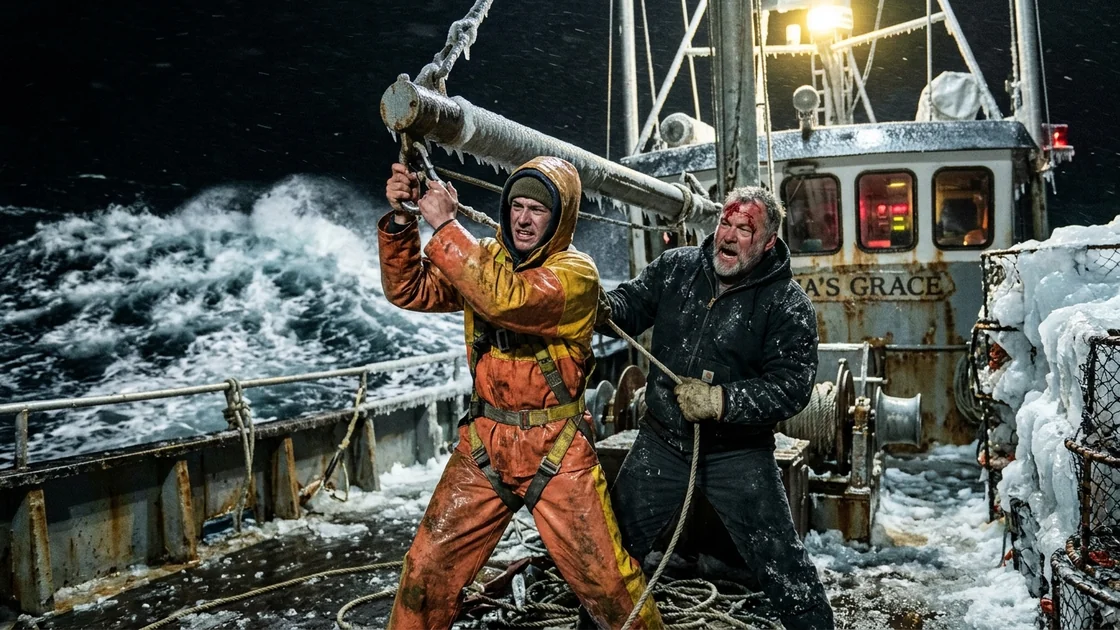
In the unforgiving waters of the Bering Sea, Arthur and his son, Caleb, operate the rusted trawler Martha’s Grace, trapped in a bitter silence that began two years ago when the boat's namesake passed away. For months, their interactions have been reduced to barked orders, heavy glares, and the relentless grind of hauling crab pots through freezing spray, as each man privately blames the other for the circumstances surrounding her death. However, when a sudden, catastrophic arctic gale strikes their vessel, crippling their hydraulics and encasing the hull in deadly black ice, the physical barrier of the storm forces them to confront the emotional chasm between them. As they fight side by side through forty-eight hours of sub-zero temperatures, machinery failures, and life-threatening injuries to keep the sinking boat afloat, the raw survival instinct strips away their stubborn pride, leading to a desperate, freezing confession on the ice-slicked deck that finally allows them to grieve together and mend their fractured bond before the sea claims them both.
The engine of the Martha’s Grace did not purr; it coughed, a deep, phlegmy, diesel rattle that vibrated through the soles of Caleb’s steel-toed boots and settled somewhere behind his molars. It was the only constant voice on the boat. Outside the wheelhouse, the Bering Sea was the color of hammered lead, heaving in long, greasy swells that promised worse weather before the week was out.
Arthur stood at the helm, his massive shoulders hunched inside a stiff Carhartt jacket stained with decades of hydraulic fluid and salt. His hands, thick and scarred like cured driftwood, rested lightly on the spokes of the wheel. He didn't look at Caleb. He hadn't truly looked at his son since the dirt had been shoveled over Martha’s pine box twenty-six months ago in a soggy churchyard outside of Dutch Harbor.
"Pot's coming up," Caleb said. His voice was raspy, underused.
Arthur didn't turn his head. He just gave a curt nod, his gray beard brushing the collar of his jacket, and eased the throttle back. The diesel rumble dropped an octave. "Watch the warps. Current’s pulling south-southeast. Don't foul the prop like you did on the third string."
Caleb’s jaw tightened until the muscles ached. The third string had been four days ago, in the middle of a squall that had blinded them both with horizontal sleet, and the line had slackened because Arthur had misjudged the drift. Caleb hadn't said it then, and he didn't say it now. Speaking required energy, and out here, sixty miles north of St. Paul Island, every calorie belonged to the deck and the ice.
He pulled his heavy rubber hood over his wool cap, shoved the wheelhouse door open, and stepped out into the teeth of the wind.
The cold hit him like a physical blow, instantly stealing the warmth from the cab. It was fourteen degrees, though the wind howling off the Siberian shelf made it feel closer to twenty below. The deck of the Martha’s Grace—a fifty-eight-foot steel-hulled combination vessel that had seen its best days during the Reagan administration—was already slick with freezing spray.
Caleb stomped his feet to keep the blood moving and walked toward the hydraulic launcher on the starboard side. The boat rolled heavily in a trough, dipping the gunwale close to the churning gray froth. He braced his thigh against the bulwark, his gloved hands automatically checking the gaff hook and the coiler.
Everything on the boat was muscle memory. He had been working this deck since he was fourteen, back when the summers were spent chasing salmon in Bristol Bay and the winters were spent right here, gambling their fingers and toes against Opilio crab. Back then, the wheelhouse had smelled of his mother’s cinnamon rolls, which she baked in giant tin pans and froze for their trips, and the radio was always playing classic country while Arthur sang off-key over the roar of the winch.
Now, the wheelhouse smelled of stale Folgers and wet wool, and the radio was strictly tuned to the NOAA weather band or dead silent.
From the high window of the cab, Arthur engaged the main hydraulics. The pump whined, a high, metallic shriek that cut through the roar of the surf. Caleb leaned over the rail, squinting into the freezing mist, waiting for the twin poly-balls to break the surface.
When they popped up, crusted in slush, he swung the grappling hook with practiced ease, snagged the trailer line, and hauled it aboard. He fed the thick, icy rope into the coiler. The machine bit down, hauling the seven-hundred-pound steel cage up from the muddy bottom four hundred feet below.
The line came up taut, vibrating like a bass string, shedding freezing water that sprayed across Caleb’s oilskins and instantly turned to a crusty glaze. He stood in the deluge, head bowed, watching the line. One bad splice, one frayed strand under this much tension, and the rope would snap back like a bullwhip, strong enough to take a man’s head off or shatter both his legs.
Arthur watched from the glass above, his hand on the auxiliary controls. There was no trust between them anymore, only a grim, mechanical reliance. Caleb knew Arthur wouldn't let the pot swing wild and crush him against the bulkhead, not because Arthur loved him, but because losing a deckhand meant turning back to port with a half-empty hold, and the bank in Anchorage owned sixty percent of the boat's mortgage after the medical bills.
The pot broke the surface, streaming black mud and kelp. The crane groaned as it took the weight, swinging the dripping steel rectangle over the rail. Caleb grabbed the rusted frame, guiding it down onto the hydraulic launcher with a bone-jarring clang.
Inside the mesh, dozens of snow crabs clattered over one another, their brownish-red shells clicking like castanets, their small black eyes glistening in the sodium deck lights.
Caleb didn't pause to admire the haul. It was a decent pot—maybe eighty keepers—Worth a few hundred bucks at the cannery if the price didn't drop before they made landfall. He popped the toggle latches, swung the gate open, and began sorting.
Undersized crabs and females went straight back over the side via the chute. The legal males—four inches across the carapace or better—were tossed into the open hatch of the live tank in the belly of the boat. His hands worked with a furious, robotic speed. Grab, measure by eye, toss. Grab, measure, toss. If you moved too slow, the crabs’ legs would freeze and snap off in the air, rendering them worthless at the dock. Deadloss, they called it.
Within four minutes, the cage was empty. Caleb grabbed the frozen blocks of chopped herring and cod from the bait tub, stuffed them into the plastic bait jars hanging inside the pot, slammed the gate shut, and secured the latches.
"Clear!" he shouted toward the wheelhouse, though the wind tore the word from his lips.
Arthur didn't need to hear it; he saw Caleb step back to the safe zone behind the mast. The hydraulics hissed, the launcher tilted, and the pot slid back into the gray abyss with a massive white splash, dragging sixty fathoms of coiled rope behind it until the buoys danced on the surface once more.
The boat immediately lurched forward as Arthur jammed the throttle ahead to run down the line to the next buoy, a quarter-mile upwind.
Caleb leaned against the mast, gasping in lungfuls of air so cold it burned his bronchial tubes. Eighteen down. Forty-two to go on this string. His lower back was a solid slab of agony, and his left knee—banged against a hatch coaming two days ago—was swollen tight inside his thermal underwear.
The wheelhouse door banged open. Arthur stepped out onto the small raised deck behind the cabin, holding a heavy wooden mallet. He wasn't looking at the pots; he was looking at the forward rigging and the bow rails.
"Get the bats," Arthur barked over the wind. "We're making ice."
Caleb looked toward the bow. His father was right. The spray coming over the port quarter wasn't running off the scuppers anymore. It was clinging to the steel rails, the anchor winch, and the stacked pots on the foredeck, building up in milky, translucent layers.
Ice was the silent killer of the Bering Sea. It didn't punch holes in the hull like a rogue wave; it just grew, inch by inch, ton by ton, raising the boat's center of gravity until a modest swell would roll the vessel over like a child's toy in a bathtub. Once a boat turtled in this water, you had roughly three minutes before the cold locked your muscles, and five before your heart stopped.
Caleb pulled a three-foot hickory baseball bat from the rack by the bait shed. He didn't say a word as he walked past his father toward the bow, where the pitching of the boat was most violent.
For the next forty minutes, while the boat chugged on autopilot toward the next set of gear, the only sound over the engine and the wind was the dull, rhythmic thud-crack of wood against ice.
Caleb swung the bat with everything he had, smashing the two-inch rime off the forward bulwarks. Shards of salt-ice flew into his face, stinging his windburned cheeks. A few feet away, Arthur was working on the stacked crab pots, his heavy mallet rising and falling like a pile driver. Despite being fifty-nine, Arthur still possessed the terrifying, bear-like strength of a man who had spent four decades pulling his living out of the ocean by hand.
A sudden cross-swell caught the Martha’s Grace on the beam. The boat rolled thirty degrees to starboard.
Caleb lost his footing on the slushy deck. His feet shot out from under him, and he slid toward the low gunwale, his hip slamming hard against the steel rail just above the churning water. His bat went spinning into the dark waves.
Before he could even scramble to his knees, an iron grip clamped onto the back of his oilskin harness, yanking him backward with enough force to nearly dislocate his shoulder.
Arthur hauled him upright and shoved him toward the center of the deck, away from the rail.
"Watch your feet!" Arthur roared, his face inches from Caleb’s. His eyes were bloodshot, ringed with deep, salt-crusted wrinkles, and blazing with a disproportionate fury. "You go over, I can't turn this pig around fast enough in this chop! Use your head, damn it!"
Caleb ripped his jacket out of his father's grip, his chest heaving, adrenaline spiking hot and sharp through his exhaustion. "I slipped! The non-skid paint on the foredeck is worn down to bare steel because you were too cheap to haul out in September!"
"We didn't haul out in September because we needed the autumn cod tender contract to pay for the new main bearing!" Arthur shouted back, his breath pluming white between them.
"Yeah, well, maybe if we had a third man on deck like every other fifty-eight-footer in the fleet, we wouldn't be running twenty-hour shifts and falling over our own feet!"
Arthur’s jaw set like concrete. The fury in his eyes banked down into that familiar, glacial coldness that Caleb hated more than the shouting. "Two shares split the pot better than three. Get another bat from the locker. We've got six inches on the anchor winch."
Arthur turned his back and went back to swinging his mallet.
Caleb stood there for five seconds, his fists clenched so tight inside his neoprene gloves that his knuckles popped. Two shares. Everything always came back to the ledger. The boat, the bank, the fuel bill, the hospital debt that still hung over their heads like a guillotine blade, even though the woman it was meant to save was rotting in the frozen mud of Unalaska.
Caleb turned, walked back to the gear locker, grabbed a spare iron bar wrapped in friction tape, and went back to beating the ice off the steel.
By 1800 hours, the sky hadn't so much darkened as simply ceased to exist, merging seamlessly with the black water. The sodium vapor lights mounted on the masthead cast a harsh, jaundiced glow over the working deck, turning the blowing snow into a swirling vortex of yellow sparks.
They had hauled thirty-eight pots. Four more remained on the string, sitting on the edge of a steep underwater canyon where the big males liked to congregate.
Inside the wheelhouse, the barometer had been falling so fast since noon that it looked broken. The needle sat well below 970 millibars. On the VHF radio, the Coast Guard station out of Kodiak was broadcasting an updated marine warning every fifteen minutes, the automated voice droning through the static about a rapidly intensifying low-pressure system moving up from the Aleutian trench. Storm force winds. Seas building to twenty-five, locally thirty feet. Freezing spray warning in effect—rapid ice accumulation likely.
Most of the fleet had already cut their strings and begun steaming south toward the lee of Unimak Pass or Dutch Harbor. Caleb could see the glowing green blips of their transponders on the AIS screen, a slow migration of steel heading for shelter.
The Martha’s Grace was still pointing north-northwest, nose into the building gale.
Caleb stood in the doorway of the galley, peeling off his soaked gloves. His hands were shriveled, white, and cracked around the fingernails from the salt water. The grease on his skin kept the water from soaking in, a fisherman’s trick, though it smelled rancid by day six. He poured himself a mug of black coffee from the carafe wired to the burner and took a scalding sip, letting it burn all the way down to his stomach.
He walked up the three steps into the wheelhouse. Arthur was sitting in the captain’s chair, one boot propped on the dash, staring out through the spinning clear-view screen as the wipers fought a losing battle against the sleet. The boat pitched up the face of a fifteen-foot roller, hung at the crest for a sickening, weightless second, and then slammed down into the trough with a boom that made the hull plates shudder.
"The Sea Star and the Northern Lady broke off an hour ago," Caleb said, leaning against the chart table to brace himself against the next pitch. "They’re running for the pass."
"Good for them," Arthur said. "Tomlinson’s boat is paid for. He can afford to hide behind an island every time it blows forty knots."
"It’s not blowing forty, Artie," Caleb said, deliberately using his father’s name instead of 'Dad,' a habit he’d picked up the day after the funeral. "The anemometer just Gust-peaked at fifty-four. Look at the radar. That squall line is solid green for eighty miles. We haul these last four pots, we’re going to be taking twenty-footers on the beam the whole way back to the shelf."
"There's six grand worth of crab in those four pots," Arthur said, his voice flat. "And another twelve grand sitting in the steel if we leave them for the storm to drag into the canyon. We lose four pots at fifteen hundred bucks a pop, plus the catch, we don't make the January payment to First National. You want to explain to the loan officer why we turned tail four miles from the end of the line?"
"I don't give a damn about the loan officer!" Caleb slammed his tin mug down on the wooden chart table, splashing black coffee across a laminated map of the Pribilof Islands. "I care about the fact that our starboard bilge pump has been cycling every twenty minutes since yesterday, which means we’ve got a weeping seam somewhere under the lazarette, and we’re carrying forty tons of water in the crab tank!"
Arthur finally turned his head. In the dim red glow of the instrument panel, his face looked hollowed out, like a skull wrapped in gray leather.
"Then go down into the lazarette and check the packing gland on the rudder post," Arthur said quietly. "Instead of standing up here whining like a greenhorn."
The word hit Caleb like a slap. Greenhorn. He had ten years on this deck. He had given his twenties to this rusting tub. While his high school friends had gone off to the University of Washington or taken union welding jobs on the North Slope, he had stayed in Dutch, patching nets, rebuilding Detroit Diesel injectors in an unheated shed, and sending eighty percent of his crew share straight into his parents' joint account when the oncology clinic in Seattle started demanding cash upfront.
"You know what your problem is?" Caleb’s voice dropped to a low, trembling hiss. "You think if you work yourself to death out here, it’ll somehow balance the ledger. You think if you sink this boat with both of us on it, it counts as an apology to her."
Arthur came out of the captain’s chair so fast the bolted swivel base groaned. He was three inches shorter than Caleb, but fifty pounds heavier, a solid wall of bone and hard fat. He stepped into Caleb’s space, his chest brushing the younger man’s damp thermal shirt.
"Don't you talk about her," Arthur breathed. His hands were balled into fists at his sides, trembling with the effort of not raising them. "You don't get to use her name to excuse going soft on me."
"Soft?" Caleb laughed, a jagged, ugly sound. "I was there, remember? I was the one holding her hand in St. Elias Hospital while she drowned in her own lung fluid! Where were you, Captain? Huh? Where was the great provider?"
"I was fifty miles off Cape Newenham trying to pay for the bed she was dying in!" Arthur roared, the veins in his neck standing out like steel cables. "Because somebody had to keep the checks clearing after you blew three grand on a plane ticket to come sit by a bed when the doctors already told us she was gone!"
There it was. The poisoned harpoon they had been throwing back and forth across the silence for two years.
When Martha had taken her final turn in November two years back, they had been mid-season in the red king crab fishery. The hospital in Anchorage had called the satellite phone at two in the morning. Forty-eight hours, the doctor had said.
Caleb had demanded they head straight for Cold Bay, tie up the boat, and catch the first commuter prop plane to Anchorage. Arthur had looked at the fish hold—only a third full—and the weather forecast showing the season’s best fishing window closing in three days, and said no. He said Martha wouldn't want them to lose the boat over forty-eight hours of unconsciousness when she wouldn't even know they were in the room.
Caleb had mutinied. When they touched dock in Dutch Harbor to offload their partial catch and refuel, Caleb had jumped off the rail with his duffel bag, leaving Arthur to finish the season with a hastily hired, half-drunk deckhand from the local bar. Caleb had made it to Anchorage four hours before Martha’s heart stopped. She had been in a morphine coma, her skin yellow, her breathing like dry leaves rattling in a gutter. She hadn't woken up. She hadn't known he was there.
And Arthur had arrived three days later, smelling of diesel and dead crab, just in time to pick out a casket he couldn't afford because the replacement deckhand had dropped a string of pots onto a rocky reef and cost them twenty thousand dollars in gear.
Neither man had forgiven the other. Caleb hated his father for choosing iron and crab over his wife’s last breath; Arthur hated his son for abandoning the ship, costing them their livelihood, and claiming the moral high ground for sitting in a warm room while Arthur fought the sea alone, grieving in an empty wheelhouse.
They stood nose to nose as the Martha’s Grace took another massive wave over the bow. Solid green water smashed against the forward pilothouse windows—inch-thick tempered glass that bowed inward with a terrifying thump, plunging the room into momentary darkness before the water cascaded off the roof.
The boat shuddered, wallowing sluggishly at the bottom of the trough before her bow slowly, painfully lifted again. She was heavy. Way too heavy.
On the console, a high-pitched buzzer suddenly pierced the air. A red light began flashing on the main alarm panel: HIGH WATER - LAZARETTE.
Neither man moved for a second, their chests heaving, locked in their private war. Then the boat took another wave, and this time she didn't fully recover her trim, listing five degrees to port.
Arthur broke eye contact first, spinning back to the helm and grabbing the throttle. "The rudder post packing blew, or the weld on the port horn split. Get down there. Take the emergency trash pump from the engine room and rig the hose through the deck hatch!"
The hatred didn't vanish—it was too deep, calcified into their bones—but twenty years of maritime instinct overrode it. If the lazarette flooded completely, the stern would drop, the deck would submerge under the weight of the crab tank, and the sea would swallow them before they could even get into their survival suits.
Caleb didn't argue. He spun on his heel, leaped down the companionway stairs, and grabbed his oilskin coat on the fly.
The engine room of the Martha’s Grace was a vision of mechanical hell. The heat was stifling after the freezing deck, thick with the stench of vaporized Rotella oil, bilge water, and scorching paint. The 600-horsepower Caterpillar diesel took up most of the space, roaring so loudly that Caleb could feel the sound waves vibrating in his lungs.
He grabbed the portable Honda gas-powered water pump lashed to the bulkhead near the workbench, along with twenty feet of collapsible blue discharge hose and the heavy cast-iron suction pipe. Together, the rig weighed nearly ninety pounds.
Swinging it onto his shoulder, he kicked open the watertight door leading back toward the shaft alley and the stern lazarette—the cramped, triangular compartment at the very rear of the boat that housed the steering hydraulics and the rudder post.
To get to the lazarette hatch, however, he had to go back out onto the main working deck, all the way aft behind the crab pots.
When Caleb shoved open the rear bulkhead door and stepped out under the sodium lights, his breath caught in his throat.
In the fifteen minutes he had been inside arguing with his father, the storm had arrived in earnest.
The wind wasn't howling anymore; it was screaming, a continuous, deafening banshee shriek through the steel rigging that tore the tops off the waves and turned the air into a horizontal blizzard of salt spray and sleet. The waves were monstrous—twenty-five-foot walls of black glass veined with white foam that rose up behind the stern, towering above the masthead before rolling beneath the hull and lifting the fifty-eight-foot steel boat as if it were a cork.
Worse was the ice. It was everywhere. The stacked crab pots on the starboard side were no longer individual cages; they had fused into a single, gargantuan glacier of milky white ice that had to weigh ten or fifteen tons. That was why the boat was listing to starboard now, counteracting the port flood.
Holding the ninety-pound pump against his chest, Caleb timed the roll of the boat and staggered aft toward the stern rail.
Water was washing freely across the back deck now, knee-deep and filled with slush, sucking back out through the open freeing ports only to be replaced by the next breaking crest. The water temperature was twenty-nine degrees—only kept from freezing solid by its salinity. As it surged over Caleb’s boots and up his oilskin bibs, the cold radiated through three layers of wool and fleece like fire.
He reached the raised coaming of the lazarette hatch. He dropped the pump, braced his legs wide against the stern bulwark, and spun the heavy brass wheel to release the dogs on the hatch cover.
He threw the heavy steel lid back. It clanged against the deck stop.
Shining his waterproof headlamp down into the hole, Caleb cursed aloud.
The compartment was four feet deep in black, oily water that was sloshing violently from side to side with every roll of the boat, slamming against the hydraulic steering rams. A geyser of white seawater was spraying upward from the starboard side of the rudder post where the steel hull plate met the stern tube. A seam hadn't just wept; a twelve-inch section of rotten weld had completely sheared away under the pounding of the following sea. The electric bilge pump down there was completely submerged, its float switch probably fouled with rust flakes or grease, doing nothing.
Working with frantic speed, his fingers already growing clumsy from the wet cold, Caleb threaded the heavy suction hose onto the intake side of the gas pump and dropped the strainer basket down into the sloshing black hole. He connected the flat blue discharge hose, tossing the loose end over the stern rail.
He flipped the choke on the little red Honda engine, switched the ignition to ON, and pulled the starter cord.
The engine coughed and died.
A wave broke directly over the port quarter. A wall of green water slammed into Caleb’s back, knocking him flat onto his chest over the pump. The breath was driven from his lungs as freezing water poured down the collar of his jacket, soaking his shirt and chest. For three terrifying seconds, the deck disappeared entirely under four feet of churning white foam. Caleb clung to the hatch coaming with one hand and the handle of the pump with the other, feeling the massive suction of the receding wave trying to drag him over the low stern rail into the black void behind the boat.
The water drained away, leaving him gasping, coughing up salt water, his vision swimming with black spots.
He didn't have time to shiver. If that water reached the main engine room bulkhead and shorted out the generator, they would lose lights, radar, and the main hydraulic pumps. They would be dead in the water.
He yanked the starter cord again. Nothing. The spark plug wire was wet.
Ripping off his right glove with his teeth, he used his bare, freezing hand to pull the rubber boot off the spark plug, wiped it inside his damp wool hat—the driest thing he had—and shoved it back on until it clicked. He pulled the cord with every ounce of strength left in his back.
The little engine roared to life, sputtering for a second before settling into a frantic, high-pitched buzz. The blue hose instantly inflated as hard as a log, vomiting a thick stream of black bilge water over the stern rail into the sea.
"Thank God," Caleb gasped, pulling his sodden glove back over his numb fingers.
He used a short piece of nylon line to lash the vibrating pump to the hatch hinges so the waves wouldn't wash it overboard. He was just tying the final half-hitch when the boat rose up the face of a massive wave—the biggest yet, thirty feet from trough to crest—and hung at the top, rolling violently to starboard under the weight of the iced-up crab pots.
The roll went past thirty degrees. Past forty.
The starboard rail buried itself completely under the black water. The sea poured over the side, filling the working deck like a bathtub.
And then, above the scream of the wind and the roar of the main engine, there was a sound like a cannon shot from the center of the deck.
CRACK-PING!
The main hydraulic boom—a twenty-foot steel pipe used for swinging the crab pots aboard—had broken free from its iced-up cradle. The heavy steel turnbuckle holding the stay-wire had snapped under the combined weight of six inches of ice and the violent forty-five-degree roll.
As the boat wallowed on its side, the two-ton boom swung wildly across the deck like a giant pendulum.
It smashed into the port rail, showering sparks into the dark, and then, as the boat rolled back toward the port side, the boom swung back toward the starboard gear—and its steel block-and-tackle hook slammed directly into the main hydraulic manifold pipes running along the deckhouse bulkhead.
Cast iron shattered. High-pressure hydraulic line ruptured.
A geyser of scalding, pressurized red hydraulic oil sprayed twenty feet into the air, instantly atomizing into a toxic, slippery mist that coated the deck, the windows, and the ice.
Inside the wheelhouse, Caleb saw the silhouette of his father thrown violently across the cabin as the steering wheel spun wild and free in his hands. Without hydraulic pressure, the rudder had just gone slack, slamming hard over to port under the force of the waves.
Without steering, the Martha’s Grace immediately broached—swinging broadside into the trough of the thirty-foot seas.
Caleb didn't think; he scrambled forward on his hands and knees through the mix of freezing slush and slick hydraulic oil, grabbing onto deck cleats and welded tie-downs as the boat took another monstrous wave squarely on the port beam.
The impact sounded like a freight train hitting a brick wall. The entire fifty-eight-foot vessel was shoved sideways through the water. From inside the cabin came the sound of shattering glass, the crash of the microwave tearing out of its brackets, and a heavy, sickening thud.
By the time Caleb hauled himself up the ladder and tore open the wheelhouse door, the cabin was a wreck. Charts, coffee mugs, tools, and broken glass littered the tilted floor. The port side window had been stove in by the wave crest; freezing water and wind were howling directly into the cab, soaking the electronics panel, which was already sparking and smoking.
Arthur was on the floor between the helm chair and the chart table, lying in a puddle of seawater and broken glass. A four-inch gash above his left eyebrow was pumping dark blood down the side of his face and into his gray beard, and he was clutching his right ribs, his face contorted in agony as he tried to push himself up with one arm.
"Artie!" Caleb dropped to his knees beside him, sliding in the wet mess.
Wait—Dad. The word formed in his mind, terrifying and instinctual, though it stuck in his throat.
"The boom—" Arthur wheezed, spitting a mouthful of blood onto the linoleum. His eyes were glazed with concussion, struggling to focus on his son's face. "Steering's gone. Return line... on the manifold... blew out."
"I saw it! Stay down, you broke your ribs!"
"Can't stay down!" Arthur grabbed the front of Caleb’s oilskin bibs with his left hand, his grip still shockingly strong. "We're in the trough, Cal! The loose boom... it'll punch a hole through the wheelhouse or knock the mast down on the next roll. And if we don't get the bow back into the wind, the next set of waves will roll us completely over!"
He was right. Even as Arthur spoke, the boat rolled fifty degrees to starboard. The loose steel boom swung across the deck outside with a terrifying whoosh, the heavy iron hook smashing into the steel corner of the bait shed, denting the quarter-inch plate like tin foil. Another swing like that could take out the engine room vents or shear the fuel tank breathers right off the deck, flooding their diesel tanks with salt water and killing the main engine.
"How do we steer without the rams?!" Caleb shouted over the roar of the wind pouring through the broken window.
"Emergency tiller!" Arthur coughed, a wet, rattling sound that made him wince and press his forearm tighter against his side. "In the lazarette. Big iron bar... drops onto the top of the rudder post. You have to bypass the hydraulic loop... open the cross-over valve down there so the rams move free... and steer by hand."
Caleb stared at him. The lazarette was currently half-full of freezing water, pitch black, and pitching ten feet up and down every six seconds. And before anyone could steer, that swinging two-ton boom had to be captured and tied down, or it would kill anyone who stepped onto the deck.
"I'll get the boom," Caleb said, his voice dropping into a strange, icy calm as the sheer magnitude of their situation settled over him. "You get up in that chair and work the throttle. Use the prop wash against the waves to keep us from rolling while I'm out there."
Arthur tried to stand, cried out as the broken ribs ground together, and collapsed back against the base of the helm chair. His face was the color of dirty snow beneath the blood. "My leg... when the table came loose, it pinned my knee. I can't... I can't stand on the pitch, Cal."
Caleb looked at his father’s right leg. The knee was twisted at a slight, unnatural angle, wedged beneath the heavy oak chart table that had ripped its lag bolts right out of the floorboards.
Caleb grabbed the edge of the oak table, planted his boots against the bulkhead, and heaved with a roar that tore at his throat. The table shifted six inches. Arthur dragged his leg free, groaning through clenched teeth.
Caleb didn't waste time being gentle; he hooked his hands under his father’s armpits, hauled the two-hundred-and-forty-pound man upward, and dumped him into the bolted captain’s chair. He grabbed a roll of grey duct tape from the dash bin and rapidly wrapped it around Arthur’s waist and the back of the chair, four, five, six times, strapping the injured man straight to the seat so the violent rolls wouldn't throw him onto the deck again.
"Can you reach the throttle?" Caleb demanded, slapping his father’s Pale cheek lightly to keep him focused. "Look at me! Can you work the stick?"
Arthur blinked away the blood dripping into his left eye and clamped his good left hand onto the brass throttle lever. He gave a grim, bloody nod. "I got it. Watch the oil on deck, boy. Clip your lanyard to the safety wire before you step out."
Boy. He hadn't called him that in years.
Caleb grabbed two coils of three-quarter-inch braided nylon crab line from the locker in the companionway, clipped a heavy steel carabiner onto his harness, and stepped back out into the storm.
The deck was a skating rink in the ninth circle of hell.
The combination of red hydraulic fluid and freezing ocean spray had created an emulsion as slick as wet Teflon over every horizontal surface. The boat was lying completely broadside to the gale now, rolling from rail to rail in a sickening, pendulum motion. With every starboard roll, the ocean came straight over the bulwark in a solid, roaring cataract, burying the deck waist-deep before draining slowly out the scuppers.
Above him, the twenty-foot steel boom was swinging back and forth across a ninety-degree arc with every roll of the vessel. The thick steel lifting cable was trailing from its tip like a whip, the hundred-pound iron block at the end gouging sparks out of the steel deck plates and smashing into the wooden sorting table, reducing it to splinters.
Caleb clipped his harness tether to the overhead dog-run cable that stretched from the cabin to the mast. He tied one end of his nylon rope to the massive steel bollard welded to the port bulkhead.
He couldn't grab the boom itself—it was moving with enough kinetic energy to crush his chest like an eggshell. He had to lasso the trailing iron block at the bottom of the arc when the boat paused between rolls, and snub it tight against the winch before it could gain momentum again.
He waited by the mast, bracing himself against the icy steel column.
A wave hit the port side. The Martha’s Grace rolled violently to starboard—forty degrees, forty-five, fifty. The iced-up crab pots groaned as the sea rose up to meet them.
The boom swung hard to starboard, smashing into the top of the crab pot stack, sending a shower of shattered white ice across the deck. For one brief second, as the boat hung at the extreme end of its roll, the boom paused, its iron block dangling just four feet from Caleb’s reach.
Caleb lunged forward, his boots instantly slipping out from under him on the oil-slicked ice. He went down hard on his already swollen left knee, a bolt of white-hot agony shooting up his thigh, but he threw his body forward anyway, passing the heavy nylon line straight through the giant iron eye of the block and yanking the tail back toward himself.
The boat began to roll back to port.
Caleb scrambled backward toward the mast, frantically wrapping the nylon rope three times around the heavy steel capstan of the auxiliary winch.
"Hold!" he screamed into the wind, throwing all his weight onto the tail end of the rope to create friction on the drum.
The boom swung back toward the center of the deck, building terrific speed. The slack vanished from the nylon line in a heartbeat.
TWANG!
The three-quarter-inch rope stretched until it was as thin as a broomstick, smoking instantly against the steel drum of the winch from the friction. The jolt nearly ripped Caleb’s arms out of their sockets as the tail end tried to slip through his oiled gloves. The entire mast shuddered as it took the shock load of two tons of flying steel stopping dead in mid-air.
The rope held. The boom hung suspended over the middle of the deck, jerking wildly against the tether like a harpooned whale, four feet above the hatch.
Before it could bounce back and create slack on the next roll, Caleb hauled in three feet of line with bleeding, blistered strength, wrapped it four more times around the capstan, and threw three locking half-hitches over the horn cleat on the mast.
He didn't stop to breathe. He grabbed the second coil of rope, fought his way across the tilting, wave-swept deck to the starboard rail, and threw a line over the boom from the opposite side, winching it down by hand with a come-along ratchet until the rogue pipe was triangulated, pinned tightly down against the top of the hatch cover, unable to move more than an inch in any direction.
One problem down. Two left: the boat was still sinking by the stern, and they were still sideways in the trough, taking every wave directly on the beam.
Behind him, near the stern, the little red Honda pump had sputtered and died—washed out by the waves that had swept the deck during the broach.
And worse: the starboard list was getting steeper. Even with the boom secured, the boat wasn't rolling back to level anymore. She was resting at a permanent twenty-degree tilt to starboard. The ten tons of ice encasing the forty crab pots stacked on the starboard side were slowly, inexorably pulling the Martha’s Grace over onto her side.
Caleb looked up at the shattered wheelhouse window. Arthur was leaning out through the jagged frame, the wind plastering his blood-soaked hair to his forehead, waving his good arm frantically toward the crab pots.
"Cut 'em loose!" Arthur screamed, his voice barely carrying over the gale. "The starboard stack! Cut the lashings and dump the gear! She won't come out of the trough with that weight on the rail!"
Caleb stared up at the stack. Forty steel pots, seven hundred pounds each, stacked three high along the starboard rail, all bound together by inch-thick steel cables, chains, and turnbuckles—and now cemented together by a foot-thick carapace of solid sea ice.
That was sixty thousand dollars' worth of gear. Without those pots, their season was over. The bank would foreclose on the Martha’s Grace before the snow melted in May. Everything Arthur had sacrificed—including his last hours with his wife—was tied up in that twisted mountain of steel and mesh.
"Cut them!" Arthur roared again, slamming his fist against the outside of the steel cabin. "Do it now, Caleb!"
Caleb pulled the serrated survival knife from the sheath on his chest harness, grabbed a six-foot iron crowbar from the rack by the mast, and waded through the waist-deep wash toward the starboard rail.
To dump the stack, he had to release the three main chain binders holding the bottom tier to the deck eyes, and then use the crowbar to crack the ice weld holding the pots to the rail while the boat rolled to starboard, letting gravity drag the whole mass into the sea.
The danger was absolute. He had to stand right next to the stack on the low side of the tilting deck to reach the binders. When forty pots went over the rail, if a trailing buoy line or a jagged piece of steel mesh snagged his oilskins, it would drag him four hundred feet to the bottom of the Bering Sea in thirty seconds.
He unclipped his safety tether from the overhead wire; if the pots caught his tether, the cable would cut him in half. He had to work free.
Wading into the freezing slop pooling against the sunken starboard rail, Caleb jammed the end of the crowbar into the lever of the forward chain binder. The binder was buried under four inches of hard white ice. He reversed the bar, using the pointed chisel end like a spear, stabbing violently at the ice until it shattered away from the iron clasp.
He hooked the lever and threw his whole body weight downward.
The binder popped open with a loud clank, the chain going slack.
He moved to the middle binder, working half-underwater now as the sea sloshed over the submerged rail and up to his chest. His legs were entirely numb below the knees; it felt like he was walking on two wooden stumps. His hands were claws that could barely register the shape of the iron bar, operating purely by sight and forearm strength.
He smashed the ice off the middle binder, jammed the bar in, and popped it loose. The massive stack of pots creaked ominously above him, shifting two inches toward the sea as the ice holding them to the deck cracked like a rifle shot.
One binder left, at the aft end of the stack near the launcher.
Caleb scrambled back along the narrow passageway between the pots and the hatch coaming. If the stack slid inward instead of outward on a port roll, it would crush him flat against the three-foot steel wall of the fish hold hatch.
He reached the rear binder. It wasn't a lever-style; it was a threaded turnbuckle, rusted and frozen solid.
He jammed the crowbar through the center eye of the turnbuckle and pulled. It didn't budge. The threads were locked with salt corrosion and ice.
The boat took another massive roller on the port side, rolling fifty-five degrees to starboard. The sea came right over the top of the crab pots, burying Caleb completely under solid green water. He held his breath, wrapping both arms around the steel stays of the launcher as the freezing torrent roared over his head in the dark, tearing at his hood, trying to rip him away from the boat.
When his head broke the surface again, he was coughing violently, half-blinded by salt and hydraulic oil. The boat didn't come back up past thirty degrees. She was wallowing, dying right beneath his feet. Another two waves like that and she would roll past her point of vanishing stability and turn turtle.
The turnbuckle wouldn't turn. He needed to cut the one-inch nylon lashing straps that connected the chain to the upper tiers, and let the leverage of the top pots rip the bottom chain out by its roots.
He dropped the crowbar, pulled his serrated knife, and began sawing frantically at the frozen two-inch nylon webbing strap holding the rear corner down.
The cold nylon was almost as hard as oak. The serrated blade chewed through the fibers strand by strand. One quarter through. Halfway through.
The Martha’s Grace rose up the face of a mountainous wave, tilted toward the sky, and then began her sickening roll to starboard as the crest passed underneath.
Thirty degrees. Forty degrees.
Under the immense strain of the tilt, the half-cut nylon strap suddenly exploded with a sound like a pistol shot, unraveling in a blur of frayed yellow fibers.
With the rear corner free, the weight of the top two tiers of iced-up pots leveraged outward against the bottom chain. The welded deck eye holding the turnbuckle tore straight out of the rusty quarter-inch deck plate with a screech of ripping steel.
The entire forty-pot glacier began to slide toward the sea.
"Clear!" Caleb screamed to nobody, throwing himself backward over the three-foot coaming of the fish hold hatch, sprawling flat on top of the steel hatch cover just as thirty thousand pounds of steel and ice thundered past the exact spot where he had been standing a half-second before.
The pots went over the starboard rail in a cascading roar of grinding metal, snapping cables, and shattering ice. Sparks flew in the darkness as steel scraped across the gunwale. Poly-balls and coiled lines whipped across the deck like angry cobras as they were dragged into the black water behind the sinking cages.
One heavy steel pot on the very end of the line caught on the corner of the hydraulic launcher, spinning around and slamming into the deck crane before tearing free and vanishing into the foam.
And then they were gone.
Freed of fifteen tons of dead weight on her starboard rail, the Martha’s Grace reacted instantly. She snapped back toward an even keel with a violent jerk that nearly threw Caleb off the hatch cover, rolling back to only five degrees of list caused by the water in the lazarette.
The deck rose two feet higher out of the sea. She was buoyant again. She had her fight back.
Caleb lay on the icy hatch cover for three seconds, staring up at the screaming black sky, feeling his heart hammering against his ribs like a trapped bird.
Then the boat took another wave broadside, rolling forty degrees in both directions. Without steering, they were still in the trough, and the lazarette was still filling up through that split weld in the stern.
He wasn't done. Not even close.
Dragging himself off the hatch, Caleb made his way back to the stern. The little Honda pump was still lashed to the lazarette hatch hinges, dripping wet. He didn't have time to dry the spark plug again; he had to get down into that black hole, open the hydraulic bypass valve, jam the iron emergency tiller onto the rudder post, and try to wedge something into that split hull seam before the stern dragged them under.
He grabbed a four-foot iron pipe—the emergency tiller handle—from the bracket inside the engine room door, along with a wooden maul and a bag of soft pine damage-control wedges that had been sitting under the workbench since the boat was built in 1978.
He climbed over the coaming of the open lazarette hatch and dropped down into the dark compartment.
The water hit him squarely in the chest.
It wasn't like the waves on deck that hit you and drained away; this was four feet of twenty-nine-degree black water mixed with diesel fuel and hydraulic oil, trapped in a five-by-eight-foot steel box. The cold was so absolute, so violent, that Caleb’s diaphragm instantly contracted in a torso reflex, making him gasp involuntarily.
His feet touched the slick steel ribs at the bottom of the hull. Every time the boat rolled, the four-foot depth of water rushed from one side of the compartment to the other like a miniature tidal wave, slamming Caleb against the steel frames and the steering gear, threatening to drown him right there in the dark.
Shining his flickering headlamp through the swirling, oily surface, he located the split seam on the starboard side of the stern tube. It was underwater now, invisible except for the turbulent boil of freezing ocean water forcing its way in under high pressure.
Taking a deep breath, Caleb ducked his head completely beneath the oily black water.
Opening his eyes in the stinging, fuel-tainted brine, he felt along the freezing steel hull plate with his bare left hand—he had lost the glove somewhere by the crab pots—until his numb fingers found the ragged, quarter-inch gap in the weld, about eighteen inches long.
He pulled two tapered pine wedges from his jacket pocket, jammed their narrow tips into the center of the crack, and swung the heavy wooden maul underwater.
Swinging a hammer underwater was like moving through molasses, and his muscles were already seizing up from hypothermia, losing their coordination. He gave up on swinging and instead used the head of the maul like a battering ram, shoving it with both hands and all his body weight against the backs of the wedges.
The dry pine crunched into the jagged steel gap.
He surfaced, gasping for air as the boat rolled and slammed his shoulder into the rudder quadrant, leaving him seeing stars. He took another breath, went back under, and shoved three more wedges into the remaining length of the split. Once the dry pine soaked up the seawater, it would swell tight, cutting the inflow down by eighty percent. It wouldn't stop it completely, but the main engine room bilge pump could handle the rest if he opened the drain valve in the forward bulkhead.
He came back up, coughing up diesel-flavored water, shivering so violently now that his teeth were chattering like castanets, biting the inside of his own cheek until he tasted copper.
Now the steering.
The twin hydraulic rams attached to the rudder post were right in front of him, just at chest level above the sloshing water. Because the pipes on deck had ruptured and been pinched shut by the falling boom, the oil trapped inside the cylinders had locked the rudder hard over to port.
Caleb found the brass cross-over bypass valve on the manifold block between the two cylinders. He grabbed the small iron wheel with both hands and twisted. It was stiff, stiff as death. He braced his boot against the hull frame and pulled until his back popped.
The valve turned.
Instantly, there was a loud hiss of equalizing pressure as the oil bypassed the broken circuit, and as the next wave struck the outside of the hull, the massive steel rudder swung free, slamming the iron quadrant back and forth with terrifying force just inches from Caleb’s chest.
Holding his breath against the violent pitching, Caleb lifted the forty-pound iron tiller bar above the water, timed the wild swing of the rudder post, and dropped the square socket at the end of the bar straight down onto the squared-off top of the six-inch steel rudder shaft.
It dropped home with a solid clunk.
Now he had a lever. Four feet of iron against the whole weight of the Bering Sea.
He couldn't see where the boat was pointed from down here in the dark hole at the stern. He looked up at the small square of yellow light coming through the open hatch above his head, where sleet was blowing horizontally across the opening.
How could he steer if he couldn't hear Arthur in the wheelhouse fifty feet away?
Just to his left, bolted to the dry upper part of the forward bulkhead near the deck beams, was an old, corroded brass box with a crank handle on the side—the original sound-powered intercom phone installed when the boat was built, requiring no electricity from the dead battery panel. Neither of them had touched it in ten years.
Caleb reached up with a shaking, grease-blackened hand, lifted the heavy Bakelite handset off its hook, and cranked the magneto handle three times.
Fifty feet forward, in the shattered, freezing wreck of the wheelhouse, a faint, mechanical bell rang inside the rusty brass box mounted beside the chart table.
Arthur, strapped to the captain’s chair with duct tape, his face crusted with frozen blood and salt spray, stared at the box through one swollen eye. With his good left hand, he reached over, tore the handset off the hook, and pressed it to his ear.
"Caleb?" Arthur’s voice cracked, raw and desperate over the whine of the wind. "Caleb, are you there?!"
Down in the black water of the lazarette, cradling the earpiece between his freezing shoulder and his jaw while both hands gripped the kicking iron tiller bar, Caleb heard his father’s voice—tinny, faint, driven entirely by the vibrations of the vocal cords through a copper wire, yet clearer than anything he had heard in two years.
"I'm here," Caleb chattered, his voice barely recognizable through his violent shivering. "Wedges are in the crack. Leak's slowed down. I've got the tiller bar on the post."
In the wheelhouse, Arthur closed his eyes for a fraction of a second, his gray head bowing against the steering wheel as a tremor ran through his massive frame. "Thank God," he whispered into the Bakelite mouthpiece. "Thank God. Okay, listen to me, son. Listen close. We're still in the trough, heading zero-two-zero. The wind and swells are coming from two-nine-zero, almost dead on our port beam. I'm going to give her full throttle between the next two crests. When you feel the prop bite, you pull that bar hard to port—push the stern to starboard—and bring our nose up into the wind. You understand?"
"Port... push the bar to the port side," Caleb repeated, his brain starting to fog from the core temperature drop. The water around his chest felt strangely warm now—the final, lethal illusion of severe hypothermia before unconsciousness set in. "Got it. Wait for the prop."
"Hold on down there. There's a big set coming—three sisters, twenty-five feet at least. Wait until the third one passes under us, or she'll pitch-pole us if we turn on the face."
Down in the hole, Caleb braced his back against the starboard hull frames and planted both boots against the wooden stringers beneath the water, wrapping both arms around the iron tiller bar like a wrestler.
The first wave hit the boat. The Martha’s Grace heeled forty degrees, water pouring down through the open hatch above Caleb’s head like a waterfall, nearly drowning him where he stood. The rudder kicked violently against the sea, the iron bar slamming into Caleb’s ribs and threatening to tear his arms off. He held on, screaming wordlessly into the dark as his muscles tore and burned.
The second wave hit. The boat rose, shuddered as ten tons of white water crashed across the working deck above, and then dropped into the deep trough behind it.
"Here comes the third!" Arthur’s voice crackled in the earpiece. "Get ready! On my mark!"
The boat lifted again, climbing the steep wall of the third wave, rolling onto her side until the water in the lazarette was up to Caleb’s chin on the starboard side. Then the crest passed beneath the keel, and the boat slid down the backside into the relatively flat water of the trough.
"NOW!" Arthur roared over the wire. "Pull it, Cal! Give me everything you've got!"
Above the roar of the sea, the 600-horsepower Caterpillar diesel suddenly bellowed as Arthur shoved the throttle lever all the way to the firewall. Beneath Caleb’s feet, the four-bladed bronze propeller bit into the black water, sending a massive surge of pressurized prop-wash slamming straight against the rudder blade.
Caleb threw his entire body weight backward, straightening his legs against the hull frames, pulling the iron tiller bar toward the port side with a primal, guttural roar that came from the very bottom of his soul.
The rudder fought him—hundreds of pounds of water pressure trying to hold the blade straight—and for three agonizing seconds, the bar didn't move an inch. Caleb’s vision began to tunnel into grey static at the edges. His fingers were bleeding where the frozen skin had split against the iron pipe.
Think of the boat. Think of the warm galley. Don't die in this hole.
Inch by agonizing inch, the iron bar gave way. Five degrees. Ten degrees. Fifteen.
As the rudder deflected the massive blast of water from the propeller, the stern of the Martha’s Grace kicked violently to starboard. Slowly, ponderously, like a wounded buffalo turning to face a pack of wolves, the heavy steel bow swung out of the trough and pointed straight into the screaming teeth of the gale.
"Hold her there! Midships! Bring the bar back to center!" Arthur shouted.
Caleb let the bar ease back to the center line, bracing it between his knees and both hands as the motion of the boat transformed completely.
The sickening, fifty-degree side-to-side rolls vanished. Instead, the bow rose straight up the face of the next thirty-foot wave, climbing toward the clouds at a thirty-degree angle, slicing through the foamy crest with a spray of white water, and then sliding down the back into the trough on an even keel.
Pitching bow-to-stern. The motion the boat was built for.
"We're in the groove!" Arthur’s voice came through the phone, ragged with triumph and pain. "Heading two-nine-five, dead into the swell! We're making three knots into the wind! Can you lash that bar in place?"
Caleb looked around through half-closed, freezing eyelids. With the rudder centered, he only needed to keep the bar from swinging while Arthur used short bursts of the throttle to keep the bow pointed into the wind.
Using the last vestiges of his motor control, Caleb unwrapped a length of quarter-inch nylon cord that was hanging from the spare parts rack overhead. With clumsy, club-like hands, he lashed the end of the iron tiller bar tightly between two opposing steel deck frames, tying a series of clumsy granny knots because his fingers could no longer form a bowline.
He tested it. When a wave hit the rudder, the rope stretched an inch and held the bar dead center.
He dropped the Bakelite phone into the oily water. He didn't have the strength to hang it back on the hook.
Moving like an eighty-year-old man, he reached down below the water line on the forward bulkhead, found the manual bilge suction valve that connected the lazarette to the main engine room pump, and twisted it open. Now the main engine’s belt-driven pump would suck the water out of this compartment automatically.
Now he just had to climb four feet up a vertical steel ladder to get out of the hatch.
He reached up and hooked his elbows over the steel coaming of the deck hatch. He tried to pull himself up. His arms didn't work. His triceps and biceps felt like bags of wet sand, completely disconnected from his brain. His legs were utterly dead beneath him, floating uselessly in the three feet of freezing water.
He slipped back down, his chin dipping under the oily surface before his heels hit the hull ribs.
So this is how it ends, a quiet, detached voice whispered in the back of his head. Saved the boat, and drowned in three feet of bilge water because I couldn't climb three rungs.
It wasn't even scary anymore. He wasn't shivering now. The water felt like a warm bath, and the roar of the Caterpillar diesel on the other side of the bulkhead sounded remarkably like the box fan his mother used to run in the hallway on hot July nights in Unalaska when he was a boy. If he just leaned his head back against the cold steel frame and closed his eyes for five minutes, he’d be warm enough to climb out later.
His eyelids fluttered shut. His grip on the top rung of the ladder loosened.
Suddenly, a massive, bloody hand reached down through the square hatch opening from the storm-swept deck above and clamped onto the front of Caleb’s life vest harness with the grip of a hydraulic crane.
"Don't you dare!" Arthur’s voice bellowed from inches above his face. "Don't you dare let go of me, Caleb!"
Caleb’s eyes snapped open.
Arthur was lying flat on his stomach on the freezing, wave-swept stern deck, having cut himself out of the wheelhouse chair and dragged himself fifty feet aft on one good leg and a chest full of broken ribs while the boat ran on autopilot-throttle into the gale. Every time he strained, fresh blood bubbled at the corner of his mouth from his bruised lung, and his face was twisted in white-hot agony as his broken ribs ground against the steel hatch coaming.
"Dad..." Caleb slurred, his tongue thick and heavy in his mouth. "Your ribs... you can't..."
"Kick your damn legs!" Arthur roared, veins bulging in his forehead as he hooked his left arm through the shoulder straps of Caleb’s oilskins and levered backward with his heavy torso, using the hatch coaming as a fulcrum. "Help me, boy! Climb!"
The sheer, terrifying ferocity in his father’s bloodshot eyes shocked a final reserve of adrenaline into Caleb’s dying nervous system.
Caleb jammed the toes of his rubber boots against the bottom rung of the ladder, hooked his numb forearms over the deck lip, and pushed upward with everything he had left while Arthur pulled from above, screaming in agony as his broken ribs bore the weight of his son's waterlogged two hundred pounds.
Inch by inch, Caleb scraped over the steel coaming, collapsing forward onto the slushy deck on top of his father.
They lay there in a tangled heap for five seconds as freezing spray rained down over them. Then Arthur shoved Caleb off him, reached over with one shaking hand, slammed the heavy steel lazarette hatch lid shut to keep the next wave from filling the hole again, and spun the wheel half a turn to lock it.
"Inside," Arthur gasped, grabbing the collar of Caleb’s hood and dragging him along the deck like a sack of flour as he crawled backward on one knee and one elbow toward the engine room door. "Gotta get... get you to the heat..."
Half-crawling, half-dragging each other, slipping in the frozen hydraulic oil and salt slush, the two men made it across the thirty feet of pitching deck as the bow slammed through another twenty-five-foot crest.
Arthur kicked the heavy steel door of the companionway open, dragged Caleb over the high watertight sill, and pulled the door shut behind them, dogging the top latch before collapsing onto the grated floor of the narrow hallway outside the engine room.
Inside the belly of the boat, the silence—relative to the screaming hurricane outside—was almost deafening, filled only with the rhythmic, comforting thrum of the big yellow Caterpillar diesel and the steady clack-hiss of the belt-driven bilge pump sucking the water out of the stern.
The air in the companionway was eighty degrees, heated by the massive radiant warmth of the engine block just below the steel floor grates.
Arthur lay on his back against the wall, wheezing like a punctured bellows, his face grey, sweat cutting clean tracks through the dried blood and salt on his cheeks. Beside him, Caleb was curled on his side on the warm steel grating, and as the eighty-degree air hit his skin, his body began to violently re-warm—triggering convulsions of shivering so severe that his heels drummed loudly against the iron floor plates.
With a groan that sounded like grinding rocks, Arthur rolled onto his good left side, pulled his pocketknife out with his teeth, opened it, and began slicing Caleb’s soaked, oil-covered rubber bibs and jacket right off his body. He didn't bother with buttons or zippers; he just cut the heavy neoprene and wool away until Caleb was down to his damp thermal underwear, and then reached into the drying locker above their heads and pulled down four heavy wool blankets and a spare sleeping bag from the crew quarters, piling them on top of his convulsing son.
When he finished tucking the sleeping bag around Caleb’s shoulders, Arthur’s strength finally gave out completely. He slumped sideways against the warm steel bulkhead next to Caleb, his head lolling back, his left hand resting loosely on top of the wool blanket covering his son’s chest.
For twenty minutes, neither of them spoke. The boat rose and fell, rose and fell, pitching steeply up the faces of the mountain waves and sliding down their backs, holding her course into the wind on her lashed rudder and steady throttle. Down below, the bilge pump discharge gauge slowly dropped as the pine wedges held and the water level in the lazarette receded.
Slowly, painfully, the violent racking shivers in Caleb’s body began to subside into smaller, manageable tremors as the radiant heat from the engine room floor seeped through the steel grates into his core. The pins-and-needles agony in his hands and feet was excruciating as the blood returned to the frozen capillaries, making him groan and clench his teeth, though he knew the pain meant he wasn't going to lose his fingers.
He turned his head on the warm steel floor and looked up at his father.
In the dim yellow bulb of the companionway, Arthur looked a hundred years old. His left eye was swollen completely shut under the clotted four-inch gash on his forehead, and every breath he took was shallow and hitched, avoiding the stab of the broken ribs on his right side. Yet his left hand was still curled tightly into the wool blanket on Caleb’s chest, as if he were afraid another wave might wash through the steel walls and take the boy away.
"You cut the pots," Caleb whispered, his voice hoarse and raw.
Arthur didn't open his good eye, just gave a tiny, barely perceptible nod against the bulkhead. "Just steel and rope, Cal. Just steel and rope."
"The bank..."
"To hell with the bank," Arthur wheezed, a ghost of a grim smile touching his cracked lips. "Let 'em come out here and dive four hundred fathoms if they want their collateral back."
Silence fell again, filled by the deep, steady heartbeat of the diesel engine. The ice between them—thicker and older than the rime they had beaten off the rails—was cracking, melting in the close, stifling heat of the engine room companionway. They had just stared into the black water at the bottom of the world together, and pride didn't survive at twenty-nine degrees.
Arthur’s good eye opened slowly, staring at the painted steel wall opposite them. A single tear, clear against the grime of oil and dried blood, leaked from the corner of his eye and vanished into his gray beard.
"I was scared," Arthur whispered. The voice was so quiet, so stripped of the roaring captain’s authority, that Caleb almost thought he’d imagined it over the engine noise.
Caleb blinked, staring at his father’s profile. "Out there?"
"No," Arthur said, his voice trembling slightly as his broad chest hitched. "Two years ago. Off Cape Newenham. When the doctor called the sat-phone."
Caleb froze beneath the blankets, the pain in his thawing hands forgotten.
"I knew the crab wouldn't pay the hospital off," Arthur continued, staring fixedly at the rust spots on the wall as if confessing to a priest. "I did the math in my head ten minutes after I hung up the phone. Even if we plugged the tank to the hatch coaming, we were still forty grand short of what Seattle wanted. I didn't stay out there for the money, Cal."
Arthur turned his head slowly, his single bloodshot, haunted eye meeting Caleb’s gaze directly for the first time in twenty-six months.
"I stayed out there because for thirty-four years, there wasn't a single thing included in this world that I couldn't fix for your mother with a wrench, a welding torch, or a sixteen-hour shift on this deck," the old man choked out, his jaw quivering. "And when that doctor told me she was dying, and that there wasn't a damn thing I could do but sit in a plastic chair under fluorescent lights and watch the life go out of her... I couldn't do it. I was a coward, Cal. I knew how to fight the sea. I didn't know how to sit in a quiet room and let her go."
A heavy, suffocating weight that had been sitting on Caleb’s chest for two winters suddenly fractured. His breath caught in a ragged sob.
"And when you jumped off the rail in Dutch with your bag," Arthur whispered, fresh tears cutting down his weathered cheeks, "I didn't hate you because you left me short-handed. I hated you because you were brave enough to go sit in that room, and I wasn't. And every time I looked at you on this deck for the last two years, I saw the man who held her hand when it should have been me."
"Dad..." Caleb reached out from beneath the blankets with a bandaged, blistered hand, grabbing his father’s thick, grease-stained wrist.
"She didn't know I was there," Caleb cried softly, the confession tearing out of him after two years of holding it like a weapon. "She never woke up, Dad. The nurse told me... before I went in... she told me that right before Martha slipped into the coma the day before, she asked where we were. The nurse said we were still out on the grounds fishing. And Mom smiled. She told the nurse, 'Good. Arthur gets restless on the beach, and he'll keep Caleb safe in the wheelhouse.' She didn't want you in that hospital room, Dad. She knew you right down to your bones."
Arthur let out a sound that was half-groan, half-sob—a deep, tearing noise from the center of his chest that had nothing to do with his broken ribs. He leaned forward, ignoring the grinding bone in his side, and rested his blood-crusted forehead against Caleb’s shoulder on the warm floor grate.
Caleb wrapped his weak, trembling arms around his father’s massive, battered shoulders, holding the old man tight as the Martha’s Grace climbed another invisible mountain in the dark outside and slid safely down the other side, carrying them both toward the morning.