The Weight of Unspoken Forgiveness
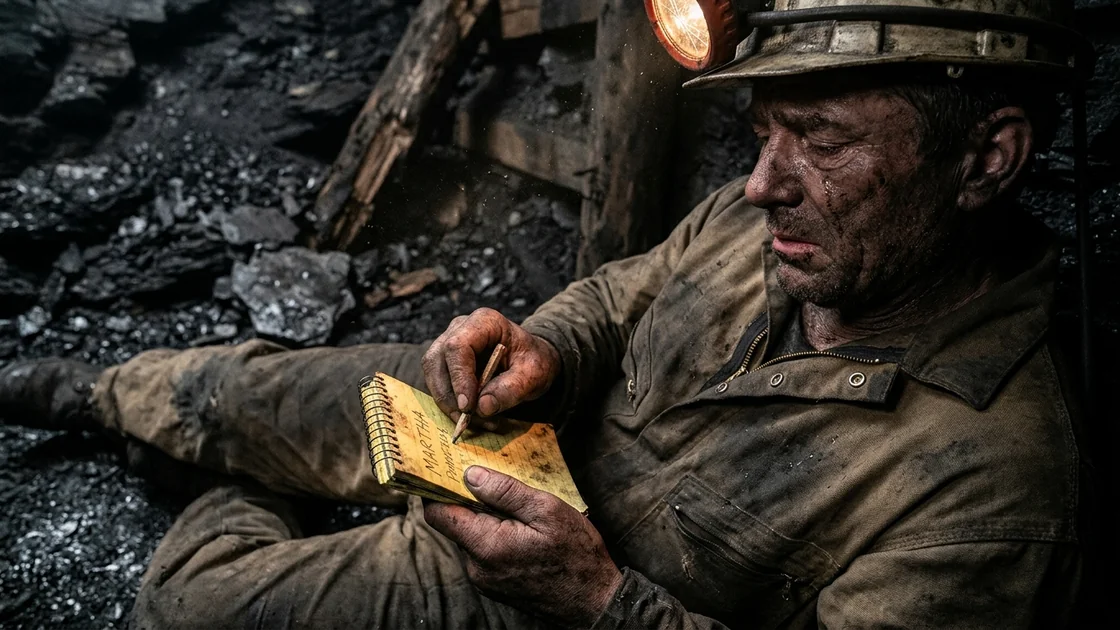
Arthur Pendelton lies pinned beneath a collapsed timber and a mound of black shale in the depths of Seam Four, nursing a shattered tibia as his cap lamp slowly dies. In the suffocating darkness of the Appalachians, with no guarantee of rescue, the gruff fifty-two-year-old coal miner is forced to confront a pain far sharper than his broken bone: the memory of every harsh, bitter, and cruel word he ever spoke to his patient wife, Martha, and his estranged children, Caleb and Lily. As the oxygen thins and the cold seeps into his marrow, Arthur meticulously relives decades of misplaced anger, realizing too late that the walls he built around his heart were far more impenetrable than the mountain currently burying him alive.
The mountain did not roar when it came down. It sighed. It was a heavy, settling exhalation of millions of tons of ancient swamp and compressed stone deciding, all at once, that the hollow spaces men had carved into its belly had been there long enough.
One second, Arthur Pendelton was checking the roof bolts near the working face of Seam Four, his hammer clinking against steel plates with the reassuring ring of tensioned rock. The next second, the air pressure spiked so violently it popped his eardrums, blowing his hard hat off his head. A crib timber the thickness of a butcher’s block snapped with the sound of a cannon shot. The ceiling peeled away in a great, flaking slab of kettle-bottom shale, and the world dissolved into a churning soup of pulverised carbon and noise.
When the dust finally began to settle—an agonizingly slow process in a dead-end drift with the ventilation curtains blown to rags—Arthur discovered he was still breathing. His respirator had been ripped from his neck, so every shallow gasp pulled fine, greasy particulate deep into his throat. He spat black slime onto his chin.
He tried to roll onto his stomach, and the dark behind his eyelids exploded into blinding white.
A noise tore out of him that he didn't recognize as his own voice. It was thin, reedy, and wet. He reached down with trembling, gloved hands, feeling along the canvas of his coveralls until his fingers met the jagged edge of a roof slab resting across his right calf. Beneath the rock, his leg was twisted at a sickening, impossible angle. Even through the stiff leather of his steel-toed boots and the heavy denim of his trousers, he could feel the sharp, distinct tenting of his tibia pressing against his skin. It hadn't quite broken through the flesh, not yet, but any movement made the fractured ends grate together like dry millstones.
"Easy," he whispered to the dark. His voice sounded hollow, swallowed immediately by the close walls. "Easy now, Artie. Don't move it."
His cap lamp had survived the fall, though the lens was cracked, casting a spiderwebbed crescent of weak yellow light across the rubble three feet from his nose. The battery pack on his hip was warm, pinned awkardly beneath his bruised ribs. He had maybe ten hours of charge left on the main filament, another twenty on the secondary dim bulb if he switched it over.
He reached up and clicked the switch to the low setting. The yellow beam shrank to a dull, amber glow, barely enough to illuminate his own chalky knuckles.
Silence rushed in to fill the space left by the light. It wasn't a peaceful silence. It was the heavy, pressurized silence of twelve hundred feet of overburden—sandstone, slate, clay, and oak roots—pressing down on the timber cribbing around him. Every few minutes, the rock ticked. Tink. Tink. The sound of the mountain adjusting its weight, settling into its new configuration.
Arthur lay back against the cold, damp floor of the drift. The stone leached the heat from his back with terrifying efficiency. Pain radiated from his lower leg in rhythmic, sickening waves, syncing with the frantic thudding of his heart. Thump-grind. Thump-grind. Sweat broke out across his forehead, instantly turning icy in the fifty-five-degree air of the deep seam.
"They know where I was," he told the roof above him. "Miller knew I was coming back to check the bolts on Four. The belt boss knew."
Did they? Shift change had been twenty minutes away when the roof let go. Half the crew was already riding the mantrip back toward the elevator shaft. The noise of the collapse would have registered on the surface monitors, and the dust cloud would have rolled down the main haulageway like a black freight train, triggering every methane and particulate alarm in the sector. They knew the roof had fallen.
Whether they thought anyone was still back here, behind three hundred feet of choked drift, was another matter entirely. And even if they knew, digging through a major fall in a low-coal seam where the roof was already rotten took days. Men had to build cribs by hand, inch by inch, timber by timber, shoving jacks into the muck while the mountain threatened to drop the rest of the sky on their heads.
Arthur closed his eyes. The pain in his leg was a roaring furnace, demanding all his attention, screaming at him to panic, to thrash, to claw at the unyielding slate until his fingernails tore off. To keep from screaming, he had to put his mind somewhere else. He had to build a crib inside his own head to hold up the weight of the terror.
He tried to picture his house. The white clapboard two-story at the edge of Hocking Valley, the one with the sagging porch he’d promised to jack up three summers ago. He tried to picture the warm yellow light of the kitchen window as it looked when he pulled into the gravel driveway after a double shift.
Instead, he heard his own voice.
“What the hell is this supposed to be, Martha? It’s dry as cinders. A man works ten hours in the dark eating rock dust, he expects something he doesn't have to choke down with a gallon of water.”
Arthur flinched in the dark, a spasm running through his shoulders that jarred his broken leg and made him whimper.
That had been this morning. Not ten years ago, not some ancient sin faded to sepia by time. Twelve hours ago. Technically, it had been breakfast for the rest of the world, though for Arthur, coming off the hoot-owl shift, it was supper. Martha had made pork chops. She’d stood at the stove in her faded blue housecoat, her gray hair pinned up hastily, her ankles swollen the way they got when the humidity was high. She had fallen asleep at the kitchen table waiting for him to get home at four in the morning, and the chops had stayed in the warming oven twenty minutes too long.
She hadn't argued back. That was the worst part. In the early years of their marriage, Martha had possessed a quick, bright temper that matched her auburn hair. She would have thrown the skillet in the sink and told him to fry his own damn hog if he didn't like her cooking.
Somewhere along the line, he had ground that out of her. Just like the continuous miner chewed through the coal face with its tungsten teeth, Arthur had chewed through her spirit, year after year, shift after shift, until there was nothing left but quiet compliance.
This morning, she had just looked down at the linoleum floor, her small, veined hands tightening on the edge of the dish towel. "I'm sorry, Artie," she had murmured. "I dozed off. I can scramble you some eggs real quick."
And what had he said? Had he softened? Had he looked at the dark circles under the eyes of the woman who had washed the coal grease out of his clothes for thirty-one years and told her not to bother, that the meat was fine with a bit of gravy?
No. He had shoved his chair back so hard the metal legs screeched across the floor. “Forget it. I’m going to bed. Leave a man to starve in his own house.”
"God," Arthur breathed into the stale air of Seam Four. A tear, hot and stinging, leaked from the corner of his eye and tracked through the coal dust caked on his temple. "Oh, God, Martha."
Why had he said it? He hadn't even been that hungry. He had just been tired. His lower back had been aching from wrestling a fouled cable on the shuttle car, and his knees were stiff with the creeping arthritis that claimed every miner who spent his youth working forty-eight-inch seams on his hands and knees. He hurt, so he wanted someone else to hurt. It was the ugly, unspoken arithmetic of his entire adult life: if Arthur Pendelton was miserable, nobody under his roof was allowed to be at peace.
The mountain ticked again. Tink. A trickle of fine gravel pattered down onto his chest, sounding like dry rain on a tin roof.
The leg throbbed, a deep, sickening ache that made his stomach roll with nausea. He was thirsty already. His canteen was clipped to the tool belt he’d taken off and hung on a rib pin twenty feet away, right where the brunt of the fall had come down. It was buried under five hundred tons of slate now. His mouth tasted of copper and pulverized stone.
He tried to shift his hips to take the pressure off his tailbone, and the broken ends of his tibia ground together again. A shriek tore from his lungs, bouncing off the tight rock walls and mocking him with its helplessness. For five minutes, he could do nothing but pant, his fingernails gouging into the damp clay of the mine floor, his whole body shaking with the onset of shock.
When the white stars faded from his vision, the voice in his head was waiting for him. It was ruthless. It didn't care that he was dying; in fact, the certainty of his death seemed to have broken the lock on a vault he’d spent thirty years welding shut.
“You’re a soft boy, Caleb. Soft in the hands and soft in the head. You think the world cares about your little drawings? You think the electric company takes charcoal sketches when the bill comes due?”
Caleb had been fourteen. He was sitting on the back steps of the porch, a pad of cheap newsprint balanced on his knees, drawing the old tipple at the abandoned Number Two mine down the hollow. It had been a good drawing. Even Arthur, who knew nothing of art and cared less, had seen the uncanny accuracy in the way the boy captured the sag of the rusted corrugated iron and the skeletal angles of the conveyor housing against the weeds.
Arthur had come home from a union meeting where they’d been told the company was cutting health benefits for retirees. He was forty years old then, already feeling the pinch of time, terrified of the day his body would give out before the mortgage was paid. Seeing his son sitting there in the golden afternoon light, his hands clean—except for the smudge of artist’s charcoal on his thumb, a mockery of the real coal dust Arthur wore like a second skin—had triggered a blind, surging fury in Arthur’s chest.
He had snatched the pad out of Caleb’s hands.
He could still see his son’s face. Caleb had his mother’s eyes—wide, hazel, too quick to show hurt. The boy had stood up, not in defiance, just in startled fear, reaching out a hand. "Dad, don't, that's for Mr. Henderson's class—"
“Mr. Henderson ain't gonna feed you when you're twenty,” Arthur had snarled. He hadn't torn the paper. That would have been too dramatic, too easy to point to as an act of madness. Instead, he had just dropped it intentionally into the mud puddle beside the rain barrel, right where the downspout leaked, and stepped over it on his way into the house, letting the heel of his dirty work boot catch the corner of the pad and press it deep into the wet red clay. “Go get the weed hook and clear out the ditch behind the garage. Do something useful with your back before you forget how.”
In the freezing dark of the coal seam, Arthur lifted his dirty hand and pressed the heel of his palm against his forehead. "I kept it," he whispered to the rock. "Caleb, I got it out of the mud."
It was true, in the most cowardly way possible. That night, after Martha and the kids were asleep, Arthur had gone out to the porch with a flashlight. The guilt had been a sour knot in his belly. He had picked the sodden pad out of the mud, wiped the worst of the clay off the back with an old rag, and torn out the top sheet—the drawing of the tipple. The bottom corner was ruined, stained permanently brown and scarred by the waffle-print of his boot heel, but the drawing itself was mostly intact.
He hadn't given it back to the boy. Giving it back would have meant admitting he was wrong. In Arthur Pendelton’s house, the father was never wrong. The father was the law, the provider, the martyr who went down into the black earth every day so they could breathe the sweet air on the surface. To apologize was to show weakness, and if he showed weakness, the whole fragile structure of his authority would collapse like an unbolted roof.
So he had hidden the torn, mud-stained drawing inside the metal casing of an old broken radio on the top shelf of his workbench in the garage. As far as he knew, it was still there, sitting in the dark among rusted coffee cans full of bent nails and dried-up cans of grease.
Caleb had cleared the ditch that evening. He had worked until dark without saying a word. And he had never drawn on the porch again. If he drew at all after that, he did it behind the closed door of his bedroom, with a chair propped under the knob.
When Caleb turned eighteen, the day after high school graduation, he packed two duffel bags, loaded them into the back of a rusted Honda Civic he’d bought with money earned bagging groceries in town, and drove to Columbus. He didn't ask for a dime. He worked nights at a UPS warehouse and put himself through a two-year graphic design program at a community college. He lived in Chicago now. He had a wife named Sarah whom Arthur had met twice, and a three-year-old boy named Leo whom Arthur had only seen in photographs Martha kept stuck to the refrigerator with little plastic fruit magnets.
Every Christmas, Caleb called the house. He always called at two in the afternoon on Christmas Day, because during the years when the mines ran holiday maintenance shifts, two o'clock was when Martha was guaranteed to be home alone while Arthur was either at the pit or sleeping off a shift.
When Arthur was home, Martha would talk on the phone for forty minutes, her voice rising with a lightness and joy Arthur never heard when she was speaking to him. She would laugh. She would ask about Leo’s teeth, about Sarah’s sister, about the snow off Lake Michigan. Then, inevitably, a tense silence would fall over the kitchen.
"Hold on, sweetie," Martha would say, her voice dropping an octave, the lightness evaporating. "Your dad’s right here. Let me put him on."
And she would hold the receiver out to Arthur, her eyes pleading with him—just once, Artie, just say something warm, ask him how his job is, tell him you miss him.
Arthur would take the phone as if it were a dead rat. He would clear his throat, his chest tightening with a mixture of fierce pride he didn't know how to voice and a festering resentment that his son didn't need him anymore.
“Yeah. Caleb.”
"Hey, Dad. Merry Christmas."
“Yeah. Same to you. Roads bad up there?”
"Not too bad. They salt pretty heavy here. How's the truck running?"
“Needs a water pump. I’ll get to it Saturday. Don't let those city mechanics rob you on antifreeze, they thin it out with tap water if you don't watch 'em.”
"Sure, Dad. I'll watch 'em. Well... I'll let you guys get back to your dinner."
“Alright. Put your mother back on.”
Thirty seconds. That was all he could manage. Every word clipped, defensive, a tiny stone added to the wall between them. Last Christmas, when he handed the phone back to Martha, he had muttered, loud enough for Caleb to hear through the receiver before Martha got it to her ear: “Boy talks like a radio announcer now. Too good for the valley.”
Why? Why had he said that? In the crushing dark of the mine, with his leg ballooning inside his boot until the leather felt like an iron maiden, Arthur didn't have the luxury of his usual excuses. He couldn't blame the union, or the coal company, or his bad back.
He had said it because Caleb’s voice on the phone sounded happy. It sounded free. Caleb had escaped the shadow of the tipple, and instead of rejoicing that his son wouldn't die of black lung at sixty or get crushed under a slate fall at fifty-two, Arthur had hated him for it. He had wanted Caleb to validate his own miserable choices by making the same ones. When the boy chose light over the dark, Arthur took it as an insult.
"I'm proud of you," Arthur croaked. The words scraped against his dry palate. The dust was still thick enough to taste. He spoke louder, his voice cracking against the low slate ceiling three feet above his face. "Caleb! I'm proud of you, boy! You did right getting out!"
The rock didn't care. The rock just pressed down on his shin, a cold, dead weight that seemed to grow heavier with every passing minute.
His foot was going numb now. In a way, it was a mercy, taking the sharp edge off the agony where the bone had snapped, though the deep, sickening ache in his knee and thigh remained. He knew enough first aid from forty years of MSHA safety meetings to know what the numbness meant. The swelling inside the heavy boot was cutting off the circulation, or the slab of shale had pinched the main artery behind his knee. Compartment syndrome. Crush syndrome. If they didn't lift this rock off him in the next few hours, the tissue in his lower leg would begin to die. Toxins would pool in the trapped blood—potassium, myoglobin, the poison of his own decaying muscle. Even if a rescue crew broke through tomorrow and levered the stone off him, the sudden rush of poisoned blood back to his heart could stop it instantly.
He was going to die in this hole, or he was going to leave it with one leg.
“Look at you. Walking around here like a streetwalker from Wheeling. Go wash your face before I take a belt to you.”
A sob caught in Arthur’s throat, hitching his chest and sending a fresh lance of fire down his right side.
Lily.
If Caleb had taken his beatings in silence and retreated behind locked doors, Lily had fought back. She had inherited the fire Martha had lost, mixed with Arthur’s own stubborn iron. For four years, from the time she turned fourteen until the night she left, the house in Hocking Valley had been a war zone.
The memory that surfaced now, dragged up from the muck of his conscience by the certainty of his doom, was from a Friday evening in October. Lily was sixteen. She was going to a homecoming football game with a group of girls from her class. She had come down the stairs wearing a pair of jeans that were a little too tight and a dark red lipstick she’d bought at the drugstore in Nelsonville.
She had looked beautiful. That was the truth that Arthur had buried under six feet of rage at the time. She had looked like Martha did in the summer of 1978, when Arthur was nineteen and courting her at the county fair—all bright eyes, sharp cheekbones, and a terrifying, vibrant life that made a young man’s heart hammer against his ribs.
Looking at his sixteen-year-old daughter, Arthur hadn't seen a girl excited for a ball game. He had seen the miners he worked with. He had heard the way the young bucks in the bathhouse talked about the local girls while they scrubbed the grease off their bellies under the communal showers—crude, filthy, Laughing boasts about backseats and riverbanks. The thought of some nineteen-year-old coal-camp trash looking at Lily the way those men talked had filled Arthur with a cold, murderous panic.
If he had been a better man, he would have told her she looked pretty, handed her five dollars for a soda, and quietly asked her to put on a sweater because the October wind got sharp after sundown.
Instead, he had called his own daughter a whore in her mother’s kitchen.
He remembered the way the smile had died on Lily’s face. She had been spinning her mother’s car keys on her finger, humming a song from the radio. When he spoke, she froze. The keys clattered onto the countertop.
"It's just lipstick, Dad," she had said, her voice trembling, trying to hold onto her dignity. "Everybody wears it."
“Everybody ain't my daughter,” he had roared, stepping into the kitchen, smelling of diesel fuel and cheap beer from the two cans he’d drunk in the garage while greasing the truck’s leaf springs. “You think I don't know what you're advertising with that paint on your mouth? You're cheapening yourself! You look like trash, Lily. Pure river-bottom trash.”
"Artie, stop it!" Martha had stepped between them, a rare flash of her old fierceness returning when her children were cornered. "She's going with Betty Miller's girls! There's nothing wrong with how she looks!"
“You stay out of it!” he had barked at his wife, pointing a grease-stained finger in her face. “You’re the one letting her run wild while I’m underground breaking my back! Neither one of you has got the sense God gave a mule!”
Lily hadn't gone to the game. She had run back up the stairs, slamming her bedroom door so hard a framed print of the Last Supper in the hallway jumped off its nail and shattered on the floorboards. She had scrubbed her face with a dry washcloth until her lips were raw and bleeding, and she had stayed in her room all weekend.
Two years later, she fell in love with a boy named Travis who played guitar in a country band that toured the VFW halls along the Ohio River. Travis had long hair, drove a van with a rusted-out muffler, and didn't know which end of a shovel went in the dirt. Naturally, Arthur treated him like a leper. When Lily came home at eighteen and told them she was pregnant, and that she and Travis were moving to Nashville where his uncle ran a recording studio, Arthur hadn't just yelled.
He had gone quiet. A cold, lethal quiet.
He had walked upstairs, pulled Lily’s drawers out of her dresser, and dumped them out the second-story bedroom window onto the front lawn in the pouring rain. Sweaters, high school yearbooks, her baby blanket, tiny plastic horses she’d collected when she was ten—all of it scattered in the wet grass like debris from a plane crash.
“Don't come back,” he had told her from the top of the porch steps while she sobbed on her knees in the mud, trying to stuff her soaked clothes into plastic garbage bags while Martha wept and tried to hold an umbrella over her. “You made your bed with that drifter, you lie in it. You ain't got a home here no more. You're dead to me.”
You're dead to me.
In the black belly of Seam Four, Arthur began to hyperventilate. The air was getting thin, or maybe it was just the panic closing his throat. He clawed at the collar of his coveralls, ripping the heavy brass snap open.
"I didn't mean it," he gasped, his voice echoing back to him from the wall of rubble three feet away. "Lily! Baby girl, I didn't mean it!"
How could a man look at the flesh of his own flesh—the little girl who used to sit on his knee on Sunday mornings and comb his hair with a plastic fork, the girl who used to bring him dandelions wrapped in wet paper towels when he came out of the pit—and tell her she was dead to him?
And the worst part, the part that made him wish the rest of the ceiling would come down right now and crush his skull like a walnut, was what happened after Travis left her.
Because Arthur had been right about Travis. That was the poison that kept Arthur’s pride alive for so many years: he had been right. Six months after the baby—a little girl named May—was born in a trailer outside Chattanooga, Travis vanished with a waitress from a Waffle House, leaving Lily with two hundred dollars in an envelope and three months of back rent.
Martha had wanted to go get her. Martha had begged him, on her knees beside his recliner, holding the telephone bill that showed the collect calls from Tennessee. "Artie, please. Let me take the truck. She's working at a laundromat, she's got nobody to watch the baby, she's nineteen years old! Let me bring her home!"
Arthur had stared at the television screen, his jaw set like concrete, his heart hammering with a sick, twisted triumph warred over by shame. He knew he had gone too far the night he threw her clothes on the lawn. If Lily came back now, he would have to look at her every day and remember what he had done. He would have to look at that baby and know he had wished them both into the gutter. His pride couldn't bear the sight of his own sin walking around his kitchen.
“She made her choice,” he had said, turning the volume up on the ball game. “She wanted to be a grown woman, let her figure it out. That truck doesn't leave this driveway. You send her a dime of my money, Martha, and I’ll close the bank account.”
Martha had sent the money anyway. He knew she had. She had sold her grandmother’s silver tea set to an antique dealer in Athens, and she had started taking in ironing for the schoolteachers in town, hiding the five- and ten-dollar bills in a flour canister at the back of the pantry, mailing money orders from the post office on foot so the truck’s odometer wouldn't give her away.
Arthur had found the money orders' stubs once, tucked inside an old coat pocket in the hall closet. He hadn't said a word. He had put them back and pretended he didn't know, allowing himself to feel magnanimous for not beating his wife down over her rebellion, while still maintaining the iron fiction of his righteousness.
Lily never came home. She stayed in Tennessee. She worked two jobs, got her GED, went to nursing school at night while an old woman in the trailer park watched little May, and now she was an ER nurse in Knoxville. She was thirty-one years old. Little May was thirteen—a teenager. Arthur had never laid eyes on his granddaughter. Not once. Lily wouldn't even send photographs to the house if she thought Arthur might look at them; she sent them to her Aunt Clara’s house down the road, and Martha walked down there on Tuesday afternoons to look at them over coffee.
Arthur’s cap lamp flickered.
It wasn't a dramatic dimming; just a tiny, momentary stutter in the amber glow, a reminder that the acid in the battery pack on his hip was slowly exhausting its chemistry.
The cold was deeper now. It wasn't just on his skin; it was inside his chest, chilling the blood as it pumped through his heart. He couldn't feel his right leg below the knee at all anymore. It felt as though his body ended at the thigh, and below that was just a massive, throbbing toothache made of stone and iron.
He listened hard, holding his breath to stop the rasping whistle in his dust-coated windpipe.
Tink.
Nothing else. No distant thrum of a continuous miner chewing through the fall. No muffled thud of hydraulic jacks being set. No clanking of steel roof bolts being driven into the ceiling down the haulageway.
How big had the fall been?
Before the roof let go, he had noticed the ribs—the side walls of the coal pillar—sloughing off in big, greasy slabs. "Rib rash," the old-timers called it. It meant the pillar was taking too much weight from the mountain above, squeezing out sideways like toothpaste under a boot. He had been about to walk back to the phone by the feeder-breaker and call the shift boss to tell him Seam Four was squeezing, that they needed to pull the equipment back before the whole panel rode down.
If the pillars had crushed out all the way back to the main entry, the fall wouldn't be thirty feet long. It would be two thousand feet long. The entire section would have pancaked, dropping fifty-foot-thick sandstone ledges across the entries, sealing him inside a tomb of solid rock that a dozen crews working for a month couldn't breach.
He was alone. Nobody was coming in time.
The realization didn't bring panic this time. It brought a strange, heavy clarity, like the clear water that sometimes pooled in the old, abandoned workings of a mine after the mud had settled for fifty years.
In that clear water, he saw himself. Not the man he pretended to be at the union hall—Artie Pendelton, thirty-year pin, tough as hickory, a man who paid his debts, kept his yard mowed, and never took a handout from the government. That man was a ghost, a lie built out of arrogance and calloused skin.
The real Arthur Pendelton was a bully. A small, frightened, angry man who had taken the crushing weight of the mountain home with him in his lunch bucket every single day and dumped it on the people who loved him because they were the only ones too small or too gentle to hit him back.
He thought about the dog.
"Oh, Jesus," Arthur whispered, turning his face into the gritty clay of the floor. "Not the dog. Please, God, don't make me think about the dog."
His mind didn't listen. The vault was open, and the ghosts were marching out in order.
It was a beagle mix named Buster. Caleb had found him shivering in a culvert behind the high school when Caleb was ten and Lily was八. The dog was half-starved, had a crooked tail that had been broken and healed wrong, and one ear torn by a raccoon or a stray tom. Martha had begged Arthur to let them keep him.
Arthur had hated that dog from the first day, simply because the children loved it effortlessly, without the dog having to earn it. When Caleb and Lily heard Arthur’s truck turn into the gravel drive, they stopped laughing and went inside to make sure their chores were done so he wouldn't yell. When Buster saw the kids come home from the school bus, he went frantic with joy, baying and rolling on his back in the clover.
One Saturday in November, Arthur had spent four hours under the hood of Martha’s old Chevy Caprice, trying to replace a rusted-out exhaust manifold. Two of the bolts had snapped off flush with the engine block. He had skinned his knuckles to the bone when the wrench slipped, he had rust flakes in his eyes, and it was starting to sleet. He was freezing, bleeding, and furious at the cheap Detroit steel, at the cold, at the fact that he couldn't afford to take the car to a garage like the mine superintendent did.
He had walked out of the garage to get his tap-and-die set from the basement, and Buster had been trotting across the yard with one of Arthur’s good leather work boots in his mouth—the new Red Wings he’d just paid ninety dollars for on credit at the company store, left on the back porch to dry after he oiled them. The dog hadn't chewed it much, just carried it into the wet grass and left tooth marks on the tongue.
Arthur didn't yell. He didn't throw a wrench.
Wait—yes, he did. He had walked over to the woodpile, picked up a piece of split hickory stove-wood, called the dog to him in a calm, quiet voice—because Buster still trusted him then—and when the little beagle trotted up, tail wagging crookedly, dropping the boot at Arthur’s feet as if presenting a prize, Arthur had swung the hickory stick with both hands.
He hadn't killed the dog. He had broken its left hind leg and cracked two of its ribs.
He could still hear the sound Buster made. And worse than the dog’s high, yipping scream was the sound Lily had made from the kitchen window where she had been watching while drying the lunch dishes.
Arthur hadn't taken the dog to the vet. A vet cost fifty dollars, and fifty dollars was groceries for a week. He had splint-bound the dog's leg himself with two pieces of pine lath and friction tape in the woodshed while the dog whimpered and licked his bloody knuckles—licked his hand while he did it—and then he had chained Buster to the doghouse behind the coal shed in the sleet.
The dog lived another six years, walking with a stiff, swinging hop in its back hip. It never came within ten feet of Arthur again. Whenever Arthur walked into the backyard, Buster would slink under the porch, his tail tucked tight against his belly, his brown eyes watching Arthur from the dark between the cinder blocks with quiet, permanent terror.
And that was how his children had looked at him, too, after that day. He hadn't just broken the dog's leg; he had shown Caleb and Lily what lived inside their father. He had shown them that his love—if you could even call that possessive, suffocating grip love—was completely conditional on his mood, and that mercy did not live in their house.
Look at him now.
Arthur let out a laugh that turned into a wet, hacking cough, spraying black mucus onto his chin. The irony was so sharp it felt like a roof bolt driven through his breastbone.
Here he lay in the dark, in the cold mud, with his hind leg snapped in two by a blind, unfeeling force he couldn't fight. He was Buster in the sleet behind the coal shed. Only God hadn't even bothered to splint it with pine lath. God had just dropped the hickory stick on him and walked back inside the house.
"Fair," Arthur rasped, his tongue thick and dry as leather inside his mouth. "That's fair, Lord. I got no complaint on the math."
He did have a complaint, though. Not for himself. He deserved the slate. He deserved the slow creep of the cold and the poison pooling in his calf.
His complaint was that Martha was going to have to live with the memory of those pork chops.
He knew his wife. He knew the deep, quiet grooves of her mind after thirty-one years of sleeping beside her in the same double bed. When the company men in their clean white hard hats and dark suits drove up the hollow to the white clapboard house—maybe tonight, maybe three days from now when they finally dug to his body—and when they took off their hats on the sagging porch and told her that Artie wouldn't be coming home from Seam Four, Martha wouldn't rejoice that her warden was dead.
She would weep until her heart broke. And in the long, silent nights that followed, sitting alone in that kitchen with the ticking clock, she wouldn't remember the thirty years of his meanness. Because she was good, and because her heart was made of something soft and forgiving that the coal dust had never managed to blacken, she would blame herself for his last morning on earth.
She would sit at that linoleum table and think: The last thing I ever did for him was burn his breakfast. He went down into the dark hungry and angry because I fell asleep.
"No," Arthur whimpered, panic finally breaking through the numbness again, far worse than the fear of dying. "No, Martha, don't you think that. Don't you dare think that."
He tried to sit up, some mad instinct telling him he could claw his way through two thousand feet of sandstone with his bare fingers if it meant getting back to that kitchen for thirty seconds. The movement wrenched his trapped leg. The jagged end of the tibia finally pierced the skin inside his jeans. He felt the hot, slick gush of blood soaking into his wool sock, pooling down into the heel of his boot.
The agony was absolute. It was a white-hot wire pulled through his spine. He didn't even have the breath to scream; his mouth just opened in a silent O, his head thrashing back against the floor, banging his bare skull against a lump of coal until the world spun away into merciful, roaring black.
When he came back, the light was almost gone.
The cap lamp wasn't yellow anymore. It was the color of a dying ember in a grate, a faint, reddish-orange smudge that barely showed him the tip of his own nose. The air had changed, too. It smelled sweetish and heavy, and his head throbbed with a dull, iron band of pressure right behind his eyebrows.
Blackdamp. Carbon dioxide pushing out the oxygen in the unventilated pocket, or methane bleeding slowly out of the fractured coal ribs. In the old days, miners brought canaries. In the modern mine, Arthur had a digital multi-gas detector clipped to his belt—the belt that was buried twenty feet away with his water canteen.
He didn't need a meter to tell him the air was going bad. His lungs were working like bellows just to get half a breath, sucking deeply at the stagnant, dust-choked pocket, never quite feeling full.
He was delirious now, floating on the surface of the pain rather than drowned beneath it. The cold had won; he had stopped shivering an hour ago, which he dimly knew was a bad sign. He felt strangely warm, tucked under a heavy, dark quilt of stone.
In the red-orange gloom of the dying bulb, he thought he saw the kitchen table.
Not in his head this time. Right there, where the slab of kettle-bottom shale met the crushed timber crib. He saw the chrome legs of the chairs, the ones with the cracked yellow vinyl seats that pinched the back of your thighs in the summer if you wore shorts.
"Martha?" he whispered. His lips were cracked, crusted with dried black spit.
She wasn't there, of course. It was just a shadow cast by a splintered wedge of oak cribbing.
He needed to write it down.
The thought hit him with the force of a revelation. That was what trapped miners did! He had heard the stories since he was a boy sitting on his grandfather’s knee in the company patch after the 1968 Farmington disaster. When the air ran out behind the barricades, the men took chalk, or belt nails, or the sharp corners of their brass check-tags, and they scratched notes to their wives on their dinner buckets. Tell Molly I love her. Went peaceful. Give the boy my watch.
When the recovery crews finally dug him out—whether it took a week or a month, coal miners did not leave their dead in the hole if it was humanly possible to bring them up—they would find the note. They would give it to Martha. She would know the pork chops didn't matter. She would know he was sorry.
Arthur patted his coveralls with clumsy, wooden hands that he couldn't quite feel.
His lunch bucket was back by the feeder-breaker with the rest of the crew's gear. His pockets? He dug into his left breast pocket. Empty, save for a crushed pack of Marlboros with two bent cigarettes inside and a plastic disposable lighter. He didn't dare flick the lighter; if methane had bled into this pocket from the broken seam, a single spark would turn the drift into a blowtorch and roast him before he could write a single letter.
His right breast pocket. He fumbled with the brass zipper, his frost-numbed fingers slipping off the tab three times before he hooked a thumbnail into it and yanked it down.
Inside was his tally book—a tiny, spiral-bound pad of yellow waterproof paper the company gave the roof-bolters to record the depth of test holes and the torque on the bolts. And clipped to the spiral wire was the stub of a flat carpenter’s pencil.
A sob of pure gratitude shook his chest. "Thank you," he breathed. "Thank you, Jesus."
He pulled the pad out. It was three inches wide by five inches long, greased with coal dust and sweat from riding over his heart for two months. He popped the pencil loose. The lead was dull, rounded down almost to the cedar wood, but there was enough to mark.
He held the tiny yellow pad six inches from his face, tilting it to catch the dying red glow of his cap lamp. His hands were shaking so violently from shock and blood loss that at first he couldn't get the pencil to touch the paper. He had to brace his elbows against his ribs, locking his wrists together like he was aiming a pistol.
What do you write when you have thirty years of rot to clear away and two inches of pencil lead?
He flipped past the pages of torque numbers and roof-bolt tallies until he found a clean sheet near the back. He pressed the flat lead against the paper.
Martha, he wrote. The letters were huge, jagged, wandering across the tiny blue lines like spider tracks.
He stopped. I'm sorry about the pork chops sounded insane. If that was all he wrote, people would think the lack of oxygen had addled his brain before he died. He had to go deeper. He had to tell the truth, the whole ugly truth, so that when she read it, she could finally put down the heavy sack of stones he had made her carry since she was nineteen years old.
He bit his lip until he tasted fresh blood under the coal dust, steadying his hand through sheer, stubborn miner’s grit.
Martha, It wasn't the chops. You never did a wrong thing to me in 31 years. I was just a mean man. I was scared of getting old and broke and I took it out on you because I knew you wouldn't leave me. You should have left me.
He stared at that sentence in the faint red light. You should have left me. It was the truest thing he had ever thought. Any woman with an ounce of self-preservation would have packed the kids into the Chevy while he was underground in 1992 and driven away. She had stayed because she took her vows in the little Methodist church up the hollow seriously, and he had used her own goodness as a whip to beat her with.
He turned the tiny page. The pencil lead grated against the waterproof paper, catching on a splinter of wood casing. He bit the wood away with his teeth, spitting cedar chips onto his chest, exposing another eighth of an inch of graphite.
I love you. I don't know if a man like me knows how to love right, but what I had was yours. Don't grieve hard over me. Take the death benefit and the pension and go live near Lily or Caleb. Sell the house. Don't fix the porch, let the next man do it.
He turned the page again. The red filament in his lamp was pulsing now, a slow, dying heartbeat of light. Dim. Dimmer. Dim.
He had to hurry. His breathing was shallow, panting like a dog in July. Black spots were swimming across the yellow paper, eating the words as fast as he wrote them.
Caleb, I kept the drawing of the Number 2 tipple. It is inside the old Zenith radio on the top shelf in the garage. I was jealous that you could make something pretty out of this ugly place and I couldn't. You are a better man than me. Be good to your boy. Never talk to him like I talked to you.
His thumb slipped, and the pencil snapped. Not the lead—the wooden stub broke in half where he was gripping it too tight. He dropped the bottom half into the dark on his chest and couldn't find it. He pinched the remaining one-inch stub between his thumb and forefinger, his muscles cramping fiercely.
One more page. He couldn't leave Lily out. If he died with Lily thinking she was still dead to him, he would go straight to hell, and he wouldn't even need the devil to push him; he’d walk in himself.
The cap lamp went out.
It didn't flicker this time. The chemical reaction in the battery simply hit its threshold and died.
The darkness that dropped over Arthur Pendelton was not the darkness of a bedroom at night, or a moonless hollow in the woods. It was the absolute, primordial blackness of the earth's crust—a dark that had existed for three hundred million years before the first human eye ever opened to see the sun. He waved his hand an inch from his nose and saw nothing. Nothing at all.
"No!" Arthur cried out, his voice thin and frantic. "Just a minute! Just one more minute, God! Please!"
He clicked the switch on the battery pack back and forth, back and forth. Click-click. Click-click. Nothing. Not even a red spark in the filament.
He lay in the pitch black, sobbing dry, rasping sobs that tore at his throat. He hadn't written Lily's name. Martha would get her page, Caleb would get his, and Lily would look at the pad and think that even at the very end, buried alive under a mountain, her father had held onto his grudge. It would poison her forever.
"Think, Artie, think," he begged himself.
He didn't need to see to write. He knew how big the pad was. His left thumb was still resting on the spiral binding. He carefully folded the page he had written for Caleb back over the wire, feeling the crisp edge of a fresh sheet beneath his fingers.
He put his left index finger at the very top left corner of the blank page to mark his starting point. He set the tiny stub of the pencil right beside his fingernail.
In the blind dark, guided only by the memory of how letters were shaped when he learned them at the consolidated grade school forty-five years ago, he began to draw the shapes, dragging his left finger down the side of the paper a quarter-inch at a time to keep the lines from overlapping.
L - I - L - Y
He felt the tip of the graphite crumbling. He pressed lighter.
I - A - M - S - O - R - R - Y
He moved his guide finger down a notch.
I - W - A - S - W - R - O - N - G
Down another notch. He was near the bottom of the tiny pad now. His fingers were going numb from the lack of oxygen; it felt like he was wearing thick woolen mittens, trying to write with a pebble.
C - O - M - E - H - O - M - E
He had room for one more line at the bottom edge. He felt the rough perforated edge of the paper with his pinky finger. What could fit in that tiny strip of yellow paper? He thought of the little girl on his knee with the plastic fork in his hair. He thought of the dandelion stems wrapped in wet paper towels.
U - R - M - Y - G - O - O - D - G - I - R - L
The pencil stub slipped from his deadened fingers and rolled away into the shale dust.
Arthur didn't try to find it. Carefully, reverently, as if he were handling the Host at communion, he closed the cover of the tally book. He couldn't get it back into his breast pocket—his arms didn't want to lift that high anymore, and he was terrified that if the roof shifted again while they were digging him out, a rock might tear the pocket off his coveralls and lose the book in the muck.
Instead, he opened his mouth and bit down on the top corner of the waterproof pad, jamming it firmly between his back molars, then folded both of his hands over his chest, clamping his palms over the bottom half of the book resting on his chin. If they found his head, they would find the book.
He let his elbows settle into the dirt.
The pain in his leg was completely gone now. So was the cold. In fact, it felt remarkably like a warm Sunday afternoon in late May, right after the apple trees by the creek dropped their blossoms. The air wasn't suffocating anymore; it just felt thin and sweet, like the breeze on top of Bald Knob when you climbed up there to hunt squirrels in the fall.
He heard a sound.
It wasn't the mountain ticking. It was the screen door on the back porch of the house in Hocking Valley slapping shut against the wooden frame. Thwack-rattle. The spring on that door had been too loose since 1998.
And he smelled coffee. Not the bitter, scorched sludge he drank out of a steel thermos at the dinner hole, tasting of aluminum and stale water. This was Sunday morning coffee, perked on the stove while the sun came through the yellow gingham curtains Martha had sewed when Lily was a baby.
And beneath the coffee, the smell of pork chops frying in lard.
They weren't dry at all. They were sizzling in the cast-iron skillet, brown around the edges, with little slices of onion turning clear in the grease beside them.
"Artie?"
Her voice was so clear he tried to turn his head toward it, forgetting his head was wedged between two slabs of fallen roof. It didn't sound like Martha’s voice from this morning—tired, fifty years old, flat with caution. It sounded like Martha when she was twenty-two, standing by the fence at the bottom of the yard with the baby propped on her hip, waving a dish towel to call him in from the garden before the rain started.
He wanted to answer her. He wanted to tell her he was coming, that he had just stopped to wipe the mud off his boots on the scraper so he wouldn't track red clay across her clean linoleum. He couldn't open his mouth because his teeth were clamped down on the little yellow tally book, holding onto the only good work he had ever done with his hands.
That was alright. She didn't seem to mind that he didn't answer.
In the great, heavy quiet of the mountain, twelve hundred feet below the roots of the oak trees, Arthur Pendelton finally closed his eyes, let go of his anger, and went inside to eat his breakfast.