The Weight of the Span
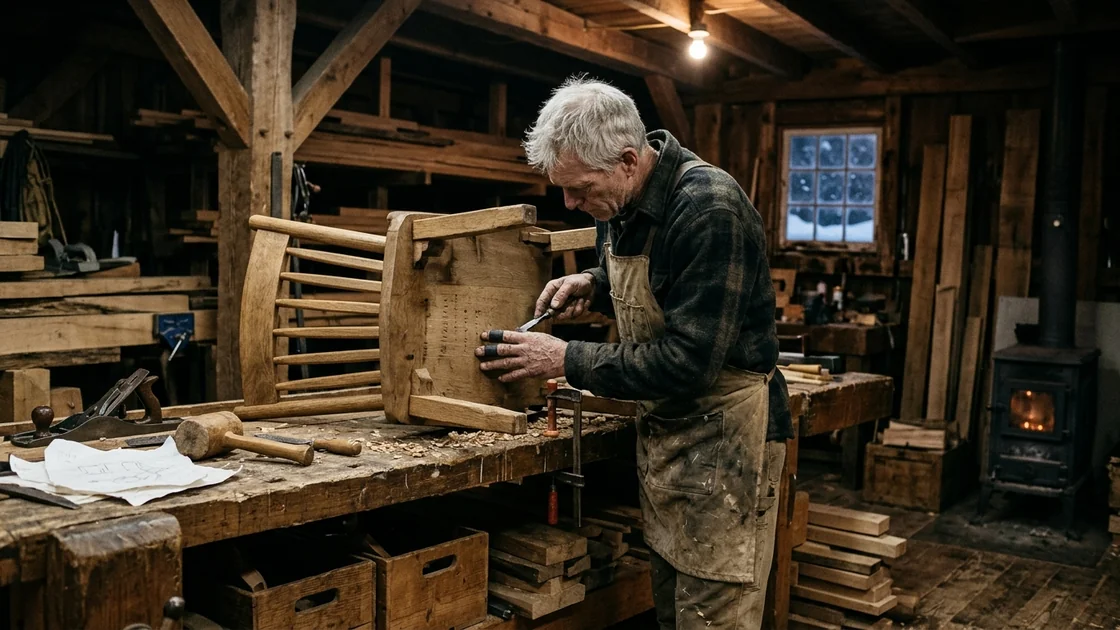
Arthur Pendelton was once a celebrated visionary of modern architecture, revered for his daring ability to make steel and glass appear completely weightless, until the winter night his greatest triumph became a tomb. When the revolutionary cantilevered roof of the Oakhaven Civic Atrium gave way under an unprecedented accumulation of wet snow, it claimed fourteen lives and shattered hundreds more, instantly transforming Arthur’s legacy of brilliance into a monument of fatal hubris. Though the subsequent legal inquiries stopped just short of criminal conviction due to ambiguous building codes regarding experimental tension systems, the court of public opinion—and Arthur's own unforgiving conscience—passed an absolute sentence of guilt. Stripped of his license, abandoned by his peers, and haunted by the mechanical ghosts of his miscalculations, Arthur retreated to a decaying coastal town in Maine to live out a quiet penance of isolation. This is the story of his descent into the crushing mathematics of remorse, his unexpected confrontation with a woman whose life was broken beneath his falling steel, and the agonizing, lifelong process of learning how to carry a dead weight that can never be engineered away.
Part I: The Geometry of Arrogance
Before the sky fell in Oakhaven, Arthur Pendelton believed that gravity was not a law, but an archaic habit of the earth that could be argued away with high-tensile steel and sufficient audacity.
At forty-six, Arthur was the principal partner of Pendelton & Vance, a firm housed on the thirty-eighth floor of a glass needle in downtown Chicago. From his corner office, the city looked like an intricate motherboard of limestone and iron, a grid where other men built boxes because they were afraid of angles. Arthur was not afraid of angles. He despised columns. To Arthur, a vertical support column in the middle of a room was an admission of defeat, a structural stutter that broke the visual poetry of open space. He wanted his interiors to breathe like canyons; he wanted roofs that floated like silk handkerchiefs dropped over a summer breeze.
"Architecture isn't about keeping the rain out, Marcus," Arthur had told his senior structural engineer, Marcus Vance, two years before the tragedy. They were standing over the sprawling birchwood architectural model of the Oakhaven Civic Atrium. "Any mason with a trowel and a plumb line can keep the rain out. We are building the town’s living room. When people walk in here out of a brutal midwestern January, they shouldn't feel like they’re entering a bunker. They should feel like they’re walking under a frozen cloud."
Marcus, a man whose thinning hair and perpetually ink-stained fingers spoke to a life spent worrying about shear forces and bending moments, had adjusted his wire-rimmed glasses. He was looking at the center of the model—a vast, clear-span public plaza covered by an undulating shell of laminated glass and tubular steel trusses. The span covered four hundred feet without a single interior pillar. Instead, the load was transferred outward to four massive, slanted perimeter piers via an intricate web of tension cables that Arthur called the "Gossamer Matrix."
"It’s beautiful, Arthur. Truly," Marcus had said, his voice carrying the cautious cadence that Arthur always found slightly irritating. "The finite element analysis clears the baseline code requirements for District Four. The dead load is remarkably low because of the hollow-core nodes you specified. Look at the deflection ratios here along the central spine, though. Under asymmetric loading—say, a sixty-mile-an-hour gale packing wet drift against the northern parabola—the secondary gusset plates take an enormous amount of eccentric torque."
Arthur had waved a silver drafting pencil over the model, dismissing the phantom wind. "The parabola is aerodynamic, Marcus. It’s designed like an airfoil. The wind won't pack the snow; it will scour the glass clean. That’s the whole point of the reverse-curve camber. If we beef up the gusset plates to eight-inch stock, the nodes become bulbous. They’ll cast heavy shadows across the concourse. People will look up and see ironmongery instead of light."
"We could drop two slender dendritic columns near the amphitheater," Marcus suggested gently. "Just two. Barely twelve inches in diameter. It would cut the span stress by forty percent and give us a massive redundancy factor if one of the primary tension nodes ever fatigued."
Arthur had stared at Marcus as if his partner had suggested painting a mustache on the Mona Lisa. "No columns, Marcus. If we put columns in the atrium, it’s just a shopping mall. The town council hired us to put Oakhaven on the map. They paid for a miracle of engineering, not a warehouse."
Marcus had sighed, rubbing the bridge of his nose. "Then let’s at least use the standard forged steel connectors from Bethlehem instead of these custom cast-alloy spiders from the fabricator in Rotterdam. The cast alloy is lighter and cleaner, I know, but cast metal can hide microscopic porosity. If there's a void in the metal and the temperature drops fast enough to make the steel brittle..."
"They X-ray every fifth casting, Marcus," Arthur said, clapping his partner on the shoulder with the warm, intoxicating confidence that had won him three national design awards and a profile in Architectural Digest. "And we’re already six weeks behind schedule because the steelworkers’ union balked at the rigging tolerances. If we switch to forged connectors now, we miss the December grand opening. The Mayor wants the Winter Symphony played under that glass before Christmas. Run the numbers again with the four-inch plates and the Rotterdam castings. They’re within the statutory margin, aren't they?"
"By eleven percent," Marcus murmured, looking down at his yellow legal pad. "Standard practice for an unconventional space-frame is usually thirty."
"Code is code," Arthur said, smiling as he leaned down to look through the miniature glass entrance of the model, imagining the winter sunlight refracting through the crystalline lattice. "Eleven percent above the law is still above the law. Sign the sheets, Marcus. Let’s build a cloud."
Marcus signed the sheets. And below Marcus’s cramped, hesitant signature, Arthur signed his own in thick, black fountain-pen ink—a sweeping, decisive flourish that looked very much like the curved roof of the Oakhaven Atrium itself.
The opening on December 14th was everything Arthur had promised the Mayor and the world. The atrium was a triumph of spatial liberation. Above the polished terrazzo floors, the glass canopy rose like a soaring wave frozen at the moment of cresting. The custom cast-alloy nodes—the "Rotterdam spiders"—were so sleek and refined that the thick steel cables seemed to tie themselves together in midair without hardware. The architectural press called it The Cathedral of Light. Arthur stood in the center of the floor in his bespoke charcoal tuxedo, drinking champagne while the Oakhaven Youth Orchestra played Vivaldi’s Winter. He looked up at the soaring expanse of glass and steel, watching the first light flurries of December snow brush across the exterior and slide harmlessly into the heated perimeter gutters.
He felt like a god who had negotiated a treaty with the sky.
Forty-two days later, the treaty was broken.
Part II: The Night the Sky Turned to Lead
January 25th began not with a blizzard, but with an atmospheric betrayal. A stalled warm front from the Gulf collided with a howling Arctic vortex directly over the river valley where Oakhaven sat. For twelve hours, it rained—a heavy, freezing slush that coated the curved glass of the Civic Atrium in a two-inch carapace of rough, stippled ice.
The airfoil effect Arthur had so arrogantly predicted relied on a smooth glass surface. Once the freezing rain turned the glass into the texture of coarse sandpaper, the aerodynamics died.
At 4:00 PM, the temperature plunged twenty degrees in forty minutes, and the lake-effect snow began. It did not scour across the roof. Driven by forty-knot winds, the wet, heavy flakes caught on the rough ice crust and began to pack into the leeward valley of the northern parabola. By 7:00 PM, the heated perimeter gutters were overwhelmed, frozen solid at the downspouts by the sheer volume of slush. An asymmetric drift, eleven feet deep and dense as wet concrete, had accumulated over the northeastern quadrant of the Gossamer Matrix.
Inside the atrium, three hundred people were attending the regional High School Winter Art Expo. Strings of Edison bulbs hung above temporary display partitions where teenagers had pinned charcoal drawings and watercolors. Parents stood in small clusters with paper cups of hot cider, their boots squeaking on the warm terrazzo.
Arthur was four hundred miles away in Chicago, dining at a French bistro on Rush Street with a developer who wanted him to design a cantilevered conservatory in Aspen. He had just ordered his second glass of Bordeaux when his phone vibrated against the white tablecloth.
It was the building superintendent of the Oakhaven Atrium, a retired Navy chief named Miller who had bothered Arthur during the final walkthroughs with endless questions about expansion joints.
"Mr. Pendelton," Miller’s voice was tight, almost shouted over a strange, rhythmic background noise that sounded like distant cannon fire. "We’ve got a situation here. The roof is talking."
Arthur frowned, gesturing apologies to his dinner guests as he stood and walked toward the restaurant’s velvet-draped foyer. "Every long-span structure makes noise during a rapid thermal drop, Chief Miller. The steel cables contract in the cold. They’re adjusting in the saddles. It’s normal thermal settling."
"Sir, I spent twenty years in the hull of nuclear submarines," Miller barked. "I know the sound of metal settling, and I know the sound of metal yielding. Two minutes ago, six glass panels along the northeastern truss popped out of their neoprene gaskets and shattered on the upper mezzanine. Nobody was hit, thank God, we had the balcony roped off because of a leak, but the laser levels we use for the maintenance lifts are showing a fourteen-inch sag in Sector B."
Arthur’s stomach gave a sudden, cold lurch. Fourteen inches. The maximum allowable deflection before the tension cables lost their geometric equilibrium was nine.
"Did you turn the snow-melt glycol system up to maximum?" Arthur asked, his voice dropping an octave as the arrogance drained out of him, replaced by the sudden, terrifying arithmetic of loads and resistances.
"It’s been redlined since noon! It’s twenty below with the windchill up there, Mr. Pendelton, the heat isn't penetrating the ice layer, it’s just melting the bottom inch and letting it refreeze into solid blue ice against the gutters. Listen to that—"
Through the phone, Arthur heard it. A high, singing ping—like a piano wire being cut with pliers inside a cathedral—followed immediately by a deep, shuddering boom that rattled the microphone in Miller’s phone.
That was not thermal contraction. That was a Rotterdam spider snapping in two.
"Evacuate the building," Arthur whispered.
"What did you say?"
"Pull the fire alarms! Clear the floor!" Arthur screamed, causing the hostess at the maître d' stand to drop her menus. "Get them out! Get everyone out right now! Do not use the main revolving doors under the overhang, push them through the concrete fire corridors in the back! Miller!"
"Jesus Christ," Miller breathed. In the background, Arthur heard the sudden, shrill whoop of the Simplex fire horns beginning to strobe. Then he heard a sound that would live inside the bone marrow of his skull for the rest of his life.
It was a screech of tortured alloy, a metallic shriek that rose in pitch as the failure cascaded from node to node. When one cast-alloy spider fractured under the eccentric torque that Marcus had warned about, its share of the four-hundred-ton ice load was instantly whipped onto the adjacent nodes at the speed of sound. The dynamic shock wave traveled through the Gossamer Matrix in less than three seconds.
Ping-ping-ping-CRACK.
Then came the roar—the deafening, apocalyptic waterfall of two thousand tons of laminated glass, tubular steel, and frozen slush dropping sixty feet onto the display boards of the High School Art Expo.
The line went dead.
Arthur stood in the warm, scented foyer of the bistro, the silent phone pressed so hard against his ear that the glass screen bruised his cartilage. Beyond the frosted window of the restaurant, Chicago snow drifted lazily past the streetlamps, weightless as feathers.
Part III: The Anatomy of a Ruin
They did not put handcuffs on Arthur Pendelton, though there were mornings during the eighteen-month investigation when he wished the bailiffs would simply lead him down the concrete stairs into a windowless cell and turn the key. A cell had four thick walls and a reinforced concrete ceiling. In a cell, nothing fell from above, and nobody expected you to explain yourself.
Instead, there was the National Institute of Standards and Technology inquiry, the state licensing board tribunal, and the consolidated civil depositions held in a sterile conference room on the twelfth floor of the Dirksen Federal Building.
Fourteen people had died under Sector B. Twelve of them were killed instantly when the primary box girder sheared away from the eastern pier and scythed through the center of the atrium. Two more—a seventeen-year-old girl who had won second prize for a pastel portrait of her grandfather, and a forty-two-year-old middle school choir director—had died three hours later in the dark, pinned beneath a tangled web of tension cables and freezing slush while rescuers desperately tried to bring in heavy hydraulic cranes through the snow-choked streets. Sixty-three others had suffered permanent, life-altering injuries: crushed pelvises, severed spines, amputated limbs.
Marcus Vance did not attend the depositions. Three weeks after the collapse, after spending eighteen hours a day turning over every scrap of digital correspondence and structural calculation to the federal investigators, Marcus had driven his Volvo into the garage of his Evanston home, stuffed rags into the tailpipe, and gone to sleep with the engine running. On the passenger seat, the police found the original yellow legal pad from two years prior, opened to the page where Marcus had written: Asymmetric drift load—eccentric torque at Node 14? Ask Arthur about columns.
At the tribunal, the prosecutors and the plaintiffs’ attorneys projected that yellow page onto a twelve-foot screen directly opposite the witness table where Arthur sat.
"Is this Mr. Vance’s handwriting, Mr. Pendelton?" the lead counsel for the victims' families asked. His name was Henderson, a man with a voice like dry gravel who wore no expensive suits and never looked Arthur in the eye, as if Arthur were something dead found by the side of the road.
"Yes," Arthur said. He had lost thirty pounds since January. His suits hung off his collarbones like fabric draped over a wire hanger. His hair, once a distinguished salt-and-pepper brushed back from his temples, had gone the color of dirty snow and was cropped raggedly short because he could no longer bear to look in the mirror long enough for a barber to style it.
"And did Mr. Vance ask you about the columns?"
"He did."
"And what did you tell him?"
Arthur looked at the screen. Beyond the screen sat four rows of the bereaved and the broken. He knew all of their names now. He had memorized their faces from the newspapers, from the television broadcasts, from the funeral programs he had downloaded at three in the morning when the sleeping pills failed to work. In the front row sat a man in a motorized wheelchair with a steel halo bolted into his skull, and next to him sat a woman in a plain grey coat holding a framed photograph of a boy with braces.
"I told him no," Arthur said into the microphone. His voice sounded hollow, amplified through the speakers of the high-ceilinged room. "I told him columns would ruin the aesthetic purity of the space."
A sound rippled through the gallery—not a shout, just a collective, ragged intake of breath, like wind through dry reeds.
"And what about the cast-alloy nodes from the foundry in Rotterdam?" Henderson continued relentlessly, tapping a laser pointer against a metallurgical micrograph showing the jagged, crystalline fracture surface of Node 14. Right in the center of the five-inch steel casting was a dark, oxidized pocket the size of a walnut—a shrinkage void created during the cooling process at the foundry, missed by the one-in-five X-ray sampling protocol. "Mr. Vance wanted forged steel connectors. They would have cost an extra ninety-four thousand dollars and delayed the project by five weeks. Why did you overrule your licensed structural engineer on a matter of metallurgy, Mr. Pendelton?"
"Because the forged connectors were bulky," Arthur said. He did not look at his own lawyers, who were shifting uncomfortably beside him, subtly touching his elbow to remind him to stick to the prepared testimony about relying on the foundry’s quality-control certifications. Arthur pulled his elbow away from his attorney’s hand. "Because I wanted the cables to look like they were floating. Because I was vain. Because I thought the math would bend to accommodate my sketches."
His lead defense attorney, a high-priced litigator paid for by the firm’s errors-and-omissions insurer, leaned into his own microphone. "To clarify for the record, my client’s design met all statutory minimums of the 2018 International Building Code as adopted by the municipality of Oakhaven, and the proximate mechanical trigger of the failure was an undetected manufacturing defect by a certified third-party vendor during a five-hundred-year weather event."
The lawyer’s words were technically true. They were the legal life raft that kept Arthur out of state prison. The Grand Jury had declined to indict him for involuntary manslaughter because the state’s own building code had not yet been updated to account for the complex non-linear behavior of space-frames under ice-damming conditions, and because the Dutch foundry had falsified two of their ultrasonic testing logs.
In the eyes of the law, it was a "systemic convergence of non-criminal failures."
In the hallway outside the courtroom after the final civil settlement was signed—a settlement that liquidated Pendelton & Vance, bankrupted Arthur personally, seized his Chicago condominium, his Lake Geneva house, his pension, and stripped him permanently of his architectural license in all fifty states—Arthur stood alone by the brass elevators. His lawyers had already vanished down the stairwell to avoid the press cameras waiting in the lobby.
The doors to the hearing room opened, and the families began to file out.
They walked past him in terrible silence. Nobody screamed at him. Nobody spat on him or struck him, though Arthur stood with his hands hanging loosely at his sides, his chin slightly raised, almost praying that one of the fathers would drive a fist into his throat. Instead, they gave him a wide berth, stepping toward the far wall of the marble corridor as if his grief were a contagious rot.
Only one person stopped. It was the woman in the grey coat—Elena Rostova, though her married name was Miller, no relation to the building superintendent. Her husband, David, had been the choir director who lived for three hours under the girder. Her twelve-year-old daughter, Clara, had been standing ten feet away when the glass fell; the girl had survived, though a shard of laminated glazing had severed the tendons in her right leg and left a jagged scar from her hip to her ankle.
She stood four feet away from Arthur. She was small, with dark circles under her eyes that looked like thumbprints of soot.
"The lawyers say it was the foundry in Holland," she said. Her voice was quiet, conversational, completely devoid of melodrama. "And they say it was the rain freezing on the glass."
Arthur looked down at her shoes—sensible, worn black leather boots with salt stains around the welts. "It wasn't the foundry, Mrs. Miller. And it wasn't the rain. If I had listened to Marcus Vance and put two steel columns in the floor, the roof would have sagged when that casting broke, the glass would have cracked, and everyone would have walked out the doors into the snow. Your husband died because I didn't want two pieces of vertical pipe interrupting the view from the mezzanine."
Elena stared at him for a long time. Her hands tightened around the strap of her purse until her knuckles turned white.
"My husband stayed behind to help a boy whose foot was caught under a display rack," she said softly. "And then he lay in the dark under your roof for a hundred and eighty minutes, Mr. Pendelton. The firemen could hear him talking through the rubble while they waited for the crane. He sang hymns to the girl trapped next to him until the cold and the weight stopped his chest from moving. You didn't even get a scratch, did you?"
"No," Arthur whispered.
"Don't do what your partner did," she said, her voice hardening into something cold and sharp as iron. "I saw the way you looked at the window in there. Don't you dare go home and turn on a car in a closed garage. Marcus Vance was a coward. If you have an ounce of decency left in you, you will stay alive. You will wake up every morning for the next thirty years, and you will remember that you are breathing air that David should be breathing."
She turned and walked down the hall toward the elevators, holding her daughter’s hand—a tall, thin girl who walked with a rigid carbon-fiber brace strapped over her jeans, dragging her right foot in a slow, rhythmic semicircle across the polished marble floor.
Shhh-click. Shhh-click.
The elevator doors closed behind them. Arthur stood in the empty hallway until the security guards came at six o’clock to tell him the building was closing.
Part IV: The House of Square Corners
The bankruptcy court allowed Arthur to keep one suit of clothes, his personal effects, a twelve-year-old pickup truck with a rusted rocker panel that had belonged to his late uncle, and four thousand dollars in cash. Everything else went into the Victims' Compensation Trust.
He drove east until the land ran out.
He stopped in a town called Marrow’s Neck, a half-abandoned sardine-canning port on the rocky coast of Washington County, Maine, twenty miles south of the Canadian border. It was a place where the fog smelled of rotting kelp and diesel fuel, and where nobody read Architectural Digest or cared about civic centers in Illinois.
With three thousand of his remaining dollars, he rented a former net-mending shack perched on granite pilings at the edge of a tidal mudflat. The shack had been built in 1924 by men who knew nothing of aesthetics and everything about the North Atlantic wind.
On his first night in the shack, Arthur lay on a bare mattress on the pine floorboards and looked up at the ceiling with a flashlight.
The roof was framed with rough-sawn, full-dimension hemlock rafters—eight inches deep by three inches wide, spaced twelve inches on center. Every four feet, a massive six-by-six collar tie was bolted across the rafters with hand-forged iron spikes the size of railroad nails. Beneath the collar ties, running right down the middle of the single sixteen-by-twenty room, stood three thick cedar posts, bark still clinging to their sides, resting directly on granite ledges below the floor.
It was over-engineered by at least four hundred percent. A hurricane could tear the shingles off, a three-foot blizzard could bury the chimney, a blue whale could be dropped onto the ridgepole, and those ugly, squat cedar posts would not deflect by the thickness of a fingernail.
Arthur turned off the flashlight and wept into the dusty ticking of the mattress until his ribs ached.
He got a job at a boatyard owned by a man named Gideon Phinney, who had three fingers on his left hand and didn't ask for a resume. Arthur’s job was the lowest form of yard labor: scraping barnacles and blistered bottom paint off the hulls of lobster boats pulled up on the marine railway, hauling bags of coal for the workshop stove, and sweeping up mahogany sawdust beneath the band saws.
At night, the ghosts came, and they always brought their blueprints.
Arthur did not dream of monsters; he dreamed of vectors. He would wake at 2:00 AM with his sheets soaked in freezing sweat, his mind locked in a compulsive, feverish loop of structural recalculation. He would sit at the shaky pine table under a single forty-watt bulb, wrapping a wool blanket around his shoulders as the tide gurgled through the mud under the floorboards, and he would cover the backs of grocery bags and hardware-store receipts with differential equations.
He calculated the exact shear stress on Bolt 4 of Gusset Plate B at 7:14 PM on January 25th. He calculated the thermal conductivity of the neoprene glazing gaskets. He calculated the weight of fourteen human bodies compared to the weight of the steel that crushed them.
David Miller: 180 pounds. Box Girder Section 4B: 14,200 pounds.
Every time he closed his eyes, he heard the ping of the Rotterdam spider giving way over the telephone line. And beneath that sound, like a metronome keeping time in hell, he heard the sound of Clara Miller’s braced leg dragging across the marble floor of the federal building. Shhh-click. Shhh-click.
In the boatyard, Arthur never looked up. He kept his eyes fixed on the boots of the men around him, or on the grey mud beneath the keels. Once, when Gideon asked him to climb a twelve-foot scaffolding plank to hand up a bronze rudder port on a thirty-foot dragger, Arthur froze on the third rung. The slight bounce of the spruce plank beneath his boots sent a jolt of pure, paralyzing terror through his nervous system. He felt the span deflecting. He saw the grain of the spruce fibers stretching in tension along the bottom of the board, waiting for a hidden knot to give way. He vomited over the side of the sawhorse and spent the rest of the afternoon on his knees scraping bilges with a putty knife.
"You scared of heights, Artie?" Gideon asked him that evening, leaning against a stack of white oak planking while he packed a pipe.
"I'm scared of things that don't have enough underneath them," Arthur said, washing the copper anti-fouling paint off his cracked hands in a bucket of kerosene.
Gideon looked at him shrewdly. The old man had seen plenty of drifters wash up in Marrow’s Neck—men running from alimony, from prison, from bottles, from wars. He looked at Arthur’s hands. Even scarred by barnacle shells and stained with bottom paint, they were the long, delicate hands of a man who had spent forty years holding nothing heavier than a rapidograph pen.
"You know how to read a lofting table?" Gideon asked.
Arthur hesitated. Lofting—the ancient art of drawing the curved lines of a boat’s hull full-size on a wooden floor before cutting the frames—was pure descriptive geometry. It was the grandfather of structural engineering.
"Yes," Arthur said quietly. "I know descriptive geometry."
Gideon nodded toward the dusty second-floor loft above the boat shed. "Got a forty-two-foot sardine carrier coming in next month with a rotten sternpost and six cracked ribs along the bilge turn. My eyes aren't good enough to spile the new shutter planks anymore, and my nephew can't add fractions without his telephone. Twenty bucks a day extra if you fair the lines and mark the oak for the saw."
Arthur looked up at the ceiling of the boat shed. Heavy twelve-by-twelve Douglas fir beams supported the loft floor, held up by knee braces bolted into the wall studs every six feet. Inside a wooden boat, every curve was an arch in compression, pushed together by the water outside rather than pulled apart by gravity. It was the exact inverse of a tension roof.
"I'll mark the oak," Arthur said. "Everything fifty percent thicker than the original scantlings, though."
Gideon snorted around his pipe stem. "She’s a workboat, Artie, not an icebreaker. Extra oak costs money and sits heavy in the water."
"I'll pay for the extra oak out of my wages," Arthur said, his voice flat and final. "Or I stay down here with the scraper."
Gideon studied the gaunt, grey-haired man for a long moment, seeing the terrible, rigid panic behind his eyes. "Suit yourself," the old man muttered. "Never heard a lobsterman complain his boat was too strong when a gale hits the Reach."
Part V: The Geometry of Penance
Three years passed in Marrow’s Neck.
Arthur became a fixture of the mudflats, as weathered and silent as the creosote pilings of the old cannery wharf. He lived on oatmeal, canned mackerel, and black coffee. Every Friday afternoon, when Gideon handed him his pay envelope in cash, Arthur walked up the hill to the tiny post office by the general store. He kept sixty dollars for rent, kerosene, and food, and he put the rest—usually two hundred and forty dollars—into a postal money order made out to the Oakhaven Victims' Compensation Trust.
He never put a return address on the envelope. It was a pathetic, microscopic sum compared to the millions the insurance companies had paid out, a drop of brackish water in an ocean of ruin, yet if he was five minutes late to the post office on a Friday, his hands would shake until he had slid the envelope through the brass slot.
He built things in his shack at night, when the winter nights stretched to sixteen hours of howling blackness. Not buildings. He built crutches, walking sticks, and small, sturdy step-stools out of scrap white oak and ash from the boatyard burn pile. He used no glue and no modern drywall screws; he joined every piece with deep, wedged mortise-and-tenon joints and pinned them with oak dowels, testing every stool by piling four hundred pounds of scrap iron engine blocks on top of it and leaving it for a week before he gave it away to the elderly widows in town or left it on the porch of the local clinic.
In the fourth autumn of his exile, the rain came early and stayed for a week, turning the dirt road outside his shack into a trough of grey clay.
It was a Tuesday evening in late October. Arthur was sitting by his woodstove, using a spokeshave to shape the handle of an ash cane, when he heard the crunch of tires stopping on the gravel turnaround at the top of the bank. Few cars ever came down the cannery lane after dark, and those that did were usually teenagers looking for a place to drink beer out of sight of the county sheriff.
Arthur didn't look up until he heard the footsteps coming down the wet wooden boardwalk that led to his door.
He stopped the spokeshave in mid-stroke. The curls of white ash fell from his fingers onto his oilskin apron.
It was a rhythmic, uneven cadence on the wet planks.
Step. Shhh-click. Step. Shhh-click.
Arthur’s heart stopped. For a terrifying second, he thought his mind had finally broken under the years of isolation and the auditory hallucination had stepped out of his nightmares into the room. He stood up slowly, knocking his wooden stool backward against the stove hearth.
A knock sounded on the plank door. Three sharp raps.
Arthur walked across the room, his knees trembling so violently he had to brace one hand against the central cedar post he had spent four years worshiping. He lifted the iron latch and pulled the door open against the wind.
Standing on the narrow porch in the yellow smear of his kerosene lantern were two women.
Elena Miller looked older, the grey in her dark hair now dominant, her face lined by the particular exhaustion that never leaves those who grieve the sudden dead. Beside her stood Clara. She was sixteen now, taller than her mother, wearing a yellow rain slicker over her jeans. The heavy exterior carbon-fiber frame was gone, replaced by an articulated titanium ankle-foot orthosis that slipped inside a modified boot, though she still leaned lightly on an aluminum forearm crutch held in her left hand.
Behind them, up on the bank, the headlights of a rental car cut through the blowing coastal drizzle.
Arthur could not speak. His mouth opened, working uselessly against the cold salt air. He looked from Elena’s eyes down to Clara’s boot, and then back up again, his hand gripping the rough wood of the doorjamb until splinters drove under his fingernails.
"You left a postmark on the envelopes," Elena said over the sound of the tide lapping against the pilings. "The trustee’s accountant noticed them six months ago. Two hundred and forty dollars every Friday from Washington County, Maine. It didn't take much to find out who was sending them."
Arthur took a step back into the shack, bowing his head. "I told the postmaster not to stamp the town name," he whispered, his voice hoarse from days of silence. "I didn't want to intrude. I didn't want you to have to think of me."
"May we come in, Mr. Pendelton?" Elena asked. "It’s freezing out here, and Clara’s leg aches in the damp."
"Yes. God, yes, please," Arthur stammered, stumbling backward to clear the doorway, frantically brushing ash shavings off the only two chairs in the room—two massive, heavy-timbered Windsor chairs he had built himself out of boatyard oak. He dragged the one nearest the woodstove forward. "Sit here, please. It’s warm by the stove. I have—I have tea. I don't have milk, I'm sorry, I only have canned milk—"
"We don't want tea," Clara said.
Her voice was not a child’s voice anymore. It was clear, alto, and carried a hard, bright edge that made Arthur flinch and stop with the tin kettle halfway to the stove.
Clara didn't sit in the chair he offered. Instead, she walked slowly into the center of the small room, her eyes moving upward. She looked at the massive hemlock rafters, the oversized collar ties, the three rough cedar tree trunks bolted into the floor beams. Then she looked at the pine table in the corner, which was stacked two feet high with brown paper grocery bags covered in frantic, tiny pencil calculations and stress diagrams of the Oakhaven Atrium.
She walked over to the table and picked up the top sheet—a flattened flour sack on which Arthur had drawn Node 14 at a one-to-one scale in charcoal, shading the walnut-sized void in the casting over and over until the paper was nearly rubbed through.
"You draw it every night?" Clara asked, not looking at him.
"Yes," Arthur said, standing with his back pressed against the cold sink counter as far from them as the small room allowed.
"Why?"
"Because I can't stop," Arthur said simply. "If I don't draw it, I see it when I close my eyes. Sometimes I think if I draw the vectors enough times, I'll find a path where the load went somewhere else. It’s stupid. I know the load already fell."
Elena had remained near the door, her hands buried deep in the pockets of her grey wool coat—the same coat she had worn in the federal building four years ago. She looked around the bleak, monastic room: the bare mattress on the floor, the tin plates, the stacks of firewood piled all the way to the ceiling along the north wall like an interior buttress, the raw red scars and calluses on Arthur’s hands.
When she had driven up from Boston—where Clara was having a fifth corrective surgery on her Achilles tendon at Massachusetts General—Elena had not known what she expected to find. Part of her had feared she would find him living in a comfortable coastal cottage, painting watercolors and writing a memoir about his "tragic mistake" while sending token checks to salve his conscience. Another part of her had simply wanted to see the monster’s face one more time to prove to her daughter that he was just an old man, not a demon controlling their lives from the shadows.
She had not expected to find a man living inside a wooden coffin he had reinforced against the sky.
"Clara wanted to come," Elena said quietly. "The doctors in Boston said the scar tissue in her calf is fusing to the bone again. She’s going to need another graft in the spring. She was angry. She wanted to see where the money orders were coming from."
Clara turned from the table, still holding the flattened flour sack with the charcoal drawing of the broken steel spider. Her face was pale, her jaw set with a fierce, trembling intensity as she looked at the shrunken man by the sink.
"Do you know what I was doing when it happened?" she asked.
"You were looking at the watercolors," Arthur said instantly, his voice barely audible over the crackle of the birch logs in the stove. "Section C, Row 4. Near the fountain. Your father had gone back toward the coat check to help Daniel Webber get his boot out from under the collapsed metal easel."
Clara’s eyes widened slightly. Even Elena looked startled.
"I read all the transcripts," Arthur whispered, looking down at the pine floorboards between his boots. "All twelve thousand pages. Before the court took my computer, I printed them out. They’re in those wooden crates under the window. I know where everyone was standing. I know what everyone was wearing. Your father was wearing a green corduroy jacket with leather patches on the elbows."
Silence fell over the shack, heavy and suffocating, broken only by the hiss of rain hitting the stovepipe on the roof.
"I heard him," Clara said, her voice cracking for the first time, a sixteen-year-old girl breaking through the armor of her rage. A tear spilled over her lower lashes, tracking down her cheek as she crumpled the flour sack in her right fist. "The glass fell on my leg and I couldn't move because the steel tube was across my hip, and it was freezing cold because all the snow came in with the roof. And I could hear him forty feet away under the big beam. He was singing Abide With Me to Sarah Jenkins because she was crying for her mother. He sang for two hours, Mr. Pendelton. And every time he took a breath, it sounded smaller, like somebody was stepping on a bellows. And then he stopped singing, and he just called my mother’s name twice, and then the metal made another loud crunch, and he didn't make any more noise."
Arthur didn't cover his face. He didn't look away, because he felt that looking away would be a second murder. He stood upright, his hands clenched at his sides, letting the girl’s words drive into him like iron spikes, feeling the physical weight of that beam settling onto his own chest as she spoke. Tears ran freely down the deep grooves of his gaunt cheeks, dripping into the grey stubble on his chin, though he made no sound at all.
"I used to dance," Clara choked out, lifting her right boot off the floor and slamming the titanium brace down onto the pine planks with a loud thud. "I was going to audition for the state ballet academy that spring! And now I walk like a broken crab because you didn't want ugly pipes in your stupid building! And you send us two hundred and forty dollars a week? What am I supposed to buy with two hundred and forty dollars, Mr. Pendelton? A new leg? A new father?"
She threw the crumpled flour sack at him. It had no weight; it fluttered through the air and landed three feet short of his boots.
Arthur slowly sank to his knees on the rough floor. He didn't reach for her, and he didn't touch the paper. He simply knelt there in his paint-stained trousers and oilskin apron, his head bowed so low his forehead nearly touched the floorboards.
"It isn't to buy anything, Clara," Arthur whispered to the floor. "Nothing can be bought back. Nothing can be fixed. When you work forty hours with a scraper in the cold, your body hurts, and at the end of the week they give you pieces of paper that represent the hours you spent hurting. I send them to you because my hours don't belong to me anymore. They belong to your father, and to you, and to Sarah Jenkins, and to the twelve others. If I kept them for myself, I would be stealing from the dead."
Elena stepped forward, placing a hand on her daughter’s trembling shoulder. Clara was sobbing openly now, leaning heavily on her aluminum crutch, her right hand gripping her mother’s coat sleeve as the rage drained out of her, leaving only the vast, hollow exhaustion that lived beneath it.
Elena looked down at the broken architect kneeling on the floor of the shack. For four years, in the dark hours of the night when she lay alone in the bed she had shared with David for fifteen years, she had imagined Arthur Pendelton as a monolithic silhouette of arrogance—the man in the bespoke suit on the magazine covers, smiling beneath his glass cloud. She had needed him to be huge so that her hatred had something solid to push against.
Seeing him here—fifty years old and looking seventy, smelling of kerosene and raw fish, surrounded by frantic charcoal drawings of his own failure and furniture built with terrified, manic thickness—she realized there was nothing left to push against. The roof had fallen on him, too; it had just taken four years to crush him flat.
"Get up, Mr. Pendelton," Elena said softly.
Arthur didn't move for several seconds. Then, bracing his hand against the cedar post, he pushed himself slowly to his feet. He kept his eyes lowered.
Elena reached into her coat pocket and pulled out a thick brown envelope. She walked over to the pine table and laid it down on top of the grocery-bag calculations. Inside the envelope were thirty-six uncashed postal money orders, rubber-banded together.
"The Trust closed its accounts in June after the final appellate distribution from the Dutch foundry’s insurers," she said. "The clerk forwarded these to me because my name was first on the plaintiffs' committee list. I haven't cashed them."
Arthur looked at the stack of blue-and-green slips of paper. A look of profound panic crossed his face—the same panic he had felt on the third rung of the boatyard scaffolding. Those money orders were the only load-bearing columns holding up his sanity.
"Please," he breathed. "Throw them in the stove if you want. Tear them up and throw them in the mud outside. Just don't make me take them back."
Elena looked at the money orders, then at the ash walking stick lying half-finished by the woodstove, and then at her daughter. Clara had wiped her face with the sleeve of her yellow slicker. She was looking at the Windsor chair Arthur had pulled out for her earlier.
Tentatively, Clara took two steps forward—Step, shhh-click—and lowered herself into the oak chair.
She ran her fingers over the arm of the chair. The wood had been scraped smooth with glass and burnished with linseed oil and beeswax until it felt like warm satin. The spindles were twice as thick as a normal chair’s, tenoned completely through the two-inch plank seat and wedged with walnut keys so they could never loosen over time. The curve of the backrest caught the small of her spine at the exact anatomical point where her uneven gait caused her lower back to ache after a long drive.
For the first time since they had walked into the shack, Clara’s posture relaxed by an inch.
"Did you make this?" Clara asked, her voice small and hoarse.
"Yes," Arthur said quietly. "From the frames of an old lobster boat they tore apart last winter."
"It doesn't wobble," she murmured, testing the arm with her weight. "Hospital chairs always wobble when I push off them with one leg."
"It has splayed legs with a double stretcher box," Arthur said automatically, the ghost of the architect speaking before he could stop himself. "The center of gravity stays inside the footprint even if you put two hundred pounds of lateral load on the edge of the arm. It won't ever tip, Clara. I promise you."
Elena watched her daughter’s hand resting on the oak armrest. Then she looked back at Arthur.
"There is an old Carnegie library in Oakhaven," Elena said slowly. "Down on Fourth Street, three blocks from where the Atrium used to be. They tore the Atrium down two years ago, you know. They didn't rebuild it. They just filled in the basement with gravel and planted grass and fourteen oak trees."
Arthur nodded silently. He knew. He had looked at the satellite photos on the public computer at the county library in Machias once a year until he couldn't bear the sight of the empty green rectangle anymore.
"The city council took the settlement money from the municipality’s share and bought the brick warehouse next to the library," Elena continued. "They’re turning the ground floor into a community music and art space for the schools. Named after David and the kids we lost. Nothing fancy. Just brick walls and wooden floors. No glass roofs."
Arthur swallowed hard. "That’s good. Brick is honest."
"They need a ramp at the side entrance," Elena said, her dark eyes fixing him with a steady, unblinking gaze. "And they need worktables for the art room and music stands and chairs for the choir room that don't fall apart. The contractor the city hired wanted to put in a cheap galvanized steel ramp that looks like a cattle chute and freezes solid in January. The committee doesn't have the budget for custom millwork."
She picked up the stack of thirty-six money orders from the table and held them out toward him.
"Cash your money orders, Mr. Pendelton. Buy some oak from your boss at the boatyard. If you want to give us your hours, don't send paper to a bank in Chicago. Build things that hold people up."
Arthur stared at the stack of money orders in her hand, and then at Clara sitting in his massive, unshakeable chair by the stove. Something inside his chest—a rusted, frozen mechanism that had been locked under eccentric torque for forty-five months—gave a long, shuddering groan and shifted.
He reached out with a scarred, trembling hand and took the envelope.
"Tell me the rise and run of the doorway," Arthur whispered.
Part VI: Dead Load and Live Load
He did not go back to Oakhaven. He knew, without Elena having to say it, that his physical presence in that town would be an obscenity—a wound reopened for dozens of people who crossed Fourth Street every day. Exile was part of the structure of his sentence, and Arthur had learned never to compromise a structure again.
Instead, two days after Elena and Clara drove back toward Boston, Arthur sat down with Gideon Phinney in the boatyard office.
He showed the old man the thirty-six money orders—nearly nine thousand dollars—and told him everything. He did not use the language of his defense lawyers. He didn't mention the Dutch foundry or the five-hundred-year freezing rain. He told Gideon that he had been an architect in Chicago, that he had designed a roof that was too proud and too thin, and that fourteen people had died under it because he had refused to put columns in the room.
Gideon listened without interrupting, his cold pipe clamped between his teeth, watching the grey harbor water through the greasy windowpane while the rain beat against the shingles. When Arthur finished, the old boatbuilder took the pipe out of his mouth and spat into the coal scuttle.
"My brother-in-law lost his boat and two sternmen off Grand Manan in eighty-six," Gideon said gruffly. "Loaded forty more traps on the stern deck than the hull was lined for because lobsters were fetching four dollars a pound that week. Wave caught her quartering, she rolled, and she didn't come back up. He came ashore in a dory by himself. Lived down the point for twenty years mending traps for the other boats until his heart gave out. Nobody called him a good man for what he did on the water, Artie. And nobody threw stones at him while he was mending their gear on the beach, neither."
Gideon stood up and took a heavy brass key off a nail beside the calendar. He tossed it onto the desk in front of Arthur.
"That’s the key to the old spar shed on the north wharf. Roof’s tight, and there’s a twenty-four-inch planer and a table saw wired into the three-phase box. You do my boat work from seven to three. After three, the shed’s yours, and you can have the seasoned white oak in the back racks at mill cost. Just clean the sawdust out of the motor housings before you lock up at night."
That winter in the spar shed became the true school of Arthur Pendelton’s life.
For thirty years, Arthur had worked with materials only as abstract numbers in software programs and glossy samples brought to his desk by sales representatives. In Chicago, "white oak" was a hexadecimal color code on a rendering and a line item in a specification book: Provide kiln-dried select white oak, clear grade, moisture content not to exceed 8%.
In the freezing spar shed on the Maine coast, white oak was a brute, stubborn reality. A rough-sawn twelve-foot plank of two-inch-thick white oak weighed nearly a hundred pounds. It smelled sharply of tannic acid and vinegar when the saw teeth bit into it. It fought the planer blades with twisted grain around every pin knot, kicking back with enough force to break a man’s wrist if his attention wandered for a fraction of a second.
Arthur learned to read the wood the way Marcus Vance had once tried to teach him to read steel. He looked for every check, every wind-shake, every sap pocket. If a board had the slightest invisible flaw—a hairline drying crack at the end or a diagonal grain runout that might weaken its resistance to bending—he rejected it for structural legs and cut it down into short blocking.
He began with the choir chairs—forty of them, built to the exact geometry of the chair Clara had sat in by his woodstove, though refined for people who would sit in them for two-hour rehearsals.
Every night from four o’clock until midnight, with his breath pluming white in the unheated corners of the shed until the woodstove got going, Arthur planed, mortised, steamed, and bent the oak. He did not use a single metal fastener in the chairs. Metal and wood expanded at different rates; over decades, iron screws rusted and wallowed out their holes. Instead, he used the boatbuilding techniques Gideon had taught him: draw-bored mortise and tenon joints, where the oak peg was driven through slightly offset holes, pulling the shoulder of the joint together with thousands of pounds of mechanical tension that only grew tighter as the wood breathed with the seasons.
Before he steamed the curved crest rails of each chair, he took a fine one-quarter-inch chisel and carved a tiny, almost invisible mark on the underside of the oak seat plank, right between the front leg tenons where nobody would ever see it unless they turned the chair upside down on a workbench.
He did not carve his own initials. He had forfeited the right to sign his work on the day he signed the blueprints for the Oakhaven Atrium.
Instead, on the first fourteen chairs, he carved the initials of the fourteen people who had died under Sector B, along with the date of their birth.
On the first chair—the conductor’s stool, built six inches higher with a broad footrest and a wide swiveling oak seat mounted on a massive forged bronze boat-pintle—he carved: D.M. 1979.
When his hands split open from the cold dry oak dust and the endless hand-sanding, he wrapped them in friction tape and kept sanding until the wood felt like river stone.
In the spring, he built the six art tables. Each table was ten feet long and four feet wide, with tops laminated from three-inch-thick hard maple bowling-alley salvage he found in Bangor, resting on trestle frames of four-by-six white oak timber braced with giant wooden tusks wedged through the stretchers. Each table weighed four hundred and fifty pounds.
Before he disassembled them for shipping, Arthur and two of Gideon’s yard hands lifted a three-thousand-pound cast-iron marine diesel engine with the chain hoist and lowered it directly onto the center of each maple tabletop, leaving it suspended an inch off the floor ropes for twenty-four hours.
Arthur stood in the dark shed all night with a mechanic’s feeler gauge and a machinist’s straightedge, checking the underside of the maple slab every hour.
Deflection under a ton and a half of dead iron: 0.015 inches.
When the engine was hoisted off, the maple sprung back to dead flat. A whole classroom of teenagers could climb onto those tables during an earthquake, and the timbers beneath them would not even creak.
In July, he built the ramp for the side entrance of the brick warehouse.
Elena had sent him the city engineer’s survey of the doorway—a forty-two-inch rise over forty-five feet along the brick alley wall. Instead of galvanized steel grating, Arthur designed a modular timber trestle system made from rot-resistant Black Locust and Alaska Yellow Cedar, materials used for the keels and deck beams of ice-going trawlers.
He built it in eight-foot interlocking sections in the boatyard driveway. Every vertical post was six-by-six timber resting on precast granite piers. The handrails were laminated strips of white ash, steamed and bent into a continuous, flowing curve without a single sharp corner or cold metal bracket to catch a crippled hand in winter. Into the top surface of the cedar decking planks, he routed deep, dovetailed channels and inlaid strips of coarse silicon-carbide marine deck grit set in black epoxy—a surface that could be covered in grease or sleet and would still grip the rubber tip of an aluminum crutch like dry concrete.
In August, it took a forty-foot flatbed semi-trailer to haul the crates out of Marrow’s Neck. Arthur paid the freight bill with the last of his boatyard savings and the money from selling his uncle’s rusted pickup truck; he walked the mile and a half from his shack to the boatyard now, rain or shine.
He watched from the gravel bank beside Gideon’s diesel tank as the big Peterbilt truck geared down up the steep hill out of the harbor, its flatbed stacked high with tarped crates bound for Illinois.
He did not include a bill of lading, a letter, or an assembly manual—he had color-coded every mortise and wooden peg with marine enamel so any carpenter with a wooden mallet could drive the ramp together in an afternoon.
He walked back down into the spar shed, picked up his broom, and swept the white oak curls into a pile by the stove.
Part VII: The Load Path
Two more years went by on the coast.
Arthur grew thinner, harder, and quieter, until the people of Marrow’s Neck stopped thinking of him as "the fellow from away" and simply thought of him as Artie at Phinney’s yard. When a winter gale blew the cupola off the Methodist church steeple, it was Arthur who climbed up into the belfry with a flashlight and a plumb bob, and it was Arthur who drew the timber framing plan for the new roof trusses—refusing to take a penny from the parish council, demanding only that they use eight-by-eight spruce timbers instead of the two-by-tens the local contractor wanted to nail together.
He still woke up at two in the morning when the freezing rain hit the tin stovepipe of his shack. He still heard the ping of the Rotterdam spider. The ghosts did not leave him; he had finally understood that they were not supposed to leave him. Remorse was not an illness you recovered from like a fever; it was a permanent prosthetic bolted onto your soul after you had amputated your own innocence. You didn't try to take it off. You just learned how to walk with the weight of it so you didn't fall down on top of anyone else.
In the sixth December after the collapse of the Oakhaven Atrium, a white envelope arrived in Arthur’s post-office box.
It had an Illinois postmark. Arthur stood by the wooden sorting tables in the tiny post office for five minutes, staring at the handwriting on the front while his heart hammered against his ribs. For a terrible moment, he was afraid one of the chairs had failed, or someone had slipped on the locust ramp in the snow.
With trembling fingers, he tore open the flap.
Inside was a single glossy photograph and a folded piece of heavy cream cardstock.
The photograph had been taken inside the renovated brick warehouse on Fourth Street. The room was warm, lit by simple brass pendant lamps hanging from exposed, hundred-year-old brick arches and heavy timber columns that stood every twelve feet down the center of the hall. On the floor sat the forty white-oak Windsor chairs, arranged in a semicircle around the tall oak-and-bronze conductor’s stool. Teenagers in sweaters and jeans sat on the chairs holding sheet music, while in the background, through a wide brick archway, other kids were leaning over the massive maple trestle tables, their elbows resting securely on the three-inch wood as they worked with clay and charcoal.
Outside the tall, arched window in the background, Arthur could see the smooth ash handrail of the timber ramp rising gently along the brick wall through a foot of newly fallen Illinois snow.
He turned over the piece of cream cardstock. It was a program for the Oakhaven David Miller Memorial Winter Concert.
Below the printed list of choir pieces, someone had written three lines in black ink, in a young woman’s steady, upright hand:
The ramp doesn't ice up when the wind blows off the river. My mother sits in the chair with my father’s initials under the seat. I went back to physical therapy in September. I walked up the ramp yesterday without the crutch. — C.M.
Arthur stood under the buzzing fluorescent tube of the Marrow’s Neck post office, holding the photograph in both of his scarred, calloused hands.
The postmaster, an old woman named Mrs. Gaskill who had watched him mail two hundred and forty dollars every Friday for four years before he started buying timber from Gideon, peered at him through the brass bars of the window.
"Good news from home, Artie?" she asked gently.
Arthur looked down at the photograph again. He looked at the twelve-by-twelve timber columns standing solid and unapologetic in the middle of the brick room, holding up the ceiling with four hundred percent more strength than the building code required, casting long, honest shadows across the floor where the children sat singing in the warmth.
"It isn't home, Mrs. Gaskill," Arthur said quietly, carefully sliding the photograph into the breast pocket of his wool coat, right over his heart, where the weight of it pressed firmly against his ribs. "Just a building that’s holding up."
He pushed open the heavy wooden door of the post office, stepped out onto the solid granite steps, and walked down the hill toward the boatyard through the falling snow.