The Stranger in the Sunlit Room
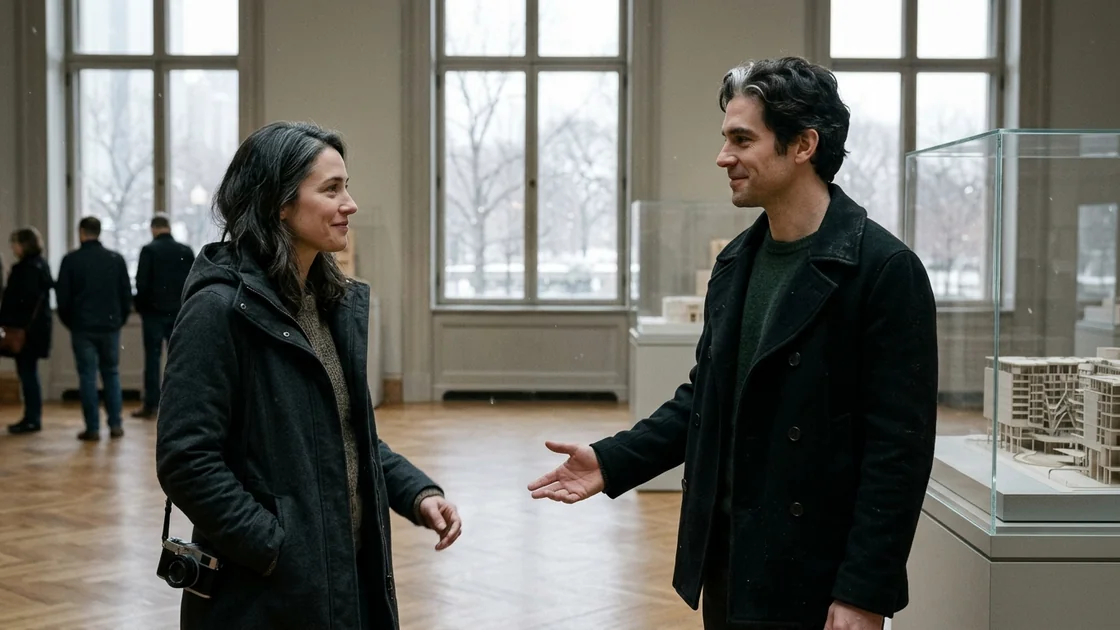
Clara spent a decade of her life tethered to a hospital bed, tending to her comatose husband, Julian, with unwavering devotion while the world outside moved on without them. When he finally opened his eyes after ten silent years, the miracle she had prayed for turned into an unimaginable heartbreak, as a cruel twist of retrograde amnesia had erased the entire five years of their courtship and marriage, leaving him with the firm belief that he was still a twenty-five-year-old bachelor and that the exhausted woman weeping at his bedside was a complete stranger. Forced to navigate the agonizing chasm between her profound, battle-tested love and his polite, bewildered detachment, Clara must bring a man who does not know her back to the home they built together, ultimately learning that the hardest part of holding on is knowing when to let go so they might have a chance to begin again.
The rhythm of Clara’s life was measured not in hours or seasons, but in the mechanical sigh of a ventilator and the steady, glowing green peaks of an electrocardiograph.
Sixty-two beats per minute. Sometimes sixty-four when she washed his face with warm water infused with lavender oil. Never higher than seventy.
Room 412 at St. Jude’s Long-Term Care Facility was a capsule suspended outside of time. Outside the tall, double-paned window, the maples along the avenue had flared into violent autumn oranges, shed their brittle skins to the winter sleet, and burst back into the tender, translucent greens of spring ten separate times. Inside, the temperature was a perpetual seventy-one degrees. The walls were painted a muted shade of eggshell designed by behavioral psychologists to soothe the grieving. To Clara, the color looked like stagnant milk.
She sat in the vinyl recliner beside the bed, her fingers working a silver crochet hook through loops of cerulean yarn. She didn't even like crocheting; she had picked it up in Year Three when she realized that reading novels required a narrative focus her fractured mind could no longer sustain, and staring at Julian’s chest to make sure it rose and fell was driving her toward a quiet madness. She had made forty-two blankets over the last seven years. Most of them had been donated to the neonatal intensive care unit three floors down. Babies were born, grew lungs strong enough to breathe the sharp air of the world, went home, learned to walk, and started primary school, all while Julian lay beneath a crisp white sheet, his dark hair threading prematurely with silver at the temples.
"Your sister called again last night," Clara said aloud, her voice automatically dropping to the low, resonant register the nurses called the vigil tone. "She’s taking the kids to Maine for the summer. Leo lost his second front tooth. He looks ridiculous, Jules. Like a tiny, belligerent hockey player."
Julian did not answer. His eyelids, thin and veined like dried rose petals, remained shut. Because he had been weaned off the ventilator in Year Two—a monumental triumph that had led the doctors to falsely predict an imminent awakening—he breathed on his own now, a shallow, whispering draft through slightly parted lips. Every two hours, Clara stood up, set her yarn aside, and performed the liturgy of preservation.
She applied a tiny dab of lanolin to his lips so they wouldn't crack. She took his left arm, the one that had once effortlessly hoisted her onto the kitchen counter of their first apartment while pasta water boiled over on the stove, and began the range-of-motion exercises.
Flex. Extend. Rotate.
Ten repetitions for the wrist. Ten for the elbow. Ten for the shoulder. The physical therapist, a kind man named Marcus whose own hair had receded entirely over the course of Julian’s stay, had taught her how to feel for the subtle catch of spasticity in the tendons. If you didn't move a body, the body forgot it was meant to move. The muscles shortened, drawing the limbs inward into a fetal curl, turning a man into stone before his heart even stopped beating. Clara had sworn on the rain-slicked asphalt of Route 9, while the jaws of life shrieked against the crumpled steel of Julian’s sedan, that she would not let him turn to stone.
She was thirty-eight years old. When the logging truck had lost its brakes on that mountain curve, she had been twenty-eight. They had been married for three years, together for five. Five years of laughter, of burnt toast, of arguments over whose turn it was to scrub the bathtub, of making love on a mattress on the floor before the moving truck arrived with their bedframe. And then, ten years of silence. The silence now outweighed the marriage by two to one.
Her best friend, Maya, had stopped trying to Gently Intervene around Year Six. Before that, there had been the agonizing coffee dates where Maya would slide brochures for support groups across the table, or mention, with excruciating casualness, that a lawyer friend of hers specialized in "medical emancipation" and financial restructuring for spouses of the permanently incapacitated.
“You’re twenty-nine, Clara,” Maya had said. Then, “You’re thirty-two, Clara.” Finally, on a rainy Tuesday when Clara had forgotten her own birthday because Julian had developed a low-grade urinary tract infection that required heavy antibiotics, Maya had grabbed her by the shoulders in the hospital parking lot. “He died on that highway, Clara! The man who loved you died in that car. You are haunting a graveyard, and you’re dragging yourself into the dirt with him!”
Clara hadn't spoken to Maya for eight months after that. When they finally reconciled, the boundary was drawn in iron: Maya could ask about Julian’s vitals, or she could not ask about Julian at all. She could never, ever suggest that the man in Room 412 was an empty shell.
Because Clara knew he wasn't. She knew the micro-expressions of his stillness. She knew that when she played the Cello Suites by Bach, the tiny muscle beneath his right eye relaxed. She knew that when a thunderstorm rolled across the valley, dropping the barometric pressure, his fingers would twitch against the cotton blanket, seeking the warmth of her palm just as he used to seek her across the mattress in his sleep.
She moved to the right side of the bed to work on his other arm. His skin was pale, possessing the translucent, waxy quality of someone who had not felt the ultraviolet kiss of the sun since his late twenties. Yet, to her, he was still devastatingly handsome. The coma had spared him the lines of stress, the crow’s feet of squinting into traffic, the heavy furrow between the brows that came from paying mortgages and worrying about aging parents. Those lines had all migrated to Clara’s face instead. She wore the decade for the both of them.
She picked up his right hand, sliding her fingers between his. His wedding band—a simple brushed platinum ring she had bought with the entirety of her first bonus from the graphic design firm she had long since quit—was loose around his knuckle. Despite the feeding tube delivering a precisely calibrated slurry of nutrients directly into his stomach, coma patients lost a fundamental density. He was lighter than he used to be, like a bird.
Flex. Extend.
She bent his wrist back gently.
His fingers closed around her thumb.
Clara froze. A cold electric shock detonated at the base of her skull and raced down her spine.
It wasn't uncommon for him to have a palmar grasp reflex. The human brain, stripped of its higher executive functions, often reverted to the primal wiring of infancy. Nurses had warned her about it in the first month: If you put your finger in his palm and he squeezes, honey, don't get your hopes up. It’s just the brainstem talking.
She waited for the reflex to release, holding her breath, her heart hammering a frantic, jagged rhythm against her ribs. Usually, the grip was mechanical, a slow tightening followed by an equally slow slackening.
Instead, his thumb moved. It stroked the side of her knuckle. Once. Twice.
It was the exact, unmistakable gesture he used to make when they were sitting in a movie theater, a silent code that meant, I’m here, I’m with you.
"Jules?" The word tore out of her throat, ragged and small.
On the monitor above his head, the green line spiked. Seventy-eight. Eighty-five. Ninety-four. The machine let out a soft, rhythmic chiming, warning the nurses' station down the hall that the patient in 412 was experiencing tachycardia.
Julian’s throat convulsed. He swallowed, a dry, clicking sound that made his Adam's apple bob violently. His head rolled an inch to the right against the pillow, his brow furrowing into a deep, sudden knot of agony, as if the fluorescent light above—which had been turned off for three hours—was blinding him.
"Julian!" Clara dropped his hand and lunged for the call button pinned to the mattress, smashing her palm against the red plastic. "Nurse! Somebody come in here! Help!"
She turned back to him, her hands hovering frantically over his shoulders, terrified to touch him, terrified not to. A low, rasping groan vibrated in his chest, the sound of an ancient engine turning over in the dead of winter, rusted gears grinding against bone-dry cylinders. His vocal cords hadn't vibrated in three thousand, six hundred and fifty-eight days.
His eyelashes fluttered. They were stuck together slightly from the lubricating ointment the night nurse had applied at dawn. He grimaced, his face contorting with the monumental, heroic effort required to lift a millimeter of flesh.
And then, they opened.
Clara clapped both hands over her mouth, a sob breaking through her fingers so violently her knees buckled, dropping her against the metal guardrail of the bed.
His eyes were hazel—a rich, muddy ring of forest green encircling a burst of amber gold near the pupil. For ten years, she had only seen those eyes in photographs that were slowly fading in their frames, or when the doctor pried his lids open to shine a harsh white penlight into the dark centers to check for pupillary response. Now, they were looking out. They were milky with confusion, darting wildly around the ceiling, unable to focus on the acoustic tiles.
The door burst open. Elena, the head floor nurse who had been at St. Jude’s almost as long as Clara, came rushing in, expecting a code, expecting cardiac arrest or a violent seizure.
"What is it, Clara, what’s—" Elena stopped dead in her tracks, her stethoscope swinging wildly against her scrubs. "Oh, good Lord."
"Get Dr. Aris!" Clara wept, her tears spilling hot and fast over her knuckles as she leaned over the rail, bringing her face directly into Julian’s line of sight. "Jules, baby, don't be scared. You’re okay. You’re safe. Look at me, my love, look right here."
Julian’s frantic eyes dragged downward from the ceiling, fighting against the atrophy of his ocular muscles. They swept past the IV pole, past the framed painting of a sailboat on the wall, and landed on Clara’s face.
Theamber and green irises contracted. He blinked once, a slow, agonizingly heavy movement.
In the movies Clara used to watch before her life became a medical chart, this was the moment where the music swelled. The hero looked at the heroine, whispered her name, and ten years of purgatory dissolved into a tearful embrace. She leaned in closer, letting him see her, letting the scent of her skin—the same vanilla and cedar soap she had used since she was twenty-six, kept religiously so that if he ever woke, he would smell home—wash over him. She smiled through her tears, her heart expanding until she thought her chest might literally split open from the sheer, blinding radiance of her joy.
"Hi," she whispered, her voice trembling like a leaf in a gale. "Hi, sweetheart. You came back to me."
Julian stared at her. The terror in his eyes didn't fade at the sight of her face; if anything, it sharpened, crystallizing into a stark, cornered panic. His gaze darted over her silver-streaked hair, the deep hollows beneath her eyes, the unfamiliar lines bracketing her mouth. He tried to pull his right hand away from where her fingers were brushing his wrist, a weak, spasmodic jerk of his arm that barely moved it an inch across the sheet.
His lips parted. He drew in a ragged, whistling breath and forced air through his ruined throat.
"Who..." The word was barely audible, a scrape of sandpaper against stone. He swallowed painfully, his eyes wide and wet with terror as he stared directly into the face of his wife. "...who are you?"
The next seventy-two hours were a tempest of white coats, flashing penlights, and whirring diagnostic machines that shattered the ten-year silence of Room 412.
Clara was pushed to the periphery. For a decade, she had been the sole proprietor of Julian’s body, the high priestess of his quiet temple. Now, she was reduced to a spectator pressed against the eggshell wall in the hallway, clutching a lukewarm paper cup of coffee while neurologists from the university hospital three towns over crowded around his bed.
Dr. Aris, a man with a neatly trimmed white beard and eyes that had seen too many miracles turn sour to ever get overly excited, stepped out into the corridor on the third afternoon. He pulled the door shut behind him with a soft click, muffling the sound of a speech therapist asking Julian to repeat the days of the week.
"How is he?" Clara asked, pushing herself off the wall. She hadn't slept in two days. Maya had brought her a fresh change of clothes, which she had put on in the visitor’s bathroom without looking in the mirror, and had forced half a bagel down her throat an hour ago.
"Physically? He is defying almost every piece of medical literature we have on decade-long persistent vegetative states," Dr. Aris said, taking off his glasses and rubbing the bridge of his nose. "Because you and the staff kept his body in such immaculate condition—no bedsores, minimal contractures, consistent auditory and tactile stimulation—his baseline is astonishing. It will take months, perhaps a year of brutal physical therapy for him to walk unassisted, and his vocal cords are severely atrophied, though they are recovering fast. His higher cognitive functions, his reasoning, his vocabulary... they are all remarkably intact."
"Then why won't you let me in the room for more than five minutes at a time?" Clara’s voice cracked. "Yesterday, when I walked in, his heart rate went up to one-thirty. Elena had to ask me to leave so he wouldn't hyperventilate."
Dr. Aris sighed, the heavy, reluctant breath of a physician who preferred dealing with the clean certainties of cellular pathology over the messy architecture of the human soul. He gestured toward a pair of chairs in the quiet alcove near the elevators. Clara didn't sit. She stood with her arms wrapped tightly around her ribs, as if holding herself together by sheer physical force.
"Clara, when Julian suffered the diffuse axonal injury in the crash, the shearing forces in his brain caused microscopic damage across several neural networks," Dr. Aris explained gently. "How the brain repairs itself—or reroutes itself—over ten years of dormancy is a mystery we are only beginning to map. In Julian’s case, in order to reboot the system, his brain seems to have reverted to a previous 'save point,' for lack of a better clinical term. He is suffering from dense, focal retrograde amnesia."
"I know what those words mean, Doctor. I've read the journals for ten years," Clara said sharply, the defensive spikes of a decade-long advocate rising instinctively. "Tell me what his save point is."
Dr. Aris looked at her with profound pity. "We ran a series of autobiographical memory tests this morning. He knows his name. He knows his parents' names, though he didn't know his father passed away four years ago—we haven't told him that yet, so please keep that in mind. He remembers graduating from architectural school. He remembers his first job at the firm in Boston. Clara... Julian believes the year is 2009. He believes he is twenty-five years old."
The hallway seemed to tilt. The fluorescent lights overhead buzzed with a sudden, deafening ferocity.
2009.
Clara did the math, though she didn't need to. The dates of her life with Julian were carved into her bones.
They had met in October of 2010 at a mutual friend’s gallery opening in Chicago. He had spilled red wine on the cuff of his white shirt while trying to gesture wildly about the structural integrity of Frank Lloyd Wright’s cantilevers, and she had handed him a club soda with a slice of lime, laughing at his earnestness. They had moved in together in 2011. He had proposed on a freezing beach in Lake Michigan in 2012. They had married beneath a canopy of string lights in a botanical garden in June of 2013. The crash was in November of 2015.
"Everything after the summer of 2009 is gone," Dr. Aris said softly. "The last six years before the accident have been completely wiped from his declarative memory. Combined with the ten years he was asleep... he has lost sixteen years of his life. In his mind, he went to sleep in his tiny studio apartment on Beacon Hill after a night out with his college roommates, and he woke up in a geriatric body he doesn't recognize, in a city he never lived in, with a woman he has never laid eyes on claiming to be his wife."
Clara’s hand went to her throat, her fingers brushing the thin gold chain Julian had given her on their second anniversary. "So when he looks at me..."
"He sees a stranger," Dr. Aris confirmed. "And when we tell him he has been married to you for thirteen years, it triggers an acute panic response. Imagine waking up tomorrow, Clara, and a forty-year-old man you have never seen before is weeping over your bed, holding your hand, telling you that you have a mortgage together and a whole life you can't access. It feels like a kidnapping to him. His brain is trying to protect him from a reality that feels psychotic."
"Will it come back?" she whispered. "The memories. Are they just... blocked? Can we unlock them?"
"With retrograde amnesia of this scale, following a coma of this duration, there is simply no precedent to give you an honest prognosis," the doctor said, placing a warm, dry hand on her shoulder. "Sometimes, environmental triggers—smells, music, photographs—can bridge the synaptic gaps. Sometimes, the memories were never consolidated properly into long-term storage before the trauma destroyed the pathways, meaning they are gone forever. My strongest recommendation is that we do not force it. If you push him to remember, his cortisol levels spike, which is terrible for his neuro-recovery. We have to introduce you to him slowly. Like you’re meeting for the first time."
Like we’re meeting for the first time.
Clara walked back down the hallway alone, her reflection ghostly in the polished linoleum floor. She stopped outside the door of 412 and looked through the narrow vertical pane of wire-reinforced glass.
Julian was propped up at a forty-five-degree angle, supported by a mountain of pillows. His sister, Sarah, who had flown in from Seattle on the red-eye the night before, was sitting on the edge of his bed. Sarah was forty-two now, though in Julian’s mind she should have been twenty-six. Yet, despite the sixteen years of aging on Sarah’s face, Julian was holding her hand tightly, clinging to her like a drowning sailor clinging to a piece of driftwood. Because he knew Sarah. He had known Sarah since he was born. The aged version of his sister was a shock, a terrifying proof of time’s passage, but the foundational architecture of sister was intact in his mind.
Clara watched as Sarah said something that made Julian’s mouth twitch into a faint, exhausted half-smile.
A hot, jagged shard of jealousy pierced Clara’s lungs, so sharp she had to lean her forehead against the cool glass. When Julian had been in the coma, Sarah had visited twice a year—once at Christmas, once in the summer—staying for an hour before retreating to a hotel bar because "seeing him like that was just too hard." Sarah had wanted to disconnect the feeding tube in Year Four. Sarah had lived her life, had two children, got promoted, went to Paris, bought a boat.
Clara had wiped the drool from his chin. Clara had shaved his face with a safety razor every three days so he would still feel like a man. Clara had declared bankruptcy in Year Five when the insurance maxed out its lifetime cap, selling their house—the colonial with the yellow door they had spent six months renovating—and moving into a cramped one-bedroom apartment with radiators that clanked like chains so she could afford the co-pays for the private facility that wouldn't let him rot in a state ward.
And now, Julian was looking at Sarah like she was his savior, while Clara was the monster in the hallway who made his heart monitor scream.
She pushed the door open.
The quiet laughter in the room died instantly. Julian’s head snapped toward the door, his shoulders tensing beneath the blue hospital gown. He didn't pull his hand away from Sarah’s; he gripped it harder.
"Hey, Clara," Sarah said, standing up awkwardly, smoothing the front of her designer jeans. Guilt radiated off her in waves; she knew the math of the last decade just as well as Clara did. "I was just... we were just talking about Mom’s old golden retriever. Barnaby. He remembers Barnaby."
"That’s good," Clara said. She kept her distance, stopping at the foot of the bed, her hands clasped neatly in front of her stomach so he could see she wasn't going to touch him. She forced her face into a pleasant, neutral mask, erasing the starving devotion that had terrified him on day one. "Barnaby was a good dog. Though he was gone before I ever met you, Julian."
Julian looked at her. Now that the initial delirium of waking had subsided, his gaze was clear, sharp, and profoundly unsettling. It was the look he used to give contractors who tried to tell him a load-bearing wall didn't need a steel beam—analytical, guarded, assessing the angles.
"Sarah says you stayed," Julian spoke. His voice was still a raspy whisper, like dry leaves blowing across concrete, and he had to pause every few words to catch his breath. "She says... you came here every day. For ten years."
Clara’s throat tightened. "Not every day. I had the flu in 2019. They wouldn't let me on the floor for a week." She tried a small, self-deprecating smile.
He didn't smile back. His amber-green eyes searched her face with an agonizing intensity, as if he were trying to read a book written in a dead language. "Why?" he whispered.
The question hung in the antiseptic air. Sarah looked down at her shoes.
Because you are the other half of my soul, Clara thought. Because on the night we met, we talked until the diner closed and then walked around the block for three hours in the freezing rain because neither of us wanted to go home. Because when my mother died, you held me on the bathroom floor for two days and fed me spoonfuls of broth. Because I promised you, in front of everyone we loved, in sickness and in health, and I didn't know how to break a promise to a man who couldn't defend himself.
She remembered Dr. Aris’s warning. His cortisol levels spike. Keep it light.
"Because you’re my husband, Julian," she said simply, her voice steady and cool as river stone. "And you’re a very stubborn man. I knew you’d wake up eventually, and I knew you’d be furious if nobody had kept your muscles working so you could get back to your drafting table."
Julian looked down at his hands—pale, thin, the veins prominent beneath skin that hadn't seen the sun. He flexed his fingers, watching the tendons move smoothly, without the agonizing stiffness the doctors had told him he should have had. He looked at the platinum band on his left ring finger. He touched it with his right thumb, spinning it slowly around the knuckle.
"I don't know you," he said, and there was no malice in it, only a vast, hollow bewilderment that was infinitely worse than cruelty. "I’m sorry. I look at you, and there’s... nothing there. I don't even like Chicago. Why was I in Chicago?"
"You transferred there in 2010 to work on the riverfront revitalization project," Clara answered evenly, gripping her own wrists so hard her fingernails left crescent moons in her skin. "You fell in love with the architecture. And then you stayed."
For me, she didn't say. You stayed for me.
"I was supposed to go to London," Julian murmured, his brow furrowing as he stared at the blanket. "I applied for the fellowship at Foster + Partners. I was waiting for the letter."
"You got it," Sarah chimed in softly, trying to help. "You turned it down, Jules."
Julian’s head snapped up, his eyes widening in disbelief as he looked back at Clara. The subtext was written across his pale features in bold, unmistakable ink: I gave up London for a woman I can't even remember?
"I should let you rest," Clara said quickly, before the suffocating pressure in her chest turned into tears. She would not cry in front of him again. She would not make him feel responsible for the grief of a stranger. "The physical therapist will be in at four. He’s going to try to sit you on the edge of the bed today. His name is Marcus. He’s a Patriots fan, so don't let him get started on football or you’ll never get your exercises done."
She turned and walked out of the room before he could reply, her spine ramrod straight until she reached the stairwell, pushed through the heavy fire door, and sank onto the concrete steps, pressing her face into her knees to muffle the sound of her heart breaking all over again.
Four months later, the autumn leaves were falling again, and Julian was discharged.
It was a logistical and emotional minefield. Sarah had offered to take him back to Seattle, where she had a sprawling four-bedroom house near the water and a husband who worked in tech. Julian had wanted to go. Clara had known he wanted to go; she had overheard him talking to the hospital social worker about it, his voice stronger now, carrying that familiar baritone resonance that made Clara’s knees weak from thirty feet away.
“I just feel like I’d do better with family,” he had told the social worker. “With people I know.”
“Clara is your family, Julian,” the social worker had replied gently. “Legally, she is your next of kin and your medical proxy. More importantly, your outpatient rehabilitation team is here. Your neurologists are here. Moving across the country right now would set your physical recovery back by months, and Sarah works sixty hours a week. Clara works from home and has spent ten years learning how to care for you. Her apartment is already modified.”
So, on a crisp October morning, Clara pulled her ten-year-old Honda Civic up to the sliding glass doors of St. Jude’s.
Julian sat in a wheelchair at the curb, wearing a pair of charcoal gray sweatpants and a navy sweater she had bought for him last week, guessing at his new, leaner size. He had gained fifteen pounds since waking up, and the physical therapy had put some muscle back onto his frame, though he still required a quad-cane to walk short distances and tired easily. A streak of pure white ran through the dark waves of his hair above his right temple, making him look like a distinguished professor rather than the boyish architect he believed himself to be.
Orderlies helped him transfer from the wheelchair into the passenger seat of the Civic. He moved with a grim, jaw-clenching concentration, his pride visibly wounded by every helping hand he required. When the door shut and the hospital receded in the rearview mirror, the silence inside the small car was absolute.
He stared out the window as they drove through the town, his hands gripping his knees. Everything was an alien landscape to him. He gasped softly when he saw a sleek electric car whisper past them at a stoplight. He stared in bafflement at pedestrians walking down the sidewalks with tiny white plastic stems sticking out of their ears, talking to the empty air, their faces illuminated by the large, borderless glass slabs of modern smartphones. In 2009, he had owned a Motorola flip phone.
"The world got loud," he murmured, his head turning to track a digital billboard that changed its advertisement every six seconds in blinding high definition.
"Wait until you see the grocery store self-checkouts," Clara said, keeping her eyes fixed on the road, her hands at ten and two. "They yell at you if you don't put your cabbage in the bag fast enough."
A tiny huff of breath escaped his nose—not quite a laugh, just an acknowledgment of the joke. "Sarah gave me an iPhone before she flew back. I spent an hour yesterday just zooming in and out on a map of Rome. It’s incredible. Terrifying, too."
"You don't have to rush into any of it," she said. "The apartment is quiet. No digital billboards."
Her apartment was on the ground floor of a converted Victorian house on a tree-lined street two miles from the hospital. She had rented it four years ago specifically because it had only two shallow steps leading up to the porch, holding onto the insane, stubborn delusion that one day she would need a place with wheelchair access. For the last month, she had spent every spare dollar she had—and several hundred she didn't, put on a high-interest credit card—preparing it for him.
She had installed grab bars in the shower. She had moved her drafting table and freelance computer setup into a tiny alcove in the living room so that the single bedroom could be entirely his. And she had bought a new pull-out sofa for herself.
When she unlocked the front door and stepped aside so he could navigate the threshold with his four-pronged cane, Julian paused in the entryway, looking around.
Clara held her breath, suddenly seeing the space through his eyes—the eyes of a man with an immaculate sense of spatial design who had last lived in a trendy, minimalist Boston loft. Her apartment was small, the hardwood floors scuffed, the furniture a mismatched collection of thrift-store finds and pieces salvaged from their old house. Yet, it was warm. Afternoon sunlight slanted through the bay windows, illuminating shelves crammed with architecture monographs—his books, which she had refused to sell even when she was eating ramen noodles for dinner—and pots of trailing pothos vines.
What wasn't there were the photographs.
On Dr. Aris’s advice, Clara had taken down the shrines. She had packed away the giant framed canvas of their wedding day that used to hang over the sofa. She had cleared the mantelpiece of the candid shots from their trip to Montreal, the blurry polaroids of them painting the kitchen of their old house with rollers in their hair. All of that history had been placed into a cardboard box labeled FRAGILE and shoved to the back of the hall closet. Leaving them up, the psychologist had warned, would turn the apartment into a museum of guilt, constantly reminding Julian of a ghost he couldn't embody.
She had left only one small frame on the bookshelf near the hallway: a picture of Julian’s parents and Sarah on a sailboat in Cape Cod from 2005. Something from before.
Julian limped slowly toward the bookshelf, the rubber tips of his cane thudding softly against the rug. He picked up the photograph of his father, who had died of a sudden stroke in 2019, and stared at it for a long time. His jaw worked, a muscle feathering beneath his ear.
"Sarah told me on Tuesday," he said quietly, setting the frame back down with trembling fingers. "About Dad. She waited until the doctors said I was stable enough."
"I’m sorry, Julian," Clara said softly from the doorway, her heart aching for him. When her father-in-law had died, she had sat by Julian’s hospital bed and wept for hours, telling his unconscious body every detail of the funeral so that some part of his spirit might know and grieve along with them. Now, the grief was brand new for him, raw and jagged, while for her it was an old, healed scar. "He came to see you every Sunday until the week he passed. He used to read you the sports section from the Globe."
Julian turned away from the shelf, rubbing a hand over his eyes. The movement threw him slightly off balance, and he caught himself heavily against the back of the sofa. Clara took an instinctive step forward, her hands raised to steady him, then stopped herself when he stiffened.
"I’m fine," he said, his voice tight. "Just dizzy. Where... where am I sleeping?"
"Through there," she pointed toward the open door at the back of the apartment. "The bathroom is attached, so you won't have to walk far at night. All your clothes are in the dresser. I kept a lot of your old things from storage—your college hoodies, your broken-in jeans. I thought they might feel more comfortable than the new stuff."
Julian limped to the bedroom doorway and looked inside. The bed was made with crisp gray linens—masculine, neutral. He looked at the single closet, then turned back to look at the living room, his gaze landing on the folded-up duvet and pillow stacked neatly on the end of the tweed sofa.
"This is a one-bedroom apartment," he said, realization dawning across his face. "You gave me your room."
"The sofa pulls out," Clara said breezily, walking into the small galley kitchen and filling the kettle at the sink just to have something to do with her hands. "It has one of those memory foam mattresses. Honestly, after sleeping in a hospital vinyl recliner for ten years, a bed of nails would feel like the Ritz."
She meant it as a joke to lighten the mood, to defuse the awkward tension of their sudden domesticity.
Instead, the words landed like a lead weight in the quiet room. She realized her mistake instantly and bit her lip, turning the stove burner on with a sharp click-click-click of the igniter.
When she looked back over the counter, Julian was leaning heavily on his cane, staring at her with a look of profound, suffocating misery.
"Don't do that," he said, his voice low and strained.
"Do what?"
"Say things like that. Casual little reminders that you threw your entire youth away sitting in a chair watching me breathe." His knuckles were white around the grip of the cane. "Do you have any idea what it feels like to be indebted to someone for a life you didn't ask them to save, for a relationship you can't even verify happened? Every time I look at you, I feel like a thief. I stole ten years from you, Clara, and I don't even have the decency to love you back for it."
The air left Clara’s lungs as if she had been struck in the solar plexus with a battering ram.
She gripped the edge of the laminate countertop behind her. For ten years, she had imagined the difficulties of his recovery. She had imagined incontinence, speech deficits, frustration over paralysis, depression over lost career opportunities. Never once, in her darkest, most terrifying nightmares at three in the morning in Room 412, had she imagined Julian looking at her and calling her love a debt he couldn't pay.
"You didn't steal anything from me," she said, her voice dangerously quiet, vibrating with a sudden, fierce heat that surprised even her. "A truck crossed the center line on Route 9. That truck stole from us. What I did afterward—staying with you, caring for you—that was my choice, Julian. You were unconscious. You couldn't ask me to stay, and you couldn't tell me to leave. If you want to be angry at the universe because you lost sixteen years, be angry! Scream at the walls, break a plate, I don't care! But do not stand in my house and act like my devotion to my husband is a cross you have to bear."
Julian blinked, taken aback by the sudden steel in her spine. For four months at the hospital, she had been nothing but soft-spoken, deferential, walking on eggshells around his fragile neurology.
For a split second, as she stood there with her chin raised and her cheeks flushed with righteous anger, something flickered behind his hazel eyes. Not a memory—something deeper, more cellular. In their marriage, Clara had always been the quiet one until pushed too far, and when she snapped, Julian used to look at her with a mixture of awe and intense attraction. That exact shadow passed over his face now, before vanishing behind his wall of confusion.
"I’m tired," he said, looking away first, his shoulders slumping beneath the navy sweater. "I’m going to lie down."
He limped into the bedroom and shut the door. The click of the latch sounded like a gavel coming down.
The weeks bled into November, bringing a cold, gray rain that lashed against the bay windows and turned the street outside into a river of rotting leaves.
Living with a ghost who was made of flesh and blood was a uniquely exquisite form of torture. Clara learned to navigate the apartment like a phantom herself, Anticipating his needs before he had to suffer the indignity of asking a stranger for help, while simultaneously erasing her own presence as much as possible.
She learned that the Julian of 2009 was slightly different from the Julian of 2015.
When they had been married, Julian had given up sugar in his coffee because Clara drank hers black and he had gradually acquired her taste for the bitter roast. On his third morning in the apartment, when she handed him a mug of black dark roast, he took one sip, grimaced violently, and dumped three heaping spoonfuls of sugar and a splash of milk into it.
He didn't know how to cook the lemon-garlic pasta he had made for her every Friday night for four years; he had learned that recipe from a cooking class they took together for Valentine's Day in 2012. Now, left to his own devices in the kitchen at noon, he made microwave quesadillas with cheddar cheese and hot sauce—bachelor food from his twenties.
Every day was a minefield of micro-erasures.
One afternoon, while Clara was sitting at her computer in the alcove designing a brochure for a local bakery, Julian was sitting on the sofa, doing his hand-strengthening exercises with a ball of therapeutic putty. The radio was playing softly on the bookshelf. An indie folk song came on—Iron & Wine’s "Flightless Bird, American Mouth."
It was their wedding song. The song they had swayed to beneath the string lights at the botanical garden while her veil caught on the buttons of his tuxedo jacket and he had whispered, You’re stuck with me now, Clara-bell, against her ear.
Clara’s fingers froze over the keyboard. Her breath hitched, her eyes darting to his reflection in the dark glass of the window in front of her desk. She waited, praying with everything she had left for Dr. Aris’s theory about auditory triggers to work. Please, she begged the silent room. Please let him feel it. Just a flicker.
Behind her, Julian stopped squeezing the putty. He tilted his head slightly toward the speaker, listening to the slow, waltz-time guitar.
"God, this song is depressing," he muttered, reaching over with his cane to tap the power button on the radio, plunging the room into silence. "Sounds like someone drowning in molasses."
Clara stared at her computer screen until the pixels blurred into a bright, meaningless smear of white light. She excused herself to the bathroom, turned the faucet on full blast so he wouldn't hear her, sat on the edge of the porcelain tub, and cried until her ribs cramped.
Yet, despite the wall between them, they were two human beings sharing six hundred square feet of space, and slowly, inevitably, a strange new domesticity began to form in the vacuum of the old one.
Julian was not a cruel man. Once the initial shock of transitioning from the hospital subsided, the guilt that had made him lash out on his first day softened into a quiet, observant courtesy. As his physical strength returned—moving from the four-pronged cane to a sleek wooden walking stick, and occasionally walking from the sofa to the kitchen without any aid at all—he began trying to balance the invisible ledger between them.
When Clara came out of the bathroom in the mornings after changing out of her pajamas, she would find the pull-out sofa already folded neatly back into a couch, the heavy cushions arranged with architectural precision, even though she knew bending over to lift the metal frame had to pull terribly at the stiff muscles in his lower back.
He started washing the dishes after she cooked dinner, standing at the sink with one hip braced against the cabinet for support, methodically scrubbing every pot while she worked late at her desk.
And he watched her.
He thought he was subtle about it, hiding behind the pages of the architectural journals she bought for him to help him catch up on sixteen years of building technology and design theory. But Clara had spent a decade watching his motionless face; she was hyper-attuned to the direction of his gaze.
She would feel his eyes on her when she was curled up in the armchair with her cerulean yarn, her fingers flying automatically through the stitches while rain drummed against the glass. She would feel him looking at the silver threads in her dark hair when the lamplight caught them, or watching the way she bit the inside of her cheek when a client sent a frustrating email.
One evening in late November, a brutal nor'easter knocked out the power on their block.
The apartment plunged into pitch blackness, the hum of the refrigerator dying away into a sudden, eerie quiet.
"Julian?" Clara called out immediately, pushing back from her desk. "Stay right where you are, don't try to walk in the dark. I have candles in the kitchen drawer."
"I'm sitting down," his voice came from the sofa, calm and deep in the dark. "I won't move."
She navigated the familiar geography of the room by memory, her shins knowing the exact distance between the coffee table and the doorway. Within two minutes, she returned with three thick pillar candles on saucers and a box of matches, setting them on the coffee table and lighting the wicks. Golden, flickering light bloomed upward, casting long, dancing shadows against the walls and making the small room feel like a warm cave at the bottom of a dark sea.
She sat down in the armchair opposite the sofa, pulling a knitted throw blanket over her legs as the temperature in the room began to dip without the radiator.
Julian was sitting on the far end of the couch, his good leg tucked beneath him, the candlelight turning the amber rings in his eyes into molten gold. Without the distraction of the television, the radio, or her computer, they were simply left with each other.
"What was I like?" he asked suddenly.
Clara looked up from the candle flame. In the four months since he had woken up, he had never asked a question about his missing self. He had avoided the subject like a live wire.
"What do you mean?" she asked softly.
"The guy who married you," Julian said, resting his elbow on the back of the sofa and propping his chin in his hand. He looked at her with genuine, unguarded curiosity. "Right now, I feel like I’m twenty-five. I feel impatient. I want to go out and build skyscrapers, I get annoyed when the soup is too hot, and I don't know how to talk to a woman who has lived through things I can't even fathom. I look at you, Clara, and you seem... too grown-up for me. Too good for me. Who was I in 2015 that made a woman like you love me that much?"
A bittersweet ache bloomed in Clara’s chest, warm as the candle wax. She pulled her knees up to her chest beneath the blanket, wrapping her arms around her shins.
"You were still impatient," she said, a real, unforced smile touching the corners of her mouth. "You still burned your tongue on soup because you refused to wait two minutes for it to cool down. That didn't change between twenty-five and thirty-one."
Julian’s mouth quirked. "Good to know I was consistent. What else?"
"You grew into yourself," she said, her gaze drifting back to the flame as she allowed herself, for the first time since July, to step freely into the garden of her memories. "When I met you in 2010, you were a little bit arrogant, honestly. You thought any building made before 1950 should be bulldozed to make room for glass and steel. Then you worked on restoring an old 19th-century library on the South Side of Chicago, and it changed you. You fell in love with how buildings hold history. You became kinder. Quieter, in a good way. You learned how to listen."
Julian was completely still, absorbing every word as if she were reading him a prophecy of his own future rather than a eulogy for his past.
"How did you know you loved me?" he whispered.
Clara looked back at him. Their eyes locked across the four feet of carpet separating them.
"It was our fourth date," she said softly. "We went to the Art Institute. It was freezing outside—January in Chicago, the wind coming off the lake like razor blades. When we came out of the museum, my car wouldn't start. Dead battery. I had just moved to the city, I was broke, and I was so embarrassed because I was driving this rusted-out 1998 Camry and you were this hotshot young architect in a wool peacoat."
"I loved that peacoat," Julian murmured, a ghost of a smile on his lips. "Bought it at an army surplus store in Cambridge."
"I know. It smelled like wet wool and cedar," Clara smiled, her throat tightening slightly. "I started crying because I couldn't afford a tow truck. You didn't make a big deal out of it. You didn't try to play the big macho hero or make me feel small. You just took off your scarf, wrapped it around my neck until only my eyes were showing, walked three blocks to a gas station in negative-ten-degree weather to buy jumper cables, and then flagged down a snowplow driver to jump my car. Your hands were so cold they were purple, and when you got in the passenger seat, you put them right against my neck under the scarf to warm them up and made me shriek."
Julian let out a soft, genuine laugh—a rich, warm sound that filled the candlelit room and made Clara’s heart do a slow, painful somersault.
"That sounds like a terrible move," he said, his eyes crinkling at the corners—not with the old lines he had lost, but with new ones forming right in front of her. "Putting ice-block hands on a girl's neck on the fourth date."
"It worked," she whispered. "I looked at you sitting in my terrible car, blowing on your fingers and laughing at me, and I thought, Oh. There you are. I’ve been looking for you."
The laughter faded slowly from the room, replaced by a thick, charged silence. Julian wasn't looking away this time. He wasn't tense. He was looking at her lips, then up into her eyes, his chest rising and falling against the soft cotton of his t-shirt.
"Clara," he said, his voice dropping an octave, roughened by something that had nothing to do with vocal cord atrophy.
He leaned forward slightly, his hand leaving the back of the sofa to rest on his knee, as if he were about to push himself up and cross the four feet of floor between them.
Every nerve ending in Clara’s body screamed at her to let him. She had been starving in a desert for ten years, surviving on the phantom memory of his touch, and here he was, awake, warm, breathing, looking at her in the candlelight the way a man looks at a woman he wants to kiss. It would be so easy. She could lean across the coffee table, let him touch her face, let him fall into the gravity of a marriage that was already legally and historically theirs.
And then she saw the slight furrow between his brows. She saw the way he was trying to force himself into the coat of the man in the story—the man with the wool peacoat in Chicago who had earned the right to put his cold hands on her skin. He was trying to pay the debt. Or worse, he was simply a lonely, traumatized man in a dark room with an attractive woman who had just told him a romantic story.
If he kissed her right now, he wouldn't be kissing Clara, his wife. He would be kissing a stranger in the dark to see if it sparked a circuit in his damaged brain. And if it didn't—if he pulled back from her mouth and still felt nothing—Clara knew, with absolute certainty, that it would kill her. She would not survive that rejection.
Just then, the refrigerator let out a loud hum, the digital clock on the microwave beeped piercingly, and the overhead lamp flared back to life, flooding the living room with harsh, yellow sixty-watt reality.
Clara blinked against the sudden glare and stood up quickly, pulling the throw blanket tightly around her shoulders like armor.
"Power’s back," she said, her voice brisk and overly bright as she leaned down and blew out the three candles in quick succession, sending ribbons of gray smoke curling toward the ceiling. "It’s almost eleven. You have aquatic therapy at eight tomorrow morning, and Marcus is going to work you hard in the pool. I’m going to brush my teeth so you can have the bathroom."
She didn't look back at him as she walked down the short hallway, though she felt his gaze burning into the center of her back all the way until the bathroom door clicked shut.
The breaking point came three weeks later, a week before Christmas.
Julian’s physical recovery had hit a sudden, miraculous exponential curve. Once the neural pathways between his motor cortex and his limbs had been re-established, his body—preserved so faithfully by Clara’s ten thousand hours of manual exercises—remembered how to be strong. He no longer used the walking stick inside the apartment. His voice had lost its papery rasp, returning fully to the resonant baritone of his youth.
With physical autonomy came an inevitable restlessness. He was a twenty-five-year-old man trapped in a thirty-five-year-old body, locked in a six-hundred-square-foot apartment while snow piled up against the windows. He spent hours at Clara’s drafting table when she wasn't working, sketching furious, brilliant designs on trace paper with charcoal pencils, his brow furrowed as he tried to bridge the sixteen-year gap between what he knew and what the world had built while he slept.
On a Thursday afternoon, Clara came home from the grocery store, her arms loaded with two heavy brown paper bags and a small box of evergreen boughs she had bought from a street vendor so the apartment might smell like Christmas.
She kicked the snow off her boots on the porch and pushed the front door open with her hip. "Jules? Can you grab one of these—"
She stopped in the entryway.
Julian wasn't at the drafting table. He was sitting on the floor in front of the open hall closet, surrounded by a sea of photographs.
He had gone looking for extra blankets or perhaps his winter boots, and he had found the box labeled FRAGILE at the back of the top shelf.
Around his crossed legs lay the scattered artifacts of a five-year love affair. There was the large canvas of their wedding day: twenty-six-year-old Clara with wildflowers in her dark hair, laughing with her head thrown back while twenty-nine-year-old Julian kissed the side of her throat, his hand splayed possessively across her waist. There were the polaroids from Lake Michigan, her bundled in his oversized Red Sox hoodie, holding up her left hand to show off the tiny diamond ring against the gray winter surf. There was a candid shot Maya had taken of them asleep on a train to Montreal, Clara’s head resting on his chest, his chin tucked over the crown of her head, looking entirely at peace with the universe.
Julian was holding a small leather-bound notebook in his hands.
Clara’s stomach plummeted through the floor. The groceries slipped from her numb fingers, a carton of eggs cracking softly inside the paper bag as it hit the hardwood.
"Julian, don't," she breathed, lunging forward. "Those are private."
It was his vow book from their wedding. He had written his vows by hand the night before the ceremony, and Clara had kept that little leather book inside her pillowcase for the first three years of his coma, reading his own handwriting until the pages were soft as cloth.
Julian didn't look up as she knelt beside him on the rug. His face was chalk-white, a sheen of cold sweat glistening on his forehead. His hands were shaking violently as he stared down at his own distinctive, block-letter architectural handwriting across the cream paper.
“Clara,” he read aloud, his voice trembling with a rising, frantic hysteria. “Before I met you, I thought a home was something you built out of steel, timber, and glass. Now I know a home is a person. It is the sound of your laugh in the kitchen at seven in the morning. I promise to love you in every room we ever inhabit, until the roof falls in, until the foundations crumble into dust. Even then, look for me in the rubble, and I will still be yours.”
He dropped the book as if it had burned his palms. He pressed the heels of both hands hard against his temples, his elbows braced on his knees, and let out a ragged, animal sound of pure agony.
"I wrote this," he gasped, his chest heaving as he stared at the wedding canvas on the floor. "That’s my handwriting! That’s my face! Look at how I’m looking at you in that picture, Clara! Look at me!"
"Julian, breathe, please, look at me and breathe," Clara begged, reaching out to touch his shoulder, forgetting every rule she had lived by for four months in the face of his terror.
He flinched back from her hand, scrambling backward until his spine hit the baseboard of the hallway wall, knocking a framed print crooked. His eyes were wild, bloodshot, darting from the vibrant, radiant twenty-six-year-old woman in the wedding photograph to the thirty-eight-year-old woman kneeling on the floor in front of him in a faded winter coat.
"Why can't I feel it?!" he shouted, his voice cracking as tears finally spilled over his lower lashes, cutting tracks through the pale skin of his cheeks. He slammed the back of his head against the drywall once, hard enough to make the wall thud. "It’s right there! I said I’d be yours in the rubble! Well, here we are in the fucking rubble, Clara, and I look at these pictures and I feel like I’m looking at a twin brother who died! He loved you! He loved you so much it makes me sick to my stomach to read it, and I can't find him! I’m digging through my own head every single day trying to find the guy who wrote that book for you, because you deserve him, and I’m just—I’m not him!"
Clara knelt among the photographs of her own dead happiness, tears streaming silently down her face.
She looked at the wedding portrait on the floor. And then she looked at Julian—weeping, terrified, crushing himself beneath the impossible weight of a ghost he could never resurrect.
In that moment, the last illusion that had sustained Clara through three thousand, six hundred and fifty-eight days in Room 412 finally shattered into a million pieces.
Maya had been right, in a way, though not the way she thought. The man who had written those vows hadn't died on Route 9 in 2015. He had lived in Clara’s heart, kept on life support by her memories, for ten years. He had died four months ago, the second those hazel eyes opened and asked, Who are you?
The man sitting against the hallway wall was not her husband. He had the same DNA, the same bone structure, the same laugh when he forgot to be guarded, and the same soul underneath it all. He was the boy who would become her husband if given five years in Chicago, a restoration project on the South Side, and a freezing night with a dead car battery outside the Art Institute.
But he couldn't become that man while being held hostage in a tomb built for his predecessor. As long as she was his caretaker, his grieving widow, and his creditor, he could never be anything but a prisoner of her past.
A profound, terrifying calm descended over Clara. The frantic fluttering that had lived in her chest for ten years simply stopped, replaced by a vast, quiet emptiness that felt strangely like peace.
Slowly, deliberately, she began picking up the photographs from the floor. She didn't look at them as she stacked them neatly. She picked up the leather vow book, closed its cover gently, and placed it on top of the wedding canvas, sliding everything back into the cardboard box.
"Clara," Julian choked out, wiping his face roughly with the sleeve of his sweater, horrified by his own outburst. "Clara, I’m sorry. God, I’m so sorry, I shouldn't have said—"
"No," she said softly. Her voice didn't shake. She closed the flaps of the cardboard box and stood up, smoothing the front of her coat. "I’m glad you found them. And I’m glad you said it. We’ve been lying to each other for four months, pretending we’re waiting for a switch to flip in your head. It’s not going to flip, Julian."
He stared up at her from the floor, his eyes wide and wet, looking very much like a lost twenty-five-year-old boy. "What... what does that mean?"
"It means the marriage is over," Clara said.
The words didn't hurt coming out nearly as much as she thought they would; they felt like lancing a wound that had been festering for a decade.
"The man in that box loved me with everything he had," she continued, looking down at him with a tenderness so vast and unselfish it made his breath catch. "He kept every promise he made to me right up until the second that truck hit him. And I kept every promise I made to him. I stayed until he was safe, until he could walk, until he could hold a pencil again. The vows are fulfilled, Julian. The debt is paid in full. Zero balance."
Julian pushed himself up off the floor, using the wall for support, though he didn't really need it anymore. A new kind of panic—sharper and colder than the claustrophobia he had felt a moment ago—flashed across his face.
"Wait," he said, taking a step toward her as she walked back to the entryway and picked up the grocery bags. "What are you talking about? Where are you going?"
"Nowhere tonight, I live here," she said with a faint, sad smile, setting the bags on the kitchen counter and beginning to unpack the bruised apples and the cracked carton of eggs. "Tomorrow, I’m going to call Sarah. And I’m going to call your old mentor at the firm in Boston—Richard still works there, he sent flowers when you woke up. Now that you’re cleared from daily outpatient therapy, there’s no medical reason for you to stay in this town. You should go back to Boston, Julian. Or go to Seattle. Or apply to London again."
Julian stood in the archway of the kitchen, watching her put milk in the fridge as if she hadn't just detonated the only stability he had known since waking up.
"You’re kicking me out?" he asked, incredulous.
"I’m letting you out of prison," Clara corrected gently, closing the refrigerator door and turning to face him, leaning back against the cool metal. "You said it yourself. Every time you look at me, you feel like a thief. You can't start your life over while you’re sleeping in my bedroom and eating off plates we registered for at Crate & Barrel in 2013. And I..." Her voice finally wavered, just a fraction, before she steadied it. "I can't start my life over while I’m sleeping on a sofa in my own house, waiting for my husband to look at me and recognize my face. I’m thirty-eight years old, Julian. Maya was right. It’s time for me to leave the hospital."
Julian opened his mouth to argue, to protest, to say something—anything—to stop the tectonic plates from shifting beneath his feet.
Then he stopped. He looked at the dark circles etched permanently beneath her eyes. He looked at the tiny alcove where she worked twelve hours a day to pay for their groceries, and the cardboard box sitting by the hall closet containing a life she was grieving all by herself. For the first time since he had opened his eyes in Room 412, Julian didn't think about his own confusion, or his own lost time. He looked at Clara and saw the sheer, crushing agony it cost her to stand three feet away from him every single day and pretend she didn't want to throw her arms around his neck.
If he stayed out of guilt, or out of fear of facing the modern world alone, he truly would be stealing from her.
He swallowed hard, his throat clicking the way it had on that first morning. He nodded once, a slow, solemn bow of his head.
"Okay," he whispered. "I’ll call Sarah in the morning."
He left on the twenty-third of December.
Sarah had wired him money for a train ticket to Boston and a three-month lease on a furnished corporate studio near the Back Bay, right down the street from his old architectural firm, where Richard had eagerly offered him a consulting position to help him ease back into the industry at his own pace. It was a clean slate. It was 2009 again, just with better phones and a streak of white in his hair.
Clara drove him to the train station in the Honda Civic. Snow was falling in thick, lazy flakes that melted the instant they touched the windshield.
They stood on the outdoor platform as the commuter train rumbled in along the tracks, brakes squealing in a cloud of white steam. Julian was wearing a new charcoal wool peacoat he had picked out himself online, a leather duffel bag slung over his shoulder. He didn't have a cane anymore; only a slight, barely perceptible hitch in his left stride betrayed that he had ever spent a decade in a bed.
He turned to her as the conductor stepped down onto the platform and called for boarding.
"The lawyer said the divorce papers will come in the mail in a few weeks," Julian said over the hiss of the train’s air brakes. Snowflakes caught in his dark eyelashes. "I told him I don't want anything. Keep whatever is left in the old joint accounts."
"There's forty-two dollars in the old joint account, Jules, so don't feel too generous," Clara teased softly, her hands shoved deep into the pockets of her coat.
He smiled, a real, warm curve of his mouth, though his eyes were deeply troubled. He shifted his weight from one foot to the other, looking down at her. The conductor yelled "All aboard!" down the snowy platform.
"Clara," Julian said urgently, stepping into her space. Before she could anticipate it, he reached out, took her by the shoulders, and pulled her against his chest.
Clara’s breath caught in her throat. For ten years she had held his limp, unresponsive body; she had forgotten what it felt like to be held by him. His arms were solid and warm around her back, the new wool of his coat smelling faintly of cedar and cold snow. She closed her eyes for three seconds, pressing her cheek against his collarbone, letting herself memorize the strong, sixty-eight-beat-per-minute thud of his heart against her ear. A goodbye for the boy from Chicago. A funeral for the man in Room 412.
Then, she stepped back, slipping out of his arms before he could feel her trembling.
"Go," she said, smiling up at him through the falling snow. "You’re going to miss your train, and you always hated being late. Build something wonderful in Boston, Julian."
He stared at her as he backed up the metal steps into the train car. Even as the heavy doors slid shut between them and the train began to pull away from the platform, picking up speed into the white blur of the winter afternoon, he stood at the window, watching the small figure in the dark coat standing alone beneath the station lamps until the curve of the tracks swallowed her whole.
Time, Clara discovered, behaved very differently when it wasn't pinned to a wall calendar in a medical facility.
At first, the silence of the apartment without Julian—and without the hospital—was terrifying. For the first month of the new year, she woke up at six every morning in a cold sweat, her body flooding with adrenaline because she was late for the morning rounds at St. Jude’s, before remembering that Room 412 belonged to someone else now. She had moved back into the bedroom, selling the pull-out sofa and buying a bright yellow velvet couch that Julian would have hated because it wasn't mid-century modern.
In the spring, Maya helped her paint the apartment walls a warm, vibrant terracotta—banishing every trace of eggshell white from her life forever.
She stopped crocheting. She packed up her remaining yarn and donated it to a senior center, and instead, she pulled out her old oil paints and canvases from college. She began taking on larger design projects, eventually interviewing for—and landing—a senior art director position at a boutique branding agency downtown. For the first time since she was twenty-eight, she went out for drinks on Friday nights with coworkers who didn't know her as The Tragic Wife. To them, she was just Clara: talented, slightly quiet, with a wickedly dry sense of humor and a laugh that surprised people when it broke loose.
She signed the divorce decree in April. Julian’s signature was already on the bottom line when the envelope arrived from Boston—clean, block architectural letters. There was no note inside. She hadn't expected one; a clean break was the only kind that healed straight.
In August, a colleague set her up on a blind date with a high school history teacher named David. He was kind, had a warm smile, and paid for dinner without making a fuss. When he walked her back to her car and leaned in to kiss her cheek, Clara didn't pull away, and she didn't cry on the drive home. She didn't feel a lightning bolt of magic, either—just a pleasant, gentle recognition that she was still a woman living in the world, capable of sharing a meal with a man on a warm summer night.
October arrived again, bringing that crisp, metallic tang in the air that always made her think of new notebooks and woodsmoke. It had been fourteen months since Julian had opened his eyes; ten months since she had put him on the train in the snow.
Her agency had won a major contract to rebrand a historic theater district in Chicago. Because Clara was the only one on the creative team who had actually lived in the city, her boss sent her there for a four-day conference and site visit.
Stepping out of Union Station into the brisk Chicago wind felt like stepping into an old photograph, except the colors were brighter than she remembered. She spent the first three days immersed in work, walking the familiar grid of the streets with a camera around her neck, photographing vintage marquees and terracotta facades. She walked past the restaurant where she and Julian had eaten dinner on their first anniversary, paused for a moment on the sidewalk, smiled at the young couple sitting in the window booth, and kept walking without the familiar constriction in her throat. The ghosts here were friendly now. They didn't ask anything of her.
On her final afternoon, her flight back East wasn't until eight in the evening, leaving her with three free hours.
The sky over Lake Michigan was a heavy, pewter gray, threatening an early autumn sleet, and the wind whipping down Michigan Avenue had teeth in it. Almost without thinking, her feet carried her toward the stone lions guarding the entrance of the Art Institute.
She bought a ticket, checked her heavy wool coat at the counter, and wandered up the grand staircase. The museum was quiet on a Thursday afternoon, filled mostly with art students sketching on benches and tourists speaking in hushed German and Japanese.
Clara drifted through the Impressionist wing, letting the quiet wash over her. Eventually, she found herself in the modern architecture and design gallery—a long, sunlit room overlooking the central courtyard, filled with scale models of skyscrapers, fragments of Louis Sullivan’s ironwork, and blueprint sketches by Mies van der Rohe.
She stopped in front of a glass display case containing a scale model of a restored 19th-century civic library on the South Side—the very project Julian had worked on in 2012. A small brass plaque at the bottom of the display listed the architectural firm and the lead design team. Third from the top was his name: Julian Vance, AIA.
Clara leaned in slightly, resting her fingertips lightly against the edge of the wooden pedestal, a soft, proud smile touching her lips. Look at you, she thought warmly. You left your mark here after all.
"The cantilever on the eastern atrium was a nightmare to get past the historical preservation board," a deep, quiet voice said from six feet behind her left shoulder. "Looking at the model now, whoever designed the steel truss reinforcement was probably showing off a little bit."
Clara’s heart stopped. Then, it began to beat—not with the jagged, terrifying panic of a hospital monitor, nor with the heavy, suffocating ache of the apartment. Just a deep, resonant thud against her ribs.
She turned around slowly.
Julian was standing in the center of the gallery.
Ten months of freedom and sunlight had transformed him. The ghostly pallor of the coma was completely gone, replaced by healthy color in his cheeks, whipped pink by the Chicago wind outside. He had gained back all of his natural weight, his shoulders broad and straight beneath a dark green wool sweater and a familiar, worn army-surplus peacoat—a new vintage one he must have hunted down. The streak of white at his temple was still there, striking against his dark hair, which was slightly longer now, curling just over his collar. He wasn't leaning on a cane. He was just standing there with his hands in his coat pockets, looking at her as if she were the finest piece of art in the building.
"What are you doing in Chicago?" Clara asked, her voice remarkably steady as she took him in. "I thought you hated it here."
"I thought so too," Julian said, taking a slow step closer, though he left a respectful four feet of polished parquet floor between them. "I stayed in Boston for six months. Worked with Richard. Dated a girl who worked at a gallery on Newbury Street for about three weeks. Kept feeling like I was wearing somebody else's shoes."
"So you came here?"
"I came here in July," he said, a slightly sheepish smile tugging at the corner of his mouth. "Richard’s firm has a satellite office on Wacker Drive. I asked for a transfer. Tell you the truth, Clara... I think I was looking for that guy from the vow book. I wanted to walk down the streets he walked down and see why he turned down London."
Clara’s breath caught slightly. She searched his hazel eyes—clear, bright, and entirely free of the haunted guilt that had poisoned them the previous winter.
"Did you find him?" she asked softly. "Did your memory come back, Julian?"
Julian looked at her for a long, quiet moment. The sunlight filtering through the tall museum windows caught the amber gold around his pupils.
"No," he said honestly, shaking his head. "The doctors at Mass General said those pathways are permanently scarred over. I’m never going to remember the night we met at that gallery, Clara. I’m never going to remember the house with the yellow door, or the rain on Route 9. That guy is gone."
A tiny, final sigh of acceptance left Clara’s lips. She nodded once. "Then how did you know I was here today?"
"I didn't," Julian said, his eyes crinkling with genuine amazement. "I come here every Thursday afternoon on my lunch break because my office is three blocks away and I have a corporate membership. I walked into the Impressionist room ten minutes ago to look at the Monet haystacks, and I saw a woman standing in front of a painting with her head tilted to the left, biting the inside of her cheek."
He took one more step closer. He didn't reach out to touch her; he kept his hands in his pockets, leaving every ounce of power in the room entirely in her hands.
"And you recognized me from the apartment," she said.
"I recognized you," Julian agreed, his voice dropping to that low, warm register that she had heard only once before, on the night the power went out in November. "And before my brain even registered your name, or the hospital, or the ten years... my heart just jumped into my throat because I thought you were the most beautiful woman in the room, and I wanted to know what you were thinking about."
Clara stared at him, her fingers curling against her palms.
"Julian..."
"I know," he said quickly, holding up a hand to show he wasn't making demands. "We’re divorced. The ledger is at zero. I don't owe you anything, and you sure as hell don't owe me a second of your time. If you tell me to turn around and walk out of this museum right now, I will, and I’ll just be glad I got to see that you look happy and healthy."
He paused, looking out through the tall glass window behind her at the gray Chicago sky, where the first tiny flurries of early October snow were beginning to swirl against the stone courtyard. Then he looked back into her eyes, a nervous, boyish vulnerability breaking through his composure.
"My car is parked in a heated garage two blocks away, and the battery is brand new, so I can't offer to jump-start a rusted Camry in negative-ten-degree weather," Julian said softly. "And I’m thirty-six years old, with a big blank spot in the middle of my life, and I still eat my soup too fast and burn my tongue."
Clara felt a single, hot tear slip over her eyelashes—not of grief, and not of mourning, but of a sudden, blinding lightness that made the high ceilings of the gallery feel like open sky.
"I’m flying back East at eight tonight," she whispered.
"That gives us four hours," Julian said, a slow, breathtaking smile spreading across his face as he pulled one hand out of his peacoat pocket and offered it, palm up, in the space between them. "Hi. I’m Julian Vance. I’m an architect, I just moved to Chicago, and there’s a coffee shop across the street that makes really terrible dark roast. Would you like to get a cup with me and tell me your name?"
Clara looked down at his right hand. The skin was warm and tanned from the summer sun. The tendons moved smoothly. The fourth finger on his left hand was bare, just as hers was, stripped of the heavy platinum bands that had chained them to a tragedy.
There were no ghosts standing between them anymore. There was only a man and a woman standing in a sunlit room in Chicago while the winter wind blew outside, with four hours to kill and an entire lifetime of blank pages waiting to be written.
Clara smiled, reached out, and placed her hand in his. His thumb immediately brushed across her knuckle—once, twice—not because he remembered the code, but because some truths were written deeper than memory, carved into the very architecture of the bone.
"Hi, Julian," she said. "I’m Clara. And I’d love to."