The Steady Hand and the Silent Fall
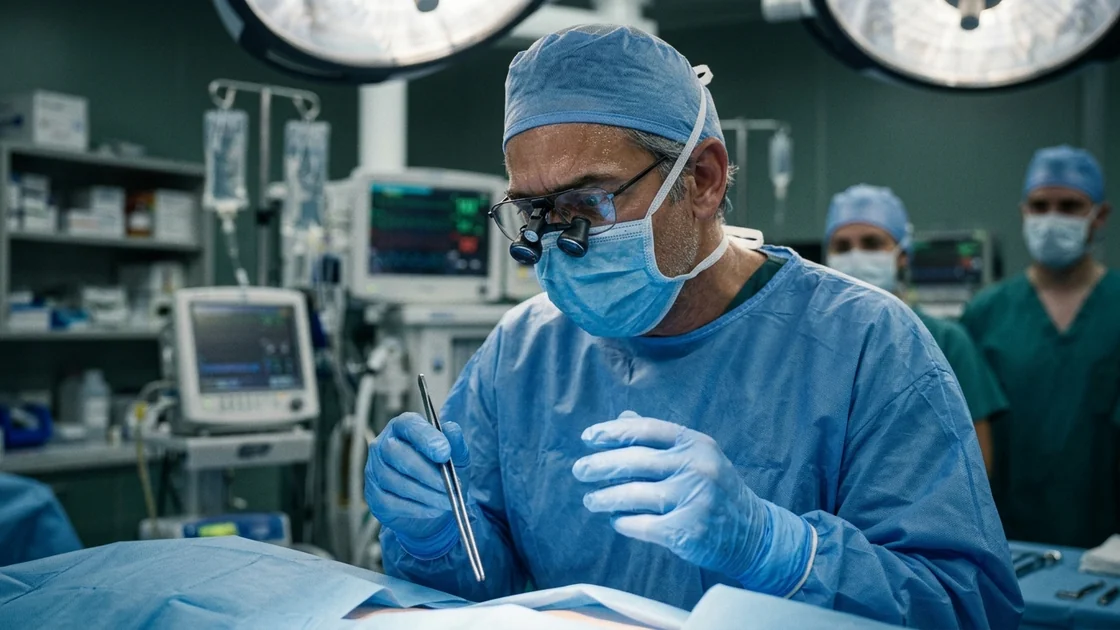
Dr. Julian Vance, an esteemed cardiothoracic surgeon known for his unshakeable composure, loses a young patient during a routine valve replacement due to an unforeseen anatomical anomaly. Devastated by the loss, Julian descends into a profound psychological crisis characterized by insomnia, panic attacks, and auditory hallucinations of the operating room monitors. Desperate to maintain his reputation and fearful of the stigma surrounding mental health in the medical community, he goes to extreme lengths to conceal his deterioration from his colleagues, his supportive wife, and the hospital board, until a high-stakes surgery forces him to confront the catastrophic cost of his silence.
The rhythm of Operating Room Four was a language Julian Vance had spoken fluently for fifteen years. It was a dialect composed of the steady, percussive hiss of the ventilator, the rhythmic beep-beep-beep of the pulse oximeter, and the low, subterranean hum of the cardiopulmonary bypass machine. To the uninitiated, it was a cacophony of mechanized anxiety. To Julian, it was the sound of absolute control.
Until the Tuesday in November when the language turned into a scream.
The patient was Lukas Miller, twenty-four years old, a graduate student in architecture with a congenital bicuspid aortic valve that had finally begun to stenosis. On paper, it was the kind of surgery Julian could perform in his sleep—a straightforward mechanical valve replacement. Lukas was young, his myocardium was strong, and his vessels were clean, free of the calcified plaques that made operating on septuagenarians feel like chiseling through coral.
"Cross-clamp time?" Julian had asked, his eyes magnified by the surgical loupes, focused entirely on the glistening, arrested heart nestled within the pericardial cradle.
"Forty-two minutes, Dr. Vance," Dana, the perfusionist, called back from behind her console of spinning rollers and oxygenators.
"Good. We’re coming off bypass in ten. Let’s start rewarming."
Julian’s hands were steady. They were famous at St. Jude’s Metropolitan for their stillness. Residents joked that Vance didn’t have a resting tremor because he didn’t have a pulse of his own; he was simply an extension of the stainless-steel instruments he wielded. He had just tied down the final suture on the sewing ring of the St. Jude mechanical valve, his fingers dancing through the knots with practiced, economical grace.
They released the aortic cross-clamp. Warm, oxygenated blood rushed back into the coronary arteries. The heart, pale and flaccid for the last forty minutes, flushed pink and gave a sluggish, fibrillating twitch.
"Paddles," Julian said, extending a gloved hand without looking up.
The scrub nurse slapping the internal defibrillator spoons into his palm was a reflex. Julian placed them on either side of the ventricles. "Clear." A tiny click, a twenty-joule jolt, and the heart jumped into a crisp, sinus rhythm.
"Looking good, Julian," said Dr. Arthur Pendelton, the anesthesiologist, peering over the sterile blue drape that separated Lukas’s head from his splayed chest. "Pressures are stabilizing. Eighty over fifty... ninety over sixty. Sinus at seventy-eight."
Then, the geometry of the world shifted.
It began at the posterior aspect of the aortic root, a place hidden from direct view, tucked down near the left main coronary artery. Later, the autopsy would reveal a microscopic, localized focus of cystic medial necrosis—a phantom weakness in the arterial wall that no echocardiogram or angiogram could have detected. The tissue there was not leathery and resilient as it should have been; it was like wet tissue paper.
As the left ventricle began to contract against its new resistance, the pressure spiked just enough to find that hidden flaw.
A jet of bright, arterial blood erupted from behind the root, striking the clear plastic lens of Julian’s loupes.
"Whoa," Clara, the chief resident assisting him, gasped as the chest cavity filled with red, instantly obscuring the surgical field.
"Suction," Julian commanded, his voice dropping an octave, still entirely flat. "Two suckers in the field. Dana, go back on bypass. Now."
"Going back on," Dana said, her voice tightening.
"Arthur, drop his pressure. Give me nitroprusside. I can’t see the tear."
Julian’s left index finger plunged into the pool of warm blood, searching by touch for the source of the hemorrhage. He felt the jet hitting his double-gloved fingertip—a fierce, pulsing laceration at the base of the aorta. The suture line had held, the valve was secure, but the native tissue just millimeter below the annulus had simply disintegrated.
"It’s the root," Julian said, his jaw clenching behind his mask. "The posterior wall is dissecting. Give me a 4-0 Prolene on a pledget. Hurry."
For the next forty minutes, time dilated and fractured. What had been a symphony of routine became a brutal, desperate trench warfare. Every time Julian placed a stitch into the tearing aortic wall, the needle seemed to slice right through the friable tissue like warm butter, creating three new holes for every one he tried to close.
"Pressure is forty over palp," Arthur said, his normally jovial voice stripped down to bare wire. "I’m hanging the fourth unit of packed cells. Calling for the massive transfusion protocol."
"I need to redo the whole root," Julian muttered, sweat finally breaking out across his brow, soaking into the paper band of his scrub cap. "Get me a ValSalva graft. Size twenty-eight. Clamp the aorta again."
"Julian, he’s already been on pump for ninety minutes," Clara whispered, her eyes wide above her mask as she worked the Yankauer suction, which was making a frantic, slurping sound that couldn't keep up with the rising tide of blood.
"I know how long he’s been on the pump, Clara! Clamp it!"
They clamped. They cut out the newly placed valve. They tried to reconstruct the shattered base of the heart’s main conduit using Dacron and bovine pericardium and Bioglue. Julian’s fingers moved with a terrifying, manic speed, yet he felt as though he were underwater. The tissue wouldn't hold. It was like trying to sew smoke.
When they finally tried to wean Lukas off the bypass machine the second time, three hours later, the heart was swollen, bruised, and exhausted. The left ventricle, starved of proper perfusion during the catastrophic bleed and subsequent repair, refused to beat effectively.
"Epi drip is maxed," Arthur said softly. "Milrinone is running. Norepinephrine is maxed. Julian... the ventricle isn't moving."
On the monitor, the arterial line tracing was nearly flat—a lazy, undulating wave that barely registered thirty millimeters of mercury. The QRS complexes on the ECG were wide, bizarre, agonizingly slow. Beeeeep.......... beeeeep.......... beeeeep.
"Put him on ECMO," Julian said, his hands still inside the chest, gently massaging the boggy, non-compliant muscle of Lukas’s heart. Beneath his fingers, the myocardium felt like cold dough.
"Julian," Arthur stepped around the drape, violating the invisible boundary between anesthesia and surgery to look directly into Julian’s blood-flecked loupes. "Look at his pupils. They’re fixed and dilated. We lost cerebral perfusion during the exsanguination. Even if we put him on the circuit, there’s nobody home anymore. His lactate is nineteen."
Julian didn't stop squeezing the heart. Compress, release. Compress, release. Each squeeze produced a pathetic, artificial blip on the monitor. If he kept squeezing, the monitor kept beeping. If the monitor kept beeping, Lukas Miller was still alive. It was a simple equation.
"Open the ECMO pack," Julian said to the circulating nurse. Nobody moved. The room was dead silent save for the machines and the wet, rhythmic squelch of Julian’s gloved hand pumping a dead heart.
"Dr. Vance," Clara said, her voice trembling. A tear had spilled over her lower lash, soaking into the top edge of her blue mask. "Let him go."
Julian looked down into the chest cavity. He looked at the brilliant white Dacron graft he had spent two hours frantically sewing into place, now stained a dull, clotting crimson. His hand slowed. Then stopped.
He pulled his hands out of the chest and held them up, palms toward himself, as he had been trained to do for half his life to maintain sterility. The red dripped from his wrists down onto his pale blue gown.
On the monitor, the wide, dying electrical complexes finally surrendered, stretching out into a single, unbroken, neon-green horizon.
"Time of death," Julian said. The voice didn't sound like his own; it sounded like a recording played from the bottom of a well. "Fourteen... thirty-two."
The walk from the operating suite to the family consultation room was two hundred yards long, traversing a subterranean corridor of polished linoleum before ascending a dedicated elevator to the surgical waiting area. Julian had made this walk before. No cardiothoracic surgeon reaches the pinnacle of their career without collecting ghosts along the way. He had lost octogenarians with ruptured aneurysms; he had lost infants with hypoplastic left hearts; he had lost septic endocarditis patients whose valves were eaten away by bacteria.
He had never lost a twenty-four-year-old who had walked into the hospital that morning carrying a sketchbook.
Before leaving the locker room, Julian had stood in front of the mirror for three minutes. He had washed his hands until the skin was raw and pink, scrubbing away the phantom stickiness that seemed to have penetrated the double layer of latex. He put on a fresh pair of crisp navy scrubs and his long white coat, stiff with starch. He ran a comb through his silver-templed dark hair. He practiced the alignment of his jaw.
They need an anchor, his mentor, Dr. Sterling, had told him twenty years ago during residency. When their world is disintegrating, you cannot disintegrate with them. If the captain weeps, the passengers drown. You give them the facts, you give them your sorrow, and you remain a wall they can lean against.
When Julian pushed open the heavy oak door of Consultation Room B, Lukas’s parents rose as one. Mrs. Miller was clutching a knitted cardigan to her chest; Mr. Miller had his hand on her shoulder, his face gray with the particular fatigue of people who have been drinking hospital coffee for six hours.
They knew before he spoke. They always knew. It was something in the posture, or perhaps the fact that he was alone.
"Mr. and Mrs. Miller," Julian began, his voice low, steady, and resonant. He sat down opposite them as they collapsed back into the vinyl armchairs. He explained the bicuspid valve. He explained the successful placement. Then, he explained the dissecting root, the hidden tissue weakness, the massive hemorrhage, and the inability of the heart to recover.
Mrs. Miller didn't scream. She made a sound that was much worse—a tiny, hollow whistling noise in the back of her throat, as though all the air in her lungs had been permanently evacuated, and then she folded forward until her forehead touched her knees. Mr. Miller stared at Julian, his mouth working silently, his eyes darting across Julian’s face as if searching for a hidden clause in a contract, a loophole that would void what had just been said.
"You said ninety-nine percent," Mr. Miller whispered. His voice was raspy, incredulous. "In your office last week. You drew it on the whiteboard. You said a healthy kid his age, it’s a ninety-nine percent success rate."
"It is," Julian said, his hands folded neatly in his lap, his thumbs pressing against each other with enough force to turn the nails white. "Your son fell into the one percent due to an undiagnosed connective tissue anomaly in the aortic wall. We did everything medically possible to repair the tear. I am profoundly sorry for your loss."
Mr. Miller continued to stare at him. The grief hadn't fully metabolized into anger yet; it was still pure, radioactive shock. "You don't even have blood on your shoes," the man muttered, looking down at Julian’s spotless black clogs. "My boy is gone, and you look like you just stepped out of a meeting."
Julian didn't flinch. He absorbed the blow, nodded once with solemn gravity, gave them the contact information for the bereavement coordinator, and stepped back out into the hallway.
He walked past the nurses' station, where three surgical nurses stopped talking to watch him pass.
"How’d he take it?" he heard one murmur as he rounded the corner toward the administrative wing.
"It’s Vance," another replied, a note of awe and clinical detachment in her voice. "Ice water in the veins. He’s already reviewing his chart for tomorrow's CABG."
Julian reached his private office on the fourth floor. He stepped inside, closed the heavy door, engaged the deadbolt, and walked into his small private washroom. He didn't make it to the porcelain bowl of the toilet before his knees buckled. He hit the tiled floor hard, his forehead slamming against the cool ceramic rim as he vomited up the black coffee and bile that constituted the entirety of his stomach contents.
He stayed there for forty minutes, curled on the floor between the sink pedestal and the wall, his pristine white coat bunched beneath him. He didn't cry. He wanted to—he felt a tremendous, tectonic pressure behind his sternum that demanded a release—but his body had spent so many decades repressing autonomic panic that the mechanism seemed broken. Instead, he just shook. A violent, full-body rigor seized him, his teeth chattering so hard he bit the inside of his cheek, filling his mouth with the coppery taste of blood.
When he looked at his hands, held out in front of his face in the dim light of the bathroom, they were trembling. It wasn't a fine physiological tremor. It was a coarse, erratic oscillation, as if the nerves in his forearms were firing at random.
And in the silence of the tiled room, just beneath the rushing sound of the building’s HVAC system, he heard it.
Beeeeeeeeeeeeeeeeeeeeeeeeeeeep.
A high, thin, monotonous frequency, vibrating directly inside his auditory cortex.
"You’re home early," Elena said, looking up from the kitchen island where she was spreading blueprints for a municipal botanical garden she was designing. She was forty-two, five years his junior, with warm brown eyes and a habit of tucking her reading glasses into the messy bun atop her head. She smiled, stepping around the marble counter to kiss his cheek. "I thought you had the departmental budget meeting after your afternoon case."
"Rescheduled," Julian said, kissing her back. He had spent twenty minutes sitting in his parked Mercedes in the hospital garage, gripping the leather steering wheel until the shaking in his hands subsided to a manageable vibration. He had sucked on three mints to hide the sour trace of bile. "Arthur had a conflict."
Elena paused, her hand lingering on his bicep. Her smile faded slightly, replaced by the observant squint she used when assessing a flawed architectural rendering. "You’re freezing, Jules. Are you coming down with something?"
"Just the hospital AC. They had the chillers turned up in the OR." He stepped away smoothly, moving toward the bar cart in the dining room—a tactical retreat disguised as domestic routine. He poured two fingers of Glenfiddich into a heavy crystal tumbler, keeping his back to her so she wouldn't see him use both hands to steady the decanter. "How did the presentation with the city council go?"
Deflect and inquire. It was a technique he used with anxious patients, and over the years, he had seamlessly adapted it to his marriage. Elena loved him fiercely, and because she loved him, she worried about the crushing weight of his profession. Early in their marriage, he had shared the dark moments with her, only to watch the secondary trauma hollow her out, keeping her awake with worry on the nights he was on call. So, bit by bit, Julian had built a containment wall around his work. He brought home the triumphs—the thank-you cards, the miraculous saves—and buried the corpses in the hospital basement.
"Oh, you know Councilman Higgins," Elena sighed, leaning back against the counter as Julian took a large swallow of the scotch, letting the peat burn away the phantom taste of blood in his mouth. "He wants the conservatory glass sourced locally, which triples the cost, while simultaneously asking me to cut the budget by fifteen percent. How was your day? You had that young man today, didn't you? The architecture student from State?"
The crystal tumbler froze halfway to Julian’s lips.
He had forgotten. Two nights ago, over pasta, he had mentioned Lukas’s profession, knowing it would interest her. A kid studying your field, he’d said lightly. Good portfolio, from what he told me in pre-op. Just needs a new valve so he can pull all-nighters without fainting.
Inside Julian’s head, the high-pitched tone of the flatline surged in volume, threatening to drown out the hum of the Sub-Zero refrigerator. He looked at his wife. She looked tired, happy to see him, stressed about glass sourcing. If he told her that the twenty-four-year-old kid who loved Frank Lloyd Wright was currently lying in a stainless-steel drawer in the basement of St. Jude’s with his chest stapled shut over a mass of clotted Dacron, the evening would shatter. She would weep for the boy’s mother. She would look at Julian with that terrible, suffocating pity. She would ask him if he needed to take time off.
And if Julian stopped moving, even for a single day, he knew with sudden, terrifying certainty that he would never be able to pick up a scalpel again.
"Yes," Julian said. He took another sip of scotch. His voice was velvet. "Lukas."
"How did he do?"
"Textbook," Julian lied. The word came out with horrifying ease. "A bit of calcified tissue around the annulus, took an extra twenty minutes on the pump, but the new valve seated beautifully. He’s in the CTICU now. Should be extubated by morning."
Elena’s face brightened, the tension leaving her shoulders. "Oh, I’m so glad. Twenty-four is way too young to be dealing with heart surgery. Maybe when he recovers, I can have him by the firm to look at what we're doing with the park."
"Maybe," Julian said, turning toward the stairs. "I’m going to take a shower, El. My neck is stiff from the loupes."
That night marked the beginning of the partition.
Julian lay on his side of the king-sized bed, staring at the slices of silver moonlight falling through the plantation shutters. Beside him, Elena breathed in the deep, slow cadence of the untroubled. Every time Julian closed his eyes, he didn't see darkness; he saw the bright, oxygenated crimson of arterial blood hitting the plastic lenses of his glasses. He felt the doughy, unresponsive weight of Lukas’s left ventricle in his palm. Compress, release. Compress, release.
At 3:00 AM, his heart began to race. It started with a premature ventricular contraction—a hard, fluttering thud in his chest that made him gasp—followed by a runaway sinus tachycardia. Within thirty seconds, his pulse was at one hundred and forty beats per minute. The bedroom walls seemed to tilt inward. He couldn't get a full breath; it felt as if someone had tightened a steel sternal wire around his own ribcage.
Silently, with the practiced stealth of a man who had spent decades answering midnight pages without waking his spouse, Julian slipped out of bed. He walked barefoot down the carpeted stairs to his home study, locked the door, and sat on the leather sofa in the dark, his head between his knees, gasping for air like a fish on a dock.
It’s an acute stress reaction, the physician in him diagnosed coldly, observing his own pathetic physiological collapse from a distance. Catecholamine surge. Hyperventilation leading to respiratory alkalosis. Breathe into your cupped hands to increase CO2 partial pressure.
He did. It took an hour for his heart rate to drop below a hundred. He didn't go back to bed. At 5:00 AM, he showered, shaved with extreme care to avoid slicing his throat with his trembling right hand, dressed in a charcoal suit, and drove back to the hospital before the sun came up.
The Morbidity and Mortality conference at St. Jude’s was held every Friday morning at seven o'clock in the main amphitheater. It was an ancient medical ritual, part scientific inquiry, part confessional, part tribunal.
Julian stood at the podium at the bottom of the steeply raked room. Behind him, projected onto a twenty-foot screen, were the echocardiograms, the perfusion logs, and finally, the high-resolution digital photomicrographs from the pathology department showing the histology of Lukas Miller’s aortic wall.
Two hundred pairs of eyes watched him from the tiered seats—residents clutching travel mugs, fellow attendings in their white coats, and in the front row, Dr. Richard Sterling, the Chief of Surgery, his silver hair gleaming under the recessed lighting.
Julian had not slept for more than ninety consecutive minutes in the seventy-two hours since Lukas died. To compensate, he had ingested four shots of espresso and, forty minutes prior, had gone into his office, opened his sample cabinet, and swallowed twenty milligrams of propranolol—a beta-blocker he occasionally prescribed for patients with benign essential tremor or stage fright.
The drug worked. His heart was locked in a chemical cage, forbidden from racing, and his hands, resting lightly on the edges of the mahogany lectern, were as still as carved marble. Inside his skull, however, he felt untethered, floating three inches above his own shoes, while the phantom monitor continued its relentless beep... beep... beep behind his ears.
"As you can see from the H&E stain provided by Dr. Aris in pathology," Julian said into the microphone, using his laser pointer to circle a pale, fragmented zone in the pink tissue slide. The tiny red dot didn't waver. "There was extensive mucoid extracellular matrix accumulation and elastin fiber fragmentation localized entirely to the non-coronary sinus and posterior root. The patient had no marfanoid habitus, no family history of dissection, and an aortic root diameter of thirty-six millimeters on pre-op TEE, well below the threshold for prophylactic root replacement."
"Dr. Vance," a voice called out from the third row. It was Dr. Marcus Thorne, a vascular surgeon who had been gunning for the associate chief position for years and possessed the predatory instincts of a barracuda. "Given the friability of the tissue upon initial aortotomy, was there no tactile indication during the excision of the native leaflets that the annulus was compromised?"
The amphitheater went quiet. It was a polite, academic way of asking: Didn't you feel that the tissue was rotten before you sewed a rigid ring into it, you idiot?
Julian looked up at Thorne. He felt nothing—no anger, no defensiveness, only a vast, echoing coldness.
"The pathology was sub-annular and posterior, Dr. Thorne," Julian replied evenly. "The annulus itself held the sutures throughout the entirety of the hemorrhage. As documented in the operative note, the dissection originated four millimeters inferior to the suture line upon restoration of physiological arterial pressure. Had the tissue integrity been questionable at the level of the leaflet excision, I would have performed a Bentall procedure immediately."
"A tragedy, certainly," Sterling said from the front row, turning slightly to cast a quelling glance back at Thorne before looking back at Julian. "Unforeseeable by any current diagnostic standard. A reminder to the residents here that even routine pathology can harbor catastrophic anomalies. Thank you for the thorough presentation, Julian."
The exoneration was total. In the eyes of his peers, the hospital administration, and the morbidity committee, Julian Vance was blameless. It was an Act of God, a rogue genetic mutation, a statistical inevitability in a high-volume center.
As the crowd filed out of the amphitheater toward the cafeteria, Arthur Pendelton fell into step beside Julian. The anesthesiologist looked haggard; there were dark bags under his eyes that hadn't been there on Monday.
"Hell of a week, Julian," Arthur said quietly, adjusting the strap of his messenger bag. "I haven't been sleeping right since Tuesday. Every time I close my eyes, I see that kid’s pressures dropping off a cliff. Honestly, I don't know how you do it. You stood up there today like you were presenting a lecture on potassium homeostasis."
Julian looked at Arthur. A desperate, frantic impulse surged up from the dark well inside him. He wanted to grab Arthur by the lapels of his white coat, pull him into the nearest stairwell, and say: I haven't slept since Tuesday. I threw up in my sink this morning. I lied to my wife and told her the boy is alive. I took beta-blockers out of a sample closet so my hands wouldn't shake in front of Thorne. I hear the flatline in my head right now, Arthur. Help me.
The words were right there, pressing against the back of his teeth.
Then he saw Clara, his chief resident, walking three paces ahead of them. She glanced back at Julian, her posture straightening automatically, drawing strength from his perceived invulnerability. He saw Dr. Sterling down the hall, talking to the hospital CEO, pointing toward Julian with an expression of pride.
If Julian cracked, the architecture of his entire life would collapse. Surgeons were not allowed to break. A depressed internist was given a sabbatical and a referral; a surgeon with a tremor and auditory hallucinations was stripped of his privileges, whispered about in locker rooms, relegated to reviewing insurance claims or teaching anatomy to first-years. He was Julian Vance. He was the safety net. Who catches the safety net when it falls?
"You have to compartmentalize, Arthur," Julian said, clapping a warm, steady hand on the anesthesiologist’s shoulder. "If we carry the graves with us into the next room, we do a disservice to the living. I have a mitral valve repair at nine. Are you on the board with me?"
Arthur sighed, shaking his head with a mixture of envy and exhaustion. "Yeah. OR Two. See you in twenty, Iron Man."
By December, the partition in Julian’s mind had grown into a labyrinth.
To maintain the illusion that Lukas Miller was alive—a lie he had told Elena in a moment of panic that had now calcified into an inescapable trap—he had to invent a recovery.
"How’s the architecture student?" Elena had asked over Thanksgiving weekend as they hosted her sister’s family.
"Discharged on Thursday," Julian had said while carving the turkey, his propranolol-steadied hand slicing effortlessly through the joint. "Doing cardiac rehab as an outpatient. He gave the nurses a sketch of the ICU view before he left."
Every lie required two more to prop it up, and each one drove a wedge deeper into his psyche. He began sleeping in the guest room under the pretense of a busy call schedule, claiming he didn't want his midnight pager to disrupt Elena’s rest during a crucial phase of her botanical garden project. In reality, he couldn't bear to lie next to her while his skin was slick with night sweats, his muscles twitching with hypnic jerks the moment he drifted toward unconsciousness.
Sleep had become the enemy. When he slept, he was back in OR Four. In the dreams, the chest cavity wasn't a chest cavity; it was an abyss, and the blood rising within it was drowning the entire room, rising past his knees, his waist, his neck, while Lukas Miller sat up on the operating table, his chest splayed open, asking Julian why the ninety-nine percent hadn't included him.
To combat the exhaustion, Julian began raiding the automated dispensing cabinets in the post-anesthesia care unit using a clever workaround of wasted-dose protocols he had observed an impaired resident use five years earlier—a resident Julian himself had summarily fired without a second thought.
It was a terrifyingly clinical regimen. Modafinil in the morning to cut through the dense, cottony brain fog of sleep deprivation. Forty milligrams of propranolol two hours before first incision to assassinate the tremor in his fingers and keep his heart rate at a artificially tranquil fifty-eight beats per minute. Then, at night, sitting in his parked car at a scenic overlook three miles from his house before going home, two milligrams of lorazepam washed down with lukewarm water to quiet the beep-beep-beep in his ears just enough that he could sit at the dinner table with Elena without screaming.
He was his own attending physician, managing a critically failing patient—himself—with polypharmacy and sheer, brutal willpower.
Yet, inside the operating room, something bizarre was happening. He had become hyper-vigilant to the point of pathology.
During a routine triple-bypass in the second week of December, with Clara assisting, Julian completed the grafts in record time. His technique was flawless—the propranolol saw to that—but when it came time to close the sternum, he stopped.
"Wait," Julian said, staring down into the mediastinum. The heart was beating strongly, the saphenous vein grafts pulsing with blood.
"Dr. Vance?" Clara asked, holding the sternal wires ready. "Hemostasis looks dry. Perfusion is off."
"Look at the posterior wall of the ascending aorta," Julian said. His eyes, magnified by the 3.5x loupes, were locked onto the pink, pulsating vessel just below the cross-clamp site. In the harsh glare of the overhead halogen lights, the tissue looked... thin. He could swear he saw it bulging outward with each systolic beat, preparing to shred itself into wet tissue paper.
"It looks completely normal, Dr. Vance," Clara said after a pause. "There’s no hematoma, no dilatation."
"Give me a 4-0 Prolene with felt strips," Julian ordered, his voice tight. "I’m going to reinforce the adventitia around the cannulation site."
"Sir, it’s completely dry. If we start putting unnecessary sutures into a calcified aorta, we risk creating a plaque disruption—"
"Give me the suture!" Julian barked.
The sudden violence in his voice made the scrub nurse jump, dropping a needle driver onto her Mayo stand with a loud metallic clatter. Julian Vance never yelled. In fifteen years, he had never raised his voice above a conversational mezzo-piano. The entire room froze. Over the drape, the anesthesiologist—a young attending named Chen—stood up to peer into the field.
Julian stared at his gloved hands. Even through the heavy veil of the beta-blockers, his right index finger was twitching. Beep. Beep. Beep. The monitor was too loud. Why did they always turn the volume on the pulse oximeter up so high? It was drilling into his temples.
He took a slow breath through his nose, smelling the cauterized fat and the ozone of the Bovie machine. He forced his shoulders down.
"Excuse me," Julian said, his voice dropping back into its familiar, icy register. "The lighting angle made the adventitia look attenuated. You’re right, Clara. It’s dry. Let’s wire the sternum."
He walked out of the OR ten minutes later, letting Clara close the skin, and went straight to the locker room. When he pulled off his scrub top, his chest was covered in a fine, clammy sheen. He looked at himself in the locker mirror. He had lost twelve pounds in a month. His cheekbones were sharp, the skin beneath his eyes bruised a deep, hepatic plum. He looked like one of his end-stage heart failure patients.
I need to stop, he thought, leaning his forehead against the cool steel of Locker 14. I need to go to Richard Sterling’s office right now and tell him I need a medical leave.
He closed his eyes and imagined the scene. He saw Sterling’s face morph from paternal concern to institutional calculation. He saw the mandatory psychiatric evaluation. He saw the state medical board questionnaire he would have to fill out every two years for the rest of his life: Have you ever been treated for a mental health condition or substance abuse issue that could impair your ability to practice medicine? Check yes, and you are damaged goods forever. Every complication you ever have in the future will be viewed through the lens of your breakdown. If another patient bleeds out, Marcus Thorne won't ask about histology; he’ll ask if Julian Vance had another panic attack at the table.
He opened his locker, took out the amber pill bottle hidden inside his spare running shoe, dry-swallowed another ten milligrams of propranolol, and went down to the clinic to see his afternoon pre-ops.
The unraveling accelerated as Christmas approached. The isolation Julian had engineered to protect himself had become a vacuum chamber, starving him of oxygen.
He began spending hours in the hospital medical library late at night, long after Elena thought he was sleeping in the on-call room. He wasn't reading about cardiothoracic surgery; he was reading every paper ever published on idiopathic cystic medial necrosis, searching for a phantom biomarker, an obscure clinical sign he had missed during Lukas Miller’s fifteen-minute pre-operative physical. If he could prove it was his fault—if he could find a note in the chart where Lukas complained of back pain or showed hypermobile joints—then the universe would make sense again. A mistake could be corrected; a surgeon could learn from an error.
What Julian could not survive was the randomness. If you could do everything right, with the steadiest hands in the state, and a twenty-four-year-old boy could still dissolve beneath your fingers in four minutes, then the control Julian had worshipped his entire life was a delusion. Every time he opened a chest, he was just playing Russian roulette with someone else’s heart.
One Tuesday evening, five weeks after Lukas died, Julian came home at eight o'clock. The house smelled of rosemary and roasted garlic. Elena was in the living room, a glass of cabernet in her hand, looking at a framed document on the mantelpiece.
When Julian walked in, his briefcase hanging like lead from his hand, she turned around. Her face was pale. She wasn't smiling.
"Jules," she said softly.
Julian stopped just inside the foyer, his coat still on. His autonomic nervous system, permanently primed for disaster, instantly flooded his bloodstream with adrenaline, fighting against the pharmaceutical dam of the beta-blockers. "What’s wrong?"
Elena held up a folded newspaper—the local metro section from three weeks ago that she had evidently pulled from the recycling bin in her studio.
"I was looking for the article on the zoning board," she said, her voice dangerously quiet, trembling at the edges. "And I happened to flip past the obituaries from November."
Julian’s blood turned to slush in his veins.
"Lukas Miller," Elena read from the newsprint, her dark eyes lifting to lock onto his. "Age twenty-four. Passed away unexpectedly at St. Jude’s Metropolitan Hospital on November twelfth. Beloved son of David and Sarah. Memorial contributions may be made to the School of Architecture."
The grandfather clock in the corner of the hallway ticked. Tick. Tick. Tick. In Julian’s ears, it synchronized with the phantom pulse oximeter.
"Elena," Julian started, his mouth dry as ash.
"You told me he was in the ICU," she whispered, taking a step toward him, the paper crumpling in her fist. "You told me he was extubated. On Thanksgiving, you sat at that table with my family and told me he drew a picture for the nurses before he was discharged! Why would you do that? Why would you make up a story like that?!"
"I didn't want to upset you," he said, the excuse sounding insane even to his own ears. "You had the city council presentation that night. You were already stressed, and because he was an architecture student—"
"Don't you dare put this on me!" Elena’s voice cracked, rising into a shout that echoed off the high ceilings of their pristine home. "Do you know how crazy that is, Julian? It’s psychotic! A boy died on your table, and instead of telling your wife, you invented an entire fantasy life for him for a month! Who does that?"
She walked right up to him, dropping the paper onto the hardwood floor. Up close, in the bright light of the foyer chandelier, she really looked at him—perhaps for the first time in weeks, since he had been ghosting through the house in the dark before dawn and late at night. She looked at his sunken cheeks, the pinpoint pupils of the lorazepam he’d taken in the driveway, the strange, waxy pallor of his skin.
"Look at you," she breathed, her anger suddenly collapsing into sheer horror. She reached out and grabbed his hands. Because he had forgotten to take his evening dose of propranolol, they were shaking—a steady, rhythmic palsy against her warm palms. "Julian, you’re vibrating. What is happening to you? Are you sick?"
He jerked his hands out of her grasp as if she had burned him, shoving them deep into the pockets of his wool overcoat. The shame of being seen—of having his tremor felt by another human being—triggered a vicious, cornered defensive reflex.
"I’m fine," he snapped, his jaw rigid. "I’ve been working eighty-hour weeks covering for Jenkins while he’s at the conference in Zurich. I’m tired, and I’ve had too much coffee. As for the Miller boy, I keep my work at the hospital for a reason, Elena. You don't understand what it’s like in that room. When I come home, I want a normal house, not an extension of the bereavement ward!"
Elena stared at him, tears spilling over her lower lashes. "We’ve been married for twelve years, Julian. I am your partner, not your housekeeper. If you can’t tell me when your heart is breaking, then what are we even doing here?"
"My heart isn't breaking!" he roared, the sound tearing out of his throat with such ferocity that she took a step backward, her hand flying to her mouth.
The silence that followed was absolute. Julian stood in the foyer, his chest heaving, horrified by the stranger who had just spoken with his voice. He looked at his wife’s terrified face, and he realized that if he stayed in this house tonight, she would keep pushing. She would look in his briefcase. She would find the amber bottles with no prescription labels. She would call Arthur Pendelton or Richard Sterling. She would try to save him, and in saving him, she would destroy him.
"I’m on call," Julian said, his voice dropping back into its dead, flat monotone. "I have an early case tomorrow. I’ll stay in the hospital quarters for the rest of the week."
He turned and walked out the front door before she could speak, leaving her standing alone in the bright foyer with the dead boy’s obituary at her feet.
He moved into the attending sleep rooms on the sixth floor of St. Jude’s.
Nobody questioned it at first. December was notorious for high census numbers in cardiothoracic surgery—cold weather triggered myocardial infarctions, holiday stress ruptured aneurysms, and patients scrambled to get elective procedures done before their insurance deductibles reset in January. Seeing Dr. Vance prowling the corridors at two in the morning in his long white coat became just another fixture of the hospital’s nocturnal ecosystem, like the waxing machines and the hum of the pneumatic tubes.
If anyone noticed that he had become gaunt, or that he no longer ate in the physicians' dining room, or that his eyes had developed a strange, glassy intensity, nobody said a word. Such was the armor of prestige at a major academic medical center. He was the top revenue generator for the surgical department; his mortality statistics, even with Lukas Miller factored in, were in the ninety-eighth percentile nationally. You do not ask the golden goose if it is having a nervous breakdown.
Instead, Julian descended into a private purgatory.
Without the anchor of home, the hallucinations grew bolder. They were no longer confined to the quiet moments in the bathroom or the dark hours before sleep. He heard the flatline walking down the crowded main concourse of the hospital. He would be standing in the elevator surrounded by medical students and visitors, and suddenly he would smell the metallic, coppery stench of massive exsanguination so strongly that he would have to press the back of his hand against his mouth to keep from gagging.
He began visiting Operating Room Four at night when the surgical schedule was finished and the cleaning crews had mopped the floors with bleach. He would badge himself in, stand in the dark beside the stainless-steel table in the center of the room, and stare at the black screens of the anesthesia monitors, waiting for them to light up with neon-green zeroes.
During the day, he operated on autopilot, relying on twenty years of muscle memory and increasing doses of beta-blockers. He was up to eighty milligrams of propranolol before cases now. As a result, his resting blood pressure was hovering around ninety over fifty. When he stood up too quickly from his desk chair, his vision would tunnel into black static for five seconds, forcing him to grip the edge of the mahogany until his cerebral perfusion caught up.
Three days before Christmas, Clara knocked on his office door.
Julian was sitting at his desk, staring at a blank legal pad. His computer screen was displaying Lukas Miller’s perfusion log for the four-hundredth time. With a jerky movement, he minimized the window before calling out, "Come in."
Clara stepped inside, holding a tablet. The chief resident looked uneasy, shifting her weight from one foot to the other. She had worked under Julian for two years; she worshipped him, imitated his knot-tying technique, and adopted his brisk bedside manner. Because she studied him so closely, she was the only person in the hospital who had noticed the fissures in the monument.
"Dr. Vance," she said, closing the door halfway behind her. "We just got a transfer from Mercy General in the ED. Sixty-two-year-old female, acute Type A aortic dissection. She’s hypotensive, tamponading on the bedside echo. Dr. Thorne is in a four-vessel CABG in OR One, and Dr. Miller is out with the flu."
Julian’s stomach dropped through the floor.
Type A aortic dissection.
The ascending aorta—the exact anatomical structure that had disintegrated in Lukas Miller—was tearing itself apart in a sixty-two-year-old woman downstairs. It was the highest-mortality emergency in cardiac surgery. The tissue would be boggy, swollen with blood, friable. He would have to put her on deep hypothermic circulatory arrest, cool her body until her brain was clinically dead, cut out the torn root, and sew into tissue that wanted to rip.
"Did you call Sterling?" Julian asked. His voice sounded rusty, unused.
"Dr. Sterling is at the board retreat downtown," Clara said, stepping closer to the desk. She looked down at Julian, her brow furrowing as she took in the grey cast of his skin and the slight, rhythmic bobbing of his head—a symptom of the severe exhaustion he could no longer fully mask. "Dr. Vance... Mercy General can divert her to University Hospital across town if we don't have an open room. She has maybe twenty minutes before she ruptures completely, so the transport is risky, but... you’ve been here for seventy-two hours straight. You did two valves and a thoracotomy yesterday."
She was offering him an out. His resident—his subordinate—was looking at him and seeing a man who shouldn't be holding a knife.
Pride, toxic and absolute, flared in Julian’s chest, burning away the lethargy. If he diverted a crashing Type A dissection from St. Jude’s while he was sitting in his office, the entire surgical department would know why within an hour. It would be an admission of impotence. It would be the end.
And beneath the pride was another, darker compulsion: a desperate, delusional belief that if he could go into that room and conquer a dissecting aortic root, he could retroactively save Lukas Miller. He could prove that the tissue hadn't beaten him.
"We don't divert Type A dissections from a Level One center when I am in the building, Dr. Ross," Julian said, standing up.
The room spun violently. Black spots swarmed across his vision like angry wasps as his orthostatic hypotension kicked in. He planted his knuckles firmly on the desk blotter, leaning forward in a pose of dominance and focus to hide the fact that if he lifted his hands, he would pitch forward onto the carpet. After four agonizing seconds, the blackness receded from the edges of his sight.
"Book OR Four," Julian said, his eyes clearing. "Tell Dana to prime the pump and set up for deep hypothermic arrest. Have them bring the patient straight from the ambulance bay to the table. No CT scan; we’ll use Arthur’s TEE to map the tear once she’s under."
"OR Four is currently down for terminal cleaning after a septic case," Clara said. "They put her in OR Two."
"Fine," Julian said, already moving past her toward the door, his hand slipping into his pocket to touch the reassuring plastic cylinder of his pill bottle. "I’ll meet you at the scrub sinks in five minutes."
Operating Room Two was an identical twin to Four, yet as Julian pushed through the heavy double doors, his forearms held high and dripping with chlorhexidine scrub solution, he felt as though he had never left the room where Lukas died.
It was chaos on arrival. The patient, a woman named Brenda Vane, was gray, her lips cyanotic, her jugular veins distended like ropes in her neck from the blood filling the sac around her heart, crushing it from the outside. Arthur Pendelton was at the head of the bed, slamming an endotracheal tube through her vocal cords while two nurses pumped blood bags by hand.
"She’s about to arrest, Julian!" Arthur yelled as Julian was spun into his sterile gown by the scrub nurse. "Systolic is forty! The pericardium is completely full of clot!"
"Knife," Julian said, not waiting for the final drape clip to be secured.
He made the skin incision from the sternal notch to the xiphoid process in one swift, brutal stroke. He didn't even bother with the electrocautery for the subcutaneous bleeders—there was no time, and at a pressure of forty, she wasn't bleeding from her skin anyway.
"Saw," he demanded.
The pneumatic sternal saw screamed in his hand—a high-pitched mechanical whine that harmonized horribly with the constant flatline ringing inside his skull. He split the breastbone down the middle, threw the retractor in, and cranked it open with such force that a rib cracked with an audible pop.
Before him lay the pericardium, tense and purple-black, bulging like an overinflated tire.
"Stand back," Julian told Clara. He took the Metzenbaum scissors and nicked the pericardial sac.
A geyser of dark, clotted blood and fresh crimson erupted upward, hitting the overhead lights and splashing across Julian’s chest and face shield. Instantly, relieved of the crushing pressure of the tamponade, the patient’s heart gave three violent, bounding contractions, and the arterial line pressure on the monitor shot up from forty to a hundred and ten.
"Hold the pressure there, Arthur!" Julian shouted, his voice strained. Because of the eighty milligrams of propranolol combined with forty milligrams of modafinil he had taken twenty minutes ago in the bathroom, his body was in a state of pharmacological civil war. His mind was racing at a thousand miles an hour, jittery and hyper-stimulated, while his heart was chemically throttled, struggling to pump enough oxygenated blood to his brain against the vasodilated resistance of his vessels.
He looked down into the chest.
The ascending aorta wasn't normal pink; it was the size of a grapefruit, purple and bruised, the outer wall dissected away from the inner lining by a false lumen of pulsing blood. And down at the base, where it met the heart—the aortic root—it was bleeding.
Suddenly, Julian wasn't looking at Brenda Vane.
The sensory deprivation of the past five weeks, the toxic stew of illicit drugs in his bloodstream, and the acute psychological trauma of the identical surgical field caused his brain to short-circuit. The temporal lobe misfired.
The gray-haired woman beneath the drapes vanished. In his mind's eye, with the terrifying clarity of a waking nightmare, it was Lukas Miller on the table. The blood pooling in the mediastinum was Lukas’s blood.
"Heparin is in," Arthur called out. "ACT is four-eighty. You’re good to cannulate."
Julian didn't move. He was staring into the chest cavity. The Yankauer suction in his left hand was trembling so violently that the plastic tip was rattling against the metal teeth of the sternal retractor. Clack-clack-clack-clack-clack.
Everyone in the room heard it.
Clara looked up from the femoral artery she was exposing in the groin for the bypass cannula. The scrub nurse froze, holding the aortic cannula in mid-air.
"Dr. Vance?" Clara said softly.
Julian couldn't hear her. The phantom flatline in his ears had reached a deafening crescendo, drowning out the ventilator, drowning out Arthur’s voice. His vision was shrinking again, a dark ring of frost creeping in from the periphery of his surgical loupes until all he could see was a tiny, bright circle of pulsing, purple-red tissue in the center of the chest.
If I touch it, it will tear, a voice screamed inside his head. It’s wet tissue paper. If I put a needle into that wall, he’s going to bleed out in my hands again. I can’t hold the stitches. Nothing holds.
"Julian," Arthur said, stepping up beside him, his eyes wide above his mask as he looked at Julian’s face. Behind the blood-spattered plastic shield, Julian’s skin was the color of skimmed milk, and sweat was pouring down his temples in rivers, soaking his mask until it clung wetly to his nose and mouth, suffocating him. "Julian, your hand."
Julian looked down at his right hand. He was holding the DeBakey forceps. The tips of the forceps were oscillating across a two-inch arc, completely out of his control. The beta-blockers had failed; the sheer magnitude of his terror had broken through the chemical blockade, unleashing a tsunami of norepinephrine that his exhausted nervous system couldn't handle.
On the monitor, Brenda Vane’s blood pressure began to drop again as blood poured from the tear in her aorta into the open chest. Beep... beep... beep. The pitch of the pulse oximeter was dropping lower, deeper, signaling falling oxygen saturation.
"Cannulate the femoral, Dr. Vance!" Dana, the perfusionist, yelled from the pump. "We’re losing volume! I need to get her on bypass now!"
Julian tried to move his hands toward the groin incision Clara had made. His arms felt as though they were encased in lead. He couldn't remember the steps. For the first time in twenty years, he looked at an open chest and the anatomical map in his brain was completely blank—just a smear of red and terror.
"I can't," Julian whispered. The words were muffled by his sweat-soaked mask, barely audible. "The tissue... it won't hold the Prolene. Mr. Miller said ninety-nine percent."
Clara’s eyes widened in horror. "What? Dr. Vance, this is Mrs. Vane! Give me the cannula!"
Clara reached across the table to take the arterial cannula from the nurse, trying to step into the primary position, when Julian’s cardiovascular system finally surrendered to the massive dose of beta-blockers and vagal panic.
His heart rate, visible only to himself as a heavy, sluggish thudding in his throat, dropped into the thirties. His blood pressure bottomed out.
The tiny circle of light in the center of his loupes winked out into absolute, pitch blackness.
Julian Vance, the Iron Man of St. Jude’s, didn't even put his hands out to catch himself. He simply tipped backward from the operating table like a felled tree. His shoulder clipped the Mayo stand, sending fifty thousand dollars' worth of titanium micro-instruments crashing across the linoleum floor in a deafening avalanche of steel, before the back of his head struck the floor tiles with a sickening, hollow thud.
As consciousness fled, the very last thing he registered was a profound, overwhelming sense of relief: the flatline in his ears had finally stopped.
When Julian opened his eyes, the light was wrong.
It wasn't the harsh, shadowless halogen glare of the operating theater, nor was it the dim, shuttered gloom of his bedroom at home. It was the soft, diffused fluorescent glow of an inpatient hospital room on the fifth floor—the VIP telemetry wing reserved for trustees, politicians, and physicians who had fallen from grace.
There was an intravenous catheter taped to the back of his right hand, tethering him to a bag of normal saline. On his chest, beneath a thin cotton hospital gown, five adhesive electrodes were stuck to his skin, feeding his electrical rhythm to a monitor mounted on the wall above his head.
Beep... beep... beep.
He flinched violently at the sound, his left hand coming up to tear the wires from his chest, before a warm, familiar hand caught his wrist in mid-air.
"Don't," Elena said quietly.
Julian froze, turning his head against the stiff hospital pillow. His neck ached, and there was a dull, throbbing egg of a hematoma on the occiput of his skull where he had hit the OR floor.
Elena was sitting in the vinyl bedside chair, pulled right up against the lowered side rail. She looked exhausted, wearing a rumpled cashmere sweater and jeans, her hair pulled back without its usual care. Yet when he looked into her eyes, the fury from their foyer confrontation was gone. In its place was a bottomless, aching sorrow.
"The patient," Julian croaked. His throat felt as though it had been scrubbed with sandpaper. "Mrs. Vane. The dissection."
"She’s alive," a deep voice said from the foot of the bed.
Julian shifted his gaze. Dr. Richard Sterling was standing near the window, his hands clasped behind his back, looking every single one of his sixty-eight years.
"Clara cannulated the femoral while the nurses were dragging you out from under the Mayo stand," Sterling said, his tone devoid of its usual boardroom polish—just an old surgeon talking to a younger one. "Marcus Thorne finished his CABG ten minutes later, scrubbed in, and replaced her hemi-arch. She’s in the unit. She’s going to make it, Julian. Clara saved her life."
Julian closed his eyes, sinking back into the pillow. A single, hot tear leaked from the corner of his right eye, tracking down into the silver hair at his temple. The mechanism that had been jammed since November twelfth had finally broken loose.
"I thought she was the boy," Julian whispered to the ceiling. "I looked into the chest, and I saw Lukas."
Beside him, Elena made a soft, choked sound and pressed his hand against her cheek, her own tears wetting his knuckles.
Sterling didn't move from the window for a long moment. "Your toxicology screen and blood chemistry came back from the lab an hour ago, Julian," the Chief of Surgery said quietly. "Your serum potassium was two-point-nine from malnutrition and dehydration. And you had enough propranolol, modafinil, and lorazepam in your system to tranquilize and simultaneously jump-start a thoroughbred horse. Arthur found the bottles in your locker after they brought you up here."
There it was. The catastrophe Julian had spent five weeks destroying himself to avoid had arrived. The veil was torn away. He was exposed—the impaired surgeon, the broken machine, the fraud who had lied to his wife and stolen from the PACU cabinets and collapsed into a pool of blood and instruments while a woman died on the table.
He waited for the crushing weight of humiliation to kill him. Instead, lying there on the stiff mattress with Elena’s warm tears on his skin, he felt a strange, weightless emptiness. The exhausting, twenty-four-hour-a-day theater production of being Dr. Julian Vance was finally canceled.
"You have my resignation on my desk," Julian said, his eyes still closed. "Top right drawer. I typed it two weeks ago, just in case. I won't fight the board suspension."
"Shut up, Julian," Sterling said, though there was no malice in it. The older man walked over to the side of the bed opposite Elena and looked down at his prize protégé. "Do you know why I made you the head of the cardiothoracic division five years ago?"
Julian opened his eyes, staring up at his mentor.
"Because you cared more than anyone else in this building," Sterling said, his voice rough. "Thorne is a technician; if a patient dies on his table, he goes to the country club and works on his nine-iron. You took every single heart in that room personally. That’s what made you brilliant. And because I liked the numbers you put up on the board, and because I liked bragging about my star surgeon with the ice in his veins, I never once walked into your office after the Miller M&M to ask you if you were okay. None of us did. We let you bleed out in plain sight because it was convenient for us to believe you were invincible."
Sterling reached out and squeezed Julian’s ankle through the thin white blanket.
"Your privileges are suspended indefinitely," Sterling continued, the administrator returning briefly to his voice. "You’re going to enter the Physician Health Program on Monday. You’re going to do inpatient trauma therapy, and you’re going to talk to someone who isn't yourself. Whether you ever hold a scalpel again is a question for a year from now. Right now, your only job is to stay alive."
Sterling nodded once to Elena, turned, and walked out of the room, letting the heavy door click shut behind him.
The room was quiet again, save for the rhythmic, steady beep... beep... beep of the telemetry monitor above Julian’s head. For the first time in forty-two days, the sound wasn't coming from inside his skull. It was coming from the machine on the wall, measuring his own bruised, exhausted, stubbornly beating heart.
Julian turned his head toward his wife. He looked at his right hand, resting in both of hers on top of the white cotton sheet. Without the beta-blockers, it was trembling slightly—a small, vulnerable flutter of his fingers. He didn't try to hide it. He didn't clench his fist or shove it beneath the blanket.
"He was twenty-four, El," Julian whispered, his voice breaking completely as the dam in his chest finally gave way, thirty years of swallowed grief rushing out into the sterile light of the room. "He had his sketchbook on the bedside table in pre-op. And I couldn't stop the bleeding. I tried everything, and I couldn't make it stop."
Elena didn't tell him it wasn't his fault. She didn't quote statistics or pathology reports. She simply lowered the metal side rail of the hospital bed, climbed up onto the narrow mattress beside him, and wrapped her arms around his shaking shoulders, holding the surgeon together while he finally fell apart.