The Silent Stage
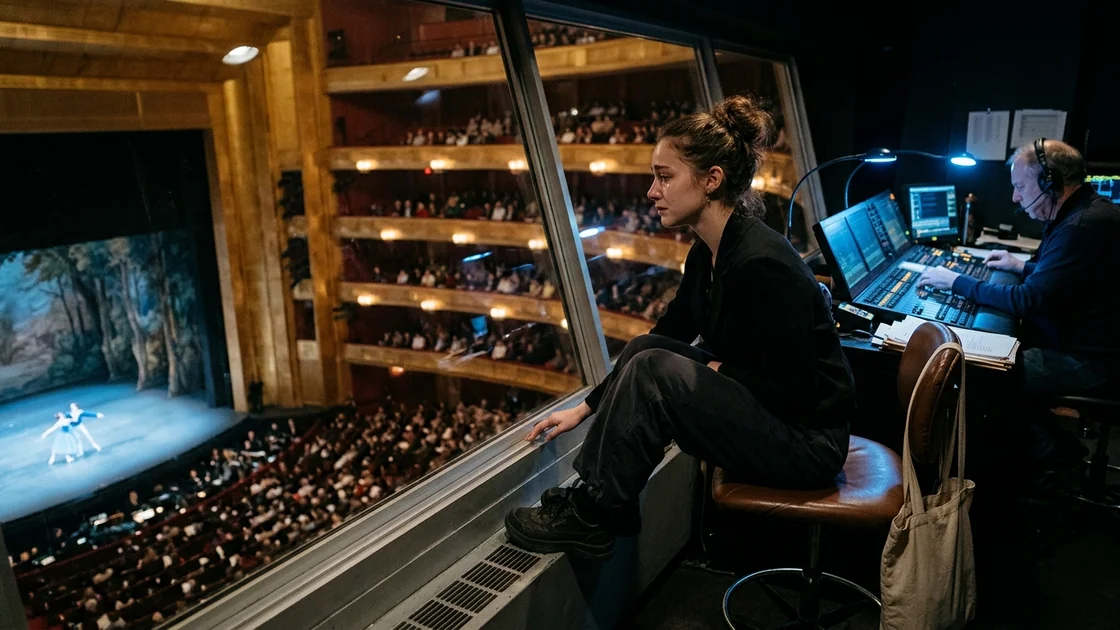
Clara Vance spent fourteen years preparing to take the stage as the principal dancer of the Metropolitan Ballet, only to have her career end in a single, catastrophic second during the final dress rehearsal on the night before her grand debut. A slick spot of uncleaned rosin and a fraction of a millimeter of miscalculation resulted in a triple compound fracture of her right talus and fibula, shattering her ankle and severing her lifelong dream before the curtain could ever rise for a paying audience. This is the chronicle of that devastating night, the brutal physical and psychological aftermath of losing the only identity she had ever known, and the quiet, agonizingly slow reconstruction of a life built from the ruins of a broken body.
Part I: The Rosin and the Bone
The air inside the grand theater of the Metropolitan Opera House tasted of pulverized pine resin, dust baked by halogen lights, and the sharp, metallic tang of adrenaline. It was ten-thirty on a Thursday night. In less than twenty-one hours, the heavy crimson velvet curtains would part for the autumn gala, and Clara Vance, at twenty-two years old, would step into the amber spotlight as Giselle.
She stood in the wings, her breathing shallow and regulated, her ribcage expanding and contracting beneath the boned bodice of her rehearsal Romantic tutu. The tulle skirt floated around her thighs like trapped fog. Her feet, encased in satin pointe shoes she had spent three hours darning, hammering, and painting with shellac that morning, felt entirely fused to her nervous system. At this stage in her training, the shoe was no longer footwear; it was an exoskeleton, a calloused, blood-warmed extension of her metatarsals.
On stage, the corps de ballet was resetting for the end of Act I—the mad scene, though Clara only needed to mark the final sequence before the company was dismissed for the night. Viktor, the artistic director, sat twelve rows back in the darkened auditorium, his chin resting on the brass rail of the lighting tech’s desk, a glowing tablet casting harsh blue shadows into the hollows of his cheeks.
"Take it from the diagonal, Clara," Viktor’s voice boomed through the house speaker, distorted and godlike in the cavernous space. "Full out on the manèges, then give me the final jeté toward the cottage. Don't mark the jump. The lighting crew needs to catch the apex of your elevation for the follow-spot cue."
Clara nodded to the darkness. Her muscles were warm, humming with the dangerous, exhausted elasticity that comes at the end of a nine-hour rehearsal day. A dull ache throbched behind her right Achilles tendon—an old, familiar companion she had been icing in twenty-minute intervals since Tuesday—but the endorphins had largely drowned it out.
She stepped out of the wings and onto the Marley floor, taking her preparatory position upstage right. The orchestra wasn't here tonight; the rehearsal pianist, an elderly man named Arthur whose fingers were crooked with arthritis, struck the heavy, ominous chords of Adolphe Adam’s score on the upright Steinway down in the pit.
One, two, three. And—
Clara pushed off the floor. She began the circular series of coupé jetés, traveling in a wide, sweeping arc around the perimeter of the stage. With each leap, the tulle whispered against her skin. The world blurred into a familiar kaleidoscope: the gilt trim of the royal boxes, the glowing green 'Exit' signs at the back of the house, the dark shapes of the other dancers watching from the wings, the blinding white stars of the follow-spots overhead. She was weightless. She had spent ten thousand hours in airless studios, bleeding through satin, starving down to sinew and bone, skipping every childhood milestone, all to purchase this exact sensation of defying gravity.
She rounded the downstage corner, building momentum for the final, explosive grand jeté that would carry her across the center mark before collapsing into the scripted madness of the character's heartbreak.
Tombé, pas de bourrée, glissade—
Her left foot brushed the Marley floor, gathering power. Her right foot slid forward to push off, demanding maximum friction from the vinyl surface.
Instead of the familiar bite of rosined satin gripping the floor, her foot met a patch of dampness—a microscopic smear of condensation left by a stagehand’s dropped water bottle ten minutes prior, mixed with a slick paste of crushed rosin.
Her right foot slid three inches too far forward before the toe box caught a dry seam in the tape holding the Marley strips together.
The momentum of her upper body was already committed to the air, hurtling forward at fifteen miles per hour. Her foot stopped dead. Her tibia and fibula continued moving.
The sound did not belong in a theater. It was not the dull thud of a body hitting a sprung floor, nor the squeak of satin. It was the sharp, echoing crack of a green oak branch snapping in the dead of winter. It cut directly through the middle of Arthur’s piano chord, loud enough to reach the twelfth row, loud enough to make the stagehands in the fly loft freeze with their hands on the hemp ropes.
Clara never left the ground.
The kinetic energy that was meant to launch her five feet into the air folded backward into her right ankle joint. She felt a sensation that wasn't initially pain, but rather an impossible, sickening shift in geometry. It felt as though her foot had been detached from her leg and reattached at a ninety-degree angle. A flash of blinding, magnesium-white light exploded behind her eyes, blotting out the stage lights.
Then she hit the floor.
She landed hard on her left hip, the breath driven from her lungs in a ragged grunt. For three seconds, there was absolute silence in the Metropolitan Opera House. The piano stopped. Nobody moved in the wings. The follow-spot remained fixed on the empty air three feet above her head where she was supposed to have been flying.
Clara pushed herself up onto her elbows, her chest heaving, a bewildered smile instinctively forming on her lips—the ingrained reflex of a dancer trained to apologize for a fall and immediately try again. "Sorry," she breathed toward the dark auditorium, though no sound came out. "I slipped."
She tried to draw her right leg beneath her to stand.
The white light behind her eyes turned red. A scream tore out of her throat—raw, animal, and entirely devoid of the grace she had spent her life cultivating.
She looked down. Her right leg extended from the froth of her white tulle skirt. Down at the end of the pink tights, the satin pointe shoe was pointing directly backward toward the upstage curtain, while her knee pointed toward the orchestra pit. Beneath the tight fabric of the convertible tights and the tightly tied satin ribbons, something jagged and white was tenting the nylon, accompanied by a rapidly spreading dark stain that looked black under the amber stage lights.
"House lights!" Viktor’s voice cracked over the intercom, the godlike calm gone, replaced by shrill panic. "Bring up the work lights! Call 911! Nobody touch her leg!"
Suddenly, the romantic illusion of the theater evaporated as the brutal, fluorescent work lights slammed on, bathing the painted forest backdrop in a sickly, hospital-corridor glare. The thundering sound of thirty pairs of feet running across the sprung wood vibrated right through Clara’s spine and directly into the ruined architecture of her ankle.
Faces appeared above her, upside down and contorted with horror. Elena, her understudy, had both hands pressed over her mouth, tears already spilling over her heavy stage makeup. Viktor was there, kneeling beside her, his expensive wool coat trailing in the rosin dust, grabbing her cold, clammy hands to stop her from reaching down toward the wreckage of her foot.
"Don't look at it, Clara," Viktor said, his face gray, his eyes wide and fixed determinedly on her forehead. "Look at me. Just breathe. The paramedics are three blocks away. Just look at me."
"Tomorrow," Clara gasped, her teeth chattering so violently she bit the inside of her lip, tasting copper. The pain was arriving now in monstrous, rhythmic waves, like a heavy iron pendulum swinging through her nervous system with every beat of her racing heart. "Viktor, the gala is tomorrow. Tape it. Just get the physio to tape it."
Viktor didn't answer. He couldn't. He just squeezed her hands tighter as a thick, warm pool of blood began to soak through the pale pink satin of her ribbons, cementing her shoe to the stage floor.
Part II: Titanium and Dust
The orthopedic surgeon at Mount Sinai had the hands of a butcher and the voice of a funeral director. His name was Dr. Aris Thorne, and when he walked into Clara’s private recovery room sixteen hours after the fall, the first thing she noticed were his shoes: heavy, sensible black leather clogs with thick rubber soles. Shoes built for standing still for hours, not for moving.
It was two-thirty in the afternoon on Friday. In five and a half hours, the doors of the Metropolitan Opera House would open to the public.
Clara lay propped up on three pillows, her right leg suspended in an elevated foam trough, encased in a massive plaster splint that ran from her toes to just below her knee. The morphine drip clicked softly beside her bed, a mechanical metronome keeping time in a room that smelled of bleach and dead lilies—the first of the sympathy arrangements from the board of directors had arrived an hour ago. Her mother, Sarah, sat in the vinyl armchair by the window, her face aged ten years overnight, shredding a wet paper towel in her lap.
Dr. Thorne pulled a rolling stool to the edge of the bed and clicked on the wall-mounted lightbox, illuminating a series of high-contrast X-rays.
Clara stared at them. Even through the heavy, cottony fog of the narcotics, the images were unmistakable. The first image, taken in the emergency room after the paramedics had used trauma shears to cut her three-hundred-dollar custom pointe shoe off her mangled foot, looked like someone had dropped a porcelain teacup onto a tile floor. The ankle joint didn't exist anymore. The talus—the crucial turtle-shaped bone that sits between the heel and the lower leg bones, acting as the hinge for all foot movement—was split into four distinct, displaced fragments. The lower end of the fibula was snapped off entirely, and the tibia had driven downward through the wreckage like a wedge.
The second X-ray, taken an hour ago as they wheeled her out of the operating suite, looked like a hardware store explosion. Two thick titanium plates ran up the sides of her leg bones, anchored by eleven coarse-threaded screws. Three longer, headless screws intersected the center of her foot, pinning the shattered jigsaw puzzle of her talus together and fusing it directly to the heel bone beneath it.
"You did a very thorough job on yourself, Miss Vance," Dr. Thorne said softly, tapping the second image with a capped ballpoint pen. "What you experienced is a high-energy pilon fracture combined with a Grade III open fracture-dislocation of the talus. In layman's terms, we usually only see this specific pattern of bone crushing in head-on motor vehicle collisions where the driver's foot is braced hard against the brake pedal at the moment of impact, or in falls from three-story buildings."
Clara’s throat felt lined with sandpaper. "I didn't fall from a building," she whispered, her voice slurred by the hydromorphone. "I was doing a glissade."
"The physics of elite ballet are extreme," the doctor replied neutrally. "You generated tremendous torque and axial load on a joint that was extended to its absolute anatomical limit. When the foot caught, the bone failed before the ligaments could tear completely, though your deltoid ligament is entirely ruptured as well."
"How long?" Sarah asked from the corner, her voice trembling. "How long until she’s out of the cast and back in the studio, Doctor?"
Dr. Thorne turned on his stool, looking from Sarah’s desperate face to Clara’s hollow eyes. He took off his wire-rimmed glasses and rubbed the bridge of his nose. A long silence stretched across the room, punctuated only by the muffled sound of a city bus air-braking down on Madison Avenue.
"I think we need to calibrate our expectations right now," Dr. Thorne said, his voice dropping an octave. "Because the talus has a very tenuous blood supply, and because it broke into multiple pieces and pierced the skin, the risk of avascular necrosis—where the bone tissue dies from lack of blood—was nearly eighty percent. To save the foot and prevent chronic, crippling pain that would eventually require below-the-knee amputation down the road, I had to perform a primary subtalar arthrodesis during the reconstruction."
Clara blinked slowly. The words were foreign, clinical, and heavy. "What does that mean?"
"It means I fused the joint beneath your ankle, Clara, and the ankle joint itself has lost roughly seventy percent of its articular cartilage," he said gently, looking directly into her eyes. "The screws you see here are permanent. Once the bones knit together over the next four to six months, your ankle will have roughly ten degrees of upward and downward flex. You will have no side-to-side rotation in the hindfoot at all."
The air left the room. Clara looked down at the white plaster mountain obscuring her foot, then back at the glowing white outlines of the eleven screws on the wall.
"Ten degrees," she repeated, the words tasting like ash. To go en pointe, a dancer required a minimum of ninety degrees of plantar flexion—a straight line from the knee, through the shin, over the arch of the foot, down to the tips of the toes. Clara had been blessed with a hundred and five degrees, the coveted 'banana foot' that made choreographers weep with joy. "I need ninety."
"Clara," Dr. Thorne said, leaning forward and placing a heavy, warm hand on the blanket near her good knee. "With intensive physical therapy over the next year, my goal is for you to be able to walk across a flat room without a cane and with only a slight limp. You will never wear high heels again. You will never run. And you will certainly never dance again. That part of your life ended last night."
She didn't cry. The statement was too vast, too structurally impossible for her brain to process. Telling Clara Vance she would never dance again was like telling a fish that, starting tomorrow, it would be living on the surface of the sun. She had been placed in her first ballet class in suburban Ohio at the age of four because she walked on her toes around the kitchen. At eleven, she had left home to board at the academy in New York. She did not have a high school diploma; she had a GED earned via correspondence courses between rehearsals for The Nutcracker. She had never been to a prom, never learned to drive a car, never eaten a slice of birthday cake without calculating how many changements it would take to burn off the buttercream, never had a boyfriend for longer than three weeks because there was no room in her bed for anything other than foam rollers, ice packs, and exhaustion.
She was not a person who danced. She was a dancer. Without the verb, the noun ceased to exist.
"Get out," Clara whispered.
"Clara, honey—" her mother started, standing up.
"Tell him to get out," Clara said, her voice rising, flat and terrifyingly calm. She stared at the eleven white screws on the lightbox. "Turn off the light and get out of my room."
Dr. Thorne gave a small, sad nod, switched off the illuminator—plunging the room back into the gray afternoon light of a rainy Manhattan October—and quietly left.
At seven-thirty that evening, Sarah turned on the small television mounted near the ceiling, hoping the noise of a sitcom would distract them both from the silence. Instead, the local NY1 arts report came on. There was footage of the Lincoln Center plaza, glistening with rain, crowded with patrons in tuxedos and floor-length gowns holding umbrellas.
"A dramatic last-minute change at the Metropolitan Ballet tonight," the anchor said brightly over B-roll of the chandelier rising in the auditorium. "Twenty-two-year-old soloist Clara Vance, who was scheduled to make her principal debut in Giselle tonight, suffered a severe lower-body injury during last night's final dress rehearsal. Stepping into the role with less than twenty hours' notice is nineteen-year-old corps member Elena Rostova..."
Clara watched the screen. Her heart rate monitor began to beep faster, the green line spiking violently on the display beside her head.
On the screen, a three-second promotional clip from earlier in the week played: it was Clara in the studio, laughing as she finished a flawless series of fouetté turns, her body a whip of muscle and grace, her right foot relevéing effortlessly onto the tiny satin platform of her shoe. Then the screen cut back to the plaza. The doors were closing. The performance was beginning.
The show always goes on. It was the first rule of the theater, drilled into them as children when they danced through fevers, food poisoning, and stress fractures. The machine of the ballet was a glorious, merciless thresher; if one gear broke, it was unbolted, tossed into the scrap heap, and replaced before the conductor's baton came down for the overture.
Clara reached down with both hands, grabbed the plastic tubing of her IV line, and yanked it out of the back of her hand. Bright red blood welled up on her skin and dripped onto the white hospital sheet as she reached for the remote and threw it with all her strength at the television screen.
Part III: The Phantom Limb
Winter in the East Village was gray, slushy, and vertical. Everything in New York required stairs, and stairs were now Mount Everest.
Clara lived in a fourth-floor walk-up on East 9th Street, an apartment she had rented two years ago because it was ten minutes by subway from Lincoln Center and had high ceilings where she could practice balances in the kitchen without hitting her hands on the light fixtures. Now, the sixty-four narrow, creaking wooden steps from the street to her front door were the walls of a prison.
Her mother had stayed for the first two months, sleeping on a deflate-prone air mattress in the tiny living room, cooking dense, rich meals from Ohio that Clara refused to eat. By late December, Sarah had to return to her job as a dental hygienist in Columbus to help pay the mounting COBRA insurance premiums after the company’s workman's compensation settlement bogged down in legal arbitration over whether the stagehand's spilled water constituted gross negligence.
Left alone in January, Clara shrank.
She had always been small—five foot four, one hundred and two pounds at her stage weight—an aerodynamic frame of dense bone and ropey muscle. Now, stripped of the six hours of daily anaerobic torture that had maintained that physique, the muscle melted away like snow in the rain. Her calves, once hard and defined as carved mahogany, withered. The left one became soft; the right one, emerging from the succession of casts and now resting inside a massive black plastic Aircast boot, looked like the limb of a starving child. It was pale, flaky with dead skin, and bisected by two angry, purple, keloid scars running seven inches up either side of the ankle bone, cross-hatched like railroad tracks from the fifty-two surgical staples.
The foot itself was a stranger. It was permanently swollen, a misshapen, purplish loaf that felt both completely numb on the surface and agonizingly alive deep inside. Whenever a low-pressure weather system rolled in off the Atlantic, the titanium plates seemed to conduct the cold directly into her marrow, setting off a deep, toothache throb that the oxycodone barely touched.
Worse than the pain was the phantom kinesiology.
Her brain, wired since infancy to communicate with the world through movement, did not know the ankle was fused. She would lie on the frayed corduroy sofa for fourteen hours a day, watching the radiator hiss, listening to traffic down on the street. A song would play in a commercial on the radio next door, or the rhythmic thrum of the refrigerator compressor would settle into a 3/4 waltz tempo, and her motor cortex would automatically begin choreographing.
In her mind, she would feel the music rise. Her brain would fire the synaptic command down her spinal cord: Tendu, dégagé, piqué arabesque.
Her right leg would twitch inside the heavy black boot. The muscles in her withered calf would contract, trying to point the foot, trying to pull the heel up toward the ceiling. And at ten degrees of motion, the biological machinery would slam into a wall of solid bone and three-inch titanium screws.
The jolt was sickening, like trying to open a door that had been bricked over from the outside. It made her gag with claustrophobia—she was trapped inside a broken house, and the exits were welded shut.
In the first week of February, the doorbell buzzed.
Clara sat frozen on the sofa, wrapped in an oversized fleece robe, a half-empty mug of cold tea on the floor beside her crutches. Nobody came here anymore. During the first three weeks in the hospital and her first week home, the dancers had come in flocks. They brought balloons, magazines, and boxes of pastries from Lafayette that they wouldn't eat themselves. They sat on the edge of her bed, smelling of hairspray, icy-hot, and the dusty, exhilarating scent of the theater, chattering about who Viktor was casting in the spring repertoire, whose partner had dropped them in rehearsal, how Elena had actually been quite good in Act II of Giselle, though her ballon wasn't anywhere near Clara’s, of course.
They didn't mean to be cruel. They were twenty-year-olds living in the consuming, narcissistic bubble of elite performance, and looking at Clara was like looking straight at the sun—if they stared too long at what had happened to her, they wouldn't be able to go back to the studio and hurl themselves into the air the next morning. They needed to believe her accident was a freak anomaly, a curse that belonged only to her. Clara had started pretending to be asleep when they visited, and then stopped answering her texts altogether. Within a month, the texts stopped coming. The river of the company flowed around the boulder of her absence and closed seamlessly behind her.
The buzzer sounded again, a long, insistent rasp.
"Go away!" Clara yelled toward the intercom panel by the door, though she knew the microphone was broken.
Five minutes later, there was a heavy, rhythmic knocking directly on her apartment door. Whoever it was had waited at the street door for another tenant to leave and slipped inside.
"Clara? I know you're in there. You literally cannot run away from me."
It was Julian.
Clara closed her eyes, resting her forehead against her drawn-up left knee. Julian Vance—no relation, though they had joked about being ballet twins when they were sixteen in the corps—was a principal dancer who had been scheduled to dance Albrecht to her Giselle on that Thursday night. He was twenty-six, breathtakingly handsome in a sharp, Slavic way despite being from Chicago, and possessed a quiet, cynical intelligence that was rare in the company.
"The door isn't locked, Julian, just leave whatever it is in the hall," she called out, her voice raspy from disuse.
The brass knob turned, and the door swung inward, hitting the stack of unopened mail—mostly medical bills and physical therapy delinquency notices—that had piled up on the welcome mat.
Julian stepped inside, bringing a gust of freezing February air with him. He was wearing a long black wool coat over gray sweatpants, a thick scarf wound around his neck, his dark hair damp from snow. He held a brown paper grocery bag in one hand and a cardboard carrier with two coffees in the other.
He stopped dead just inside the threshold, his eyes sweeping the tiny apartment.
The curtains were drawn, leaving the room in a perpetual twilight. In the corner, like a shrine to a dead religion, hung three of her practice tutus on a garment rack, covered in dry-cleaning plastic. On the floor beneath them sat a canvas duffel bag overflowing with twenty pairs of dead pointe shoes—the stock she had prepped for the autumn season. In the center of the room sat Clara, her hair unwashed and pulled into a messy knot, her collarbone sharp enough to cut glass above the collar of her robe, the monstrous black orthopedic boot resting on a stack of encyclopedias on the coffee table.
If Julian was shocked by her appearance, his years of stage training kept it entirely off his face. He simply kicked the door shut with his heel, nudged the mail out of the way, and walked into the tiny galley kitchen.
"It smells like boiled cabbage and self-pity in here," Julian said conversationally, setting the grocery bag on the counter and pulling the curtains open with a sharp zip of the metal rings.
Gray winter daylight flooded the room. Clara flinched, throwing an arm over her eyes. "Close those."
"No. You're turning into a mushroom." Julian walked over, handed her a hot paper cup of coffee, and sat down on the opposite end of the sofa, carefully avoiding her propped-up leg. "Drink that. It has sugar and whole milk in it. Don't look at me like it's arsenic; you don't have to fit into a sylph bodice tomorrow."
The casual mention of the bodice hit her like a slap. Her hand trembled slightly, the hot coffee sloshing against the plastic lid. She set it down on the floor without taking a sip. "Why are you here, Julian? Shouldn't you be at class? It's eleven-thirty."
"Company has a layoff week before we start blocking the new Ratmansky piece," he said, leaning back and stretching his long legs out in front of him. Automatically, unconsciously, he rolled his ankles in slow, fluid circles, his arches flexing with effortless, sickening beauty inside his wool socks.
Clara stared at his feet. A wave of nausea rose in her throat, hot and sour. She hated him. She hated his intact talus, his healthy cartilage, the casual way he occupied his body as if it weren't a fragile, traitorous glass cage waiting to shatter.
"How's Elena doing with my roles?" Clara asked, the venom dripping from every syllable. "Did they have to let out the seams on the Act I costume, or did she finally stop eating lunch?"
Julian stopped rolling his ankles. He looked at her steadily, his dark eyes cool. "She was terrifyingly good in Giselle, Clara. She got a twelve-minute standing ovation on opening night. The Times called her a revelation. And Viktor just promoted her to soloist last Friday. They gave her your dressing room share on the third floor."
The words were like physical blows to her solar plexus. Clara’s breath caught, a sharp, jagged inhale that hurt her ribs. She had asked the question to draw blood, and Julian had simply handed her the knife handle-first and pushed it into her own chest. Tears of pure rage sprang to her eyes, hot and humiliating.
"You bastard," she choked out, turning her face toward the back of the sofa so he wouldn't see her cry. "Why would you tell me that?"
"Because you've been sitting in the dark for four months imagining everyone is either mourning you or laughing at you, and the truth is much simpler and much harder: they just kept going," Julian said softly, the harshness leaving his voice. He slid across the cushions until he was sitting right beside her, close enough that she could smell the cedarwood of his cologne. "The house burned down, Clara. Stop sitting in the ashes waiting for the furniture to grow back. It's over."
"I don't have anything else!" she screamed, whipping her head back around, tears flying from her lashes. She beat her fists against the hard plastic shell of the Aircast boot, sending a blinding bolt of agony up her shin that she welcomed because it matched the howling void in her chest. "I don't know how to do anything else! Look at me! I'm twenty-two years old and I'm a cripple! I can't walk to the bodega on the corner! What am I supposed to do for the next sixty years, Julian? Sit in a box office tearing tickets while Elena dances my variations?"
Julian caught her wrists before she could strike the boot again, holding them firmly in one large hand until she went limp, collapsing forward against his chest, sobbing with a violence that shook her entire skeletal frame. He wrapped his arms around her thin shoulders, resting his chin on top of her unwashed hair, and just held her while she wept for the dead girl who had flown across the stage on a Thursday night in October.
When she finally quieted, reduced to wet, hiccuping breaths against his sweater, Julian reached into the pocket of his coat and pulled out a folded piece of heavy cream cardstock. He set it on the coffee table beside her boot.
"What is that?" she mumbled, wiping her nose on the sleeve of her robe.
"First of all, it's a referral to a physical therapist who doesn't work for the company," Julian said. "Because I talked to Sarah last week, and she told me you walked out of the Harkness Center clinic three weeks ago and haven't been back."
"There were dancers from ABT and City Ballet in there," Clara whispered, staring at a water stain on the wooden table. "They were rehabbing sprained ankles and hamstring tears. They were doing relevés on Bosu balls while their therapists talked about getting them back on stage by spring. My therapist was making me pick up marbles with my toes so I might be able to walk down a curb by July. I couldn't look at them."
"I figured," Julian said. "So this guy—Marcus Vance, funny coincidence on the last name, no relation to either of us—he works out of a basement clinic in Chelsea. He works with trauma patients. Veterans, car crash survivors, construction workers. Nobody in that room is wearing leg warmers, Clara. Nobody in that room cares about turnout."
Clara looked at the card. "And the other paper?"
Julian hesitated for a fraction of a second. "It's a voucher from the Dancers' Career Transition Fund. When the union settled your injury claim last month, part of the severance package includes full tuition coverage for up to four years at any accredited university in the state, plus a living stipend if you're enrolled at least half-time. Columbia's School of General Studies takes applications for the summer session from non-traditional students—people like us who spent high school in a rehearsal hall instead of a classroom."
Clara laughed, a bitter, hollow sound. "College. Right. What am I going to study, Julian? Accounting? I haven't read a book that wasn't a ballet synopsis since I was fourteen."
"You have a brain, Clara. You were the only dancer in the company who could reverse-engineer Balanchine's polyrhythms on the first hearing while the rest of us were counting on our fingers," Julian said, standing up and pulling his coat back on. "You're disciplined to the point of mental illness, and you have a pain tolerance that would terrify a Navy SEAL. Stop acting like your intelligence was stored in your right talus."
He walked to the kitchen, unpacked the grocery bag—putting milk, eggs, bread, and three containers of soup into her barren refrigerator—and then walked to the front door.
"Marcus is expecting you on Monday at ten," Julian said, his hand on the doorknob. "I already paid for the Uber account linked to your phone so you don't have to take the subway stairs. If you don't go, I'm coming back here on Tuesday with a crowbar, and I'm throwing all those dead pointe shoes in the East River myself."
The door clicked shut behind him.
Clara sat in the bright, dust-mote-filled shafts of winter sunlight for a long time. Slowly, she reached down, picked up the cup of lukewarm coffee, and took a sip. The sugar was shockingly sweet on her tongue. It tasted like rebellion.
Part IV: The Mechanics of Gravity
The basement clinic on West 22nd Street did not have mirrors.
That was the first thing Clara noticed when she hobbled through the double glass doors on Monday morning, her armpits raw from the rubber pads of her aluminum crutches after descending the four flights of stairs from her apartment. Every room she had spent her waking life in for eighteen years had been lined floor-to-ceiling with plate glass mirrors, relentless silver judges that reflected every flaw in alignment, every dropped elbow, every ounce of unwanted flesh, every micro-expression of pain or fatigue.
Here, the walls were painted a flat, industrial sage green and hung with anatomical charts of the human spine and framed jerseys from local firehouse charity runs. The floor was gray rubber matting that smelled of vulcanized tires and bleach.
In the corner, an older man with a silver crew cut and a prosthetic left leg below the knee was walking between parallel bars, sweat pouring down his temples as he practiced shifting his weight onto a carbon-fiber blade. Across the room, a woman in her thirties with a jagged scar running from her ear to her collarbone was lifting a two-pound pink dumbbell with a trembling, palsied left arm.
Nobody looked at Clara. Nobody noticed how small she was, or the way she held her neck with the long, regal posture of a principal ballerina, or the ugly black boot swallowing her right leg. Here, a broken body was not a tragic fall from grace; it was just the entry fee.
"Clara Vance?"
A tall, broad-shouldered Black man in his late forties walked over, holding a clipboard. He wore navy blue scrub pants and a gray t-shirt that stretched tight across a chest built like a barrel. He had a shaved head, a neatly trimmed beard salted with gray, and eyes that were observant without being pitying.
"I'm Marcus," he said, not offering to shake hands since hers were occupied by the crutch grips. "Table three, over by the wall. Hop up, take the boot off, and let's see what Dr. Thorne left us to work with."
Clara maneuvered over to the high vinyl examination table, dropped her crutches with a loud clatter, and pulled herself up. Her hands shook as she undid the four wide Velcro straps of the Aircast. She hated taking it off. Inside the plastic shell, she could almost pretend the foot was whole, just hibernating.
She peeled off the thick white cotton sock.
Her right foot lay on the gray vinyl paper like a piece of driftwood pulled from a stagnant pond. In the four months since the accident, the swelling had subsided just enough to reveal the altered architecture of the joint. Her ankle was thick, boxy, and malformed—the delicate, winged protrusions of her malleoli were buried under scar tissue and metal hardware. The skin was shiny, hairless, and mottled purple-red when it hung down, a hallmark of the damaged circulation and mild complex regional pain syndrome that had set in during January.
Marcus pulled up a rolling stool, snapped on a pair of nitrile gloves, and picked up her foot in both of his large hands.
Clara braced herself, gripping the edges of the table so hard her fingernails bit through the paper cover. She waited for him to force the joint, to push it the way the ballet physios always had when breaking up scar tissue after a sprain, demanding range of motion through sheer brutality.
Instead, Marcus just held it. His hands were warm, dry, and steady, applying a gentle, grounding pressure across her scarred skin. He pressed his thumb lightly over the head of the talus, then ran his fingers down the length of the two surgical incisions, feeling the heat radiating from the tissue and the hard ridges of the titanium screw heads just beneath the dermis.
"Thorne's a good carpenter," Marcus murmured, looking at the tablet propped on his knee where her latest X-rays were displayed. "Saved the calcaneus, kept the bone alive. Most people who blow a talus like this end up with a necrotic bone collapse by month six and a rock-solid fusion of the entire tibiotalar joint. You've got a sliver of joint space left on top."
"Ten degrees," Clara said flatly, staring at the ceiling tiles. "I have ten degrees of dorsiflexion and plantar flexion combined. I used to have a hundred and five."
"Yeah, well, a hundred and five is a circus trick," Marcus said calmly, gently moving her foot up and down. It moved roughly half an inch before hitting the solid, bony block of the hardware and scar tissue. A dull, nauseating ache bloomed deep inside her heel at the contact. "Human beings aren't built to walk on the tips of their toes like hooves, Clara. Evolution designed this joint to be a shock absorber and a lever for bipedal locomotion over flat savannahs. You spent fifteen years abusing the warranty, and the warranty finally expired."
Clara looked down at him, a flash of defensive anger igniting in her chest. "It wasn't a circus trick. It was art."
"It was high-velocity physics disguised as art," Marcus corrected without looking up, now testing the strength of her big toe by pressing his finger against the pad. "Push against me. Hard as you can."
Clara pushed. Her big toe quivered, pressing against his finger with the force of a dying butterfly. The long flexor tendon—the flexor hallucis longus, the golden cable of a ballerina's foot—had been trapped in scar tissue behind her ankle during the surgery and was partially adhered to the bone. A sharp, burning pain lanced up the inside of her calf. She gasped and pulled back.
"Okay," Marcus said, stripping off his gloves and tossing them into the trash can. "Here's the deal, Clara. Your friend Julian called me up and gave me the whole tragic opera story. The rising star, the opening night fall, the shattered dream. I'm really sorry that happened to you. Genuinely. It sucks when your body writes a check it can't cash anymore. I used to play linebacker at Syracuse until a helmet hit my L4 vertebra at forty miles an hour and left my left foot paralyzed for two years. I get it."
He leaned forward, resting his forearms on his knees, his gaze locking onto hers with sudden, uncompromising intensity.
"But that story stays outside those glass doors," Marcus said, pointing a thumb over his shoulder. "In here, you are not a retired ballerina. If you come in here thinking like a dancer, we are going to fail, because a dancer looks at ten degrees of motion and sees ninety-five degrees of loss. A trauma patient looks at ten degrees of motion and sees the exact amount of clearance needed so your toes don't catch on the rug and break your nose when you walk across your living room."
Clara swallowed hard, her throat tight. "I just want to walk without these," she whispered, looking down at the aluminum crutches on the floor. "I can't carry a cup of coffee from my stove to my couch."
"Right," Marcus nodded, standing up. "That's a real goal. Carrying coffee. Walking up four flights of stairs with a bag of groceries. Standing at a sink doing dishes for twenty minutes without wanting to saw your leg off at the knee. To do that, we have to rewire how you walk from the ground up. Because you don't have a hinge in your right ankle anymore, your knee, your hip, and the small joints in the front of your foot have to learn to do the job of the ankle. And before we do any of that, you're going to put your bare foot on the floor and put your weight on it."
Clara froze. She hadn't placed her bare right foot against the floor in one hundred and twenty-four days. The only times she had stood on it were inside the rigid, rocker-bottomed cage of the Aircast boot, and even then, she kept seventy percent of her weight on her left leg or her crutches. The idea of letting those eleven screws and three fused pieces of bone take the full downward force of gravity with nothing between her heel and the earth made her stomach lurch with primal terror. It felt like stepping out of an airplane without a parachute; she was entirely certain the bone would snap again with that horrible, green-branch crack.
"I can't," she said, pulling her leg back up toward her chest on the table. "The bone isn't ready."
"The X-ray from last week shows solid bony bridging across the subtalar fusion and the tibial shaft," Marcus said evenly. "The bone is stronger right now where the titanium is than your good leg is. What isn't ready is your brain. Your nervous system has spent four months screaming 'danger' every time anything touches that foot. We have to prove to your brain that the floor won't kill you. Slide to the edge of the table."
"Marcus, please—"
"Slide to the edge, Clara. I've got you. You aren't going to fall."
Her heart hammered against her ribs like a trapped bird, the exact same panic she had felt in the ambulance when they hit a pothole on Amsterdam Avenue. Slowly, trembling from head to toe, she scooted her hips to the edge of the vinyl table.
Her left foot, clad in a dirty white sneaker, touched the rubber floor. Her right foot hung two inches above the gray mat, purple, scarred, and shaking violently.
"Let it down," Marcus said softly, standing right in front of her, his hands hovering near her waist. "Just let the skin meet the rubber. Don't stand up yet."
Clara lowered her leg.
When the sole of her right foot touched the cold rubber floor, the sensory overload was instantaneous and bizarre. Because the nerves had been stretched and bruised during the dislocation and surgery, the sensation didn't register as flat rubber. It felt as though she were stepping barefoot onto a bed of warm gravel mixed with broken glass and static electricity—dysesthesia, Dr. Thorne had called it. Pins and needles on steroids.
She hissed through her teeth, every muscle in her right thigh locking up to pull the foot back up.
"Keep it there," Marcus commanded, placing a heavy, warm hand directly on top of her right knee, pressing down gently to keep her heel planted. "Breathe through your nose. Look down at your foot. Tell your brain what it's looking at. It's a flat rubber floor. There is no glass. The bone is whole. Breathe."
Clara stared down at her misshapen foot. Sweat broke out across her collarbone. She forced air into her lungs—in for four counts, hold for four, out for four—the breathing technique she used to use in the wings before the curtain rose on Swan Lake.
Slowly, over the course of two agonizing minutes, the roaring static of the nerve pain subsided from a scream to a loud, buzzing hum. The gravel sensation flattened out into cold rubber.
"Good," Marcus said. "Now, put your hands on my shoulders. We're going to stand up, and you're going to put fifty percent of your weight through that right heel."
She gripped his broad shoulders, her fingers digging into the cotton of his shirt. She leaned forward and pushed up with her strong left leg, gradually shifting her pelvis toward the center line.
As the weight transferred onto her right leg, a deep, crushing pressure built inside her ankle joint. It wasn't the sharp, electric pain of the nerves, nor the catastrophic snap of the break; it was a dense, structural ache, as if the bones were settling around the titanium screws like heavy stones in mud. Her ankle refused to bend forward as her shin came over her foot, forcing her right knee to hyperextend backward slightly to compensate.
"Don't lock the knee," Marcus corrected immediately, tapping the back of her thigh. "Keep a micro-bend in the knee. Let the weight sit right in the center of the heel. Look up at me. You're standing on two feet, Clara."
She looked up from the floor. She was standing. Without the boot. Without the crutches.
It hurt—a solid six out of ten on the pain scale, a deep, sickening throb that made her vision swim at the edges—and her posture was entirely crooked, her right hip hitched up to accommodate the stiff joint. If Viktor had seen her standing like that in a studio, he would have screamed across the room about her ruined line.
A single tear escaped her left eye and tracked down through the dust on her cheek, followed by a shaky, breathless laugh.
"It feels like a peg leg," she whispered.
"It's a starting point," Marcus said, smiling for the first time. "Stay there for thirty seconds. Then we sit down, ice it, and do it ten more times."
Part V: The Geometry of Normalcy
Spring arrived in New York not with flowers, but with a sudden, forgiving warmth that turned the dirty snowbanks along East 9th Street into rushing gutter streams.
By late April, the Aircast boot was gone, relegated to the back of Clara’s closet behind the garment bag of tutus she still couldn't bring herself to throw away. In its place, she wore a pair of wide, hideous, orthopedic Hoka running shoes with thick, marshmallow-like rocker soles designed to roll her foot forward during her stride without requiring her fused ankle to bend. She walked with a carbon-fiber cane in her left hand, moving down the sidewalk at the pace of an octogenarian, with a distinct, rolling hitch in her right hip.
She was no longer invisible on the street, and that required a different kind of armor.
Before the accident, people had looked at Clara on the street because she moved like water—head high, turnout natural even in street shoes, an ethereal, unmistakably elite creature drifting through a crowd of shuffling commuters. Now, people looked at her with the quick, uncomfortable flick of the eyes reserved for the visibly disabled: a pretty twenty-two-year-old girl in oversized jeans and monster sneakers, leaning heavily on a black cane, pausing at every curb to carefully lower her good foot first like a toddler navigating stairs.
The humiliation of it had nearly driven her back into her apartment in March, until Marcus had taken her out onto 22nd Street during a therapy session and made her walk three blocks to a coffee shop and back while he walked ten paces behind her, refusing to carry her coffee while she figured out how to hold a cup with a cane handle hooked over her wrist.
"Nobody cares about you as much as you think they do, Clara," he had told her when she got back to the clinic, flushed and shaking with embarrassment after holding up a crosswalk when the light changed before she reached the other side. "They look at you for two seconds, think 'Glad that's not me,' and go back to worrying about their taxes or their cheating spouse. Let go of your vanity. Vanity is a luxury for people whose bones don't have eleven screws in them."
In May, she walked onto the campus of Columbia University for her placement exams and orientation.
Stepping through the wrought-iron gates at 116th Street and Broadway felt like landing on Mars. The campus was awash in late spring green, crowded with nineteen-year-olds in linen shorts and hoodies lying on the lawns, tossing frisbees, arguing about postcolonial literature and internships at Goldman Sachs. They moved with the careless, unconscious physical freedom of the uninjured—sprinting up the vast granite steps of Low Library two at a time, sitting cross-legged on concrete, their bodies merely convenient vehicles for carrying their heads from one classroom to another.
Clara stood at the bottom of the Low Library steps, her hand gripping the contoured handle of her cane, staring up at the massive stone expanse. There was an accessible ramp tucked away around the side of the building, marked by a blue wheelchair placard.
Her ankle was already throbbing at a dull four from the subway ride uptown—even using the elevators at 14th Street and Times Square, the sheer vibration of the train car through the floor plates always irritated the hardware in her tibia. Taking the steps would push the pain to a seven before she even sat down for her advisor meeting.
For ten seconds, the old Clara—the girl who had danced the entire third act of Sleeping Beauty on a grade-two ankle sprain injected with lidocaine because admitting weakness was worse than death—fought to make her climb the stairs in the center with the normal kids.
Then she remembered the X-ray on Dr. Thorne’s lightbox. What little cartilage remained in the top of her ankle joint had to last her until she was eighty. Every flight of stairs she took out of pride was sandpaper on that thin white line of bone.
She turned left, followed the blue signs, and walked up the long, gentle concrete slope of the accessible ramp.
Her academic advisor in the School of General Studies was a woman named Dean Miller, whose office smelled of old paperbacks and peppermint tea. She looked over Clara’s strange, sparse transcript—the Ohio correspondence GED, a perfect score on the reading comprehension portion of the placement test, and an abysmal, ninth-grade level score in algebra.
"We get quite a few dancers here from City Ballet and ABT," Dean Miller said kindly, peering over her half-moon spectacles. "Usually, they're in their early thirties when they retire, not twenty-two. I saw the piece in the Times back in the autumn about your rehearsal accident. I'm so sorry, my dear."
"Thank you," Clara said. It was the first time someone had mentioned it to her and her heart rate hadn't doubled. The scar over the memory was still red and tender, like the ones on her leg, but the stitches were holding.
"Most former dancers gravitate toward arts administration, psychology, or pre-med physical therapy," Dean Miller continued, tapping her pen on the registration form. "We'll start you with two courses for the summer session to get your sea legs in a classroom. University Writing is mandatory. For the second slot, what interests you?"
Clara looked out the high arched window of the office. Down on the brick paths of the quad, hundreds of students were moving between buildings as the ten-minute class bell rang.
From three stories up, she didn't see individual people; she saw patterns. She saw the way the crowd bottlenecked at the narrow corner by the sundial, the way two streams of pedestrians intersected and naturally formed alternating lanes of flow, the way the wide steps of the library invited congregation on the lower tiers while leaving the upper tiers empty because of the wind tunnel effect between the neoclassical columns.
It was choreography. The city, the buildings, the way human bodies moved through physical space—it was all a vast, continuous ballet, governed not by a tyrannical Russian director in row twelve, but by the silent, permanent geometry of architecture and urban design. And she realized, with a sudden, sharp clarity, why she had hated the city so much over the past six months: it had been designed by people who never thought about what happens when a body breaks.
"Architecture," Clara said, looking back at the dean. "Or urban planning. Whatever the introductory history or theory class is for how people design spaces for bodies to move through."
Dean Miller raised her eyebrows, a slow smile spreading across her face. "Introduction to Architectural Theory and the Built Environment. Tuesdays and Thursdays, one to four. You'll need to take remedial calculus in the fall if you want to pursue the major seriously, Miss Vance."
"I know how to practice things I'm bad at until I get them right," Clara said quietly. "Sign me up."
Part VI: The Ghost in the Velvet
Summer in the city was a furnace, and heat was no friend to Clara’s ankle. While cold weather made the titanium ache deep in the bone, July humidity made the soft tissue swell against the rigid scar lines until her skin felt ready to split.
Yet, for the first time in her life, she was living primarily above her neck.
The classroom in Avery Hall was air-conditioned, dark, and smelled of cedar pencils and dust. For three hours every Tuesday and Thursday, Clara sat in the back row with her right leg propped up on an empty chair beside her, an ice pack strapped around her ankle with an Ace bandage under her wide-legged linen trousers, and watched slides of the Pantheon, the Villa Savoye, and the Brasília cathedral glow on the projection screen.
She discovered that the mind of a principal dancer was uniquely, bizarrely suited to architectural analysis. While the nineteen-year-old undergrads struggled to visualize three-dimensional volume from flat two-dimensional floor plans, Clara could look at a blueprint and immediately feel the room in her proprioceptive memory. She knew instinctively how high a ceiling needed to be before a person felt compressed; she knew the exact rhythm of a colonnade based on the stride length of a walking human; she understood load-bearing tension, cantilever balance, and the brutal honesty of structural materials that failed when pushed past their vector limits.
She studied with the terrifying, monastic ferocity she had once brought to the barre. Where other students read the assigned thirty pages and went to bars on Amsterdam Avenue, Clara spent eight hours a day in the Avery Architectural Library, reading every footnoted text, sketching elevations in a black Moleskine notebook until her fingers were cramped and stained with graphite. It was the only way she knew how to exist: total immersion, an obsession large enough to fill the quiet hours when the phantom music still tried to play in her motor cortex.
She had avoided Lincoln Center entirely for nine months. When the 1 train stopped at 66th Street on her way uptown to Columbia, she kept her eyes fixed firmly on her textbook, refusing to look out the window at the white tiled mosaic on the station wall that read Lincoln Center / Metropolitan Opera.
Then, on a muggy Friday evening in late August, Julian ambushed her.
They had been meeting once a week for dinner at a quiet Vietnamese place in Chelsea near Marcus’s clinic, right after her Friday afternoon physical therapy sessions. That evening, however, when Clara walked out of the clinic—walking without the cane now for distances under five blocks, though her limp was pronounced when she was tired—Julian was standing by the curb next to a black town car. He was wearing a summer linen suit instead of his usual rehearsal sweats.
"Get in," Julian said, opening the back door.
Clara stopped on the pavement, her canvas tote bag heavy with library books digging into her shoulder. She looked at the suit, then at the time on her phone. It was six-fifteen. The Metropolitan Ballet’s summer farewell gala—a mixed bill of contemporary pieces and classical pas de deux before the company left on their European tour—started at seven-thirty.
"No," Clara said, backing up a step, her weight automatically shifting entirely onto her good left leg. "Julian, no. Absolutely not."
"Clara, listen to me," Julian said, stepping onto the sidewalk and taking her gently by the elbows. "I'm leaving for London and Paris with the company on Sunday. I won't be back until late October. Tonight will be a year—almost to the season—since you were in that building. If you don't walk through those doors while I'm here to hold your hand, you're going to turn that theater into a haunted house in your head for the rest of your life."
"It is a haunted house!" she said, her voice cracking as commuters brushed past them on 22nd Street. "My ghost is still lying on the downstage left mark in a puddle of blood, Julian! I'm wearing orthopedic sneakers and linen pants to hide a leg that looks like Frankenstein's monster! I am not going to a gala where everyone I grew up with is going to look at me and feel sorry for me!"
"You aren't going into the lobby," Julian said quietly, his dark eyes steady and imploring. "We're going in through the stage door on 64th. You're going to sit in the lighting booth at the back of the dress circle with Dusty—nobody in the audience will ever see you. And you're going to watch me dance the Chopiniana pas de deux, and you're going to see that it's just wood and canvas and sweaty people under hot lights, not heaven that you got cast out of."
She stared at him. Her chest was heaving, the familiar acidic taste of adrenaline coating the back of her tongue. Every survival instinct she had painstakingly built over the last ten months—the new walls of textbooks, physical therapy routines, and architectural diagrams—screamed at her to turn around, walk to the subway, and go home to East 9th Street.
"If I have a panic attack, I'm throwing up in your dressing room," she whispered.
Julian smiled, a flash of genuine relief softening the sharp angles of his face. "Deal. Come on."
The town car dropped them down the subterranean ramp off 64th Street, into the concrete belly of Lincoln Center where the loading docks and stage doors lived.
As soon as the car door opened, the smell hit her.
Smells bypass the thalamus and go straight to the amygdala, the seat of memory and fear. Before Clara had even stood up from the leather seat, the scent of the Met’s backstage corridors—floor wax, dust baking on thousand-watt par cans, damp wool costumes, and the faint, sweet-and-sour tang of three hundred nervous bodies—slammed into her brain like a physical blow.
Her right ankle gave a violent, phantom throb, the nerves along her scars lighting up like Christmas wire. Her hand flew out and gripped Julian’s forearm so hard her knuckles turned white.
"I've got you," Julian murmured, tucking her hand firmly into the crook of his elbow and matching his long, fluid stride to her slow, uneven gait. "Just walk. Heel-toe, just like Marcus says."
Thankfully, at six-forty-five, most of the company was either already in makeup on the third and fourth floors or warming up at the barres on the main stage behind the lowered iron fire curtain. The cinderblock hallway was mostly populated by stagehands and wardrobe dressers pushing racks of steamed tulle.
Mac, the seventy-year-old security guard who had sat behind the stage door desk since Clara was an eleven-year-old student child-extra in The Nutcracker, looked up from his newspaper as they swiped through the turnstile. His eyes widened behind his bifocals.
"Clara?" Mac stood up slowly, a huge, gap-toothed smile breaking across his weathered face. "Well, look who's here! Good to see you on your feet, kid. We missed you round here."
He didn't look down at her clunky white sneakers peeking out from beneath her wide black trousers, or comment on the way she leaned heavily on Julian’s arm. He just looked at her face like she was a person who had gone away on a long trip and come back.
"Hi, Mac," Clara managed, her voice barely above a whisper, a lump the size of an apple wedged in her windpipe. "Good to see you too."
Instead of taking the dancers' elevator toward the dressing rooms and the wings, Julian led her to the front-of-house service elevator, taking them up to the rear of the dress circle. He tapped a code into a heavy, soundproofed door marked AUTHORIZED PERSONNEL ONLY, and ushered her into the dimly lit, air-conditioned sanctuary of the master lighting booth.
Dusty, the head lighting designer—a man who had watched Clara grow up through a pair of binoculars from this exact room—stood up from his console, gave her a brief, tight hug that smelled of peppermint and strong coffee, and pointed to a high leather drafting stool positioned right behind the wide, slanted pane of soundproof glass at the front of the booth.
"Put your foot up on the radiator grate there, Clara," Dusty said softly, adjusting a small gooseneck lamp so its dim blue light wouldn't reflect in the glass. "I've got the intercom feed from the pit turned up low so you can hear the orchestra without the crowd noise. You want water?"
"No, thank you, Dusty," she breathed.
Julian kissed the top of her head. "I have to go put on a pound of pancake makeup and a velvet vest. I'll come get you after the curtain call."
The heavy door clicked shut behind him. Dusty moved ten feet down the long console to run his pre-show board checks with the follow-spot operators on his headset, leaving Clara alone at the glass.
She climbed onto the high stool, resting her aching right heel on the metal ledge beneath the window, and looked out.
She had never seen the Metropolitan Opera House from this angle. For fourteen years, she had only ever seen it from the stage looking out into a blinding black void punctuated by the red glow of exit signs and the faint gold shimmer of the tier fronts, or from the front rows during dress rehearsals.
From the high rear booth, the auditorium was a breathtaking, terrifying cavern of crimson velvet, gold leaf, and crystal. Below her, the massive space was filling up with thousands of people—tiny, ant-like figures in bright summer silk and dark suits, shuffling down the aisles, flipping through Playbills, laughing, coughing.
And at the far end of the cavern sat the stage, currently hidden behind the heavy, gold-brocade Wagner curtain, glowing warmly under the footlights.
Clara pressed her palms flat against her thighs beneath the console counter to stop them from shaking. Her heart was beating in her throat, a fast, erratic flutter. You are safe, she told herself, using Marcus’s grounding cadence. Look at what is actually here. You are behind two inches of glass. You are two hundred feet away from that floor. The bone is healed. The titanium is holding.
At seven-thirty sharp, the house chandeliers—the famous starburst clusters of crystal—began to dim and rise smoothly toward the gold-leaf ceiling. The murmur of the four thousand people below quieted to a hushed expectancy. The conductor walked into the pit, a tiny white applause crackling over Dusty’s monitor speaker.
The curtain rose.
The first piece on the program was a modern work by a guest choreographer—all stark white leotards, harsh side-lighting, and angular, percussive movement. Clara watched it with a strange, clinical detachment. She didn't know this choreography; she had never learned these counts in her muscles. She found herself watching the lighting cues and the way the dancers used the depth of the forty-foot stage space, analyzing it almost the way she analyzed slides in Avery Hall.
Then came the intermission, and then the second piece: the Chopiniana pas de deux.
When the curtain rose again on the dim, moonlit blue wash of the Romantic woodland backdrop—the exact same painted canvas forest that was used for Act II of Giselle—Clara’s breath caught in her chest with a sharp, physical stab.
Out from the upstage left wing floated Elena Rostova, followed three seconds later by Julian.
Clara leaned forward until her forehead nearly touched the cool glass of the booth window.
Through the speaker above her head, the solo cello and violin began the aching, bittersweet melody of Chopin’s Nocturne in F major.
Down on the stage, illuminated in a pool of silvery-blue light, Julian caught Elena by the waist and lifted her into a high, floating grand jeté. Elena seemed to hang suspended in the air for an impossible two seconds before descending to the Marley floor without a sound, her right foot rolling down from the tip of her satin toe box through her arch with liquid, effortless perfection.
Instinctively, brutally, Clara’s brain fired the old synaptic pathways.
Down on the metal radiator grate, inside her heavy white Hoka sneaker, her right calf contracted. Her foot tried to point along with Elena’s, tried to arch into that sublime, banana-curved line of the relevé.
Instead, the scarred tissue pulled taut against the eleven titanium screws, and the fused joint hit its ten-degree wall with a dull, sickening thud of pain.
Tears spilled over Clara’s lower lashes, hot and silent in the dark booth, dripping onto the knees of her black trousers.
Here it was. The whole, unvarnished truth that she had been running from since October. It wasn't just wood and canvas and sweaty people under hot lights, as Julian had claimed to comfort her. It was magic. It was the closest human beings ever got to becoming music, to shedding the heavy, rotting meat of mortality and becoming pure line and light in the dark. She had possessed that magic—she had been better at it than almost anyone of her generation, better even than Elena, whose left shoulder still crept up by half an inch during her pirouettes—and a drop of water on a vinyl floor had stolen it from her forever.
She let herself cry. Not the violent, hysterical screaming of the hospital room, nor the bitter, self-pitying sobs of her dark apartment in February, but a deep, quiet grieving. She wept for the girl in the white tulle who would never take a principal bow; she wept for the fourteen years of childhood sacrificed to a god that had ultimately rejected her offering; she wept for the simple, animal joy of jumping into the air and knowing her feet would catch her when she landed.
Down on the stage, Julian supported Elena through a slow, languid promenade in arabesque, his eyes fixed on his partner with tender stage devotion, his body an invisible, effortless pillar of strength beneath her balance.
As Clara watched them through her blurred vision, something subtle shifted in her chest.
She noticed the slight tremor in Elena’s standing leg as the four-minute variation neared its end—the lactic acid building up like battery acid in the girl's calf, the tiny pinch at the corners of her painted smile as her toes crushed down into the bloodied wood pulp of the box. She saw the sheen of cold sweat on Julian’s neck as he braced his lower back against the chronic herniated disc he had been hiding from Viktor for two seasons, knowing that in five or six years, his body would cash its last check too.
The beauty on the stage was real, transcendent, and eternal.
And it was also a moment. Just a fleeting, ephemeral arrangement of young bones and borrowed time inside a velvet box. For the four thousand people sitting in the dark below her, this seven-minute dance was a lovely diversion before they went out for late-night drinks and took the subway home to their real lives.
For twenty-two years, Clara had believed the stage was the entire universe, and the rest of the world was just a waiting room between rehearsals. Looking down from the high booth, seeing the tiny, illuminated rectangle of the proscenium surrounded by the vast, dark reality of the auditorium and the sprawling, chaotic, stone-and-steel city beyond its walls, the proportions finally inverted.
The music swelled to its final, quiet chord. Julian lowered Elena to one knee, her arms curving overhead like swan wings, her head bowed over her extended foot.
The curtain fell. A second later, the thunder of eight thousand hands clapping roared through the auditorium and vibrated subtly against the glass pane in front of Clara’s face.
Clara sat back on the leather stool. She pulled a tissue from the box on Dusty’s console, wiped her face, and blew her nose.
Down below, the house lights came up to half. The spell broke. People immediately stood up in the aisles, checking their phones, reaching for their jackets, already thinking about beating the traffic out of the Lincoln Center garage.
Clara looked down at her right foot resting on the radiator grate. The phantom contraction had stopped. The ankle still ached—a steady, familiar three out of ten, the permanent tax she paid for gravity—but the claustrophobia was gone. She didn't want to rip her leg off anymore. It was a bruised, titanium-bolted, stubborn piece of machinery that had carried her up the ramp of Low Library, down the stairs of her apartment, and all the way back to the scene of its own destruction without breaking.
Twenty minutes later, the door to the booth opened. Julian stood there, back in his linen trousers and an unbuttoned white shirt, his dark hair still wet from the dressing room shower, a trace of black eyeliner smudged at the outer corners of his eyes.
He looked at her anxiously, scanning her pale face and red-rimmed eyes. "Okay?" he asked softly.
Clara slid off the high stool. She let her right foot meet the industrial carpet of the booth floor, took the weight squarely through the center of her heel with a slight micro-bend in her knee, and stood up straight.
"Elena's left shoulder still comes up on the triple pirouette," Clara said, her voice steady and dry. "And you were a sixteenth-note behind the cello on the second lift."
Julian stared at her for a beat, and then threw his head back and laughed, a loud, bright sound that made Dusty grin over his shoulder from the light board.
"God, I missed you," Julian said, holding the heavy door open for her. "Come on, architect. Let's go get something to eat. I'm starving."
Clara picked up her canvas bag heavy with books on Roman arches and load-bearing stone. She walked out of the dark booth and into the brightly lit corridor, limping slightly on her scarred right leg, moving forward at her own deliberate, unhurried pace toward the street.