The Salt and the Silence
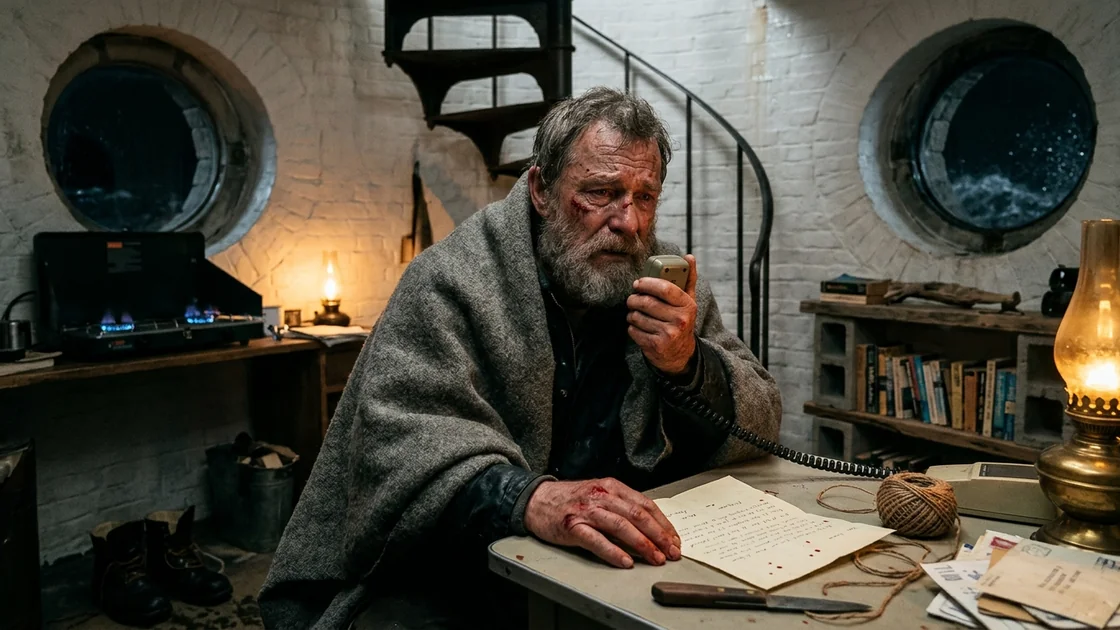
Arthur Pendelton has spent the last twenty-two years as the sole keeper of the Oakhaven Shoals Lighthouse, a jagged pillar of granite and iron bolted to a submerged reef forty miles off the storm-battered coast of Maine. His self-imposed exile began the night he walked out on his wife, Sarah, and their seven-year-old daughter, Clara, driven away by a cowardly fear of inadequacy and the suffocating weight of domestic debt. Throughout this sprawling narrative, Arthur goes through his grueling daily routines of maintaining the massive Fresnel lens, scraping salt from the thick glass panes, and logging the barometer readings while a catastrophic winter nor'easter barrels toward his solitary rock. As the storm severs his radio communications and traps him within the trembling stone walls, the howling wind and crushing waves force him to confront the spectral memories of the family he ruined. Through a series of harrowing repairs on the exterior catwalk and hallucinatory fever dreams brought on by exhaustion and hypothermia, Arthur relives every moment of his betrayal, culminating in the discovery of an unopened letter delivered months ago by the supply tender that finally shatters his hardened defenses and forces him to reckon with the irreversible cost of his solitude.
The barometer had been falling since dawn, its brass needle dipping steadily toward the engraved words Stormy and Much Rain with the slow, deliberate malice of an executioner’s axe. Arthur tapped the glass casing with a calloused knuckle. The needle didn’t budge; if anything, it trembled slightly downward, pulled by the invisible gravity of a low-pressure system screaming down from the Maritime provinces.
He stood in the watch room of the Oakhaven Shoals Light, hundred and ten feet above a sea that was currently turning the color of bruised lead. Around him, the circular walls of riveted iron plates sweated with condensation. It was always cold in the tower, a damp, penetrating chill that smelled of ancient whale oil, brass polish, kerosene, and the relentless, inescapable tang of dead kelp and brine. Even after they had converted the great lantern to run on diesel generators back in the late seventies—before the Coast Guard decided it was cheaper to pay one stubborn old fossil a stipend than to fully automate a rock nobody could safely land a helicopter on—the ghost of the old fuel remained trapped in the mortar.
Arthur turned from the barometer and walked to the small curved desk bolted to the curved wall. He picked up a fountain pen, dipped it into a heavy glass inkwell that had survived a century of gale-force tremors, and wrote in the leather-bound logbook: 0800 hours. Barometer 28.92 and falling fast. Wind NE, thirty-five knots, gusting to forty-five. Swell sixteen feet from the east-northeast. Visibility two miles, decreasing in freezing spray. Generator Number One running smooth. Oil pressure forty-five psi.
He blotted the ink, closed the book, and looked up at the window. The glass was half an inch thick, scarred by decades of airborne gravel and salt crystals hurled upward by the surf, yet it flexed ever so slightly under the mounting pressure of the wind. Out there, nothing moved except the water. There were no gulls today; the birds knew better than to linger around Oakhaven when the Atlantic decided to bare its teeth. They had all fled inland yesterday, flying low and fast toward the spruce-covered islands of Penobscot Bay, toward chimneys smoking with birchwood, toward barns and harbors and houses where people sat around kitchen tables drinking hot coffee together.
Arthur did not think about kitchen tables if he could help it. He had trained his mind over two decades to work like the lens above his head: revolving in a fixed, predictable track, illuminating only what was directly in front of it, leaving the rest of the world in total darkness.
He climbed the narrow, spiraling iron ladder up into the lantern room. Here, the noise of the wind was louder, a hollow, metallic thrumming against the copper dome roof that sounded like a giant drumming his fingers on a coffin lid. In the center of the room stood the First-Order Fresnel lens, atwelve-foot-tall beehive of concentric glass prisms framed in gleaming brass. Even by day, with the heavy linen curtains drawn around the inside of the outer glass panes to protect the prisms from the sun's magnifying rays, the lens was a thing of terrifying beauty. It weighed four tons, floating on a bath of liquid mercury in its cast-iron pedestal so effortlessly that Arthur could spin the entire assembly with the push of his little finger.
That mercury bath was another reason the Coast Guard hadn't automated the place yet; environmental teams didn't want to risk pumping five hundred pounds of toxic quicksilver down a granite shaft into a churning sea during the four days a year the water was flat enough to moor a barge to the stone landing. So they left the lens, and they left Arthur. They belonged to the same obsolete era, both of them heavy, toxic, and impossible to move without making a mess.
He took a chamois cloth from his canvas apron and began his morning wipe-down of the lower catadioptric prisms. His reflection stared back at him from a hundred fractured angles—an old man with a beard like tangled grey rope, deep-set eyes ringed with dark hollows, and skin cured by salt and wind until it resembled the leather washers in the bilge pumps. He was sixty-two, though he looked seventy-five. When he had first stepped off the tender onto the iron rungs of the Oakhaven ladder, he had been forty.
Forty years old. A man in the prime of his strength, running away like a thief in the night.
Stop it, he told himself aloud. His voice was a rusty croak, unused to forming words. Weeks went by out here without him speaking a single syllable, save for the brief, clipped radio check-ins with Sector Northern New England in Portland every Tuesday morning at nine. Today was Thursday. No one would expect to hear from him for another five days. If the storm tore the tower from its granite bolts tonight, nobody would even know he was gone until the passing freighters noticed the blind spot in the dark, and with GPS and radar, half the captains didn't even bother looking out the bridge windows anymore.
He breathed onto a prism and rubbed at a speck of soot with the chamois.
“Daddy, why does the toast always burn on one side?”
Arthur froze, his hand pressed against the cold glass. The voice hadn't come from the wind,though the wind was beginning to shriek at a pitch that sounded remarkably like a child’s cry. It had come from the back of his own skull, from the locked iron room he kept bolted down beneath the engine room of his memory.
It was the toaster. A cheap chrome two-slicer they’d bought at a rummage sale in Brewer for fifty cents because the heating element on the left side was warped. You had to stand there and flip the bread halfway through with a fork, careful not to touch the glowing red nichrome wire or you’d get a jolt that would rattle your teeth. Clara used to stand on a wooden milk crate beside the counter in her flannel nightgown, her bare feet tucked under the hem to keep them off the freezing linoleum of the rented house on Birch Street.
He remembered the smell of that kitchen: burnt whole-wheat bread, damp wool mittens drying over the cast-iron radiator, and the faint, sweet scent of Sarah’s cheap vanilla hand lotion. He remembered the way the yellow paint was peeling around the window frame above the sink, curling back like dried birch bark to reveal the grey plaster underneath. Every time he stood at that sink washing his grease-stained mechanic’s hands with Lava soap, that peeling paint had felt like an accusation. You can’t even scrape a windowsill, the house seemed to whisper. You can’t pay the fuel oil bill. You can’t fix the transmission on your own truck, let alone the ones down at the garage.
Arthur shook his head violently, as if trying to dislodge water from his ears. He shoved the chamois back into his apron pocket and checked the mercury trough. A thin film of gray dross—oxidized mercury and dust—had formed on the silver surface. Using a small wooden paddle, he carefully skimmed the scum off the top and dropped it into a glass jar kept strictly for that purpose. You weren't supposed to breathe the vapors, though after twenty-two years of skimming that trough, Arthur figured he had enough heavy metal in his blood to serve as a human thermometer. Maybe that was why he was hearing things. Mad as a hatter. That’s what happened to the old keepers, wasn't it? The mercury got into their brains, made them irritable, gave them the tremors, made them see their dead wives and grown-up daughters standing on the iron gallery in the middle of a blizzard.
Except Sarah wasn't dead. At least, he didn't know if she was. And Clara would be twenty-nine now.
Twenty-nine. Older than Sarah had been the day they got married in the little Methodist church in Bucksport, with rain drumming on the stained glass and Arthur’s borrowed suit jacket pulling tight across his shoulders.
A tremendous thud shook the tower. It wasn't the wind; it was the first of the real storm swells hitting the southwest ledge. Oakhaven Rock wasn't an island; it was barely an acre of jagged black basalt that only showed its barnacle-crusted back at dead low tide. At high water, the tower rose directly out of the churning Atlantic like a stone finger raised in defiance of God. The base of the tower was solid granite blocks, dovetailed together and pinned with iron rods for the first forty feet before giving way to a brick-lined double wall that rose another seventy feet to the gallery. When a thirty-foot wave broke directly against the lower courses, the kinetic energy had nowhere to go but straight up the masonry. The floor plates vibrated under Arthur’s boots, and the great lens chimed softly as its brass frame jostled against the stop-pins.
"Come on, then," Arthur muttered to the sea. "Let's see what you've got brought with you."
He descended the spiral stairs—seventy-eight cast-iron steps from the watch room to the storage level, another forty down to theliving quarters, and thirty more down through the heavy oak trapdoor into the cistern and generator room at the top of the solid masonry base. As he went down, the air grew heavier, warmer, and thicker with the stench of diesel exhaust and damp stone. The walls here were six feet thick, weeping pale stalactites of lime that had leached out of the mortar over a century and a half.
In the engine room, the Lister-Petter diesel generator chugged away with a deafening, rhythmic clatter that filled the vaulted stone chamber. It was a two-cylinder beast painted battleship grey, bolted to a concrete pad poured directly into the granite. Beside it sat its twin, Generator Number Two, cold and silent, waiting its turn. Every forty-eight hours, Arthur switched them over to change the oil and check the injectors.
He picked up an oil can with a long brass spout and checked the sight glass on the crank case. Good. He felt the fuel line for vibrations, checked the water separator for condensation, and shone his flashlight into the day-tank. Seventy gallons. And down in the main storage tanks built into the rock beneath his feet, there were another twelve hundred gallons. Enough to run the light and the electric heaters in his quarters until May, even if the supply tender got iced in at Rockland for the entire winter.
He had food, too. Racks of canned peaches, corned beef hash, pickled beets, lima beans, and powdered milk. Sacks of flour and cornmeal kept in galvanized rat-proof bins—though there hadn't been a rat on Oakhaven since the Great Gale of '78 washed the old wooden boathouse away. In the small chest freezer, there were thirty pounds of salt pork, three dozen vacuum-packed haddock fillets he’d caught off the leeward ledge in September, and ten loaves of dense white bread.
A man needed very little to stay alive when he didn't have anyone else to feed.
That was the arithmetic that had brought him here. Back on Birch Street, the numbers had never added up. Every Friday afternoon, he would sit in his freezing pickup outside the mill or the garage, staring at the yellow pay envelope in his grease-blackened hands, doing the subtraction in his head before he even turned the key in the ignition. Rent: one hundred and eighty dollars. Heating oil: sixty dollars, and the tank was already down to a quarter, the gauge tapping against the bottom while the January wind whistled through the gap under the back door. Groceries: forty dollars, stretched thin with cabbage soup and macaroni. The payment to the hardware store for the water heater that had burst in November: twenty dollars. And then there was the dentist bill for Clara’s bad molar, the bald front tires on the Ford, the overdue notice from Bangor Hydro.
Every dollar was spoken for before he earned it, and there were always three or four hands left empty and reaching when the envelope was torn open.
He remembered the way Sarah used to look at him when he walked through the door on Friday nights. She never yelled. God, he wished she had yelled. He wished she had thrown plates at his head like his mother used to throw at his father. Instead, Sarah would just look up from the ironing board or the stove, her dark hair pinned back with two bobby pins, the blue veins showing through the thin skin beneath her eyes, and she would give him a small, tight, hopeful smile.
“How was it today, Artie?” she would ask.
And that smile would cut him from his throat to his groin like a gutted fish. Because she still believed, somehow, despite five years of broken furnaces and borrowed money and bill collectors calling during supper, that he was going to fix it. She looked at him as if he were a man capable of shielding two women from the cold, hard geometry of the world.
He wasn't. He was a coward with dirt under his fingernails and a hollow space in his chest where a spine ought to have been.
Arthur climbed back up to his living quarters on the third level. The room was circular, eighteen feet across, with two deep-set portholes tunnelled through four feet of brick and stone. During the day, they let in two narrow shafts of weak grey light; right now, they looked like the viewports of a submarine sinking into an inkwell. Green water was already sloshing against the exterior glass of the windward port, fifty feet above the normal high-water mark.
The room was furnished with Spartan austerity. An iron cot bolted to the floorboards, covered with two grey wool blankets. A small Formica table with one chair. A two-burner propane stove set on gimbals like the ones on a ship, though the tower didn't roll—it only shuddered. A bookshelf made of driftwood planks and cinder blocks held forty or fifty paperbacks with cracked spines: Louis L'Amour westerns, old Reader’s Digest Condensed Books left behind by keepers from the fifties, a battered copy of Bowditch's American Practical Navigator, and a Bible whose pages were stuck together with salt damp.
On the corner of the table, next to the shortwave radio and a brass lamp, sat a small stack of mail tied together with brown butcher’s twine.
Arthur didn't look at the stack as he walked past it to the stove. He had put it there in October, after the last supply run before the autumn gales set in. Captain Miller on the Kennebec had tossed the canvas mailbag across the gap in the rigging while the tender pitched wildly in the trough below the crane boom. Most of it was official Coast Guard circulars, maintenance logs, and a Sears catalog that was already three months out of date.
And at the bottom of the bag, there had been a small white envelope made of heavy, cream-colored paper. It had a Portland postmark. There was no return address, just his name—Mr. Arthur Pendelton, c/o USCG Station Rockland, For Delivery Oakhaven Light—written in a neat, looping hand that slanted slightly to the right.
It wasn't Sarah’s handwriting. Sarah wrote in a cramped, upright script that she’d learned from the nuns at St. Joseph’s when she was a girl.
He hadn't opened it. For four months, it had sat at the bottom of that stack beneath the twine, glowing in his peripheral vision like a piece of radium. Sometimes, late at night when the generator was thumping below and the wind was quiet, he would sit in the chair and stare at the edge of that cream-colored envelope until his eyes watered. He knew that if he tore the flap, the vacuum seal of his life on the rock would be broken. The outside air would rush in, carrying twenty-two years of history he had forfeited the right to know, and it would suffocate him.
He filled a blue enamel kettle from the freshwater tap—water pumped up from the rain cisterns in the base that always tasted faintly of cement and gull droppings—and set it on the burner. He lit the gas with a wooden match. The blue ring of flame hissed softly, a tiny, fragile domestic sound against the rising roar outside.
While he waited for the water to boil, he turned on the VHF marine radio to catch the NOAA weather broadcast out of Dresden.
"...storm warning in effect from Eastport to Merrimack River," the mechanical voice droned through a thick soup of static. "Low pressure deepening rapidly south of Nova Scotia, ninety-sixty-four millibars, moving northwest. Winds northeast forty-five to fifty-five knots, increasing to hurricane-force gusts of seventy-five knots by late afternoon. Seas building twenty-five to thirty-five feet offshore. Freezing spray heavy at times. Mariners are advised to seek immediate shelter..."
Arthur clicked the knob off. Seek shelter. Where did a rock go when the sea decided to tear it up by the roots?
In 1858, before they built the current granite tower, there had been an iron-pile lighthouse on Oakhaven. Seven men had been inside it during the Great January Gale. When the weather cleared three days later and the revenue cutter came out from Castine to check on them, the rock was bare as a billiard ball. Nothing left but seven twisted iron stumps sheared off flush with the stone, and not a splinter of wood or a button from a uniform ever washed ashore. The sea had simply swallowed the whole structure in a single gulp between midnight and dawn.
The engineers who built the second tower—Arthur’s tower—had sworn it would stand for a thousand years. They had cut the granite blocks in Vinalhaven quarries, shaping each stone like a jigsaw puzzle piece so that it locked into its neighbors horizontally and vertically. The harder the waves hit it, in theory, the tighter the stones wedged together.
In theory, Arthur thought, Spoon-feeding instant coffee into a chipped mug.
A wave struck the tower then that made all the previous impacts feel like the taps of a tack hammer.
BOOM.
The sound didn't come through his ears; it came up through the soles of his boots, traveled up his shinbones, and rattled his teeth in his gums. The entire thousand-ton mass of masonry whipped sideways by an inch—or felt like it did—and then snapped back with a sickening, resonant shudder that lasted for three full seconds. The enamel kettle slid off the stove grate and crashed to the iron floor, spilling boiling water across his boots. On the bookshelf, two paperbacks leaped off their plank and fluttered to the ground like wounded birds.
And from seventy feet overhead, up in the lantern room, came a sharp, metallic crack, followed immediately by a high-pitched, whistling scream.
Arthur didn't even feel the scalding water soaking through his leather laces. He stood dead still, his mug poised in mid-air, listening with every nerve ending in his body. Every keeper knew the acoustic signature of his tower. He knew the groan of the tie-rods when the sun heated the south side; he knew the rattle of the copper ventilator balls in a thirty-knot breeze; he knew the hum of the lightning rod cable.
This sound was new. It was the shriek of sixty-mile-an-hour wind forcing its way through broken glass.
"God almighty," Arthur whispered.
A storm pane had gone.
That was impossible. The lantern was a hundred and ten feet above mean high water. For a wave to throw solid water—or worse, a chunk of rock torn from the submerged reef—high enough to smash a half-inch-thick plate of tempered glass at the very crown of the tower meant the sea was already breaking completely over the structure. If the wind got inside the lantern room at hurricane force, it wouldn't just blow out the curtains; the pressure differential could lift the copper dome right off its iron rafters, or blow out the remaining leeward panes from the inside. And the freezing salt spray would coat the Fresnel lens in an inch of opaque ice within twenty minutes, blinding the light and shorting out the electric drive motor and the thousand-watt halogen lamp at its heart.
He dropped the mug into the sink, grabbed his heavy oilskin coat from the peg by the door, and jammed a wool watch cap down over his ears. From a locker under the stairs, he pulled out the storm shutter kit: a three-foot-square sheet of three-quarter-inch marine plywood painted white, fitted with two heavy oak crossbars on the back, four long brass carriage bolts, and a heavy wrench. It was a two-man job to hang a storm shutter in a gale. The manual from 1912 specifically stated that the keeper and the first assistant were to secure the breach together, one man holding the board against the blast from the outside gallery while the other tightened the wing-nuts against the interior iron mullions.
Arthur didn't have a first assistant. He only had himself, and a ghost or two that couldn't lift a wrench.
He slung the coil of safety rope over his shoulder, hooked the wrench to his belt, and tucked the heavy plywood sheet under his left arm. Climbing the spiral stairs with the awkward board was a nightmare. The tower was vibrating continuously now, a low, bass hum as the wind pressed against the cylinder with thousands of pounds of static force, punctuated every twelve seconds by the sledgehammer blow of another massive wave. With each impact, the iron stairs jerked beneath his feet, slamming his shoulder and the plywood against the sweating brickwork.
By the time he reached the watch room, his heart was hammering against his ribs like a trapped pigeon, and his breath was coming in ragged, wheezing gasps. He wasn't forty anymore. His knees ached with deep, arthritic fire, and a sharp stitch burned beneath his left collarbone.
Above him, the trapdoor to the lantern room was open, and through it poured a sound like a jet engine at takeoff, accompanied by a swirling vortex of snow and salt spray. The temperature in the watch room had already dropped twenty degrees.
Arthur set his jaw, adjusted his grip on the board, and climbed the final ladder.
The lantern room was a maelstrom. One of the triangular upper panes on the northeast side had been completely obliterated. The heavy linen sun-curtain had been ripped from its brass rings and was plastered against the side of the Fresnel lens like a wet shroud, flapping madly. Shards of thick green-tinted glass littered the iron deck plating, crunching beneath his boots as he hauled himself up through the hatch.
And there, wedged against the base of the lens pedestal, was the culprit: a dead shag—a double-crested cormorant—its neck snapped, its black feathers matted with frozen blood and salt. The bird hadn't chosen to fly into the tower; it had been picked up by the gale like a stone in a slingshot and hurled straight through the glass at seventy miles an hour.
Through the jagged hole, the world outside was a terrifying void of flying white froth and horizontal grey sleet. The wind hit Arthur straight in the chest as he stood up, so strong and solid it forced the breath back down his throat and pinned him against the brass guardrail of the lens. The great beehive of glass was already shivering on its mercury bath, the silver liquid sloshing perilously close to the lip of the cast-iron trough. If the mercury spilled out, the four-ton lens assembly would drop down onto its iron safety rollers, grinding the delicate bronze gears of the clockwork drive to powder.
He had to close that hole, and he had to do it from the inside. Going out onto the exterior gallery in this was suicide; the wind would pluck him off the catwalk before he could even get the iron door latched behind him.
He uncoiled his rope and tied a bowline around his waist, securing the other end to the central iron column that supported the lens pedestal. Then he dragged the plywood shutter over to the breached frame.
The wind coming through the opening was a solid ram of freezing air. When he lifted the board to cover the hole, the blast caught the flat surface and slammed it backward into his face. The edge of the oak crossbar split his cheek below his right eye. He tasted warm, coppery blood mixing with the cold salt on his lips, and for a second, his vision went black with stars.
"Damn you!" he roared into the teeth of the gale, though his voice was swallowed instantly by the howling sky.
Wait for the lull. Even in a hurricane, the wind breathes in and out. He crouched on the glass-strewn floor, hugging the board to his chest, watching the tattered remnant of the curtain flapping straight out from the lens. For thirty seconds, forty seconds, the blast was unrelenting. Freezing spray jetted through the triangle, stinging his bleeding face like birdshot and coating his oilskins in a glaze of grey rime. His fingers were already losing their sensation inside his wet leather work gloves.
Then, for a fraction of a second, the scream dropped an octave. The curtain sagged an inch.
Arthur lunged upward. Instead of holding the board flat against the wind, he angled it like a knife blade, sliding one corner out through the broken pane against the diagonal iron astragal bar, then levering it sideways until the wind itself caught the outer edge and slammed it flat against the exterior of the frame.
"Got you," he snarled, leaning his entire weight against the oak crossbars inside to keep it from shifting while the wind tried to suck it back out into the abyss.
With his left arm trembling under the strain, he fumbled in his coat pocket with his numb right hand for the first of the two-foot threaded carriage bolts. The design was simple: push the bolt through the pre-drilled hole in the center of the plywood, hook the L-shaped end around the interior iron frame bar, and spin the heavy wing-nut down until the board was clamped tight against the rubber gasket on the outside of the glass.
His fingers were like five frozen sausages. He dropped the first bolt. It rolled across the vibrating iron floor and clinked against the lens pedestal, three feet out of reach.
"No, no, no," Arthur whimpered.
Another gust hit the tower—a seventy-knot monster that made the copper dome overhead boom like a kettle drum. The plywood bucked in his grasp, the edges rattling violently against the jagged teeth of glass still stuck in the putty around the frame. If he let go to reach for the bolt, the board would go flying into the Atlantic, and he Didn't have a spare down in the locker.
He stretched his right leg backward, feeling blindly across the glass shards with the toe of his boot while his left shoulder screamed as the muscles tore under the pressure of holding the shutter. His heel touched the cold brass of the bolt. Gently, agonizingly, he scraped it back toward him until he could bend his knees and snatch it up without taking his chest off the crossbar.
He jammed the bolt through the hole, hooked the iron mullion, and spun the wing-nut down with his teeth and the palm of his hand until it caught. Then he took the wrench from his belt and cranked it down until the wood groaned and the rubber gasket flattened out against the iron.
He got the second bolt in ten seconds later. The howling scream dropped immediately to a dull, angry roar behind the wood, though water still hissed through the tiny gaps where the broken glass prevented a perfect seal.
Arthur collapsed backward onto the iron deck, his back against the cold cast-iron pedestal of the lens, chest heaving as he sucked in mouthfuls of freezing air. His right cheek was throbbing, the blood already congealing in the cold, and his left shoulder felt as though someone had driven a hot spike into the joint.
He looked at the dead cormorant lying three feet away. Its green eye was open, filmed over with ice, staring up at the towering rings of glass prisms above it.
"Stupid bastard," Arthur panted, looking at the bird. "What were you doing out here? Why didn't you go inland with the rest of them?"
The bird didn't answer, of course, any more than the sea did.
Why hadn't he gone inland?
He closed his eyes, just for a minute, to let the dizziness pass. Beneath him, the granite tower swayed—imperceptibly to the eye, a fraction of an inch over its hundred-foot height, yet enough for the inner ear to register the sickening pendulum motion of a tree in a gale.
And in the dark behind his eyelids, the swaying of the tower became the swaying of a Greyhound bus heading south on Interstate 95 through a February snowstorm in 1982.
He had left on a Tuesday. Not even a Friday, when he would have had a pay envelope to leave on the kitchen table. Tuesday morning, February sixteenth.
He had gotten up at five-thirty, just like he always did. The house on Birch Street was freezing; the furnace hadn't kicked on during the night because they were down to the sludge at the bottom of the tank and he had turned the thermostat down to fifty degrees so it would last until Friday. He could see his breath in the bedroom air as he pulled on his woolen trousers and two flannel shirts.
In the bed, Sarah was curled on her side facing the wall, the old patchwork quilt pulled up over her ears. Only a tangle of dark hair showed against the pillow. He had stood at the foot of the bed for five minutes in the grey pre-dawn gloom, watching the slow rise and fall of her shoulder beneath the faded cotton squares. He knew that if she rolled over—if she opened her eyes and looked at him with that sleepy, trusting warmth and asked him if he wanted her to come down and make oatmeal—he would never make it out the door.
She didn't roll over. She was exhausted from working double shifts at the laundry in Brewer to help cover the dentist bill, her hands raw and red from the lye soap and the steam presses.
He walked down the narrow hallway. The floorboards creaked under his boots—one, two, three right outside Clara’s door. He stopped and pushed the door open an inch.
Clara was asleep on her back, one arm flung out over the edge of the mattress, clutching a stuffed rabbit with one ear missing that Sarah had made out of an old bath towel. Her mouth was slightly open, breathing softly. On the little painted desk beneath the frosted window sat a shoebox she had been decorating with construction paper and dry macaroni for the Valentine’s Day party at school the week before. She had made him a card out of red paper and white paste; it was propped up against the sugar bowl downstairs. TO THE BEST DADDY IN THE WORLD, it said in crooked black crayon.
Arthur had stood in that doorway until his chest hurt so badly he thought he was having a coronary at forty years old. Why was he leaving? Because the transmission on the Ford had finally dropped its second gear on the way home Monday night, and he didn't have the ninety dollars for a junkyard replacement. Because Mr. Henderson at the garage had told him that afternoon that business was slow and he was going to have to cut Arthur back to twenty hours a week until the spring thaw. Because the bank had sent a registered letter in a pink envelope that was currently shoved into the bottom of his coat pocket so Sarah wouldn't find it in the mailbox.
He wasn't a wicked man. He didn't drink his paycheck away at the American Legion hall; he didn't hit his wife; he didn't chase women in Bangor. He just couldn't carry the weight anymore. Every morning when he woke up, it felt like someone had laid another fifty-pound sack of wet sand across his shoulders, and his knees were buckling. He had convinced himself, in the twisted, desperate logic of three o'clock in the morning, that he was an anchor dragging them both down. Sarah had sisters in Portland; if he was gone—really gone, vanished like a man who had fallen through the ice on the Penobscot—her family would take them in. The church would help them. They wouldn't be tied to a sinking ship of a man who couldn't keep the heat on in February.
That was the lie he had told himself as he walked down the stairs, picked up his canvas sea-bag from the back porch where he had hidden it the night before, and stepped out into the quiet snow. He had left forty-two dollars—every cent he had in the world—under the edge of the red Valentine card by the sugar bowl, except for the twelve dollars it took to buy a one-way bus ticket to Boston.
He hadn't even left a note. What could you write on a piece of paper that would explain to a seven-year-old girl why the Best Daddy in the World had walked away while she was dreaming?
In Boston, he had lived in a rooming house in Dorchester for three years, working cash-in-hand on a scallop dragger out of New Bedford where nobody asked for a Social Security number if you could gut fish for eighteen hours straight without complaining. And when his back gave out from hauling dredges, he had heard an old Portuguese engineer in a bar talking about the Coast Guard looking for civilian contract tenders for the offshore rock stations in the Gulf of Maine—places so lonely and miserable that the young enlisted boys went crazy after six weeks and put their fists through the windows.
Oakhaven Shoals, the man had said. Forty miles off Matinicus. You don't come ashore from October to May. Nobody bothers you out there.
Arthur opened his eyes. The lantern room was growing dark. It wasn't four o'clock yet, according to his watch, but the storm had blotted out the afternoon sun completely, turning the sky and the sea into a single howling mass of charcoal and flying white foam.
It was time to light the lamp. Technically, it was on a photoelectric sensor that triggered it automatically when the ambient light dropped below a certain threshold, and the bulb itself was currently glowing brightly inside the heart of the lens, casting its four great Finger-beams out into the snow. Wait—no, it wasn't revolving.
Arthur scrambled to his feet, ignoring the screaming pain in his shoulder. The thousand-watt halogen bulb was burning steadily, blindingly white behind the crystal bullseyes, and the electric drive motor at the base of the pedestal was humming, its small brass pinion gear spinning merrily.
But the four-ton lens wasn't moving.
When the wave had struck the tower earlier—the one that had coincided with the cormorant smashing the window—the violent whip of the masonry had thrown the lens assembly slightly off center in its circular mercury trough. One of the lower bronze guide rollers had jammed tightly against the cast-iron lip of the basin, binding the entire mechanism against the small drive gear, which had sheared its brass shear-pin to save the motor.
A stationary light at Oakhaven wasn't a lighthouse; it was a death trap. On the charts, Oakhaven Shoals was listed as Fl W 10s—Flashing White every ten seconds. It achieved that flash by rotating the four-sided bullseye lens around a steady light source. If a fishing boat was running blind before the gale, trying to make the entrance to East Penobscot Bay with its radar iced over, and saw a steady white light instead of a ten-second flash, the captain would mistake it for the stern light of another vessel ahead of him, or the fixed range light on Saddleback Ledge fifteen miles to the west. He would steer straight for the jagged black teeth of Oakhaven Reef.
"Come on, you bastard," Arthur grunted, grabbing the brass spoke-handles set into the ring at the base of the lens. He planted his boots on the iron floor and heaved sideways to free the jammed roller from the basin lip.
It didn't budge. Four tons of glass and bronze, wedged tight by the force of an Atlantic comber.
He found a four-foot iron pry-bar in the tool rack by the hatch. Wrapping the tip in a greasy rag so he wouldn't crack the brittle cast iron of the mercury basin, he wedged it between the bronze ring of the lens chariot and the stationary pedestal wall. He threw his weight against the bar.
The tower shuddered under another wave hit. At the exact moment of impact, as the masonry flexed to the west, Arthur shoved with everything he had left in his legs and back.
With a loud, metallic clank, the roller popped free of the lip, and the lens settled back onto its buoyant pillow of liquid silver, rocking gently like a ship launched down the ways.
Now for the shear-pin. His hands were so cold he couldn't feel the tiny brass cotter pin he pulled from the spare-parts tin. He had to hold the flashlight in his mouth, tasting blood and grease, while he aligned the hole in the drive shaft with the pinion gear. Three times he dropped the pin into the drip pan below. On the fourth try, using a pair of needle-nose pliers like an extension of his numb fingers, he slid the brass wire through the shaft and bent the legs back to lock it in place.
He flipped the motor switch off and back on. The small electric motor whined, the gears meshed with a solid clack, and slowly, majestically, the great glass beehive began to turn. Four beams of blinding yellow-white light swept around the circular room, flashing across the plywood shutter, glinting off the broken glass on the floor, and piercing out through the salt-crusted panes into the swirling blackness of the storm.
One. Two. Three. Four. Five. Six. Seven. Eight. Nine. Ten. Flash.
Arthur leaned his forehead against the cold iron column in the center of the room and let out a long, shuddering breath. The light was turning. Whatever else he had broken or abandoned in his sixty-two years on this earth, the light was turning.
Then the light went out.
Not just the thousand-watt lamp inside the lens; the green indicator light on the motor control box winked out, the hum of the electric heater on the wall died, and down through the seventy-eight spiral steps of the tower shaft, the rhythmic, comforting thud-thud-thud of the Lister-Petter diesel generator coughed, sputtered twice like a drowning man, and fell completely silent.
Total darkness descended on the lantern room, absolute and suffocating, leaving only the monstrous, triumphant roar of the hurricane outside.
For five seconds, Arthur didn't move. Without the clatter of the generator below, the acoustic reality of the storm changed completely. Now he could hear the tower itself talking. He could hear the deep, crystalline groans of the granite blocks grinding against their iron dowels at the base as thirty-five-foot walls of solid water tried to shear the structure off the reef. He could hear the shriek of the copper roof seams pulling against their rivets.
Why had the generator died? He had checked the fuel tank at eight o'clock; there were seventy gallons in the day-tank. The oil was full.
Unless it was the intake.
The diesel engines down in the base needed air to breathe and a way to vent their exhaust. The air intake and exhaust pipes ran through a four-foot tunnel bored horizontally through the solid granite wall on the leeward side of the tower, thirty feet above the high-water mark, protected on the outside by a heavy cast-iron louver box bolted to the stone. In twenty-two years, no sea had ever reached high enough on the lee side to flood the breather pipe.
Until tonight. Either a wave had wrapped completely around the cylinder of the tower and dumped tons of green water down the intake manifold, hydrolocking the cylinders of Generator Number One, or the wind had driven freezing spray into the iron louvers until they iced over completely, choking the engine to death in its own exhaust.
He switched on the flashlight. The beam looked pitifully weak, a thin yellow pencil of light slicing through the freezing fog that hung in the lantern room. The automatic backup battery system—two banks of twelve-volt marine batteries down in the watch room—should have kicked in to power the small secondary DC bulb inside the lens, a tiny twenty-five-watt emergency blinker that had a range of barely three miles.
It hadn't kicked in. When he scrambled down the ladder to the watch room, he smelled why: the sharp, acrid stench of burnt insulation and battery acid. The salt water that had poured through the broken lantern pane had run down the central iron column, straight into the relay box mounted on the watch room wall, shorting out the transfer switch in a shower of sparks that had melted the plastic casing.
The Oakhaven Light was completely dark, on the worst night of the decade.
Arthur stood in the freezing watch room, his flashlight beam trembling against the dead grey face of the relay box. He could leave it. He could go down to his quarters, crawl under his two wool blankets with his oilskins on, light the little propane stove for warmth, and wait for daylight. Nobody would blame a sixty-two-year-old man for not going down into a flooded engine room or out onto a wave-swept ledge in a hurricane. The Coast Guard had already issued a Notice to Mariners two years ago stating that Oakhaven Light was subject to extinguishment without notice due to age and weather. Every big ship out there had satellite navigation; every lobster boat was tied up safe behind the breakwater in Rockland or Stonington with three storm lines out.
Nobody was out there tonight.
As if in answer to that thought, the VHF marine radio down in his living quarters—he must have left the backup battery switch on—crackled faintly down the stairwell, a burst of frantic, garbled static that echoed up the hollow brick shaft like a voice from a tomb.
"—day, Mayday, Mayday... fishing vessel Sarah Jane... lost steering... three miles east-southeast of Oakhaven... drifting toward the shoals... radar is gone, we can't see the light... anybody out there, please, where is the light..."
Arthur’s blood turned to slush in his veins.
Sarah Jane. It was probably a dragger out of Port Clyde or Vinalhaven, caught offshore when their rudder chain snapped or their hydraulics blew in the giant troughs. Three miles east-southeast, with a sixty-knot northeast wind and thirty-foot swells driving them sideways at four knots an hour. In forty-five minutes, they would be right on top of the northeast breaker ledge—a jagged shelf of submerged granite half a mile out from the tower where the water boiled like a cauldron in twelve feet of depth. If they hit that ledge tonight, the boat would be smashed to matchwood in sixty seconds, and no man who went into thirty-six-degree water would live long enough to take off his boots.
If they saw the light—if the great four-million-candlepower beam pierced the snow squalls even a mile out—they could drop both anchors before they hit the shoal water, or use their twin screws to back the hull around and clear the southern point of the reef. A twenty-five-watt battery bulb wouldn't punch through half a mile of horizontal sleet. They needed the main lamp, or they needed the old kerosene vapor burner that sat in the wooden crate in the storage room—a relic from 1955 whose brass mantles had rotted away to dust decades ago.
They needed Generator Number Two.
Arthur didn't stop to think about his shoulder, or his knees, or the fact that he was a coward who had run away from a broken transmission in 1982. He hurled himself down the spiral stairs, taking them three at a time, his boots clanging like fire bells in the pitch-black shaft while his flashlight beam bounced wildly off the weeping brick walls.
He bypassed his quarters—where the radio was now only hissing with empty white noise, the vessel’s antenna likely carried away by a breaking crest—and dropped through the oak trapdoor into the cistern level at the base.
Here, inside the solid granite core of the tower, the noise of the storm was a continuous, deafening sub-audible rumble, like being inside a cement mixer full of boulders. The air was thick with blue diesel smoke and the smell of cold sea water.
He shone the light on Generator Number One. Water was dripping steadily from the air cleaner housing, and a dark puddle of seawater mixed with black crankcase oil was spreading across the concrete pad. A rogue wave had indeed slammed over the thirty-foot leeward ledge and forced fifty gallons of brine straight up the exhaust pipe before the flapper valve could close, cracking the hot cast-iron manifold like a pistol shot.
Generator Number Two shared the same intake and exhaust tunnel through the four feet of granite wall, joined by a heavy cast-iron Y-valve. Arthur spun the iron wheel to close off the dead generator and open the vent to Number Two. He pressed the glow-plug button on the second machine, waited twenty agonizing seconds in the freezing dark while the battery whined, and hit the starter.
The heavy flywheel cranked over twice—chug, chug—fired once with a loud bang that blew a cloud of grey soot out around the manifold gasket, and died.
The exhaust didn't have anywhere to go. And the engine couldn't draw a breath.
Arthur walked over to the granite wall where the two six-inch iron pipes disappeared into the stonework. He laid his bare, bleeding hand against the cold metal of the intake pipe. It was below freezing. Out on the exterior wall of the tower, thirty feet above the boiling surf on the leeward side, the cast-iron louver box that protected the mouth of the tunnel from birds and solid water was encased in a solid dome of frozen sea spray two feet thick. The storm had hermetically sealed the lighthouse in ice.
To start the generator, somebody had to go outside with a sledgehammer and smash the ice off that grate.
Arthur shone his flashlight at the heavy bronze storm door set into the six-foot-thick masonry ten feet away. It hadn't been opened in mid-winter in twenty years. Beyond that door lay the exterior iron ladder that ran down the leeward face of the granite base to the boat landing—and ten feet to the left of the ladder, reachable only by a narrow four-inch ledge cut into the curve of the stone blocks with a rusted iron handrail bolted above it, was the intake grate.
"No," Arthur said aloud into the dark engine room. His voice sounded small, like a child's. "You can't go out there. A wave will take you off the stone before you take two steps."
The radio up in his quarters stayed silent. He didn't even know how many men were on the Sarah Jane. Three? Four? Boys with wives waiting in narrow frame houses in Port Clyde, sitting by kitchen tables with the scanner turned on, watching the windows rattle in the dark while their children slept upstairs with stuffed rabbits in their arms.
Sarah. Even the name of the boat was a sick joke played by a God who had been watching him hide on this rock for twenty-two years.
He thought about the forty-two dollars under the Valentine card. He had spent two decades telling himself that his exile here was a kind of penance, a monastic suffering that somehow balanced the ledger of what he had done. If he suffered enough in the cold and the dark and the silence, if he kept the brass polished and the lens turning while his hair turned grey and his teeth fell out, then he wasn't just a deadbeat who had abandoned his kid; he was a tragic figure. A keeper of the light.
What a lie. What a filthy, comforting lie. He hadn't come to Oakhaven to suffer; he had come here because on this rock, nobody ever asked him for anything he couldn't give. The lens didn't cry when the furnace went out. The generator didn't look at him with dark, trusting eyes that broke his heart with their faith in him. Solitude wasn't a punishment; it was the easiest, softest cowardice in the world.
Until tonight. Tonight, someone out there in the dark was asking him for something he couldn't give without paying for it in blood.
Arthur walked over to the tool rack, picked up an eight-pound iron sledgehammer, and tied a three-foot lanyard of parachute cord through the hole in the handle, looping it around his right wrist. Then he took a second coil of half-inch nylon mooring line—fifty feet of it—and tied one end around the base of Generator Number Two’s iron bedplate. The other end he knotted around his chest beneath his oilskins, cinching the bowline so tight it cut into his ribs.
He walked into the four-foot-deep granite tunnel that led to the outer bronze door. Two heavy dogs held the door sealed against its rubber gasket. He hit them with the head of the sledgehammer to break the corrosion free, then pulled the levers down.
Even on the leeward side of the tower, the wind pressure vacuum was so intense that the moment he released the second latch, the five-hundred-pound bronze door was sucked outward with the force of a cannon shot, tearing the handle from his glove and slamming back against the exterior granite wall with a clang that vanished instantly into the roar of the sea.
Arthur stood on the threshold of hell.
There was no sky and no ocean; there was only a vertical wall of shrieking blackness filled with horizontal sheets of water that weren't falling from above, but were being torn straight off the tops of the thirty-foot combers as they split around the seventy-foot base of the tower and rejoined in a boiling, chaotic maelstrom right beneath the ladder. The noise was physical—a roaring, tearing vibration that blurred his vision and made his nose bleed from the sudden drop in barometric pressure.
Thirty feet below him, white water surged up the curved granite stones like snow plows made of glowing green phosphorus, reaching greedily toward the threshold of the door before sucking back down into the trough with a sound like a thousand locomotives going over a cliff.
He had about twelve seconds between wave crests.
Arthur didn't look down, and he didn't look back into the safe, dry stone chamber behind him. He stepped out onto the top platform of the iron ladder and grabbed the frozen handrail that ran along the curve of the masonry to the left.
The wind hit him as he rounded the curve of the cylinder—not the full force of the northeast blast, which was splitting on the opposite side of the tower, but the swirling, violent eddy that whipped around the granite barrel at sixty miles an hour. It tore his wool watch cap off his head instantly and plastered his grey hair across his eyes, freezing it there in three seconds flat.
He shuffled sideways along the four-inch stone lip chipped into the granite blocks, his boot toes jammed into the mortar seam while his left hand slid along the iron safety rod bolted above his head. The iron was coated in two inches of glazed ice; his leather glove couldn't get a purchase on it. He tore the glove off with his teeth, spitting it into the void, and wrapped his bare, raw fingers around the freezing metal. The skin of his palm froze to the icy iron almost instantly, burning like a red-hot stove lid, but it held.
Ten feet. Eight feet. Six feet.
There it was: a huge, bulbous blister of grey ice clinging to the granite wall where the exhaust louver box should have been, completely sealing the six-inch pipes underneath.
Below him, the sea sucked back down into the trough, exposing the black, kelp-draped teeth of Oakhaven Reef for a terrifying second before the next mountain of water rose up out of the snow-streaked dark—a vertical cliff of black water capped with ten feet of tumbling white avalanche, roaring straight at the tower.
It wasn't going to split cleanly around the base. It was a peaking breaker, forty feet from trough to crest, and the shoulder of it was going to sweep right across the leeward face thirty feet up.
Arthur hooked his left elbow completely through the gap between the iron handrail and the granite wall, locking his forearm against his chest, and swung the eight-pound sledgehammer with his right hand.
CRACK.
The iron head buried itself two inches deep into the grey ice dome, sending a spray of frozen shrapnel into his face. Not deep enough. He wrenched it free and swung again, putting every ounce of his sixty-two years of bitter, wasted strength into the arc.
CRACK.
A slab of ice the size of a tombstone sheared off the stone blocks and fell into the rising wave below, exposing the rusted iron bars of the louver box. Inside the box, the mouth of the intake pipe was still plugged with a solid core of frozen slush.
He reversed the sledgehammer, jamming the narrow wedge of the peen straight through the iron grates into the mouth of the pipe, and twisted violently just as the sky disappeared behind a wall of solid black water.
The wave hit him like a freight train made of lead.
It didn't feel cold at first; it felt like being dropped onto concrete from a three-story roof. Tons of green water buried him ten feet deep against the side of the lighthouse, ripping his feet off the stone ledge and trying to tear his left arm out of its socket where it was hooked behind the iron bar. The roaring in his ears vanished, replaced by the strange, heavy, booming silence of the deep sea as the water surged past him at forty miles an hour, twisting his body like a rag doll on a clothesline.
His left elbow slipped off the iced rail. The skin of his palm tore straight off, staying frozen to the iron bar as he was swept away from the stone wall into the pitch-black abyss of the leeward eddy.
So this is it, he thought inside the roaring black water, his lungs burning as the salt water forced its way past his clenched teeth. It wasn't that hard after all.
Then the half-inch nylon mooring line tied around his chest went taut.
The rope snapped him backward out of the falling water column like a fish on a gaff, cracking two of his ribs on the right side with an audible pop that he felt in his spine, and slammed him flat against the lower rungs of the iron ladder ten feet below the doorway as the wave drained back down the granite blocks in a boiling cascade of foam.
He hung there in the freezing air for three seconds, dangling by his broken ribs against the vertical iron rungs while twenty gallons of sea water poured out of his oilskin coat. Ten feet below his dangling boots, the sea was already gathering its breath for the next leap.
Move. If the next wave caught him hanging below the door level on the ladder, it wouldn't wash him away; it would beat his skull to pulp against the iron rungs.
Arthur grabbed a rung with his bleeding left hand, hauled his boot up onto the bottom iron bar, and climbed. He didn't feel his ribs; he didn't feel his torn shoulder; he was an animal made entirely of salt and adrenaline, dragging twenty pounds of soaked wool and oilskin up six vertical feet of iced iron before the mountain fell on him again.
He threw himself headfirst through the bronze doorway onto the granite floor of the passage just as the crest of the second wave exploded against the threshold, sending a solid tongue of freezing foam shooting across the stone floor to wash around his boots inside the engine room.
Fighting the hurricane wind that was trying to hold the heavy bronze door open against the outer wall, Arthur hooked the nylon safety line around the inside lever handle, braced both boots against the interior stone jamb, and hauled backward with his back and legs until the door broke free of the wind-suction and slammed shut against its rubber gasket with a hollow, booming thud. He dropped the two iron dogs into their slots and collapsed onto his knees in six inches of swirling seawater on the generator room floor.
For a minute, he couldn't see anything. He was coughing up mouthfuls of stinging salt water, his chest feeling as though someone had driven a broken broom handle into his right lung every time he tried to draw a breath. He was shivering so violently his teeth were chipping against each other, the hypothermia setting in with terrifying speed now that the thirty-six-degree water had soaked him to the skin inside the freezing stone vault.
He shone the flashlight—miraculously still burning where it had rolled against the base of the diesel—toward the intake pipe on the wall.
A steady trickle of slushy water was draining out of the condensate valve at the bottom of the elbow, and more importantly, he could hear the wind howling faintly down the six-inch iron tube. It could breathe.
Arthur crawled on his hands and knees across the oily water to Generator Number Two. He didn't bother with the glow plugs this time; he grabbed the decompression lever on top of the cylinder head, flipped it open, and hit the starter button with his bloody palm.
The engine spun freely—whir-whir-whir-whir—building up momentum in its heavy iron flywheel. He slammed the decompression lever down.
BANG-chug-BANG-chug-chug-chug-chug-chug!
The two-cylinder Lister roared to life with a deafening, glorious mechanical thunder that shook the soot from the vaulted stone ceiling, blowing a massive cloud of black smoke and steam out through the cleared exhaust tunnel into the storm. The green indicator light on the wall panel flared to life, and above his head, sixty feet up the hollow brick shaft of the tower, he heard the heavy magnetic relay clunk home as the juice surged back up the main cable to the lantern room.
The light was back on.
Arthur lay on his side on the warm vibrating concrete pad right next to the engine block, pressing his freezing chest against the hot cast-iron crankcase of the diesel as it gradually warmed up. Every breath was a knife-thrust in his side, and his left hand looked like a piece of raw beef dropped in a coal bin, the skin torn from the palm from wrist to knuckles.
He couldn't stay down here on the wet stone floor; the cold would kill him even with the engine running. He had to get up to his quarters, get his wet clothes off, and light the stove.
It took him twenty minutes to climb the thirty steps from the base to his living level. He couldn't use his left hand or his right arm without grinding the broken ends of his ribs together, so he went up backward on his backside, one iron step at a time, pushing with his heels and leaning his shoulders against the central iron column while the whole tower swayed and shuddered in the seventy-knot gusts.
Above him, through the open grates of the spiral staircase, he could see a faint, rhythmic pulse of golden light reflecting down the whitewashed brick walls from seventy feet overhead.
One. Two. Three. Four. Five. Six. Seven. Eight. Nine. Ten. Flash.
The great lens was turning on its mercury bath, sending four million candlepower of white fire sweeping out over the murderous white cauldron of Oakhaven Reef.
When he finally dragged himself through the doorway of his circular living room, he didn't even have the strength to unlace his boots. He used a butcher knife from the sink drawer to saw through the wet leather laces and kicked them off, then peeled his frozen oilskins and soaked flannel shirts off over his head, crying out aloud in the empty room as the movement wrenched his broken chest.
He wrapped himself naked in the two grey wool blankets from the cot, lit both burners on the propane stove, and dragged his chair right up against the small Formica table so the heat from the blue gas flames washed over his shivering knees.
On the table, the VHF radio was still hissing quietly on Channel 16.
Arthur reached out with his trembling, blood-smeared right hand, picked up the microphone, and keyed the button. His voice was barely a rattle in his throat.
"Fishing vessel Sarah Jane, fishing vessel Sarah Jane, this is Oakhaven Light on one-six. Over."
He let go of the button. Only the angry crackle of atmospheric static answered him, punctuated by the shriek of the wind against the four-foot-thick porthole tunnels.
He waited a minute, his head resting on his crossed arms on the Formica tabletop, then keyed the mic again.
"Securité, Securité, this is Oakhaven Shoals Light. Main light is restored and operating on normal characteristic, flashing white ten seconds. Any vessel in the vicinity of Oakhaven Reef, do you copy? Over."
Nothing. Just the hiss of the empty night, three miles of flying freezing spray, and thirty-five-foot walls of water that swallowed radio waves and wooden boats alike.
Had he been too late? It had taken him nearly forty minutes from the time the generator died to the moment he had slammed the decompression lever down on Number Two. Forty minutes drifting broadside in a hurricane-force gale. Maybe they had already struck the northeast breaker while he was down in the dark tying a rope around his waist. Maybe four men were already tumbling through the black kelp forests at the base of the granite ledges while the light swept uselessly over their upturned hull.
Or maybe they had seen that first blinding flash cut through the snow squalls at the last possible minute, kicked their diesel into reverse, and clawed their way clear into the deep water of the channel, their radio antenna sheared off by the waves so they couldn't call back to thank the old ghost in the stone tower who had saved their lives.
He would never know. At least, not until the storm died down in three days and Sector Portland came back on the air, if the tower's own whip antenna on the copper dome hadn't been carried away by the ice.
He would never know.
Arthur sat up slowly, wincing as the broken bones in his side shifted under the tight wool blanket. He looked down at the Formica table, illuminated by the flickering blue light of the propane burners and the small brass lamp that was now burning steadily on generator power.
Right in front of his bleeding left hand sat the small stack of mail tied with brown butcher’s twine. And sticking out from the bottom of the pile was the corner of the cream-colored envelope with the Portland postmark.
For twenty-two years, he had chosen not to know. He had lived in that same static-filled silence that was coming out of the speaker of the VHF radio right now—not knowing if the Sarah Jane had made it to safe water or broken up on the rocks in the dark after he had cut her loose. He had told himself that not knowing was the price of his crime, when in reality, not knowing was the only thing keeping him from having to look at the wreckage he had left behind on Birch Street.
If he died tonight—and with a punctured lung or internal bleeding from those two ribs, sitting forty miles offshore in a hurricane with a septic hand covered in mercury dross and diesel oil, there was a very good chance he wouldn't see the spring tender—he would go into the dark without ever knowing what had happened to his little girl.
With his right hand, Arthur picked up the butcher knife he had used to cut his bootlaces and sliced through the brown twine.
He pushed the Coast Guard circulars and the Sears catalog onto the floor. He picked up the small white envelope. Two scarlet drops of blood from his torn left palm fell onto the heavy cream paper, soaking into the looping handwriting that spelled out his name: Mr. Arthur Pendelton.
He slid the point of the knife under the flap, slit it open, and pulled out the single folded sheet of stationery inside.
His vision was blurring with fever and exhaustion, the words swimming slightly on the page as the tower shuddered under another dying spasm of the storm. He held the paper close to the brass lamp and read.
June 14
Dear Dad,
I don't know if you will ever get this, or if you will read it if you do. A man who used to work for the Coast Guard in Rockland came into the clinic where I work in South Portland last month. His name was Miller, and when he saw my maiden name on my nursing diploma on the wall—Clara Pendelton—he asked me if I was any relation to the Arthur Pendelton he had been hauling supplies out to on Oakhaven Rock since the eighties.
I told him my father died in the winter of 1982. That was what I used to tell people at school when I was little, because it was easier than saying that you put forty-two dollars on the kitchen table and walked out while we were asleep.
Arthur stopped reading. A sound came out of his throat—a dry, tearing sob that hurt his broken ribs worse than the sledgehammer had, forcing a fleck of pink foam onto his grey beard. He pressed his bloody forearm against his eyes, then forced himself to look back down at the page.
Mom died three years ago in April. It was breast cancer, and it went very fast at the end, so she didn't suffer long. Before you start thinking that you killed her by leaving us, you shouldn't flatter yourself. The first two years after you left were hard. We lost the house on Birch Street in March and moved into a two-room apartment over the hardware store in Brewer, and then down to Portland to live near Aunt Ruth. Mom worked two jobs for ten years so I could go to nursing school at USM, and she never once spoke a bad word about you in front of me. Whenever I got angry and threw out the old pictures of you, she would take them out of the trash after I went to bed and put them back in the shoebox in her closet.
When I found out from Captain Miller where you were—that you had been sitting on a rock fifty miles away from us for twenty-two years while Mom grew old alone and I grew up without a father—I wanted to hate you all over again. I drove down to the breakwater in Rockland two weeks ago and looked out at the ocean, and I thought about writing you a letter to tell you every single thing you missed. How Mom cried when they turned the electricity off that first spring. How I walked down the aisle by myself when I married David four years ago.
But then I remembered what Mom said to me in the hospital two days before she died. She had the old Valentine shoebox on the bed beside her, and she told me, "Clara, your father wasn't a mean man. He was just a proud man who was terrified of failing us, and once he stepped off the path, he didn't know how to turn around in the dark."
I have a son now. His name is Samuel, and he is two years old. He has your eyes, Dad, and the same stubborn chin in the old photograph from Bucksport. When I watch David hold him in the kitchen in the morning while I make toast, I finally understand how heavy it must feel to love people that much when you think you can't protect them.
I don't know why you hid out there in the middle of the sea for half your life, and I don't know if you're ever coming ashore. You can't fix 1982, and you can't give Mom back the years she waited for the phone to ring. But you aren't dead, and we didn't drown when you left the boat.
If you ever decide to come off that rock, we live at 412 Highland Avenue in South Portland. There is a porch in the back that needs scraping and painting before winter, and Sam likes stories about boats.
Clara.
The sheet of paper slipped from Arthur’s fingers and settled onto the Formica table beside the lamp.
We didn't drown when you left the boat.
For twenty-two years, the great crushing weight on his chest had been the certainty that he had destroyed them—that Sarah and Clara had been frozen forever in that cold February kitchen on Birch Street, starving in the dark while the furnace ticked cold and the bill collectors pounded on the door. And in a sick, twisted way, his pride had needed to believe that they couldn't survive without him, even as his fear had driven him away.
Sarah was gone. The woman with the dark hair pinned back with two bobby pins, who had saved his photographs out of the garbage can and made excuses for his cowardice on her deathbed, was buried somewhere under the Maine sod where the salt spray couldn't reach her. He would never see that small, hopeful smile again, and he could never ask her to forgive him. That ledger was closed forever, sealed in stone harder than the granite of Oakhaven Light.
Wait—what was that sound?
It wasn't his own breathing, and it wasn't the generator humming down in the base.
“...Oakhaven Light, Oakhaven Light, this is fishing vessel Sarah Jane on one-six, do you read me? Over.”
The voice coming out of the VHF speaker was faint, ragged, and buried under a mountain of static, as if the man on the other end had jury-rigged a piece of copper wire to a broken antenna stub on the wheelhouse roof while pitching in thirty-foot swells.
Arthur stared at the radio through a blur of tears that were cutting clean tracks through the dried blood and salt on his hollow cheeks. With a hand that shook like a leaf in a gale, he picked up the microphone and pressed the key.
"Sarah Jane," he whispered, then cleared the blood from his throat and spoke louder, his voice echoing off the curved brick walls of his prison. "Fishing vessel Sarah Jane, this is Oakhaven Light. I read you three-by-five. Where are you? Over."
"God bless you, Oakhaven!" the voice cracked back through the static, young and hoarse with terror and relief. "We saw your flash come on when we were two hundred yards off the northeast breaker—we could hear the surf roaring right under our lee rail! We dropped the port hook and used the winch to haul our bow around into the sea with the main engine, and we just cleared the south ledge by fifty feet. We’ve got steerage way on our twin screws now, making three knots into the lee of Matinicus. Whoever you are up there, mister, you just saved four men from going on the rocks tonight. Are you alright in that tower? Over."
Arthur looked down at the cream-colored paper on the table, stained with his own blood and seawater, where his daughter’s neat, rightward-slanting hand had written an address in South Portland. A porch that needed scraping. A two-year-old boy with his eyes who sat in a warm kitchen while his mother made toast.
Above his head, seventy feet up in the howling black sky, the four-ton beehive of glass glided silently around its bath of silver mercury, throwing its four white arms out across the murderous dark of the Atlantic to show the lost boats the way home.
One. Two. Three. Four. Five. Six. Seven. Eight. Nine. Ten. Flash.
He pressed the button on the microphone.
"I'm banged up a little, Sarah Jane, broke a couple of ribs clearing the intake in the surf," Arthur said, and for the first time in twenty-two years, his voice didn't sound like a rusty hinge to his own ears; it sounded like a man speaking to other men. "When you get inside the breakwater at Rockland, tell Captain Miller on the tender to bring a relief crew out with him as soon as the sea goes down."
He paused, looking at the dark porthole where the furious white water was already beginning to subside by an inch as the tide turned toward the ebb.
"Tell him the keeper is coming ashore. Over and out."