The Salt and the Scale
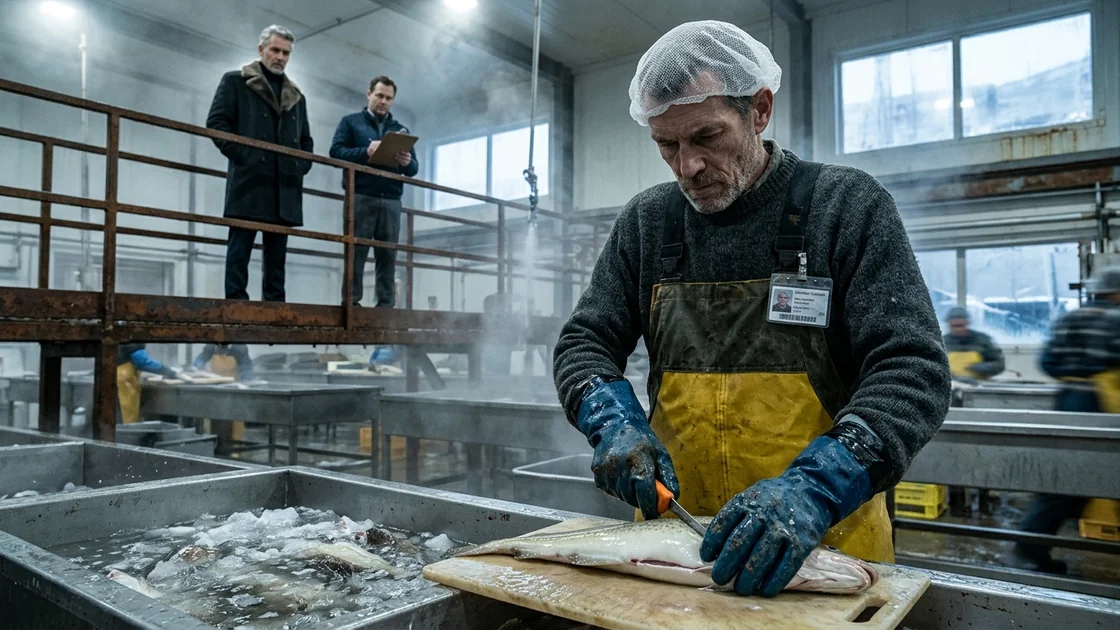
After a catastrophic nor'easter claims his cherished trawler, veteran fisherman Silas Vance is forced to take a degrading job gutting fish in the cannery of his bitterest rival, Victor Sterling, who has ruthlessly purchased Silas's delinquent mortgage. Through months of grueling humiliation on the slimy cutting floor of the port of Oakhaven, Silas uncovers a systematic fraud within Sterling's vast maritime empire and uses his lifetime of oceanic knowledge to turn the tables on his oppressor, eventually reclaiming his dignity, his boat's rightful legacy, and his place upon the open water.
The gale did not blow in from the Atlantic so much as it erupted out of the black belly of the sea itself. For twelve hours, Silas Vance had fought the helm of the Marrow, a forty-two-foot wooden stern-dragger that his grandfather had framed out of season-cured white oak fifty years prior. The sky above the Grand Banks was the color of a grease-smeared skillet, indistinguishable from the forty-foot rollers that marched out of the northeast with rhythmic, murderous intent.
Every timber in the Marrow screamed. It was a sound Silas knew intimately—the high, resinous whine of trunnels straining against oak planking, the dull thud of the iron-shod keel dropping into the trough of a wave that had no bottom. His deckhand, a nineteen-year-old boy from the narrows named Billy Pike, was lashed to the bunk down in the cuddy, his collarbone snapped by a rogue boarding sea three hours back. Silas was alone in the wheelhouse, his knuckles bruised to the color of plums against the brass-rimmed spokes of the wheel, his boots awash in four inches of freezing bilge that had found its way up through the cabin floorboards.
"Come up, old girl," Silas rasped, his voice lost instantly in the shriek of the rigging. "Come up and meet it."
The Marrow tried. Her blunt, broad bow lifted toward the ragged crest of a greybeard that towered above the masthead light. For a suspended second, the trawler hung on the sheer face of the water, her single Detroit Diesel thumping like a terrified heart in her belly, her screw biting at foam and air. Then the crest folded over.
Sixty tons of green winter water dropped straight down onto the pilothouse roof.
The toughened glass of the forward windows didn't shatter; the entire pine frame simply blew inward like a dry leaf. The impact tore the wheel from Silas’s grip, spinning him backward against the chart table with enough force to crack two of his ribs. The sea poured in—black, brine-heavy, and bitter cold—filling the small enclosure to his chest before the scuppers could even begin to clear the deck outside.
Through the roar in his ears and the sting of salt in his eyes, Silas felt the change in the boat's motion. The lively, cork-like stubbornness of the Marrow was gone. Down below, under the fish hold where four thousand pounds of prime haddock sat on crushed ice, a plank had finally sprung its butt-block near the garboard strake. The sea was no longer merely over them; it was inside them, rising with the steady, mechanical certainty of an iron weight.
The engine coughed once, swallowed a lungful of salt water through its air intake, and died. In the sudden, terrifying absence of the diesel's vibration, the only sound was the kettle-drum rattle of the hail against the remaining shards of glass and the rush of water pouring down the companionway hatch.
Silas didn't think about the bank note then. He didn't think about the four thousand dollars in fuel bills at the Oakhaven dock, or the lean seasons that had forced him to lever the Marrow’s hull against a second mortgage at the Maritime Trust. He only thought of Billy.
Clawing his way out of the ruined wheelhouse, Silas dragged himself along the handrail as the deck settled beneath the foam. He wrenched the cuddy hatch open against the pressure of the rising water, plunged into the pitch-black cabin, and cut Billy free with his rigging knife. By the time he hauled the half-conscious boy up into the grey light of dawn and tumbled him into the inflatable four-man Valise raft, the Marrow’s stern was already awash. Her A-frame gallows stood out against the frothing sea like a gallows indeed, the heavy steel otter boards banging against the quarters with a sound like a tolling bell.
Silas sat in the flooded bottom of the rubber raft, holding Billy’s head above the bilgewater, and watched her go. She didn't roll over. She had too much pride for that. She simply settled by the stern, lifted her bruised white bow toward the clearing eastern sky one last time, and slid backward into forty fathoms of water down on the edge of the Kettle Bank. A few wooden fish boxes bobbed to the surface, spinning in the vortex of oily diesel slick, and then a great gray swell marched over the spot and smoothed it flat.
The Coast Guard cutter out of Portland picked them up six hours later. When the helicopter winch set them down on the concrete apron of the Oakhaven fish pier, half the town was waiting behind the chain-link fence. It was a quiet crowd. In a town where every family had a name chiseled into the granite memorial wall up by the lighthouse, nobody cheered when a boat came back without her timber. They just stood in their yellow oilskins and wool watch caps, nodding once as Silas walked past with a grey wool blanket draped over his torn oilskin coat, one arm tucked tight against his broken ribs.
Billy was loaded into the waiting ambulance. Silas refused the stretcher. He stood at the edge of the pier, looking down into the greasy harbor water of the inner basin, where the fleet sat safe behind the granite breakwater.
Across the slip, painted a blinding, immaculate corporate blue, sat the Sovereign, the Monarch, and the Regent—three eighty-foot steel-hulled factory trawlers owned by Sterling Seafoods Inc. And standing on the raised timber loading dock of the Sterling Processing Plant, hands tucked into the pockets of a cashmere-lined shearling coat, was Victor Sterling.
Victor hadn't been to sea since he was twenty-two, when his father had bought out the old cooperative cannery during the cod collapse of the nineties and turned the family from fishermen into brokers. Victor was fifty now, the same age as Silas, though he looked ten years younger. His hair was silver and neatly groomed, untouched by the salt sores that permanently scarred the back of Silas’s neck. His boots were leather, not neoprene, and they had never known the stink of gurry.
Victor didn't come down the steps to the ambulance. He just watched Silas over the roofs of the pickup trucks, a faint, unreadable expression on his smooth face, before turning back into the glass-walled officethat overlooked the gutting floors.
The true wreckage didn't wash ashore until eleven days later, when the ribs in Silas’s side had begun to knit into a dull, constant ache and the insurance adjusters from Boston had finished their work.
Silas sat in the cramped, overheated office of Arthur Pendelton at the Oakhaven Maritime Trust. Outside the frosted glass window, the winter rain fell in sheets, turning the dirty snowbanks along Water Street into gray slush.
"The policy was for hull value minus depreciation, Silas," Pendelton said, not looking up from the manila folder spread across his blotter. He was a small man who smelled of peppermint lozenges and old paper. "And the marine surveyor's report from October noted the rot in the horn timber and the age of the main engine. With the deductible for winter offshore transit north of forty-three degrees..." He slid a single sheet of paper across the mahogany desk. "It covers forty-one percent of the principal on the primary note."
Silas stared at the figures. His hands, resting on his knees, looked like pieces of driftwood—scarred by dogfish spines, the knuckles permanently swollen from thirty-five years of hauling longlines and mending twine in freezing winds. "Forty-one percent," Silas repeated. His voice sounded like gravel turning in a surf. "Arthur, my father banked here. I’ve paid on that boat through three groundfish closures. Give me until the spring lobster run. I can mate on Tom Haskell’s rig, lease a hundred traps, and start paying down the balance by June."
Pendelton pulled off his wire-rimmed glasses and rubbed the bridge of his nose. A muscle twitched in his pale cheek. "I can't do that, Silas. The bank doesn't hold the secondary paper anymore. In fact, as of nine o'clock yesterday morning, we don't hold the primary Deficiency Judgment either."
The silence in the room grew very large. The radiator in the corner hissed, a sharp, metallic sound.
"Who bought it, Arthur?"
"The board was looking to clear non-performing maritime assets off the quarterly ledger before the state audit," Pendelton said quickly, his eyes darting toward the umbrella stand in the corner. "A private holding company made a par-value offer on four distressed notes in the harbor. Yours was the largest."
"Don't talk to me about holding companies," Silas said, leaning forward until his shadow fell across the banker's desk. "This town is two miles wide, Arthur. Who bought my house and my name?"
Pendelton swallowed hard. "Sterling Cold Storage and Marine Holdings. Victor signed the transfer himself."
Silas stood up. The movement was slow, deliberate, ignoring the stab of pain in his left side. "How much do I owe him after the insurance payout clears?"
"Sixty-four thousand, eight hundred dollars," Pendelton whispered. "And Silas... the secondary note has a thirty-day acceleration clause in the event of total loss of the primary collateral. If it isn't serviced or restructured by the first of the month, he can foreclose on the cottage on Turner’s Point. And the moorings."
The cottage on Turner's Point was three rooms of cedar shingle perched on the granite ledge at the mouth of the harbor. Silas’s mother had died in the front bedroom looking out at the channel markers. His grandfather had built the stone pier below it with granite hauled by ox-team.
Silas didn't say goodbye to Pendelton. He walked out of the bank into the freezing rain, his oilskin coat unbuckled, and walked the four blocks down the hill to the Sterling wharf.
The Sterling plant dominated the eastern side of the harbor like a concrete fortress. Where the old town wharves were built of creosote-soaked spruce pilings that smelled of rockweed and low tide, Sterling’s facility was all poured concrete, corrugated aluminum siding, and roaring ammonia refrigeration compressors. The air around it didn't smell like the sea; it smelled of chlorine bleach, diesel exhaust, and the sour, metallic tang of ten thousand tons of processed whitefish.
Silas bypassed the receptionist in the front lobby, his wet rubber boots leaving black puddles on the polished linoleum tiles, and climbed the iron stairs to the mezzanine office. He didn't knock. He pushed the heavy oak door open and stood on the threshold.
Victor Sterling was sitting behind a desk made of salvaged ship's teak—wood that had never seen an honest day's work since it was planed into furniture. He was on the phone, looking out the panoramic floor-to-ceiling window that gave him a god's-eye view of the main processing floor below. Down there, under the harsh glare of sodium-vapor lamps, forty men and women in yellow aprons and hairnets stood at stainless-steel troughs, their knives flashing in a blurred, mechanical rhythm as conveyor belts fed them an endless stream of headless cod and pollock.
Victor held up one manicured finger to Silas, finishing his conversation. "Tell the broker in New Bedford we'll take the whole lot at sixty cents a pound, landed. If the small-boat fleet down there doesn't like the price, they can let it rot in their holds. Good."
He set the receiver down and swiveled his leather chair around. He didn't look surprised to see Silas. In fact, there was a fresh pot of coffee sitting on the credenza beside two clean porcelain mugs.
"Silas," Victor said smoothly. "I heard Billy Pike is out of the hospital. Good news. A broken collarbone is a hard thing for a young deckhand, though I suppose he's lucky he wasn't twenty miles further east when that plank gave out."
"You bought my paper, Victor," Silas said. He stayed by the door, water dripping from the hem of his oilskins onto the beige carpet.
"I bought a bundle of delinquent loans from a local institution that was losing faith in the Oakhaven fleet," Victor corrected mildly, standing up to pour himself a cup of coffee. He didn't offer the second mug now that he saw Silas’s hands were clenched into fists. "It’s called consolidating local debt, Silas. Somebody has to keep capital in this harbor, or the whole town turns into bed-and-breakfasts for people from Connecticut."
"You paid full price for a dead boat's mortgage," Silas said, his voice low and steady. "There’s no profit in that unless you want the granite on Turner's Point."
Victor walked over to the great interior window and looked down at the cutting floor. "Your grandfather’s point has deep water right up to the ledge, Silas. Twenty-two feet at mean low tide. It’s the only parcel left on the outer harbor where I could put in a secondary offloading pier for my mid-water trawlers without having to dredge through town council permits."
"That land isn't for sale."
"Technically, it’s already half mine," Victor said, turning back with a thin, cold smile. "My father tried to buy that point from your old man in eighty-six. Your father threw him off the pier. Called him a land-shark and a scale-thief in front of the whole lobstermen's co-op."
There it was. The old poison, kept on ice for forty years just like the fish down in Victor’s holds. Silas remembered that day. He had been twelve years old, coiling pot-warp on the dock while his father, a giant of a man with a black beard, had taken old man Sterling by the collar of his wool Mackinaw and tossed him into four feet of eelgrass and harbor mud for trying to short-weigh their catch on a rigged scale.
"You've got sixty-four thousand dollars of my debt," Silas said, forcing the words through his teeth. "Tell me the terms to keep the house out of foreclosure."
Victor looked Silas up and down—from the salt-cracked boots to the grey stubble on his gaunt jaw. "You have no boat, Silas. Your commercial groundfish permit went down with the hull until you can buy a replacement vessel of equal tonnage, which you can't. No captain in the independent fleet can afford to pay you a share that would cover seven hundred dollars a week in interest and principal."
"I asked for the terms, Victor."
Victor walked back to his desk, picked up a laminated yellow badge and a pair of heavy-duty blue nitrile gloves, and tossed them onto the edge of the teak blotter.
"I'm short-handed on the number two slime line," Victor said softly. "The Guatemalan crew I had on contract didn't get their visas renewed this quarter. Sixteen dollars an hour, Silas. Fifty hours a week. I take half of your gross pay straight off the top to service the note, and as long as you don't miss a single shift—not one hour, not one minute—I’ll suspend the acceleration clause on Turner's Point."
Silas looked down through the glass at the cutting floor. The "slime line" was the bottom of the cannery hierarchy—the wet, freezing trough where the fish came straight out of the holding tanks to be scaled, gutted, and scrubbed of kidney blood before they went to the skilled filleters. It was work for sixteen-year-old dropouts, drifters, and men who had drunk themselves out of every wheelhouse on the coast.
And the plant had windows looking out onto the public wharf. Every lobsterman, every dragger captain, every man Silas had ever raced to the fishing grounds or shared a mug-up with at the harbor diner would walk past those windows every morning and see Silas Vance standing in a yellow rubber apron, scraping belly-lining out of Victor Sterling’s trash fish.
"At eight dollars an hour toward the debt," Silas calculated, his eyes fixed on Victor’s throat, "it’ll take me three years just to clear the interest."
"Three years and four months," Victor agreed pleasantly. "Assuming I don't have to dock your pay for slow poundage. The shift starts at five in the morning. Harry Briggs is the floor boss. If you're at the time clock at five-oh-one, I file the sheriff's deed on Turner's Point at nine."
Silas walked to the desk. He didn't look at Victor as he reached out and picked up the yellow badge and the rubber gloves. The plastic felt cheap and slick between his calloused fingers.
"I'll see you in the morning, Mr. Sterling," Silas said.
At 4:45 AM, the air inside the Sterling plant was thirty-eight degrees and saturated with a fine, freezing mist that rose from the chlorination tanks.
Silas stood by the rusted punch-clock near the loading bay doors, wearing his own oilskin bibs under the mandatory yellow plastic apron and a white mesh hairnet over his grey hair. Around him stood the rest of the morning shift—mostly older women from the inland trailer parks with swollen ankles wrapped in Ace bandages, and a few hollow-eyed young men who smelled of cheap whiskey and stale tobacco. None of them looked at Silas. The word had traveled through Oakhaven by suppertime the night before, carried on the back of a cold wind: Silas Vance is on the gutting trough at Sterling’s.
Harry Briggs, the floor foreman, came out of the scale-house carrying a clipboard. Harry was sixty, a man who had crewed for Silas’s father thirty years ago before he lost three fingers on his left hand in a winch drum and took a shore job with the Sterlings. Harry stopped three feet from Silas. He couldn't bring himself to look his old captain's son in the eye; instead, he stared at the brass buckle on Silas’s shoulder strap.
"Trough four, Silas," Harry muttered, his voice barely audible over the clatter of the ice machines starting up. "Right at the head of the chute. You’re on splitter and belly-scrub. Keep your knife out of the roe sacks if any hake come down, or Victor docks the line bonus."
"I know where the roe sits in a fish, Harry," Silas said evenly. "I've gutted a few."
Harry flinched as if he’d been slapped, nodded once, and hurried down the catwalk.
Then the horn blew—a harsh, electric klaxon that echoed off the concrete walls—and the hydraulic gate on the primary holding hopper lifted.
A ton of half-frozen pollock and undersized cod cascaded down the stainless-steel chute with a wet, heavy roar, slamming into the water-filled trough in front of Silas. The water was thirty-three degrees, kept just above freezing by a slush-ice injector that sprayed directly onto their forearms.
Silas picked up the plant-issued knife. It was a cheap, stamped-steel blade with a hollow plastic orange handle—light, badly balanced, and sharpened on a coarse mechanical wheel that left a ragged wire edge on the steel. To a man who had spent forty years sharpening his own high-carbon Dexter blades on an Arkansas oilstone until they could shave the hair off a dry wrist, the tool felt like an insult.
He grabbed the first pollock by the eye sockets with his left hand, flipped it belly-up on the grooved plastic cutting board, and drove the tip of the orange knife into the vent.
Slit. Rip. Scrape.
He hooked the gills with his thumb, tore the entrails free in one motion, dropped them down the offal chute between his feet, and used the serrated spoon on the back of his wrist to scrape the black kidney blood from the spine under the running water jet. He tossed the cleaned carcass onto the central conveyor belt and reached for the next fish. Seven seconds.
By seven o'clock, his broken ribs were screaming. The trough was built for a man five feet eight inches tall; Silas was six-two, which meant he had to stand in a perpetual, hunchbacked stoop over the steel rim. Every time he reached into the slush water to haul a twenty-pound cod toward his board, the fractured bones in his left side ground together like two pieces of wet flint. Sweat poured down his back beneath the rubber apron, while his hands and forearms, plunged wrist-deep in ice-brine, went from red to white to a numb, waxy blue.
At eight o'clock, the sunlight finally cleared the roof of the ice house across the wharf and slanted through the tall, salt-streaked windows along the dockside wall.
Silas didn't have to look up to know who was out there. He knew the sound of every marine diesel in Oakhaven Harbor by the rhythm of its exhaust. That deep, loping six-cylinder thrum was Tom Haskell’s Northern Star coming in from setting lobster gear off the ledges. The high-pitched whine behind it was the Miller brothers in their fiberglass skiff.
Out of the corner of his eye, through the smeared glass, Silas saw two figures in orange Grundéns stop on the public walkway thirty feet away. They didn't point. They didn't laugh. They just stood there for five seconds, watching the greatest high-liner in the history of the Oakhaven fleet standing ankle-deep in blood-water and cod guts under a fluorescent light, wearing a hairnet. Then they turned their heads away, spat into the harbor, and walked quickly toward the co-op fuel dock as if they had seen something indecent.
Silas’s jaw locked so hard a vein stood out like a rope along his temple. His knife never slowed. Slit. Rip. Scrape. Toss.
At ten-fifteen, the shadow fell across his trough from above.
Silas didn't look up toward the mezzanine window, because Victor wasn't up there. Victor had come down onto the elevated iron catwalk that ran directly over the center of the gutting lines. He had two men with him in dark wool overcoats—buyers from the restaurant distribution syndicate in Portsmouth.
"We process forty thousand pounds a shift on this floor alone," Victor was saying, his voice carrying clearly over the splash of the water jets. He stopped directly above Trough Four, resting his hands on the yellow safety railing. "Everything is vertical. My boats catch it, my ice preserves it, my people clean it, and my trucks put it on the turnpike before midnight."
One of the buyers looked down at Silas’s hands. Even with the dull plant knife and his cracked ribs, Silas was moving at twice the speed of the workers on either side of him. His hands didn't seem to hurry, yet the fish flowed from the ice hopper to the finished belt in an unbroken, silver stream, every belly cavity washed white as snow, not a single nick in the prime collar meat.
"That old fellow down there knows how to handle a blade," the buyer remarked. "Most plant cutters ruin three percent of the napes on the gill-cut."
Victor looked down through the steel grating at the top of Silas’s hairnet. "He should," Victor said loudly enough for the whole line to hear. "He used to own a boat in this harbor. Before he realized he was better suited for shore work."
A trickle of bloody ice-water splashed up from the trough and hit Silas’s cheek. He didn't wipe it away. He reached into the hopper, took a fifteen-pound haddock by the jaw, and opened it from vent to throat with a single, silent stroke of the blade.
Wait, he told himself, feeling the rough grain of the granite ledge on Turner's Point in his mind's eye. The sea taught you two things if you lived long enough: you cannot punch a wave, and no tide stays high forever.
The weeks bled into one another, measured not by days of the week, but by tonnage and the relentless ticking of the punch-clock. January froze the harbor margins into shelves of grey pancake ice. February brought gales that rattled the corrugated tin walls of the cannery while Silas stood inside, breathing the warm, sickly stench of boiling fish meal from the rendering vat in the back room.
His hands changed. A fisherman’s hands are calloused and scarred, hardened by salt air and manila rope. A fish-cleaner’s hands are something else entirely. Immersed for ten hours a day in chlorinated ice-water and acidic fish slime, the skin between Silas’s fingers cracked open into raw, red fissures known on the line as "gurry sores." They never healed. Every morning at four A.M., sitting at the kitchen table on Turner’s Point, Silas would wrap his knuckles in black electrical tape before pulling on the cotton liners and the rubber gloves, his teeth clenched against the burn as the salt from the previous day’s sweat hit the open skin.
He lived on oatmeal, potatoes, and the bruised "cull" fish that the line workers were allowed to take home in a plastic bucket at the end of a Saturday shift. He turned the heat in the cottage down to forty-five degrees to save on heating oil, sleeping in his wool watch sweater under three blankets inside the front parlor, where the woodstove burned drift-logs he hauled up from the high-tide line after dark.
He saw almost no one. Pride kept him out of the Harbor Diner, and shame kept the other captains from knocking on his door. Only Billy Pike came by, once a week on Sunday afternoons, his left arm still in a canvas sling, bringing a sack of groceries he swore his mother had bought by mistake and sitting on the stone pier with Silas to watch the gulls wheel over the channel.
"Victor’s Sovereign came in last night at two in the morning," Billy said one bleak Sunday in late February, kicking his heel against a frozen lobster trap. "Didn't unload at the main chute, neither. Backed her right up to the west annex—the old freezer bays by the ice tower."
Silas was sitting on an upturned oak Nail-keg, sharpening his pocketknife on a flat beach stone. He stopped the blade. "The west annex doesn't have a sorting line, Billy. That’s just bulk cold storage for bait mackerel."
"Wasn't bait they were swinging off her," Billy said, squinting out toward the breakwater. "I was walking back from Sarah’s house up on the hill. Saw the crane working under the yard lights. They were hoisting out big gray insulated totes—the thousand-pounders—and running them straight into the freezer with the electric forklifts. No state fish-weigher on the dock. No NOAA observer."
Silas looked across the half-mile of grey water toward the sprawling blue complex of Sterling Seafoods. His eyes narrowed.
For the last three weeks on Trough Four, something had been bothering Silas. It wasn't a thought so much as an old fisherman's instinct—the same prickling at the back of his neck that told him when the barometer was dropping before the glass even moved.
It was the fish coming down his chute.
On paper, according to the chalkboards hanging in Harry Briggs’s office, Trough Four was processing the Monarch’s and the Regent’s catches from Sector Twelve—the inshore mud-bottom grounds forty miles south-southeast of Monhegan. Those grounds produced small, dark-backed "market" cod with soft bellies from feeding on mud-shrimp and brittle stars, along with medium pollock and grey sole.
And for the first four hours of every shift, that was what came down the chute.
Then, around ten in the morning, after the state marine patrol officer had finished his morning walk-through of the pier and driven up to Rockland for the day, Harry Briggs would blow the whistle, flush the hoppers, and switch the feed conveyor to the secondary holding tanks in the back of the plant.
The fish that came down the chute after ten o'clock were different.
To the women from the trailer parks and the kids on the line, a cod was a cod and a haddock was a haddock. Even to Victor’s quality-control managers, who had business degrees from Orono and had never set foot on a deck, it was all just white fillets going into plastic trays.
But Silas had spent thirty-five years reading the bottom of the ocean through the bellies and scales of the fish he hauled out of it.
The cod that came down that chute in the afternoon weren't mud-bottom market cod. They were forty-pound "whale" cod with pale, silver-green backs and thick, muscular tails. Their bellies weren't full of mud-shrimp; when Silas slit them open, his knife grated against crushed sea-clam shells and tiny red sand-eels. And mixed in with them were giant, slab-sided halibut with their white bellies scarred by coral rock, and huge yellowtail flounder with brass-colored spots as bright as new pennies.
There was only one place within five hundred miles of Oakhaven where cod grew that pale and fed on sand-eels over coral and gravel.
The Cashes Ledge Closed Area. A three-hundred-square-mile federal marine sanctuary seventy miles offshore, closed to all commercial bottom-trawling by federal law for the last fifteen years to protect the last great spawning stock of New England groundfish.
"Billy," Silas said quietly, setting his sharpening stone down on the head of the barrel. "Who’s running the wheelhouse on the Sovereign this winter?"
"A guy from Gloucester named Decker," Billy said. "Mean bastard. Got his license suspended down in Massachusetts three years ago for towing inside the three-mile line at night, so Victor hired him up here as a 'fleet captain.' Why?"
Silas looked down at his taped, scarred hands.
If a boat towed inside the Cashes Ledge closure at night, with her satellite VMS transponder tampered with to show her steaming slowly along the legal boundary edge three miles outside the line, she could fill her hold with forty thousand pounds of prime spawning fish in two four-hour drags.
Wait, Silas thought, his mind working with the cold, geometric precision of a man plotting a dead-reckoning course through thick fog. Catching illegal fish was only half the problem. To sell them into the Boston and New York markets under the new federal catch-share laws, every pound of high-grade cod and halibut had to be matched to a legal vessel trip report and weighed by a certified dealer scale. If you landed thirty thousand pounds of giant Cashes Ledge cod on a trip where your boat only had quota for ten thousand pounds of inshore pollock, the federal auditors would catch the discrepancy in a month.
Unless you already owned the cannery.
And unless you had been buying up the dead boats and dormant fishing permits of broken independent fishermen all up and down the coast, using their old inshore pollock quotas as a paper laundry to wash black-market spawning cod into fifty-pound fillets before an inspector ever saw the whole fish.
"Billy," Silas said, standing up as the cold wind off the channel whipped his grey hair across his forehead. "You still got that little fourteen-foot aluminum skiff with the nine-horse Johnson up in your uncle’s barn?"
Billy blinked. "Yeah. Needs a shear-pin in the prop, and the transom leaks if you sit too far aft, but she runs."
"Fix the pin this week," Silas said. "And don't come down to the wharf no more. Don't even look at me if we pass on the street."
On Monday morning, Silas began to watch the plant with new eyes.
Humiliation has a strange side effect: it makes a man invisible. To Victor Sterling, to the office clerks who walked the catwalks with their spreadsheets, and to the truck drivers who backed their refrigerated trailers up to the loading bays, Silas Vance was no longer a rival captain or a dangerous man. He was a broken piece of harbor furniture, just another stooped back in a yellow rubber apron who kept his head down, took his abuse, and smelled of fish guts.
Nobody noticed when Silas took thirty seconds longer to hose down the offal grates under Trough Four during the noon wash-down.
The offal grates didn't just drain water; they connected to the main concrete sluice tunnel that ran beneath the entire length of the processing floor, carrying the heads, frames, and entrails back to the rendering vats in the west annex. And running right alongside that sluice tunnel, bolted to the damp concrete foundation wall beneath the steel floor plates, were the main electrical conduits and the braided steel data cables for the dockside floor scales.
On Wednesday afternoon, the Sovereign tied up at the main pier at three o'clock. It was an unusual daylight landing, made necessary because a late-winter gale was brewing down off Cape Cod and the big trawler wanted to get inside the breakwater before the seas built across the bar.
Because she came in during banking hours, the federal port sampler—a young woman from the National Marine Fisheries Service with a yellow hard hat and a waterproof tablet—was standing on the dock when the unloading crane swung the first brailer of fish out of the Sovereign’s forward hold.
Silas was on Trough Four, twenty feet inside the open bay doors. He watched as the crane dropped a thousand-pound tote of small, legal inshore haddock onto the digital floor scale inside the scale-house.
Inside the glass booth, Harry Briggs hit the tare button, logged the weight into the federal electronic dealer reporting system, and waved the port sampler over to verify the species composition. Everything was clean. Everything was legal. Sixty thousand pounds of small haddock and pollock, well within Victor’s quarterly sector quota.
At five o'clock, the shift horn blew. The line workers stripped off their aprons, punched out, and hurried out to the gravel parking lot before the freezing rain started. The federal port sampler got into her government-issue Ford sedan and drove out through the main gates toward the highway.
Silas punched his time card at 5:02 PM, walked out the side door toward the dumpster corrals as if heading for the footpath down to the beach, and then slipped back through the unlatched fire door of the boiler room before the pneumatic closer could click shut.
He knew every inch of the old building's bones. Thirty years ago, before Victor’s father had wrapped the structure in blue aluminum siding and poured the new concrete floors, this had been the Oakhaven Fishermen’s Cooperative. Silas had played hide-and-seek among the salt bins when he was eight years old while his father sat on the board of directors. He knew about the four-foot crawlspace between the old brick boiler room wall and the new polyurethane insulation panels of the west annex freezer bays.
He climbed up the iron rungs of the coal-chute ladder, squeezed his broad shoulders past the main steam pipe, and settled into the darkness behind a ventilation louver that looked directly down into the west annex loading bay.
He waited for two hours in the dark. The cold crept through his damp boots, turning his toes to blocks of wood. His broken ribs ached with a steady, rhythmic throb that matched the beat of the ammonia compressors behind him.
At 7:15 PM, the heavy steel roll-up door of the west annex rumbled open just enough to clear the cab of a forklift.
Outside on the dark wharf, the Sovereign had shifted her lines, warping fifty yards down the pier from the main unloading chute to the unlit bulkhead behind the ice tower. Her deck lights were off; only a single red cargo lamp burned under her stern gantry.
Victor Sterling walked into the annex from the interior office corridor. He was wearing his shearling coat, and right beside him was Decker, the Sovereign’s captain—a thick-necked man with a shaved head and a toothpick clamped in the corner of his mouth. Harry Briggs trailed behind them, looking older and greyer than usual under the mercury-vapor lamps.
"Move it along, Harry," Victor said, his voice echoing in the concrete cavern. "The storm front’s going to hit the turnpike by midnight. I want those two reefers rolling toward Hunts Point Market before the state police put the truck bans on the bridge."
"Victor, I don't like running the floor scale in bypass mode this twice in one week," Harry muttered, his three-fingered left hand twitching against his thigh. "If the state weights-and-measures guys ever pull the internal memory chip out of that Toledo head-unit, they’re gonna see the tare-weight overrides."
"They don't pull chips unless there’s an audit, Harry, and there won't be an audit because on paper, this fish doesn't exist," Victor snapped. He pulled a leather-bound ledger—not a computer tablet, not a digital file, but an old-fashioned green canvas accountant's book—out of his inner coat pocket and handed it to Harry. "Log the boxes against the Marrow’s old state transit numbers and the Sea Fever’s dormant permit for the Canadian line-truck bill of lading. Forty-two thousand pounds of jumbo cod, eight thousand of halibut."
Silas’s breath stopped in his throat behind the iron louver.
The Marrow’s old state transit numbers.
Victor hadn't just bought Silas’s mortgage to take his land and humiliate him on the slime line. When a bank foreclosed on a vessel's corporate holding paper in Maine, the creditor took temporary administrative control of the vessel's historical dealer-landing tags until the estate was settled. Victor was using the ghost of the Marrow—a boat lying in forty fathoms of water on the Kettle Bank—to forge bill-of-lading manifests for poached sanctuary fish, shipping them across state lines as "brokered independent catch" so they wouldn't count against his own trawlers' federal quotas.
If the federal enforcement agents ever intercepted one of those trucks on Interstate 95 and traced the falsified transit numbers back to the originating vessel tag, the criminal indictment for Lacey Act violations—interstate trafficking in illegal wildlife—would have two names at the bottom of the registration: Sterling Marine Holdings as the lienholder, and Silas Vance as the Master of Record.
Victor wasn't just going to take Turner’s Point after three years. He was setting Silas up to take a five-year federal prison sentence the moment the scheme ever got too hot.
Down below, the forklift rolled in off the dock, its forks groaning under the weight of two stacked gray insulated totes brimming with crushed ice and massive, pale-backed Cashes Ledge cod. Harry Briggs wrote the weights down in the green canvas ledger with a carpenter's pencil, tore off a carbon copy for the truck driver waiting by the bay door, and handed the book back to Victor.
Silas watched where Victor went when the last pallet was loaded into the unmarked white eighteen-wheeler.
Victor didn't go back up the main stairs to his glass-walled showcase office. He walked into the old brick scale-master’s room at the corner of the annex—the only room left from the original 1950s co-op building. Through the dusty transom window above the door, Silas saw the faint blue glow of an old Mosler floor safe tucked behind a stack of cardboard fillet boxes. Three minutes later, Victor came out, locked the heavy steel fire door with a brass deadbolt key on his keyring, and walked out to his Mercedes in the empty parking lot.
Silas didn't act that night. A fisherman who hauls his gear before the slack tide loses his traps to the current.
For ten more days, he stood at Trough Four. He let the ice-water burn his raw hands. He let Victor walk the catwalk above him, dropping quiet insults for the benefit of the plant supervisors. He let the town look through the salt-streaked glass at the fallen captain of the Marrow.
Every day, Silas gathered another piece of the chart.
He learned that the Sovereign’s illegal night-tows inside the Cashes Ledge sanctuary were guided by a secondary, unlogged Garmin plotter that Decker kept in a padded aluminum case and carried off the boat in a canvas seabag after every trip, while the trawler’s official federal VMS satellite beacon was left bolted to a solar battery inside a lobster car moored three miles outside the sanctuary line—broadcasting a steady, legal four-knot drift back to the enforcement computers in Woods Hole while the Sovereign raped the spawning grounds ten miles inside the wire.
He learned it because on Tuesday morning, two of the young deckhands from the Sovereign were pulled onto the gutting line to help clear a backlog of dogfish, and young deckhands with three beers still in their blood at five in the morning talk loud over the roar of the ice chutes when they think the deaf old bastard at the head of the trough is just part of the machinery.
"Sixteen hundred bucks cash in an envelope every Friday," the taller kid boasted to the girl working the skinning machine beside him, jerking his thumb toward the ceiling. "All we gotta do is pick up the buoy with the blinker box on the way back out of the reserve at three A.M. and bolt it back onto the mast bracket before we hit the twenty-fathom curve."
Silas slit a dogfish belly from vent to jaw, tore the grey liver out, and dropped it down the chute without blinking. A floating spoofing buoy on the eastern boundary of Cashes.
He had the where. He had the how. And in the old brick scale-master’s room behind the west annex, locked in a Mosler safe that had originally belonged to the Oakhaven Fishermen’s Cooperative when Silas’s father was president of the board, was the green ledger that proved five million dollars of interstate customs and fisheries fraud.
All he needed was a storm big enough to bring every piece into the harbor at the same time.
It came on the eighteenth of March—the equinoctial gale that the old men along the coast called the Line Storm.
The barometer in Silas’s kitchen fell six-tenths of an inch between midnight and four A.M. Out on the granite ledges of Turner’s Point, the groundswell was already thundering into the sea-caves with a dull, cannon-like boom that shook the windowpanes in their putty.
When Silas walked onto the cutting floor at five o'clock, the atmosphere in the plant was frantic. The radio in Harry Briggs’s booth was crackling with Coast Guard storm warnings—gusts to sixty knots out of the east-southeast, seas building to twenty-five feet inside the gulf by nightfall.
Every boat in the harbor was running for shelter. And out on the edge of Cashes Ledge, seventy miles to the east, the Sovereign and the Monarch had cut their tows short and were driving hard for the Oakhaven channel with their holds three-quarters full of black-market spawning cod, trying to beat the gale and get their catch into the annex freezers before the hurricane barriers closed and the harbor froze up for three days.
"Double shift today!" Harry Briggs yelled down the line at noon, waving a yellow telex sheet over his head as the wind began to howl around the eaves of the cannery roof. "The Monarch is two hours off the whistling buoy, and the Sovereign is right behind her! Nobody punches out until the holding tanks are clear!"
Up in the mezzanine office, Silas could see Victor Sterling pacing behind the glass with his telephone pressed to his ear, coordinating the fleet of unmarked Canadian refrigerated trucks that were battling through the sleet down Route 1 to meet the boats. Victor was gambling everything on the storm. No federal fisheries agents would be on the roads in a blizzard; no Coast Guard boarding teams would launch a rigid-hull inflatable in twenty-foot breaking seas to check a trawler’s masthead transponder.
Except Victor didn't know that at four-thirty that morning, before punching his time card, Silas had stood in the payphone booth behind the closed laundromat on Water Street and dialed a direct number in Portland—not the local marine patrol officer who drank coffee in Victor’s office every Tuesday, but Special Agent Marcus Vance—no relation, just an old Coast Guard warrant officer Silas had pulled out of a burning lobster boat off Matinicus Rock nineteen years ago, who now ran the NOAA Office of Law Enforcement field desk for Northern New England.
"If I pull two federal prosecutors and a forensic audit team out of Portland in a nor'easter on your word, Silas, and we come up dry on that wharf, Victor’s lawyers will own the shirt off your back," Marcus had said through the static on the line. "We can't get a warrant for the inner office safe based on an employee's hunch. We have to catch the fish on the deck with the fake tags in the scale-house, or have the spoofing beacon in our hands."
"Be at the town line behind the gravel pits at nine o'clock tonight, Marcus," Silas had told him. "I’ll give you the beacon, the ledger, and the boat all tied to the same piling."
At four o'clock in the afternoon, the Line Storm hit Oakhaven with the force of a freight train.
Horizontal sheets of sleet and snow obliterated the town across the harbor. The tide, driven into the funnel of the bay by the sixty-knot easterly gale, rose four feet above the normal high-water mark, lapping over the concrete cap-log of Sterling’s pier and sending geysers of dirty white spray exploding thirty feet into the air against the breakwater.
At six-thirty, the Monarch came staggering in through the harbor mouth, her steel wheelhouse white with frozen spray, her radar scanner spinning wildly against the black sky. She tied up at the west annex, and the crane crews began swinging the illegal totes off her deck in the blinding sleet.
At seven-fifteen, the main power in Oakhaven flickered twice and died as a pine tree took down the high-tension lines up on the ridge.
Inside the cannery, the fluorescent lights went out with a heavy thump. Three seconds later, the plant’s auxiliary diesel generator kicked in, bathing the wet, blood-smeared concrete floor in a dim, flickering amber glow from the emergency halogens. Half the conveyors stopped; the main processing line couldn't run on generator amperage.
"Shut down the troughs!" Harry Briggs shouted over the roar of the wind tearing at the tin roof. "Clear the floor! Everybody go home except the annex forklift crew!"
The forty workers on the slime line didn't need to be told twice. Terrified of being stranded in town as the coastal road flooded, they tore off their aprons and bolted for the doors.
Silas walked into the locker room, took off his yellow plastic apron, and hung it neatly on hook number fourteen. From the bottom of his narrow tin locker, wrapped inside his spare wool jersey, he took out a heavy, sixteen-inch forged-steel rigging marlinspike and his own six-inch Dexter filleting knife, honed to a surgical razor's edge. He tucked both into the deep tool pocket of his oilskin bibs.
Instead of walking out the front door toward the parking lot, he stepped into the dark shadow beneath the number three ice-flaker chute.
Through the high, salt-caked windows facing the harbor mouth, he saw two masthead lights—white over green—pitching violently as they rounded the granite bell-buoy at the channel entrance.
It was the Sovereign. And because the sea at the harbor mouth had built into a terrifying wall of breaking twenty-foot combers during the last hour of the flood tide, Decker hadn't dared stop three miles offshore in the dark to haul his lobster car and recover the illegal satellite spoofing buoy. He had run straight for the barn with his tail between his legs, leaving the federal VMS transponder floating out in the gale while his actual sixty-foot steel hull steamed right into Oakhaven harbor.
If a man could get onto the Sovereign’s bridge right now and hit the manual distress-ping on her secondary emergency position beacon while she was tied to Victor’s pier—at the exact same moment her primary VMS transponder was telling the satellite she was still forty miles out at sea—the federal computer system in Woods Hole would automatically flag a Class-One Tampering Alert, giving Marcus Vance and his agents probable cause to tear every safe, hold, and computer in the Sterling empire apart without a judge’s signature.
Wait, Silas thought, watching the big blue trawler slam hard against the rubber tire fenders of the west annex pier. He wanted more than probable cause. He wanted the green ledger in Victor’s safe, with his own dead boat’s name written in Victor’s hand.
He crept down the darkened corridor connecting the gutting floor to the west annex. The emergency lights cast long, shivering shadows across the stacked pallets of salt. The air was freezing, vibrating with the deep thud-thud-thud of the Sovereign’s main engine idling against the dock pilings outside and the shriek of the wind through the loading bay doors.
Down on the annex floor, the two unmarked tractor-trailers were backed up to the bays, their diesel refrigeration units roaring. The forklift driver and two of the Sovereign’s deckhands were already swinging the first totes of giant Cashes Ledge cod off the boat’s stern deck and running them straight past the scale-house into the waiting trailers.
Silas slipped behind a ten-foot stack of flattened cardboard boxes and looked toward the old brick scale-master’s room in the corner.
The door was closed, but a thin yellow line of light showed beneath the threshold.
Victor and Decker were inside. Silas could hear Decker’s bull-like voice cursing over the wind.
"—telling you, the seas were breaking clear across the thirty-fathom edge! If we’d slowed down to grapple that damned buoy in the dark, we’d have broached in the trough! It’ll ride out the blow on the mooring—we’ll run back out and pick it up as soon as the wind backs into the northwest tomorrow!"
"And if the Coast Guard runs an overflight tomorrow morning and sees my boat tied to this dock while the computer in Woods Hole says she’s still jogging on the bank?" Victor’s voice was shrill, stripped of its smooth, boardroom polish. "Get the tarps over the stern name-boards right now! As soon as the hold is empty, you’re taking her around into the back river behind the bridge where she can't be seen from the harbor road!"
The heavy fire door of the brick room swung open. Decker came out first, pulling his oilskin hood up over his shaved head, and stalked out toward the pier to bark orders at the deckhands.
Victor stayed inside the room, kneeling in front of the open Mosler safe in the corner, his back to the door as he pulled three thick bundles of hundred-dollar bills out of the iron cash drawer to pay off the Canadian truck drivers. Beside his knee on the concrete floor lay the green canvas ledger.
Silas stepped out from behind the cardboard pallets.
His rubber boots made no sound on the wet concrete. The roar of the reefers and the howling gale outside swallowed the creak of the brick room’s door as he stepped across the threshold and pushed it shut behind him.
The sharp click of the brass latch made Victor freeze.
Slowly, Victor turned his head over his shoulder. When he saw Silas standing there in the dim amber glow of the single emergency bulb—tall, gaunt, his oilskins glistening with salt spray and old fish blood, his grey eyes as flat and pitiless as winter water—the color drained completely from Victor’s smooth face.
"What are you doing in here?" Victor’s voice cracked. He started to rise, his right hand sliding instinctively toward the top drawer of the metal desk beside the safe. "The shift ended twenty minutes ago. Get out of this annex before I—"
Silas didn't let him reach the drawer. In two long strides, moving with the sudden, coiled violence of a man who had spent his life dodging swinging two-ton steel otter boards on a pitching deck, Silas crossed the small room and brought the heavy steel marlinspike down onto the metal desktop, pinning the cuff of Victor’s cashmere coat sleeve to the steel surface with a deafening clang.
Victor gasped, jerking backward, tearing the expensive wool of his coat free as he stumbled back against the brick wall.
"Silas—" Victor held both hands up in front of his chest, his eyes darting wildly toward the small, painted-over window that faced the loading bays. "Silas, listen to me. You’re upset about the double shift. I understand. We can renegotiate the payment schedule on the point—"
"Shut up, Victor," Silas said quietly.
He didn't raise his voice. He didn't have to. He reached down with his left hand—the hand wrapped in black electrical tape over the raw gurry sores Victor’s troughs had given him—and picked up the green canvas ledger from the floor. He flipped it open with his thumb.
There it was, on the page dated March 18th, written in Harry Briggs’s cramped pencil script and initialed V.S. in blue fountain pen at the bottom: Ex-Vessel Transfer: F/V MARROW (Permit #4409-ME) — 38,400 lbs Large Cod; 6,200 lbs Atlantic Halibut. Destination: Montreal Cold Storage.
"My boat’s in forty fathoms of water, Victor," Silas said, tucking the ledger deep inside the breast bib of his oilskins and buckling the waterproof storm flap over it. "She never dragged an illegal fathom of bottom in fifty years. And you weren't even man enough to steal fish under your own name."
"You can't prove where that fish came from!" Victor spat, a desperate, cornered bravado creeping back into his voice as he realized Silas hadn't hit him yet. "Once those fillets go through the skinning machines tomorrow morning, it’s just white meat in a box! And if you walk out that door with my property, I’ll have the county sheriff sitting in your mother’s parlor on Turner’s Point before midnight! You’re a gut-scraper, Silas! Nobody in this state is going to listen to a bankrupt old fisherman who—"
Silas didn't use the marlinspike. He dropped the iron bar into his pocket, stepped forward, and drove his taped left fist straight into Victor’s stomach.
It wasn't a barroom swing; it was a short, six-inch piston stroke powered by thirty-five years of hauling wet hemp and oak traps by hand. All the air left Victor Sterling’s lungs in a wet, choking sound. He doubled over, his knees hitting the concrete floor right where the spilled stacks of hundred-dollar bills lay scattered by the safe.
Silas reached down, took Victor by the shearling collar of his coat—just as his father had taken Victor’s father on the co-op dock in the summer of eighty-six—and hauled him bodily out of the brick room into the freezing wind of the loading bay.
Decker was standing by the tailgate of the first trailer, a clipboard in his hand. He spun around as Silas dragged Victor into the amber glare of the forklift headlights.
"What the hell—!" Decker roared, dropping the clipboard and reaching for a three-foot iron cargo hook hanging from the trailer’s latch. "Vance! Let go of him or I’ll open your skull!"
Two of the Sovereign’s crewmen jumped down off the trawler’s gunwale onto the sleet-slicked concrete pier, their boots thudding as they ran toward Silas from the seaward side. Harry Briggs stood frozen inside the glass scale-house, his face white as paper, his three-fingered hand pressed against the window.
Silas didn't let go of Victor’s collar. Instead, he dragged the gasping plant owner backward up the wooden gangplank of the Sovereign itself, stepping right onto the icy steel working deck of the eighty-foot trawler as the storm surges lifted the vessel four feet up and down against the pilings.
"Come on, Decker!" Silas roared over the scream of the rigging, his boots planted wide and sure on the heaving, fish-slimed steel plates—back on a deck for the first time in three months, where the roll of the sea beneath his feet made him ten years younger and twice as fast as any shore-bound man. "Come put a hand on me!"
Decker charged up the gangplank, swinging the iron cargo hook in a vicious, whistling arc aimed at Silas’s ribs.
Silas timed the roll of the boat. As a six-foot harbor surge lifted the Sovereign’s starboard rail, throwing Decker’s balance backward by two inches, Silas side-stepped the hook, caught Decker’s heavy forearm with his own, and used the momentum of the big captain’s swing to drive him face-first into the steel frame of the net-reel winch. Blood spurted from Decker’s broken nose; he slid down into the scuppers, groaning as the freezing bilge-slush washed over his boots.
The two young deckhands stopped dead at the foot of the gangplank, looking from their massive captain lying in the scuppers to the wild-eyed old man standing under the gantry light with the six-inch Dexter fillet knife now shining in his right hand.
"This boat’s got forty thousand pounds of Cashes Ledge cod in her forward pens," Silas told the two boys calmly over the howl of the wind. "And in about four minutes, four federal agents are coming through that front gate. If you boys are still standing on this pier when they get here, you’re going to federal prison for ten dollars an hour. If you walk down the beach right now, nobody knows your names."
The two deckhands looked at each other, looked at Victor Sterling whimpering on his knees by the fish-hatch coaming, and bolted into the swirling snow toward the dark beach behind the ice house.
"Get up, Victor," Silas said, grabbing the collar of the shearling coat again and hauling him toward the Sovereign’s open wheelhouse door.
"What are you doing?" Victor screamed, clawing futilely at the steel doorframe as Silas shoved him into the dark, instrument-lit pilothouse. "You’re crazy! You’re going to take the boat out in this? The bar is breaking clear across!"
"I wouldn't take this painted tub outside the breakwater if you gave her to me," Silas said.
He kicked the wheelhouse door shut against the storm, locking it from the inside with the brass dog-latch as Decker began to stir out on the deck. The pilothouse of the Sovereign smelled of stale cigar smoke, leather upholstery, and money—a bank of six flat-screen Furuno radars and sonar plotters glowing softly in the dark.
And right there on the chart table, sitting inside its yellow aluminum padded case with the lid still unlatched from their panicked run through the storm, was the secondary Garmin chart-plotter—its screen still glowing with a bright red breadcrumb trail that led straight out of the heart of the Cashes Ledge Federal Sanctuary and right up to the Sterling pier.
Silas looked up at the overhead bulkhead above the helm. Bolted to the mahogany panel behind a clear plastic break-glass cover was the vessel’s secondary Coast Guard COSPAS-SARSAT emergency position beacon—hardwired directly into the ship’s hull identification number.
"No!" Victor lunged forward across the helm console, his manicured hands reaching for Silas’s throat as he realized what Silas was looking at. "If you trip that while the primary buoy’s still out on the bank, the Woods Hole computer will—"
Silas caught Victor’s wrist in his iron grip, twisted him around, and shoved him face-down across the chart table. With his free elbow, he smashed the plastic cover off the overhead bracket and flipped the red toggle switch to MANUAL TRANSMIT.
A tiny red LED light began to blink on the ceiling panel, accompanied by a high, rhythmic electronic chirp that broadcast on 406 megahertz straight up through the storm clouds to the NOAA satellites orbiting three hundred miles overhead—reporting the exact GPS coordinates of the Sovereign at the Sterling Seafoods dock in Oakhaven Harbor, sixty-eight miles west of where her legal fisheries transponder was currently claiming she was fishing.
Outside, through the snow-lashed forward windows of the wheelhouse, two sets of high-intensity blue strobe lights suddenly pierced the blizzard at the top of the wharf hill.
Two black Chevy Suburbans and a Maine Marine Patrol pickup truck skidded through the open chain-link gates of the Sterling plant, one blocking the exit lane in front of the two loaded Canadian eighteen-wheelers, the other sliding to a halt right beside the scale-house where Harry Briggs was already walking out with his hands raised above his head.
Silas let go of Victor’s wrist. He stepped back from the chart table, took the Dexter filleting knife, and slid it back into the leather sheath on his belt.
Victor slowly pushed himself up off the chart table. He looked out the salt-streaked glass at the six men in dark blue federal raid jackets fanning out across the loading bay with flashlights and evidence cameras, already photographing the forty-pound spawning cod spilling out of the totes by the scale-house.
Victor looked at Silas. His silver hair was plastered across his forehead with sweat and melted sleet; his three-thousand-dollar coat was smeared from collar to hem with cod slime and rust from the Sovereign’s deck.
"You think this clears your note?" Victor whispered, his voice shaking with a venom so pure it made his lower lip tremble. "My lawyers will tie this up in Boston for four years! And while they do, Sterling Holdings still owns your paper, Silas! Tomorrow morning at nine o'clock, I’ll instruct the trustees to file the foreclosure on Turner’s Point! You’ll be living in a tent on the town common before I ever see a courtroom!"
Silas looked at him almost with pity.
"You never did read the maritime statutes your father built this place on, did you, Victor?" Silas reached into his oilskins, patted the green ledger, and nodded toward the flashing blue lights on the pier. "Under the federal Magnuson-Stevens Act and the Lacey Act asset-forfeiture rules, when a corporate holding entity uses a foreclosed vessel’s permit tags as an instrument of interstate fisheries fraud, every single maritime lien, note, and real-estate collateral attached to that permit is automatically seized by the United States Treasury as a corrupted instrument."
Victor’s mouth opened slightly, no sound coming out.
"And under the same law," Silas continued quietly, reaching for the brass dog-latch on the wheelhouse door, "the whistle-blower who hands the government the ledger and the transponder gets twenty-five percent of the civil forfeiture penalty levied against the plant."
Silas pulled the heavy steel door open, letting the cold, clean roar of the Atlantic gale sweep into the stuffy wheelhouse, washing away the smell of cigars and cologne.
"That’s about three hundred thousand dollars once they auction off the Monarch and the Regent down in New Bedford," Silas said, looking back over his shoulder from the top of the ladder. "I figure after I buy my grandfather’s point back from the federal receiver for ten cents on the dollar, I’ll have just enough left over to go down to Thomaston and have the Lash brothers frame me up a forty-five-foot wooden dragger."
He reached into the pocket of his oilskin bibs, pulled out the laminated yellow employee badge and the pair of torn blue nitrile gloves, and dropped them into the bloody slush at Victor’s leather-booted feet.
"You're short a man on Trough Four at five o'clock, Victor," Silas said. "Looks like you're gonna have to learn how to hold a knife."
The storm blew itself out by daybreak, backing around into the northwest as the great high-pressure dome rolled down out of Quebec and swept the sky clean.
At seven o'clock in the morning, the harbor of Oakhaven looked as if it had been carved out of blue glass and new silver. The snow along the granite ledges of Turner’s Point was two feet deep, untouched and blindingly white under the rising sun, while out beyond the breakwater, the residual groundswell from the gale marched past the lighthouse in long, stately lines of emerald and foam.
Silas Vance stood at the end of the public town pier, a steaming paper cup of black coffee from the Harbor Diner in his un-taped, bare hand. The raw cracks between his fingers were already drying in the crisp salt breeze; in a week of working with tarred hemp and cedar buoys, the sea would heal what the chlorine had rotted away.
Across the basin, the great corrugated-aluminum fortress of Sterling Seafoods sat dead and silent. Yellow federal seizure tape was strung across the loading bays and around the wheelhouses of the three blue steel trawlers, which sat low and motionless against the concrete wharf like dead whales. Two state police cruisers idled by the main gate while forensic accountants carried cardboard boxes of files down the iron stairs from the mezzanine office.
Down the slip from where Silas stood, three independent lobster boats and Tom Haskell’s dragger, the Northern Star, were warming up their diesels, their exhaust pipes sending plumes of white steam straight up into the freezing air as the crews chipped the night’s rime ice off their winches.
Tom Haskell stepped out of his wheelhouse, a mug in his hand, and looked up at the pier. When he saw Silas standing there in his clean wool jersey and his old sea-boots—no hairnet, no yellow apron, his shoulders square despite the healing ache in his side—Tom stopped.
For a long moment, the two men looked at each other across twenty feet of open water. Slowly, other men on the neighboring decks stopped their hammers and ice-mallet swings, turning their faces up toward the pier.
Tom Haskell didn't make a speech. People in Oakhaven didn't have the words for speeches. He simply lifted his coffee mug two inches toward his cap brim and nodded once.
"Morning, Captain," Tom called out across the water. "Wind's laying down outside the ledge. I got an extra bunk and a quarter-share open on the starboard winch if you want to stretch your legs for a trip or two while your timber’s seasoning down at the boatyard."
Silas looked out toward the harbor mouth, where the bell-buoy was clanging with a slow, iron rhythm in the swell, calling the fleet back out to the deep water where the bottom was clean and a man answered only to the weather and his own two hands.
He took a drink of his coffee, tossed the empty cup into the barrel on the dock, and stepped down the wooden ladder onto the Northern Star’s deck.
"Cast off your spring line, Tom," Silas said, reaching for the icy hemp of the stern hawser. "We're burning daylight."