The Rhythm of the Wheel Below
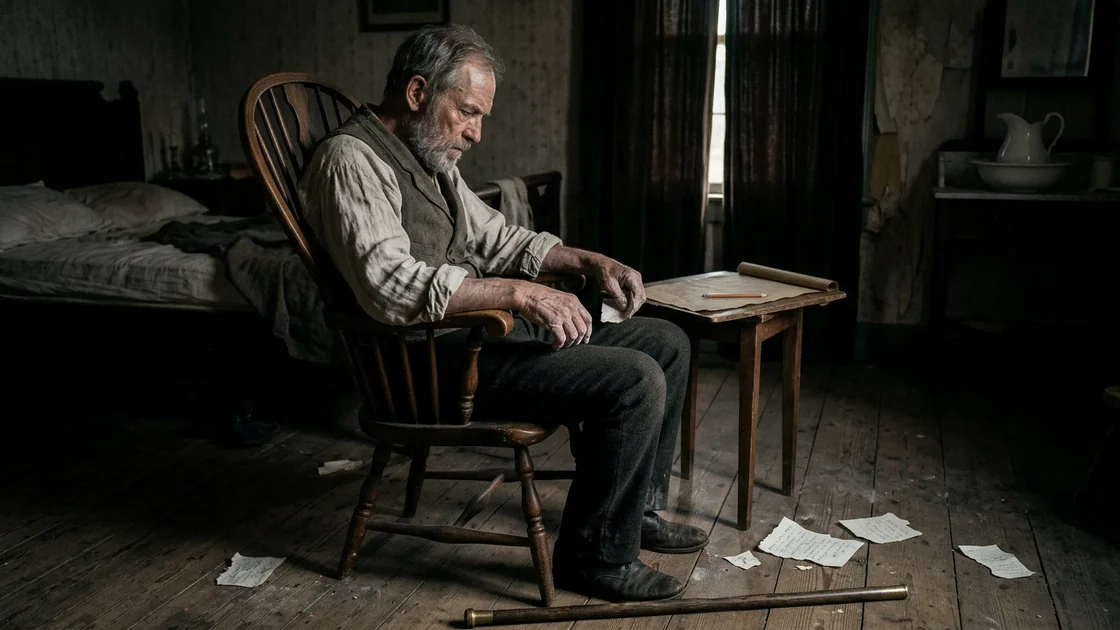
This is the story of Arthur Pendelton, a master potter whose debilitating spinal degeneration has exiled him from his beloved studio to a darkened bedroom directly above it. Confined to a stiff wooden chair as the slightest movement triggers agonizing spasms, Arthur experiences his craft entirely through the floorboards by listening to his three apprentices—impatient Julian, timid Clara, and methodical Thomas—struggle to master the kick wheels below. Over the course of several suffocating months, Arthur learns to diagnose their flaws purely by the acoustics of the spinning flywheels, the slap of wet clay, and the scrape of trimming tools, while grappling with his own obsolescence and bitterness. Ultimately, through a system of knocks on the floor and brief, agonizingly dictated notes, Arthur finds a way to guide the troubled Clara toward creating a masterpiece for the autumn kiln firing, transforming his dark prison of pain into a sanctuary of unseen mentorship and ensuring his legacy survives within the clay he can no longer touch.
The pain did not arrive like a sudden storm; it settled into Arthur’s spine the way moisture seeps into unsealed terracotta, slowly, invisibly, until the frost comes and cracks the vessel from the inside out. It resided specifically between the fourth and fifth lumbar vertebrae, a grinding, incandescent knot of ruin that turned the simple act of breathing into a negotiation with gravity.
To survive the afternoon, Arthur had to sit in the high-backed Windsor chair placed precisely in the center of his second-floor bedroom. The heavy velvet curtains were drawn tight against the July sun, sealing the room in a perpetual, bruised twilight. Light, he had discovered over the past year, possessed a bizarre weight; when it struck his eyes, he involuntarily squinted, and the microscopic tension of that squint traveled down his neck, along the tight cables of his trapezius, and detonated at the base of his spine. Darkness was the only anesthetic that did not cloud his mind.
He rested his forearms on the wooden armrests, his hands hanging limp over the edges. They were the hands of a man who had spent fifty years arguing with the earth—broad-palmed, with flattened, spatulate fingertips and permanent crescents of white stoneware dust embedded deep beneath the nails, persisting even nine months after he had last touched the wheel. The skin was dry now, almost papery, lacking the slick, protective armor of slip that had coated them from his fourteenth birthday until his sixty-fourth.
Directly beneath the worn pine floorboards, the studio was waking up.
Arthur closed his eyes and let his hearing sharpen, extending his awareness downward through the joists and crossbeams like the roots of an ancient, dying tree seeking water. He did not need eyes to see the room below. He had built the benches himself out of reclaimed hemlock. He knew the exact topography of the concrete floor, the slope toward the central drain clogged with decades of grey sediment, the galvanized bins sweating in the corner, filled with pugged clay aging in the damp dark.
The heavy oak door at the front of the shop groaned on its iron hinges. A gust of warm air—he could almost smell the bruised clover and dust of the lane outside—swept through the lower room, followed by the sharp, staccato click of boots. That was Julian.
Julian walked with his weight entirely on his heels, a young man in a perpetual state of grievance against the physical world. He was twenty-two, the son of a timber merchant from the valley, possessing strong shoulders and an impatient mind. Arthur tracked him by sound: the careless toss of a canvas knapsack onto the wedging table, the clang of the water bucket being lifted by its wire bail, the overly aggressive turn of the brass spigot over the deep sink. Water hissed and drummed against the empty tin, the pitch rising rapidly as the bucket filled.
Too fast, Arthur thought, a familiar tightness gathering in his jaw, which he immediately forced himself to relax before his back could protest. He’s splashing the plaster bats stacked by the basin. They’ll take three days to dry out, and if he tries to throw on a damp bat, the base will slide right off during the pull.
Before the water had even stopped running, the door opened again, barely wide enough to let a shadow slip through. No footsteps followed, only the soft, apologetic rustle of heavy linen skirts and the quiet click of the latch being guided home by hand so it wouldn't snap. Clara. She moved through the studio like a moth, terrified of displacing the air. She was nineteen, an orphan from the parish house whom Arthur had taken on two years ago primarily to wash rags, sieve glaze, and sweep the bisque shards from the kiln room floor. It was only six months before his back finally gave out completely that he had caught her after hours, her small hands buried up to the wrists in scrap clay at the third wheel, trying to center a lump that was far too stiff for her slender wrists.
"Morning," Julian’s voice rose through the floorboards, muffled and bass-heavy, stripped of its higher frequencies by the timber and plaster between them.
Clara’s reply was entirely inaudible to Arthur, a mere exhalation.
Ten minutes later, the grandfather clock in the downstairs hall struck eight, its chimes vibrating sympathetically in the springs of Arthur’s untouched bed. On the third stroke, the back door—the one leading to the woodyard and the sprawling brick mound of the anagama kiln—opened and closed with a solid, measured thud. Thomas had arrived. He had likely been there since six, splitting red pine into wrist-thick stakes and stacking them under the tin roof to season for the October firing. Thomas was thirty, older than the usual apprentice, a former mason’s laborer whose hands were already calloused to horn before he ever touched wet clay. He walked with a rolling, flat-footed gait, heavy and deliberate.
For a few minutes, the sounds were communal and preparatory. The canvas cover was peeled back from the wedging table with a wet, ripping sound. Then came the rhythmic, dull thud-slap, thud-slap of clay being wedged.
Arthur leaned his head back against the wooden spindles of the Windsor chair, millimeter by millimeter, until his occipital bone found a groove he had worn into the varnish. He listened to the wedging. It was the first true test of the day, the diagnostic rhythm that told him the state of their minds and the moisture content of the earth.
Thomas was at the left side of the plaster table. Thump. Roll. Thump. Roll. The sound was like a slow, healthy heart. He was using the spiral method—ram’s head wedging had never suited his stiff wrists—and the pause between each impact was identical. The clay was yielding to him, compressing, driving out the tiny pockets of trapped air that would otherwise become bombs in the two-thousand-degree fury of the kiln.
When Thomas finished, Julian stepped up. Slap. Bang. Slap. Bang. He was lifting the thirty-pound mass too high and dropping it flat, trapping air rather than expelling it. The pitch of the impact was too sharp, too wet. He had dipped the clay in the water bucket to make it move faster under his palms, an old cheat that ruined the plasticity of the stoneware body, washing away the fine platelets of bentonite that gave the clay its memory and tooth.
He’s making mud, Arthur thought in the dark. He’ll pull a cylinder two feet high in three minutes, and by noon it will slump into a concertina at the base because the walls have no bone in them.
Then came Clara’s turn at the table. Pat-thud. Pat-thud. Pause. Pat-thud. She was cutting the lump in half with the brass wire—Arthur heard the high, musical zing of the taut wire slicing through the block—and slamming the halves together. Cut and slam. The wire singing, the clay slapping. It was a child’s way of wedging, or the way of someone who lacked the upper-body mass to spiral forty pounds of iron-rich stoneware. Yet, there was a fierce, desperate persistence to the sound. Zing. Slap. Zing. Slap. She was doing it twenty, thirty, forty times, compensating for her lack of leverage with sheer repetition.
A spear of white-hot agony suddenly lanced through Arthur’s left hip, radiating down the sciatic nerve to the back of his knee. He did not gasp; gasping required the sudden expansion of the ribcage, which pulled on the thoracic fascia, which tugged the lumbar spine into a fresh hell. Instead, he parted his dry lips and let the air trickle out in a long, silent whistle, his fingers tightening almost imperceptibly on the curved ends of the armrests. Sweat broke out instantly on his forehead, cold and slick in the gloom of the bedroom.
He waited. That was all he ever did now. He waited for the nerve to settle back into its ragged groove, for the white fire to die down to its customary bed of dull, orange coals. It took four minutes. During those four minutes, the studio below shifted from preparation to creation.
The wheels began to turn.
There were four kick wheels in the studio, arranged in a row facing the long north window that looked out over the orchard. The first wheel, the one closest to the stove with the heavy cast-iron flywheel that Arthur’s grandfather had hauled up from the foundry in Bristol by ox-cart, was silent. That was Arthur’s wheel. A drying rack had been pushed in front of it three months ago, an unspoken boundary that none of the three dared to cross, though Julian had once set his tea mug on its splash pan and been frozen out by Thomas for a week.
The second wheel belonged to Julian. The third to Thomas. The fourth, tucked into the damp corner near the settling basins where the light was poorest, was Clara’s.
Each wheel had its own voice, a mechanical signature forged from decades of wear on its bearings, the slight warp of its iron shaft, and the temperament of the foot that drove it.
Julian’s wheel started with a violent scritch-thrum, scritch-thrum. His right boot struck the concrete flywheel with impatient, jerky thrusts, accelerating the heavy stone disk from dead stop to maximum velocity in five kicks. The top bearing on that shaft had a slight flat spot, and at high speed, it produced a rapid, clicking hum—tictictictictic—that vibrated straight up through the wall studs.
Then came the wet, heavy smack of a ten-pound ball of clay being thrown dead-center onto the aluminum wheel head. Or, as Arthur knew immediately from the uneven, lurching groan that followed, slightly off-center.
Julian didn't cone up and down to center the clay; he fought it. Arthur could hear the boy’s stool scrape backward aninch as he braced his heels against the frame, locking his elbows into his ribs and throwing his raw weight against the spinning mass. The clay resisted, creating a rhythmic, wet whuff-whuff-whuff against his palms before his sheer brute strength forced the lump into submission. The sound smoothed out into a continuous, high-pitched hydroplaning hiss. He was centered, not through persuasion, but through conquest.
At the third wheel, Thomas began. His flywheel was made of poured concrete banded in iron, heavier than Julian’s, and its bottom pivot rested in a cup of lignum vitae wood soaked in tallow. It made almost no sound at all—just a deep, sub-audible rumble, like distant thunder over the hills, or blood rushing through a large vein. Shhh-hum. Shhh-hum. His foot stroked the wheel rather than kicked it. He threw his clay down with a dull, solid chock, and immediately the sound of water being squeezed from a sponge Trickled down. He centered slowly, bringing the clay up into a tall spire—Arthur could hear the pitch of the spinning wet surface rise as the diameter decreased—and then pushing it back down into a dome. Up and down, three times, aligning the microscopic platelets of clay into a tight, spiraling helix. It was textbook. It was irreproachable. It was also, Arthur knew with an old, familiar ache of disappointment that had nothing to do with his spine, entirely devoid of spark. Thomas would make fifty cider flagons today, and every single one of them would be precisely nine inches tall, weigh two and a quarter pounds wet, and look as though it had been stamped out by a steam press in Staffordshire.
And then, from the far corner, came the sound of the fourth wheel.
Clara’s wheel had a warped wooden treadle rod attached to a crank, an older design meant for someone with shorter legs. As she pumped her foot, the iron joint gave a faint, musical squeak on every downstroke. Eek-shhh. Eek-shhh. Eek-shhh.
She didn't throw her clay onto the wheel head; she placed it there and patted it into a mound while the wheel was still stationary. Then, the squeak began, accelerating until it was a breathless, fluttering rhythm, like the wings of a trapped bird.
Arthur leaned forward less than a quarter of an inch—the absolute limit of his tether—and listened.
Water splashed. The wet sound of her hands meeting the clay began, and immediately, the rhythm of the treadle faltered. The clay was pushing her around. Instead of anchoring her elbows to her hipbones and becoming an extension of the heavy timber frame of the wheel, she was letting her arms float. The lump of clay had a slight wobble, and with every revolution, that wobble caught her palms and threw them outward. Whap-slap-whap-slap. The squeak of the treadle slowed as she forgot to kick, all her mental energy consumed by the rebellion between her hands.
Drop your left shoulder, girl, Arthur thought fiercely into the dark floor. Tuck your chin. Breathe into your belly, not your chest. You’re trying to hold the clay like a baby. It’s not a baby; it’s a wild pig. Lock your wrists.
Downstairs, the wet slapping grew more frantic. She was adding more water, trying to lubricate her way out of an architectural problem. He heard the telltale slurp of slip gathering too thickly in the splash pan, the sound of clay losing its integrity as its skin became waterlogged. If she tried to open the center now, the whole mass would shear off its base.
"Too much water, Clara," Thomas’s voice drifted up, calm and flat. "Scrape your pan. Dry your hands on your apron and use the heel of your palm."
A pause. The squeaking treadle coasted to a halt, the iron crank giving one last, dying creak. The scrape of a metal rib against the wheel head followed as she cleared the ruined, soupy mound off the bat, dropping it with a defeated plop into the reclaim bucket.
Julian laughed. It wasn't a cruel laugh, merely the careless bark of someone who had already pulled his first cylinder and was now using a wooden rib to bell out the belly of a large storage jar. Arthur could hear the hollow, booming resonance of Julian’s jar—as a vessel grows taller and thinner on the wheel, the air inside it acts like an organ pipe, changing pitch with every pass of the potter's knuckles. Julian’s jar was singing a deep, resonant G-flat, the walls vibrating under the pressure of his wooden rib. It was a good sound, dangerously thin near the lower third, perhaps, where Julian always got greedy for height, but undeniably alive.
"Give her one of your pre-wedged balls, Tom," Julian said, his voice slightly strained as he leaned over his wheel, guiding the neck of his jar inward. "She’s worn her arms out at the table before she’s even sat down."
"A potter wedges her own clay," Thomas replied evenly. His wheel never broke its slow, thunderous cadence. Shhh-hum. Shhh-hum. The air inside his cylinder was singing too, a tight, thick, unvarying C-sharp. "If she doesn't learn the weight of it on the plaster, she won't know the weight of it on the wheel."
"She’s ninety pounds soaking wet," Julian retorted. The high ziiip of a cutting wire sounded as he sliced his finished jar free from the bat, followed by the soft grunt of him lifting the heavy vessel over to the ware boards. "The Master didn't make you wedge forty pounds at once when you started."
"I was twenty-six when I started, and I had been hauling dressed limestone up forty-foot ladders for ten years," Thomas said. His cutting wire sang out a second later. Ziiip. The clink of brass against the wood frame. "And the Master isn't down here."
Silence fell over the studio below. Even the wheels seemed to spin more quietly, coasting on their grease.
Upstairs, in the velvet dark, Arthur stared at the indistinct grey square of the washstand across the room. The Master isn't down here.
The words didn't anger him; they simply hollowed him out, scraping away at his insides the way a loop tool hollows out a solid block of leather-hard clay. Nine months ago, he had been down there fourteen hours a day. He had been the center of that room’s gravity. Every pot that came off those wheels had passed under his eyes; many had been crushed by his own thumb before they ever reached the drying racks—a swift, merciless dent in the lip of a pitcher whose handle didn't spring naturally from the shoulder, a wire drawn through the belly of a bowl to show Julian the grotesque disparity between the half-inch-thick base and the paper-thin rim.
Now, he was a ghost haunting his own ceiling. His sister, Martha, came up three times a day with a tray of broth, dry toast, and the bitter brown laudanum tincture he refused to take until midnight because it dulled his ears. She emptied his chamber pot, washed his face with a cool cloth while he sat rigid as an effigy in the Windsor chair, and gave him the accounts.
The studio was surviving, barely, on the strength of Thomas’s tireless production of tavern mugs, butter crocks, and salted-meat jars for the local farmers, supplemented by Julian’s flashy, oversized garden urns that the solicitor’s wives in the market town bought for their verandas. They were selling bisque-ware and simple lead-glazed earthenware fired in the small updraft kiln out back.
The great anagama kiln—the thirty-foot brick dragon climbing the hill behind the woodyard, which required four cords of seasoned pine, five days of continuous stoking, and three hundred pots of the highest caliber to justify its hunger—had remained cold since last October. That was the kiln where the real work was done, where the wood ash flew through the chamber like a blizzard of molten glass, painting the raw stoneware in colors no brush could ever imitate: the deep, iron reds of autumn bracken, the pale celadon greens of pooled willow-ash, the rough, crusted scorch marks where the flame licked the shoulder of a jar.
If they did not fire the anagama this October, the merchants from the city would stop coming up the valley. They didn't travel forty miles over rutted roads for Thomas’s butter crocks. They came for Pendelton stoneware. And without the October purse, the notes on the land and the timber rights would default by January.
Downstairs, the squeak of the fourth wheel began again. Eek-shhh. Eek-shhh.
Clara had fetched another lump of clay. She had not taken one of Thomas’s.
Arthur closed his eyes and listened to her fail for the next three hours.
By mid-August, the heat in the darkened bedroom had become a physical presence, thick and stagnant, smelling of old horsehair plaster, camphor, and Arthur’s own sour sweat. His back had entered a new phase of degradation. A numbness had crept into his right foot, turning his toes to cold lead, while the muscles flanking his spine had seized into permanent, petrified ridges, like clay left uncovered in the sun. He no longer moved from the chair to the bed at night. Martha simply propped pillows beneath his elbows and knees at ten o'clock, gave him thirty drops of the laudanum in water, and left him to drift through feverish, shallow half-sleeps until the birds started in the orchard.
Because he could not move, his mind became terrifyingly vast and hyper-focused. The geography of the studio below was no longer just a memory; he had mapped it entirely by acoustics. He knew when the sun had moved past the pear tree outside the north window because the temperature in the room below dropped slightly, causing the tin flue of the unlit stove to give a single, sharp tick. He knew when the clay in the settling bins was getting too stiff because the sound of the iron spade slicing into it changed from a smooth schlick to a gritty, tearing crunch.
And he knew, with agonizing precision, the exact shape of every vessel being born beneath his feet.
It was a Tuesday afternoon when the crisis of the October firing finally surfaced in the studio. The wheels had stopped for the midday meal. Usually, the boys went out to sit on the cordwood stacks in the shade, leaving Clara inside to eat her bread and cheese by the sink, where Arthur could hear the pages of his old notebook—the one with the glaze recipes written in his cramped, left-slanted hand—rustling as she studied them.
Today, however, the heat outside was oppressive, buzzing with cicadas and horseflies, so all three remained in the cool, damp cellar-like air of the studio.
"We have six weeks," Julian said. He was pacing near the drying racks; Arthur could hear his heel-heavy stride moving along the rows of shelving, pausing here and there. "The wood is dry enough. Old Man Miller said his boy can come help split the last of the side-stoking pine next week. If we don't start loading the big kiln by the last week of September, the autumn rains will soak the brickwork and we’ll waste two cords just driving the steam out of the arch."
"We don't have the ware for the front chamber," Thomas said. He was scraping dried slip off his wheel frame with a piece of broken slate—scritch, scritch, scritch. "The back two-thirds can take my crocks and jugs, and your garden urns can sit on the side shelves where the draft is steady. But the firebox face... the first three rows behind the bag wall. We have nothing to put there."
Arthur’s breath caught slightly. The first three rows behind the bag wall. That was the seme-dama—the torture chamber, as he used to call it when he was young and romantic enough to read the translations of the eastern master potters. It was where the flame from the main firebox struck the pots directly, where temperatures climbed past twenty-three hundred degrees and the glowing coals piled up around the bases of the vessels like drifts of winter snow.
Only the greatest work went into the front rows. A pot placed there had to be thrown with supreme authority; its walls needed an architecture that could withstand being half-melted into glass without collapsing under its own weight. It had to have a form bold enough to accept the violent, random deposits of melting wood ash—if the pot was timid, the ash would overwhelm it, turning it into a featureless lump of slag. If the pot was overly fussy or thin, the thermal shock would tear it apart on the third day of stoking.
Those front rows were Arthur’s domain. Thirty monumental jars, wide-bellied Moon Jars, and tall, broad-shouldered bottles. Those thirty pieces paid for the entire year; a single jar from the front row, kissed by the flame and dripping with natural emerald ash-glaze, fetched more from the city collectors than five hundred of Thomas’s tavern mugs.
"I’ve thrown twelve double-walled baluster vases this month," Julian said, an edge of defensive heat in his voice. "They’re sitting on the top rack under damp cloths right now. Two feet tall, every one of them."
"They’re thrown in two pieces and joined at the belly, Julian," Thomas said, the slate pausing in its scraping. "And you pulled the necks too fast. The clay is twisted. I looked at them this morning when I was turning the drying boards. You can already see the spiral ridge starting to show through the slip as they shrink. Put those in the front row where the draft hits them at full roar, and they’ll untwist like a clock spring and bow right into the embers. They’re second-chamber pots. Maybe third."
"And what have you got to put in front of the fire, Tom?" Julian snapped. His boots cracked against the concrete as he spun around. "A hundred and fifty two-gallon pickle jars? You think Mr. Vance is going to ride up here in his carriage from the city to buy a pickle jar with a fly-ash run down the side? At least my vases have a line to them! At least they don't look like they were birthed by a turnip!"
"My pickle jars won't blow up and take three shelves of good ware with them when the seam fails," Thomas said, his voice dropping an octave, becoming as heavy and immovable as his flywheel. "A dead kiln is better than a ruined kiln. If we fire the anagama and open it up to find forty pounds of slumped shards fused to the floor, the Pendelton name is finished. We stick to the small updraft kiln this autumn. We make enough to pay the coal bill and the flour merchant, and we wait until spring."
"He won't be back at the wheel by spring!" Julian’s voice rose, cracking against the timber ceiling, vibrating right through the soles of Arthur’s numb feet. "Look around you, Tom! Have you seen Martha’s face when she comes down with the tray? He hasn't stood up since May! His legs are the size of broomsticks! The Master is done! If we don't fire the big kiln ourselves, it’s never going to be fired again, and by Christmas I’ll be back in my father’s timber yard tallying oak planks, and you’ll be laying brick in the rain, and Clara—"
"Shut your mouth," Thomas said.
He didn't shout. It was the quiet, terrifyingly calm tone of a man who could lift a hundredweight of wet clay without breathing hard. Julian’s pacing stopped dead.
In the silence that followed, a small, hesitant voice rose from the corner near the sink. It was so soft that Arthur had to hold his breath entirely to catch the words through the floorboards.
"The clay in the north bin," Clara whispered. "The wild vein the Master dug from the creek bank two winters ago. With the coarse quartz sand in it. It’s been souring in the dark for twenty months. He said... he told me last autumn, when I was sieving the slip, that that clay was meant for the firebox face. Because the quartz holds the wall up when the iron melts."
"That stuff is like throwing gravel, Clara," Julian muttered, though the bluster had gone out of him, replaced by a sulky exhaustion. "It’ll tear the skin right off your palms in two revolutions. None of us know how to pull a thirty-pound jar out of creek-bank stone."
"You have the strength to pull it, Julian," Clara said, her voice gaining a fraction of steadiness. "And Thomas knows how to wedge it so the sand doesn't settle to the outside."
"And who’s going to shape it?" Julian asked bitterly. "Tom’s right about one thing—my joins won't hold in that heat, and I can't pull thirty pounds in one piece without the base staying two inches thick. And Tom can't throw a belly wider than his own collarbones without it going flat in the curve."
Nobody suggested Clara. Even from the room above, Arthur could feel the total absence of the thought. To the two men, Clara was the girl who wedged her clay forty times and still lost her center on a two-pound teacup.
Yet Arthur’s mind suddenly snagged on a memory—not a visual memory, for those were fading in the dark, but an acoustic one from three days ago.
It had been late evening, just before twilight, after Julian and Thomas had washed up and gone down the lane to the tavern. Clara had stayed behind to clean the wheels. Arthur had been half-dozing, waiting for Martha’s footsteps on the stairs, when he heard the fourth wheel begin to turn.
Eek-shhh. Eek-shhh.
Only, it hadn't been the frantic, bird-wing flutter of her daytime attempts. With the studio empty, with Julian’s arrogant eyes and Thomas’s heavy, judgmental silence removed from the room, the rhythm of her treadle had changed. It had slowed down. Eek... shhh. Eek... shhh.
He had listened as she threw a small ball of clay onto the bat. There had been no frantic slapping of water. There had been a long, quiet pause while the wheel spun, and then a soft, steady pressure sound. She had centered it inside of ten seconds. And when she pulled the wall up, the tiny cylinder had sung a clear, unwavering high E—the sound of a vessel whose walls were completely uniform from base to lip, rising smoothly, without hesitation, until she flared the rim out into a bowl. A moment later, she had collapsed it with her fist, scraped it into the bucket, and gone home before the dark settled in.
She wasn't failing because her hands were weak. She was failing because she was trying to throw like Thomas and Julian. She was trying to conquer the clay with muscle, the way the boys did, and when the men watched her, her fear made her stiff, turning her arms into brittle sticks that the spinning earth easily shattered.
When she was alone, she didn't fight the clay at all. She listened to it.
Arthur looked down at the floor between his feet. Three inches away from his right heel lay the heavy ash walking stick he had used during the last month before his legs gave out entirely. It had fallen there weeks ago, and Martha had left it, knowing that bending down near his chair sometimes startled him into a spasm.
The creek-bank clay. The wild, iron-heavy, quartz-toothed monster sleeping in the north bin. Julian would try to beat it into submission, and the sharp quartz grains would flay his palms raw while the short, low-plasticity clay sheared apart under his aggressive pulls. Thomas would try to force it into his rigid, mechanical cylinders, and the wild clay would simply refuse to go, cracking along the rim like old leather.
That clay couldn't be bullied, and it couldn't be machined. It had to be coaxed. It required a hand that moved with the rotation, not against it—a hand that used the centrifugal force of the wheel itself to lift the weight, merely guiding the rising earth from the inside with the lightest possible touch.
It required Clara’s night-time hands.
A lunatic idea took root in the dark of Arthur’s skull. It was an idea born of desperation, pride, and the sheer, maddening boredom of listening to his life’s work die by inches beneath his floorboards.
To speak to them directly was impossible. He could not bear to have Julian and Thomas climb the stairs and stand in his room, smelling of wet earth and woodsmoke, looking down at his shrunken, unwashed frame propped up in the gloom like a preserved specimen in an apothecary’s jar. His vanity—the fierce, uncompromising pride of a master craftsman—was the only thing holding his shattered spine upright. If they saw him like this, his authority would vanish instantly, replaced by their pity. And you cannot teach a man or a woman to face a two-thousand-degree fire through a veil of pity.
More than that, speaking loud enough to be heard, or holding a conversation for more than two minutes, caused his diaphragm to cramp, which inevitably triggered the white lightning in his lumbar vertebrae.
No. If he was going to teach again, he would have to do it from the dark. He would have to become part of the building itself.
That evening, when Martha came up with the candle shielded by her hand and the tray of mutton broth, Arthur did not open his eyes to the faint glow.
"Martha," he whispered, his voice like dry leaves scraping across slate.
She froze by the washstand, setting the tray down quickly. He rarely spoke more than a single word—water, cold, enough—for days at a time. "Arthur? Is the pain worse? Shall I fetch the doctor from the town?"
"No doctor," he breathed, keeping his jaw entirely slack so the vibration wouldn't travel up to his base of his skull. "A slate. And chalk. Put it on the table... by my left hand. And tell the girl..." He paused, letting a wave of nausea pass as a muscle twitch threatened his lower back. "Tell Clara... tomorrow at six. Before the boys come. She is to work at my wheel."
Martha stared at his silhouette in the gloom. "Your wheel, Arthur? The front wheel?"
"Move the rack," he whispered. "Tell her... if she speaks a word of it to Thomas or Julian... I will turn her out to the parish."
"She’s a timid thing, Arthur, she can barely throw a mug without—"
"Do it," he hissed, and the force of the two syllables sent a hot needle straight into his hip. He locked his teeth together, silent once more, his chest refusing to rise or fall until Martha, murmuring a worried prayer under her breath, did as she was told. She found an old carpenter's pencil and a pad of butcher's paper instead of a slate—so the scratching wouldn't hurt his head, she said—and propped it on a lap-board beside his left arm, where his hand could reach it without his shoulder leaving the chair back.
He did not take the laudanum that night. He needed his mind to be like a freshly broken flint when the sun rose. He sat through the black hours listening to the house settle, the mice skittering inside the wainscot, the distant hoot of a barn owl hunting in the orchard, and the ceaseless, screaming chorus of his own ruined nerves. He welcomed the pain tonight; it kept him sharp. It reminded him that he was still tethered to the world of matter and weight.
At five-thirty, the grey light of false dawn began to bleed around the edges of the heavy velvet curtains.
At five-forty-five, the latch of the front shop door clicked so softly that only a man who had been listening for it for six hours could have heard it.
Light footsteps crossed the concrete floor. They stopped in front of the north window, right below Arthur’s chair. He heard the scrape of the wooden drying rack being carefully lifted and set aside—Martha had forgotten to do it the night before, or had left it for the girl. Then came the sound of a damp rag wiping nine months of dust from the heavy mahogany splash pan and the polished saddle-seat of the first wheel.
Arthur’s wheel.
For a moment, an irrational jealousy flared in his chest. He knew every nick in that mahogany frame; he had worn a hollow into the right side of the wooden seat where his hip had pivoted for half a century; the iron flywheel had been polished to a mirror sheen on its outer rim by the leather soles of his own boots. To have another person sit on that saddle felt like someone climbing into his coffin while he was still warm.
He let the breath trickle out through his teeth. Let it go, old man, he told himself. The wood doesn't care whose backside is on it. Only the clay cares.
Clara sat down on the wooden saddle. She didn't touch the flywheel yet. She was waiting, terrified, looking up at the ceiling.
Slowly, agonizingly, Arthur slid his right foot three inches across the pine floorboards. He hooked the crook of the heavy ash walking stick over his ankle, drew it between his knees, and let his right hand—still hanging over the edge of the armrest—close around the shaft of the stick, about midway down. He didn't need to lift it high; the weight of the dense ash wood and its brass ferrule was enough.
He let the stick drop half an inch against the bare pine floor.
Knock.
Downstairs, he heard Clara gasp softly.
Arthur waited three seconds, then dropped the stick twice in rapid succession.
Knock-knock.
Before coming down at dawn, Martha had slipped a single scrap of butcher's paper under the studio door, bearing four lines of monstrously shaky, barely legible scrawl that Arthur had traced in the dark without looking at his hand:
One knock: Stop. Listen. Two knocks: Begin / Good. Three knocks: Too fast / Too hard. Continuous tapping: Match my rhythm. Use the creek clay in the north bin. Fifteen pounds. Do not wedge it on the table; cut and slam it ten times only, or you will align the sand and it will split. Sit at my wheel.
Below him, Clara scrambled off the saddle. He heard her small boots hurry over to the damp corner where the galvanized bins stood. The lid of the north bin screeched as she pried it off—it hadn't been opened since the previous autumn. A heavy, mineral smell, like wet river stones and rotting ferns, seemed to rise through the very floorboards to Arthur’s nostrils, though he knew it was only memory.
She dug out a mass of the wild clay. He heard her carry it to the scale, the iron weights clinking as she measured out fifteen pounds. For Clara, fifteen pounds was a mountain; she had never successfully centered more than four.
She took it to the table. Zing. Slap. Zing. Slap. Ten times, precisely as the note had commanded. Then she carried the heavy, rough block back to the first wheel and dropped it onto the wooden bat locked into the iron wheel head. Thud.
Silence returned. She was back on the saddle.
Arthur lifted the brass ferrule a quarter of an inch and tapped twice. Knock-knock.
Downstairs, the great cast-iron flywheel of the first wheel began to turn.
A shiver went through Arthur that had nothing to do with his spine. He hadn't heard that sound in two hundred and eighty days. His grandfather’s wheel didn't rumble like Thomas’s concrete disk, and it didn't click like Julian’s worn shaft. It balanced on a hardened steel point resting in an oil-bath of whale fat, and when it turned, it sang a pure, low, bell-like hum that vibrated at the exact resonant frequency of the old building’s oak main-beam. Mmmmmm. It was the sound of his youth, his prime, his whole vanished life waking up in the dark.
Clara was kicking it timidly, her small foot barely grazing the three-hundred-pound iron rim. The wheel was turning too slowly to center fifteen pounds of coarse river-stoneware.
Arthur tapped the stick thrice. Knock-knock-knock. Then he began a steady, driving beat against the floorboard. Tap... tap... tap... tap.
Downstairs, he heard the leather sole of her boot catch the rhythm. Scuff... scuff... scuff... scuff. She used the momentum of the heavy iron itself, adding just a fraction of push at the top of each rotation, the way he had taught her to push the garden gate when the hinges were rusted. Within a minute, the great wheel was humming at eighty revolutions a minute, holding its speed effortlessly through sheer mass.
Now came the centering.
He heard her dip her hands in the water pan. Then, the harsh, abrasive shhhhh-krrrr of her palms meeting the quartz-laden clay.
Immediately, the high-pitched hum of the wheel wavered as the heavy, off-center lump fought her. He heard her stool-saddle creak as her body tensed up, reverting to her daytime panic. She was leaning forward, trying to push the fifteen-pound brute into the center with the muscles of her shoulders. The clay slapped her hands away—whack-whack-whack—the rough sand tearing at her skin.
Knock!
Arthur struck the floor once, sharply.
Below, her hands left the clay instantly. The wheel spun on, humming softly in the quiet room. He heard her breathing hard, a ragged, frustrated sound that was dangerously close to a sob.
Arthur closed his eyes. How could he tell her with a stick that she was sitting four inches too far back on the saddle? How could he explain the geometry of leverage through two inches of pine?
He reached his left hand over to the butcher’s paper on the lap-board. Without looking, feeling the edges of the paper with his thumb, he scrawled three words with the carpenter’s pencil, tore the strip off against the sharp edge of the board, and let it flutter to the floor. Then he gave four sharp knocks—the signal he had told Martha meant she should come fetch a message, though Martha was still in the kitchen making porridge.
Instead, he heard the studio door open below, and light footsteps raced up the narrow back stairs. A moment later, the bedroom door cracked open an inch.
"Don't look in," Arthur whispered into the dark, his voice barely more than the rustle of dry corn husks. "On the floor. By the door."
He had dropped it nowhere near the door; it was lying right by his chair. He heard Clara hesitate on the threshold of the pitch-black room. The smell of her—wet river clay, marsh-iron, and young sweat—washed over him, so vivid it made his throat ache. Without a word, she crept forward on her knees in the dark, her hand brushing the floorboards until she found the strip of paper near his numb right foot. Her fingertips accidentally grazed the hem of his wool trousers. She flinched as if she had touched a hot stove, snatched the paper, and retreated backwards out the door, pulling it shut without a sound.
Thirty seconds later, she was back at the wheel below. By the faint morning light coming through the north window, she would be reading the three words he had written:
Cradle, don't push.
Arthur tapped twice. Knock-knock.
The wheel hummed back to speed. Her wet hands touched the spinning grit again. Shhhh-krrrr.
This time, the saddle didn't creak backward. He heard the leather of her apron rub against the wooden splash pan—she had slid all the way forward on the seat, jamming her hipbones right up against the frame, locking her elbows inside the hollow of her pelvis. She wasn't using her arms at all now; she had turned her whole small frame into a single wooden wedge braced against the floor joists. Instead of pushing the clay toward the center, she simply held her hands cupped around it like a mold and leaned two inches forward, letting the three-hundred-pound iron flywheel drive the unruly clay into the unyielding cradle of her braced palms.
The whack-whack-whack of the off-center lump fought her for three revolutions, four, five—and then, miraculously, the sound smoothed out into a continuous, gritty purr.
She had centered fifteen pounds of wild creek clay in twenty seconds.
Upstairs in the dark, a fierce, silent grin stretched Arthur’s dry lips. His back gave a vicious twinge at the small movement of his facial muscles, and he didn't care in the slightest. Knock-knock, he tapped softly with the brass ferrule. Good.
Now, the opening.
He listened as she drove her thumbs down into the center of the spinning dome. The pitch of the wheel’s hum dropped slightly under the vertical pressure. Then, as she began to pull her thumbs outward to widen the floor of the pot, he heard the sound change—a subtle, hollow thrum that told him she was going too deep, leaving the base too thin for a heavy jar that would have to support its own weight in the fire.
Knock!
She stopped instantly. Wait. He tapped twice, very softly. Knock-knock. Go on, but lighter.
She adjusted, pulling the floor out flat and wide, leaving a good three-quarters of an inch of dense, sandy earth at the bottom to anchor the vessel when the ash began to melt.
For the next forty minutes, the man in the dark chair and the girl at the north window threw the pot together.
It was the strangest, most intimate conversation Arthur had ever conducted. He had no eyes, and she had no voice, yet through the iron shaft of his grandfather’s wheel and the dry pine of the ceiling, they were connected by a taut wire of pure sound.
As she began the first pull—gathering a roll of clay at the base between her inner left fingers and her outer right knuckle, lifting it upward as the wheel spun—Arthur listened to the acoustic chamber forming inside the cylinder.
Whooooo-oooo-oooo.
The note rose as the walls grew taller and thinner. Halfway up the second pull, Arthur heard the note waver—a tiny, fluttering harmonic that meant her inside hand was moving slightly faster than her outside hand, stretching the clay unevenly on the upper shoulder. Before the wobble could even become visible to her own eyes, Arthur’s stick struck the floor.
Knock-knock-knock. Too fast.
Then he began to tap a slow, glacial beat on the pine. Tap... ... ... tap... ... ... tap. Keep the wheel fast, girl, but move your hands up the wall at the speed of growing grass. Let the clay make at least three full turns under your fingers before you rise an inch.
Downstairs, the rising harmonic steadied. The cylinder grew. The hollow note inside it deepened from a flute-like whistle to a rich, cello-like drone as the air column lengthened. Twelve inches. Fourteen inches. Sixteen inches.
With fifteen pounds of dense, short creek clay, sixteen inches was the absolute limit before the coarse quartz grains began to lose their grip on one another. If she pulled it once more for height, the whole thing would tear in half at the waist. Now, she had to belly it out—pushing from the inside with a wooden rib while supporting the outside with nothing more than the flat of her wet fingertips, stretching the cylinder into a great, swelling globe.
This was where Julian always failed through greed, pushing too hard and rupturing the wall. This was where Thomas always failed through cowardice, stopping too soon and leaving the belly stiff and joyless, like an iron boiler.
Arthur held his breath. The pain in his spine was a roaring furnace now; he had been leaning his head slightly to the right for half an hour to keep his good ear angled toward the floor crack, and his neck muscles had locked into iron bands. Sweat was running down into his collar, soaking his linen shirt. He gripped the ash stick until his knuckles cracked.
Below, the sound of the wooden rib meeting the inside of the spinning jar began. As Clara pushed the belly outward, the volume of air inside the pot expanded rapidly, and the acoustic note plunged downward into a deep, resonant bass hum that vibrated right through the soles of Arthur’s boots.
Bmmmmmmmmm.
She was pushing it wide. Wider. The wet, sandy hiss of the outside wall told him the clay was stretching to its absolute breaking point, the quartz pebbles popping to the surface like gooseflesh, creating the rough, orange-peel texture that would catch the flying wood ash in the kiln and hold it in glorious, dripping pools of green glass.
Just a fraction more. If she stopped now, it would be a very good jar. If she pushed it another half-inch into the empty air, defying gravity, it would be a masterpiece—a form that looked as though it were still expanding from a deep breath taken inside the earth.
Clara hesitated. He heard the pitch of the belly plateau as her nerve faltered. She was looking at the thin, straining curve of the wet clay, terrified of losing forty minutes of miraculous work in the final ten seconds.
Arthur raised the stick and gave two soft, encouraging taps. Knock-knock. Go on. Trust the arch. A dome is stronger than a straight wall. Push.
The deep bass hum dropped another half-step as the belly swelled outward into its final, breathtaking curve. And then, with a deft, feather-light touch at the collar, she tucked the rim inward, locking the tension of the great globe in place with a thick, rolled lip.
The wheel slowed. Mmmmmm... mmmm... mm.
It stopped.
In the silence of the studio below, there was no sound at all except for the drip of muddy water falling from the mahogany splash pan into the bucket beneath: plink... plink... plink.
In the lane outside, a quarter-mile away, a metal wheel-rim struck a stone, and Julian’s loud voice called out to Thomas about the weather. It was seven-forty-five.
Arthur tapped twice, rapidly, urgently. Clear the evidence.
Below, Clara moved with startling speed. He heard the ziiip of the brass wire slicing under the base of the massive jar, the strained, breathless grunt as she slid the wooden bat off the wheel head—fifteen pounds of clay plus four pounds of water was nearly a quarter of her own weight—and the hurried shuffle of her boots as she carried it not to the main drying racks, where the boys would see it immediately, but into the dark, locked glaze pantry at the back of the shop, towhich only she and Martha held the key.
A frantic splashing of water followed as she washed the sandy creek-clay slip from the first wheel, dried the mahogany with her apron, and dragged the wooden drying rack back in front of the seat just as the front door latch rattled under Julian’s heavy hand.
Upstairs, Arthur let the ash stick slip from his nerveless fingers. It clattered softly against the floorboards. As the adrenaline drained out of his bloodstream, the full, unmitigated catastrophe of what he had done to his back over the last two hours crashed down on him.
A black curtain edged with red sparks closed over his vision. He couldn't even whistle the breath out this time; his lungs simply locked, his spine arching slightly against the spindles as a silent scream tore through the dark dome of his skull. He passed out sitting bolt upright in the Windsor chair, his hands still hanging over the edges of the armrests like a pair of broken wings.
For three days after the first jar, Arthur could not lift the stick.
A fever accompanied the inflammation in his lumbar spine, turning the dark bedroom into a swirling pit of auditory hallucinations. When the wheels spun below during the day, he could no longer separate their voices; they blended into a single, monstrous grinding sound, as if the house itself were a millstone crushing his bones into bone-ash for a porcelain body. Martha had to spoon laudanum between his gray lips every four hours just to keep the spasms from cracking his ribs against the chair back.
Yet on the fourth morning, the fever broke, leaving him lighter, emptier, and clearer than before. He was shrinking; his clothes hung on his frame like rags on a scarecrow, and his skin had taken on the translucent, bluish cast of raw bone china before the bisque fire. He knew, with the cold, practical certainty of a man who had judged the structural integrity of physical objects his whole life, that he did not have until Christmas. The vessel had a hairline crack running from rim to foot; one more thermal shock, and it would let go entirely.
He had just enough time to fill the front three rows of the anagama.
On the fifth morning, at five-forty-five, the ash stick dropped once against the pine floor.
Knock.
Downstairs, the drying rack was moved aside. The whale-oil bearing of the first wheel began to sing its low, bell-like hum in the grey dawn.
Throughout the last two weeks of August and the first two weeks of September, they worked in the secret hours before the sun cleared the orchard. Thirty mornings. Twenty-six pots—four collapsed on the wheel when Arthur pushed her too far, demanding a curve so extreme that even the quartz-sand skeleton couldn't hold against gravity, slumping into wet ruin with a heavy, comical flump that once made Clara let out a tiny, horrified hiccup of laughter, which Arthur answered with a single, amused tap of his stick.
She was changing beneath his feet. He didn't need to see her to know it.
In the first week, he had had to tap thirty or forty times during a single piece, correcting her speed, halting her when her hands panicked, guiding the rhythm of her pulls stroke by stroke. By the third week, the ash stick barely moved. He would tap twice to start, and then simply sit in his black vault, his eyes closed, listening to the music of a master potter coming into her inheritance.
Her daytime throwing changed, too, though she was clever enough—or terrified enough of the boys' questions—to hide the full scale of it when Julian and Thomas were in the room. Still, competence is impossible to conceal entirely. At the fourth wheel in the corner, the frantic bird-wing squeak of her treadle disappeared, replaced by a steady, effortless pulse. She stopped using too much water. When Thomas set her to throwing two-pound soup bowls for the market order, she threw forty of them before noon, and when Thomas went over to check them with his wooden calipers, Arthur heard the long, baffled silence that followed as the older apprentice realized he didn't have to cull a single one.
"Your rims are thicker," Thomas said to her one Tuesday afternoon, his voice carrying a note of gruff respect that hadn't been there in August. "And you’ve stopped leaving water in the bottoms. You’ve been practicing after hours."
"A little," Clara murmured from the sink.
"Good," Thomas said simply. "Maybe by next spring you can try your hand at the one-gallon cider jugs."
Upstairs, sitting in the dark above twenty-six monumental, three-foot-wide Moon Jars and baluster vases curing slowly under damp sacking in the locked glaze pantry, Arthur nearly choked trying to suppress a laugh. One-gallon cider jugs.
By the twentieth of September, the twenty-six jars were leather-hard and needed trimming—turning them upside down on the wheel to carve the excess weight from their bases and cut the foot-rings on which they would stand in the embers.
Trimming was the true signature of a potter. Anyone with strong wrists could learn to pull a cylinder eventually, just as Julian had. Anyone with patience could learn to make ten thousand identical mugs, as Thomas had. But the foot of a pot was where its character lived. If the foot was too narrow, the vessel looked anxious, tippy, as if it were afraid of the ground. If it was too wide and heavy, the pot looked dead, anchored to the mud. A great foot-ring had to lift the belly of the jar into the air like a cloud, giving the illusion that the thirty-pound mass of fired stone was barely resting on the table.
On the morning of the twenty-first, Arthur dropped a long note on the floor for Clara to fetch. His left hand was losing its grip now; the pencil kept slipping between his numb fingers, so the letters were three inches tall, jagged and desperate, scrawled across four sheets of butcher's paper:
Take the big pear-wood chuck from under my bench. Do not use the flat steel loop tool to trim the river clay; the quartz will catch the blade and chatter, tearing holes in the base. Use the forged iron hook I made from the old horse-rasp. Keep the wheel slow. Listen to the sound of the iron against the sand. When the pitch of the scraping rises by a third, stop—the wall is half an inch thick. Leave the foot-ring unglazed and rough; cut it with a single twist of the bamboo knife so the ash has a ledge to catch on before it hits the kiln shelf. Do not sponge the base smooth. Never hide how the tool made the pot.
Downstairs, he heard her wrestling the first of the leather-hard giants onto the wooden chuck. The wheel began to turn—slowly now, mmmm... mmmm... mmmm.
Then came the sound he loved perhaps best of all in the craft: the dry, rhythmic shhhhk-shhhhk-shhhhk of a sharp iron tool peeling ribbons of firm, cold clay from the spinning bottom of a vessel. As the ribbons fell away into the splash pan like curls of dark chocolate, the hollow jar acted like a drum, amplifying the scrape of every grain of quartz sand.
Shhhhk-shhhhk-shhhhk.
The pitch rose steadily as the base grew thinner, the drumhead tightening under the iron hook. C-sharp... D... D-sharp... E.
Right on the E, before Arthur’s hand could even tighten on the ash stick to knock, the scraping stopped. He heard the sharp, decisive snick-crunch of the beveled bamboo knife slicing a forty-five-degree facet around the outer edge of the foot-ring in one continuous rotation.
She didn't need the stick anymore. Her ears were as good as his.
On the twenty-eighth of September, the autumn rains held off, and a crisp, dry wind blew down from the northern hills, smelling of woodsmoke and frost. It was kiln-loading day.
Arthur knew it before the sun rose, because his sister Martha came into his room at five o'clock, carrying two candles instead of one, and set them on the washstand without shielding them.
The sudden yellow light struck Arthur’s eyes like a pair of iron spikes driven into his sockets. Immediately, the chain reaction he had dreaded for months occurred: his eyes screwed shut, his neck tensed, his shoulders drew up by a fraction of an inch, and the ruined disk between his fourth and fifth vertebrae seemed to explode into powdered glass. A wet, animal rattle tore from his throat as his legs jerked uselessly against the floorboards.
"I know, Arthur, I know, God forgive me," Martha wept, not blowing the candles out, her hands trembling as she held a glass of dark liquid to his clenched teeth. It wasn't the laudanum; it was neat brandy, fiery and ancient, from the bottle their father had laid down the year the studio roof was raised. "Drink it. You have to drink it. Clara says it’s today. She says she can't bring them out of the pantry alone—they’re too heavy now they’re bone-dry, and if she tries to carry them out to the yard by herself, she’ll drop one on the steps. The boys have to carry them. And Julian won't touch them unless he knows."
The brandy burned its way down his gullet, hitting his empty stomach like a shovelful of glowing coals. The alcohol didn't kill the pain in his spine—nothing short of the grave would do that—but it built a thick glass wall between the pain and his mind, allowing him to watch the agony from a slight distance, as if it were happening to a horse in the next field.
Downstairs, the heavy front door banged open. Julian and Thomas had arrived early, hauling the wooden carrying-cradles and the buckets of wadding—the mixture of coarse fireclay and alumina sand used to prop the pots up on the kiln shelves so the melting wood ash wouldn't weld them permanently to the brick.
"We’re going to be two dozen pieces short in the back chamber if we don't space the crocks out wider," Julian was saying, his voice echoing in the chilly morning air of the studio. "And Tom’s still insisting we brick up the front three rows entirely and start stacking behind the first pillar so we don't waste the firebox heat on empty air."
"If you put your two-piece vases against the bag wall, Julian, they’ll melt into pancakes and block the lower flues by Thursday," Thomas replied, setting a heavy bucket down with a clang. "We’ve been over this ten times. Leave the front three rows empty, stack a second dwarf-wall of firebrick to baffle the direct flame, and we’ll get a clean, even salt-and-ash glaze from the middle chamber all the way to the chimney. It won't be a great firing, but it’ll be a safe one."
In the silence that followed, the iron key turned in the lock of the glaze pantry door at the back of the shop.
The heavy plank door swung open, its hinges groaning.
"What’s in there, Clara?" Julian asked, amused. "We don't need the cobalt or the dolomite today. Everything going into the big kiln gets raw-fired or dipped in the standard iron slip out back."
Clara didn't answer him. Instead, Arthur heard her say two words, her voice no longer a moth-wing whisper, but clear, steady, and ringing like a well-fired bell:
"Bring a cradle."
Julian laughed shortly, his boots clicking across the concrete toward the back of the room. "A cradle for the glaze pantry? What have you got in there, girl, a sack of—"
His voice cut off as if someone had taken a brass wire to his throat.
For ten seconds, there was absolute, dead silence in the studio below. Then, Thomas’s heavy, rolling footsteps crossed the floor to join him at the pantry threshold.
Arthur sat in the yellow candlelight above, the brandy humming in his ears, his spine screaming behind its glass wall, and listened to the two men stare at the twenty-six ghosts waiting in the dark pantry.
He knew what they were looking at. Bone-dry creek-bank clay turns the color of old ivory before it sees the fire, speckled with black iron nodules and glinting with bits of raw white quartz. Standing in four neat rows on the floor and lower shelves were twenty-six vessels that looked as though they had been dug out of an emperor’s tomb—great, swelling Moon Jars two feet across, their bellies impossibly wide and taut above narrow, fiercely cut foot-rings; tall, broad-shouldered storage jars with rolled lips as thick and muscular as a bull’s neck, still bearing the faint, hypnotic spiral ribs of the fingers that had lifted them from the earth.
"God in heaven," Thomas whispered. Arthur had never heard the former mason take the Lord’s name in vain before. "When... how long have these been in here?"
"Not since last autumn," Julian said, his voice tight, high, and trembling with a mixture of awe and sudden, violent comprehension. He stepped into the pantry; Arthur heard him tap his fingernail lightly against the bone-dry rim of a jar, producing a low, dense thunk. "They’re dry, Tom, bone-dry all the way through the foot, ready for the fire. Look at the throwing rings inside the necks. Look at the bamboo cut on the base. That’s the Master’s rasp-hook mark."
"He hasn't been down the stairs since May," Thomas said, though there was no conviction in his voice anymore. "Martha said he can't stand."
"Then he crawled down here at night!" Julian cried, almost hysterically. "Nobody else in the county could pull thirty pounds of the creek-bank gravel into a curve like that! Look at the belly on that Moon Jar, Tom—if you breathed on that while it was wet, it would have fallen flat on the bat! It’s him! He’s been coming down here in the dark while we were asleep!"
"He didn't come down here," Clara said quietly.
The two men fell silent.
"He hasn't left his chair," she continued, her boots moving out of the pantry and stopping directly beneath the center of the ceiling, right below Arthur’s feet. "He threw them from up there. Through the floor. I just... I just held the clay for him."
Above them, Arthur reached out with a trembling, half-paralyzed hand, took the ash stick that Martha had propped against his knee, and dropped it twice against the pine boards.
Knock-knock.
Downstairs, nobody spoke for a full minute. The authority of those two dry impacts in the quiet morning house was absolute—more commanding than any shouting match Arthur had ever waged in the yard, more final than the smash of a hammer against a flawed pot.
Knock-knock. Begin.
"Thomas," Clara said, her voice steady. "Take the front handles of the big cradle. Julian, get the straw pads from the shed to brace the bellies so they don't knock against the doorframes on the way up the hill. I want the six widest Moon Jars directly behind the bag wall, raised four inches on clam-shells and alumina wads so the flame can get right under their feet. The tall shouldered jars go on the second tier to catch the fly-ash coming over the arch."
Julian didn't argue. He didn't make a joke about her size, or her wedging, or the parish house. "Right," he said, his voice subdued, almost reverent. His boots hurried toward the back door, moving on the balls of his feet for the first time in two years so as not to shake the floor where the bone-dry giants stood.
"Careful with the doorway, Clara," Thomas rumbled softly as the wooden cradle creaked under the weight of the first jar. "Let me take the heavy end going up the steps."
For the next six hours, the house was a highway of quiet, intense labor. One by one, the twenty-six vessels were carried out of the cellar-like dark of the studio into the crisp September sunlight and up the sloped woodyard to the brick mouth of the anagama kiln. Behind them went Thomas’s two hundred crocks and flagons, and Julian’s garden urns and vases, filling the thirty-foot tunnel of brick from the firebox to the chimney damper, a tightly packed city of raw earth waiting for transfiguration.
By nightfall, Thomas was bricking up the side doorway of the kiln, sealing the chamber with wet mud and sand.
At midnight, they lit the fire.
A wood-firing is not an event; it is a five-day siege.
Arthur never slept during a firing when he was whole, and he did not sleep now. He had Martha pull the heavy velvet curtains back an inch—just a single vertical slit facing the north window—and leave the bedroom door wide open so the sounds and smells of the woodyard could travel unimpeded up the back stairwell.
For the first forty-eight hours—the water-smoking period—the fire in the main box at the foot of the hill was kept small and gentle, coaxing the last microscopic traces of chemical water out of the clay walls so the pots wouldn't explode into shrapnel when the real heat began. Arthur smelled the damp, sweet smoke of smoldering oak bark drifting through the house, heard the slow, lazy crackle of the low fire and the low murmur of Thomas and Julian swapping four-hour watches through the night.
On the third day, the fire changed its voice.
The small, crackling camp-fire sound vanished, replaced by a deep, continuous, subterranean roar as the thirty-foot brick chimney heated up and began to draw like a blast furnace. Now they were stoking red pine—four-foot lengths of dry, resinous wood thrown into the main firebox every ten minutes.
Every time the iron stoking-door was wrenched open out in the yard, Arthur heard the ferocious, sucking whooooosh of the draft pulling the cold outside air into the inferno, followed by the rapid clack-thud-clack-thud of twenty pine billets being hurled onto the white-hot coal bed, and the immediate, thunderous boom of the pine pitch igniting in a single breath, sending a twenty-foot plume of black smoke and orange flame shooting out the top of the chimney at the crest of the hill.
By the fourth night, the house itself was warm. The radiant heat from the brick mound fifty yards out back seemed to soak into the very earth of the hillside and travel through the stone foundations of the workshop. The air in Arthur’s bedroom smelled of wood gas, scorched iron, and the sharp, metallic tang of volatilized silica—the smell of stone turning into liquid glass.
Through the one-inch slit in the velvet curtain, the night sky above the orchard was no longer black; it pulsed with a rhythmic, angry orange glow every six minutes as they side-stoked the upper chambers through the peepholes, feeding thin splits of pine directly among the pots.
Arthur sat in his chair, barely breathing, his eyes fixed on that pulsing orange ribbon of light. His body had ceased to be a body; it was merely a clay sagger inside the kiln, cracking and warping under intolerable pressure to protect the precious ware inside his head. He had stopped taking both the laudanum and the brandy. His feet were entirely dead up to the ankles now, and a cold, strange tightness was wrapping around his chest, like an iron band being hammered down around a barrel, yet his hearing had reached an almost supernatural clarity.
He could hear the kiln breathing. He could hear the difference between Julian’s stoking—too many billets thrown in at once, choking the air intake and making the chimney roar drop into a suffocated, smoky chug-chug-chug—and Clara’s stoking, which spread the wood in a crisp, criss-cross lattice across the embers, letting the oxygen tear through the fuel so the temperature climbed with a clean, high-pitched whistling scream.
On the fifth afternoon, at three o'clock, a sound came from the woodyard that made Arthur’s heart leap against the iron band around his ribs.
From deep within the belly of the roaring brick dragon came a dull, muffled, crunching THUMP, followed immediately by the tinkle of falling ceramics and a sudden change in the pitch of the chimney’s roar.
A pot had blown or collapsed, taking a shelf column with it.
Outside, the shouts of the apprentices rose above the roar of the draft. He heard the iron tongs clattering as someone pulled the brick plug out of the front spy-hole to look into the blinding, white-hot glare of the firebox face.
For five agonizing minutes, no one came near the house. Arthur sat rigid in the Windsor chair, staring at the slit in the curtain, his dry lips moving in a silent, blasphemous bargaining with whatever God governed gravity and silica. Not the front row, he prayed into the hot air. Take Julian’s vases in the middle. Take the crocks. Don't take the Moon Jars.
Then, light, rapid footsteps pelted across the woodyard, through the back door of the studio, and straight up the stairs.
Clara didn't stop at the bedroom threshold this time. She burst right into the room, stopping five feet from his chair.
In the narrow band of grey daylight falling through the slit in the curtains, Arthur saw her for the first time in nine months.
He barely recognized her. The timid, round-shouldered parish orphan had vanished. Her heavy linen apron was scorched black in a dozen places from flying embers; her hair was tied back in a wet rag; her face was smeared with soot and grey wood-ash, out of which her eyes shone with a fierce, terrifying brightness. Her forearms, bared to the elbow, were corded with lean, whip-like muscle, and her hands—the hands hanging at her sides—were broad, scarred by quartz sand, and coated in dry white fireclay wadding. They were his hands.
"It wasn't yours," she gasped, her voice raw and hoarse from five days of breathing pine smoke. She didn't look at his wasted legs or the chamber pot in the corner; she looked straight into his sunken eyes as an equal reporting from the front lines of a battle. "One of Julian’s double-walled vases in the second chamber let go at the seam and knocked three of Tom’s cider jugs into the side-stoking lane. The front three rows are holding. I just pulled the spy-plug with the dark glass—the ash is running down the shoulders of the big Moon Jar like melted butter, Master. The draw-rings say we’re at cone eleven at the bottom and cone twelve at the arch. If we stoke for two more hours to soak the bases, the coal bed will come right up over the foot-rings."
She paused, her chest heaving, waiting for the stick.
Arthur realized the stick was lying on the floor, out of reach of his dead feet and his failing hands. He couldn't lift it. The iron band around his chest was tightening rapidly now, squeezing the air from his lungs in a cold, painless vise, while the roaring of the kiln outside seemed to be moving inside his own head, growing louder, brighter, filling the dark bedroom with the rushing sound of a twenty-three-hundred-degree wind.
He looked at her soot-stained face in the single beam of light. With the last ounce of willpower left in his sixty-four years of arguing with gravity, Arthur parted his dry lips and forced a single word past his teeth:
"Soak."
Then he let his right hand slide off the end of the wooden armrest, dropping it twice against his own knee in a silent, weightless ghost of the knock.
Clara’s eyes widened slightly as she saw the gray, waxen stillness settling over his features, the way his chin was finally, mercifully sinking down toward his chest as the lifelong tension in his spine abruptly let go. She didn't scream for Martha. She didn't run for the doctor. She knew a vessel that had reached the end of its firing when she saw one.
Instead, she bowed her head once—sharply, respectfully, the way a master bows to the kiln before bricking up the last damper—turned on her heel, and ran back down the stairs into the roar of the fire to finish the work.
Upstairs, as the footsteps faded into the studio below and the back door banged shut, the darkness in the room finally lost its weight. The pain between the fourth and fifth vertebrae cooled from white fire to orange coals, from orange coals to warm grey ash, and then to nothing at all, while outside the north window, carried on the autumn wind, the great kiln sang its high, clear, unbroken note into the evening sky.