The Quiet Ledger of Oakhaven
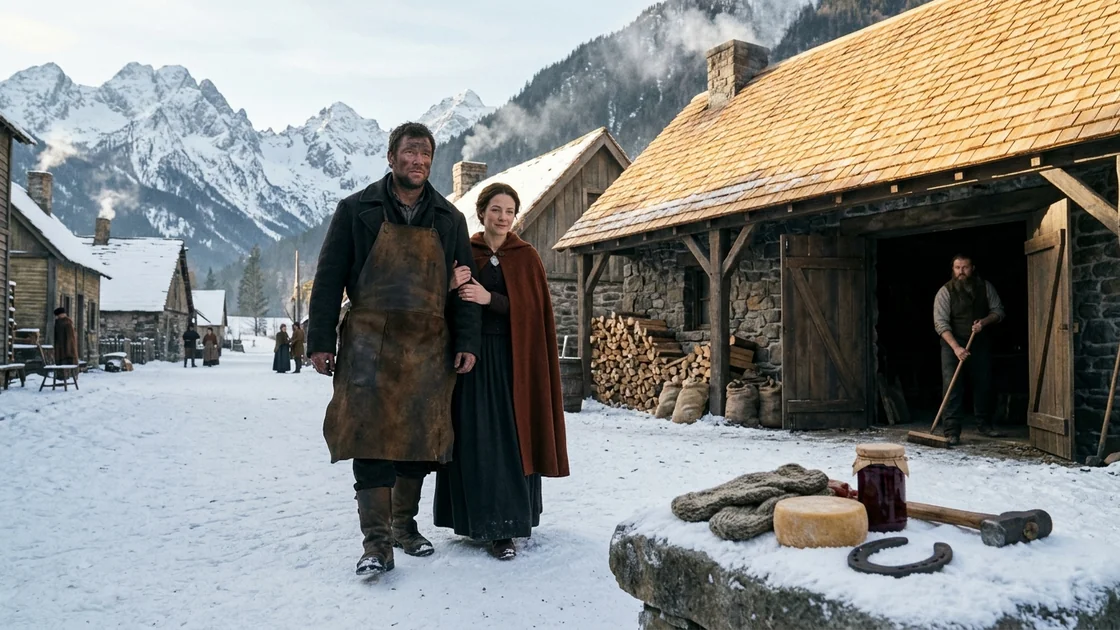
Arthur Pendelton spent seven years as the most despised man in the isolated valley village of Oakhaven after his three closest friends falsely accused him of stealing the community's emergency harvest fund. Refusing to abandon his ancestral blacksmith shop despite relentless shunning and quiet cruelty, Arthur endured the long seasons of isolation by burying himself in ironwork and keeping a silent vigil over the very people who hated him. Through harsh winters and blight, his quiet resilience never wavered, even as the guilt of the real thief slowly began to fracture the tight-knit circle of his former companions. When a catastrophic midnight fire finally destroys the village granary and exposes a hidden ledger, the devastating truth of Arthur's sacrifice is revealed, forcing the villagers and his erstwhile friends to confront the monstrous injustice they committed against the only truly honorable man among them.
The valley of Oakhaven did not welcome strangers, and it was even less forgiving to its own when they broke the covenant of the hills. Ringed by the jagged granite teeth of the Cinder Peaks to the north and the impassable bogs of the Weeping Fen to the south, the village existed in a state of deliberate self-reliance. Three hundred souls shared the black soil, the cold snowmelt of the River Oakh, and the ironclad belief that a man’s word was the only currency that did not rust.
When that currency went counterfeit, the price was exacted not with a rope, for the villagers were too proud to call in the king’s magistrates from the lowlands, but with the Great Silence.
Arthur Pendelton knew the silence intimately. He wore it like the heavy leather apron over his chest, stained with coal dust and scorched by a thousand flying sparks.
On a Tuesday in late October, seven years to the day since the gates of fellowship had closed against him, Arthur stood before his anvil. The forge burned low, a dull cherry red that barely fought back the damp chill seeping through the chinks in the timber walls of the smithy. Outside, the first frost had rimed the wheel-ruts of the High Street in brittle white lace.
Arthur raised his four-pound cross-peen hammer and brought it down upon a glowing bar of wrought iron. Clang-chink. Clang-chink. The rhythm was the heartbeat of the village, though the village pretended it had gone deaf. He was shaping a set of heavy strap hinges for the north barn of Miller’s Stead. Yesterday, old Tobias Miller had crept up to the smithy’s boundary stone while Arthur was down at the creek fetching water. Tobias had left the broken hinges, a bar of pig iron, and six copper pennies wrapped in a cabbage leaf. He had not knocked. He had not called out. Tomorrow, Arthur would leave the finished hinges on the same flat granite stone, and by noon they would be gone, taken while Arthur was purposefully looking the other way.
That was the arrangement. Oakhaven hated Arthur Pendelton, despised the ground his boots pressed, and spat when his shadow fell across the threshold of the tavern, yet no plowshare could break the rocky clay of the valley without his temper, and no horse could haul timber down the mountain trails without his shoes. They needed his hands, so they amputated his name.
Arthur plunged the glowing hinge into the slack tub. The water hissed violently, sending a plume of sour, metallic steam toward the blackened rafters. Through the open double doors of the shop, the mist cleared just enough for him to see three figures walking abreast down the center of the High Street.
His breath caught, though his hands did not tremble as he lifted the cooled iron with his tongs. Seven years was a long time to practice stillness.
The three walked with the easy, practiced cadence of people who owned the air they breathed. In the center was Julian Vance, taller than the rest, wearing a coat of fine blue wool with brass buttons that caught the pale autumn sun. Julian’s dark hair was graying handsomely at the temples now, giving him the distinguished air of the village alderman he had become. To Julian’s left walked Gareth Hale, broad-shouldered and thick-necked, the master timber-wright, whose booming laugh used to shake the rafters of this very smithy when they were boys roasting chestnuts in the embers. And to Julian’s right walked Clara.
Clara Vance. Once Clara Thorne.
She wore a shawl of russet wool over her shoulders, her head tilted slightly toward Gareth as he spoke, a faint, tired smile touching the corners of her mouth. Time had sharpened the angles of her face, pulling some of the warmth from her cheeks, though to Arthur’s eyes she remained the only spot of true color in the grey valley.
They were thirty yards away. To pass the smithy was unavoidable if one wished to reach the village green from the upper pastures. As they drew nearer, Gareth’s voice dropped. The easy posture of the three stiffened, as if they were walking into a sudden, freezing headwind.
Arthur did not retreat into the dark back corner of the shop where the bellows stood, nor did he step out onto the apron of packed dirt to challenge them. He simply stood by the anvil, his big, scarred hands resting on the handle of his hammer, his grey eyes steady beneath a brow smudged with soot.
Gareth looked straight ahead, his jaw set like a stone wall, his eyes fixed fiercely on the steeple of the chapel a quarter-mile away. Julian, however, looked directly at Arthur. There was a strange, brittle alertness in Julian’s gaze—not the hot fury that Gareth carried, nor the cold disdain of the townsfolk, but something watchful, almost defensive, before he looked away and placed a guiding hand on Clara’s elbow.
Clara looked last. For the space of a single heartbeat, her hazel eyes met Arthur’s through the lingering veil of steam. There was no hatred in them, only a vast, hollow exhaustion and a grief that had calcified into part of her bones. Then she looked down at her boots, and the three of them passed behind the line of the hawthorn hedge.
Arthur let out the breath he had been holding. He looked down at the iron hinge in his tongs. The metal was black, cold, and unyielding. He laid it on the wooden workbench beside three others just like it, picked up a rasp, and began to file the burrs from the punched nail holes. Scritch-shhh. Scritch-shhh.
Memory, he had learned, was like scale on hot iron. No matter how hard you hammered it off, the next time you put the metal in the fire, a new layer formed.
Eight years ago, the four of them had been indivisible. In Oakhaven, they were called the Four Corners, because you could not build a festival, a barn raising, or a harvest dance without them holding up the roof.
Arthur was the quietest of the four, a large, slow-spoken young man who had inherited his father’s forge at nineteen when a kick from a draft mule stopped the old smith’s heart. Julian was the silver-tongued son of the village clerk, brimming with grand ideas about stone bridges and improved waterwheels, always scribbling in little leather notebooks. Gareth was the strength, able to heft the butt-end of an oak beam by himself, fiercely loyal and quick to fight anyone who looked sideways at his friends. And Clara, the apothecary’s daughter, was the heart that kept the three men from tearing each other apart with their competing prides.
It was an open secret in the valley that both Arthur and Julian loved her, though neither had spoken the words aloud that would sever the group. Yet in the summer of their twenty-fourth year, the balance had tipped. It had happened in the quiet hours—Clara bringing salve for a burn on Arthur’s forearm and staying until the forge went cold; Arthur forging a tiny, intricate herb-chopper with a handle of polished staghorn that made her weep with delight when she found it on her workbench. By late August, when they walked back from the berry-picking on the high ridges, it was Arthur’s rough hand she reached for in the dusk, while Julian walked three paces ahead, slashing at the purple thistles with his walking stick, his back rigid.
Then came the Autumn of the Rot.
Three weeks of warm, incessant rain in September had turned the wheat in the shock to black slime and rotted the potatoes in the ground. Starvation stared down from the Cinder Peaks. Oakhaven had only one defense against such a season: the Iron Chest.
For forty years, every household had contributed a tithe of silver and coin from the wool trade to a heavy oak-and-iron chest kept in the stone vestry behind the council hall. It contained nearly four hundred silver crowns—enough to send wagons fifty miles south to the lowland markets of Brackenridge to buy grain and salted fish to see the village through till spring.
Because the old councilmen were infirm, the Four Corners were entrusted with the chest’s preparation. Arthur had forged the two great padlocks that secured it; Julian, as the clerk’s son, kept the tally; Gareth was to drive the heavy timber-wagon south with four armed drovers; Clara was organizing the rationing lists for the widows and children.
Two nights before the wagon was to depart, a storm of freezing sleet had battered the valley. Arthur had been in his cottage behind the smithy, oiling a heavy leather harness for the journey, when a frantic pounding shook his door.
It had been Julian. He was soaked to the skin, hatless, his face the color of tallow, his hands shaking so violently he could barely hold his shuttered lantern.
"Arthur," Julian had gasped, stumbling into the small room, dripping freezing water onto the floorboards. "Arthur, God help me. I am ruined. I am dead."
Arthur had dropped the harness, catching his friend by the shoulders. "What is it? Is it Clara? Is it your father?"
"The chest," Julian choked out, his eyes wild, darting toward the shuttered window as if hounds were on his heels. "The tally. Arthur, the elders called for an early audit tonight because of the weather. They want to load the wagon at dawn instead of Friday. My father just told me. We open the chest at six o'clock tomorrow morning."
Arthur frowned, confused. "Then we open it at six. The padlocks are oiled. I have the second key right here on the mantel—"
"It’s empty, Arthur!" Julian’s voice cracked into a high, thin wail. He sank to his knees on the rag rug, clutching at Arthur’s wool trousers. "Not all of it—two hundred crowns. Over half of it. It’s gone."
The room seemed to tilt. The crackle of the small hearth fire sounded suddenly like breaking bones. "Gone?" Arthur whispered. "How can it be gone? Only my father’s lock and the clerk’s lock secure it. You have your father’s key, and I have mine. The wood wasn't splintered when we checked it on Sunday."
"I took it," Julian sobbed, pressing his forehead against his clenched fists. "In April. When the wool-factors from the south came through. A man from the city—he had documents, Arthur, royal charters for the silver mines in the West. He swore the return would double the coin by harvest. I thought—I thought if I could double the village fund, they would make me Reeve despite my age. I thought Clara’s father would finally see I had prospects, not just clerk’s ink on my fingers! The man was supposed to meet me at the crossroads in Brackenridge three days ago. I rode down in the night. He wasn't there. The tavern keeper said he’d hung in the capital in July for forgery."
Arthur stared down at the boy he had pulled from the freezing river when they were ten, the boy who had taught him to read the difficult words in the old herbals. A cold, heavy sickness settled into Arthur’s stomach. "Julian... the wheat is rotted. People will die without that grain. The children—"
"I have eighty crowns of my own!" Julian scrambled up, his wet hands gripping Arthur’s shirtfront, his breath hot and sour with panic. "My mother’s dowry silver, and what I saved. And—and my uncle in Brackenridge! He’s a grain merchant, Arthur. If I can get to him, he’ll give me the wheat on credit against my father’s house! The village won't starve, I swear to you on my mother’s grave, not a single mouth will go empty! I just need three days. Four days to ride to Brackenridge and bring the wagons back myself."
"They open the chest at dawn," Arthur said hollowly.
"Wait until they don't!" Julian’s eyes burned with a desperate, feverish light. "You have the second key. If your key isn't there at dawn, they can't open the iron bands without a cold chisel and a sledge. And you're the smith! If you aren't there—if they think you've ridden out to the hill-farms to shoe the drovers' horses—it’ll buy me twelve hours. Give me your key, Arthur. Let me put my eighty crowns back in tonight so it doesn't look completely bare, and then I’ll ride out and fetch my uncle’s grain. By the time I come back with four wagons of wheat, it won't matter that the silver was short! They’ll have the food!"
It was madness. Even to Arthur’s straightforward mind, the plan was full of holes, born of terror and pride. "No, Julian. We go to your father now. We wake Gareth. Between my forge, Gareth’s timber yard, and your father’s land, we can pledge the bond to the elders tonight. We tell the truth."
"My father’s heart will give out," Julian whispered, the tears cutting clean tracks through the rain and dirt on his face. "You know the apothecary said another shock would kill him. And Gareth? Gareth will break my neck with his bare hands before I get three words out. And Clara..." Julian’s voice dropped to a broken rasp. "She already looks at you like you're the sun rising, Arthur. You've won her. Don't take my life too. Just give me until noon tomorrow. Let me put the eighty crowns in the chest tonight so the weight feels right if they lift it. Please. Twenty years we've been brothers."
Arthur looked at the brass key sitting on the oak mantel beside his father’s bible. He thought of old Master Vance, frail and coughing by his ledger desk. He thought of the twenty years of shared bread.
"Put the eighty crowns in," Arthur said heavily, reaching up to take the heavy iron key from the wood. "Bring the key back to me before first light. At six o'clock, I will walk into that hall with you, and we will tell the elders together that the rest of the money is pledged against my smithy and your father’s house until your uncle’s grain arrives. I will not run, Julian, and I will not lie for you. Do you understand me? Bring the key back before the bell rings."
Julian had kissed his hand—actually pressed his wet, trembling lips to Arthur’s scarred knuckles—before vanishing into the sleet.
Arthur had sat by the fire until the embers died. At four in the morning, the key had not returned. At five, uneasy, Arthur had pulled on his heavy coat and walked through the slush toward the council hall.
He never reached the vestry.
They met him in the square beneath the great oak—six men with lanterns, Gareth at their head holding a pitchfork, old Master Vance weeping into his muffler, and Julian standing on the stone steps of the hall, his face ghostly pale, holding Arthur’s iron key in his outstretched palm.
Beside Julian’s boots lay the Iron Chest, its lid thrown back, the lock unpicked—opened cleanly by the two keys. Beside the chest lay a leather saddlebag that Arthur recognized instantly: it was his own, the one he had left hanging on the peg by his smithy door two days ago. Spilled from its mouth onto the wet cobblestones were forty silver crowns and a half-forged set of lock-picks.
"I caught him behind the vestry at three o'clock," Julian’s voice had rung out across the square, trembling, anguished, carrying to every shuttered window that was now flying open in the grey dawn. "God forgive me, I heard a horse by the creek. I came down to check the hall. He had my father’s key—he took the wax impression when he repaired the clerk’s iron strongbox last month! He dropped this bag when I shouted! The rest of the silver—three hundred crowns—he must have buried it in the woods or given it to a confederate!"
Arthur had stopped dead in the freezing mud, the breath knocked from his lungs as surely as if Gareth had driven the butt of an oak log into his chest. He looked at the saddlebag. He looked at the lock-picks—crude things made of bar-iron that any apprentice could have hammered out, though to a villager, ironwork meant only one man. Then he looked up at Julian.
Julian’s eyes met his. In that split second, across the lantern-lit slush, Arthur saw the terrifying completeness of the trap. Julian hadn't had eighty crowns of his own. He had only had forty left from his disastrous gamble. He had needed a thief to take the blame for the missing three hundred and sixty, and he had needed the second key to stage the theft without breaking the chest, because breaking the chest would have made too much noise in the center of the village.
"Julian," Arthur said, his voice sounding strange and small in his own ears. "Julian, what have you done?"
"Don't speak his name!" Gareth roared. Before Arthur could raise his hands, Gareth was upon him. The timber-wright’s massive fist crashed into the side of Arthur’s jaw, sending him sprawling into the freezing filth of the street. "You filthy Judas! While we were measuring out handfuls of mouldy barley for the widows, you were filing keys!"
"I gave him the key!" Arthur shouted, spitting blood onto the grey slush as two drovers pinned his arms behind his back. "He came to my cottage at midnight! Ask him about the man from the city! Ask him about the silver mines!"
"He’s raving," Julian said, covering his face with one hand as if he could not bear to look upon his fallen friend. His shoulders shook with what looked to the gathered crowd like noble, heartbreaking grief. "He told me when I cornered him that if I turned him in, he’d swear I was his partner. Search his house! Search the forge!"
They did. They tore up the floorboards of Arthur’s cottage. They raked the ashes of his forge. They dug up his mother’s cabbage patch. They found nothing, of course, which only convinced Oakhaven that Arthur was a cleverer, more hardened villain than they had ever dreamed—a man who had hidden the village's lifeblood somewhere in the vast, trackless Cinder Peaks, waiting until the heat died down to abandon them all to starve and go live like a lord in the south.
Only Clara had come to him before the sentence was passed. While he was locked in the stone root-cellar beneath the council hall, bruised and shivering, the small barred grate at ground level had darkened.
"Arthur," she had whispered.
He had pressed his swollen face against the cold iron bars, looking up at the hem of her muddy skirt and her crouched form. "Clara. You know me. Look at my hands. Have I ever lied to you?"
"Why were your lock-picks in the bag, Arthur?" she asked, her voice cracking with a pain so sharp it made him wince worse than Gareth’s fist. "Why did Julian have your key? You never take that key off your mantel. Even when we were children, your father taught you never to let it leave the house."
"Because he begged me," Arthur said earnestly. "Because he was crying on my floor, and he said his father would die of the shock if we didn't wait till morning to tell them he’d lost the money to a city sharper."
There was a long, terrible silence from above the grate. "Julian was at my house until eleven o'clock last night, Arthur," she said softly, each word dropping like lead into the dark cellar. "He was helping my father and me tally the sick-list. And at midnight, Gareth was at the clerk’s house with him, waxing the tarpaulins for the wagon. Gareth swore it to the elders."
Arthur’s heart stopped. "Gareth...?"
"Gareth was only away from him for twenty minutes while he went back to the timber yard for more cordage," Clara whispered, a sob finally breaking through her control. "Julian couldn't have ridden to Brackenridge three days ago either, Arthur. He was in bed with the quinsy. I brought him the fever-bark myself, though I didn't go into his room. Why would you make up such a story? Just tell them where the silver is. If you give it back, they'll only banish you. They won't send for the sheriff. Please, Arthur. For what we were."
Arthur leaned his forehead against the rusted iron bar. Julian had planned it days ago. The sickness—a closed bedroom door while he rode out the back window by night. The twenty minutes Gareth had gone for cordage—just long enough for Julian to sprint the two hundred yards to the smithy through the back alleys, get the key, and sprint back before Gareth returned with the rope, so Gareth would innocently swear they had been together all night.
It was seamless. A man of words and ledgers against a man who only knew how to hit hot iron until it bent.
"I don't have the silver, Clara," Arthur said into the dark dirt.
She had stood up without another word, and walked away.
The village did not starve that winter. Julian Vance, in an act that cemented his status as the savior of Oakhaven, convinced his father to mortgage every acre of their pastureland to his uncle in Brackenridge, securing just enough low-grade oats and turnip-meal to keep the valley alive through March. In the spring, old Master Vance died of the winter cough, and Julian was unanimously elected Reeve and Alderman, the hero who had sacrificed his family's fortune to mend the hole torn by the traitor at the forge.
As for Arthur, the elders decided against the sheriff. If the king’s law hung Arthur, they would never find the hidden three hundred crowns. Better, they reasoned, to leave him in his cottage and watch him like hawks. Sooner or later, a thief goes to his cache. And besides, who else would mend the plows come April?
So they gave him the Silence.
The memory faded into the rhythmic scritch-shhh of the file against the hinge.
Seven years. Two thousand five hundred days of eating alone, working alone, walking down the center of the road while women pulled their children behind their skirts and men spat into the weeds.
Why had he stayed?
During the first two winters, Arthur had asked himself that question every night while the wind howled down from the Cinder Peaks. He was a master smith; he could have packed his hammers on his back, walked south through the pass to Brackenridge, and found work at any coaching inn or estate within a week.
At first, he had stayed out of sheer, bull-headed Pendelton stubbornness. His grandfather had built that stone hearth; his father was buried under the rowan tree behind the chapel. To run was to sign his name to Julian’s lie. If he vanished over the ridge, every man and woman in Oakhaven would nod over their ale and say, There, you see? He’s gone to dig up our silver and buy himself a coach in the city.
By the third year, the stubbornness had cooled and hardened into something else, much like steel quenched in oil. He stayed because he was the only witness. As long as Arthur Pendelton stood at the anvil in the center of the village, his head unbowed, his boots planted in the dirt, Julian Vance had to look at him every time he walked to the council hall.
And by the fifth year, Arthur stayed because Oakhaven was failing, and they were too proud or too blind to see that he was the one holding their roofs up.
Julian Vance was a fine speaker, and he kept neat ledgers, and two years after the theft he had married Clara Thorne in a quiet ceremony that Arthur had listened to from the back of his shop as the chapel bells rang. Better to marry the hero who saved the village than pine for the monster who tried to starve it. Yet for all Julian’s fine coats and town manners, he was a poor manager of the valley’s real life. He taxed the smallholders heavily to pay back the supposed "mortgage" to his uncle in Brackenridge—a debt that never seemed to shrink, despite five good harvests in a row.
When the widow Garrow’s cow died and she couldn't pay her tithe nor afford to have her cottage roof re-thatched, it was Arthur who crept out at two in the morning in the pouring rain with bundles of river-reed he had cut himself, patching the hole before dawn so the old woman thought the mountain fairies or a repentant neighbor had pitied her. When Gareth Hale’s timber-wagon broke an axle on the treacherous gorge road and the horses were slipping toward the precipice in the dark, it was Arthur, out checking his snares in the high woods, who wedged a pine beam under the wheel from the shadows beneath the bridge and held the weight until Gareth could cut the traces, slipping into the brush before the big man could bring a lantern down to see how the wagon had miraculously caught on a root.
He became the ghost of Oakhaven. Despised by day, indispensable by night.
A small shadow fell across the threshold of the smithy, breaking Arthur from his thoughts.
He paused with his file and looked down. Standing just outside the drip-line of the eaves, careful not to put a toe across the invisible line that the village children were taught meant instant damnation, was a boy of about six. He had a mop of dark, unruly hair, a smudge of mud across his nose, and a pair of hazel eyes that made Arthur’s chest tighten with a familiar, dull ache.
Thomas Vance. Julian and Clara’s boy.
In his hands, the child held a small wooden toy horse, one of its carved pine legs snapped cleanly off at the knee. Around his neck hung a piece of twine, and on the twine was a bright, shiny horseshoe nail that Arthur had dropped in the lane two weeks ago.
The boy didn't speak. He knew the rule. Even at six, he knew you did not speak to the Iron Man. Instead, Thomas solemnly held out the three-legged horse and the broken splinter of wood, his lower lip trembling just slightly with the effort of being brave in the presence of the village bogeyman.
Arthur looked swiftly up and down the High Street. The cold afternoon wind had driven everyone indoors early; smoke curled from the chimneys, and the shutters of the tavern were barred against the draft.
Slowly, so as not to startle the boy, Arthur laid down his heavy iron rasp. He wiped his soot-blackened hands meticulously on a clean rag from his pocket, then knelt on one knee in the doorway, keeping five feet of safe dirt between them.
He held out his palm.
Thomas hesitated, glancing back toward the green, then took one quick, darting step forward, dropped the wooden horse and the broken leg into Arthur’s huge, calloused hand, and hopped back behind the drip-line.
Arthur turned the little horse over. Gareth had carved it, likely; it had the bold, chunky lines of Gareth’s knife-work, though the pine he had used was cross-grained at the leg, bound to snap the first time it was dropped on a hearthstone.
Without a word, Arthur stood, went to his workbench, and selected a tiny, hair-thin brad he used for tacking leather bellows-seals. With a miniature gimlet no thicker than a darning needle, he bored a microscopic hole up through the broken hoof and into the shoulder of the horse. He smeared a drop of warm hide-glue from the pot warming near the flue onto the break, tapped the tiny iron pin through to join the pieces, and wiped away the excess glue with his thumb. The repair was stronger than the original wood, and the seam was entirely invisible.
He walked back to the doorway, knelt, and set the little horse down on the dry dirt just inches from the boy’s scuffed boots.
Thomas picked it up. He tugged experimentally at the leg. When it held fast, a brilliant, gap-toothed smile broke across his face—Clara’s smile, before the Autumn of the Rot had stolen it from her.
"Thank you, Master Smith," the boy whispered, breaking the Great Silence with the casual treason of childhood.
Arthur’s throat felt as though he had swallowed hot cinders. He hadn't heard his title spoken without a curse attached to it in seven years. He gave a single, slow nod, touching one rough knuckle to his forehead in salute. "Mind the cobblestones with him," Arthur rasped, his voice rusty from disuse. "Pine's brittle when the frost takes it."
"Thomas!"
The voice cracked like a whip down the quiet street.
Julian Vance was striding rapidly from the direction of the council hall, his blue wool coat flying open. He must have come out of the vestry door and seen the boy standing by the smithy. Behind him, fifty yards back, Gareth was emerging from the timber yard, drawn by the shout.
Before the boy could even turn around, Julian reached him, snatching Thomas roughly by the collar of his coat and yanking him three paces back into the center of the road. The wooden horse tumbled from the child's startled fingers, bouncing across the frozen ruts.
"What did I tell you about coming near this yard?" Julian’s voice was shrill, ragged around the edges in a way it never used to be. There were dark, bruised-looking hollows beneath Julian’s eyes, Arthur noticed now that the man was close, and a faint, sour smell of plum brandy hung around him despite the afternoon hour. "Go to your mother. Now! Run!"
"My horse—" Thomas whimpered, pointing at the toy in the dirt.
"Leave it! Go!" Julian gave the boy a shove toward the green. Thomas burst into tears and ran, his small boots clattering on the frozen mud.
Julian stood panting in the road. Gareth walked up beside him, a heavy iron cant-hook resting over his broad shoulder, his brow furrowed as he looked from the crying boy back to the doorway of the smithy where Arthur still stood.
"What did he do?" Gareth rumbled, taking a half-step toward the smithy, his grip tightening on the wooden shaft of the cant-hook. "If he laid a finger on the lad, Julian, by God, we finish this today."
Julian didn't answer right away. He was staring at the little wooden horse lying in the wheel-rut. With a jerky, spasmodic movement, Julian raised his heavy riding boot and brought his heel down squarely on the toy, crushing the pine body into splinters in the frozen mud.
Gareth blinked, looking down at the ruined toy, a flicker of confusion crossing his honest, weathered face. "Julian? I carved that for his birthday last month."
"It touched his hands," Julian spat, his chest heaving as he glared up at Arthur in the shadow of the doorway. "Everything he touches rots. Stay in your hole, Pendelton. If I see you looking at my family again, I’ll have the council wall up these doors with you inside."
Arthur looked down at the splintered wood in the mud, then raised his grey eyes to Julian’s face. He didn't look angry. He looked at Julian the way a physician looks at a man dying of a gangrenous wound he refuses to have lanced.
Noticeably, Julian flinched under that level, silent gaze. He turned sharply on his heel and stalked away after his son.
Gareth lingered for three seconds longer. He looked at the crushed toy in the dirt, then up at Arthur’s calm, soot-stained face, and finally at the neat stack of newly forged hinges waiting by the boundary stone for Tobias Miller. A strange, troubled crease deepened between the big timber-wright’s eyebrows. For the first time in seven years, Gareth didn't spit in the weeds before he turned and walked away.
When the street was empty again, Arthur walked out into the road, knelt in the frozen rut, and gathered every splinter of the broken horse into his apron. He carried them back inside, set them on his clean workbench, and pulled a fresh block of seasoned mountain ash—wood that wouldn't crush under a coward’s boot—from the rack beneath the rafters.
November came in on the teeth of a gale that stripped the last brown leaves from the oaks and sent the temperature plunging faster than any elder could remember. The River Oakh froze three inches thick in a single night. Worse, the early blizzards closed the high pass to Brackenridge two weeks ahead of schedule, piling twenty-foot drifts between the valley and the southern lowlands.
Oakhaven was sealed in for the winter.
Fortunately, the harvest had been good. The new village granary—a massive, two-story structure of timber and stone built three years ago under Julian’s direction to replace the damp old tithe-barn—was packed to the rafters with threshed wheat, barley, oats, and winter peas. Adjacent to the main storage bays was the Reeve’s office, a small, stone-walled room with an iron stove where Julian kept the village weights, the tax rolls, and the new Iron Chest.
Yet as the days shortened to brief, grey smudges of twilight between long, howling nights, a strange tension settled over the village, palpable even to the outcast at its center.
Arthur saw the signs from his anvil.
The drovers who usually went south in November to sell the village’s surplus wool and buy salt, lamp oil, and tea had been stopped by the early snows, yet Julian had already collected their wool-tithe in October, claiming he had sent it ahead with a lowland merchant train that no one else remembered seeing pass through the valley. When old Tobias Miller went to the Reeve’s office to ask for his winter salt ration, there were raised voices that carried all the way across the frozen green to the smithy.
More than that, Arthur saw Julian walking the perimeter of the granary at odd hours of the night.
Arthur slept little these days; an old ache in his ribs—where two drovers had kicked him during the search seven years ago—always flared when the barometer dropped. Often, around one or two in the morning, he would wrap himself in a sheepskin coat and sit on the chopping block behind his shop, smoking a pipe of dried coltsfoot and watching the stars wheel over the white peaks.
Three nights in a row during the second week of November, he saw the bobbing pinpoint of a shuttered lantern moving across the snow toward the granary. It was Julian, always alone. He would unlock the small side door of the Reeve’s office, remain inside for an hour with the chimney smoking furiously as if he were burning paper or heating the room against the bitter cold, and then hurry back toward his house before the watchman made his four o'clock rounds.
On the fourth morning, a Friday, the smithy got a visitor who did not stop at the boundary stone.
The snow was falling thick and fast, deadening all sound in the valley, when the heavy timber door of the shop creaked open and then shut again against the wind.
Arthur looked up from the fire, where he was welding a new bit onto a woodcutter’s axe.
Gareth Hale stood just inside the door, stamping the snow from his heavy boots, his bear-skin cap in his hands. The big man looked older than his thirty-one years; his beard was shot with grey, and his broad shoulders carried a slump that hadn't been there in the autumn. In his left hand he carried a heavy iron logging chain with three cracked links.
He did not leave it on the stone outside. He walked all the way across the packed-dirt floor and laid the chain down on the edge of Arthur’s wooden workbench, three feet from the anvil.
Arthur did not reach for his hammer, nor did he back away. He simply lowered the blower handle so the roar of the draft died down, leaving only the soft crackle of the charcoal and the hiss of snow hitting the hot chimney pipe outside.
For a long moment, Gareth just stared at the tools hanging in neat, graduated rows on the wall—the tongs Arthur’s father had made, the punches they had used as boys when they tried to make arrowheads out of scrap iron.
"The cold's making the iron brittle on the skids," Gareth said. His voice was low, gravelly, and hesitant, as if he were speaking a foreign language in a church. "I need those three links forge-welded before tomorrow noon, if we're to haul the cordwood down for the chapel."
"Leave it," Arthur said evenly. "It'll be on the stone by eight tomorrow."
Gareth didn't move toward the door. His big, red-knuckled hands gripped the rim of his fur cap, twisting it slowly. His eyes wandered across the workbench and stopped on a small object sitting beside the oil-stone.
It was a little wooden horse, freshly carved from pale, close-grained mountain ash, rubbed with beeswax until it gleamed like satin. It was twice as fine as the pine one Gareth had whittled, its mane delicately scored with the tip of a cold chisel.
Gareth’s breath came out in a long, ragged sigh that turned to white mist in the cold corners of the shop. He reached out with one thick finger and touched the nose of the ash-wood horse.
"Why did you stay, Arthur?" Gareth asked quietly, not looking up from the carving.
Arthur picked up his tongs and adjusted a piece of banking coal on the edge of the fire. "My forge is here."
"A smith can build a hearth anywhere there’s stone and clay," Gareth said. He finally raised his head, looking straight into Arthur’s eyes. Up close, the anger that Gareth had worn like armor for seven years was entirely gone, replaced by a deep, bewildered sickness. "Last month, when the bridge timber slipped in the gorge... I went back the next day when the sun was up. I looked under the bank where the wheel caught. There aren't any oak roots on that shale ledge, Arthur. There was a six-foot pine lever jammed into the rock crevice, and beside it in the mud was the print of a boot with a steel heel-plate. Nobody in Oakhaven wears iron heels on their boots except the smith, to keep the hot slag from burning the leather."
Arthur said nothing.
"And two winters ago," Gareth continued, his voice dropping even lower, trembling slightly, "when the wolves came down from the Cinder Peaks during the lambing and broke into my south fold... I found two of them dead in the snow by the creek the next morning, their skulls crushed by a long-handled blacksmith’s rounding hammer. I told myself one of the shepherds had found an old tool. I told myself a lot of things for seven years."
Gareth took a step closer to the anvil. "I was with Julian at the clerk’s house the night of the theft, Arthur. I swore it before the elders, and I swore it to Clara. He only left the room once, when he went down to the cellar to draw a pitcher of cider while I went back to my yard for the tarpaulin ropes. Twenty minutes. I always thought... twenty minutes isn't long enough for a man to rob the vestry, hide three hundred crowns in the woods, and get back to the parlor."
"It takes four minutes to run from the clerk’s house to my cottage door through the orchard," Arthur said, his voice completely flat, devoid of accusation or pleading. Just a statement of fact, like the weight of iron or the heat of coal. "Two minutes to beg me for my key because his father was dying. Four minutes to run back before you came through the front gate with the rope. He already had the silver out of the chest three weeks before, Gareth. He used his father’s wax seal and a hot knife to lift the hasp bolts out of the dry oak at the back of the hinges, then screwed them back in. He didn't need my key to rob the chest. He needed my key so the locks would be found open in the morning instead of the wood pried apart, because everyone knew only a man with the keys could open the front, and if he had pried the back, they would have looked for someone who had been alone with the chest in the clerk's office for weeks."
Gareth’s face went the color of wood-ash. He reached out blindly and braced one heavy hand against the timber post that held the bellows. "The back hinges..." he whispered.
"Look at the old chest next time you're in the hall," Arthur said, turning back to his fire and pumping the bellows once. "The four lag-bolts on the bottom hinge-plate. The wood around the threads is packed with sawdust and tallow to make them bite again after they were drawn out with a claw-bar. I saw it when you two were dragging me across the cobblestones past the steps. An ironworker looks at hinges."
"Why didn't you say—"
"Who was listening, Gareth?" Arthur looked over his shoulder. The orange light of the forge caught the old white scar along his jaw where Gareth’s fist had broken the skin seven years ago. "You had a pitchfork at my throat. Julian had my saddlebag in his hand. And Clara had already turned her back."
Gareth’s knees seemed to weaken. He looked down at his own massive right hand, as if seeing the blood on his knuckles for the first time since that wet dawn. "God in heaven," the big man breathed. "Arthur... what have I done? What is he doing now? Last night I went to him about the winter grain tally. The elders want to inspect the lofts tomorrow before the great snows lock us in till April. Julian flew into a rage—cursed me like a tinker, said the Reeve’s word was law and the lofts were sealed against the damp until December. He’s been drinking brandy since breakfast every day this week. Clara... Clara won't even come down from the upper rooms when people call at the house. Her left wrist was bandaged Tuesday. She said she scalded it on the kettle, Arthur, but..."
The tongs in Arthur’s hand gave a sharp, metallic crack as his grip tightened so hard the iron jaws bent slightly against each other. The quiet stillness that had sustained him for seven years vanished in an instant, replaced by a cold, terrifying focus.
"Did he strike her?" Arthur asked. His voice was scarcely louder than a whisper, yet Gareth instinctively stepped back from it.
"I don't know," Gareth said miserable, wiping a hand across his eyes. "He’s desperate about something. He told the council last month that the reserve silver—the two hundred crowns we’ve scraped together over the last five years to rebuild the fund—was locked in the new iron safe in the granary office, waiting for the spring caravans. Tomorrow morning at nine, the three senior elders are going in with him to count both the grain and the coin."
Arthur stared into the white-hot heart of the charcoal fire.
Julian walking to the granary office at two in the morning, night after night. The early wool-tithe vanishing. The salt rations short. The elders demanding an audit at nine o'clock tomorrow morning.
History was not merely repeating itself; it was coming back around like a crazed horse in a blind canyon. Only this time, there was no innocent smith left to throw the saddlebag onto. If the granary lofts were half-empty—if Julian had been selling the village’s reserve grain and wool on the sly to lowland sharpers to cover old debts or feed the same gambling fever that had ruined him at twenty-four—there was only one way left under heaven to hide an empty barn and an empty ledger before nine o'clock in the morning.
"Gareth," Arthur said sharply. "How much lamp oil is stored in the Reeve’s office?"
Gareth blinked at the sudden change of subject. "Lamp oil? Two casks. The winter supply for the watch-lanterns. Why?"
"Because you can't count ashes," Arthur said.
Gareth stared at him, slow comprehension dawning in his horrified eyes. "No. Not even Julian. If the granary burns with the passes snowed shut... Arthur, the whole valley will starve before February. His own boy is in this village!"
"A drowning man doesn't look at who he drags under," Arthur said. "He thinks if the granary burns by 'accident'—an overheated stove in the Reeve’s office—the neighboring valleys will have to send relief sledges over the ridges in January out of Christian charity, and nobody will ever know how many bushels were actually in those lofts tonight, or what paper notes were in the safe instead of silver. Or worse..." Arthur looked toward the open doorway and the falling snow. "He’ll say the village outcast finally took his revenge for seven years of hell."
Gareth’s hand dropped to the heavy iron chain on the workbench. "We go to the elders right now. You and me. I’ll stand in the square and shout it until the roof comes down that I lied—that I left him for twenty minutes—"
"If you go to the elders now without proof, he’ll simply unlock the office, show them whatever is there before he’s touched a match to it, or claim you've gone mad," Arthur said, already banking his fire with wet slack-coal to keep it safe. "Wait until dark. Watch his house from the timber yard. I’ll watch the granary from the creek bank. If I'm wrong, only the two of us know we're fools. If I'm right, we catch him with the lantern in his hand in front of the whole watch."
Gareth swallowed hard, then thrust out his huge, calloused hand across the anvil. "I'm not asking you to forgive me, Arthur. God knows I wouldn't if I stood in your boots. Just let me stand beside you tonight."
Arthur looked at the hand for a long second. Then, slowly, he reached out and clasped Gareth’s wrist in the old timber-man’s grip they had used when they were twenty.
"Go home, Gareth," Arthur said softly. "Eat your supper. Act as though nothing has changed. Meet me by the old mill-wheel at midnight."
The blizzard did not wait for midnight.
By eight o'clock that evening, the wind coming off the Cinder Peaks had risen to a shriek that tore the wooden shingles from the tavern roof and drove the snow horizontally down the High Street. It was a white darkness, impenetrable three paces from a doorway, the kind of mountain storm in which men died twenty yards from their own kitchen lights because they lost the guide-rope to the privy.
Arthur did not wait for twelve. His instincts, honed by years of solitary observation, were screaming at him that Julian would not wait for the small hours on a night when the storm itself provided better cover than midnight ever could. No watchman would be walking the streets in this gale; they would be huddled around the brazier in the council hall guardroom.
At nine o'clock, Arthur strapped on his heavy leather apron over his wool coat—not for ironwork, but because soaked leather turned both wind and fire better than cloth. He jammed his fur cap down over his ears, picked up a four-foot iron crowbar and his eight-pound sledgehammer, and stepped out into the maelstrom.
The wind hit him like a solid wall, driving ice crystals into his cheeks like buckshot. He lowered his head, keeping the stone wall of the gardens to his left, feeling his way forward toward the north end of the village where the great granary stood above the frozen mill-race.
He was fifty yards from the structure when he smelled it beneath the ozone and pine-scent of the snow: the thick, greasy stink of burning whale-oil and tarred oakum.
Arthur broke into a heavy run through the knee-deep drifts.
As he rounded the corner of the old tithe-barn, a dull orange glow bloomed through the swirling white curtain ahead. It wasn't coming from the chimney of the Reeve’s office. It was coming from the lower ventilation louvers of the main timber granary itself, and from the shattered window of the stone office annex.
Standing ten feet from the side door of the office, fighting to pull his scarf up over his mouth against the gale, was a tall figure in a dark coat, just turning away to plunge back into the blinding snow toward the village green.
Wait—he wasn't alone.
Lying in the snow drift directly beside the burning wall of the office, beneath the overhanging eaves where tons of snow and flaming shingles would soon cascade down, was a second figure, smaller, crumpled against the stone foundation where she had been flung.
"Clara!" Arthur’s roar was torn away by the howling wind, but his body moved with the terrifying momentum of a boulder rolling down a mountain.
Julian heard the crunch of heavy boots or saw the massive silhouette looming out of the blizzard. He spun around, his eyes wide and white in the orange glare emerging from the broken window. In his gloved hand he still clutched an empty brass tinder-box and the heavy iron key to the granary padlock.
"You!" Julian shrieked over the wind, backing up a pace, though a wild, manic glee suddenly twisted his terrified face. "You came! By God, they'll find your tracks in the morning! They'll find the smith right here by the—"
Arthur didn't stop to argue, nor did he slow his stride. He didn't even use the sledgehammer. As Julian raised the heavy iron key to strike at him, Arthur simply drove his left forearm—thick as an oak branch from seven years at the four-pound hammer—squarely into the center of Julian’s chest.
The impact lifted the Alderman of Oakhaven completely off his boots and hurled him backward into a five-foot snowbank, knocking the wind and the words clean out of him.
Arthur didn't look twice at him. He dropped to his knees beside the foundation wall where Clara lay half-buried in the drift.
"Clara! Look at me!"
She was conscious, though dazed, a bright trickle of crimson blood running down from her temple where her head had struck the granite corner-stone when she fell. Her fingers were clutched desperately around the iron handle of the Reeve’s office door, which was bolted from the outside with a heavy iron hasp that had been snapped shut with a spring-padlock.
"Arthur—" she gasped, coughing as a gust of black, oily smoke billowed down from the broken window above them. Her freezing hands grabbed his leather apron with frantic strength. "Thomas! Arthur, Thomas is inside!"
The cold of the blizzard was nothing compared to the ice that turned Arthur’s blood to stone. "What?"
"I followed Julian!" she screamed over the roar of the wind and the rapidly growing crackle of dry pine timbers catching fire inside. "I found the real ledger under the floorboards of our bedroom tonight—I knew what he was going to do! I ran after him to stop him, I didn't know Thomas woke up and followed me in the snow! The boy ran into the office when Julian and I were struggling by the grain-chutes! Julian didn't see him go in—he threw the lamp into the oil cask by the door and slammed the padlock shut before I could tell him the boy was under the desk! The padlock hasp is jammed, Arthur, the smoke—"
Through the shattered, high window of the stone office, Arthur heard it: a faint, terrified, choking cough from beneath the roar of the burning oil-cask that blocked the narrow doorway inside.
Arthur glanced over his shoulder. Twenty feet away, Julian was scrambling out of the snowdrift on hands and knees.
"Julian! The key to the spring-lock!" Arthur bellowed, pointing at the burning door. "Your boy is inside! Thomas is in the office!"
Julian froze on his hands and knees in the snow. He looked at the roaring curtain of yellow flame now licking out of the window frame, then at Clara bleeding by the wall, and the colour drained from his face until it matched the snow. He patted his pockets wildly, then looked back toward the deep drift where Arthur had knocked him. "I dropped it! When you hit me—it was in my hand—"
There were three feet of wind-whipped powder in that drift. Looking for an iron key in a blizzard would take ten minutes. In three minutes, the dry pine ceiling of the office would collapse into the oil fire.
"Get back to the wall, Clara!" Arthur dragged her six feet clear of the door and stood up, hefting the eight-pound sledgehammer and the four-foot iron crowbar.
He didn't need a key. He had built this door.
He knew the oak planks were two inches thick, studded with nails—the sledge wouldn't splinter them fast enough. And he knew the iron padlock was his own work, forged to resist a hammer blow.
Look at the hinges, he had told Gareth six hours ago. An ironworker looks at hinges.
The door swung outward, hung on two massive iron pintles driven into the mortar between the granite blocks of the doorway wall.
Arthur jammed the chisel-point of his four-foot crowbar not behind the lock, where Julian had reinforced the oak, but behind the upper hinge-pintle where the winter frost had already worked at the lime mortar for three winters. He wedged his hip against the bar to hold it in place, raised the eight-pound sledge in his right hand alone, and brought it down with every ounce of strength in his back and shoulders upon the butt of the crowbar.
CLANG!
Sparks flew bright blue in the snow. The granite block cracked down the mortar line.
CLANG! CLANG!
With a wrenching heave that made the tendons in his neck stand out like iron rods and tore a grunt of agony from his bad ribs, Arthur threw his entire two-hundred-and-twenty-pound frame against the crowbar.
The upper iron pintle ripped out of the shattered stone in a shower of mortar and granite chips. Arthur dropped the sledge, grabbed the top corner of the heavy oak door with both bare, calloused hands, planted one steel-heeled boot against the stone lintel, and pulled downward with a roar that drowned out the wind.
The bottom hinge twisted, shrieked, and snapped clean in two. The entire two-hundred-pound oak door tore free of the building, padlock and all, and crashed flat into the snow.
A solid wall of superheated flame and black whale-oil smoke belched out of the doorway, scorching Arthur’s eyebrows and blackening the leather of his apron. The front six feet of the small stone room was a lake of burning oil from the shattered casks; the dry timber ceiling was already ablaze, dropping gouts of burning pitch.
"Stay back!" Arthur shouted at Clara, who was trying to stagger to her feet, and at Julian, who was standing paralyzed in the snow ten yards away, his hands tangled in his hair, screaming his son's name uselessly into the wind.
Arthur pulled his wool scarf up over his nose, yanked his fur cap down until only a slit remained for his eyes, and charged straight through the lake of burning oil.
The heat was a physical blow that crisped the hair on his wrists and set the hem of his heavy wool coat smoldering instantly. He couldn't breathe; the air was pure carbon and searing gas. Blinded by the yellow glare, he went by memory of the room he had measured for stove-pipe two years ago. Six paces straight ahead, two paces to the left: the heavy oak clerk’s desk.
His shins struck a fallen chair. He reached down into the knee-high layer of cooler, smoky air beneath the heavy kneehole of the desk.
His fingers closed on small, trembling wool shoulders.
Thomas was curled into a tight ball against the stone back wall, his face buried in his arms, barely conscious from the thick black smoke filling the small stone box. Next to the boy’s boot, lying where it had tumbled from the overturned desk drawer when Julian had ransacked the room before lighting the fire, was a heavy, brass-bound ledger book and a metal strongbox, its lid gaping open and empty.
Arthur didn't touch the strongbox. With his left arm, he scooped the six-year-old boy up against his chest, tucking the child’s face completely inside the gap of his thick leather blacksmith’s apron to shield him from the flames. With his right hand, almost as an afterthought born of seven years of waiting, he snatched the heavy brass-bound ledger by its spine.
Above him, with a sound like a cannon shot, the main ceiling joist of the office gave way, dropping a cascade of burning pine planks directly across the doorway between Arthur and the snow outside.
The path out was blocked by four feet of roaring timber.
Arthur didn't hesitate. Turning his back squarely to the fire, bending over the boy so his own broad spine and leather-aproned shoulders formed a human roof over the child, Arthur lowered his head and charged backward and sideways toward the high, narrow window whose glass Julian had shattered.
The stone sill was chest-high, and the wooden frame was blazing fiercely. A burning beam fell from the rafters as he moved, striking Arthur squarely across the left shoulder and the back of his neck, driving him to one knee on the stone floor. The pain was blinding, white-hot as an iron bar fresh from the coals, and the smell of his own wool coat and searing flesh filled his nostrils.
He did not drop the boy. He did not drop the book.
Forcing his legs to straighten by sheer, ferocious willpower, Arthur lunged upward at the burning window frame, turning his shoulder to take the impact of the splintered wood and blazing sash, and threw himself backward out into the blizzard.
He hit the snowdrift outside hard on his burned back, rolling instinctively to keep his weight off the child.
Before he had even stopped sliding down the bank, big, powerful hands grabbed the front of his smoking apron and dragged him twenty yards clear of the building just as the floor of the upper grain-loft gave way inside, sending a geyser of sparks and burning wheat a hundred feet into the stormy sky.
"I've got you! I've got you both!"
It was Gareth’s booming voice. Behind the timber-wright, twenty men with buckets, hooks, and lanterns were pouring out of the blizzard from the direction of the village green—Gareth had not gone home to eat his supper; he had gone straight to the three senior elders and the captain of the watch and brought them all through the storm.
Arthur lay on his back in the deep snow, gasping the freezing, clean mountain air into his scorched lungs. He opened his arms and parted the smoking leather apron.
Thomas popped his head out, coughing weakly, his face smudged with soot, but completely untouched by a single spark. Clara threw herself down in the snow beside Arthur, gathering the boy into her arms, weeping hysterically, pressing her bloody forehead against her son’s dark hair while she kept one hand clutched tightly on Arthur’s charred sleeve.
"He’s safe," Arthur wheezed, every breath feeling like broken glass in his chest. His left arm was useless, burned from wrist to shoulder where the beam had struck him, and his eyebrows were gone. "He’s got good lungs."
Slowly, painfully, Arthur rolled onto his good side and pushed himself up to his knees in the snow. The heat from the burning granary was melting the drifts for fifty yards around, lighting the scene as bright as noon—lighting the horrified faces of old Tobias Miller, the elders, the watchmen, and Julian Vance.
Julian stood ten feet away between two watchmen who had caught him when he tried to slip back toward the orchard as the lanterns appeared. His fine blue coat was smeared with soot and whale oil; his hands were black with lamp-black.
Arthur looked down at his own right hand. His fingers were still locked like iron tongs around the brass-bound ledger he had pulled from under the desk. And sticking out from the breast pocket of Clara’s torn cloak was a smaller, older book wrapped in oilskin—the one she had torn from under the floorboards of Julian’s bedroom an hour ago.
Arthur tossed the heavy Reeve’s ledger into the melted slush at the feet of Elder Matthias, the oldest man on the council. Then he reached out, gently took the oilskin bundle from Clara’s trembling hand, and tossed it beside the first.
"Count your silver, Matthias," Arthur rasped, his voice raw with smoke, yet carrying clearly beneath the roar of the burning barn as the wind momentarily died. "And while you're at it, read the first ten pages of the small book from seven years ago. You'll find the names of the lowland brokers who took your three hundred crowns before the Autumn of the Rot, and the dates your Reeve sold half this year's wheat before the snows even fell."
Elder Matthias bent down, picked up the oilskin book, and opened it in the bright orange glare of the fire. Beside him, Tobias Miller knelt and smelled Julian’s oil-soaked cuffs, then looked at the empty tinder-box lying in the snow where Julian had dropped it.
"It's a lie!" Julian’s voice cracked, high and desperate, the exact same pitch it had held in Arthur’s cottage seven years ago. He pointed a shaking, soot-stained finger at Arthur kneeling in the snow. "Look at him! He’s hated us for seven years! I came up here through the storm because I saw a light—I caught him breaking the door with his crowbar! Ask him why he had his sledgehammer at the granary in a blizzard!"
No one looked at Arthur.
Slowly, one by one, the twenty men of Oakhaven turned their heads to look at Clara, who was kneeling in the snow with her arm around her son, staring up at her husband with an expression of absolute, bone-deep revulsion.
"I brought the book, Julian," Clara said. She didn't shout, yet every man heard her. Blood dried on her pale cheek as she rose to her feet, lifting Thomas in her arms. "I found it under the loose board beneath the washstand where you hid the brandy. The dates from seven years ago are in your hand. The receipts from the man in the capital. The record of the forty crowns you put in Arthur’s saddlebag while Gareth went for the ropes. And when I followed you here tonight to beg you not to burn the village's food... you struck me down in the snow and locked our son in that room with the fire."
Gareth Hale stepped forward. His massive hands did not ball into fists this time; they simply closed like iron vices on the collar of Julian’s fine blue coat, lifting the Reeve nearly onto his toes.
"And I lied seven years ago," Gareth said to the elders, tears cutting tracks through the soot on his bearded cheeks. "I left him alone for twenty minutes that night, Matthias. Enough time for him to take the smith’s key and ruin the best man in this valley while we all watched."
Julian stopped struggling. The grand posture, the alderman’s pride, the silver tongue—all of it collapsed inward like the rotten rafters of the barn behind them. He hung limp in Gareth’s grip, his head lolling forward, weeping silently into the snow.
Arthur didn't watch them drag Julian away toward the stone root-cellar beneath the council hall—the same dark pit where Arthur had spent his last nights as a member of the village seven years ago. The smoke, the broken rib, and the deep burn across his back were finally taking their toll. The orange light of the fire began to spin around the white peaks, and the snow beneath his knees felt suddenly very soft and warm.
Before his face hit the slush, four pairs of hands caught him.
They did not drag him. Tobias Miller, Elder Matthias, and two of the young drovers who used to spit in the weeds when he passed lifted the big blacksmith onto their shoulders as gently as if he were a king on a litter, while Clara walked beside him, holding his unburned hand in both of hers all the way down the hill.
The winter was hard, the hardest Oakhaven had known in a century, for only a third of the grain in the lower stone bins had been saved when they finally beat the fire out with snow and axes. Yet no one starved.
When they broke the floor of Julian’s cellar the next morning, they found six casks of salted beef, four barrels of white flour, and a hundred and eighty silver crowns that Julian had hoarded away for his planned escape to the south once the spring thaw opened the roads—enough to see the valley through on half-rations until the pass could be dug out in March to bring sledges from Brackenridge.
In April, two king’s magistrates rode up through the slush of the mountain pass in answer to the council’s summons, and Julian Vance rode back down with them in irons, never to see the Cinder Peaks again.
Arthur knew little of the first three weeks after the fire. The infection in the deep burn across his shoulder and neck brought a raging fever that kept him tossing on a narrow cot—not in his cold cottage behind the smithy, where the roof leaked, but in the warm, herb-scented downstairs bedroom of the apothecary’s old house, where Clara and Thomas had moved the night the granary burned.
When the fever finally broke on a bright, cold morning in early December, Arthur opened his eyes to the smell of sage tea and pine smoke.
He was lying under a thick goose-down quilt stitched with a pattern of oak leaves. His left shoulder and half his chest were bound tightly in clean linen bandages smelled of honey and yarrow-salve.
Sitting on a low wooden stool beside the bed was Thomas. The boy was very quiet, carefully running a small, satin-smooth horse made of pale mountain ash along the edge of the blanket.
When the boy saw Arthur’s grey eyes open and focus, he didn't run, and he didn't whisper. He dropped the wooden horse on the quilt and bolted for the kitchen door, shouting at the top of his lungs: "Mama! Mama, the Master Smith is awake!"
Clara came through the doorway so fast she dropped the wooden spoon she was holding, her apron dusted with barley meal. She stopped at the foot of the bed, her hands flying to her mouth, her hazel eyes brimming instantly with tears that spilled over onto cheeks that had already regained some of the softness of her youth.
"Arthur," she breathed.
He tried to sit up, wincing as the tight skin across his back pulled against the bandages. "My shop," he croaked, his voice like dry leaves. "The frost... if the slack-tub freezes solid, it'll crack the oak staves. And Tobias Miller's plow-coulter—"
Clara let out a sound that was half-sob, half-laugh, coming around the bed to press one cool, gentle hand against his good shoulder, keeping him on the pillows.
"The slack-tub hasn't frozen, Arthur," she said softly, sitting on the edge of the mattress beside him. "Gareth has kept a banking fire going in your hearth every day for three weeks. And when you're able to walk across the green... you won't recognize your cottage."
It was another ten days before she let him put his boots on and wrap his heavy coat over his bandaged shoulder.
When Arthur finally stepped out onto the porch of the apothecary’s house into the crisp, blinding sunlight of mid-December, he stopped with his hand on the rail.
Down the High Street, five men were walking toward the tavern. As they passed the apothecary’s gate, Tobias Miller and the two drovers took their wool caps completely off their heads in the freezing air, bowing low in silence before walking on.
Arthur walked slowly down the lane toward his smithy, Clara walking openly at his side, her hand resting lightly in the crook of his good right arm, refusing to let him walk alone.
When they rounded the hawthorn hedge, Arthur stopped dead in the snow.
The rotten cedar shingles on the roof of his cottage were gone, replaced by brand-new, split-oak shakes that gleamed golden in the winter sun—Gareth’s finest timber. The chinks in the walls of the smithy had been freshly daubed with white lime-mortar against the drafts. Stacked neatly under the eaves was a cord of seasoned hickory wood and twenty sacks of prime charcoal.
And sitting on the flat granite boundary stone by the lane—the stone where for seven years men had crept by night to leave broken iron and guilty pennies wrapped in cabbage leaves—there were no broken hinges.
Instead, the stone was piled high with small, quiet offerings from a village that did not know how to use words to ask forgiveness for seven years of stone-hearted blindness: a wheel of aged sheep’s cheese from the widow Garrow; a pair of thick, hand-knitted wool mittens; a jar of preserved mountain berries; a new hickory hammer-handle scraped smooth as glass; and on top of the pile, a heavy iron horseshoe forged crudely by some amateur hand, stamped with seven clumsy notches that had been struck through with a cold chisel, as if to cross out the years.
Gareth was inside the shop, sweeping the packed-dirt floor with a birch broom. When he saw Arthur standing by the boundary stone, the big timber-wright set the broom against the anvil, walked out into the snow, and simply nodded toward the warm glow of the forge.
"The fire’s clean, Arthur," Gareth said quietly. "Whenever you're ready."
Arthur looked at his old friend, then at the village green where smoke rose peacefully toward the white peaks, and finally down at Clara, who was looking up at him with eyes that held no shadow of the past—only the long, quiet promise of the spring to come.
Arthur reached out with his right hand, picked up the four-pound hammer from the anvil block, and felt the familiar, honest balance of the worn hickory shaft against his palm. He had lost seven years to the winter, yet as the warm draft of the forge washed over his face, he knew the iron was still good.