The Longest Walk
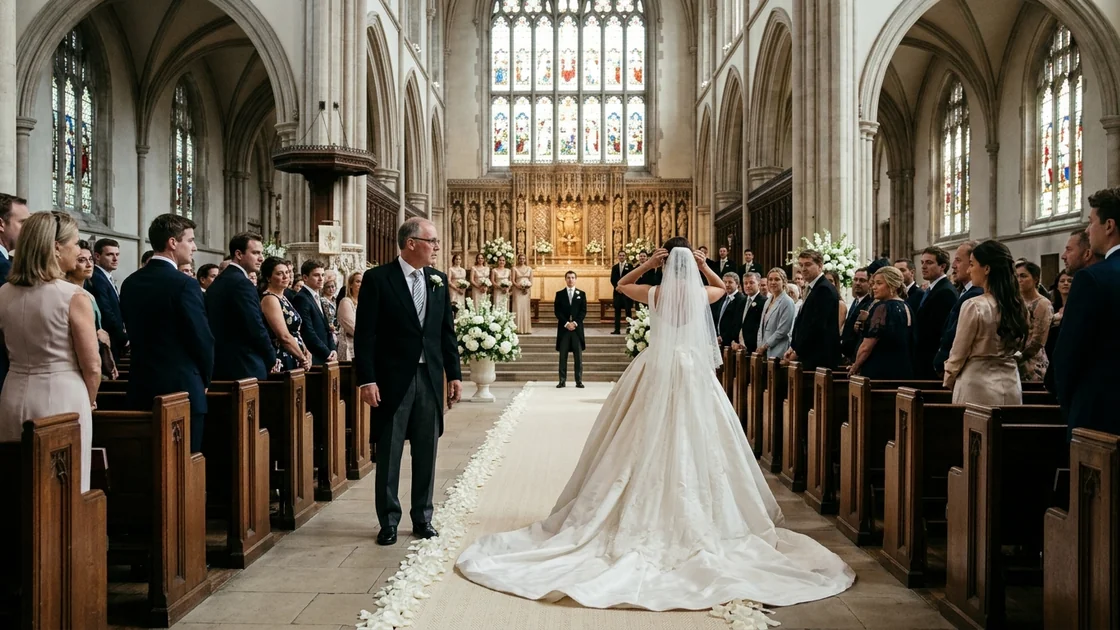
Clara stands at the threshold of Saint Jude’s Cathedral, draped in silk and lace that feel more like a costume than her own skin. As she begins her descent down the aisle toward Julian, a man of impeccable pedigree and curated charm, the distance between the heavy oak doors and the altar stretches into an eternity of sudden, agonizing clarity. Through a series of sharp flashbacks triggered by the faces in the pews, the floral arrangements she didn't choose, and the rigid perfection of the groom waiting for her, Clara realizes that their three-year courtship has been a performance where she played a supporting role in Julian’s ambition. By the time she reaches the halfway mark of the nave, the illusion shatters completely, forcing her to confront the reality that the man at the end of the runner is a stranger who neither knows nor loves her, leaving her with a monumental decision to make before she takes another step.
The heavy oak doors of Saint Jude’s Cathedral smelled of lemon oil and centuries of trapped incense. Behind them, the late September heat of Charleston was beginning to bruise the afternoon sky into shades of violet and tarnished gold, though inside the narthex, the air wasconditioned to a crisp sixty-eight degrees. It was Julian’s preferred temperature. He had mentioned it to the verger three weeks ago during the logistical walkthrough, citing the preservation of the imported Dutch white hydrangeas and the comfort of the groomsmen in their heavy wool morning coats.
Clara stood with her heels together on the cool limestone floor, her father’s hand resting on the crook of her elbow. His grip was slightly damp, trembling with a mixture of paternal pride and the mild exhaustion of a man who had just signed a check that could have funded a small municipal library.
"Almost time, kiddo," Arthur whispered, adjusting his silver-striped cravat with his free hand. He looked at her with eyes that were watery behind his rimless glasses. "You look like a painting. Like something out of an old museum."
Clara tried to smile, though the muscles in her cheeks felt stiff, as if they had been set with the same lacquer the stylist had used on her chignon. A painting. That was an apt description. For the past six months, she had felt increasingly two-dimensional, flattened between layers of tulle, seating charts, and the endless, polite tyranny of Julian’s mother, Eleanor.
The wedding coordinator, a woman named Brenda who wore an earpiece like a Secret Service agent and moved with the silent lethality of a predator, held up three fingers. Then two. Then one.
She nodded toward the two young ushers—Julian’s cousins from Connecticut, boys with identical jawlines and indifferent expressions—who gripped the brass handles of the twelve-foot doors.
The pipe organ, perched high in the rear gallery like a roosting gargoyle, exhaled a low, vibrating rumble before launching into Jeremiah Clarke’s Prince of Denmark’s March. The brassy, triumphant notes bounced off the vaulted ceilings, swallowing the nervous coughs and rustling programs of the three hundred guests inside.
The doors swung open.
The light inside the nave was diffused, filtered through stained-glass apostles who looked down with expressions of centuries-old martyrdom. The aisle was eighty feet long, covered in a custom-woven cream runner bordered with white rose petals that had been laid down with geometric precision twenty minutes prior. At the far end of that white ribbon stood Julian.
He was framed by the chancel steps and two massive urns overflowing with the white hydrangeas he had been so concerned about. He stood with his hands clasped lightly in front of him, his shoulders back, his chin tilted up just enough to catch the light from the clerestory windows. Even from eighty feet away, Clara could see the immaculate break of his trousers over his polished oxfords and the slight, practiced curve of his mouth. It wasn't a smile of overwhelming joy; it was the expression of a man watching a high-yield investment mature right on schedule.
"Ready?" her father murmured.
Clara didn't answer. She simply moved her right foot forward, the silk organza of her skirt whispering against the limestone before catching the edge of the fabric runner.
Step one.Pause. Step two.
The cadence had been drilled into her during yesterday’s rehearsal. Walk as if you are wading through shallow water, Brenda had instructed, clapping her hands to a slow four-four beat. Let them look at you. Let the photographers get the back of the cathedral train. Don't rush toward the future, Clara.
As she took her third step, passing the last row of mahogany pews, the scent of the hydrangeas hit her. Wait—not hydrangeas. Lilies. Stargazer lilies, mixed in with the white roses at the ends of the pews.
Her breath hitched, a tiny, sharp intake of air that made her corset dig into her ribs.
She hated lilies. Not just a mild aesthetic dislike, either; the heavy, cloying pollen gave her migraines that lasted for days, turning the world into a soup of nausea and针-pricks behind her eyes. She had told Julian this on their fourth date, three years ago, when he had sent a massive bouquet of them to her studio apartment in Savannah.
“Oh,” he had said then, looking briefly perplexed when he arrived that evening to find the vase sitting outside on her fire escape. “My assistant always orders the seasonal signature arrangement from Thorne’s. Most women love them. They’re very dramatic.”
She had laughed it off then, charmed by the fact that he was the kind of man who had an assistant, the kind of man who sent flowers on a Tuesday just because. She had assumed he would make a note of it. Yet, six months later, on her birthday, another arrangement arrived—white lilies this time. And when they had met with the florist in April to plan the wedding, and Clara had explicitly asked for gardenias and sweet peas—flowers that reminded her of her grandmother’s porch in Beaufort—Julian had placed a warm, heavy hand over hers on the glass tabletop.
“Sweetheart, sweet peas wilt if you look at them wrong,” he had told the florist, smiling that conspiratorial, charming smile that made service workers instantly side with him. “And gardenias turn brown at the edges within an hour. Let’s stick to the classics. White roses, hydrangeas, and those lovely lilies you showed us in the portfolio. They have structure. They hold up under the lights.”
Clara hadn't fought him. Why hadn't she fought him? Because by April, she was already tired. She was tired of defending her preferences against the steamroller of his "practicality," which was always just his own taste dressed up in the language of logic.
She took another step. Row twenty-eight.
To her left sat Julian’s colleagues from the private equity firm in Charlotte. There was Marcus, with his silver hair and his third wife, a woman twenty years his junior who looked terrified of her own clutch purse. There was Henderson, who had once asked Clara at a Christmas party what she "did with her time" after she had spent twenty minutes explaining her work as an archival restorer for the state historical society.
“Oh, old letters,” Henderson had chuckled, swirling his scotch. “How quaint. Keeps you out of trouble while Julian’s in New York, I suppose.”
Julian had been standing right beside her. He hadn't corrected Henderson. He hadn't mentioned that Clara held a master’s degree from Columbia, or that she had recently authenticated a collection of Reconstruction-era diaries that changed the historical record of three coastal counties. Instead, Julian had laughed, clapped Henderson on the shoulder, and said, “She’s very patient with the dust, Bill. Much more patient than she is with my golf game.”
Later that night, in the back of the town car, when Clara had asked him why he minimized her work, Julian had sighed—a long, theatrical exhalation that fogged the tinted window.
“Clara, don’t be so sensitive. Bill Henderson manages four hundred million dollars in pension funds. To a man like that, preserving old paper is a hobby. I was protecting you from sounding pretentious. You get very intense when you talk about your little projects, and in that crowd, it doesn't play well. I'm trying to help you fit in.”
And she had apologized. God help her, she had leaned her head against his cashmere-clad shoulder and apologized for being "intense."
Her right heel sank slightly into a seam in the floorboards beneath the runner. Row twenty-four.
The dress was heavy. It was an architectural marvel of Mikado silk, with a structured bodice and a train that trailed six feet behind her. It was not the dress she had wanted. When she had gone to the bridal salon in Atlanta with Eleanor and her own mother, Clara had fallen in love with a vintage-inspired Chantilly lace gown. It was soft, slightly bohemian, with sleeves that fell off the shoulder and moved like water when she turned. In it, she had felt like herself, only illuminated.
Eleanor had looked at her in the three-way mirror, her lips pursed as if she had just bitten into an unripe persimmon. “It’s very… country, dear,” Eleanor had said, smoothing her own Chanel tweed skirt. “Very small-town. Remember the scale of Saint Jude’s. That cathedral has sixty-foot ceilings. If you wear something limp like that, the architecture will swallow you whole. And Julian will be in full morning dress. You need to look like his equal, not like a girl who wandered in from a meadow.”
When Clara had shown Julian a photo of the lace dress later that week, hoping for an ally, he had squinted at her phone screen while answering emails on his laptop.
“My mother’s right,” he had said, without looking up from his spreadsheet. “It looks a little cheap, Clara. A little flimsy. Go with the silk one she liked. It has dignity.”
So here she was, encased in "dignity." The silk was so stiff that when she breathed, her chest didn't expand; the dress simply forced the air downward into her stomach. She felt like an armored car moving down a parade route.
Row twenty.
She looked back toward the altar. Julian was still fifty feet away. The distance seemed to be elongating, the perspective warping like that famous shot in a Hitchcock film where the hallway stretches out forever. He hadn't moved a muscle. His posture was military, his expression serene. He caught her eye and gave a tiny, almost imperceptible nod.
It wasn't a nod of I love you. It was a nod of Good. You’re on pace. Keep the chin up.
A cold drop of sweat detached itself from the base of her skull and traced the line of her spine, disappearing into the tight lacing of her corset.
Who was that man?
The question arrived not with a crash, like thunder, but with the quiet, chilling certainty of a key turning in a well-oiled lock.
She knew his vital statistics, of course. Julian Vance Sterling III. Thirty-four years old. Educated at Woodberry Forest and UVA. Allergic to shellfish. Preferred single-malt Scotch from Islay, though he kept Macallan on the bar for guests because the label was more recognizable. He ran five miles every morning at 5:30 AM, regardless of the weather, listening to financial podcasts at one-point-five speed. He folded his dirty laundry before putting it in the hamper. He tipped twenty percent—never more, even if the service was extraordinary, and never less, because leaving a bad tip looked "petty."
She knew the curriculum vitae of his life. She knew the silhouette he cast against the world.
Suddenly, with the organ brass blaring in her ears and three hundred people watching the sweep of her train, Clara realized she had no idea what lived inside him. And worse—infinitely worse—she realized that he had no interest in what lived inside her.
Row十八. Her father patted her hand. "Doing great, sweetheart. Almost there."
Almost where? she thought.
Memory, unbidden and sharp as broken glass, began to crowd out the sight of the stained-glass windows.
She remembered the night her grandmother died, fourteen months ago. Clara had been at Julian’s townhouse in Myers Park when the call came from her mother. Her grandmother, Nana Mae, had been the person who raised Clara during the summers when her parents were both working double shifts at the hospital. Nana Mae had taught her how to read cursive from 19th-century family Bibles, sparking the passion that became Clara’s career.
When Clara hung up the phone, she had dropped to her knees on Julian’s antique Persian rug, sobbing so hard she couldn't draw breath, her forehead pressed against the wool.
Julian had come out of his study, holding his reading glasses. He had stood over her for a moment—she remembered seeing his suede loafers inches from her fingers—before he knelt down and pulled her upright.
“Shh, Clara. Come on, get up off the floor, you’re going to make yourself sick,” he had said. He had held her against his chest, patting her back with a rhythmic, mechanical thud-thud-thud. Five minutes later—she knew it was five minutes because the grandfather clock in the hall had chimed the quarter-hour—he had gently extricated himself from her grip.
“I’m going to make you some chamomile tea,” he had told her, his voice brisk and efficient. “And then you really need to get some sleep. I have the quarterly review breakfast with the board at seven tomorrow, and if we’re both exhausted, it’s going to be a disaster. I’ll have Sarah book you a flight to Savannah in the morning, okay? First class, so you can rest.”
He hadn't gone with her to the funeral. He had sent an enormous wreath of white chrysanthemums—the largest one at the graveside, with a satin ribbon that read Deepest Sympathies, Julian Sterling—and he had called her twice a day to ask how the "logistics" were going with her grandmother’s estate.
At the time, her mother had praised him. “He’s a rock, Clara,” her mother had said, dabbing her eyes with a tissue in the back of the funeral home limousine. “Men like Julian don’t fall apart. When life gets messy, you want a man who stays calm and handles things. Your father cried all night, couldn't even find his black socks this morning. Julian takes care of you.”
Clara had believed her. She had mistaken his emotional absence for strength. She had mistaken his impatience with her grief for a desire to protect her from it.
Row sixteen.
To her right sat her own college roommates, Maya and Chloe. Maya was looking at her with a strange expression—not the misty-eyed adoration that filled the rest of the pews, but a tight, worried squint. Maya had never liked Julian.
Six months after Clara and Julian started dating, they had all gone to a cabin in Asheville for a long weekend. On Saturday night, after a few bottles of Pinot Noir, they had played a stupid parlor game where everyone had to describe their biggest fear. Chloe had talked about losing her parents; Maya had talked about failing her residency and hurting a patient. Clara had admitted that her deepest fear was disappearing—living a life that was entirely safe and entirely forgettable, leaving no mark on the world, just like the thousands of unnamed women whose faded letters she cataloged every day in the basement of the archives.
When it was Julian’s turn, he had laughed, swirling the dregs of his wine. “I don’t really do ‘fears,’” he had said. “Fear is just a lack of preparation.”
And later, when they were brushing their teeth in the master bathroom, Julian had looked at her in the mirror, toothbrush泡沫 on his lip, and said, “What was all that dramatic stuff about disappearing? You’re with me, Clara. You’re not going to be some nobody. We’re going to be on the museum board by the time I’m四十. People are going to know your name.”
He thought "not disappearing" meant having her name printed in twelve-point Garamond on the back of a charity gala program, hyphenated and trailing behind his. Mrs. Julian Vance Sterling III.
He hadn't heard a single word she’d said. In three years, had he ever actually listened to her, or had he just waited for her to stop talking so he could tell her how her thoughts fit into his schedule?
Row fourteen. They were approaching the transept, the midpoint of the cathedral where the floor plan formed a cross. The light was brighter here, pouring down from the central lantern tower.
Clara’s steps slowed. Her father’s arm tensed against hers, subtly urging her forward to keep time with the organ, which was now swelling into the second movement of the march.
"You alright?" Arthur whispered out of the side of his mouth, his smile frozen for the cameras.
"My shoe," she lied, her voice barely a rustle. "It’s pinching."
"Almost there, baby. Thirty feet."
Thirty feet. Ten yards. The length of a first down in football.
She looked at Julian again. Now she was close enough to see the details that the eighty-foot distance had blurred. She could see the faint razor burn near his Adam's apple. She could see the small gold cufflinks at his wrists—the ones with the Sterling family crest, a rampant lion holding a sheaf of wheat, which he wore to every formal event even though his great-grandfather had bought the crest from a mail-order heraldry company in London in 1924 after making a fortune in textile mills.
Clara knew that fact about the crest because she was an archivist; she had looked up the Sterling family papers in the state library out of curiosity during their first year together. She had never told Julian what she found. She had known, even then, with a subterranean instinct she refused to examine, that puncturing his mythology would be an unforgivable sin.
If he didn't love her—and the realization was now rising in her throat like cold water—why was he marrying her?
Julian could have married anyone in the Carolinas. He could have married one of the girls he grew up with at the country club in Greenville, women with blonde hair as smooth as fiberglass and trust funds tied up in timberland. Why Clara, the daughter of a high school principal and a pediatric nurse from a mid-sized town near the coast?
The answer was sitting in the third pew on the left: Eleanor. And beside her, Julian’s father, Julian II, a retired appellate judge whose face looked like it had been carved out of gray soap.
The girls from the country club had their own money, which meant they had their own leverage. They had fathers who played golf with the Judge and wasn't afraid to tell Julian when he was being an ass. They had expectations of five-week vacations in Nantucket and decorators who charged six figures to gut a kitchen that had been renovated four years prior.
Clara, on the other hand, was grateful.
Or at least, she had been cast in the role of the grateful girl. She was educated enough to be presentable at a dinner party—"She went to Columbia, you know, she works with historical documents," Eleanor liked to tell her bridge club, making it sound like Clara spent her days handling the Magna Carta in white gloves—but she came from no money. She didn't have a family board of directors behind her. She was quiet, she was accommodating, she had nice posture, and she didn't make scenes.
She was a blank canvas onto which the Sterlings could paint their ideal daughter-in-law.
She remembered the house. The house they had closed on two months ago in Eastover.
It was a five-bedroom Georgian brick colonial with white shutters and a boxwood parterre garden in the back. When the realtor had walked them through it, Clara had felt an oppressive weight in the rooms. The ceilings were high, the moldings were intricate, and the windows looked out onto the manicured lawns of neighbors who were all partners at law firms or heads of surgical departments.
"Where would I put my studio?" Clara had asked, standing in the upstairs hallway. At home, she kept a large drafting table, a microscope, and several humidification chambers for repairing brittle paper for private clients—work she loved, work that paid her enough to be independent.
Julian had walked out of the master suite, tapping a wall to check if it was plaster or drywall. "We don't need a studio here, Clara. That stuff smells like mildew and chemicals. Plus, once we’re married, you’re going to be stepping back from the archives anyway."
She had stared at him. "Step back? Julian, I’m up for the Senior Conservator position in November. We talked about this. That’s why I’ve been commuting to Columbia three days a week."
He had given her that look—the patient, slightly weary look of a father explaining the concept of taxes to a seven-year-old.
"Clara, be realistic. You can’t be driving down I-77 three days a week once we start a family. And frankly, it looks strange for my wife to be working a forty-thousand-dollar-a-year state job in a basement. If you want to stay involved in history, I’ve already spoken to Helen Vance about getting you on the acquisitions committee at the Mint Museum. You get to go to four luncheons a year, look at some paintings, and you don't have to get ink under your fingernails."
"I like the ink under my fingernails," she had said quietly.
He had laughed, walked over, and kissed her on the forehead—his favorite place to kiss her, a gesture of benevolent ownership. "You’re adorable when you’re being stubborn. Come look at the wine cellar. It holds six hundred bottles."
Why hadn't she walked out of that house right then?
Because the invitations had already been at the calligrapher’s. Because her father had already paid the non-refundable deposit on the reception venue at the Yacht Club. Because everyone she knew—her mother, her aunts, her coworkers, the women at the grocery store—kept telling her how lucky she was. “He’s like a Kennedy,” her Aunt Linda had breathed at the bridal shower, staring at the framed engagement photo where Julian stood slightly in front of Clara on a sailboat, his hand on her shoulder like a hunter with a prize buck.
You don't walk away from a Kennedy because he doesn't want you to have a drafting table in the spare bedroom. You swallow it. You tell yourself that marriage is about compromise, ignoring the fact that every single compromise involves the amputation of a piece of yourself until there’s nothing left but a torso in a silk dress.
Row twelve. The halfway mark.
Here, the nave intersected with the transepts. Above her, the vaulted ribs of the ceiling met at a central boss carved in the shape of a lamb. The acoustic here was strange; the organ music from the rear gallery met its own echo bouncing back from the stone apse behind the altar, creating a muddy, cacophonous swirl of sound where the notes overlapped and warred with one another.
Clara stopped walking.
It wasn't a conscious decision made by her brain; her legs simply ceased to receive the signal to move. Her feet, encased in the ivory satin Jimmy Choos that Eleanor had insisted upon despite the fact that the toe box was too narrow for Clara’s foot, rooted themselves to the white runner.
Her father took half a step forward before her dead weight on his arm pulled him back. He stumbled slightly, his polished black shoe making a small scuff sound against the stone that was instantly swallowed by the organ.
"Clara?" Arthur whispered, his head turning toward her. The smile was gone from his face now, replaced by a sudden, sharp panic. "Clara, what is it? Are you dizzy? Don't lock your knees, remember what the woman said—"
She didn't look at her father. She was looking at Julian.
At the altar, thirty-five feet away, the five bridesmaids in their champagne silk dresses and the five groomsmen in their gray morning coats were arranged like chess pieces. When Clara stopped, a tiny ripple of confusion passed through them. Her maid of honor, her cousin Sarah, tilted her head, her bouquet of white roses dipping an inch toward the floor.
The organist, high in his loft and watching the procession through a small convex mirror mounted above the keyboards, didn't notice immediately. He played another four bars of the Prince of Denmark’s March, the triumphant trumpet stops blaring into the sudden stillness of the bride, before his hands faltered on the keys. He held a sustained G-major chord that hung in the air like a question mark, vibrating in the soles of Clara’s shoes, before he let his fingers lift.
The silence that rushed in to fill the cathedral was absolute, heavy and suffocating as wet wool.
Three hundred heads turned. The rustle of silk programs, the creak of mahogany pews as people shifted to see, the tiny, mechanical whir-click-whir of the photographer’s DSLR camera from the side aisle—every small sound was magnified tenfold.
Julian was looking at her.
And in that fraction of a second, before he could school his features for the audience, Clara saw it.
It wasn't concern. If the woman you loved stopped dead in the middle of the aisle, pale as bone and trembling, your first instinct would be fear for her well-being. You would take a step down the chancel stairs. Your hands would unclasped. Your eyes would widen with the silent question: Are you hurt?
Julian didn't move toward her. His hands stayed clasped over his abdomen, though his knuckles turned white. His jaw tightened, a small muscle jumping beneath his ear, and his eyes narrowed with a cold, sharp flash of pure irritation.
It was the exact same look he had given the waiter at Le Bernardin in New York when the man had accidentally brought sparkling water instead of still. It was the look of a man whose carefully orchestrated schedule was being disrupted by someone else’s incompetence.
What are you doing? his eyes said. Everyone is looking at me.
Not Are you okay?
Everyone is looking at me.
Time seemed to unspool, decoupling itself from the ticking of the watches on three hundred wrists. In that frozen tableau, standing beneath the stone lamb at the crossroads of the church, Clara saw her future with the terrifying clarity of a medieval vision.
She saw the honeymoon in Amalfi, where Julian would spend two hours every morning on the terrace with his laptop, and where they would eat at the restaurants he had booked six months in advance, and where he would gently correct her pronunciation of Italian words in front of the sommelier.
She saw the house in Eastover at Christmas, filled with his colleagues and their wives, women who talked about private school waitlists for toddlers and Peloton instructors, while Clara stood in the kitchen making sure the caterers didn't put too much nutmeg in the eggnog because Julian hated nutmeg.
She saw the children—two of them, a boy and a girl, spaced twenty-four months apart for maximum efficiency—who would be named Julian IV and Eleanor, and who would be sent to boarding school at fourteen just when they were becoming interesting people, leaving Clara rattling around in ten rooms of brick and boxwood with nothing to do but wait for the next museum luncheon.
She saw herself at fifty, sitting across from him at the breakfast table in the sunroom, listening to the rustle of the Wall Street Journal and realizing that if she died in her sleep that night, his primary emotion would be the inconvenience of having to find a hostess for the firm’s autumn retreat at Sea Island.
She had been so afraid of disappearing, she thought, looking down at the lace veil that hung over her arms like a shroud. She had told him in that cabin in Asheville that her greatest terror was living an erased life. And yet she had walked eighty percent of the way toward the man who held the eraser.
"Clara," her father whispered again. His hand came over hers on his sleeve. It wasn't the trembling hand of the proud father of the bride anymore; it was the steady, warm hand of the man who used to sit by her bed with a cool washcloth when she had strep throat as a child. "Honey, talk to me. Do you need to sit down?"
She turned her head slowly and looked at her father.
Up close, she could see the deep lines around his eyes—lines that had deepened over the last six months as he had tried to keep up with the financial demands of a wedding he hadn't wanted to host for a family that treated him like a quaint relation from the provinces. Two nights ago, at the rehearsal dinner at the peninsula club, Clara had walked out onto the veranda and seen her father standing alone by the railing, nursing a bottle of domestic beer while Julian’s father and uncles stood twenty feet away in a closed circle, smoking cigars and laughing about a judge they all knew in Raleigh. They hadn't included Arthur once all evening. And Julian, the host, hadn't bothered to bridge the gap.
"Dad," Clara said. Her voice wasn't a whisper. In the dead silence of the stone nave, it carried clearly to the nearest ten rows of pews.
"Yeah, kiddo. I'm right here."
"He doesn't know my middle name," she said.
Arthur blinked, his brow furrowing behind his glasses. "What?"
It was true. The realization had just surfaced from the deep water of her memory, bobbing up like a piece of wreckage from a sunken ship. Two weeks ago, when they had gone to the county courthouse in Charlotte to apply for the marriage license, the clerk behind the bulletproof glass had asked Julian to verify the bride's full legal name on the form.
“Clara Marie Ross,” Julian had said confidently, tapping his Montblanc pen against the counter.
“It’s Mae, Julian,” Clara had said softly, her cheeks burning as the clerk looked up over her bifocals. “Clara Mae. After my grandmother.”
Julian hadn't looked embarrassed. He had just shrugged and given the clerk his dazzling smile. “Marie, Mae—same thing. Let’s just get it typed up, we’re double-parked.”
Three years. A thousand days. He had slept beside her, he had bought a house with her, he had put a two-carat emerald-cut diamond on her left hand, and he hadn't known the name she was given at birth, the name of the woman she had wept over on his Persian rug.
Because to know someone’s name—to really hold it in your mind—requires that you view them as a separate, sovereign human being with a history that existed before they met you. For Julian, Clara’s history had begun the day she walked into the charity auction in Charleston where he had bid on a weekend in Kiawah and decided she would look good on his arm while he used it.
At the front of the church, Eleanor Sterling leaned out of the first pew, her pearl earrings swinging against her jaw. Her face was a mask of tight, aristocratic fury. She caught Julian’s eye and made a sharp, subtle gesture with her program toward Clara. Go get her, the gesture said. Fix the optics.
Julian unclasped his hands. He adjusted the lapels of his morning coat, pasted a look of tender, indulgent concern onto his face—the mask sliding into place so smoothly that Clara marveled at the craftsmanship of it—and took a step down from the chancel.
Then another.
He was coming down the aisle toward her.
The guests in the pews let out a collective, soft sigh—the sound of three hundred people deciding upon a narrative that made them comfortable. Ah, the sigh said. The poor girl has stage fright. Look at the groom coming to rescue her. How romantic. How chivalrous.
Clara watched him walk. Even now, in a moment of crisis, his stride was measured, his posture impeccable. He was performing "The Devoted Groom," and he was doing it well. By tomorrow morning, the story at the country club brunch would be about how poor little Clara Ross had nearly fainted from the sheer magnitude of marrying into the Sterling family, and how Julian had gallantly walked halfway down the nave to carry her across the finish line.
He was twenty feet away now. Fifteen.
"Clara," Julian said, his voice pitched to that resonant baritone he used when addressing a boardroom—loud enough to be heard by the first six rows, soft enough to sound intimate. He held out his right hand, palm up, fingers slightly curved. "Sweetheart, it’s okay. Just look at me. Take my hand."
He stopped five feet in front of her. The scent of his cologne—Creed Aventus, three hundred dollars a bottle, smelling of birch smoke and expensive pineapple—cut through the heavy perfume of the Stargazer lilies.
Up this close, the mask had tiny cracks around the edges. His smile was gentle, his eyebrows drawn together in mock sympathy, yet his eyes—those pale, gray-blue eyes that she had once thought looked like the winter ocean off Folly Beach—were flat as slate. Beneath the breathy warmth of his public voice, he added in a barely audible hiss through his teeth:
"Don't do this. Take my hand right now."
Clara looked down at his outstretched palm. The skin was smooth, the nails buffed to a dull sheen by the manicurist who came to his office every second Thursday. There wasn't a callus on it. There wasn't a single mark of a life lived without a buffer.
If she put her hand in his, the organist would start playing again. The crowd would applaud—a polite, relieved little patter of hands. They would walk the remaining thirty-five feet together. Bishop Vance would read the words from the Book of Common Prayer, and Clara would repeat them, and by five o'clock she would be Mrs. Julian Sterling, sipping champagne under a tent on the Cooper River while her life quietly closed over her head like water over a stone.
She looked away from his hand and up into his face.
"What is my favorite book, Julian?" she asked.
Her voice was completely conversational, neither loud nor whispered, as if they were standing in the aisle of a bookstore on a rainy Saturday afternoon.
Julian’s outstretched hand twitched. A tiny drop of sweat appeared at his temple, right where his barber had faded his dark hair into perfection yesterday afternoon.
"Clara," he murmured, his jaw clenching so hard his teeth clicked. "You’re having a panic attack. We’re in the middle of the church. Come on."
"Tell me," she said. She didn't move an inch. Behind her, she could hear the rustle of the pews growing louder as people realized this wasn't a dizzy spell. "We’ve lived in the same city for two years. My bookshelves are in the living room right next to your television. Name one book that I love."
Julian stared at her. His eyes darted briefly to his left, where Bill Henderson and the partners from the firm were sitting in the fourth row, their heads craned forward, their mouths slightly open. Humiliation, hot and crimson, began to creep up from inside Julian’s stiff white collar, staining his neck.
"You read history," he whispered fiercely, taking another half-step closer so his body blocked the view of her face from the altar. "Biographies. Old letters. Clara, for God’s sake, my mother’s friends are here. Stop being dramatic and walk."
"Where did I go the summer after my sophomore year of college?" she asked. "I’ve told you the story four times. It’s why I have the scar on my left wrist."
He didn't know. She could see his mind—that rapid, calculating mind that could value a distressed manufacturing company in twenty minutes—frantically rifling through the mental dossier labeled Clara, and finding the folder almost entirely empty. There were no notes on her scars. There were no notes on the books she read when the rain hit the windows on Sunday afternoons. The folder only contained her dress size, her alma mater, and the fact that she looked good in navy blue.
"You fell," he guessed, his voice tight, the veneer of the devoted groom slipping entirely now as his temper began to rise. "You fell off a bike."
"I fell through a rotten floorboard in an abandoned rice mill near Georgetown while I was photographing graffiti from the Civil War," Clara said. "And my favorite book is The House of Mirth by Edith Wharton. It’s about a woman who destroys herself trying to fit into a world made of people like you."
In the second pew, someone gasped—a sharp, theatrical sound that probably belonged to Julian’s aunt from Richmond.
Arthur’s hand tightened on Clara’s elbow again, though this time he wasn't pulling her forward. He had shifted his weight so he was standing slightly between his daughter and the groom, his shoulders squaring beneath his rented morning coat.
Julian’s hand dropped to his side, curling into a fist against the gray wool of his trousers. The benevolent mask was gone, shattered on the limestone floor between them. In its place was the true face of Julian Sterling III: a man who had bought and paid for an asset that was suddenly, inexplicably refusing to be delivered.
"If you take one step backward," Julian said, his voice so low only she and her father could hear it, vibrating with a cold, venomous fury that made her stomach turn over, "we are done. Do you understand me? You don't humiliate me in front of three hundred people and get to apologize for it tonight. You walk out those doors, and I will have the locks changed before you get your suitcase out of the trunk. You will have nothing."
There it was.
No I love you, please don't leave me. No Whatever is wrong, we can fix it.
Just the threat of foreclosure. You will have nothing.
For three years, she had been terrified of his disapproval. She had walked on eggshells around his moods, curated her vocabulary around his friends, shrunk her ambitions to fit inside the glove compartment of his life. And now that he had leveled his ultimate weapon at her—the total withdrawal of himself and his world—she waited for the devastation to hit.
Instead, a strange, buoyant lightness rose in her chest, so sudden and fierce it felt like laughing.
The corset didn't feel so tight anymore. The smell of the lilies was just a smell; she could walk away from it.
"You're wrong, Julian," Clara said, and for the first time since she had woken up at five o'clock that morning to let the makeup artist into her hotel suite, she smiled. It wasn't a painted smile for the photographer. It was wide, slightly crooked, and entirely her own. "I have my drafting table. I kept it in a storage unit in Savannah because I knew you’d never let me bring it into the house."
She reached up with both hands, found the two long pearl-headed pins that anchored the four-thousand-dollar French lace veil into her chignon, and pulled them out.
A collective murmur—like wind moving through dry marsh grass—swept through Saint Jude’s Cathedral.
The veil slithered down from her hair, pooling for a second over her bare shoulders before she gathered it into a loose bundle in her hands. Without the weight of the lace dragging her head back, her neck felt cool in the sixty-eight-degree air.
She held the veil out to him, pins and all.
"Give this to your mother," Clara said softly. "It was her grandmother’s, after all. It never really fit me."
Julian didn't reach for it. He stood frozen, his face mottled white and red, his jaw working silently as if he had forgotten the English language.
Clara didn't wait for him to take it. She leaned forward and draped the cloud of antique lace over the white hydrangeas wired to the end of the twelfth pew, right next to the knee of a stunned partner from Julian’s firm.
Then she turned to her father.
Arthur was looking at her with eyes that were wide and shining—not with the sentimental tears of thirty seconds ago, but with a fierce, startled pride. He looked twenty years younger.
"Dad?" she asked.
"Yeah, kiddo."
"Do we still have the keys to your truck, or did we give them to the valet at the hotel?"
A slow, massive grin broke across Arthur Ross’s face, crinkling the corners of his eyes. "They're in my front pocket, Clara Mae. Parked it myself in the deck on Meeting Street because I wasn't paying thirty bucks for some kid to drive a Ford F-150 two blocks."
"Good," she said, gathering two massive handfuls of heavy Mikado silk and hiking the skirt up to her knees so she wouldn't trip over the hem. "Let's go get a cheeseburger. I haven't eaten anything but celery and egg whites since Tuesday."
"Done," Arthur said, offering her his arm with a small, courtly bow that put every prep-school usher in the building to shame.
She took it, turned her back on the altar, the hydrangeas, the Bishop, and the man who didn't know her name, and began the forty-foot walk back toward the doors.
Going back was infinitely faster than coming in.
She didn't walk like she was wading through shallow water. She walked with the brisk, purposeful stride she used when she was late for the train in Columbia, her satin heels clicking a sharp, staccato rhythm against the stone where the runner had pulled aside. Click-clack, click-clack, click-clack.
As she passed the twentieth row, she caught the eye of her roommate Maya, who had both hands clapped over her mouth to hide a grin so wide it was practically luminous. Maya gave her a tiny, frantic thumbs-up behind the back of the woman in front of her.
At the twenty-fifth row, Brenda the wedding coordinator stepped out from the shadows of a stone pillar, her clipboard held across her chest like a shield, her mouth opening and closing like a landed trout.
"Clara—" Brenda hissed, her training kicking in even during the Hindenburg of Charleston society weddings. "The timeline—the cocktails start at five—"
"Drink mine, Brenda," Clara said without breaking stride. "Tell them to put it on Julian’s tab."
The two Connecticut cousins at the back doors were so paralyzed by the spectacle that they didn't move to touch the brass handles until Arthur barked, "Open the doors, boys," in the voice that had stopped hallway fights at Beaufort High School for thirty-two years.
The boys scrambled, pulling the heavy oak leaves wide.
And then the September heat hit her—thick, humid, smelling of pluff mud from the harbor, exhaust fumes from the tour buses on Broad Street, and blooming confederate jasmine on the iron fences across the road. It was eighty-four degrees outside, bright and messy and completely unregulated, and as Clara stepped out of the dark stone throat of the cathedral into the blinding late-afternoon sun, she took the deepest breath she had drawn in three years.