The Invisible Month of Clara Vance
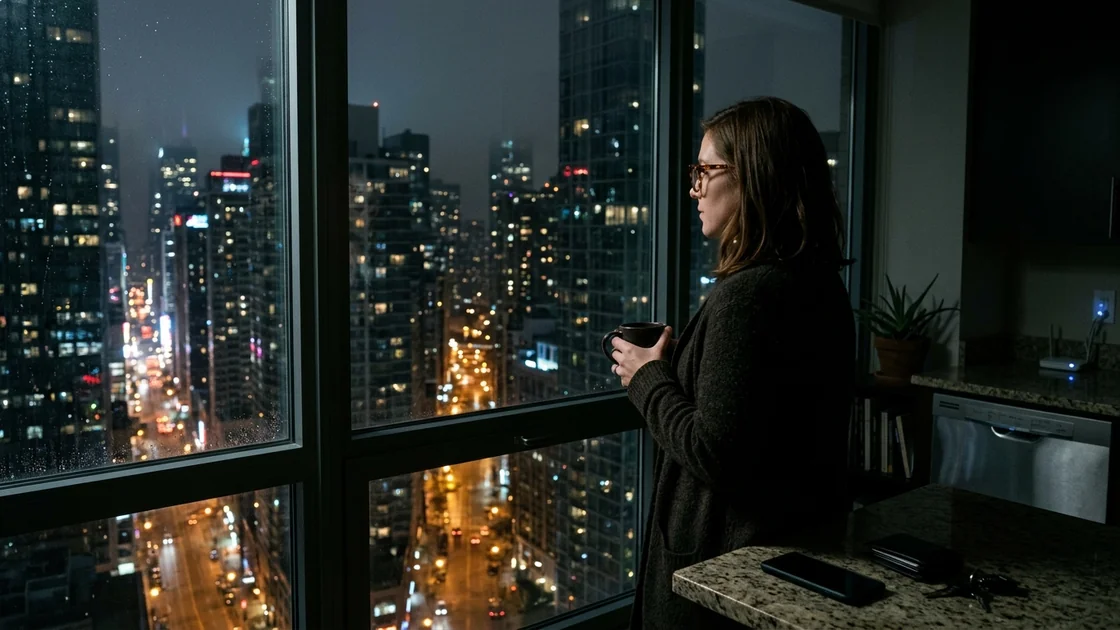
Clara Vance lives a quiet, automated existence in the heart of a sprawling, neon-lit metropolis, eventually realizing that her life is so thoroughly digitized and isolated that not a single person would notice if she disappeared for an entire month. Deciding to test this grim hypothesis, she locks away her phone, abandons her apartment, and checks into a rundown, cash-only hotel just three miles from her home to observe the city as a ghost. Over the course of thirty days, she wanders the crowded streets freed from the burden of identity, finding an unexpected sense of liberation in her absolute anonymity while secretly watching the periphery of her old life. As the month draws to a close and she discovers that the world has indeed spun on effortlessly without her, Clara undergoes a profound internal transformation, deciding to return not to the cage of her invisible routine, but to a newly claimed life driven by genuine human connection and deliberate presence.
Part One: The Architecture of Absence
The revelation did not arrive with the cinematic drama of a thunderclap or a sudden crisis. Instead, it arrived on a Tuesday evening in late October, accompanied by the rhythmic, mechanical hum of a stainless-steel dishwasher and the pale blue glow of a fiber-optic router.
Clara Vance stood in the center of her kitchen, holding a ceramic mug of chamomile tea that had gone entirely cold. Outside her nineteenth-floor window, the metropolis of New Veridian stretched out in an endless, vertical labyrinth of glass, steel, and sodium-vapor light. Millions of people were moving through the arteries of the city below—crowding onto subway platforms, arguing in the back of yellow cabs, laughing under the heated awnings of bistro patios. The city was a roaring, magnificent beast of collective humanity.
And yet, within the climate-controlled box of Apartment 19B, the silence was so absolute that Clara could hear the microscopic settling of dust on her bookshelves.
It had started with a minor bureaucratic anomaly. Earlier that afternoon, the corporate conglomerate for which Clara worked as a senior data archivist—Vanguard Logistics—had announced a mandatory, thirty-day server migration. Because Clara’s specific division dealt exclusively with legacy records from the late twentieth century, her entire department had been placed on an immediate, fully paid administrative hiatus. There were no meetings to attend, no quarterly reports to compile, and no automated check-ins required until the new network architecture went live in precisely four weeks. Her supervisor, a man named Arthur whom she had only ever seen as a pixelated, shoulders-up rectangle on a video conferencing grid, had sent a mass email to the twelve members of the archival team. Enjoy the downtime, the email had read. See you all on November 25th.
When Clara closed her laptop at 4:58 PM, she waited for the familiar weight of obligation to shift toward some other sector of her life. She waited for the mental checklist of social engagements, familial duties, or domestic necessities to populate her mind.
Nothing came.
She walked from her desk to the kitchen counter. She picked up her smartphone. The screen was pristine, devoid of notifications. The last text message she had received was from an automated pharmacy system four days ago, informing her that a prescription for vitamin D supplements was ready for pickup. Before that, a verification code from her banking app. Before that, a message from her mother, dated three weeks prior, sharing a photograph of a moderately successful hydrangea bush in her garden in Oregon, to which Clara had replied with a thumbs-up emoji.
Clara set the phone down on the granite countertop and began to do the math of her own existence.
Her rent was paid via an automatic electronic transfer on the first of every month. Her utilities—water, electric, high-speed internet—were similarly tethered to her checking account, functioning without the need for human intervention. Her groceries were delivered every Friday morning by a rotating cast of gig-economy couriers who left brown paper bags outside her door, snapped a photograph as proof of delivery, and vanished down the service elevator before she even peered through the peephole. The building’s doorman, a rotating shift of three men employed by a third-party security firm, knew her only as a polite nod behind a pair of oversized tortoiseshell glasses. They did not know her name; packages were sorted into an automated locker system in the lobby that opened via a barcode scanned from her phone.
She had no pets. Even her houseplants were resilient, drought-tolerant succulents that thrived on neglect. Her last romantic relationship had ended two years ago, dissolving not in a blaze of passion or betrayal, but in a mutual, exhausted sigh as her ex-partner accepted a transfer to Chicago. Her two closest friends from college had long since migrated to the suburbs, their lives consumed by school board meetings, pediatric dental appointments, and the relentless gravity of nuclear family life. They spoke perhaps once a quarter, exchanging long, apologetic voice notes about how they really needed to get together for drinks soon.
Clara looked down at her hands. They were entirely solid. Warm blood moved beneath her pale skin. She was thirty-four years old, healthy, financially solvent, and living in the most densely populated square mile in the northern hemisphere.
And if she were to walk out her front door tonight and simply cease to exist for thirty days, not a single living soul would notice.
No one would file a missing persons report. No frantic calls would go straight to voicemail. Her employer would assume she was enjoying her paid leave. Her mother would assume she was busy with work. Her neighbors, hidden behind their own heavy fire-rated doors, would assume nothing at all, because to assume something about a person required knowing they were there in the first place.
A strange, cold sensation washed over her, starting at the crown of her head and trickling down her spine. It was not grief, at least not initially. It was the dizzying vertigo of a person who looks down from a high ledge and realizes there is no guardrail—not because it broke, but because no one ever bothered to build one.
"Thirty days," she whispered aloud. Her voice sounded rusty, an instrument left in a damp closet for too long.
She walked into her bedroom and opened the closet. Her clothes hung in a neat, monochromatic gradient: grays, navies, blacks, creams. The uniform of a woman designed to blend into concrete and drywall. When had she built this fortress of frictionless convenience? Every choice she had made over the last decade had been optimized for comfort and safety. Why deal with a chaotic roommate when she could afford a studio alone? Why endure the fluorescent misery of the subway commute when she could petition to work remotely full-time? Why suffer the awkward small talk of the neighborhood grocery store when an algorithm could remember her preference for oat milk and Honeycrisp apples?
She had systematically removed every point of friction from her life, failing to realize that friction was the only thing that proved two surfaces were actually touching.
Clara walked back into the living room and stared at her phone. A bizarre, intrusive thought took root in the quiet soil of her mind. What if she tested it?
Usually, when people fantasized about running away, it was an act of rebellion against overwhelming expectations—a suffocating marriage, a tyrannical boss, crushing debt. People ran away to escape the noise of their lives. Clara had no noise to escape. If she vanished, it wouldn't be an escape; it would be an empirical study. A literal manifestation of her current reality.
If she stayed in this apartment for the next thirty days, she would spend the hiatus scrolling through streaming platforms, reading historical fiction, and ordering takeout, slowly calcifying into the furniture until November 25th arrived. She would remain a ghost haunting her own life.
But if she left—if she stepped out of the frame entirely, stripped of her digital tether, her credit cards, and her routine—what would happen to the space she left behind? More importantly, who would she be when there was no routine left to perform?
The idea was absurd. It was theatrical, slightly unhinged, and entirely unnecessary. Which was, perhaps, why her heart began to beat faster than it had in years.
Part Two: The Mechanics of Erasure
The morning of October 26th dawned gray and crisp, the sky above New Veridian the color of brushed aluminum. Clara woke at 6:00 AM without an alarm, propelled from sleep by a sharp, unfamiliar current of adrenaline.
She did not allow herself time to rationalize the impulse away. If she paused to make a pro-and-con list, the archivist in her would categorize the plan as illogical and file it away indefinitely. Instead, she moved with brisk, methodical precision.
First, she went to the kitchen and opened the delivery app on her phone. She paused her weekly grocery subscription for five weeks. She paused her mail delivery through the postal service’s online portal, selecting the maximum thirty-day hold. She logged into her utility portals to ensure every autopay toggle was switched to green.
Next, she dressed in clothes from the very back of her closet—items she hadn't worn in years. A pair of faded, slightly frayed denim jeans, heavy leather walking boots that needed oiling, a thick woolen sweater the color of dried moss, and a heavy, unbranded canvas parka.
At 9:00 AM, precisely when the lobby of the Continental Trust Bank three blocks away opened its doors, Clara was standing at the teller’s window.
"I'd like to make a withdrawal, please," she said to the young man behind the bulletproof glass. "Three thousand dollars. In twenties and fifties."
The teller blinked, glancing at his screen, then up at her. Large cash withdrawals were increasingly rare in a city where even street vendors took tap-to-pay. "Planning a big purchase, Ms. Vance?" he asked, his voice carrying the mandatory, scripted friendliness of corporate retail.
"Renovations," Clara lied smoothly, surprised by how easily the falsehood slipped out. "My contractor gives a discount for cash."
She took the thick, crisp envelope of currency, slipped it into the inside zippered pocket of her canvas parka, and walked back to her apartment.
The final phase of preparation took twenty minutes. She packed a single, battered nylon duffel bag with four changes of plain clothing, a basic toiletry kit, three thick paperback books she had bought at a library sale years ago and never read, two blank composition notebooks, and a handful of black ink pens. She emptied the refrigerator of anything perishable, tied the trash bag into a tight knot, and dropped it down the incinerator chute in the hallway. She adjusted the apartment thermostat to fifty-eight degrees.
Finally, she stood before the dining table. Upon the polished oak surface, she placed her wallet—containing her driver’s license, her health insurance card, and her three credit cards. Beside it, she placed her apartment keys, keeping only the plastic keyfob required to exit the building's side service door, which she planned to drop into a storm drain the moment she hit the street.
And then, she held her smartphone.
The device felt disproportionately heavy in her palm. It was a black glass monolith containing the entirety of her modern existence: her photographs, her banking access, her medical records, her navigation system, her music, her identity. To turn it off felt slightly like pulling the plug on a life-support machine.
She held down the side button and the volume key. The slider appeared on the screen. Slide to power off.
With a slow, deliberate swipe of her thumb, Clara dragged the icon across the glass. The screen went black, reflecting only the dim outline of her own face—pale, wide-eyed, and startlingly present. She placed the dead phone neatly beside her wallet, picked up her duffel bag, and walked out the door, letting the heavy deadbolt click shut behind her.
She did not take the main elevator to the lobby. Instead, she pushed open the heavy metal door to Fire Stairwell B and began the long, echoing descent down nineteen flights of concrete steps. By the time she pushed through the heavy emergency exit into the damp, garbage-scented alleyway behind her building, her thighs were burning, and her lungs were full of cold autumn air.
She was out.
Part Three: The Sovereign Hotel
Clara did not leave the city. Leaving the city would have invalidated the premise of her experiment. If she went to a cabin in the woods or a beach town down the coast, she would merely be on vacation. The true horror—and the true fascination—of her realization was that she could vanish in plain sight, surrounded by eight million people, within walking distance of her own bed.
She walked south for two hours, crossing the invisible fault lines of wealth and zoning that divided the metropolis. The gleaming glass towers of the financial and residential districts gradually gave way to the squat, brick silhouettes of the garment district, which in turn bled into the chaotic, neon-drenched sprawl of the Lower East Ward. Here, the streets were narrower, the sidewalks cracked and uneven, and the air smelled permanently of roasted chestnuts, diesel exhaust, and wet asphalt.
By noon, she stopped in front of a narrow, six-story building wedged between a wholesale restaurant supply store and a twenty-four-hour laundromat. A vertical sign of rusted metal jutted out from the brick facade, its flickering red neon spelling out: HOTEL SOVEREIGN – TRANSIENTS & WEEKLY RATES.
It was the kind of establishment that existed completely outside the digital ecosystem. It had no website, no presence on travel aggregator apps, and certainly no digital keycards.
Clara pushed through the heavy glass door, which rattled in its wooden frame, and stepped into a lobby that smelled heavily of pine cleaner and old tobacco. The floor was covered in cracked black-and-white linoleum tile. Behind a waist-high mahogany counter reinforced with a partition of scratched plexiglass sat an older man with a shock of white hair, reading a folded newspaper through half-moon spectacles.
He didn't look up as she approached. "Check-in isn't until two," he said, his voice a gravelly baritone.
"I'm looking for a room for a month," Clara said. "Paid in advance. Cash."
That made him look up. He lowered the newspaper slowly, peering at her over the rims of his glasses. He took in her unremarkable canvas parka, the duffel bag gripped in her hand, and the faint, unmistakable posture of middle-class anxiety that she hadn't quite managed to shed. In the Lower East Ward, people who paid cash for a month at the Sovereign were usually running from the law, a violent spouse, or a catastrophic addiction.
"Four hundred a week," the man said flatly. "Sixteen hundred for the month. Plus a two-hundred-dollar deposit in case you decide to set the mattress on fire or rip the copper out of the walls. No visitors after ten. Bathroom's in the room, but the water pressure's terrible on the top floors. No refunds if you leave early."
"That's fine," Clara said. She unzipped her parka, pulled out the bank envelope, and counted out eighteen hundred dollars in crisp fifties, sliding the stack through the curved slot in the plexiglass.
The man picked up the bills, snapped them once to check the paper quality, and pulled a heavy, cloth-bound ledger toward him. He slid a cheap ballpoint pen under the glass. "Sign the book."
Clara looked down at the lined page. There was no request for a driver's license. No credit card imprint. Just a column for a name and a column for a room number.
She picked up the pen. For thirty-four years, she had been Clara Vance, a woman with a credit score of 790, a spotless background check, and a meticulously maintained digital footprint.
In neat, cursive script, she wrote: Jane Archer.
The clerk turned the book around, glanced at the obviously fake name without a flicker of judgment, and reached behind him to a pegboard covered in tarnished brass keys attached to large green plastic diamonds. He tossed number 404 under the slot.
"Fourth floor. Elevator's broke. Stairs are to your left." He went back to his newspaper. "Welcome to the Sovereign."
Room 404 was twelve feet by ten feet. It contained a sagging double bed covered in a thin, mustard-yellow chenille bedspread, a scarred wooden dresser with one missing drawer pull, a single straight-backed chair positioned by a window overlooking the brick wall of the adjacent building, and a radiator that hissed and clanked like a trapped poltergeist. The tiny bathroom featured a clawfoot tub stained blue around the drain and a sink with separate taps for scalding hot and freezing cold water.
There was no television. There was no telephone. There was no Wi-Fi password taped to the mirror.
Clara set her duffel bag on the floor, walked over to the window, and sat down on the wooden chair. She rested her hands on her knees.
For the first twenty minutes, a wave of sheer, unadulterated panic threatened to choke her. What are you doing? a voice in her head screamed. You have a luxury apartment with heated bathroom floors three miles north of here. You have a plush sofa and a fifty-five-inch screen and a kitchen full of organic spices. This is madness. You are playing at poverty like a spoiled tourist.
She gripped the edges of the chair, forcing herself to breathe through the tightness in her chest. Her right hand twitched involuntarily, reaching toward her hip pocket for the familiar rectangle of her phone. She wanted to check the time. She wanted to check the weather. She wanted to scroll through a feed of strangers' opinions just to numb the sudden, terrifying expansion of her own consciousness.
Her pocket was empty.
She didn't even have a wristwatch; she had relied on her phone for the time since her mid-twenties. Looking out the gap between the brick buildings, she could see a sliver of the gray sky. Based on the angle of the light, it was perhaps one-thirty or two in the afternoon. Beyond that, time had lost its granular edges.
Clara sat in that chair as the afternoon light slowly darkened from steel gray to charcoal, then to the bruised purple of city night. She did not unpack. She did not read. She simply sat in the silence of Room 404, listening to the radiator clang and the distant wail of sirens down on the avenue, waiting for the panic to subside.
Around what felt like seven o'clock, her stomach growled loudly. The panic had burned itself out, leaving behind a hollow, exhausted calm. Clara stood up, locked the door of 404 with the heavy brass key, and walked back down into the neon night.
Part Four: The Withdrawal
The first week was defined by physical and neurological withdrawal.
Clara had never considered herself addicted to technology; she didn't have a TikTok account, she rarely posted on Instagram, and she found the performative outrage of social media exhausting. Yet, she quickly discovered that her brain had been fundamentally rewired by the constant availability of instant information and micro-distractions.
On Day Two, while eating a plate of eggs and rye toast at a grease-stained diner called The Acropolis two blocks from the Sovereign, she overheard two men in the booth behind her arguing about the year the Brooklyn Bridge was completed. Instantly, her right thumb twitched. The urge to pull out a screen, type three words, and resolve the ambiguity was almost physical in its intensity. Sitting there, forced to simply not know the answer, felt like an itch in the center of her brain that she couldn't scratch.
On Day Three, it rained—a relentless, horizontal downpour that turned the streets of the Lower East Ward into rivers of oil-slicked slate. Confined to Room 404, the silence became claustrophobic. Without podcasts to fill the air while she washed her face, without background television to soften the edges of the evening, her own thoughts echoed loudly in the small room. She paced the worn carpet from the bed to the window, four steps there, four steps back. She read fifty pages of a paperback novel, lost focus, stared at the water stain on the ceiling that looked vaguely like the Iberian Peninsula, and then read the same fifty pages again because she hadn't retained a single word.
On Day Four, she bought a cheap, ten-dollar plastic Casio watch from a variety store on Grand Street just so she would stop asking strangers for the time.
By Day Six, however, the neurological static began to clear.
With nothing to look at in her hands, Clara was forced to look up.
She began to walk the city with the methodical dedication of a cartographer. Having lived in New Veridian for twelve years, she thought she knew it. She realized now that she had only ever known a series of tunnels and destinations: the subway line from her apartment to her old office, the four-block radius around her grocery store, the curated paths of the central park. She had navigated the city by following a glowing blue line on a glass screen, blind to everything three feet outside her trajectory.
Now, with no destination and no schedule, she let the city pull her wherever its currents flowed.
She discovered the Forgotten Arcade on Fourth Street—a nineteenth-century glass-roofed passageway that had been largely abandoned by modern retail, now housing only an umbrella repair shop, a philatelic dealer whose windows were yellowing with decades-old stamps from fallen empires, and a tiny stall where an ancient man repaired mechanical clocks. Clara stood outside the clockmaker’s window for forty minutes on Day Seven, mesmerized by the magnification lenses strapped to his forehead as he manipulated gears no larger than grains of rice with a pair of silver tweezers.
She discovered the rhythm of the city's daytime labor, a world completely invisible to those who spent nine-to-five staring at spreadsheets. She watched the fishmongers in the river district hosing down the cobblestones at 10:00 AM, their rubber aprons gleaming with scales. She sat on benches in small, concrete pocket parks and watched the nanny brigade—women from the Caribbean and Central America pushing three-thousand-dollar strollers while speaking softly to one another in their native tongues, sharing thermoses of sweet coffee. She watched the old men playing fierce, silent games of Xiangqi in the shadow of the Manhattan Bridge overpass, slamming the wooden disks down onto cardboard boards with the crack of pistol shots.
Because she was not looking at a phone, she became intensely observant. And because she was carrying no markers of status—no designer bag, no gleaming white earbuds, no hurried corporate stride—she became entirely porous to the environment.
In the evening of Day Eight, she opened the first of her blank composition notebooks. Sitting at the small wooden table in The Acropolis, nursing a cup of decaf coffee while rain streaked the front windows, she uncapped a black pen and began to write.
She did not write about herself. She was tired of Clara Vance. Instead, she wrote about the people around her.
The waitress is named Rosa, Clara wrote, her handwriting initially stiff after years of typing, then gradually loosening into flowing loops. She has a faded tattoo of a swallow on her left wrist and wears two different kinds of orthopedic insoles in her white sneakers—I can see the blue edge of one sticking out of the left heel. Every time the bell above the door rings, her right shoulder drops half an inch before she turns around and smiles. She calls everyone 'sweetheart,' except for the man in the corner booth wearing the corduroy jacket with the patched elbows. Him, she calls 'Mr. Miller,' and she brings him his rye toast dry without him having to ask.
"Writing a book, honey?"
Clara blinked and looked up. Rosa was standing beside the table, holding a glass pot of decaf with an orange plastic handle. Up close, the lines around her dark eyes were deep, etched by decades of squinting through diner grease and fluorescent light.
For a second, Clara froze. In her old life, unexpected interactions with service workers were kept strictly transactional: Thank you, no I'm good, just the check please.
"No," Clara said, offering a tentative smile. "Just... trying to pay attention. I think I've been asleep for a very long time."
Rosa didn't look at her as if she were crazy. In the Lower East Ward, saying you felt like you’d been asleep for years was probably the most sane thing Rosa had heard all week. The waitress snorted softly and topped off Clara’s mug.
"Tell me about it," Rosa said, resting a hip against the edge of the laminate booth. "Sometimes I wake up on a Thursday and the last thing I remember clearly is wiping down the pie case on Monday night. The days just grease together if you don't watch out. You new in the neighborhood? I seen you come out of the Sovereign a couple mornings."
"Just staying for a month," Clara said. "My name is... Jane."
"Well, Jane, don't order the clam chowder on Fridays. The delivery truck comes on Tuesday, if you catch my drift. Stick to the lentil soup."
"I'll remember that, Rosa. Thank you."
As the waitress walked away, her white sneakers squeaking softly against the linoleum, Clara felt a strange, warm fluttering behind her ribs. It was a thoroughly mundane interaction—fifty words exchanged over cheap coffee and dietary advice—yet it felt weightier, more real, than any of the hundred digital communications she had conducted over the past year. Rosa had seen her. Not as a demographic, not as an employee ID number, and not as a delivery address, but as a physical woman sitting in a red vinyl booth on a rainy Tuesday night.
Part Five: The Ghost at the Periphery
On the fourteenth day of her disappearance—nearly halfway through the experiment—curiosity finally pulled Clara back north.
She wanted to see the vacuum she had left behind.
She took the subway, paying cash for a single-ride paper ticket at a vending machine, and rode the express train uptown. Emerging from the station at 72nd Street, the sensory contrast was immediate and jarring. Here, the sidewalks were wide and scrubbed clean. The air smelled not of diesel and fried dough, but of expensive floral perfume, roasted arabica beans from minimalist coffee shops, and the sterile, ozonic scent of newly constructed glass towers.
Clara pulled the hood of her canvas parka up, though the afternoon was mild, and stood across the street from her apartment building, The Aurelia.
She leaned against the brick facade of a boutique pet bakery, her hands shoved deep into her pockets, and looked up. Nineteen floors above the street, she counted four windows from the corner on the eastern side. Her windows. The blinds were drawn, just as she had left them.
Down at street level, the brass-trimmed revolving doors of The Aurelia spun in a steady, quiet rhythm. Residents in tailored wool coats and athleisure wear stepped out with their labradoodles; couriers in neon vests arrived with insulated bags of artisanal sushi and dry cleaning; the doorman—today it was the tall, bald one whose name she had never bothered to learn—stood behind the marble podium in the lobby, his eyes fixed downward on the security monitor.
She stood there for two hours.
In her mind, despite all her logical calculations, she had harbored a tiny, secret vanity—a faint hope that her absence might have caused some microscopic ripple in the fabric of this place. Perhaps a neighbor had noticed the lack of footsteps above or beside them. Perhaps a pile of uncollected flyers had jammed her door frame, prompting the building manager to perform a wellness check. Perhaps someone, anyone, had stood in the lobby and asked, Has anyone seen the woman from 19B lately?
Nothing of the sort was happening. The building was a massive, self-cleaning organism. It had simply absorbed her absence without a hiccup. Her apartment was generating its monthly rent; its utilities were paid; it was causing no noise complaints and requiring no maintenance. As far as The Aurelia was concerned, Apartment 19B was operating at peak efficiency. In fact, she was a better tenant now that she wasn't there to flush the toilets or ride the elevators.
At 4:30 PM, she walked three blocks west to the small, glass-walled plaza outside the headquarters of Vanguard Logistics. Though she had worked remotely for the past three years, she used to come into this building every day, and she knew that some of the upper-management personnel from the archival division still kept physical offices on the fourteenth floor.
She bought a hot pretzel from a street cart, sat on the edge of the concrete fountain in the center of the plaza, and watched the revolving doors as the workday ended.
At 5:12 PM, she saw Arthur.
Her supervisor stepped out into the twilight, wearing a navy-blue quilted vest over a checkered button-down shirt, a leather laptop bag slung over his shoulder. He was walking alongside two women from the legal compliance department whom Clara vaguely recognized from company-wide newsletters.
Arthur was laughing. He threw his head back, gesturing with a takeaway coffee cup, clearly in the middle of an anecdote. He walked right past the fountain—no more than fifteen feet from where Clara sat in her faded jeans and olive-green wool sweater, chewing on a piece of salted dough.
His eyes swept over the plaza, passing directly across Clara’s face.
Clara didn't duck. She didn't hide behind her hood. She looked straight at him, meeting his eyes for a fraction of a second.
There was zero recognition. To Arthur, Clara Vance was a voice through a headset and a two-inch square on a monitor, always framed by the neutral beige wall of her apartment's dining nook, always wearing her tortoiseshell glasses and a neat cardigan. Out here in the wild, stripped of her context, dressed like a working-class stranger sitting on cold concrete, she didn't register as human data worth processing. His gaze slid off her as if she were a fire hydrant or a pigeon, and he continued walking toward the subway entrance, still talking about his weekend golf game.
Clara sat on the edge of the fountain until the twilight deepened into night and the plaza lamps flickered on.
She waited to feel hurt. She waited for the crushing weight of insignificance to reduce her to tears. After all, she had just proven her darkest hypothesis beyond a shadow of a doubt: she was entirely replaceable, entirely forgettable, a rounding error in the census of New Veridian.
Instead, as she tossed the last crust of the pretzel to a boldly approaching sparrow, a slow, startled laugh bubbled up from her chest.
If no one knew who she was, then she didn't have to be her anymore.
If Clara Vance was just a collection of automated bank transfers and a two-inch square on Arthur’s screen, then the woman sitting on this fountain—the woman with cold fingers, a pocket full of crumpled twenties, and a notebook full of observations in her bag—was entirely free. No one expected anything of Jane Archer. Jane Archer had no career trajectory to maintain, no lonely apartment to keep immaculate, no pathetic digital breadcrumb trail to curate.
For the first time in her adult life, the realization of her own invisibility didn't feel like a death sentence. It felt like a jailbreak.
Part Six: The Ecosystem of the Unseen
The third week of the month transformed from an endurance test into an immersion. Having severed the phantom limb of her old life at the fountain outside Vanguard Logistics, Clara plunged fully into the ecosystem of the Lower East Ward.
When you have no identity to defend, you become remarkably approachable.
It started in the lobby of the Sovereign. The white-haired clerk—whose name, she learned, was Leonard—was a retired merchant marine who had spent forty years on container ships before his knees gave out, anchoring him permanently behind the plexiglass partition on Eldridge Street.
On Day Sixteen, Clara came down the stairs at 10:00 AM and found Leonard squinting furiously at a pink carbon-copy form from the city's Department of Buildings, muttering profanities under his breath.
"Bad news?" Clara asked, pausing by the counter.
Leonard scowled, tapping the paper with a thick, gnarled forefinger. "Boiler inspection audit. They changed the filing codes again. Used to be you just mailed in the pressure gauge log with a check. Now they want cross-referenced sub-classifications from the municipal registry. The owner's in Florida with gout, and he tells me to 'just figure it out,' like I went to law school instead of running engine rooms in the South China Sea."
Clara looked at the form through the plexiglass. "May I see it?"
Leonard hesitated, then slid the pink sheet and an accompanying four-page booklet of dense, six-point bureaucratic legalese through the slot.
Clara was a senior data archivist. Deciphering labyrinthine, poorly indexed bureaucratic systems was literally what she had been trained to do for a decade. She pulled a pen from her pocket, leaned against the mahogany counter, and read the instructions. Within three minutes, she saw the structural logic of the form.
"Here," she said, flipping to page three of the booklet. "They consolidated the low-pressure steam categories last year. Because this building is six stories and built before 1950, you fall under Exemption Class 4B, not the commercial registry. You only need to fill out boxes one, four, and twelve, and attach the September pressure reading from your maintenance log. You don't even owe the filing fee if it's postmarked before the twentieth."
Leonard stared at her, his mouth slightly open beneath his bushy white mustache. He looked down at the places she had circled in black ink, then back up at her face.
"What did you do before you ended up here, Jane?" he asked quietly. "Rob a bank from the inside?"
"Something like that," Clara smiled, sliding the papers back under the glass. "I used to organize things that nobody cared about."
"Well, I care about not having the city padlock the basement," Leonard grunted, though the hostility that had characterized his demeanor for the past two weeks vanished entirely. The next morning, when Clara came downstairs, there was a fresh, warm honey-glazed cruller from the Polish bakery down the block sitting on a napkin on her side of the plexiglass slot, beside a steaming paper cup of black coffee.
That afternoon, wandering near the riverfront, she stumbled upon St. Jude’s Basement—a cavernous, brick-lined community center underneath a deconsecrated Methodist church. A handwritten cardboard sign taped to the iron railings outside read: PACKERS NEEDED – TUESDAY HARVEST DROP. WALK-INS WELCOME.
In her old life, Clara had donated two hundred dollars every December to the Metropolitan Food Bank via an online portal, receiving an automated tax receipt via email three seconds later. It was clean, efficient, and required no contact with actual hunger.
Now, with six hours of daylight to fill and an increasing desire to use her hands for something other than holding a pen, she walked down the stone steps.
The basement was loud, chaotic, and smelled strongly of damp earth, onions, and corrugated cardboard. Three long wooden tables were piled high with crates of imperfect produce trucked in from upstate farms—twisted carrots, bruised apples, forty-pound sacks of russet potatoes, and mountains of dark green cabbage. Around the tables stood a dozen people: retirees in tracksuits, college students with nose rings, and several residents from the neighborhood shelters.
A tall Black woman with silver braids piled high on her head and a clipboard tucked under her arm spotted Clara hovering by the door.
"You here for a box, or you here to pack 'em?" the woman called out over the din of a portable radio playing classic soul music.
"To pack," Clara said.
"Grab an apron from the hook, wash your hands at the utility sink, and get on the potato line next to Mateo. Five pounds to a mesh bag, tie it tight, toss it in the blue crate. I'm Evelyn."
"Jane," Clara said.
For the next four hours, Clara stood beside Mateo—a quiet, broad-shouldered man in his sixties who spoke very little English but communicated with an expressive series of nods, grins, and rapid hand gestures—scooping heavy, dirt-crusted potatoes into mesh bags until her lower back ached and her fingernails were rimmed with gray soil.
It was exhausting. Her hands developed raw red blisters at the base of her thumbs from pulling the coarse plastic drawstrings tight. Her knees throbbed from standing on unyielding concrete.
And she loved every second of it.
She loved the weight of the food. She loved the immediate, undeniable utility of the task: there was a pile of loose food here, and by five o'clock, because of the sweat of her body and the bodies standing next to her, there were four hundred bags of food ready to be handed to families who needed to eat tonight. There was no ambiguity. There was no server migration. There was no wondering if her existence had any tangible impact on the physical world.
When the last crate was loaded onto the hand trucks at 5:30 PM, Evelyn handed out styrofoam bowls of thick vegetable stew and heels of crusty bread to the volunteers. Clara sat on an upturned milk crate beside Mateo and an eighty-year-old former seamstress named Mrs. Gable, eating the hot stew with a plastic spoon while Mrs. Gable launched into a long, scandalous story about a landlord she had feuded with in 1978.
Clara listened, laughing until her sides hurt, her dirty hands wrapped around the warm styrofoam bowl.
When she walked back to the Sovereign that night, the city looked different. The neon signs reflecting in the puddles didn't look cold or alienating; they looked like campfires scattered across a dark plain. She wasn't invisible anymore—not here. When she passed the newsstand on the corner of Broome, the vendor raised a hand in greeting because she bought the morning paper from him every day. When she walked past The Acropolis, Rosa was wiping down a front table and tapped the glass with her rag, flashing a tired smile. When she walked into the lobby of the Sovereign, Leonard nodded over his newspaper and said, "Evening, Jane. Radiator in 404 behaving itself?"
"Clanking like a marching band, Leonard," she replied cheerfully. "I'd miss it if it stopped."
She realized, as she climbed the four flights of stairs to her room, what had been wrong with her life uptown. In Apartment 19B, she had bought into the modern delusion that independence meant never needing anyone, and never being needed by anyone in return. She had built a life where every human interaction was mediated by a screen and a credit card, stripping away the messy, inconvenient obligations of community.
Down here, in the friction of the Lower East Ward, people bumped into one another. They owed each other favors. They borrowed pens, shared information about broken boilers, warned each other about bad clam chowder, and lifted heavy crates together when someone’s back gave out. They were tethered to one another by a thousand tiny, frayed threads of mutual reliance.
Part Seven: The Deepening of Jane
By the fourth week, the notebook on the scarred dresser in Room 404 was nearly full, and Clara had started on the second one.
Her writing had changed. In the beginning, her entries had been the detached, clinical observations of an outsider watching a foreign species through a window. Now, the pages were filled with dialogue, sketches of street corners, recipes Mrs. Gable had dictated to her over potato bagging, and long, honest excavations of her own past.
On Day Twenty-Three, sitting by the window as the first light snow of late November dusted the brick wall opposite her room, she wrote about how she had become Clara Vance.
She wrote about her father, a quiet, anxious accountant who had died when she was twenty-two, whose primary advice to his only daughter had always been: Get a stable job with a pension, Clara. Keep your head down, save your money, and don't rely on other people, because people will always let you down.
She had taken his fear and built a cathedral out of it. When her heart was broken in her twenties, she retreated further. When the pandemic hit and remote work became the norm, she welcomed the isolation like a warm blanket, mistaking the absence of pain for the presence of peace. Year by year, her world had shrunk until it was no larger than the square footage of her apartment, and she had convinced herself that this smallness was maturity.
That afternoon, after her shift at St. Jude’s Basement, Evelyn stopped her before she could put her coat on.
"We've got a problem with the Thanksgiving distribution list for next week," Evelyn said, rubbing her temples where a tension headache was clearly brewing. "The church youth group tried to transfer five years of paper sign-up sheets into a spreadsheet so we can coordinate delivery routes for the homebound seniors. It’s a disaster. Duplicate names, missing zip codes, streets spelled four different ways. Half the volunteers are going to end up driving in circles while the turkeys go cold."
Clara’s pulse jumped. "How many records?"
"About twelve hundred households," Evelyn sighed. "I don't have the budget to hire a temp agency, and my eyes cross if I look at Excel for more than twenty minutes."
"Do you have a computer in the office?" Clara asked.
"An old Dell desktop that sounds like a helicopter taking off, yeah. Why?"
"Give me the paper binders and the password," Clara said, taking her canvas parka back off and hanging it on the peg. "And maybe a pot of coffee. I can have it cleaned, cross-referenced by zip code, and sorted into logical walking and driving grids by tomorrow afternoon."
Evelyn stared at her for a long moment, her dark eyes narrowing in sudden comprehension. She looked at Clara’s calloused hands, her cheap plastic watch, and her articulate, unhurried posture. Evelyn was too wise, and had worked in the Lower East Ward too long, to pry into a volunteer’s past, so she simply smiled—a slow, radiant expression that transformed her tired face.
"You're an angel, Jane. Or an accountant on the run. Either way, the office is through that door."
For the next two days—Day Twenty-Four and Day Twenty-Five—Clara worked ten-hour stretches in the cramped, windowless church office, surrounded by towering stacks of dog-eared three-ring binders.
It was the exact same skill set she used at Vanguard Logistics, yet the sensation of doing the work could not have been more different. At Vanguard, she was archiving maritime shipping manifests from 1994 so that corporate lawyers could occasionally reference them in insurance disputes. Here, every line of data she cleaned had a pulse. Maria Gonzalez, 84, Apt 3F—no elevator, diabetic, needs low-sodium box, ring bell twice because she moves slow.
As she cross-referenced the addresses against a physical folding map of the ward taped to the cinderblock wall, she realized she knew almost every street on the list. She had walked them. She knew that Allen Street had construction blocking the east sidewalk; she knew that the tenements on Forsyth had tricky rear-courtyard entrances that delivery drivers always missed; she knew which buildings had broken buzzer systems because she had watched the mail carriers navigate them during her morning walks.
She added a "Notes for Driver" column to the spreadsheet, typing in her hard-won street knowledge with rapid, flying fingers.
When she printed out the final, color-coded master routing binders on the evening of the twenty-fifth day, Evelyn paged through them in stunned silence.
"Jane," Evelyn said softly, running her fingers over the neatly organized grids and turn-by-turn neighborhood notes. "This isn't just a list. You just saved us about forty hours of labor. Every single one of those old folks is going to get hot food on Thursday because of this."
Clara stood by the humming desktop printer, smelling the warm toner and the damp basement air. A lump rose in her throat, so sudden and thick that she couldn't speak. She simply nodded, her eyes stinging with tears she hadn't cried in years.
Someone was going to eat because she had paid attention. Someone’s grandmother was going to have her doorbell rung twice because Clara Vance had decided to disappear.
Part Eight: The Thirtieth Day
The morning of November 24th arrived with a brilliant, crystalline cold. It was the thirtieth day. Tomorrow, November 25th, Vanguard Logistics’ new server architecture would go live at 9:00 AM, and Clara Vance was scheduled to log into the network from Apartment 19B.
Clara woke early in Room 404. The mustard-yellow bedspread, which had disgusted her on the first day, now felt like an old acquaintance. The rhythmic clanking of the radiator was the comforting heartbeat of the building.
She packed her nylon duffel bag slowly. Her clothes were worn softer now; her leather boots were scuffed at the toes and stained with salt and potato dirt. She placed the two filled composition notebooks safely between her sweaters.
She did not leave anything behind in the room, except for the three hundred dollars she had left over from her original withdrawal. She slipped the bills into an envelope, wrote For the boiler fund — Thank you, Leonard on the front, and propped it against the base of the bruised brass lamp on the dresser, where the maid wouldn't mistake it for a tip, knowing Leonard checked the rooms himself after a monthly tenant checked out.
Downstairs, the lobby was quiet in the pale morning light. Leonard was behind the plexiglass, drinking tea from a chipped mug.
Clara slid the heavy brass key with the green plastic diamond through the slot.
Leonard looked at the key, then up at her. "Month's up already?"
"Thirty days," Clara said.
"Going back to wherever it was you came from?"
"Going back to pack it up," Clara said, and as the words left her mouth, she realized they were entirely true. "Then I might be looking for a real lease down this way. Somewhere with a working elevator, maybe, if my back stays sore from St. Jude’s."
Leonard’s weathered face creased into a rare, genuine grin. "Stay away from the buildings on Ludlow, the pipes are original lead. Try the brick walk-ups over by East Broadway. Mrs. Kowalski’s got a two-bedroom on the second floor opening up in December. Tell her Leonard from the Sovereign sent you, she won't gouge you on the security deposit."
"I'll do that, Leonard. Take care of yourself."
"See you around the neighborhood, Jane."
"Actually," she paused with her hand on the brass push-bar of the front door, turning back to look at him in the morning sun. "It's Clara."
Leonard nodded once, accepting the correction without surprise. "See you around the neighborhood, Clara."
She stopped at The Acropolis one last time before heading north. She ate two eggs over-easy with rye toast, drank two cups of Rosa’s terrible decaf coffee, and left a fifty-dollar bill under the salt shaker. She didn't say a dramatic goodbye to Rosa, nor had she said one to Evelyn and Mateo the evening before; she had simply promised Evelyn she would be back on Thursday morning at 6:00 AM to help load the Thanksgiving delivery vans. It wasn't a goodbye if you had no intention of vanishing again.
At 11:00 AM, Clara took the subway uptown.
When she emerged at 72nd Street, the glass towers of her old neighborhood gleamed against the bright blue sky. She walked up to the main entrance of The Aurelia, pushed through the revolving doors, and walked straight up to the marble concierge desk.
The tall, bald doorman looked up, offering his standard, blankly polite customer-service nod to a woman he assumed was a visiting relative or a housekeeper, given her faded canvas parka and nylon duffel bag. "Can I help you, ma'am?"
"Good morning," Clara said clearly. "I'm Clara Vance, in 19B. I lost my keyfob while I was away for the month, and my physical keys are locked inside. Could you let me up and issue a spare?"
The doorman blinked, surprised by the direct eye contact and the steady, warm authority in her voice. "Oh—of course, Ms. Vance. Just need to verify your ID in the system..."
"My ID is upstairs on my dining table," Clara said, smiling slightly. "Along with my phone and my wallet. Have a look at my resident photo on your screen. I'm just not wearing my glasses."
The man looked down at his monitor, tapped a few keys, and squinted at the five-year-old corporate headshot on file, then back up at the woman standing before him—her cheeks ruddy from the November wind, her hair slightly wild, her eyes bright and unshielded.
"Right you are, Ms. Vance," he said, pulling a master keycard from the drawer. "Apologies. Didn't recognize you without the frames. What's your name, by the way? I've lived here four years and I realized I've never introduced myself."
The doorman paused, looking genuinely startled by the question. "It's Marcus, ma'am. Marcus Vance—no relation, I guess!" He chuckled.
"Nice to finally meet you, Marcus. Thank you."
When Marcus unlocked the heavy fire door of Apartment 19B and handed her the temporary keycard, Clara stepped inside and closed the door softly behind her.
The apartment was tomb-quiet. The air was dry, stale, and smelled faintly of lemon floor polish from a month ago. The pristine gray sofa, the minimalist glass coffee table, the rows of untouched hardcover books, the drought-tolerant succulents on the windowsill—everything was frozen in amber, exactly as she had left it on the morning of October 26th.
She dropped her duffel bag on the parquet floor and walked over to the oak dining table.
There lay her wallet, her keys, and the black glass rectangle of her smartphone, covered in a thin, barely perceptible film of dust.
Clara stood over the table, her heart beating a steady, calm rhythm against her ribs. This was the final phase of the experiment. The data collection. She picked up the phone, plugged the charging cable into the wall, and held down the power button.
The white logo appeared on the screen. For sixty seconds, the device hummed and warmed in her palm as it reconnected to the fiber-optic router, reaching out into the invisible digital ether to pull down thirty days of accumulated life.
The lock screen illuminated. And then, the chimes began.
Ding. Ding. Ding-ding-ding.
Clara watched as the notification banners cascaded down the glass like a slot machine hitting a meaningless jackpot.
247 Unread Emails. 42 Text Messages. 14 Voicemails.
Her breath caught slightly. Fourteen voicemails? Forty-two texts? Had she been wrong? Had someone noticed after all? Had her mother panicked? Had a friend come looking for her?
With steady fingers, she unlocked the phone and opened the messaging app first, scrolling through the forty-two texts from bottom to top.
Twelve were automated political campaign messages urging her to vote in the municipal elections on November 5th. Nine were promotional codes from retail brands she had bought clothes from years ago, announcing early Black Friday sales. Six were automated alerts from her credit card companies sending her monthly statement summaries (Balance: $0.00). Five were from her pharmacy, reminding her about the vitamin D supplements, followed by an automated notice that the prescription had been returned to stock. Eight were delivery confirmations and marketing texts from her grocery app, offering her $15 off if she unpaused her subscription.
And two were from her mother. One on November 3rd: Dad’s old cousin Gary passed away, funeral is in Ohio, we aren't going. Hope work isn't too crazy! Love Mom. And one from four days ago, on November 20th: Are you coming out to Oregon for Christmas this year or staying in the city? Let me know by December so I can order the ham.
Not a single text asked where she was. Because she hadn't replied to the November 3rd message, her mother had simply assumed she was busy, just as she always was.
Clara closed the messaging app and opened her voicemail log. Fourteen messages.
Six were robocalls in Mandarin. Four were automated calls about her non-existent car's extended warranty. Two were from the alumni association of her university asking for an annual pledge. One was from her dentist’s office reminding her she was due for a six-month cleaning in December.
The final voicemail was from yesterday afternoon. It was from Arthur’s administrative assistant at Vanguard, leaving a routine reminder to all twelve members of the archival team that their new login credentials had been sent to their corporate email addresses ahead of Monday's launch.
Clara opened her email inbox. Two hundred and forty-seven messages of newsletters, substacks, bank statements, terms-of-service updates, and retail flyers.
She set the phone back down on the oak table.
The hypothesis was confirmed. One hundred percent accuracy. She had dropped off the face of the earth for thirty days—720 consecutive hours—and the grand totality of the world's concern amounted to an automated pharmacy returning a bottle of vitamins to the shelf.
If she had died on the kitchen floor on October 26th, she would still be lying there today, and no one would have come knocking until the lease expired in May.
Clara looked around the immaculate, silent box of Apartment 19B. A month ago, this confirmation would have shattered her. It would have felt like the ultimate indictment of her worth as a human being.
Today, standing in her mud-stained boots with her calloused hands resting on the polished oak table, she looked at the glowing screen of her phone and felt only a profound, overwhelming sense of relief.
The woman who had lived in this apartment—the quiet, frightened archivist who had optimized her life for safety and convenience until she was nothing more than a ghost—really had died on October 26th. And because nobody had noticed she was gone, nobody could stop the woman who had walked back through the door in her place.
Clara didn't sit down on the gray sofa. Instead, she picked up the phone, scrolled to her Contacts list, and pressed her thumb against the first name that mattered.
She lifted the phone to her ear and listened to it ring once, twice, three times, picturing the kitchen in Oregon with the yellow curtains and the porcelain rooster on the windowsill.
"Hello?" Her mother's voice crackled through the speaker, sounding slightly surprised. Clara never called in the middle of the day; Clara only ever sent texts.
"Hi, Mom," Clara said, walking over to the nineteen-floor windows and pulling the cords to raise the blinds, flooding the dusty room with blinding, magnificent November sunlight.
"Clara! Well, this is a nice surprise. I was just about to go water the porch pots. Everything okay at work?"
"Everything is changing, actually," Clara said, leaning her forehead against the cool glass and looking down at the teeming, chaotic, glorious arteries of the city below. "Don't order the ham in Oregon this year. Why don't you fly out here for Christmas instead? I'm moving into a new place next month—a two-bedroom down on East Broadway. It's noisy, and the stairs are a little steep, but there's a great bakery on the corner, and I have plenty of room for you."
There was a long pause on the other end of the line. "A new place? You're leaving your building? Why on earth would you do that, sweetheart?"
Clara smiled at her reflection in the sun-drenched glass. She looked solid. She looked entirely, undeniably there.
"Because it was too quiet," Clara said. "Stay on the line, Mom, let me pull up the flights. I have so much to tell you."