The Golden Cage of Aethelgard
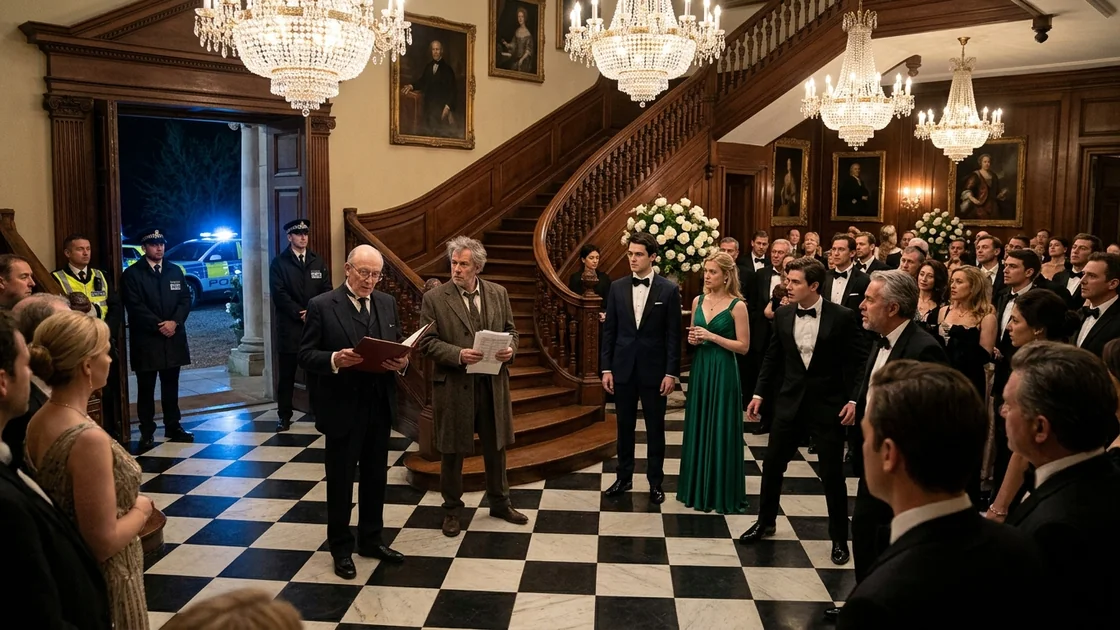
Arthur Pendelton, the twenty-four-year-old heir to the sprawling Pendelton shipping and industrial fortune, discovers through a series of accidental eavesdropping and a staged financial ruin that every single person in his inner circle—his doting fiancée Clara, his lifelong best friend Julian, his surrogate father and legal guardian Uncle Richard, and even the household staff who raised him—are only pretending to care for him to secure their share of his multi-billion-dollar inheritance. Following the fabricated announcement of his bankruptcy on the eve of his twenty-fifth birthday, Arthur watches the masks of affection drop one by one in a brutal display of greed and betrayal, ultimately leading him to sever all ties with his toxic past, reclaim his vast wealth in secret, and walk away into an anonymous, authentic life where his worth is not measured by his bank ledger.
Chapter 1: The Velvet Noose
The grandfather clock in the main gallery of Aethelgard Manor did not merely tick; itpronounced the passage of time with the heavy, deliberate cadence of a judge’s gavel. Each swing of the brass pendulum behind its beveled glass door seemed to remind Arthur Pendelton of what was approaching. In seventy-two hours, he would turn twenty-five. Under the stipulations of his late father’s ironclad will, the labyrinthine trusts, the offshore holding companies, the fleet of deep-sea container vessels, and the prime metropolitan real estate portfolio would pass from the stewardship of the board of trustees directly into Arthur’s solitary control.
He stood on the mezzanine balcony, looking down into the great hall where preparations for his birthday gala were underway. Four dozen white roses were being arranged into a singular, monolithic centerpiece by three florists who whispered to one another as if they were working in a cathedral. Below him, the black-and-white checkered marble floor was polished to such a high sheen that it reflected the crystal chandeliers like a dark, indoor lake.
"You look like a king surveying a realm he isn't quite sure he wants to conquer," a soft voice murmured against his shoulder.
Arthur turned to find Clara standing behind him. She was wearing a cashmere wrap the color of cream, her blonde hair swept up in that effortlessly messy way that he knew took her stylist at least forty minutes to achieve. She smiled, her blue eyes crinkling at the corners, and reached up to adjust the lapel of his bespoke tweed jacket. Her fingers lingered over his heart.
"Just thinking about the noise," Arthur said, offering her a small, genuine smile. "Your mother has invited half the senate, hasn't she?"
"Only the ones who know how to hold their champagne," Clara laughed, a light, musical sound that had charmed him since the night they met at the winter charity ball two years ago. She leaned her head against his arm, looking down at the bustling staff. "They’re here to celebrate you, Arthur. You’ve been tucked away in this house for too long. Richard says it’s time the world saw the man behind the name."
At the mention of his uncle, Arthur’s gaze drifted toward the mahogany double doors of the library on the ground floor. As if summoned, the doors parted, and Richard Pendelton emerged, deep in conversation with Julian Vance, Arthur’s best friend since their boarding school days at St. Jude’s.
Richard was fifty-eight, with a silver mane of hair and the posture of a retired general. Since the private plane crash over the Atlantic that had claimed Arthur’s parents ten years ago, Richard had been the rock upon which Arthur’s fractured life was rebuilt. He had stepped away from his own law practice to manage the estate’s transitional phase, moving into the east wing of Aethelgard to ensure his fourteen-year-old nephew was never alone in the echoing mansion.
Julian, walking beside the older man, looked up and caught Arthur’s eye. He grinned, flashing the easy, reckless smile that had gotten them out of a dozen scrapes at Oxford, and mimed raising a glass. Julian was an aspiring architectural developer; Arthur had already promised to fund his first solo venture—a sustainable housing complex in the docklands—the moment the ink dried on the transfer documents this Friday.
"They adore you, you know," Clara whispered, kissing his cheek. "We all do. I don't think I've ever met a man so entirely surrounded by people who would walk through fire for him."
"I'm lucky," Arthur said. And in that moment, with the scent of white roses drifting upward and the warmth of Clara’s hand in his, he believed it entirely. He had lost his parents to the cold black waters of the ocean, a trauma that still visited him in nightmares of falling and salt water, but fate had compensated him with a fortress of devotion.
Even Mrs. Gable, the housekeeper who had bandaged his scraped knees when he was six and sat by his bed when he had pneumonia at twelve, was down there, briskly directing the caterers with a protective scowl, making sure Arthur’s favorite single-malt Scotch was placed at the private bar in the conservatory, away from the grasping hands of the minor guests.
"Come down," Clara urged, tugging gently at his sleeve. "The tailor is waiting in the morning room for the final fitting of your tuxedo, and Julian wants to go over the seating chart for the young patrons' table. He’s trying to sit next to that cellist from Vienna."
"Tell Julian I’ll be down in ten minutes," Arthur said. "I left my father’s watch in the north solarium. I want to make sure the clasp is tight before Friday."
"Don't be long, darling." She brushed her lips against his, a fleeting, velvet touch, before descending the grand staircase with the practiced grace of the future mistress of Aethelgard.
Arthur watched her go, feeling a familiar, quiet ache in his chest. Sometimes, the sheer weight of the Pendelton legacy felt suffocating. Every room in the house was a museum to dead men’s triumphs. The oil portraits of his ancestors stared down with severe, acquisitive eyes. He didn't care about the shipping lanes or the mineral rights in Western Australia. He cared about his rare book collection, his quiet mornings rowing on the estate’s lake, and the small circle of people who saw him simply as Arthur, not as a walking sovereign wealth fund.
He turned and walked down the long, carpeted corridor toward the north wing. The house was old, built in the late eighteenth century over the foundations of an even older priory, and its layout was eccentric. Between the main hallways ran a series of narrow service passages and ventilation shafts, originally designed so the nineteenth-century servants could stoke the coal fires in the walls and move from room to room without offending the delicate sensibilities of the gentry by being seen.
Arthur reached the north solarium, a glass-domed room filled with ferns and citrus trees. He found the Patek Philippe watch resting on a cast-iron side table beside a half-read copy of Marcus Aurelius’s Meditations. He slipped the heavy gold timepiece onto his wrist. It had been recovered from his father’s desk; he hadn't worn it on the flight.
As Arthur turned to leave, he noticed that the small paneled door at the back of the solarium—one of the old service accesses that led behind the upstairs sitting rooms—was slightly ajar. A draft was blowing through it, rustling the leaves of a lemon tree.
Frowning, assuming one of the temporary catering staff had gotten lost and left it unlatched, Arthur stepped over to pull it shut. As his hand touched the brass knob, he heard his own name spoken through the hollow acoustic chamber of the wall.
The passage ran directly behind the "Blue Parlor," a small, soundproofed sitting room where Clara and Julian often hung out when visiting. However, the soundproofing had been installed in the 1980s on the interior walls facing the main corridor; nobody had bothered to insulate the brick backing that bordered the disused servant's chute, where an old brass speaking tube and an iron heat grate still sat flush with the floorboards.
"If I have to let him paw at me with those damp, pathetic little hands for one more month without a ring on my finger that actually grants me power of attorney, I’m going to throw myself off the parapet," Clara’s voice floated up through the iron grate, crystal clear, stripped of its usual breathless melody. It was hard, flat, and nasal.
Arthur froze. His hand remained welded to the brass knob. His brain, so accustomed to the narrative of his life, initially refused to attribute the voice to his fiancée. He thought perhaps a television had been left on.
Then Julian laughed. It wasn't the warm, boyish bark Arthur knew. It was a low, raspy chuckle, followed by the clink of glass against crystal.
"Patience, darling," Julian said. The familiarity in the word darling—the sheer, practiced intimacy of how it rolled off Julian’s tongue—struck Arthur like a physical blow to the solar plexus. "Seventy-two hours. That’s all. Once he signs the omnibus transfer on Friday morning, the discretionary clauses dissolve. He’s already instructed Richard’s clerks to draw up the pre-nuptial waiver you cried about last week, and my seed capital for Vance Developments is sitting in the escrow queue."
"Fifty million," Clara scoffed. Through the narrow slats of the old ventilation grate, which sat at eye level in the sunken passage, Arthur stepped silently inside the dark space and looked through.
Clara was lounging on the velvet settee, her shoes kicked off, swirling two fingers of Arthur’s rare Macallan in a tumbler. Julian stood behind her, his hands resting inside the collar of her cream cashmere wrap, his thumbs lazily massaging the base of her throat. Clara leaned her head back against Julian’s stomach, closing her eyes.
"Fifty million is pocket change compared to the liquid reserves," Clara said, rolling her head to kiss the inside of Julian’s wrist. "And we have to split that fifty with my mother’s creditors before we even touch it. You should have pushed him for a hundred. The idiot doesn't know what a dockland permit costs. You could have told him the dirt was made of platinum and he would have written the check just to see you smile. God, the way he looks at you, Julian. Like a kicked spaniel waiting for a biscuit."
"He’s lonely," Julian said, his tone devoid of pity, merely stating a tactical advantage. He bent down and kissed Clara deeply on the mouth. Arthur watched, the blood roaring in his ears like the cold Atlantic surf of his nightmares, as his best friend’s hand slipped beneath his fiancée’s blouse. "Lonely men with guilt complexes are the easiest marks in the world. Have been since we were twelve. Why do you think I let him copy my Latin exams at St. Jude’s? My old man told me the day Arthur’s parents went into the drink: ‘Stick to that boy like glue, Jules, and you’ll never have to work a day in your life.’ Best advice my father ever gave me before he drank himself to death."
"It’s exhausting, though," Clara sighed as Julian broke the kiss, her lipstick slightly smeared—the same lipstick she had brushed against Arthur’s cheek five minutes ago. "Listening to him drone on about his dusty old books. Pretending I want to live in this drafty mausoleum. Do you know he actually suggested we spend our honeymoon in the Scottish Highlands? Walking in the rain? Looking at sheep?"
Julian laughed again, moving around the settee to sit beside her, pulling her legs across his lap. "Give it a year, Clara. One year of marriage to establish the communal residency in the state courts, then we leak a few stories about his 'unstable mental state'—which, frankly, won't be hard, given how he broods about his dead parents—and you file for an uncontested settlement.Or better yet, get him back on those sleeping pills he took after Oxford. Mix a few with his evening brandy while he's out on that rowboat he loves so much. Tragic accident. Runs in the family."
"Don't talk like that here," a third voice said sharply.
Arthur’s heart, which had felt as though it were turning to stone, seemed to stop beating entirely.
The door to the Blue Parlor had opened and closed quietly. Richard Pendelton stood by the mantelpiece. He wasn't looking at Julian’s hands on Clara’s thighs with shock or outrage. He looked merely annoyed, like a corporate director dealing with two indiscreet junior executives.
"The acoustics in this house are unpredictable," Richard said, walking over to the sideboard and pouring himself a drink. "If one of the temp staff hears you two rutting like alley cats before the wedding, or talking about rowboats, I’ll cut you both out of the restructuring before Friday even arrives. Do you understand me?"
Julian took his hands off Clara and sat up straighter, a flicker of genuine caution crossing his face. "Relax, Richard. The hall is empty. Arthur’s upstairs hunting for his daddy’s watch like a good little orphan."
"Never underestimate the stupidity of greed," Richard said coldly. "I have spent ten years cultivating that boy. Ten years of listening to his teenage angst, ten years of pretending to respect my brother’s idiotic philanthropic wishes, ten years of covering up my own margin calls with creative accounting in the sub-trusts. If Arthur doesn't sign the blanket indemnity and power-of-management release on Friday morning, the auditors from Zurich will be here by Monday noon, and I won't be going to prison alone, Julian. Your signature is on those fraudulent consulting invoices from Cayman."
"He’ll sign," Clara said, sitting up and smoothing her hair, her face hardening into a mask of cold calculation that made her look ten years older. "He worships you, Richard. Yesterday he told me he wants to commission a portrait of you to hang next to his father’s in the great hall. It took everything in me not to laugh in his face."
Richard’s expression softened into a smug, disdainful smirk. "My brother was a sentimental fool, and he raised a weakling. Thomas always thought money was a 'stewardship.' Arthur is the same. He wants to give thirty percent of the shipping dividends to ocean conservation. Can you imagine? Three hundred million dollars to save some whales, while I’ve had to beg the board for every stipend."
"Well, come Friday at ten o'clock, the whales are out of luck," Julian said, raising his glass in a mock toast. "And by Saturday, you’ll have full operational control, I’ll have my fifty million, and Clara will be on the clock for the big payout."
"Just keep your hands off each other during the gala," Richard warned, setting his empty glass down. "Mrs. Gable is already asking why Julian’s car is always parked by the guest house when Arthur is in the city."
"Oh, please, Gable is on the take just like the rest of us," Clara sneered. "How much are you paying the old bat to keep feeding him those mild sedatives in his evening tea so he sleeps through the night and doesn't wander the halls?"
"Enough to buy her a cottage in Surrey when we shut down the main house next year," Richard replied matter-of-factly. "She’s been skimming from the household petty cash since Thomas was alive. When I caught her six years ago, we came to a very simple arrangement. She plays the doting nanny, keeps the boy docile and guilty about wanting to leave the estate, and I don't call the police—plus a half-million-dollar retirement bonus on Friday."
In the darkness of the narrow brick passage, Arthur did not breathe. He did not tremble.
A strange, glacial calm descended over him, starting at the crown of his head and flowing down to his fingertips. It was the psychological equivalent of shock after a traumatic amputation; the pain was too massive for the nervous system to register all at once, so the brain simply shut off the receptors.
Mrs. Gable. The sedatives in the tea. The reason he always felt so groggy in the mornings, the reason he had come to rely so heavily on Richard to handle the morning briefings with the lawyers because his own head felt stuffed with cotton until noon.
Ten years.
Every hug from his uncle after a nightmare. Every late-night talk with Julian about their dreams. Every whispered I love you from Clara in the dark. Every warm cup of chamomile handed to him by the woman who had practically raised him.
None of it was real. He was not a person to them. He was livestock. He was a prized calf being fattened, soothed, and led gently down a chute toward the bolt gun on his twenty-fifth birthday.
Arthur slowly stepped backward in the dark passage, placing the balls of his feet on the crossbeams so the floorboards wouldn't creak. He pulled the small paneled door shut with millimeter precision, letting the latch click home only when it was muffled by his handkerchief.
He stood in the bright, sunlit solarium among the lemon trees. He looked down at his father’s watch on his wrist. The second hand swept forward, smooth and relentless.
Seventy-two hours.
Chapter 2: The Anatomy of a Ghost
Arthur walked down the grand staircase ten minutes later. To anyone watching—and he now knew they were all watching, always watching—he looked entirely unchanged. He had paused before a gilded mirror in the upper gallery, expecting to see a hollowed-out wraith staring back at him. Instead, he saw the same pale, dark-haired young man with the slightly stooped shoulders of a scholar and the polite, apologetic eyes of an heir who felt guilty for his own fortune.
He straightened his spine by half an inch. Not enough for them to notice. Just enough to breathe.
In the morning room, the tailor, Monsieur Laurent, was pinning the cuffs of Arthur’s midnight-blue tuxedo trousers. Julian was lounging in an armchair by the window, flipping through a magazine, while Clara stood by the three-way mirror, holding two different silk bowties up to the light.
"There he is," Julian said, flashing that boyish grin. "We thought you’d fallen into the fern pots up there. Come on, let’s get you pinned up so we can go shoot some billiards. I owe you a rematch after yesterday."
Arthur stepped onto the low wooden pedestal. He looked at Julian in the mirror. Now that the blindfold had been ripped away, the signs were glaringly obvious, like brushstrokes on a forgery that you only notice once an expert points them out. The smile didn't reach Julian’s eyes; his gaze lingered for a fraction of a second on the Patek Philippe on Arthur’s wrist before flicking up to Arthur’s face. And when Clara stepped forward to hold the black bowtie against Arthur’s throat, he smelled Julian’s sandalwood cologne on her wrists, underneath her floral perfume. He had smelled it before—weeks ago, months ago—and his mind had simply dismissed it because Julian was always around.
"The black silk, I think," Clara said softly, her eyes shining with simulated adoration. "You look so handsome, Arthur. Your father would be so proud to see you standing here."
"Thank you, Clara," Arthur said. His voice sounded remarkably normal. Perhaps a touch quieter than usual. "And you’re right. My father was a very perceptive man. I’ve been thinking about him a great deal today."
"Of course you have, darling," she murmured, patting his chest.
That afternoon, Arthur pleaded a mild headache after lunch—a standard occurrence, given the chemical cocktail Mrs. Gable had apparently been feeding him—and retreated to his private study on the third floor.
When Mrs. Gable knocked at four o'clock, carrying the silver tray with the porcelain teapot and a plate of shortbread, Arthur was sitting at his desk, staring at an old photograph of himself at age ten, sitting on the shoulders of the groundskeeper, while Mrs. Gable stood beside them, beaming in the sunlight.
"Here we are, Master Arthur," the older woman said, her voice thick with maternal warmth as she set the tray down. She had gray hair pinned in a neat bun and a round, ruddy face that looked like an advertisement for country baking. "Drink it while it's hot. It'll settle your nerves before all those horrid lawyers arrive on Friday. You work your poor brain too hard."
Arthur looked up at her. "Mrs. Gable?"
"Yes, love?"
"Do you remember the winter after the crash? When I couldn't sleep because I kept hearing the rain against the windows, and I thought it was the ocean?"
Mrs. Gable’s face softened into a practiced expression of sorrow. She reached out and patted his shoulder. "Oh, my poor lamb. Of course I do. I sat right in that rocking chair over there till dawn, reading you Treasure Island."
"Why did you do that?" Arthur asked quietly.
She blinked, a tiny flicker of confusion tightening the corners of her mouth before the mask settled back into place. "Why, because I love you, Master Arthur. You’re like my own flesh and blood. What a silly question."
"Yes," Arthur said, picking up the teacup and looking at the amber liquid. "A silly question. Thank you, Mrs. Gable. That will be all."
The moment the lock clicked behind her, Arthur walked into his en-suite bathroom and poured the tea down the sink, watching it swirl away into the pipes. He opened his medicine cabinet, took out the bottle of vitamins Richard’s personal physician had prescribed for him three years ago, and flushed them down the toilet.
Then, he locked the outer doors of his study, went to his safe, and bypassed his personal laptop—which he now assumed was monitored by Richard’s IT consultants—in favor of an old, pre-paid burner phone he had bought two years ago solely to bid anonymously at rare book auctions without driving up the prices by using the Pendelton name.
He needed someone outside the circle. Someone who hated Richard.
Arthur sat on the edge of his bed and thought back to the years immediately following his parents' death. When Arthur was sixteen, there had been a massive row in the downstairs library. Arthur had been on the landing, listening to his uncle screaming at an older man with a thick Scottish brogue.
Alastair MacNeil.
MacNeil had been Thomas Pendelton’s chief forensic accountant and the original co-executor of the estate. Richard had fired him in 2016, claiming to young Arthur that MacNeil had gone senile and tried to embezzle funds from the charitable foundation. MacNeil had tried to intercept Arthur outside the gates of St. Jude’s a month later, looking disheveled and frantic, waving a leather folder, before security guards hired by Richard had tackled the old man to the pavement and served him with a restraining order.
Arthur had believed his uncle then. He had looked at MacNeil from the back seat of the Rolls-Royce with fear and betrayal. Now, Arthur remembered the look in the old Scotsman’s eyes as the guards pinned him down: it hadn't been the madness of a thief; it had been desperate, terrified pity.
Using the burner phone’s rudimentary browser over a cellular data connection, Arthur searched for Alastair MacNeil.
He wasn't dead. He was seventy-one years old, living in a modest semi-detached house in Edinburgh, operating a tiny, one-man tax consultancy out of a high-street office above a bakery.
Arthur dialed the office number. It rang four times before a gravelly, impatient voice answered.
"MacNeil and Associates. Though there aren't any associates, so spit it out."
"Mr. MacNeil," Arthur said. "This is Arthur Pendelton."
Silence stretched across the line, heavy and static-filled. For ten seconds, the only sound was the distant rumble of an Edinburgh bus passing the old man's window.
"If this is one of Richard’s little legal thugs trying to bait me into breaking the non-contact injunction so you can take my pension," MacNeil said, his voice shaking with a mixture of rage and old grief, "you can tell that viper to go to hell."
"You met my father in 1994 at the shipyard in Clydebank," Arthur said rapidly. "You were auditing the steel suppliers. You found a discrepancy of forty thousand pounds, and instead of taking the bribe the foreman offered you, you walked twelve miles in the rain to my father’s hotel to show him the ledgers. He gave you his dry coat and a job for life. You gave me a first-edition copy of Kidnapped for my tenth birthday, and inside the cover you wrote: 'Never trust a man who counts your money with the door locked.'"
Another long silence. Then, a sharp, ragged intake of breath on the other end of the line.
"Arthur?" MacNeil whispered. "Laddie... is it really you? You don't sound—Wait. Are you calling from the house?"
"On an untraceable phone," Arthur said. "I stopped drinking the tea today, Alastair. And I was in the service passage behind the Blue Parlor two hours ago."
"Jesus wept," MacNeil breathed. "You heard them."
"All of it. Richard, Julian, Clara, Gable. The Cayman invoices. The power-of-management release they want me to sign on Friday. And the rowboat."
"The rowboat?"
"They plan to stage my suicide within a year of the wedding," Arthur said, his voice so devoid of emotion that it seemed to chill the phone line. "Alastair, I have seventy hours before the transfer meeting with the board of trustees. I need to know everything you tried to show me outside the gates of St. Jude’s."
"Get out of that house, Arthur," MacNeil said urgently. "Get in a car and drive to the police right now."
"With what evidence?" Arthur countered, his mind working with a sharp, sudden clarity that felt like waking up from a decade-long coma. "A conversation no one else heard? Richard controls the local police commissioner through the county charity board. He has two physicians on retainer who have spent five years documenting my 'chronic depression and somnolence'—symptoms caused by the sedatives Gable has been feeding me. If I go to the authorities screaming about a conspiracy, Richard will have me placed under an emergency psychiatric hold before Friday morning, and he’ll retain control of the estate indefinitely as my conservator."
"The boy has his father's brain after all," MacNeil muttered, awe creeping into his voice. "Aye. You're right. Richard covered his tracks well when he pushed me out. He used a shell company in Panama to cover the initial thefts, then folded the debt into the sub-trusts. I kept copies of the original 2015 ledgers before his goons raided my office, Arthur, but without the current internal audit files from Richard’s safe to match the routing numbers, it’s just half a puzzle."
"Where would those routing numbers be?"
"In your father's day, the master ledger was kept on an air-gapped hard drive in the floor safe behind the wainscoting in the downstairs library. Richard isn't smart enough to invent a new system; he just corrupted your father's. And Arthur... there’s something else. Something about the will itself."
"What about it?"
"Your father knew what Richard was," MacNeil said grimly. "Six months before the plane crash, Thomas came to me in secret. He didn't suspect sabotage—God knows the crash was investigated by three governments, it was genuinely mechanical failure—but Thomas had a bad heart, and he was terrified of dying before you came of age. He knew that if he cut Richard out of the guardianship entirely, Richard would sue the estate and tie you up in court for your entire childhood. So your father set a trap in the codicils."
Arthur leaned forward, gripping the edge of his mahogany desk. "What kind of trap?"
"The 'Spendthrift and Malfeasance Clause' in Section 14," MacNeil explained, the sound of rustling paper echoing through the phone as the old accountant clearly pulled a well-worn file from his desk drawer. "Richard thinks that on Friday, the board hands you the keys, and you immediately sign over the operational authority to him via the secondary contracts he’s drawn up. What Richard doesn't know—because the final codicil was lodged solely with the senior partner at Vance, Sterling & Cross in London, old Mr. Sterling himself, who is eighty-four and hates Richard’s guts—is that the transfer on Friday is conditional on a final forty-eight-hour solvency review."
"Go on," Arthur said, his pulse quickening.
"If I get on the night train from Edinburgh," MacNeil said, his voice hardening with the fierce glee of an old warrior finally called back to the front lines, "I can be in London by dawn. If you can get me the digital copies of Richard’s current sub-trust ledgers by tomorrow afternoon, I can take them to old man Sterling. Together, we can do something remarkable."
"I don't just want Richard arrested, Alastair," Arthur interrupted softly. He looked toward his bedroom door, thinking of Clara’s laugh, of Julian’s hand at her throat, of the aunts and cousins and hangers-on who would be arriving tomorrow for the gala, all of them smiling, all of them holding out their hands. "If Richard is simply arrested on Thursday, Clara and Julian and the rest of them will pretend they were horrified victims of his deception. Clara will weep on my shoulder and still try to marry me. Julian will play the loyal friend standing by me in my dark hour. Everyone at that party on Thursday night will swear they love me for me."
"What do you want to do, laddie?"
"I want to see their faces when the money is gone," Arthur said. "Can we make it look like Richard didn't just steal a fraction of the sub-trusts? Can we make it look to the board—and to the guests at my birthday gala on Thursday night—as though Richard lost the entire Pendelton fortune in a catastrophic, leveraged derivative collapse, leaving the estate completely bankrupt and fifty million pounds in debt to the crown?"
On the other end of the line, Alastair MacNeil let out a long, low whistle.
"Old Sterling is the head of the board of trustees," MacNeil mused slowly. "And he’s a theatrical old bastard when he wants to be. If we show him that your life is in literal danger from your fiancée and your best friend, and we give him the evidence to nail Richard to the wall for the actual embezzlement... yes. We could draft a fabricated Emergency Notice of Insolvency and Asset Seizure. We could serve it right in the middle of the champagne toast on Thursday night."
"Do it," Arthur said. "Book a suite at the Savoy under my burner number's alias—use the name 'Mr. Aurelius.' Tell me what I need to get from Richard’s safe tonight."
Chapter 3: The Night Watch
Without the sedatives in his bloodstream, night at Aethelgard Manor was an entirely different experience.
Usually, by eleven o'clock, Arthur was sunk deep into a dreamless, chemical stupor, unable to wake even if a thunderstorm rattled the leaded glass windows. Tonight, at two in the morning, his mind was as sharp and bright as a scalpel. However, the withdrawal from years of low-dose barbiturates had begun to set in: a fine tremor in his hands, a cold sweat along his spine, and a heightened sensitivity to every creak of the ancient timber.
He used the pain. Every time his hands shook, he reminded himself that Mrs. Gable had done this to him for half a million pounds and a cottage in Surrey.
At 2:15 AM, dressed in dark trousers, a black turtleneck sweater, and soft leather driving moccasins that made no sound on stone or wood, Arthur slipped out of his bedroom—not through the main door, which he had wedged from the inside and left locked, just in case Gable checked on him—but through the small panel in his walk-in closet that connected to the service shafts.
He moved through the hollow walls of his ancestral home like a ghost haunting his own life.
As he descended the narrow wooden ladder behind the second-floor guest suites, he passed the ventilation grate for Clara’s bedroom. He didn't need to stop and look to know who was in there with her. The low murmur of Julian’s voice and the rhythmic creak of the antique four-poster bed—the bed that had belonged to Arthur’s grandmother—followed him down the shaft.
Arthur didn't pause. The capacity for jealousy had been cauterized hours ago; you cannot be jealous of two parasites feeding on each other in the dark.
He emerged from the hidden broom closet beneath the main staircase and crossed the checkerboard marble of the great hall, staying in the deep shadows cast by the Ionic columns. The house was silent, save for the ticking of the grandfather clock. The four dozen white roses in the center of the hall smelled overwhelmingly sweet, like a funeral parlor.
The library doors were unlocked. Richard never bothered to lock the main rooms; in his mind, Aethelgard was already his fiefdom, and its rightful heir was a narcotized child upstairs.
Arthur slipped inside and closed the heavy mahogany door behind him. He didn't turn on the desk lamp. Instead, he used the dim, bluish light of his burner phone’s screen, muffled behind two fingers, to navigate toward the fireplace.
To the left of the hearth, the oak wainscoting was carved with Tudor roses. Arthur remembered sitting on the Persian rug when he was eight years old, watching his father press two specific carvings simultaneously—the third rose from the top on the left border, and the center rose above the baseboard—to release the counterweighted spring.
Arthur pressed the wood. With a muffled, well-oiled click, a three-foot square section of the paneling swung inward by two inches.
Behind it sat a modern biometric and keypad safe that Richard had installed over the old iron vault door five years ago.
Think, Arthur told himself, wiping the cold sweat from his palms onto his trousers. How does a man like Richard think?
When MacNeil had talked him through the preparation earlier that evening, the old accountant had laughed bitterly when Arthur mentioned the keypad. "Richard is the most vain, unimaginative narcissist God ever put breath into, laddie. It won't be his wife's birthday—he divorced her twenty years ago. It won't be yours. It'll be the date he considers the greatest day of his life."
Arthur looked at the eight-digit keypad. He didn't type Richard’s birthday. Instead, with a cold knot in his stomach, Arthur typed the date his parents’ Gulfstream G550 had vanished from radar over the North Atlantic: 14-11-2013.
The little LED light above the handle flashed from red to green, and the internal solenoids retracted with a heavy clunk.
Arthur stared at the green light for five seconds. His uncle’s password to the stolen fortune was the day his brother had died.
He pulled the heavy steel door open. Inside, neatly organized on velvet-lined shelves, were stacks of bearer bonds, four passports under various names, several bricks of Swiss gold bullion, and, sitting on the top shelf, a sleek, brushed-aluminum external solid-state drive alongside three leather-bound ledger books.
Arthur pulled a high-speed thumb drive and an OTG adapter cable from his pocket—items he had scavenged from his own study—and connected the aluminum drive directly to his burner phone. While the files began transferring across the screen, a process that the progress bar estimated would take twelve minutes, Arthur opened the leather ledgers and began photographing every page with the phone's camera, using a small pocket flashlight held between his teeth to illuminate the ink.
Here it all was. Not just the fifty million Richard had siphoned into the Cayman shell companies with Julian’s forged consulting signatures, and not just the regular cash payouts to Clara’s mother to keep her gambling debts afloat while Clara secured the ring.
There were payments to Arthur’s college therapist, Dr. Holloway, who had spent four years convincing Arthur that his feelings of isolation and suspicion were symptoms of "survivor's paranoia" and that he should trust his uncle implicitly. There were payments to the dean of his Oxford college to ensure Arthur was placed in a suite with Julian. There was even a five-thousand-pound payment to the breeder who had sold Arthur his beloved golden retriever, Barnaby, three years ago—and a subsequent ten-thousand-pound payment to the local veterinarian six months later, around the time Barnaby had suddenly died of "acute kidney failure" right when Arthur had talked about taking the dog and moving to a cottage in Cornwall to write a book.
The dog was keeping me independent, Arthur realized, his vision blurring for the first time that night as a single, scalding tear spilled over his lower lash and dropped onto the ledger page. I was going to leave Aethelgard with Barnaby, and they poisoned my dog so I’d be too heartbroken to move away from my support system.
A floorboard creaked in the hallway outside the library.
Arthur instantly clicked off the flashlight in his mouth. The phone screen showed the file transfer at 94%.
Footsteps—heavy, shuffling, wearing slippers—were approaching the library doors from the east wing. Richard couldn't sleep either; the anticipation of Friday was probably keeping him awake, eager to gloat over his ledgers with a glass of brandy.
97%... 98%...
The brass doorknob of the library began to turn.
100%.
Arthur yanked the cable from the aluminum drive, shoved the drive back onto the velvet shelf, pushed the safe door shut until the bolts clicked, and swung the wooden wainscoting panel closed just as the library door opened two feet away.
There was no time to reach the service exit or hide behind the curtains. Arthur dropped noiselessly to his hands and knees behind the massive partners' desk in the center of the room, curling his frame into the kneehole cavity.
The overhead chandelier didn't come on. Instead, Richard walked over to the bar cart—less than four feet from where Arthur crouched in the dark—and turned on the small amber bar lamp.
Arthur held his breath, pressing the back of his hand against his mouth so the sound of his pounding heart wouldn't somehow escape his throat. Through the gap between the desk pedestals, he could see Richard’s burgundy leather slippers and the hem of his silk dressing gown.
Richard poured a generous measure of Arthur’s Macallan 30-Year. He took a slow sip, sighed with deep satisfaction, and walked over to the window overlooking the front courtyard, where the white marquees for the gala were glowing softly in the moonlight.
Richard pulled his cell phone from his robe pocket and dialed. It was 2:40 AM, which meant he was calling someone in a different time zone—New York or the Caribbean.
"It's me," Richard said into the phone, his voice low and triumphant. "Yes, everything is set for Friday morning. I want you to liquidate the Pacific shipping division the moment the power-of-attorney clears at eleven o'clock... I don't care if the union strikes, dump the pension fund into the secondary holding company and strip the hull assets. By Monday, Arthur will be off in Paris with his new fiancée thinking he’s a philanthropist, and by the time he comes back, the corporate veil will be restructured under my sole directorship."
Richard chuckled, taking another sip of Scotch.
"If he kicks up a fuss? Please. The boy is made of wet tissue paper. One stern word from me and he apologizes for breathing too loud. And if he suddenly grows a spine, Julian and the girl have a very permanent contingency plan for the autumn. Either way, the Pendelton accounts are mine by noon on Friday. Have the Gulfstream fueled in Geneva for Saturday night."
Richard hung up, drained his glass, set it on the edge of the desk directly above Arthur’s head, and walked back out of the library, switching off the amber lamp as he went.
Arthur stayed beneath the desk in the pitch dark for thirty minutes after the door closed. The tremor in his hands had stopped entirely. His tears had dried like salt on stone.
Chapter 4: The Gathering of Vultures
Thursday dawned bright, crisp, and golden—the kind of flawless autumn morning that made the sprawling lawns and ancient oaks of Aethelgard Manor look like a painting by Constable.
At nine o'clock, Arthur sat at the head of the dining table, picking at a plate of dry toast and drinking black coffee he had poured himself from the machine after watching the kitchen staff prepare it for everyone else. He had dark circles under his eyes—genuine ones, from lack of sleep and withdrawal—which played perfectly into the narrative his captors expected.
"You look exhausted, darling," Clara said, floating into the breakfast room in a silk tennis dress, smelling of fresh soap and lies. She kissed the top of his head and sat at his right hand. "Did you have the ocean dream again?"
"Something like that," Arthur said, looking down at his coffee cup. "I dreamed I was on a boat, and the water was rising, and everyone on the shore was just watching."
Across the table, Julian paused with his fork halfway to his mouth, exchanging a micro-glance with Richard, who was reading the Financial Times at the far end of the table. It lasted less than a tenth of a second, that look, before Julian forced a sympathetic wince onto his face.
"Pre-birthday jitters, mate," Julian said warmly. "It’s a big step tomorrow. Taking on your old man’s mantle. Anybody would be feeling the pressure. Tell you what, after the gala tonight, you and I will crack open that 1945 Romanée-Conti from the cellar and toast to the next fifty years."
"A toast," Arthur repeated softly. "Yes. I'd like that, Julian. To true friends."
"Hear, hear," Richard said, folding his newspaper and smiling with paternal benevolence. "Speaking of tomorrow, Arthur, the preliminary clerks from Vance, Sterling & Cross dropped off the preparatory binders this morning. There’s really no need for you to sit through the four-hour line-item audit with old Sterling tomorrow morning; you know how dry and pedantic he is. I’ve had my team summarize the omnibus transfer and the management delegation into a single signature packet. We can knock it out over coffee at nine-thirty, and you’ll be free to enjoy your birthday with Clara."
"You always take such good care of the details for me, Uncle Richard," Arthur said, meeting the older man's eyes with a gaze of pure, simulated helplessness. "Where would I be without you?"
"In the sharks' tank, my boy," Richard chuckled, standing up and patting Arthur’s shoulder as he walked past. "The world is full of vultures when you have a name like ours. Family is the only thing you can trust."
At noon, while Clara was having her hair done and Julian was on the driving range hitting golf balls into the estate lake, Arthur told Mrs. Gable he was going to take his vintage Aston Martin into the village to pick up a custom jewelry box for Clara’s engagement gift.
Instead, he drove three miles down the lane, parked behind an overgrown hedgerow near the local train station, and met a black London cab that had driven all the way up from the city.
In the back of the cab sat Alastair MacNeil and a man who looked as though he had been carved out of dry ivory and dressed on Savile Row in 1962: Bartholomew Sterling, senior partner of Vance, Sterling & Cross, and chairman of the Pendelton Board of Trustees.
Arthur got into the back of the cab and handed the thumb drive to MacNeil.
For twenty minutes, the only sound inside the parked taxi was the clicking of MacNeil’s ruggedized laptop and the occasional sharp intake of breath from the eighty-four-year-old lawyer as he adjusted his half-moon spectacles and leaned over the screen.
When they viewed the video file Arthur had uploaded—a hidden audio-visual recording Arthur had captured that very morning by leaving a micro-camera inside the Blue Parlor, showing Clara and Julian discussing the "sleeping pills and brandy" plan again while laughing over their mimosas—old Mr. Sterling’s face turned the color of slate.
"I knew your uncle was a thief, Arthur," Sterling said, his voice trembling with an ancient, patrician fury. "Your father and I suspected he was skimming from the Caribbean shipping manifests before the crash. That is why your father placed the Section 14 Malfeasance Clause in my private vault. If a trustee attempts to defraud the heir, not only are his stipends revoked retroactively, creating an immediate civil debt to the estate for every penny he has spent over the last decade, but all secondary contracts tied to his recommendations—including Mr. Vance’s development grant and Miss Montgomery’s pre-nuptial trusts—are rendered legally void."
Sterling looked up from the laptop screen, his watery blue eyes fierce. "I have known the Chief Constable of the Financial Crimes Unit at Scotland Yard since he was a junior inspector. With these ledgers and this recording, I can have sixteen detectives at Aethelgard Manor by eight o'clock tonight."
"Nine-thirty," Arthur corrected calmly. "The champagne toast is scheduled for nine o'clock. I want you to arrive at eight-forty-five, Mr. Sterling, accompanied by two men who look like bankruptcy bailiffs, not homicide detectives. Let Scotland Yard wait outside the main gates until nine-thirty."
Sterling studied the young man sitting opposite him. The diffident, stammering boy who used to hide behind Richard’s coat-tails at the annual board meetings was gone. In his place sat Thomas Pendelton’s son—cold, analytical, and entirely lethal.
"You want me to read the fabricated Notice of Insolvency before the guests," Sterling said slowly. "To test the waters."
"There will be two hundred people in that room tonight," Arthur said, looking out the cab window at the autumn leaves blowing across the lane. "Cousins who have lived in my properties rent-free for twenty years. Charities whose directors take eighty percent of my donations in salaries. Friends from Oxford who have never once paid for a dinner when I was at the table. Clara’s family. Julian. My uncle. My housekeeper. Before I lock the doors and hand the criminals over to the police, I want to know if there is a single soul under that roof who would stand beside me if I didn't have a penny to my name."
MacNeil put a heavy, calloused hand on Arthur’s knee. "Laddie... that’s a hard road to walk down in front of a crowd. Even knowing what you know, watching every person you’ve ever known turn their back on you in real time—it leaves a scar."
"The scar is already there, Alastair," Arthur said quietly. "Tonight, I’m just taking off the bandages."
Chapter 5: The Gala of Masks
By eight o'clock that evening, Aethelgard Manor blazed with light against the velvet dark of the countryside.
A string quartet played Vivaldi on the mezzanine balcony—the exact spot where Arthur had stood forty-eight hours earlier, believing himself loved. Below, the great hall was a swirling sea of black tie, silk gowns, diamond necklaces, and the bright, brittle laughter of the British upper crust. Waiters in white gloves glided through the crowd carrying silver trays of Dom Pérignon and beluga caviar blinis.
Arthur stood near the base of the grand staircase, resplendent in his midnight-blue tuxedo, his father’s gold Patek Philippe gleaming at his wrist. He had never played his part better. He smiled, he nodded, he let people pat his back and kiss his cheeks.
Now that he possessed the key to the cipher, every single interaction was a dark comedy of staggering proportions.
"Arthur, my dear boy!" boomed Lord Harrington, a distant cousin on his mother’s side who lived in the estate’s six-bedroom dower house in Hampshire. Harrington clapped a heavy hand on Arthur’s shoulder, his breath thick with gin. "Twenty-five tomorrow! Your dear mother is smiling down from heaven, I’m sure of it. You know, Cynthia and I always think of you as our own fourth son. By the way—hate to bring up shop at a party, old boy, truly—but the roof on the stables in Hampshire needs re-slating before December, and I went ahead and told the contractors to send the forty-thousand-pound invoice to Richard’s office. Knew you wouldn't want the horses catching a draft!"
"Of course, Uncle Edward," Arthur smiled pleasantly. "You and Cynthia have always been so selfless."
Five minutes later, it was Clara’s mother, Eleanor Montgomery, a woman whose face had been pulled so tight by cosmetic surgery that she looked perpetually startled. She gripped both of Arthur’s hands, her eyes moist with crocodile tears.
"To see my little girl so happy," Eleanor whispered, glancing greedily at the sixteenth-century Holbein portrait hanging behind Arthur’s head. "When you two are married in June, Arthur, you’ll finally have a proper mother again. Someone to help you manage this great, big, lonely house. In fact, I’ve already told my decorator in Chelsea to start pulling fabrics for the west wing—my apartment in Knightsbridge is becoming so cramped, and I know you’ll want me close by when the grandchildren start arriving."
"How generous of you to sacrifice your city life for me, Eleanor," Arthur said smoothly.
At eight-forty, Julian slung an arm around Arthur’s shoulders, holding two glasses of champagne. Clara joined them a second later, radiant in a backless emerald-green gown that had cost twelve thousand pounds on Arthur’s American Express card the previous week.
"Look at this room, Artie," Julian said, his eyes bright with genuine adrenaline. For Julian, this was the night before the heist paid off. He was practically vibrating with excitement. "Everyone’s here for you. The king in his castle. Drink up, mate."
Arthur took the glass, raised it to his lips, and didn't let a drop pass his teeth. He looked at Clara.
"Clara," Arthur said softly, pitching his voice so only she and Julian could hear over the Vivaldi. "Have you ever thought about what would happen if we just... walked away from all this?"
Clara’s dazzling smile froze for a fraction of a second before resuming. "Walked away, darling? What do you mean?"
"The money. The shipping lines. The noise," Arthur said, looking around the room with a wistful sigh. "Sometimes I think about giving the whole thing to the foundation tomorrow. All four billion of it. Just signing it away to ocean conservation and living on a teacher’s salary in a little two-bedroom flat in Bristol with you. Just the two of us, and Julian coming to visit on the train for Sunday roast. We wouldn't need the money as long as we had each other, would we?"
The silence between Clara and Julian was absolute. It was as if Arthur had just suggested they all drink arsenic.
Julian recovered first, letting out a forced, barking laugh that sounded like a dog choking. "A flat in Bristol! Ha! Good one, Artie. You’ve got your father’s dry sense of humor, hasn't he, Clara? A teacher’s salary! God, can you imagine Clara on a bus?"
"You're so funny when you're philosophical, darling," Clara said, though the color had drained slightly from her cheeks, and her grip on her champagne flute was white-knuckled. "Your father left you a sacred duty, Arthur. Richard says it would be a sin to abandon your responsibilities."
At that exact moment, the heavy oak front doors of Aethelgard Manor swung open.
A blast of cool autumn air swept into the warm hall, making the candle flames flicker on the high tables.
Standing on the threshold was Bartholomew Sterling, dressed in a severe black three-piece suit, carrying a thick red leather legal portfolio. Behind him stood Alastair MacNeil and four large, grim-faced men in dark overcoats wearing the high-visibility badges of High Court Enforcement Officers.
The string quartet on the balcony faltered, the first violinist drawing a discordant screech across his strings before falling silent. Conversations died across the hall like dominoes falling.
Richard, who had been holding court near the bar with three senators and a high court judge, turned around. The blood drained from his silver-maned head so fast he looked like a waxwork. His eyes locked onto Alastair MacNeil.
"What is the meaning of this?" Richard barked, his voice cracking slightly as he strode forward, trying to intercept the group before they reached the center of the room. "Sterling! The board meeting is tomorrow at ten! And that man—MacNeil—there is a restraining order against him! Security! Put these men out!"
The two estate security guards by the door took a step forward, then stopped dead when one of the High Court officers held up a gold-sealed warrant signed by a Supreme Court Justice.
"If any private security personnel lay a finger on my officers," Bartholomew Sterling’s voice rang out, dry, ancient, and carrying to the farthest corners of the vaulted ceiling like a church bell, "they will be arrested for obstruction of the Crown and held without bail."
Sterling walked straight past a trembling Richard and stopped at the foot of the grand staircase, facing Arthur, Julian, and Clara. The two hundred guests pressed inward, forming a breathless, tuxedoed amphitheater around them.
"Arthur," Sterling said, his face a mask of magnificent, devastating theatricality. "My dear boy. I had hoped to spare you the humiliation of a public disclosure, knowing this was your birthday celebration, but the Swiss Central Bank and HM Revenue & Customs refused to wait until morning. The freeze took effect at eight o'clock tonight."
"Mr. Sterling?" Arthur said, letting his voice tremble with confusion and fear, stepping forward into the center of the marble floor. "What are you talking about? What freeze?"
"Don't listen to this senile old fool!" Richard roared, lunging toward Sterling, his face purple with panic. He didn't know what game Sterling was playing yet, only that MacNeil’s presence meant his hidden ledgers had somehow been compromised. "This is a private function!"
"Silence, Richard, or I shall have the bailiffs handcuff you to the banister while I read the decree!" Sterling snapped with such sudden venom that Richard actually stumbled back a step.
Sterling opened the red leather portfolio and pulled out a four-page document stamped with official-looking red seals—a document he and MacNeil had spent three hours fabricating on official Vance, Sterling & Cross letterhead that afternoon.
"Listen to me carefully, Arthur," Sterling said, his voice softening with profound, funereal pity so that every guest in the silent hall had to strain to hear every word. "For the past eight years, your uncle, Richard Pendelton, using his interim authority as guardian and co-trustee, has been pledging the core assets of the Pendelton Shipping Corporation, the real estate portfolio, and your personal inheritance trusts as triple-leveraged collateral in high-risk, unregistered foreign currency derivatives and fraudulent margin accounts."
A collective gasp rippled through the two hundred guests. Several people took a physical step backward, as if poverty were an airborne pathogen.
"That's a lie!" Richard screamed, though sweat was now pouring down his temples. "I only took—I mean, the sub-trusts are completely solvent! Show me the audit!"
"The sub-trusts were merely the tip of the iceberg, whether you understood the leverage ratios your brokers in Panama were using or not, Richard!" MacNeil barked, stepping beside Sterling and waving a stack of spreadsheets. "When the Asian bond market shifted at four o'clock this afternoon, the margin calls were triggered simultaneously across all fourteen holding companies! The dominoes fell in twenty minutes!"
Sterling looked back at Arthur, removing his spectacles with a heavy sigh.
"Arthur, my boy... I don't know how to tell you this gently. The banks have seized the fleet. The offshore trusts have been liquidated to cover the short positions, and they didn't cover half of it. Aethelgard Manor, the London townhouses, the Hampshire estates, and all personal chattels—down to the paintings on these walls and the watch on your wrist—are now the property of the receivership court. After the total liquidation of every asset bearing the Pendelton name, the estate remains forty-two million pounds in sovereign debt."
Sterling closed the red folder with a loud smack.
"You are not a billionaire, Arthur," Sterling said into the tomb-like silence of the hall. "As of eight o'clock tonight, you are entirely, irrevocably bankrupt. You do not have a penny to your name. In fact, because Richard attached your preliminary counter-signatures to the guarantee renewals last month, you are personally liable for the deficit."
Chapter 6: The Great Unmasking
For ten seconds, nobody in the great hall moved. Even the champagne bubbles in two hundred crystal flutes seemed to pause on their way to the surface.
Arthur let his knees buckle slightly, catching himself against the marble balustrade of the staircase. He looked around the circle of faces—the people who, ten minutes ago, had called him their son, their brother, their king, the love of their life.
"Uncle Richard?" Arthur whispered, looking at his uncle with wide, devastated eyes. "Tell me it's a mistake. Tell me it isn't true."
Richard wasn't looking at Arthur. Richard wasn't even pretending to care about Arthur anymore. The mask of the noble patriarch had disintegrated, leaving behind a cornered, middle-aged rat whose brain was frantically calculating flight paths to non-extradition countries.
"You little idiot," Richard hissed at Arthur, backing slowly toward the side door that led to the garages where his Bentley was parked. "You think I spent ten years rotting in this country tomb with a whining, pathetic weakling like you for my health? If Sterling hadn't interfered before ten o'clock tomorrow, the shorts wouldn't have mattered—I’d have stripped the pension funds and been in Geneva before the clearinghouses even blinked!"
"Richard!" Arthur cried out, holding a hand toward him. "You're my father's brother! You raised me!"
"I tolerated you!" Richard spat, his face contorted with a decade of suppressed hatred as he reached the side door. "Your father always treated me like a charity case, and you were just a walking blank check with his dead eyes! Good luck paying off the Crown, nephew!"
Richard yanked the side door open and bolted into the hallway—where, entirely unknown to the guests in the main hall, two burly Scotland Yard detectives waiting in the service corridor immediately slammed him face-first into the carpeting, clapped irons on his wrists, and stuffed a handkerchief in his mouth before dragging him silently out the back way.
In the main hall, the guests thought Richard had simply fled. And his flight broke the dam.
"Wait a minute," Julian said.
His arm was no longer around Arthur’s shoulders. He had stepped three feet away, his face pale, his boyish charm completely evaporated, replaced by the vicious, street-brawler panic of a con man who realized he had spent twelve years working a dry well.
"Sterling!" Julian shouted, striding up to the old lawyer and jabbing a finger at the red folder. "What about the escrow queue? The fifty million for Vance Developments! That money was segregated from the main trust last Tuesday! Arthur signed the promissory warrant!"
"The promissory warrant was drawn against the Cayman sub-trust, Mr. Vance," Sterling replied coldly. "Which is currently frozen by the Serious Fraud Office and valued at negative twelve million pounds. Your development grant is worth less than the paper it’s printed on. Furthermore, as you signed as a corporate guarantor on the docklands lease this morning in anticipation of the funds, I believe the municipal authorities will be coming after your personal assets by noon tomorrow to cover the default."
Julian spun around and looked at Arthur. The hatred in his best friend’s eyes was so pure, so incandescent, that it almost made Arthur smile.
"Julian," Arthur said softly, stepping toward him and reaching out to touch his sleeve. "Jules... I'm so sorry. I didn't know what Richard was doing. We'll figure this out together, won't we? Like at St. Jude's. You can move into the flat we'll get, we'll work—"
"Get your fucking hands off me!" Julian snarled, slapping Arthur’s hand away with such force that the crack echoed off the ceiling. "Together? Are you out of your mind, you useless freak? Do you have any idea how many years of my life I wasted listening to you cry about your dead parents? Twelve years! Twelve years of laughing at your pathetic jokes and letting you beat me at billiards and pretending you weren't the most boring, spineless waste of oxygen at Oxford!"
"Julian, please," Arthur said, his voice steady beneath the act. "You're my best friend."
"I was your handler!" Julian roared, his composure completely shattered by the prospect of his own financial ruin. "Fifty million! You owed me fifty million for babysitting you for a decade, and you let your crooked uncle blow it all! If you think I’m spending another five seconds in the same room as a broke loser, you’re even dumber than Clara said you were!"
At the mention of her name, every eye in the room shifted to the woman in the twelve-thousand-pound emerald gown.
Arthur turned slowly to look at his fiancée.
Clara was already taking off the four-carat diamond engagement ring.
She wasn't crying. She wasn't even pretending to be shocked by Julian’s outburst. Her face was hard, cold, and briskly practical, like a woman checking out of a hotel that had suddenly lost its hot water.
"Clara?" Arthur asked quietly. "Darling... you heard what I said earlier. We still have each other. I can work. I know rare books, I can get a job at an auction house in London—"
Clara let out a short, sharp bark of laughter. It was the exact same nasal, contemptuous laugh he had heard through the iron grate in the Blue Parlor.
"An auction house," she said, her voice dripping with acid as she looked him up and down. "Making what, Arthur? Forty thousand pounds a year? Riding the Underground in the rain and eating takeaway curry on a Friday night?"
She stepped forward, took Arthur’s limp hand, and slapped the diamond ring into his palm.
"Take it," she said coldly. "Maybe the bailiffs will let you trade it for a month's rent in some basement flat in Brixton. Though knowing Richard, the diamond is probably paste anyway."
"You said you loved me," Arthur said into the dead silence of the room. "Up on the balcony on Tuesday. You said everyone in this room would walk through fire for me."
"I loved the Pendelton name, Arthur. Grow up," Clara sneered, glancing over at Julian, who was already heading for the coat check. "Do you really look in the mirror and think a woman like me would let a gloomy, awkward little hermit like you touch her if there weren't four billion pounds attached to the marriage certificate? It made my skin crawl every time you kissed me. Julian and I have been laughing at you in your own guest beds for two years."
Beside her, her mother, Eleanor, grabbed Clara’s elbow, her surgically tightened face twisted in horror as she glared at Arthur. "Come along, Clara! Before the reporters get here and photograph you standing next to a debtor! Honestly, the deceit of this family—dragging my daughter into a financial scandal! You’ll be hearing from our solicitors if our name is mentioned in the press, Arthur!"
Like a flock of starlings startled by a gunshot, the rest of the room suddenly burst into frantic motion.
Nobody offered a word of comfort. Nobody stepped forward to put an arm around the twenty-four-year-old orphan who had just lost everything.
Instead, there was a stampede for the doors.
Lord Harrington literally shoved a waiter out of the way to reach the foyer, terrified that if he stayed another minute, the bailiffs might ask him about the forty-thousand-pound stable roof or the back rent on the dower house. Friends from Oxford who were currently staying in the upstairs guest rooms sprinted up the grand staircase to pack their bags before the locks were changed, several of them stuffing silverware and crystal ashtrays into their pockets on the way out.
Arthur turned toward the service doors near the dining room, where the household staff had gathered in a tight cluster.
Mrs. Gable stood at the front, already untying her white linen housekeeper’s apron.
"Mrs. Gable?" Arthur called out across the emptying marble floor. "Everyone is leaving... at least you'll stay tonight, won't you? We can make some tea in the kitchen, like when I was little."
The woman who had raised him since he was six years old threw her apron onto a velvet chair and looked at him with flat, bitter eyes.
"And who’s going to pay my wages on Monday, then?" Mrs. Gable snapped, her cozy, maternal voice vanishing into a harsh docklands rasp. "And what about the half-million your uncle promised me for my retirement tomorrow, eh? Ten years I spent brewing your bloody chamomile and listening to you whinge in the dark when I should have been in Surrey! You’ve ruined me, you ungrateful little brat! Don't you look at me for a cup of tea—I already packed the Georgian silver tea service into the boot of my car twenty minutes ago when I saw the bailiffs pull up the drive, and you can tell the court it was back pay!"
She turned on her heel and marched out through the kitchens, followed by the butler, the chauffeur, and the under-staff, none of whom looked back once.
Within six minutes, the great hall of Aethelgard Manor was completely empty.
The front doors stood wide open to the night air. On the circular gravel driveway outside, the taillights of sixty luxury cars formed a glowing red traffic jam as Arthur’s entire world fought to get off his property as fast as their engines could carry them.
Inside, half-empty champagne glasses sat on tables beside abandoned plates of caviar. The four dozen white roses stood in the center of the floor, monumentally indifferent.
Arthur stood alone at the foot of the grand staircase, holding Clara’s diamond ring in his palm.
Slowly, he closed his fingers around the ring, walked over to the decorative marble urn beside the pillar, and dropped the diamond into the dirty water at the bottom of the umbrella stand.
Then, Arthur Pendelton straightened his spine to its full height, let out a long, deep breath that seemed to expel ten years of poison from his lungs, and began to laugh.
It wasn't a mad laugh. It was quiet, clear, and genuine—the laugh of a prisoner who had just watched the walls of his cell collapse into dust.
Chapter 7: The Ledger Balanced
"A remarkable performance, my boy," Bartholomew Sterling said, walking over to the private bar in the hall and picking up an unopened bottle of Macallan. "Though I confess, watching human nature stripped to the bone like that is rather hard on an old man's digestion."
"Not mine," Alastair MacNeil grunted, pulling a flask from his tweed jacket and taking a swig. "I haven't enjoyed an evening this much since Thatcher left office. Did you see the look on Julian Vance’s face when you told him about the docklands lease?"
"He didn't make it very far down the driveway," a new voice said from the front doorway.
Chief Inspector Miller of Scotland Yard stepped into the hall, tipping his hat to Sterling. Behind the open doors, the blue lights of four unmarked police cars were now flashing across the stone facade of the manor, having blocked the main iron gates at the bottom of the mile-long drive, trapping the departing guests' cars in a neat line.
"We intercepted Mr. Vance and Miss Montgomery together in his Porsche at the gatehouse," the Chief Inspector said, consulting his notebook. "Curiously enough, while waiting in the queue of cars, they were already screaming at each other about whose fault it was that they hadn't poisoned you back in August when they had the chance. My officers had their body-cameras rolling when Miss Montgomery slapped him and shouted—and I quote—'I told you we should have drowned him in the lake before the audit!' Coupled with the video recording Mr. Sterling provided us this afternoon and the financial ledgers linking Mr. Vance to the Cayman fraud, we have arrested them both for conspiracy to commit murder and grand theft."
Arthur nodded calmly, accepting a glass of neat Scotch from Sterling. "And Mrs. Gable?"
"Picked up at the rear service gate with four hundred thousand pounds' worth of seventeenth-century silver in her hatchback and three blister-packs of unprescribed barbiturates in her handbag," Miller replied grimly. "She’s already singing like a canary, blaming your uncle for the drugging in hopes of a lighter sentence. As for Richard Pendelton, he’s in the back of the transport van right now, crying his eyes out. Between the embezzlement, the forgery, and the conspiracy charges, he’ll die in Belmarsh Prison."
"And the guests stuck in the driveway?" MacNeil asked with a wicked grin.
"My officers are taking their names as material witnesses before letting them through the gates," Miller said. "The press has already caught wind of the police presence and the word 'bankruptcy' from the catering staff who ran down the lane. By tomorrow morning’s papers, every tabloid in London will report that the Pendelton fortune has vanished into thin air and the estate is under Crown seizure. Which, I understand from Mr. Sterling, is how you wish the public story to remain?"
"For good," Arthur said.
He walked over to the massive fireplace and looked up at the portrait of his father, Thomas Pendelton. For the first time since the plane crash, Arthur didn't feel like a frightened child failing to live up to the painting's gaze.
"Mr. Sterling," Arthur said, turning back to the old lawyer. "What is the actual, true valuation of the estate tonight, now that Richard’s stipends, Julian’s grant, and the secondary leeches have been legally voided under Section 14?"
Sterling consulted a small, genuine notebook from his breast pocket. "Richard had only managed to siphon forty-eight million into his Panama and Cayman accounts, all of which we have already placed under recovery injunctions with the Swiss authorities. The core shipping fleet, the real estate holdings, and the sovereign bond portfolios were never touched—your father locked them behind my counter-signature ten years ago. As of midnight tonight, Arthur, when you officially turn twenty-five, your net liquid worth is four point six billion pounds."
The grandfather clock in the gallery began to chime the hour—not midnight yet, just ten o'clock, though the old house felt timeless now.
"I don't want Aethelgard," Arthur said, looking around the vast, cold hall with its marble floors and dead roses. "My parents didn't even like this house; my grandfather bought it to impress people he didn't respect. Convert the manor and the surrounding three thousand acres into a pediatric trauma and bereavement center for children who have lost their parents. Endow it with five hundred million pounds so it never has to ask a politician or a lord for a penny."
Sterling’s pen moved briskly across his notepad, a small, proud smile touching the old lawyer's lips. "Consider it done. And the shipping corporation?"
"Restructure it into an employee-owned cooperative Trust, overseen by Alastair here—if he's willing to come out of retirement for a ridiculous salary—with thirty percent of all net annual profits permanently locked into the Thomas and Eleanor Pendelton Ocean Conservation Fund."
MacNeil puffed out his chest, his eyes suspiciously bright. "Aye, laddie. I’ll keep the ledgers straight for you. No locked doors."
"And the dower house in Hampshire where Lord Harrington lives?" Sterling asked, raising a snowy eyebrow.
"Evict him on Monday morning," Arthur said without a flicker of hesitation. "And send him the bill for the stable roof. Do the same for every cousin, every hanger-on, and every fraudulent charity board that walked out those doors tonight. Liquidate the London townhouses and the luxury cars."
"And what about you, Arthur?" Sterling asked gently, lowering his notebook. "Even after the endowments, you will have upwards of three billion pounds sitting in private, anonymized blind trusts in Zurich and London. Where will you go?"
Arthur walked over to the open front doors. Beyond the flashing blue lights at the distant gatehouse, the night sky was clear and vast, dusted with autumn stars. The air smelled of woodsmoke, damp earth, and rain coming in from the west.
He looked down at his wrist, unclasped his father’s gold Patek Philippe, and slipped it into his trouser pocket, where no one could see it.
"I think I'm going to buy a very old, very reliable second-hand car," Arthur said, a genuine, boyish smile touching his face for the first time in a decade. "Perhaps a Volvo. And then I’m going to drive up to the Scottish Highlands, walk in the rain, look at some sheep, and maybe open a little bookshop in a town where nobody has ever heard the name Pendelton."
"A bookshop," MacNeil chuckled, shaking his head. "And what if you meet someone up there, Arthur? A friend, or a lass who comes in out of the rain to buy a paperback? How will you ever trust anyone again after tonight?"
Arthur stepped out onto the stone portico, feeling the cool wind against his face. His mind was clear. His hands were steady. The ghosts were gone, and the vultures had flown away into the dark, leaving him with the one thing all his billions had never been able to buy: the absolute certainty of the truth.
"It'll be very simple, Alastair," Arthur said, looking out at the open road beyond the gates. "The world thinks Arthur Pendelton is forty-two million pounds in debt. The next person who loves me will think all I have to offer them is a cup of tea and a dry coat."
He turned up the collar of his tuxedo jacket, left the golden cage of Aethelgard behind him without looking back, and walked down the steps into the beginning of his life.