The Ghost of the Nathan AirChime
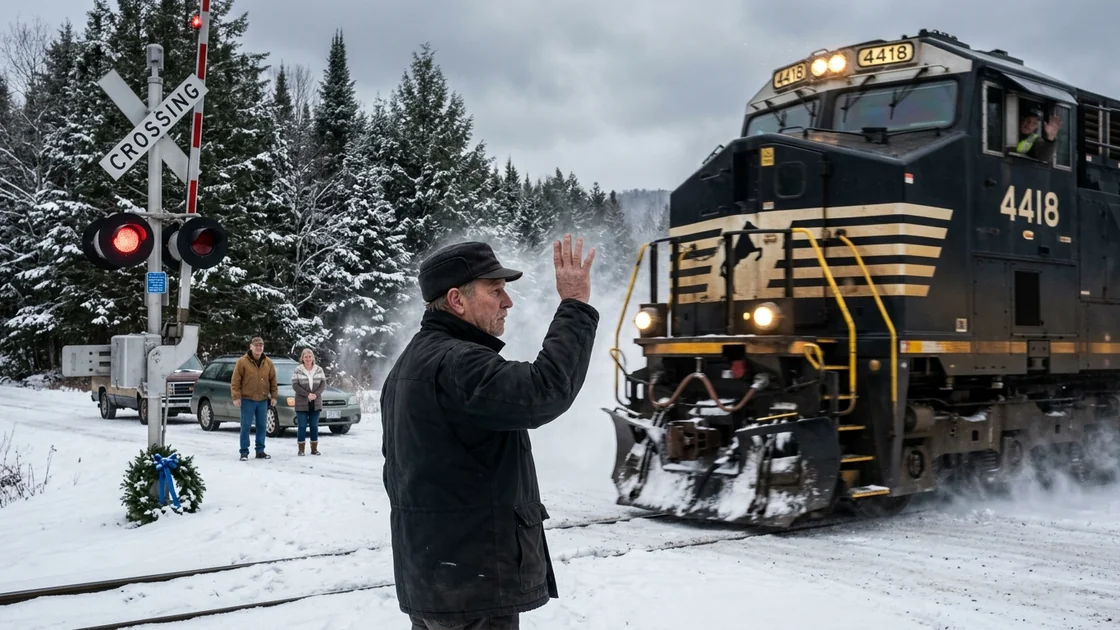
Arthur Pendelton spends thirty years as a dedicated freight conductor before a fatal collision at a snowy rural crossing shatters his life and leaves him with severe post-traumatic stress disorder. Haunted by the deafening blast of the locomotive horn that preceded the tragedy, Arthur becomes a prisoner in his own home, suffering debilitating panic attacks whenever a train passes through his valley town. With the help of a persistent trauma therapist, a compassionate former coworker, and the unexpected arrival of the victim's grieving widow, Arthur must confront the sensory triggers of his guilt and find a way to reclaim his sanity from the relentless echo of the rails.
Part I: The Iron Pulse
For thirty-two years, Arthur Pendelton measured his life not in hours or days, but in mileposts, tonnage, and the rhythmic, metallic click-clack of joint bars passing beneath fifty-ton trucks. He was a man built of railroad timings. His internal clock did not recognize nine-to-five; it recognized the erratic, demanding call of the crew dispatcher’s telephone, the smell of creosote baking in the August sun, and the deep, resonant rumble of an Electro-Motive Diesel engine idling in the frost of a November dawn.
Arthur was a conductor on the Allegheny & Western Division, a stretch of double-track mainline that carved its way through the jagged spine of the mountains, hugging muddy rivers and diving through nineteenth-century tunnels choked with soot. He knew every grade, every curve, every signal bridge, and every whistle post along the hundred-and-forty-mile sub-division between Oakhaven and Ridgeway.
In the cab of a locomotive, there is a distinct hierarchy of sound. There is the ambient roar of the prime mover behind the bulkhead, a mechanical beast generating four thousand horsepower. There is the intermittent hiss of the independent air brake, the sharp crack of the radio handset spitting static and track warrants, and the low, hypnotic thrum of steel wheels grinding against steel rail. Above it all, commanding the valley and warning the world of twenty thousand tons of unstoppable momentum, is the horn.
For most of his career, Arthur loved the horn. Most of the engines on the A&W were outfitted with the Nathan AirChime K5LA—five cast-aluminum bells mounted atop the cab roof, tuned to a B-major sixth chord. To the uninitiated, it was merely a loud noise, a nuisance at a grade crossing that delayed a morning commute. To Arthur, it was a voice. Every engineer had a different touch on the valve, even after the newer locomotives replaced the manual lanyards with electric push-buttons. Some men blew sharp, aggressive staccato bursts; others, the old-heads who remembered the steam era, found a way to feather the air, making the five bells wail with a mournful, musical lilt that echoed off the limestone cliffs like a steel-lunged choir.
Two long, one short, one long. Dash, dash, dot, dash. The universal signal for a public grade crossing at grade. Fifteen seconds before entering the crossing, held until the lead locomotive occupied the asphalt. Arthur had heard that sequence hundreds of thousands of times. It was the heartbeat of his livelihood, the sonic shield that cleared the path before them.
He never imagined that those five notes, tuned to perfection to mimic a church organ, would become the instrument of his undoing.
The night the world broke was the nineteenth of January. It had been snowing since noon—not the wet, heavy slush that weighed down the hemlock branches, but a dry, crystalline powder whipped into blinding sheets by a thirty-mile-per-hour gale out of the northwest.
Arthur was working the Q-314, a high-priority manifest freight running eastbound out of the classification yards at Oakhaven. They had ninety-four cars behind them: a mix of double-stack intermodal containers, lumber flats, and twenty-two tankers of anhydrous ammonia tucked safely behind buffer cars. They were heavy—nearly eleven thousand tons—and the cold weather was making the air lines sluggish, the brake shoes stiff.
At the throttle was Frank Miller, a fifty-eight-year-old veteran with a silver mustache and eyes that had squinted into sixty thousand miles of headlights. Arthur sat in the conductor’s seat on the left side of the wide-nose cab, his lantern tucked by his boots, his clipboard resting on his knee as he logged the signal aspects they passed.
"Clear block at Milepost 84, Frank," Arthur called out, his voice gravelly from three decades of coffee and diesel fumes.
"Clear at 84," Frank echoed from the right side of the cab, his gloved hand resting lightly on the throttle notch. "Going to be a tight squeeze making the meet at Miller’s Siding if this wind keeps drifting the switches."
The cab was warm, smelling of wet wool, toasted ham sandwiches wrapped in foil on the sidewall heaters, and the faint, sweet scent of hot lubricating oil. Outside the thick, electrically heated windshields, the twin beams of the ditch lights bored into a swirling vortex of white. The snow hypnotic, rushing directly at the glass like warp-speed stars in an old science fiction film. Every few miles, the yellow reflective blade of a whistle post would flash out of the gloom, and Frank’s thumb would depress the horn button.
BWWWWAAAAAHHHHH—BWWWWAAAAAHHHHH—BWAH—BWWWWAAAAAHHHHH.
The K5LA right above their heads vibrated through the steel roof, a physical pressure that Arthur felt in his molars and his breastbone. He didn't even blink. He took a sip from his thermos and glanced down at his timetable. Next up was County Road 9, known locally as Miller’s Crossing. It was a notoriously bad intersection. The road came down a steep hill through dense pines, meeting the tracks at an acute, awkward angle with no gates—only a pair of flashing red crossbucks and a bell that nobody could hear over a heater blower inside a car.
As they rounded the sweeping left-hand curve at forty-two miles per hour, the headlights swung across the tree line and locked onto the crossing half a mile ahead.
Frank hit the first long blast.
Arthur looked up from his paperwork, doing his job, scanning the left-hand approach while Frank watched the right. At first, there was only the white-out. Then, a pair of dull, yellowish halogen bulbs emerged from the pines on Arthur’s side.
It was an old pickup truck, a two-tone blue and white Ford from the late nineties, moving too fast for the grade.
"Car coming in from the north," Arthur said, his tone initially flat, professional. They saw cars approach crossings every ten minutes. Ninety-nine point nine percent of them slid to a halt behind the white line, their drivers glaring up at the cab as the freight rumbled past.
Frank held the second long blast a little longer, letting the five chimes scream into the blizzard.
The pickup didn't slow down. Arthur saw the front wheels of the truck turn sharply to the right, the driver trying to steer away from the tracks, or perhaps trying to correct a skid. The truck’s rear end broke loose on the packed ice beneath the fresh powder. Instead of stopping, the pickup slid sideways, fishtailing gracefully, horribly, right past the flashing red lights of the crossbuck.
The truck's tires hit the raised timber planking of the crossing. The sudden friction caught the rubber, bouncing the old Ford into the air for a fraction of a second before it settled dead-center between the eastbound rails, stalling out.
"Dump it!" Arthur roared, throwing himself forward against his safety harness, his hand slapping the emergency brake valve on his side of the console at the exact instant Frank slammed the main automatic brake handle into the far-right notch.
The air evacuated the train line with a deafening, violent WHOOSH that filled the cab. Behind them, eleven thousand tons of steel began to bunch up as the emergency application propagated back through ninety-four cars.
"Get down, Artie!" Frank screamed.
Arthur couldn't move. His boots felt welded to the steel floor plates. Frank had his thumb jammed down on the horn button, locking it in a continuous, unyielding shriek of pure panic.
BWWWWWWWWWWWWWWWWWWWWWAAAAAAAAAAAAAAAAAAAAHHHHHHHHHHHHHH!
At forty-two miles per hour, a freight train of that weight requires over a mile to come to a complete stop. They were less than four hundred feet from the crossing. The physics were absolute, cold, and unmerciful.
Through the sweeping arc of the windshield wipers, illuminated by the blinding glare of the locomotive’s high-intensity LED headlights and the pulsing ditch lights, time dilated. Every detail of the stalled pickup truck was etched into Arthur’s retinas with surgical precision. He saw the rust bubbling around the rear wheel arch. He saw an orange hunting vest draped over the passenger seat.
And he saw the driver.
The man was in his thirties, wearing a dark knit cap. He wasn't scrambling for the door handle. He had tried the ignition once—Arthur saw the brief dim of the truck’s headlights—and then the man had looked up. He looked directly past the snow, past the glare, straight through the left-hand windshield of lead locomotive 4402, and locked eyes with Arthur Pendelton.
The man’s mouth was open. His eyes were wide, reflecting the twin suns of the train’s lights. He raised one hand, palm outward, pressed against the frosted glass of his driver's side window—a futile, instinctual gesture of a human being trying to hold back a mountain.
Above Arthur’s head, the Nathan K5LA was still screaming. The B-major sixth chord tore through the night, vibrating the fillings in Arthur’s teeth, filling his skull until there was no room for thought, no room for prayer, only that monstrous, brassy wail.
Then came the crunch.
It wasn't a sharp bang. It was a heavy, sickening thud that shuddered through the front pilot of the locomotive, followed by the high-pitched screech of tearing sheet metal and the pop of safety glass exploding like rifle shots. The pickup disappeared beneath the brow of the short hood. For six hundred feet, Arthur felt the sickening, rhythmic thump-scrape-thump beneath his boots as the lead truck of the locomotive pushed the mangled steel carapace down the ballast, shearing off wooden ties and throwing showers of orange sparks into the swirling snow.
Frank had finally let go of the horn button, his hands covering his face as the train ground, groaned, and bucked to a halt nearly three-quarters of a mile past the crossing.
When the motion finally stopped, the silence in the cab was not silent at all. The alerter was beeping. The air compressor was thumping frantically, trying to recharge a dead line. The radio was crackling with the dispatcher’s voice asking why Q-314 had lost track occupancy speed.
And in Arthur’s ears, the horn had never stopped blowing.
He didn't remember climbing down the steep steel ladder of the locomotive with his flare kit and his lantern. The company rulebook—the Bible by which he had lived his adult life—dictated that in the event of a grade crossing collision, the conductor must walk back to the scene to assess hazards, check for derailed equipment, and assist emergency personnel.
Frank stayed in the cab to coordinate with the dispatcher and call the county sheriff. Arthur walked back alone into the teeth of the gale.
The red fusees he dropped along the right-of-way hissed in the snow, casting a bloody, flickering light against the undersides of the boxcars and tankers. The smell of hot brake shoes—acrid, metallic, and burnt—hung heavy in the freezing air. As he neared the rear of the front twenty cars, the smell changed. Raw gasoline mixed with the sweet, sickly scent of radiator antifreeze and something else. Something copper and warm that had no business being out in the January frost.
He found the first piece of the truck at car twelve—a blue tailgate, twisted like a piece of taffy, lying in the ditch. At car fifteen, he found an orange hunting vest, soaked in motor oil.
At car eighteen, wedged beneath the lead axle of a loaded lumber car, was the cab of the Ford.
Arthur stopped ten feet away. The snow was already trying to bury it, sifting gently over the jagged teeth of broken glass and the crumpled roof. His lantern light shook violently, casting wild shadows across the wreckage. He didn't want to look inside, but the rulebook said to check for survivors. His humanity demanded he check for survivors.
He stepped closer, his boots crunching on the granite ballast. He raised the lantern.
The hand was still there, protruding from the crushed window frame, the fingers curled slightly into the falling snow. The dark knit cap was gone. Inside the compressed metal cage, there was nothing that could be saved.
Arthur dropped his lantern. He fell to his knees in the snow beside the tracks, tore off his heavy leather work gloves, and vomited onto the frozen ties. Around him, the wind howled through the undercarriage of the freight cars, and in his mind, the five aluminum bells atop Engine 4402 continued to scream their terrible, harmonious chord into the dark.
Part II: The Siege of Elm Street
Six months after the inquest, the drug tests, the union hearings, and the mandatory three-day critical incident leave that the railroad considered sufficient to patch a man's soul back together, Arthur Pendelton lived in a tomb of his own construction.
His house was a modest, two-story clapboard colonial on Elm Street in Oakhaven. He had bought it twenty-five years ago with his late wife, Clara, specifically because it was four blocks from the yard office. Back then, being close to the tracks was a blessing. When the thirty-minute call came at two in the morning, he could roll out of bed, pull on his overalls, grab his grip, and walk to work before the coffee in his travel mug even lost its steam. Clara used to say the rumble of the westbound freights passing the bottom of the hill rocked her to sleep like a cradle.
Clara had died of ovarian cancer four years prior. Now, the proximity to the mainline was a torture device engineered with demonic precision.
The A&W mainline ran along the riverbank at the foot of Elm Street, roughly twelve hundred yards from Arthur’s front porch. Just two blocks east of his house was the Depot Street crossing. Because Oakhaven had never coughed up the municipal funds to establish a Federal Railroad Administration "Quiet Zone," every single train—and there were thirty-five to forty of them every twenty-four hours—was federally mandated to blow the standard crossing sequence for Depot Street.
Dash, dash, dot, dash.
Arthur had spent four thousand dollars of his savings trying to soundproof the house. He had hired contractors to blow dense-pack cellulose insulation into the old plaster walls. He had installed triple-pane acoustic storm windows in every room. Over those windows, he had hung heavy, theatrical-grade velvet blackout curtains that kept the house in a perpetual, sepulchral twilight, even in the height of July.
He had moved his bed out of the upstairs master bedroom and set up a cot in the basement, right next to the furnace. Down there, surrounded by four feet of poured concrete foundation and bags of potting soil stacked against the cellar bulkhead, the world was muffled. He kept two white-noise machines running twenty-four hours a day, alongside a box fan set on high, creating a constant, rushing roar of artificial wind.
It didn't matter.
You cannot block a low-frequency sound wave generated by one hundred and forty PSI of compressed air pushing through five cast-metal horns at a hundred and ten decibels. More than that, you cannot block the vibration. The sound didn't just travel through the air; it traveled through the bedrock of the Allegheny Valley, up through the concrete footings of Arthur’s basement, through the metal legs of his cot, and directly into his spine.
It happened on a Tuesday morning in July.
Arthur was upstairs in the kitchen—a rare foray into the upper world because he needed to boil water for instant oatmeal. He was wearing a pair of bright yellow 3M industrial Peltor earmuffs, the kind ground crews wore next to jet engines. They squeezed his temples so hard that he had permanent red indentations above his ears and a constant, dull tension headache.
He was staring at the saucepan on the gas stove, watching the tiny bubbles form on the aluminum bottom. His hands were trembling slightly—they always trembled now—and he had lost nearly thirty pounds since January. His flannel shirt hung off his shoulders like clothes on a scarecrow.
Suddenly, the water in the saucepan began to ripple. Concentric rings of tiny waves pulsed inward from the edges of the pot.
On the counter, a spoon resting inside an empty ceramic coffee mug gave a tiny, almost imperceptible tink-tink-tink.
Arthur froze. His breath caught in his throat. Even before the sound penetrated the triple-pane glass and the yellow foam of his earmuffs, his body knew. A heavy eastbound coal drag was coming down the river grade, leaning on dynamic brakes, approaching the whistle post for Depot Street.
He didn't try to turn off the stove. He didn't try to run for the basement stairs; he knew he wouldn't make it before the second long blast.
Then it came.
Filtered through glass, walls, and earmuffs, the sound was just a faint, muffled moan—like a whale singing miles beneath the ocean surface. Mmmmmmwaaaaahhhhhh.
To Arthur’s amygdala, the part of his brain that had been rewired in the snow at Miller's Crossing, that faint vibration was indistinguishable from being strapped into the left seat of Engine 4402 with death fifty feet away.
His nervous system detonated.
Adrenaline, raw and toxic, dumped into his bloodstream like battery acid. His heart rate spiked from seventy beats per minute to one hundred and六十 in the span of three seconds, hammering against his ribs with such violence he thought his sternum would crack. His peripheral vision vanished, replaced by a swirling tunnel of gray static and blinding white snow.
Mmmmmmwaaaaahhhhhh. The second blast.
Arthur dropped to the linoleum floor of the kitchen, knocking a chair over. He curled into a tight fetal ball beneath the overhang of the oak kitchen table, his hands clamping over the yellow earmuffs, pressing them into his skull with all the strength left in his withered arms.
He couldn't breathe. His throat constricted as if an invisible brakeman’s chain were being winched tight around his windpipe. He gasped, sucking in tiny, ragged sips of air that never seemed to reach his lungs. Sweat broke out instantly across his forehead and soaked the back of his flannel shirt, ice-cold and smelling of terror.
Mwah. The short blast.
In the blackness behind his tightly shut eyelids, the movie played. It always played at the exact same framerate, with the exact same high-definition cruelty. The blue and white Ford fishtailing. The orange hunting vest. The man’s face turning toward the glass. The hand raised against the frosted window. The sickening thump-scrape-thump beneath the floorboards. The smell of antifreeze and copper in the snow.
Mmmmmmmmmwaaaaaaaaaahhhhhhhhhhh. The final long blast as the lead units took the crossing two blocks away, the sound shifting downward in pitch as the Doppler effect took hold.
"Stop it, stop it, dump it, Frank, dump the air!" Arthur sobbed into his knees, his voice a high, reedy whimper that he couldn't even hear over the roaring in his own ears and the clamping pressure of the muffs. His stomach heaved, dry-retching nothing onto the kitchen floor. His fingers went numb, tingling with paresthesia from hyperventilation, curling into rigid claws like the hand he had seen sticking out of the crushed pickup cab.
The coal train took four minutes to clear the crossing. Ninety cars of Blacksville bituminous coal rumbling toward the coastal power plants.
It took Arthur forty-five minutes to uncurl his legs.
When the tremor finally subsided into a deep, bone-weary exhaustion, he lay on his side on the dusty linoleum, staring at the bottom of the overturned kitchen chair. Above him, the water in the saucepan had boiled completely away, leaving the scorched aluminum smoking faintly on the burner.
He crawled to his knees, reached up with a shaking hand to click the gas burner to OFF, and then sat back down against the cabinets. He pulled the heavy earmuffs off one ear just enough to wipe the sweat and tears from his stubbled cheek.
A sharp, rhythmic rapping vibrated through the front door.
Arthur flinched, nearly jamming the earmuffs back on. Nobody knocked gently on his door anymore, because nobody could get his attention without pounding like a bailiff.
"Artie!" a voice bellowed through the thick oak of the front door and the acoustic curtain hanging behind it. "Artie, open the damn door! I know you're in there, your truck hasn't moved since Easter!"
Arthur closed his eyes. It was Frank Miller.
Slowly, using the wall for support like a ninety-year-old man, Arthur hauled himself upright. He left the earmuffs hanging around his neck like a bright yellow collar—never further than a half-second away from his ears—and shuffled down the dark, carpeted hallway to the foyer.
He unlocked the deadbolt, the chain, and the knob latch, opening the door four inches. The July morning sunlight hit him like a physical blow, making him wince and squint.
Frank stood on the porch. He looked older than he had in January; the silver mustache was white now, and there were deep, dark bags under his eyes. He wasn't wearing his railroad boots or his grip. He was wearing a faded polo shirt and holding a brown paper bag from the bakery downtown.
"Jesus Christ, Artie," Frank said softly, his bluster evaporating the moment he saw Arthur’s face. "Look at you. And what died in here? Smells like burnt metal."
"Burned a pot," Arthur croaked, his throat raw from hyperventilating. He glanced anxiously past Frank’s shoulder toward the bottom of the hill, where the green tops of the sycamore trees hid the river and the tracks. "You shouldn't be here, Frank. An eastbound just went by. If there's a westbound stacked up at the signal waiting for the block to clear—"
"There’s nothing coming for forty minutes," Frank said firmly, stepping forward and pushing the door open gently so Arthur had to back up into the dim hallway. "MOW crew has got a track warrant on Number One main replacing a cracked frog at the west switch, and Number Two is held at Ridgeway for an Amtrak late out of Chicago. I checked the dispatcher’s board on my scanner before I walked up the hill. You got forty minutes of quiet, Artie. Let me in."
Arthur retreated into the gloom of the living room, sinking into his recliner, which was draped in a stained quilt. Frank walked into the kitchen, opened the back door a crack to let the smoke from the ruined pot out, poured a glass of tap water, and brought it back to the living room alongside the bakery bag.
"Apple fritters," Frank said, setting them on the end table beside a stack of unopened mail from the Railroad Retirement Board and the union disability office. "From Miller’s Bakery. Still warm."
Arthur didn't look at the bag. He stared at Frank’s hands. "You're back on the board?"
Frank sat down on the sofa, sighing heavily as the cushions sank. He rubbed his knees. "I tried, Artie. Back in April. Took a yard job switching cars at the chemical plant. Thought if I stayed off the mainline, kept the speed under ten miles an hour, I’d be alright."
"And?"
Frank looked away, staring at the heavy black velvet curtains covering the bay window. "The hostler brought an engine out of the roundhouse while I was eating lunch in the shanty. Tested the horn before coupling onto a cut of tankers. I threw my thermos through a window and pissed myself in front of three twenty-two-year-old brakemen."
A heavy, suffocating silence fell over the room, broken only by the hum of the refrigerator in the next room.
"I put in my papers last week," Frank said quietly. "Took the early medical buyout. Thirty-six years, Artie. Gone. Just like that."
Arthur swallowed hard, the water glass shaking in his hand so badly he had to set it down on the coaster. "It wasn't your fault, Frank. We were doing forty-two in a forty-five zone. The headlight was on bright. You blew the crossing right on the post. The coroner said his blood-alcohol was zero, he just hit black ice on the hill. The trooper said there was nothing anyone on God's earth could have done."
"Yeah," Frank said, his voice hollow. "That's what the FRA inspector said, too. And the union rep. And my wife." He leaned forward, fixing his bloodshot eyes on Arthur. "So if it wasn't our fault, Artie, why am I taking two milligrams of Lorazepam just to walk past a highway overpass? And why are you living in a dark closet wearing ear protectors waiting to starve to death?"
Arthur’s hands went instinctively to the yellow plastic cups around his neck. "I hear it, Frank. All the time. Even when the tracks are clear. When the furnace kicks on, or a semi-truck blows an air horn out on the bypass, or a neighbor runs a lawnmower. My body doesn't know the difference. It thinks we're still sliding into that crossing."
"I know," Frank said gently. He reached into his shirt pocket and pulled out a crisp white business card, setting it on top of the bakery bag. "The Brotherhood is paying for a specialist over in the medical arts building by the hospital. Not one of those company doctors who just wants to sign a liability release and shove you back on a freight. Her name is Dr. Vance. She works with combat vets mostly. Guys who came back from Fallujah and can't handle the Fourth of July."
"I didn't fight in a war, Frank."
"Eleven thousand tons hitting a half-ton pickup at forty miles an hour is plenty of war, Artie," Frank said, standing up. He checked his watch. "Amtrak’s going to be clearing the interlocking at the east end of town in about fifteen minutes. I'm gonna head home before he whistles for the station."
Frank paused at the front door, his hand on the brass knob. "His name was Thomas Miller, by the way. No relation to me. Thirty-four years old. High school shop teacher over in Creekside. He was coming back from checking on his father’s cabin because the pipes had froze the week before. He had a wife, Artie. No kids yet."
"Don't," Arthur whispered, his chest tightening again. "Please don't tell me about him."
"You gotta know he was a real person, Artie, not just a ghost under the pilot of 4402," Frank said softly. "Call the doctor. Clara wouldn't have wanted you dying in the dark down here."
The door clicked shut. Arthur didn't eat the apple fritter. Fifteen minutes later, when the high-pitched, screaming K5LA of the Amtrak passenger train sliced through the valley at seventy miles per hour, Arthur was already back in the basement, curled against the concrete beside the roaring furnace, weeping into his knees.
Part III: The Anatomy of a Chord
It took three more weeks, and an incident where the mailman threatened to call Adult Protective Services after hearing Arthur screaming through the front door mail slot during a track-maintenance train pass, before Arthur finally dialed the number on the card.
Dr. Elena Vance’s office was on the fourth floor of a brick building on the far north side of Oakhaven—three miles from the river, shielded from the mainline by a high ridge of limestone and pine forest. That geographical fact was the only reason Arthur agreed to leave his house. Even so, he drove his old pickup with the windows rolled tight in the August heat, wearing his yellow earmuffs and a baseball cap pulled low, taking back alleys to avoid crossing the tracks at grade, opting instead for the high concrete highway viaduct two miles out of town.
Dr. Vance was not what Arthur expected. He had pictured a soft-spoken, grandmotherly woman with tissues and a bowl of hard candies, or perhaps a stern, clinical psychiatrist with a prescription pad ready to dope him into a coma.
Instead, Elena Vance was in her late forties, sharp-featured, wearing wire-rimmed glasses and practical linen trousers. Her office didn't have a leather couch; it had two comfortable armchairs facing each other across a low coffee table, and the walls were lined not just with medical textbooks, but with schematic diagrams of the human brain and, oddly enough, an old framed map of the county’s topographic elevations.
During that first session, Arthur refused to take the earmuffs off his neck. He sat on the edge of the armchair, his posture rigid, his eyes darting toward the window every time an ambulance siren wailed blocks away at the emergency room.
"Tell me about the Nathan K5LA, Arthur," Dr. Vance said, her hands folded in her lap. She didn't have a notepad.
Arthur blinked, thrown off balance. "What?"
"Frank Miller is a patient of mine as well—he gave me permission to tell you that, since he referred you," she said evenly. "He told me the model of the horn on the locomotive you were working that night. I looked it up last night. Five bells. Tuned to D-sharp, F-sharp, G-sharp, B, and a high D-sharp. A B-major sixth chord."
Just hearing the notes listed made the skin on the back of Arthur’s arms prickle with gooseflesh. His breathing shallowed. "Why are you talking about that?"
"Because right now, Arthur, you treat that sound like a supernatural curse," Dr. Vance said, leaning forward slightly. "To you, it is the voice of death. And as long as it remains a monster in the dark, it owns you. We need to turn the lights on and look at the machinery."
"I know the machinery," Arthur snapped, a flash of his old railroad pride cutting through his fear. "I worked around those engines for thirty-two years. It’s an air manifold feeding five cast-aluminum projectors with stainless steel diaphragms. When the solenoid opens, compressed air from the main reservoir vibrates the diaphragms at specific frequencies. I don't need a science lesson, Doctor. I need to stop feeling like I’m having a heart attack six times a day."
"What you are having six times a day is a textbook sympathetic nervous system hijack," Dr. Vance explained, her voice calm, steady, and rhythmic—like a slow pendulum. "When you were in that cab on January nineteenth, your brain experienced a moment of absolute helplessness combined with extreme horror. During that trauma, your sensory cortex was flooded with one overwhelming input: a hundred-and-ten-decibel B-major chord vibrating through steel."
She pointed two fingers at the side of her own head, just above the ear.
"Normally, the hippocampus processes a memory, stamps a date and time on it—January 19th, in the past—and files it away in the cortex. But when the trauma is too severe, the amygdala, your brain’s smoke detector, overrides the filing system. It took the sound of that horn and wired it directly to your survival reflex. There is no timestamp on it, Arthur. When you hear a train whistle down on Depot Street, your brain does not think, 'Oh, that sounds like the night of the accident.' Your amygdala literally believes it is January nineteenth, and that you are about to hit that blue pickup truck all over again."
Arthur stared at the carpet between his boots. His eyes stung. For seven months, he had thought he was losing his mind. He had thought he was weak, a coward who couldn't stomach the harsh realities of a dangerous job that generations of railroaders had endured before him. Hearing it described like a broken electrical circuit—like a shorted relay on a signal bungalow—made something loosen slightly in his chest.
"Can you cut the wire?" he whispered.
"We can't cut it," Dr. Vance said honestly. "Anyone who tells you they can erase thirty-two years of railroad life and a fatal accident from your head is lying to you. What we can do is build a bypass track around it. We have to teach your hippocampus how to put a timestamp on that sound. We have to prove to your body that a chord of music made by compressed air cannot kill you."
"How?"
"It’s called prolonged exposure, combined with bilateral stimulation," she said. "And we start very, very small. You aren't going near the tracks, Arthur. Not for a long time. Today, we just talk about the snow."
That was the beginning of the hardest work Arthur Pendelton had ever done—harder than slinging eighty-pound knuckles in sub-zero weather to fix a broken drawbar two miles from the nearest road.
Twice a week, every Tuesday and Friday, Arthur made the winding drive over the viaduct to the medical building.
In the first month, they didn't listen to any sounds at all. Dr. Vance used a technique with a lightbar—a horizontal strip of LEDs that moved a green dot back and forth across Arthur’s field of vision while he recounted fragments of the night. He felt foolish doing it at first, watching a blinking light like a cat chasing a laser pointer while talking about the smell of foil-wrapped ham sandwiches on the cab heater.
But the strangest thing happened. As his eyes tracked back and forth, engaging both hemispheres of his brain, the memories began to lose their razor-sharp, bleeding edges. He could talk about the yellow reflective blade of the whistle post at Milepost 85 without his heart rate climbing past a hundred.
In September, the work got harder.
Dr. Vance placed a small Bluetooth speaker on the coffee table between them.
"I have a recording on my phone," she told him during a rainy Friday session. "It is not a Nathan K5LA. It is a single piano key—a D-sharp—played at forty decibels. That’s quieter than the rain hitting the window right now. If your distress level hits a seven out of ten, you raise your hand, and I stop it instantly. Are you ready?"
Arthur’s hands gripped the upholstered arms of the chair until his knuckles turned white. The yellow earmuffs were sitting on the floor beside his boots—a milestone it had taken three weeks to achieve. His mouth went dry.
"Go ahead," he rasped.
Dr. Vance tapped her phone.
Ping.
A single, pure piano note hung in the air of the quiet office.
Arthur flinched violently, his shoulders hunching up toward his ears, his breath hitching in his chest. His eyes darted to the earmuffs on the floor.
"Stay with me, Arthur," Dr. Vance’s voice cut through the rising static in his head. "Look at my office. Tell me three things you see right now that prove you are not in Engine 4402."
Arthur’s chest heaved. He forced his eyes up from the floor. "The... the green lamp on your desk," he panted. "The map of the county. Your glasses."
"Good. Feel your boots on the carpet. Is the floor vibrating?"
"No."
"Is it snowing in this room?"
"No."
"It’s September twelfth. You are safe in a brick building on North Hill. That was a piano string vibrating in a wooden box. Let your shoulders drop."
She played the note again. Ping.
And again. Ping.
By the end of the hour, Arthur was soaked in sweat, exhausted as if he had walked a hundred-car train in knee-deep mud, and he had to sit in his truck in the parking lot for twenty minutes before his hands were steady enough to turn the ignition key.
But he hadn't put the earmuffs on.
Still, progress in a quiet office three miles from the river was one thing; surviving the wild environment of Oakhaven was another. The world outside Dr. Vance’s fourth-floor sanctuary did not operate at forty decibels, and it did not stop when Arthur raised his hand.
In early October, boosted by a modest string of nights where he had actually slept on the living room sofa instead of the basement cot, Arthur decided to attempt a grocery run himself rather than relying on Frank to drop off canned soup and bread on the porch.
He went to the Shop 'n Save on the west side of town at seven in the morning, right when they opened, hoping to beat the crowds. He left the big yellow Peltors in the truck cab, opting instead for a pair of discrete foam earplugs shoved deep into his ear canals.
For twenty minutes, it felt like a miracle. He pushed a wire cart down the fluorescent-lit aisles, picking out real apples, a carton of eggs, a pound of ground chuck. He felt almost human. He was just an old retired railroader buying his breakfast, blending in with the early-bird pensioners and the night-shift nurses heading home.
He was standing in the dairy aisle, reaching into the cold case for a half-gallon of two-percent milk, when a delivery truck backed up to the loading dock behind the butcher counter, separated from the main store only by a pair of swinging rubber double-doors.
To warn the stock boys in the warehouse, the truck driver yanked the lanyard on a roof-mounted Hadley air horn.
BLAAAAAAAAAAAAAT!
It wasn't a five-chime locomotive horn. It wasn't even the same pitch. It was a single-note, raspy commercial truck horn echoing inside a concrete loading bay.
To Arthur’s amygdala, it was close enough.
The carton of milk slipped from his numb fingers, hitting the bottom rail of the cooler and splitting open, sending a white river across his work boots and the waxed linoleum floor.
The fluorescent lights of the grocery store vanished, replaced by the blinding glare of ditch lights in a blizzard. The hum of the refrigeration compressors became the roar of an EMD diesel prime mover in run-eight.
Arthur didn't scream this time—he didn't have the wind for it. He dropped straight to his knees in the puddle of freezing milk, his hands clawing at his ears, pushing the foam plugs so deep they hurt, his forehead pressed against the cold glass door of the butter display.
"Sir? Oh my gosh, sir, are you having a stroke?"
A young woman in a blue cashier’s vest was kneeling beside him, her hand touching his trembling shoulder. A small crowd of elderly shoppers had gathered at the end of the aisle, whispering, staring at the gaunt, unshaven man hyperventilating in a puddle of dairy.
"Somebody call 911!" a man called out. "It’s his heart!"
"No!" Arthur choked out, the humiliation burning hotter than the panic. If they called an ambulance, there would be sirens. If they put him in the back of a rig with a wailing electronic horn right above the roof, it would kill him for sure.
With a surge of desperate, terrified energy, Arthur shoved himself up off the slick floor, nearly knocking the young cashier backward. He left his cart—with the apples, the eggs, and the ground chuck—sitting in the middle of the aisle. He stumbled toward the front automatic doors, his milk-soaked boots squeaking loudly on the tile, his hands still clamped over the sides of his head, and fled into the parking lot while the store manager chased after him asking for his name.
That night, Arthur moved his blankets back down into the basement beside the furnace. He didn't go to his Friday appointment with Dr. Vance. He unplugged his telephone from the wall jack and sat in the dark, listening to the white-noise machines hiss like escaping train air.
Part IV: The Woman at the Door
For four days, the house on Elm Street was sealed tighter than a submarine hull.
When an eastbound freight rumbled past the bottom of the hill, Arthur didn't even try to use Dr. Vance’s grounding techniques. He didn't look for three objects in the room. He didn't remind himself what month it was. He just surrendered to the terror, letting the B-major chord tear through his nerves until he was hollow, convinced that Frank had been wrong—some wrecks couldn't be cleared with a crane. Some equipment just had to be torched where it lay and scrapped.
On Monday afternoon, during a lull in the rail traffic, someone knocked on the front door.
Arthur, sitting at the bottom of the basement stairs with his yellow earmuffs over his head, ignored it. He figured it was Frank, coming to lecture him for skipping therapy, or maybe the police checking up on the crazy old guy from the Shop 'n Save.
After two minutes, the knocking stopped.
Arthur let out a long, shaky breath and stood up to go back to his cot. Then, he heard the metal squeak of the mail slot in the center of the front door being pushed open from the outside.
A piece of folded notebook paper fluttered down onto the entryway rug.
Curious despite himself, Arthur waited ten minutes to make sure the porch was empty before creeping up the basement stairs. He picked up the paper. It was written in neat, looping cursive with blue ink.
Mr. Pendelton, the note read. My name is Sarah Miller. My husband, Thomas, died at the County Road 9 crossing on January 19th. I am sitting in the green Subaru parked across the street. I am not here to yell at you, and I don't want money. I just need five minutes. If you want me to leave, just flick your porch light on and off once, and I will drive away and never bother you again.
Arthur’s heart stopped—not with the violent, adrenaline-fueled spike of the horn, but with a cold, sinking dread that turned his blood to slush.
The widow.
He crept to the side of the living room bay window and pulled the heavy black velvet curtain back half an inch, squinting into the bright October afternoon where golden maple leaves were blowing down Elm Street.
Parked against the opposite curb was a faded green Subaru Outback with a dented rear bumper. Sitting behind the wheel was a woman in her early thirties. Her brown hair was pulled back in a messy ponytail, and she was wearing an oversized gray cardigan. Even across the width of the street, Arthur could see her hands gripping the top of the steering wheel, her knuckles white, looking just as terrified of his house as he was of her car.
His hand went immediately to the wall switch by the front door. One flick. On, off. That was all it would take. She would start the car, drive back over the hill to Creekside, and he could go back down to the cellar and rot in peace.
He thought of the hand pressed against the frosted glass of the blue pickup. He thought of the orange hunting vest soaked in motor oil.
You gotta know he was a real person, Artie, Frank had said. Not just a ghost under the pilot.
If he flicked that light switch, he would never get out of the basement. He knew that with sudden, terrifying clarity. If he couldn't face the woman whose life had been destroyed on the other side of that windshield, no amount of blinking green lights in Dr. Vance’s office would ever quiet the horn in his head.
Arthur’s hand dropped from the light switch. He looked at the grandfather clock in the hall—stopped months ago because the chime bothered him—and checked his wristwatch instead. Two-fifteen. Usually, there was a local switching job that worked the lumber yard three miles west around this time, which meant the main tracks through town were generally quiet until the three-fifteen intermodal out of Chicago came roaring through.
Forty-five minutes. Maybe an hour.
Slowly, Arthur lifted the yellow earmuffs off his ears, letting them rest around his neck. He unlocked the three bolts on the front door and pulled it open.
Across the street, the driver’s side door of the Subaru opened. Sarah Miller stepped out into the autumn wind. She looked smaller than he expected, clutching her cardigan tight around her ribs as she crossed the asphalt and walked up his concrete steps. Up close, she had the same dark, exhausted circles under her eyes that Arthur saw in his bathroom mirror every morning. Grief, it seemed, wore the same uniform regardless of which side of the steel you were on.
"Mr. Pendelton," she said softly, stopping on the second step so she was looking up at him. Her voice was steady, though her bottom lip trembled slightly.
"Mrs. Miller," Arthur rasped. He stepped back into the dim foyer. "You can come in. It’s... it’s dark in here. I keep the curtains drawn. Because of the noise."
She stepped inside, her eyes adjusting to the gloom and taking in the acoustic foam taped around the doorframes, the heavy velvet drapes, and the industrial earmuffs collar around his neck. She didn't look disgusted or frightened by the state of the house; she looked profoundly sad.
"I can make coffee," Arthur offered awkwardly, gesturing toward the kitchen. "I only have instant, though. I had a little trouble at the grocery store the other day."
"Water is fine, thank you," she said, sitting perched on the edge of the sofa where Frank usually sat.
Arthur brought her a glass of tap water and sat across from her in his quilt-covered recliner. For a long minute, neither of them spoke. The quiet of the insulated house pressed in on them, thick and awkward.
"How did you find me?" Arthur asked finally. "The railroad usually keeps the crew names out of the papers."
"They weren't out of the coroner’s inquest report," Sarah said, holding the cold glass between both palms. "I got a copy of the transcript last month. I went to see Mr. Miller—Frank Miller—last week. We talked on his porch for a long time. He told me you were the conductor on the left side of the cab. And he told me you weren't doing well."
Arthur looked down at his lap, his fingers picking at a loose thread on the quilt. "If you came here to tell me I should have been watching closer, or that we should have been going slower... Mrs. Miller, there is nothing you can say to me that I haven't screamed at myself ten thousand times since January."
"I didn't come here to blame you," Sarah said. A tear slipped down her cheek, and she wiped it away quickly, almost angrily, with the back of her sleeve. "Tom grew up two miles from those tracks. His grandfather worked in the roundhouse at Ridgeway in the fifties. He knew trains can't stop. And I know how fast he drove down that hill when he was running late for dinner. The tires on that old Ford were bald on the back, and he kept putting off buying new ones because we were saving to redo the kitchen."
Arthur looked up at her, stunned by the ordinary, mundane domesticity of the details. Bald tires. Running late for dinner. Redoing a kitchen.
"Frank told me something," Sarah continued, her voice dropping to a whisper. "He said that because the road curves in from the north, the engineer’s view gets cut off by the nose of the engine right at the end. He said you were the one on the left side. You were the last person to see him."
Arthur’s throat closed up. The phantom pressure of the B-major chord began to hum faintly behind his temples. "Yes, ma'am. I was."
Sarah leaned forward, her eyes locking onto Arthur’s with desperate intensity. "For nine months, Mr. Pendelton, I wake up at three in the morning and I stare at the ceiling, and I wonder if he suffered. The state trooper told me it was instant, that he probably never even knew the train was there because of the snow. They think lying to a widow is a kindness. Look at me, please."
Arthur forced himself to meet her gaze.
"Did he know?" she asked, her voice breaking. "And did he suffer?"
In the dim living room on Elm Street, the memory came back—not with the violent, chaotic explosion of a panic attack, and not as a monster chasing him into the cellar. It came back because this woman needed the truth that only he carried.
"He knew," Arthur said softly, tears finally spilling over his own weathered cheeks. "The snow broke right at the crossing. When the truck stalled on the planks, he tried the key once. Then he looked up at my window. He saw the lights, Mrs. Miller. He put his hand up against the glass."
Sarah let out a ragged, choked sob, covering her mouth with one hand while her shoulders shook.
"Wait—listen to me," Arthur said urgently, leaning forward out of his chair and reaching out, stopping his weathered, trembling hand an inch from her knee. "From the second his tires hit those planks to the second the engine reached him... it wasn't even two seconds, Sarah. Two heartbeats. I watched him the whole way in. And when I walked back there afterward with my lantern... he didn't suffer. The coroner wasn't lying to you about that part. The impact took him before the steel even finished bending. He was scared for two seconds, and then he was gone."
Sarah bowed her head, weeping openly now, letting go of nine months of terrible, unanswered questions that had festered in the dark of her own bedroom. Arthur sat there, weeping silently with her, feeling a strange, heavy warmth spreading through his chest where there had only been ice since January. For the first time, the memory of that terrible night had served a purpose other than torturing him. He had been a witness. He had kept vigil for a man who died alone in the snow, so that he could deliver the message home.
Then, the water in Sarah’s glass on the end table began to ripple.
Arthur’s eyes snapped toward the window.
He looked at his watch. Two-fifty-five. The local switcher wasn't working the lumber yard today; the dispatcher had let the Chicago intermodal through early. And an intermodal didn't rumble along at thirty-five miles an hour like a coal drag. A hotshot stack train ran at track speed—fifty miles per hour right through the heart of Oakhaven.
"Mrs. Miller," Arthur said, his voice suddenly tight, his breathing hitching as the familiar, terrifying wave of adrenaline began to pool in his gut. "There’s an eastbound coming. Right now. At the Depot Street crossing."
Sarah wiped her eyes, looking at him in confusion. "Okay?"
Everything in Arthur’s body was screaming at him to bolt. The basement door was twelve feet away. His yellow earmuffs were resting right against his collarbones; all he had to do was lift his hands six inches and snap them over his ears, drop to the floor under the dining room table, and squeeze his eyes shut.
Then he looked at Sarah Miller. She was sitting on his sofa, raw and grieving, having driven twenty miles to face the man who had been on the train that killed her husband. If she could walk through his front door, he could stay in his chair.
Look at my office, Dr. Vance’s voice echoed in his mind. Prove to your body that a chord of music made by compressed air cannot kill you.
Thirty seconds away, at the west whistle post, the engineer on the Chicago intermodal hit the horn button.
BWWWWAAAAAHHHHH!
Even through the triple-pane glass and the velvet curtains, the Nathan K5LA roared into the house, vibrating the floorboards beneath Arthur’s boots.
Arthur’s heart slammed against his ribs. The gray static crept into the edges of his vision. His hands twitched upward toward the yellow earmuffs around his neck—and then stopped. Instead, he gripped the worn fabric of his recliner arms with white-knuckled ferocity. He kept his eyes wide open.
BWWWWAAAAAHHHHH! The second long blast. Closer now, louder, shaking a framed picture of Clara on the wall.
Arthur sucked in a deep breath through his nose—four seconds in, hold for four, out for four, just like Dr. Vance had drilled into him fifty times. His chest was on fire, and cold sweat beaded on his forehead, trickling into his eyebrows.
Across from him, Sarah watched him. She saw the terror on his face, saw the violent tremor in his forearms as the roar of the train grew deafening outside. She didn't run, and she didn't call an ambulance. Slowly, she stood up from the sofa, stepped across the small gap between them, and placed her small, warm hand directly over Arthur’s white-knuckled fist on the chair arm.
BWAH! The short blast.
Arthur looked down at her hand on top of his. Her skin was warm. She was wearing a thin gold wedding band on her left finger.
This is October, Arthur told his screaming brain. Not January. There is no snow. The hand on the glass is gone. This is Sarah’s hand. I am in my living room on Elm Street.
BWWWWWWWWWWAAAAAAAAAAHHHHHHHHHH!
The final, sustained blast tore through the valley as the three-unit lash-up blasted over the Depot Street asphalt two blocks away, the pitch dropping into a mournful, minor-key groan as it passed the house, followed by the thunderous, earth-shaking roar of a hundred double-stack well cars pounding the rail joints at fifty miles per hour.
Arthur’s entire body shook like a leaf in a gale. Tears streamed down his face, and a low groan escaped his clenched teeth as the adrenaline surged through his veins with nowhere to go.
But he didn't drop to the floor. He didn't cover his ears. And for the first time in nine months, when he looked across the room, he didn't see a blue and white Ford pickup sliding across the ice. He saw his own living room, dim and dusty, and the woman standing beside him, holding onto his hand like a lifeline until the last car cleared the town limits and the valley went quiet again.
Part V: The Whistle Post
Healing, Arthur discovered over the winter that followed, was not like throwing a switch and taking a train down a clean, new track. It was more like clearing a massive rockslide in the dead of night with hand shovels. You moved a ton of stone, gained ten feet of rail, and then a smaller rainstorm brought another bushel of gravel sliding down onto the ties that you had to shovel all over again.
There were bad days. In November, when the first early snow flurry dusted the streets of Oakhaven, a freight went into emergency braking down in the yard because of a burst air hose, and the combination of the falling snow and the prolonged horn blasts sent Arthur back under the kitchen table for an hour.
Wait it out, Dr. Vance told him. Don't judge the setback. A derailment in the yard doesn't mean the whole railroad is shut down; you just rerail the trucks, inspect the bearings, and keep moving east.
Slowly, piece by piece, Arthur began dismantling the tomb on Elm Street.
In December, he took down the heavy black velvet curtains in the kitchen and the living room, letting the pale winter sunlight flood across the dusty carpets for the first time in nearly a year. He hauled his cot and his blankets up out of the basement and remade the bed in the upstairs master bedroom—the room with the window that looked directly down the hill toward the sycamores and the river.
He threw the yellow 3M Peltor earmuffs into the municipal dumpster behind the hardware store. It was the scariest thing he had ever done; his hands shook all the way home in the truck, feeling naked and defenseless against the sonic ambush of the world. He still kept a pair of small foam plugs in his shirt pocket, just in case, like a heart patient carrying nitroglycerin tablets, though weeks began to pass without him touching them.
Every Thursday morning, he met Frank Miller at the diner on Main Street—a place three blocks from the tracks where the waitresses dropped ceramic plates with a clatter and the big stainless-steel coffee urns hissed like air brakes. The first time a westbound grain train blew for Depot Street while Arthur was cutting into a stack of pancakes, his fork clattered out of his hand and his heart hammered at a hundred and thirty beats a minute. Frank just reached across the Formica table, tapped his knuckles against Arthur’s wrist to ground him, and kept talking about the Pittsburgh Steelers’ offensive line until Arthur’s breathing steadied and he picked the fork back up.
As the anniversary of the accident approached—January nineteenth—a heavy, expectant tension settled over both men, and over Dr. Vance’s office.
"The human body keeps its own calendar, Arthur," Dr. Vance warned him during their session on the sixteenth. "The quality of the light in January, the smell of woodsmoke and road salt, the cold air in your lungs—all of those are secondary cues. Your nervous system is going to be on high alert this Friday. Have you thought about how you want to spend the day?"
Arthur looked out her fourth-floor window toward the gray, snow-covered ridge that separated them from the valley. For months, their therapy had progressed from single piano notes to full organ chords, then to low-volume recordings of distant train horns, and finally to Arthur standing on his own front porch with a cup of coffee while the afternoon freights rolled through the bottom of the hill.
There was only one place left that still held absolute terror over him.
"I need to go back to Milepost 85," Arthur said quietly. "County Road 9."
Dr. Vance studied him carefully through her wire-rimmed glasses. "That is a major step, Arthur. Are you doing it to punish yourself, or are you doing it to finish filing the memory?"
"For thirty-two years, every trip had a terminal where you tied the train down and signed the register book to go off duty," Arthur said, looking at his weathered hands. "Frank and I never signed off on Q-314. An ambulance and a company suburban hauled us out of the snow before the wrecking crew even got the truck out from under the cars. As far as my head is concerned, I’m still on duty out there. I need to mark off."
Dr. Vance nodded slowly. "Don't go alone."
On the morning of January nineteenth, the sky over the Allegheny Valley was the exact shade of bruised pewter it had been a year ago, though the air was calm—twenty-two degrees, with six inches of fresh, crisp snow blanketing the pines and the fields.
Arthur didn't drive out to County Road 9 alone. Frank sat in the passenger seat of Arthur’s pickup, wearing his old insulated railroad Carhartt jacket with the union pins still stuck to the lapel. Following behind them in a faded green Subaru Outback was Sarah Miller, holding a small wreath of evergreen boughs tied with a simple blue ribbon.
They parked on the wide gravel shoulder at the bottom of the hill, fifty feet back from the tracks, where the county road crew had plowed a turnaround.
When Arthur shut off the truck’s engine and stepped out into the biting cold, the silence of the rural woods was immense. Just ahead, the two main tracks of the Allegheny & Western sliced through the forest on a raised bed of gray granite ballast, disappearing around the sweeping curve to the west. The black-and-white crossbucks stood stark against the evergreens, the red lenses dark and silent.
Looking at the timber planking of the crossing, Arthur felt the familiar tightening in his chest. His stomach dipped. Right there—right where the packed snow had been grooved by logging trucks—was where the blue Ford had bounced and stalled.
"You alright, Artie?" Frank asked softly, coming around the hood of the pickup, his breath pluming white in the frost.
"Yeah," Arthur said, rubbing his gloved hands together. "Just cold."
They walked toward the crossing together, their boots crunching loudly on the salted gravel. Sarah walked up to the wooden post of the northern crossbuck—away from the ballast and the foul of the tracks—and knelt in the snow to wire the evergreen wreath to the metal bracket at the base.
Arthur didn't look at the wreath yet. He walked ten yards east of the crossing, stepping up onto the shoulder of the right-of-way where he had walked with his lantern that night.
In his mind’s eye, he had expected the place to still look like a slaughterhouse. He half-expected to see twisted blue metal in the ditch, or smell burnt brake shoes and antifreeze hanging under the hemlocks.
There was nothing there. The railroad’s maintenance-of-way crews had replaced the scarred wooden ties months ago with fresh, creosote-soaked timber. The winter snow had covered the ballast in a clean, unbroken sheet of white. A cardinal was perched on the communication wire overhead, a bright drop of blood-red against the gray sky, completely indifferent to the human tragedy that had unfolded beneath it.
Then, six hundred yards to the west, the signal on the cantilever bridge dropped from green to red as the track circuit was shunted, and the crossing bells behind them suddenly burst into life.
Clink-clink-clink-clink-clink-clink.
The red LED lights on the crossbucks began to flash in alternating rhythms against the snow.
Sarah stepped back quickly from the post, retreating to the safety of the gravel shoulder beside Frank.
Arthur didn't retreat. He stood fifteen feet back from the nearest rail, right at the edge of the plowed snowbank—a distance he had stood from passing trains ten thousand times during roll-by inspections over his career.
From around the curve behind the dense pines came the deep, throbbing bass note of three General Electric locomotives working in notch six against the river grade, pulling a massive manifest freight eastbound—the modern reincarnation of train Q-314.
Frank took two steps toward him. "Artie, get back by the truck. You don't need to stand that close."
"I'm clear of the ties, Frank," Arthur called back over the rising rumble of the ground. "I know the rules."
The granite beneath his boots began to tremble. His heart rate climbed—ninety, a hundred, a hundred and twenty. The old smoke detector in his brain was ringing its alarm bell, screaming at him that the steel beast coming around the trees was coming to kill them all over again.
Arthur planted his feet wide in the snow. He took off his leather work gloves and shoved his bare hands deep into the pockets of his coat, feeling the rough wool lining against his skin. He looked at the flashing red lights. He looked at Sarah standing by Frank. He looked at the clean white snow covering the ditch.
It is a year later, he told himself, his jaw set hard. The wreck is cleared. The track is open.
The lead locomotive—painted in the black and yellow livery of the A&W, numbered 4418—swung its wide nose around the curve, its twin ditch lights blazing through the morning gloom, throwing a plume of powdery snow from its front pilot.
The locomotive reached the yellow whistle post at the edge of the trees.
The engineer inside hit the valve.
BWWWWAAAAAAAAAAAAHHHHHHHHHHHH!
Unfiltered by triple-pane glass, unmuffled by cellulose insulation or industrial earmuffs, one hundred and ten decibels of the Nathan AirChime K5LA erupted into the narrow cut of the pines.
The B-major sixth chord hit Arthur Pendelton like a physical wave, vibrating the breastbone beneath his coat, echoing off the frozen hills in a magnificent, terrifying wall of brassy sound.
BWWWWAAAAAAAAAAAAHHHHHHHHHHHH!
Arthur’s breath caught, and tears froze instantly on his eyelashes. Every nerve ending in his body lit up like a switchboard. For one agonizing second, the ghost of the blue pickup flickered over the timber planks of the crossing.
Arthur didn't close his eyes. He stared straight through the ghost until it dissolved into the swirling snow thrown up by the lead engine.
He raised his right hand out of his coat pocket, lifting it in the classic, understated railroader’s wave—four fingers raised just above his shoulder toward the cab window of Engine 4418.
BWAH!
Up in the high cab of the roaring locomotive, backlit by the glow of the control screens, the young conductor sitting in the left-hand seat saw the old man standing in the snow by the crossing. The young man raised a gloved hand and waved back.
BWWWWWWWWWWWWWAAAAAAAAAAAAHHHHHHHHHHHHHHH!
The lead unit blasted over the timber planks at forty-five miles per hour in a hurricane of diesel exhaust, snow dust, and screaming metal chimes.
And as the horn faded into the rhythmic, deafening clatter of eighty freight cars rolling east toward Ridgeway, the panic in Arthur’s chest broke—not inward into terror, but outward, shattering like thin river ice under the weight of spring thaw.
He didn't hear a monster screaming in the dark anymore. He heard five cast-aluminum bells tuned to D-sharp, F-sharp, G-sharp, B, and a high D-sharp. He heard compressed air vibrating stainless steel diaphragms to warn the valley that heavy iron was coming through. It was loud, it was mournful, and it was indifferent to human grief—just a tool made by men to keep the world safe.
Arthur stood in the swirling snow eddies until the rear end of the train flashed past, the red marker light of the EOT device blinking steadily as it disappeared down the straightaway. The crossing bells stopped ringing. The red lights blinked out.
The forest settled back into a deep, clean silence.
Arthur let out a long breath that seemed to come all the way from the bottom of his boots, thirty-two years deep. He turned around and walked back across the gravel to where Sarah and Frank were waiting by the idle pickup truck.
"You ready to go home, Artie?" Frank asked, looking closely at his friend’s wind-reddened face.
Arthur looked back once more at the empty steel rails gleaming in the pale winter sun, and then at the small green wreath resting against the post. For the first time in three hundred and sixty-five days, the inside of his head was completely quiet.
"Yeah, Frank," Arthur said, opening the driver’s side door. "Let's go get some breakfast."