The Frayed Edge of Survival
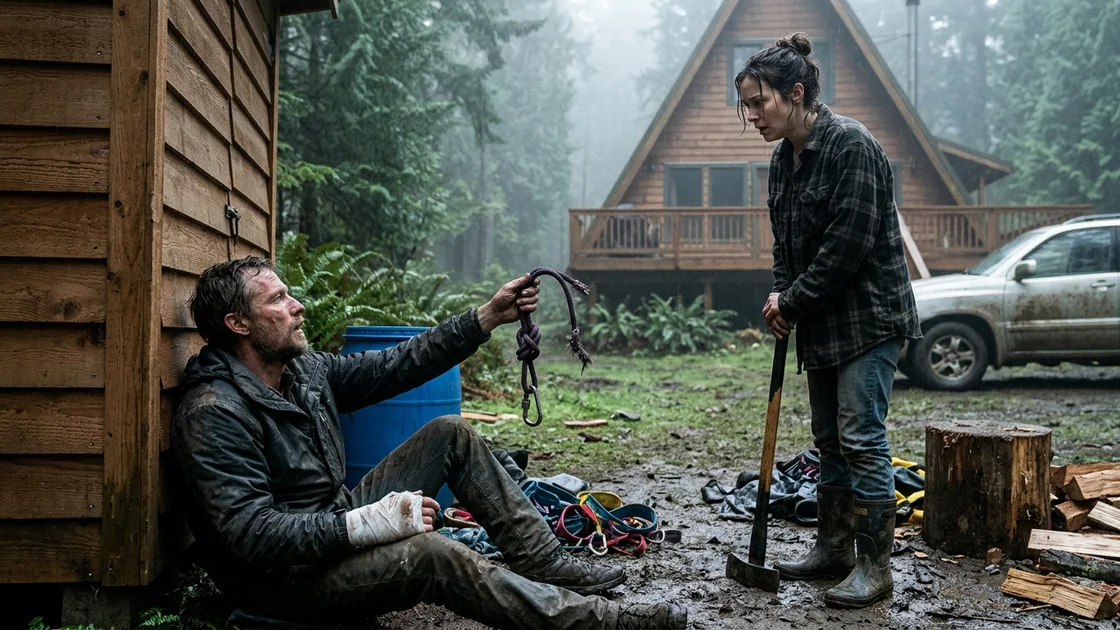
This is the story of Caleb Vance, a seasoned high-altitude mountaineer who survives a catastrophic storm on an unclimbed Himalayan face only by making the unthinkable decision to sever the rope holding his falling partner, Julian Croft. Suffering from severe frostbite and crushing survivor's guilt, Caleb returns to their quiet logging town in the Pacific Northwest to return Julian's personal effects to his widow, Mara. What follows is a grueling emotional journey through grief, deception, and the harsh realities of the alpine code, as Caleb struggles to confess the truth of what happened on the mountain while Mara grapples with the phantom left behind by her husband's obsession with the peaks.
The knife was a tiny thing, a folding titanium blade meant for slicing summer sausage and trimming frayed nylon webbing, not for deciding who lived and who died at twenty-four thousand feet. Yet, in the howling white abyss of the Fang’s southwest face, that three-inch piece of metal had become the fulcrum of the universe.
Caleb Vance stared at his own hands as the twin-engine commuter plane banked sharply over the jagged spine of the North Cascades. Four of his fingertips were swaddled in thick, sterile gauze, bulky and useless like clubbed twigs. Beneath the dressings, the flesh was black and dead, a souvenir from the Death Zone. Every time his heart beat, a dull, rhythmic throb echoed in the ruined nerve endings, reminding him that he was still breathing. It was a reminder he did not particularly want.
Outside the scratched acrylic window, the mountains of Washington looked impossibly green and gentle compared to the Karakoram. Down there, Douglas firs and western red cedars crowded the steep valleys, drinking from silver ribbons of snowmelt. Up where he had just come from, there was no green. There was only granite the color of a bruise, ice that shattered like plate glass, and a sky so dark and thin it felt like staring into the barrel of a loaded gun.
And Julian was still up there.
Caleb leaned his forehead against the cool plastic of the window, closing his eyes. Immediately, the sound of the plane’s turboprops morphed into the banshee shriek of the jet stream tearing across the granite seracs of the Fang. He could feel the harness biting into his bruised hips, the terrifying, hydraulic pull of dead weight dragging him inch by agonizing inch toward the lip of a two-thousand-foot drop.
He was already dead, Caleb told himself for the ten-thousandth time. The falling ice took him square in the chest. He didn't answer on the line. He was gone before I ever reached for the blade.
It was a logical, tidy narrative. It was what he had told the Pakistani military liaison in Skardu. It was what he had told the embassy officials in Islamabad, and the sharp-eyed reporters from the climbing magazines who had cornered him at the airport in Seattle. They had all nodded with solemn, respectful comprehension. In the alpine community, a severed rope was the ultimate taboo, a cursed event spoken of in hushed, clinical tones, yet universally understood as a tragic necessity when the mountain demanded blood. They called it the arithmetic of survival: one dead man is a tragedy; two dead men is a waste.
So why did his stomach churn with acid every time he rehearsed the words he would say to Mara?
The plane touched down on the wet asphalt of the Bellingham runway with a sharp bark of rubber. Caleb gathered his battered expedition duffel with his good left hand, slinging the strap over a shoulder that had lost twenty pounds of muscle in six weeks. He walked through the tiny terminal like a ghost passing through walls. People glanced at his bandaged right hand, at the dark, sunken hollows beneath his eyes, and at the peeling, sun-blistered skin of his nose and cheekbones. They looked away quickly. He carried the unmistakable stench of catastrophe on him, an aura of cold places where human beings were never meant to go.
His truck was still in the long-term lot, a rusted 1998 Toyota Tacoma with a camper shell that smelled faintly of damp wool and old pine needles. Starting it required using his left hand to reach across the steering column and turn the key. The engine coughed, sputtered, and roared to life. On the passenger seat sat a faded blue chalk bag and a cracked plastic box of winter-grade lip balm—Julian’s things, tossed there two months ago on their drive to Sea-Tac, back when they were invincible, laughing about the atrocious food they were about to eat in base camp and arguing over how many ice screws to pack for the summit push.
Caleb couldn't look at the chalk bag. He threw his fleece jacket over it and pulled out of the lot, heading east on Highway 542 toward Glacier.
Julian and Mara lived in a cedar-sided A-frame three miles outside of town, tucked into a second-growth forest right where the Nooksack River bent around a massive gravel bar. Caleb knew the house as well as he knew his own cramped cabin. He had helped Julian replace the cedar shakes on the roof three summers ago. He had sat on their wrap-around deck drinking cold IPAs while Mara tended to her sprawling raised beds of kale, snap peas, and heirloom tomatoes. He had been the best man at their wedding, standing in a rented suit in a meadow below Mount Baker, watching Julian—a man who was only truly comfortable when hanging from two millimeters of steel—weep openly as Mara walked toward him in a simple white dress.
"Take care of him up there, Cal," Mara had whispered to him during the reception, her hands gripping his forearms with surprising strength. It wasn't the first time she had said it, and it wouldn't be the last. "He doesn't know when to turn around. You're his brakes."
"Always, Mara," Caleb had promised, clinking his glass against hers. "I'm the old man of the rope team. I like my toes too much to let him get us killed."
He looked down at his bandaged right hand resting on his knee. The irony was so thick he could barely swallow past it.
He turned off the highway onto the gravel lane that led to the A-frame. The tires crunched loudly in the quiet afternoon, spitting small stones into the ferns that bordered the drive. As he rounded the final bend, his chest seized. He had half-expected a line of cars—friends from the local climbing gym, neighbors bringing casseroles, Mara’s sister from Portland. Instead, the driveway was empty save for Julian’s mud-splattered Outback and a neat stack of split alder firewood waiting to be stacked in the shed.
The official news had broken four days ago via a satellite phone call from base camp to the embassy, which had then dispatched a local sheriff’s deputy to the house. Caleb had tried to call her from Islamabad, and again from Dubai, and again from Seattle, his finger hovering over her name on his cracked phone screen before cowardice won out. You don't tell a woman you cut her husband off the end of your rope over a bad cellular connection. You do it looking into her eyes, so she can see the ruin it left in you, too.
He cut the engine. The silence of the woods rushed in, broken only by the distant, continuous roar of the glacially fed river and the sharp chack-chack of a Steller's jay in the branches overhead.
Caleb reached into the back of his truck and retrieved a small, waterproof dry-sack. Inside were the things he had taken from Julian’s tent at Advanced Base Camp before the porters packed up the expedition: a battered leather journal, a silver Saint Christopher medal that Julian never wore on the actual climbs for fear of the chain freezing to his neck, a titanium spork, and a Seiko dive watch with a scratched crystal. Everything that had been on Julian’s body during the climb—his wedding ring, his altimeter, the camera containing the only photos of their time on the wall—was currently buried under forty feet of wind-slab snow at the base of the Fang.
Walking up the wooden steps to the deck felt like ascending the final meters to an eight-thousand-meter peak. His legs were leaden; his lungs burned for air despite the rich, oxygen-heavy atmosphere of the valley floor. Before he could knock, the heavy fir door swung open.
Mara stood on the threshold.
She looked smaller than he remembered, as if the grief had physically compressed her bones. She was wearing one of Julian’s oversized flannel shirts, the cuffs rolled up three times to expose her pale, slender wrists, and a pair of faded jeans. Her dark hair was pulled back into a messy knot, several silver strands catching the grey afternoon light—strands Caleb was certain hadn't been there two months ago. Her eyes, usually a sharp, inquisitive hazel, were rimmed in red and terribly still, like two tarnished coins resting at the bottom of a well.
For a long time, neither of them spoke. The wind rustled the vine maples beside the porch.
"You're thin," she said finally. Her voice was raspy, stripped of its usual warmth, sounding like dry leaves scraping across pavement.
"The food at base camp wasn't great," Caleb tried to say, attempting the shadow of a familiar joke, the kind he and Julian always made upon returning. The words died in his throat, grotesque and entirely inappropriate. He swallowed hard. "Mara, I..."
Her eyes dropped from his hollowed-out face to his bandaged hand, and then to the small yellow dry-sack gripped in his left fist. A tremor passed through her jaw, so slight anyone else would have missed it. She stepped back from the doorway.
"Come in, Cal. It's cold out there."
The interior of the house was suffocatingly familiar. It smelled of cedar, woodsmoke, and the faint, citrusy scent of the beeswax polish Mara used on the furniture. On the wall beside the stairs hung a framed photograph of Julian and Caleb on the summit ridge of Mount Deborah in Alaska, their faces hidden behind ski goggles and rime-crusted beards, arms slung over each other's shoulders. Looking at it made Caleb feel physically ill.
"Sit," Mara said, gesturing toward the worn leather sofa facing the cold woodstove. "I'll make tea."
"You don't need to host me, Mara."
"I need to do something with my hands," she replied sharply, already turning toward the kitchen. "Sit down, Caleb."
He sat on the edge of the sofa, placing the yellow dry-sack on the coffee table made from a salvaged slab of old-growth fir. He stared at the grain of the wood, counting the rings. A hundred years of slow growth in the dark wet forest, cut down, planed smooth, varnished. Everything took so long to build, to grow, and only a fraction of a second to destroy.
In the kitchen, the kettle began to hum, then whistle. Ceramic mugs clinked. When Mara returned, she placed a steaming mug of peppermint tea in front of him, then sat in the armchair opposite the coffee table, pulling her knees up to her chest and wrapping the tails of Julian’s flannel around her shins. She didn't make a mug for herself.
She looked at the yellow bag. "Is that all of it?"
"It's what was at ABC," Caleb said softly, his voice cracking. "Advanced Base Camp. At eighteen thousand feet. We left everything we didn't need for the push in the vestibule of the tent. His big duffel with his street clothes and spare gear is being shipped back through Islamabad with the freight. It takes a few weeks to clear customs."
Mara reached out a trembling hand, unclipped the plastic buckle of the dry-sack, and unrolled the stiff nylon top. She tilted it, letting the contents slide out onto the wood. The Seiko watch gave a dull thud. The Saint Christopher medal pooled like liquid silver beside the leather journal.
She picked up the watch first, pressing the cold metal face against her cheek, her eyes fluttering shut. A single, silent tear tracked down the bridge of her nose and vanished into the flannel fabric at her knee. Caleb felt a band of iron tighten around his ribs. He wanted to reach across the table, to take her hand, to offer some shred of comfort, but his right hand was a useless club of dead meat, and his left felt stained with something that would never wash off.
"The deputy who came," Mara said, opening her eyes and staring past Caleb out the big A-frame windows into the dark trees. "He was twenty-five years old. His hands were shaking worse than mine. He read from a piece of paper printed off a fax machine. It said Julian died in an icefall on the descent from the southwest face. It said you tried to save him, and that you barely made it down yourself."
"That's the summary," Caleb whispered.
"I don't want the summary, Cal." Her gaze snapped back to him, fierce and sudden, burning away the numbness that had shrouded her a moment before. "I've been sitting in this house for ninety-six hours listening to the river and reading the stupid, sanitized paragraphs in Climbing and Alpinist. 'Tragedy on the Fang.' 'Veteran alpinist Julian Croft lost in serac collapse.' They write about it like it's a press release for a failed corporate merger. You were there. You were on the other end of the rope. Tell me what happened to my husband."
Caleb looked down at his tea. The steam rose into his face, smelling of summer gardens. In his mind, the temperature dropped sixty degrees.
"We shouldn't have been as high as we were when the barometer dropped," Caleb began, his voice low and monotonous, like a man reciting a confession in a dark booth. "We had been pinned down at Camp Two—that's just a snow cave we chopped into a narrow ice hose at twenty-two thousand feet—for two days. The wind was ferocious, tearing the spindrift off the upper ridges and funneling it right down our throats. By the morning of the nineteenth, we were down to half a canister of Isobutane gas and three packs of freeze-dried oatmeal."
Mara didn't blink. She knew the terminology. She had lived with Julian for ten years; she knew how many grams a stove weighed, how fast hypoxia degraded judgment, how small the margins were on an alpine-style ascent where there were no fixed ropes, no Sherpas, and no oxygen bottles.
"That was the turnaround day," she said quietly. "You told me before you left. If you hadn't summited by the nineteenth, you were coming down."
"We were supposed to," Caleb admitted, the shame burning hot behind his sternum. "I woke up at two in the morning to check the sky. The wind had died. Just completely stopped, like someone threw a switch. The stars were out, so bright they looked like ice chips, and the summit ridge was right there, glowing in the moonlight. Maybe eighteen hundred vertical feet above us. Technical mixed climbing, M6, maybe some A2 aid through the granite band, and then the snowfield to the top."
"And Julian wanted to go for it," she said. It wasn't a question.
"He had that look in his eyes, Mara. You know the one. He said the high-pressure window had just shifted late, that we had twelve hours of dead calm before the tail end of the monsoon moisture cycled back up from the valleys. He said we could go light—leave the sleeping bags, leave the tent poles, just take the stove, one rope, a minimal rack, and blast to the top and back to the snow cave before dark."
"And you let him talk you into it." There was no accusation in her tone, just a terrible, weary recognition of the dynamic that had defined the three of them for a decade.
"I wanted it too," Caleb said, forcing himself not to lie to her about that, at least. "I'm forty-two, Mara. My knees are shot. I knew while we were hiking up the Baltoro Glacier that this was my last big expedition to the Greater Ranges. Looking up at that ridge in the moonlight... it looked so close. It felt like we had already paid the price in suffering, and all we had to do was reach out and collect the prize. So I said yes."
He paused, rubbing his thumb against the rough gauze of his right hand. The phantom pain in his missing fingertips flared, sharp and electric.
"The climbing was harder than it looked from below. It always is at that altitude. The granite was rotten, fractured by the freeze-thaw cycles, and the ice in the gullies was thin—just two inches of aerated styrofoam over smooth rock. Every placement was marginal. You’d swing your axe and it would just skitter off the stone with sparks flying, or thud into snow that had the consistency of vertical sugar. It took us nine hours just to get through the rock band. By noon, we were still four hundred feet below the summit, and the clouds were already boiling up from the south, purple and flat on the bottom like anvils."
Mara gripped the Seiko watch so tightly her knuckles turned white. "Did you turn around then?"
"I yelled up to him," Caleb said, closing his eyes, seeing the tiny red dot of Julian’s Gore-Tex shell high above him against the swirling grey mist. "He was leading the pitch. I was anchored to two questionable pitons I’d hammered into a seam that was flexing under the load. I screamed that the barometer on my watch had dropped six millibars in two hours. That we were walking into a trap. He couldn't hear me over the wind—it had picked back up, roaring through the col like a freight train—or he pretended he couldn't. He just kept moving up, scratching with his crampons, turfing his picks into frozen moss. When I finally jumared up the line to his stance, he was grinning. His lips were blue, his nose was already frostbitten white at the tip, and he was grinning like a kid."
Caleb swallowed the lump in his throat. "He tapped his altimeter and pointed up. The summit ridge was less than a rope length away. Just a forty-five-degree snow slope. No more technical difficulties. He shouted in my ear, 'Twenty minutes, Cal! Twenty minutes and we never have to come back to this godforsaken pile of rock again!' So we went to the top."
"How long were you there?"
"Five minutes. Maybe less. We couldn't see anything. We were inside a ping-pong ball of blowing snow and static electricity. The metal on our ice axes was buzzing—literally humming like a beehive from the charge in the clouds. Julian took two pictures with his little point-and-shoot camera, hugged me, and then we turned around to rappel the route."
The room seemed to grow darker. Outside, rain had begun to fall, pattering softly against the steep cedar roof of the A-frame, sliding down the massive glass panes in wavering sheets. It was the classic Washington autumn drizzle, gentle and life-giving, the exact opposite of the horizontal razors of ice that had stripped the skin from Caleb’s face two weeks ago.
"Descending an unclimbed face in a whiteout is the closest thing to hell I can imagine," Caleb continued, his voice dropping an octave. "Our tracks were already gone. We were rappelling off V-threads in the ice where it was thick enough, and leaving gear behind on the rock where it wasn't. Stopper nuts, cams, pitons—we were bleeding hardware just to get down sixtieth-meter by sixty-meter. By four o'clock, the light was fading, and the cold was... it wasn't normal cold, Mara. It was the kind of cold that makes nylon ropes stiff as steel cables. My right glove got soaked when I was clearing wet slush out of a crack to place a nut, and within ten minutes, I couldn't feel my fingers anymore. I couldn't clip the carabiners with my right hand. I had to use my teeth and my left hand for everything."
He looked at her then. Really looked at her. She was leaning forward now, her elbows on her knees, her face inches from the coffee table. She wasn't crying anymore. She was entirely inside the story, climbing down that mountain with them, trying to find the exact moment where her life had split in two.
"Tell me about the fall," she whispered.
Here it was. The precipice. Caleb felt the vertigo sweep over him, far worse than anything he had experienced looking down seven thousand feet to the glacier below the Fang. He had two paths in front of him right now. He could give her the version he gave the authorities: the clean, blameless version where the mountain severed the rope over a sharp granite edge, or where the serac took Julian and the line snapped under the shock load. Or he could hand her the knife.
If he told her the truth, she would hate him for the rest of his life. He would lose the only person left in the world who understood who Julian was, and by extension, who Caleb was. This house, this sanctuary in the woods, would be barred to him forever.
"We were four rappels above the snow cave," Caleb said, his heart hammering against his ribs like a trapped bird. "It was completely dark. Nine o'clock at night. Our headlamp batteries were dying from the cold, just throwing out these weak yellow cones of light that bounced back off the blizzard. We reached the top of the big granite band—the crux section we had climbed that morning. It's an overhanging wall, maybe a hundred and fifty feet high, with a massive roof of glacial ice—a serac—hanging out over the right side of it like the eaves of a house."
He lifted his good hand to illustrate, his fingers trembling in the warm air of the living room.
"To get down it, we couldn't just rappel straight down into space because the wind was blowing so hard from the north that it would push us thirty feet out from the wall, and we'd never be able to pull the ropes down from the anchor once we reached the bottom. We had to down-climb diagonally, clipping into the gear we goes up on, keeping ourselves anchored to the rock face. I went first because my hand was useless and Julian wanted to be above me, belaying me down, in case I slipped."
"He was taking care of you," Mara murmured, a flash of fierce pride cutting through her grief.
"He was," Caleb agreed, and the truth of that was like swallowing crushed glass. "He saved my life three times on those upper pitches just by building the anchors when my hands wouldn't work. On that overhang, I made it down to the small ledge at the bottom of the rock band. It wasn't really a ledge—just a sloping ramp of blue water-ice, maybe eighteen inches wide, right above a sheer drop that fell all the way to the glacier. Two thousand feet of nothing. I slammed two ice screws into the ramp—the longest ones we had left, twenty-two centimeters—and equalized them with a Dyneema sling. I clipped myself in, took him off belay, and flashed my headlamp three times so he knew it was safe for him to start rappelling down the single line to me."
Caleb stood up abruptly. He couldn't sit anymore; the adrenaline of the memory was flooding his bloodstream, making his muscles twitch with the phantom urge to brace against an impact. He walked to the cold woodstove and rested his forehead against the black cast iron.
"I saw his light start moving down the cliff above me," Caleb said to the iron stove. "He was about forty feet above my stance, swinging in and out of the shadows as he worked his way over the lip of the overhang. And then... I heard it. You don't hear an avalanche like a roar at first. Up high, when a serac lets go, it sounds like a rifle shot. Just a massive, hollow CRACK that vibrates right through the soles of your boots."
Behind him, Mara didn't make a sound.
"A block of ice the size of a city bus calved off the edge of the hanging glacier to our right. Most of it missed us—it thundered down the gully fifty yards away, shaking the whole mountain so hard I thought my ice screws were going to pop right out of the wall. The air blast alone nearly tore me off the ledge. For thirty seconds, I couldn't breathe because the air was entirely full of pulverized ice dust. And then, right at the tail end of the slide, a secondary fracture happened right above Julian."
Caleb turned back around to face her. His face was wet with sweat, despite the chill in the room.
"I saw the debris hit the overhang in the beam of his headlamp. Pieces of dinner-plate ice and granite blocks the size of televisions. I saw his light spin wildly as he was knocked off his feet. He fell past the overhang, out into space, penduluming across the wall on the rope that was anchored directly to my harness and my two screws."
Caleb mimed the motion, his left hand slicing down through the air and stopping with a violent jerk.
"When the slack ran out, the shock load hit the anchor like a bomb going off. The upper ice screw ripped straight out of the blue ice—just exploded out in a shower of white shards, taking a dinner-plate-sized chunk of the ledge with it. The entire weight—Julian, his pack, the dynamic force of a forty-foot freefall, plus my own weight—came straight onto the remaining screw and the belay loop of my harness. I was jerked off my feet, slammed face-first into the ice ramp, and dragged down over the edge until my waist was hanging out over the void, held only by a three-foot tether clipped to a single piece of steel tube that was already bending."
Mara had both hands over her mouth now. Her eyes were wide, horrified, staring at Caleb as if he were still hanging there in the dark in front of her.
"I screamed his name," Caleb cried out, his voice breaking completely in the quiet house, echoing off the high cedar rafters. "I screamed until my throat bled! 'Julian! Julian, get on the rock! Take the weight off!' The rope was stretched so tight over the granite lip below me that it was singing in the wind. Like a cello string. I looked down between my boots. It was pitch black. His headlamp was gone—smashed in the fall or torn off his helmet. He was hanging twenty feet below the lip in free space, completely out of reach of the rock wall because of the overhang."
"Did he answer?" Mara’s voice came from behind her fingers, muffled and small. "Cal, did he answer you?"
This was the lie he had practiced in the hospital in Skardu. No, Mara. He never made a sound. He died instantly on impact.
Caleb looked at Julian’s watch on the table. He looked at the photo on the wall—two young men in Alaska who believed that the bond of the rope was sacred, that you died together before you ever let go of the other end. Julian had lived his whole life in pursuit of what was real, stripping away the comfortable lies of civilization to see who he was when the cold stripped everything else away. To lie to his wife in his own house about how he died felt like murdering him a second time.
"I felt him," Caleb whispered, sinking to his knees on the braided rug in front of the cold stove. "I couldn't hear him over the wind, Mara, I swear to God I couldn't hear anything, not even my own voice. Maybe he was unconscious. Maybe his ribs were crushed and he was just convulsing. Or maybe... maybe he was awake and trying to find his ascenders in the dark with broken hands. I don't know. All I know is that the rope wasn't still. It was jerking. Small, rhythmic tugs coming up through the nylon into my harness. Like a fish on a deep line."
Mara let out a sound—a low, animal keen that seemed to come from the very floor beneath them. She slid off the armchair onto her knees on the other side of the coffee table, gripping the edge of the fir slab as if the room were pitching like a ship at sea.
"Why didn't you haul him?" she sobbed, the tears finally breaking through in a violent flood. "A three-to-one pulley! You practiced it a hundred times in the gym! In the trees out back! You told me you could haul a dead weight in your sleep!"
"With what?!" Caleb held up his mangled, bandaged right club, thrusting it toward her in agony. "My right hand was frozen solid to the wrist! It was a block of wood, Mara! And the only thing holding both of us to the planet was one ice screw in rotten, fractured ice that was already melting out from the friction! Every time the rope twitched—every time he moved down there, or the wind swung him—the screw groaned and pivoted downward another millimeter! Cracks were spiderwebbing out from the placement right in front of my face! I didn't have another screw on my harness—I’d dropped my rack when the first one blew. I couldn't tie off the belay plate with one hand while taking the full load on my waist!"
He was weeping openly now, gasping for air, the terror of that endless hour on the ledge completely overtaking him.
"I hung there for forty minutes," he choked out. "Forty minutes watching the steel teeth of that screw slowly chew their way out of the ice. My crampon points were barely scratching into the verge of the ramp. My calves were cramping so bad they locked up. I tried to reach down and grab the rope below the device to pull up an inch, just an inch to see if he was climbing it, and the whole screw shifted half an inch outward. White powder poured out of the hole. It had seconds left. Maybe a minute."
The silence in the room suddenly became absolute. Even the rain outside seemed to hold its breath. Mara was staring at him across the table, her face pale as bone, her chest heaving. She knew. Before he said the next word, he saw the comprehension dawn in her hazel eyes, transforming her grief into something infinitely colder and sharper.
"The rope didn't break on the rock," she whispered.
"No," Caleb said, bowing his head until his forehead touched the rough wool of the rug. "The embassy report said it severed over a granite edge during the shock load. I let them write that because I was a coward. Because I was lying in a military hospital bed with doctors telling me they were going to amputate my fingers, and I couldn't bear the way they would look at me if I told them what I did with my left hand."
"You cut it," she said. The words fell like stones into deep water.
"I had my little titanium knife clipped to my chest harness for cutting webbing for V-threads," Caleb said to the floor. "I opened it with my teeth. I held it against the taut rope right above my figure-eight knot for ten minutes, praying to a God I don't even believe in that the screw would just blow first so I wouldn't have to do it. So we would just go down together like we were supposed to. Like partners."
He raised his head, looking at her through a blur of tears.
"And then I thought of the river down here. I thought of the smell of pine needles in the back of my truck. I realized I didn't want to die in the dark at twenty-three thousand feet for a pile of rock that didn't care about either of us. The animal in me took over, Mara. I didn't saw through it. The tension was so high that the second the blade touched the sheath of the rope, the inner cores just exploded apart with a sound like a pistol shot. I slammed backward onto the ramp. The tension vanished from the screw. And the rope... the tail end of the rope just whipped down over the edge and disappeared into the snowstorm."
He stopped. There was nothing left inside him. He had hollowed himself out and dumped the rotting contents onto her living room floor.
Mara didn't move. For a full minute, the only sound was the grandfather clock in the hallway ticking—a slow, steady measurement of time that Julian no longer possessed. Slowly, she stood up. She didn't use the chair for support; she rose with a rigid, terrifying grace, standing over the coffee table where her husband’s watch and journal lay scattered.
"How long did you wait on the ledge after?" she asked. Her voice was devoid of all inflection. It was the coldest thing Caleb had ever heard, colder than the wind on the Fang.
"Until dawn," Caleb whispered. "Six hours. I clipped myself directly to the screw, curled into a ball on that eighteen-inch ramp, and waited for the light so I could look down to the glacier at the base of the wall."
"And did you see him?"
"No. The wind had blown millions of tons of spindrift down the face all night. The bergschrund at the bottom was completely filled in. It was just a smooth white sheet. It took me two days to crawl down the rest of the mountain with one hand. When I got to Advanced Base Camp, our liaison officer and the two high-altitude porters thought I was a ghost. They had seen the serac collapse through the binoculars from the moraine during a break in the clouds and assumed we were both dead."
Mara walked around the table. Caleb braced himself, expecting her to strike him, to kick him while he was on his knees, to scream at him with all the fury of a woman whose world had been severed by a three-inch blade. He would have welcomed it. Pain from her would have been a kind of absolution.
Instead, she walked right past him without touching him, heading toward the front door. She pulled it open, letting in a gust of wet, pine-scented air and the loud roar of the Nooksack River.
"Get out," she said, looking out into the rain.
Caleb struggled to his feet, his knees popping, his head swimming. "Mara—"
"Take your truck, turn around in my driveway, and get off my land, Caleb." She still didn't look at him. Her hand was gripping the brass doorknob so hard her arm was shaking. "If you come back here, if you come to the memorial service on Saturday, if I see you in the grocery store in town or at the post office, I will take Julian’s shotgun out of the closet and I will kill you. Do you understand me?"
He looked at her profile against the grey afternoon light. There was nothing to argue. There was no defense to mount. In her mind, Julian had been alive down there in the dark, waiting for his best friend to figure out a way to pull him back into the world, and his best friend had chosen the smell of pine needles and his own skin instead.
"I understand," Caleb said quietly.
He walked past her out onto the porch, leaving the mug of untouched peppermint tea on the table beside the yellow dry-sack. As soon as his boots hit the wooden steps, the heavy fir door slammed shut behind him, the deadbolt sliding home with a sharp, final clack.
Caleb’s cabin sat five miles further up the valley, at the end of a washboard logging road that hugged the boundary of the Mount Baker-Snoqualmie National Forest. It was a one-room structure built by a cedar shakebolt cutter in the seventies, heated only by a rusted Fisher woodstove and wired with a single twenty-amp circuit that flickered whenever the wind blew hard in the hemlocks.
For the next three days, Caleb didn't turn on the lights, and he didn't build a fire.
He lay on his narrow mattress under a pile of old down sleeping bags, staring at the water stains on the tongue-and-groove ceiling, listening to the rain drum relentlessly on the corrugated tin roof. His right hand began to smell sour beneath the bandages—the creeping rot of dry gangrene transitioning into something worse because of the damp Pacific Northwest air—and the pain moved up from his fingertips into his palm and wrist, a deep, throbbing ache that felt like someone was driving hot sewing needles into the carpal bones. He had a bottle of Oxycodone prescribed by the doctor in Seattle sitting on the crate beside the bed, alongside a bottle of antibiotics. He took the antibiotics with cold tap water because some stubborn, pathetic part of him still refused to die, bit he left the painkillers untouched. The pain was the only thing keeping him tethered to the mountain, the only fair trade he could make with the ghost hanging at the end of his rope.
When he slept, he didn't dream of the Fang. He dreamed of the mundane things. He dreamed of sitting in the passenger seat of Julian’s Subaru driving down to Smith Rock in Oregon, Julian tapping the steering wheel out of rhythm to an old Modest Mouse album while explaining a bizarre theory he had about crack climbing technique. He dreamed of the time Julian had tried to bake a sourdough loaf in a Dutch oven at base camp in Peru and produced something with the density and appearance of a granite curling stone. Then, in the dream, Julian would turn to look at him, and the lower half of his face would be caved in by falling ice, his mouth full of blood and snow, asking softly through broken teeth: Why didn't you wait another minute, Cal? The screw was going to hold.
On Friday morning, the pounding on the cabin door woke him from a feverish half-sleep.
"Cal! Open up, man, I see your truck!"
Caleb groaned, rolling off the mattress and dragging a fleece pullover on with his left hand. When he pulled the door open, the grey morning light stabbed into his eyes like an ice pick.
Standing on the rotting porch steps was Marcus Vance—no relation, though everyone in the valley joked about it—who ran the local guide service in town and had climbed with both Caleb and Julian in the Cascades for fifteen years. Marcus was a bear of a man with a thick red beard and forearms like bowling pins, currently holding a brown paper bag from the local bakery and a six-pack of dark beer.
The smile on Marcus’s face vanished the instant he saw Caleb.
"Jesus Christ, Cal," Marcus breathed, stepping inside without waiting for an invitation. He looked around the freezing, dark cabin, taking in the untouched food, the dead woodstove, and the smell of sweat and infected flesh radiating from Caleb. "What are you doing up here? You didn't answer your phone. The clinic in Bellingham called my shop yesterday looking for you—said you missed your surgical consult for the hand on Wednesday."
"I've been sleeping," Caleb rasped. "Jet lag."
Marcus set the beer and pastries on the tiny laminate counter and grabbed Caleb’s right arm gently by the elbow, lifting the bandaged club toward the window light. Yellowish-brown fluid had seeped through the gauze at the tips of the middle and ring fingers, dried into a stiff crust. A faint red line was beginning to trace its way up the pale skin of Caleb’s inner wrist.
"That's blood poisoning starting, you idiot," Marcus said, his voice tight with alarm. "You didn't survive the Fang just to die of sepsis in a shack five miles from a highway. Get your boots on. I'm driving you down to St. Joseph’s right now."
"I'm not going to the hospital today, Marc." Caleb pulled his arm back, cradling it against his chest. "I'll go tomorrow."
"Tomorrow is the memorial at the Grange hall," Marcus said gently, his eyes softening with pity. He thought he understood what this was—just standard-issue survivor's guilt, the dark fog that every mountaineer who came back alone had to wade through. "Is that why you're hiding up here? Because you don't want to face the crowd? Man, nobody blames you. Do you hear me? Nobody. I talked to three of the guys from the American Alpine Club yesterday. Everybody knows how loose that face is when the monsoon winds shift. The fact that you got down off that rock band with one hand after the rope parted is a miracle. Julian would be the first one to kick your ass for letting your hand rot off."
Caleb stared at his friend. After the rope parted. The passive voice. The wonderful, absolving passive voice of mountaineering literature. The rope parted. The anchor failed. The mountain claimed him. As if human hands and human terror had nothing to do with it.
"Have you seen Mara?" Caleb asked, ignoring the lecture.
Marcus sighed, rubbing the back of his neck. "Yeah. My wife and I went over there on Wednesday afternoon with somelasagna and to see if she needed help setting up the chairs at the Grange. She wouldn't let us past the porch, Cal. She looks... she looks like she's made of glass. Like if you dropped a dish on the floor next to her, she’d shatter into a million pieces. She asked me one question."
Caleb’s heart stopped. "What did she ask?"
"She asked me how much weight a single twenty-two-centimeter steel ice screw can hold in rotten water-ice before it shears out." Marcus shook his head, looking puzzled and deeply saddened. "Weirdest damn thing. I told her what the textbook says—maybe ten kilonewtons in good ice, down to two or three in aerated garbage—and she just nodded, took the lasagna, and shut the door in my face. Grief makes people fixate on the strangest details, man. She's trying to do the math of the accident in her head to make it make sense."
Caleb turned away so Marcus wouldn't see the spasm of agony that twisted his features. She wasn't just hating him; she was testing his story. She was lying awake in that A-frame, picturing the single screw in the ramp, calculating kilonewtons and dynamic load, trying to prove to herself that her husband could have been saved if Caleb had just been braver, stronger, better.
"I'll go to the hospital tonight," Caleb lied, walking over to the sink and pumping a glass of water with his left hand. "Just leave me alone today, Marc. I can't talk to people right now. My head is still up at twenty-four thousand feet."
Marcus hesitated, looking from the red streak on Caleb’s wrist to the hollow, haunted set of his shoulders. Mountaineers were notoriously terrible at dealing with emotional vulnerability; their entire culture was built on stoic self-reliance and compartmentalizing trauma until the climb was over. Finally, Marcus reached into his jacket pocket and pulled out a small, folded piece of paper, setting it beside the bakery bag.
"The freight company in Seattle called the shop looking for your address too," Marcus said. "The expedition pallets cleared customs fast—some senator who climbs pulled strings for the embassy because of the press coverage. They dropped the crates at the Burlington depot yesterday afternoon. I signed for them and put them in the back of my flat-bed. Your big red haul bag is in my garage whenever you want it. I took Julian’s two blue barrels over to Mara’s last night and left them in her woodshed so she wouldn't have to look at them until she was ready."
"Thanks, Marc."
"Swear to me you'll go to the ER before dark, Cal. If you don't text me from a hospital bed by seven o'clock, I'm coming back up here with the sheriff and dragging you out."
"I'll go. I promise."
After Marcus’s diesel truck rumbled back down the logging road, Caleb stood in the center of the cabin for a long time. The red line on his wrist pulsed in time with his heartbeat. His whole right arm felt heavy and hot, as if it had been dipped in scalding water, while the rest of his body shivered uncontrollably in the forty-degree room. Fever was setting in.
He walked over to the tiny bathroom mirror and looked at himself. His beard was patchy where frostbite had killed the hair follicles on his chin. His eyes were yellow around the edges, sunken deep into his skull. He looked like the corpses people passed on the Northeast Ridge of Everest—the ones in the bright down suits who sat down to rest in the snow and simply became part of the geography.
If you come back here... I will take Julian’s shotgun out of the closet and I will kill you.
A strange, delirious calm washed over him, heated by the bacterial infection coursing through his veins. There was something left in Julian’s blue barrels in Mara’s woodshed. No—not in the barrels. In Caleb’s own red haul bag sitting in Marcus’s garage, or maybe he still had it in the bottom of his travel duffel that he had brought back on the plane.
Caleb stumbled back to the mattress, kicked aside the sleeping bags, and dragged his battered yellow North Face duffel into the light by the door. With his left hand and his teeth, he unzipped the main compartment and dumped the contents onto the dusty floorboards. Dirty wool socks, a bruised titanium thermos, his passport, a bundle of Pakistani rupees, and at the very bottom, wrapped in a dirty fleece beanie to keep it from getting crushed: his GoPro camera and the thirty-meter coil of seven-millimeter static cord they had used as a pull-line on the rappels.
No, not the pull-line. Beside the camera was a short, eighteen-inch pig-tail of frayed, purple nine-millimeter dynamic rope, still tied in a rock-hard figure-eight-on-a-bight knot, clipped to a locking Petzl carabiner.
It was the piece of the climbing rope that had remained attached to Caleb’s harness after he made the cut. He had untied it from his belay loop at Advanced Base Camp with his teeth while the porters were boiling water for him, and shoved it into the bottom of his personal duffel like a murderer hiding the bloody rag.
Caleb picked it up with his good hand. The purple nylon was stiff with dried mud from the glacier moraine and abraded fuzzily along its length from dragging across the granite bands of the Fang. At the severed end, the white polyamide core fibers bulged out from the purple sheath like frayed nerves.
He brought the severed end up to his bloodshot eyes, squinting in the grey light from the open door.
Only two of the seven internal white core strands were cut clean and flat by a blade. The other five strands—and nearly three-quarters of the outer purple sheath—were melted, fused together into blackened, ragged globules of hard plastic, stretched thin and snapped at uneven lengths before the knife had ever touched them.
Caleb sat down hard on the wooden floor, his breath leaving him in a sharp gasp.
In the dark on that ledge, blinded by spindrift, terrified out of his mind, with his headlamp battery dead and his body in the final stages of hypothermia, he hadn't been able to see the rope where it ran over the lip of the granite overhang two feet below his harness. He had only felt the tension, and heard the singing sound it made.
That singing hadn't just been the wind. It had been the sound of nylon strands popping one by one as the rope sawed back and forth across a razor-sharp flake of fractured Himalayan granite under four hundred pounds of dynamic load. The friction of the pendulum swing in the storm had literally melted the rope halfway through before Caleb ever opened his knife with his teeth. When he had touched his tiny blade to the outer sheath, he had only cut the last two remaining strands of a rope that was less than three seconds away from snapping on its own.
And the rhythmic tugs he had felt coming up the line? The "fish on the line" that had haunted every waking second of his existence since the nineteenth of October?
Any first-year physics student—or any mountaineer who wasn't hallucinating from hypoxia and sepsis—knew what happened when a weighted nylon rope sawed across a rock edge in a sixty-mile-per-hour crosswind. As each internal strand snapped and the sheath slipped over the crystal grains of the granite, the rope elongated in short, violent, rhythmic jerks. Slip-stick-slip-stick.
Julian hadn't been moving down there. Julian hadn't been reaching for his ascenders. The rope had been dying on the rock, singing its death song, while Caleb hung above it in the dark, taking the blame for the mountain’s work.
Caleb stared at the melted black beads of nylon on the end of the cord. A laugh bubbled up in his chest, dry and hysterical, quickly turning into a racking cough that doubled him over on the floorboards.
It didn't change the choice he had made in his heart. In his mind, in the crucible of that ledge, he had chosen to cut his partner loose to save himself. The moral failure was identical; the animal inside him had still won.
Wait. No. To Caleb, the moral failure was the same. Sitting here in his cabin, he knew he had been willing to kill Julian to live, and he would carry that knowledge to his grave.
But to Mara?
Right now, Mara was sitting in that A-frame three miles down the river, believing that her husband had been alive, conscious, and fighting for his life in the dark while his best friend murdered him out of panic and cowardice. That belief wasn't just grieving her; it was poisoning every memory she had of the ten years they had spent together, turning Julian’s death into a grotesque betrayal that would rot her from the inside out for the rest of her life. If she knew the rope was already ninety percent gone over the rock—if she saw the friction melt that proved the fall and the granite had killed him, and that no human being on earth could have hauled a rope that was severed to two strands over a sharp edge—she could hate the mountain instead of hating the world.
Caleb grabbed his keys and the purple rope stub, shoved his bare feet into his mud-caked running shoes without tying the laces, and staggered out to his truck.
The fever was a roaring furnace behind his eyes by the time he turned into Mara’s gravel driveway twenty minutes later. He had hit the ditch once on the logging road when a wave of vertigo made the steering wheel spin in his left hand, scraping the entire passenger side of the Tacoma against a wall of alders, ripping off the side mirror. He hadn't even slowed down.
The rain had stopped, replaced by a thick, low fog that clung to the surface of the Nooksack River and drifted through the second-growth firs like smoke.
When he skidded to a halt behind Julian’s Outback, the front door of the A-frame didn't open immediately. Instead, he heard the rhythmic thunk-shhh, thunk-shhh coming from the side of the woodshed near the edge of the trees.
Caleb pushed open the truck door and stumbled out onto the wet gravel, clutching the purple figure-eight knot against his chest with his left hand, his bandaged right arm hanging limp and useless at his side. He walked around the corner of the house toward the sound.
Mara was standing by the chopping block in the mud, wearing Julian’s rubber Xtratuf boots and the same oversized flannel shirt. In her hands was Julian’s six-pound splitting maul. She wasn't splitting the alder firewood. She had dragged one of the blue plastic expedition barrels Marcus had delivered out of the shed, knocked the metal locking ring off the lid, and dumped Julian’s spare climbing gear into the mud—a tangle of brightly colored harnesses, carabiners, webbing, and a spare green climbing rope. She was swinging the heavy steel maul down into the pile of gear with terrifying, methodical violence, smashing the aluminum carabiners into bent scrap, hacking at the green rope against the muddy ground until her breath came in ragged, tearing gasps.
"Mara!" Caleb croaked, stopping ten feet away in the fog.
She froze with the maul halfway up to her shoulder. Slowly, she lowered the head of the axe to the mud, leaning on the hickory handle like a cane, her hair plastered to her sweat-slicked forehead. Her eyes locked onto him, wild and hollow.
"I told you what I would do if you came back here," she panted, looking toward the back porch where, sure enough, the heavy twelve-gauge Remington pump shotgun was leaning against the cedar siding within arm's reach of the steps.
"You can shoot me in a minute," Caleb said, his knees buckling slightly before he locked them straight. The world was tilting to the left; the dark green fir trees seemed to be leaning in over them like spectators at an execution. "Just look at this first. Please. Look at it, and then you can do whatever you want."
He tossed the eighteen-inch stub of purple rope across the mud. It landed right beside her rubber boots, the locking carabiner clinking against a crushed aluminum camming device she had just destroyed with the maul.
Mara didn't look down. She kept her eyes fixed on his pale, sweating face. "What is that?"
"It's the knot," Caleb said, leaning his hip against the corner of the woodshed to keep from falling into the ferns. "It's the end of the lead line that was tied into my harness on the ledge. I kept it. I hadn't looked at it in the daylight until twenty minutes ago."
"Get out of here, Caleb. I don't want your trophies."
"Look at the cut, Mara! You know ropes! You used to retire Julian’s cord every season when the sheath got fuzzy! Pick it up and look at the fibers!"
His voice cracked with such desperate, dying urgency that, despite herself, her gaze dropped to the mud. For a long moment, she stood motionless over the purple cord. Then, letting the handle of the maul rest against her leg, she bent down and picked up the stiff, dirty rope by the figure-eight knot.
She held the severed end up to her face in the flat grey light of the fog.
Caleb watched her eyes move across the frayed white core. He saw the exact fraction of a second when her mind—trained by a decade of living with an obsessed alpinist, of washing ropes in the bathtub, of inspecting gear after big wall climbs in Yosemite—processed what she was seeing.
Her thumb brushed over the hard, blackened, fused globules of melted nylon covering seventy-five percent of the cross-section. She traced the uneven, stretched stairs of the five core strands that had ruptured under immense heat and tension over a rock edge, and then looked at the tiny, two-strand corner on the far edge where the fibers were severed flat and clean by a blade.
"Rock abrasion," she whispered, her voice barely audible over the rush of the river behind the shed. "It melted through on the lip."
"Before I ever got the knife out," Caleb said, sliding slowly down the rough cedar planks of the woodshed until he was sitting in the wet mud, his legs stretched out in front of him. He couldn't stand up anymore; the sky was turning a strange, vibrant violet color at the edges of his vision. "The shock load when the upper screw blew dragged the line across the granite flake below my feet. The tugs I felt... the tugs I told you about... that wasn't Julian, Mara. It was the internal strands popping one by one as the sheath sawed over the crystal. By the time my blade touched it, he wasn't hanging on the rope anymore. There were only two strands left. You can't hold a two-hundred-pound weight on two core strands. The rope had already parted over the edge and jammed in the V-slot of the rock just below my feet."
Mara was turning the rope stub over and over in her muddy hands, staring at the black melted plastic as if it were the Rosetta Stone.
"Why..." She looked up at him, her brow furrowed in profound confusion, the rage draining out of her face and leaving behind a bottomless, aching emptiness. "Why did you tell me you killed him if the rope was already broken?"
"Because I didn't know it was broken until I looked at that stub today," Caleb muttered, his head lolling back against the shed wall. It felt so good to close his eyes against the bright grey fog. "On the mountain, in the dark, I thought the whole rope was intact. I thought he was alive down there, and I still used the knife. I wanted you to know the truth about who I was up there. I couldn't let you think I was a hero when I chose myself."
Mara looked from the rope in her hand to Caleb sitting in the mud. For the first time since he had arrived in her driveway ten minutes ago, she actually saw him—not as the phantom from the mountain, not as the man who had come back when Julian hadn't, but as the human being collapsing against her woodshed.
She saw the violent, full-body shivers wracking his emaciated frame. She saw the grey, clammy sheen of septic shock on his skin, and the soaked, yellowish-brown bandages on his right hand resting in the dirt beside his hip.
"Caleb?" She dropped the purple rope back onto the pile of smashed gear and took two quick steps toward him, kneeling in the mud beside him. She pressed the back of her cold hand against his cheek and jerked it back as if she had touched a hot stove. "Caleb, you're burning up. You're at least a hundred and four."
"Marcus told me to go to the clinic," Caleb mumbled, his tongue feeling thick and dry, like a piece of wool carpet in his mouth. He opened his eyes a crack; Mara’s face was hovering right in front of him, swimming in and out of focus. "I think the frostbite got infected on the plane. It's okay, Mara. It's really okay. I just needed you to see the melted part. He didn't suffer down there waiting for me. The fall took him, or the rock took the rope right away. He didn't know."
"Shut up," Mara said fiercely, the sudden panic in her voice cutting through the fog in his brain. She grabbed his left arm, looping it over her narrow shoulders, and wedged her hip under his armpit. "Put your weight on me. Stand up, Cal! Right now, help me!"
"I'm too heavy," he protested weakly, trying to pull away so he could just lie down in the cool ferns and go to sleep. "Leave me here. Go inside."
"I am not watching another person die in front of me!" she screamed into his ear, her voice cracking with a terrifying, ferocious strength that belonged entirely to the living. With a heave that made her boots sink three inches into the mud, she leveraged him up off the ground, dragging him upright against the shed wall. "Walk! Move your feet toward the Subaru! My keys are in the ignition!"
Half-carrying, half-dragging him through the mud around the corner of the A-frame, she got him to the passenger side of Julian’s Outback, wrenched the door open, and shoved him onto the cloth seat. Before he could slump sideways against the console, she leaned across him, pulled the seatbelt tight across his chest, and slammed the door.
Ten seconds later, she was behind the wheel, turning the key. The engine roared to life, the dashboard lights illuminating the dried mud on her jeans and the stray pine needles on the floorboards—the exact same pine needles from two months ago when the three of them had driven up to Artist Point to watch the sunset before the expedition left.
As she threw the car into reverse and backed down the gravel driveway at forty miles an hour, stones spraying into the trees, Caleb looked down at the floor mat between his feet. Lying next to the heater vent was the purple rope stub. She had picked it up out of the mud before she dragged him to the car.
"Why did you bring that?" he slurred as the car fishtailed onto the wet asphalt of Highway 542, accelerating hard toward Bellingham.
Mara kept both hands locked on the steering wheel at ten and two, her eyes fixed on the winding black ribbon of road through the towering evergreens, the windshield wipers beating a frantic rhythm against the mist. Tears were streaming freely down her face now, mixing with the sweat and rain on her cheeks, but her jaw was set like granite.
"Because it's the last piece of him," she said, reaching over with her right hand to grip Caleb’s good left wrist on the console, holding onto his racing pulse as if she could keep him anchored to the earth by sheer willpower alone. "Stay awake, Caleb. Talk to me. Tell me about the stupid sourdough bread in Peru."
Caleb closed his eyes, feeling the warmth of her living hand around his wrist, the vibration of the road beneath the tires, and the thick, rich air of the valley filling his lungs. For the first time in three weeks, the sound of the wind on the Fang began to fade, replaced by the hum of rubber on wet pavement, carrying them both down out of the mountains toward the sea.