The Barren Bough and the Blooming Weed
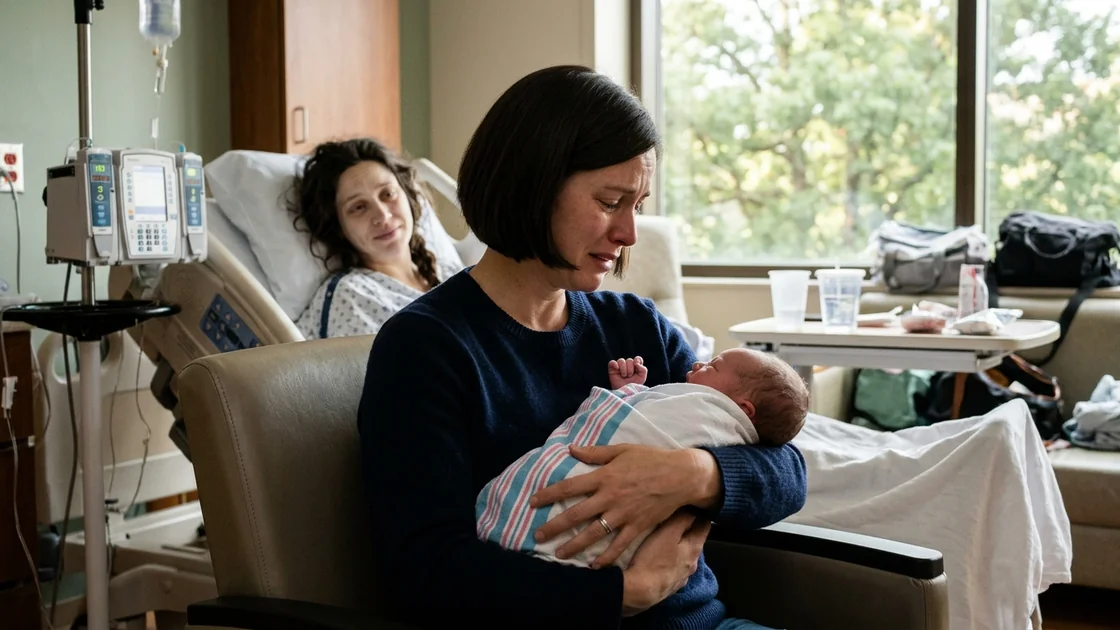
Clara Vance sits in a sterile medical office and learns that her body will never carry the child she and her husband have spent five years praying for, a devastating finality that shatters her meticulously planned life. That same evening, before Clara can even share the ruinous news with her family, her chaotic and fiercely independent younger sister, Maya, arrives at Clara’s home in tears to announce that she is accidentally and unwillingly pregnant after a brief affair with a man who has already left the country. Caught in a crucible of profound envy, grief, and sisterly responsibility, Clara must navigate the unbearable irony of their dual crises. Over the course of nine agonizing months, the sisters are forced to confront old childhood resentment, the suffocating expectations of their overbearing mother, and the raw definitions of motherhood as they negotiate a fragile, painful path toward an arrangement that will either tear their family apart forever or bind them together in a way neither woman ever anticipated.
The paper on the examination table crinkled every time Clara shifted her weight, a sharp, dry sound that filled the silence between her rapid breaths and the ticking of the wall clock. Outside the frosted glass of the fifth-floor window, the gray skies of late October pressed down against the brick facades of the downtown medical district, threatening a cold rain that refused to fall. Clara stared at her hands, folded neatly in her lap, noticing how the silver band of her wedding ring seemed slightly too tight against the pale skin of her fourth finger, a lingering side effect of the massive doses of synthetic hormones she had been injecting into the bruised flesh of her abdomen for the past fourteen months.
Dr. Aris Thorne did not look up immediately when he entered the room. That was the first sign. Over the course of three years, four failed intrauterine inseminations, and two grueling cycles of in vitro fertilization that had yielded not a single viable blastocyst, Clara had become an expert in the micro-expressions of reproductive endocrinologists. When there was hope—a new protocol to try, an experimental adjunct therapy involving human growth hormone, a slightly thicker uterine lining—Dr. Thorne walked in with his tablet held loosely against his hip, his glasses pushed up into his thinning silver hair, a brisk, clinical optimism in his voice. Today, he held a manila folder with both hands, his reading glasses perched low on the bridge of his nose, his shoulders slightly rounded as if he were carrying the physical weight of the laboratory report himself.
"Clara," he said softly, pulling his wheeled stool across the linoleum until he was sitting directly in front of her. "Did Mark get held up at the firm?"
"He’s in a deposition until four," Clara said, her voice sounding remarkably steady to her own ears, as though it belonged to a woman sitting in a café ordering tea rather than a woman braced for an execution. "I told him not to reschedule. We thought this was just a standard post-cycle review to set up the November calendar."
Dr. Thorne nodded once, slowly, and opened the folder. The light from the overhead fluorescent tubes caught the edge of a high-resolution scan clipped to the inside cover. "We ran the expanded genetic and histopathological panels on the tissue samples from Tuesday's hysteroscopy, alongside the latest ovarian reserve markers from the lab in Boston." He paused, taking off his glasses and setting them on top of the papers. "Clara, there is no easy way to preamble this, and after everything you and Mark have endured here, I owe you absolute directness."
Clara’s fingers tightened in her lap until the knuckles turned the color of bone. "Just say it, Aris."
"The premature ovarian insufficiency has accelerated beyond anything our stimulation protocols can bypass," he said, his voice dropping an octave into a register reserved for terminal diagnoses. "Your AMH levels are essentially undetectable now, and the biopsy of the basal layer of the endometrium shows severe, irreversible fibrotic scarring—likely an autoimmune response that was lying dormant until the recent hormonal surges triggered it. Even if we were to move forward with donor eggs, which I know you and Mark were hesitant to consider, the uterine environment simply cannot support implantation. It cannot remodel the spiral arteries required to sustain a placenta."
The air in the small room seemed to thin, growing cold and metallic in Clara’s throat. She looked past Dr. Thorne’s left shoulder at an anatomical diagram of the female pelvis laminated against the wall. Everything on the poster looked so simple, drawn in bright pinks and corals, clean cross-sections of tubes and cavities that functioned with mechanical certainty.
"What about a surrogate?" she asked, the words scraping against the roof of her mouth. "Using what we have left?"
"We have no embryos frozen, Clara, and the follicular ultrasound from Tuesday showed zero antral follicles on either side," Dr. Thorne replied gently. "We could stimulate you with maximum gonadotropins for six months and we wouldn't retrieve a single mature oocyte. As of today, from a biological standpoint, your reproductive window hasn't just closed; the machinery required to carry a pregnancy has shut down completely."
She sat very still. The mind has a peculiar way of defending itself against catastrophic fractures; instead of screaming, Clara found herself thinking about the four thousand dollars worth of unopened medication currently occupying the butter compartment of her refrigerator at home. She thought about the tiny, hand-knitted yellow cardigan she had bought at a street fair in Vermont three years ago, before they even knew anything was wrong, which was currently folded inside a cedar chest at the foot of her bed. She thought about the way Mark’s hand always found her stomach when they slept, a subconscious, protective gesture he had started during their first round of Clomid and never stopped.
"I see," Clara said.
Dr. Thorne leaned forward, resting his forearms on his knees. "There are still paths to building a family, Clara. Gestational surrogacy with donor embryos, private domestic adoption, foster-to-adopt programs. When you and Mark have had time to grieve this—and you must allow yourselves to grieve it, because it is a profound physical loss—my office can connect you with counselors who specialize in this transition."
"Thank you, Aris," she said, standing up before he had finished speaking. The paper beneath her tore with a loud, jagged rip. She smoothed her wool skirt with both hands, picked up her leather tote bag from the plastic chair in the corner, and looked at him with dry, wide eyes. "Will the front desk need me to sign anything to close out the chart, or can they just bill the card on file for the pathology lab?"
"Go home, Clara," the doctor said, standing up with her, his face creased with a professional sorrow that suddenly made her want to throw the heavy glass jar of cotton swabs across the room. "We'll handle the paperwork next week. Don't drive right away if you feel lightheaded."
She did not feel lightheaded. As she walked down the long, carpeted corridor toward the elevators, passing framed photographs of chubby, sleeping infants strapped into pumpkin costumes and miniature knit hats—the clinic’s wall of miracles, which she had avoided looking at directly since April—she felt heavier than she had ever felt in her thirty-four years. Every step felt as though her boots were filled with wet cement. She felt like a monument carved out of gray granite, hollow on the inside where the organs were supposed to be, filled only with calcified scar tissue and dead, silent follicles.
In the parking garage, she sat behind the steering wheel of her Volvo for forty minutes without turning the key in the ignition. The concrete pillars around her were stained with oil and exhaust. She pulled her phone from her purse and looked at the screen. There was a text from Mark sent at 2:15 PM: Deposition dragging on. Opposing counsel is an idiot. How did it go? Call me when you're out.
Her thumb hovered over the green call icon. If she heard his voice right now—that steady, warm baritone that had talked her down from a hundred hormonal panic attacks over the last thirty-six months—she knew the granite shell holding her upright would splinter into ten thousand pieces right here on level three of the parking structure. She couldn't tell him over the phone while he was sitting in a mahogany-paneled conference room surrounded by paralegals and court reporters. She needed to go home, make a pot of tea, sit at the kitchen island, and wait for the sound of his key in the front lock so they could watch their future die together in the quiet of their own house.
She typed back: All done. Everything is fine, just waiting on some final lab readouts. See you at home tonight. Love you.
It was the first lie she had ever told him about the treatments, and the ease with oil-slick smoothness with which her thumbs tapped it out terrified her.
By the time she pulled into the driveway of their colonial house in Oakridge, the October twilight had settled into a bruised purple haze. The neighborhood was silent except for the distant hum of a leaf blower and the shrill, joyful shrieks of the Henderson children playing tag two houses down. Clara turned off the headlights and sat for another moment, staring at the warm yellow light spilling from her own kitchen window.
Wait. She hadn't left the kitchen light on that morning. And parked crookedly against the curb behind the large oak tree, its right rear tire sitting squarely on the edge of Mark’s meticulously edged perennial bed, was a dented, faded blue 2011 Honda Civic with a cracked taillight held together by red duct tape.
Maya.
Clara closed her eyes and rested her forehead against the cold leather of the steering wheel. Of all the nights in the calendar year for her twenty-six-year-old sister to show up unannounced using the emergency spare key hidden inside the ceramic frog on the back porch, tonight was an impossibility. Maya lived forty minutes away in a cramped, plant-filled studio apartment above a vintage record shop in the city, working thirty hours a week as a freelance botanical illustrator and another twenty pulling espresso shots at a café where nobody wore shoes with arch support. They hadn't spoken in two weeks, not since a tense Sunday dinner at their mother’s house where Maya had arrived forty minutes late smelling faintly of turpentine and clove cigarettes, wearing a thrifted silk slip over a turtleneck, while Clara had spent three hours helping their mother baste a roast while trying to hide the progesterone bloat beneath an oversized cashmere sweater.
Gathering her coat tightly around her throat, Clara stepped out of the car, her heels clicking sharply against the asphalt. When she opened the back door leading through the mudroom into the kitchen, the smell hit her first: burnt chamomile tea and the sharp, herbaceous scent of the cheap patchouli hand lotion Maya had used since high school.
Maya was sitting on one of the high-backed linen stools at the center island, her knees pulled all the way up to her chest underneath an enormous, stretched-out charcoal cardigan so that the heels of her scuffed combat boots were digging directly into the beige upholstery Clara had scotch-guarded twice that summer. Her dark, wavy hair—so similar to Clara’s in texture, yet always left to grow wild past her shoulder blades while Clara kept hers in a neat, chin-length bob—was twisted up with a wooden paintbrush stuck through the knot.
When the door clicked shut, Maya’s head snapped up. Her face was blotchy, her large hazel eyes rimmed in deep, raw crimson, and her lower lip was trembling with the kind of violent, uncontained vulnerability she hadn't displayed since the summer she was nine and broke her collarbone falling out of the neighbor's cherry tree.
"Clary," Maya choked out, the childhood nickname tumbling from her mouth on a wet sob. "Oh god, Clary, I waited for you for two hours. I didn't know where else to go."
Instantly, the lifelong neural pathways of the eldest daughter fired in Clara’s brain, overriding the catastrophic silence in her own chest. Whatever granite tomb Dr. Thorne had sealed her inside an hour ago had to be shoved into a back corner of her consciousness; Maya was bleeding, or being evicted, or had finally been arrested for joining one of those reckless environmental blockades by the river docks.
Clara dropped her tote bag onto the granite countertop, not even telling Maya to take her boots off the fabric stool, and crossed the room in three strides. She wrapped her arms around her sister’s narrow, shaking shoulders, pressing Maya’s damp cheek against the lapel of her wool coat.
"Hey, hey, breathe," Clara murmured, her hand automatically stroking the tangled hair at the nape of Maya’s neck just as she used to do during thunderstorms when their parents were arguing downstairs. "What happened? Are you hurt? Did something happen at the studio?"
"It’s worse," Maya wept, her fingers clutching at the wool of Clara’s coat with desperate strength. "It’s so much worse. My life is over, Clary. I ruined everything. I’m so stupid, I’m just as reckless and irresponsible as Mom always says I am, and I don't know what to do."
"Your life isn't over," Clara said firmly, pulling back slightly so she could look into her sister's face, reaching blindly behind her to pull two sheets of paper towel from the holder on the counter and pressing them into Maya’s palm. "Is it money? Did the landlord raise the rent again? Mark and I have savings, Maya, we can—"
"It’s not rent," Maya hiccuped, wiping her nose roughly with the paper towel. She uncurled one leg from the stool and shoved her hand deep into the pocket of her paint-splattered canvas utility pants. When she pulled her hand out, she opened her palm between them like a child showing off a dead beetle found in the garden.
Resting across her life line were two white plastic sticks with pink caps, both of them slightly smudged with dirt from the bottom of her pocket. Even in the dim, recessed lighting of the kitchen, the two parallel crimson lines inside the tiny rectangular windows were unmistakably, violently bright. They were not the faint, phantom evaporation lines Clara had spent hundreds of hours squinting at under bathroom vanity lights, holding the plastic at forty-five-degree angles and taking inverted-color photographs on her phone to post on anonymous fertility forums at four in the morning. These lines were dark, thick, and arrogant—dye-stealers, the women on the boards called them, when the body was so flooded with human chorionic gonadotropin that the test line robbed the control line of its pigment before the urine had even finished wicked across the strip.
The kitchen stopped spinning; in fact, all motion in the universe seemed to arrest itself entirely. The refrigerator compressor hummed to a halt. The wind outside stopped rattling the dry oak leaves against the glass.
"I was twelve days late," Maya whispered, her voice cracking as she stared down at the plastic sticks in her palm with pure revulsion. "I never keep track because my cycle has been all over the place since I went vegan in July, and I just thought my breasts hurt because I was hauling those massive bags of potting soil up the fire escape last week for the commission I’m doing for the botanical conservatory. And then this morning I threw up the oat milk latte I made at work just from smelling the bacon on the panini press, and Chloe made me go to the CVS on the corner during my break."
Clara could not feel her feet inside her boots. She looked from the two dark lines in Maya’s hand to Maya’s flat stomach beneath the oversized sweater, and a sound began to build behind her breastbone—a high, thin ringing like a crystal glass tapped with a silver knife.
"Who?" Clara asked. The single word came out flat, stripped of all inflection.
Maya let out another jagged sob and buried her face in her hands, dropping the pregnancy tests directly onto the granite island where they rolled an inch and clicked against the salt cellar. "Julian. The guy who was subletting the third-floor loft in my building in August. The French sound engineer I told you about—the one who was doing the acoustic installation at the modern art museum."
"The one who moved back to Lyon three weeks ago," Clara said, her mind supplying the details with cold, bureaucratic precision.
"Not Lyon," Maya wailed through her fingers. "He took a contract recording indigenous field music in the Peruvian Amazon for six months! He doesn't even have cell service until March! And even if he did, Clary, we weren't together. We slept together four times when the air conditioning broke during that heatwave in early September. We used condoms! Except that last night after his going-away party at the gallery, we were both drunk on cheap mezcal and I thought it was close enough to my period that it wouldn't matter."
She looked up at Clara, her hazel eyes wide with terror, completely oblivious to the fact that the blood had drained entirely from her older sister’s face, leaving her skin the grayish-white of skim milk.
"I can't be pregnant, Clara," Maya said, grabbing Clara’s freezing wrists with her hot, damp hands. "I have four hundred dollars in my checking account. I finally got invited to join the collective residency in Santa Fe starting in January—six months with my own studio space in the desert, everything paid for except food! This was supposed to be the year I finally proved to you and Mom that I’m a real artist, not just a fuck-up who plays with watercolors. I don't want a baby. I’ve never wanted a baby. The thought of something growing inside me right now makes me want to claw my own skin off."
Makes me want to claw my own skin off.
The words echoed inside the hollow cavern of Clara’s ribcage, bouncing off the calcified walls of her dead ovaries and her scarred, useless womb. For five years, Clara had eaten organic Brazil nuts for selenium; she had drunk lukewarm pomegranate juice and bone broth until she gagged; she had let acupuncturists stick thirty needles into her ears, her ankles, and the soft skin below her navel twice a week at ninety dollars a session; she had thrown out every non-stick pan, every scented candle, every plastic food container, and every bottle of nail polish in her house to eliminate phthalates and endocrine disruptors; she had lain on cold tables with her feet in metal stirrups while strangers threaded catheters through her cervix more times than she could count, praying to a God she had stopped believing in at twenty-two for a single microscopic cluster of cells to latch onto her body and stay.
And Maya had gotten drunk on cheap mezcal during a heatwave with a French sound engineer she barely knew, eating vegan street food and inhaling turpentine fumes in an unventilated studio, and her body had effortlessly, exuberantly sparked life into existence.
A wave of nausea so violent it made Clara’s vision blur black at the edges surged up from her stomach. She pulled her wrists out of Maya’s grip, stepping backward until the small of her back hit the stainless steel handle of the double oven.
"Clara?" Maya blinked through her tears, finally registering the strange, rigid terrifying stillness in her sister’s posture. "Are you mad at me? Please don't lecture me right now, I know how irresponsible it was, I already hate myself enough—"
"Did you come here to ask me for money for the clinic?" Clara asked. Her voice was barely above a whisper, vibrating with a tension that felt like a piano wire stretched one millimeter shy of snapping and slicing someone’s throat open.
Maya flinched, pulling her knees back up to her chest on the stool and wrapping her arms around her shins. "I don't know," she whispered miserably. "When I left the pharmacy, I actually called the downtown women’s center from my car. They have an opening next Thursday. It’s six hundred dollars out of pocket because my catastrophic insurance doesn't cover anything until I hit a five-thousand-dollar deductible. And when the receptionist asked me for my credit card number to hold the appointment... I started shaking so hard I dropped the phone under the brake pedal."
Maya looked down at the two plastic sticks resting by the salt shaker. "I’m twenty-six, Clary. Every time I close my eyes, I feel this weird, fluttering dizziness, like my whole body is already changing tracks without my permission. When I went to give the receptionist my name, I suddenly thought about Dad."
Clara stiffened. Their father had died of a sudden aortic aneurysm four years ago while pruning the hydrangeas in the backyard, seven months after Clara and Mark had quietly started seeing their first fertility specialist.
"Why would you think about Dad?" Clara asked coldly.
"Because the test said I'm probably around six weeks along, which means the due date would be right around the middle of June," Maya said, a fresh tear sliding down the side of her nose. "Right on his birthday. And I don't believe in signs—you know I think Mom’s religious stuff is toxic garbage—but sitting in that CVS parking lot, I suddenly thought, what if I do this on Thursday, and I never get over it? What if I go to Santa Fe and paint dead cactuses for six months and all I can think about is that I erased a person who had Dad’s eyes? Every choice feels like a trap. If I terminate it, I feel like a monster. If I keep it, my life is destroyed and I’ll be a terrible, resentful mother living on food stamps in a studio apartment with no bedroom."
She looked back up at Clara, her eyes pleading for the rescue that Clara had provided for twenty-six years—from scraped knees, from overdrawn bank accounts, from their mother’s cutting remarks, from bad boyfriends whose furniture Clara and Mark had helped haul to the curb in the rain.
"Tell me what to do, Clary," Maya begged softly. "You always know the right thing to do. You’re the smart one. Just tell me what I’m supposed to do."
In that suspended second, the front door clicked open in the foyer, followed by the heavy thud of Mark’s leather briefcase hitting the hardwood floor and the rustle of his raincoat being hung in the hall closet.
"Clara?" Mark’s voice called out, warm and tired, carrying down the hallway toward the kitchen. "Sorry I'm so late, babe, traffic on the bridge was a parking lot. Did Aris say whether we’re switching to the micro-dose Lupron for November, or are we doing another round of—"
He stepped through the arched doorway into the kitchen, loosening his silk tie with one hand, and stopped dead in his tracks.
His eyes went first to Maya, curled atop the barstool with her tear-swollen face and boots on the linen; then they dropped to the granite island, where the two pink-capped pregnancy tests lay directly beneath the pendant light like twin accusations; and finally, his gaze swung to Clara, standing pressed against the oven doors in her coat, her face white as chalk, her eyes fixed on him with a look of such bottomless, shattered agony that Mark’s hand froze halfway down his tie.
Mark didn't need to see the lab report in Clara’s tote bag. He knew every shadow of his wife’s face after ten years together, and in the space of three heartbeats, he read the entire catastrophe in the silent geometry of the room.
"Maya," Mark said, his voice dropping into a quiet, careful register that Clara had never heard him use with her sister before. "I think you should go upstairs and wash your face in the guest bathroom. Give your sister and me ten minutes."
Maya looked between them, confused by the sudden, suffocating drop in barometric pressure. "Mark? Wait, what did you just say about November? Why were you at a doctor today, Clara?" Her eyes dropped back to the pregnancy tests on the counter, and then widened as a belated, horrific realization began to dawn across her features. "Wait. Last year, when Mom said you guys were just waiting until Mark made partner to start trying... you weren't waiting?"
"Go upstairs, Maya," Mark repeated, not unkindly, but with an absolute authority that brooked no argument.
Maya scrambled down from the stool, her combat boots hitting the hardwood with a heavy thud. She looked at Clara once more, her mouth opening to speak, before the sheer terror of what she saw in her sister’s eyes made her turn and flee down the hall toward the staircase, her footsteps pounding rapidly up the carpeted steps until the guest bathroom door clicked shut on the second floor.
In the kitchen, the silence returned, heavier than before. Mark walked slowly across the room. He didn't look at the plastic sticks on the island. He walked straight to Clara, took her freezing hands out of her coat pockets, and wrapped his large, warm palms around them. His eyes searched hers, dark and steady and already swimming with the unshed tears he had been holding back through three years of barren months.
"Tell me," he whispered.
And when Clara opened her mouth to speak, no words came out—only a low, guttural keen that tore itself from the very bottom of her lungs, collapsing her forward into his chest as he caught her weight and lowered them both onto the cold hardwood floor of the kitchen, holding her together while the ceiling above them creaked under the pacing footsteps of her pregnant sister.
November arrived not with snow, but with a relentless, iron-gray frost that turned the mud in the garden beds to stone and stripped the last stubborn brown leaves from the oaks along the street. Inside the house on Elmwood Drive, the silence had acquired a specific architecture. It had rooms to avoid, hallways to navigate on tiptoe, and a closed door at the end of the upstairs landing that remained shut even though it had been empty for five years—the sunlit corner room with the southern exposure that Clara and Mark had painted a neutral, hopeful sage green the second summer after they bought the house, which had gradually become a repository for unfolded laundry and out-of-season luggage.
For the first two weeks after the night in the kitchen, Clara did not speak to Maya at all.
Mark had handled the logistics that night. After carrying a half-catatonic Clara up to their bedroom and sitting with her until the sedative from her old egg-retrieval kit finally pulled her into a dreamless, heavy sleep around two in the morning, he had gone down to the kitchen where Maya was sitting at the breakfast nook wrapped in a throw blanket, staring at the dark backyard. Mark had explained the basics—not the humiliating, granular details of vaginal ultrasounds and hormone crashes and scarred uterine walls, which belonged to Clara alone, but the essential truth: that they had been trying for five years, that they had exhausted everything modern medicine had to offer, and that three hours before Maya showed up with two positive pregnancy tests in her pocket, Clara had been told she would never carry a child.
Maya had left before dawn. She had left a four-page handwritten note on watercolor paper propped against the coffee maker, covered in ink blots diluted by tears, apologizing a hundred times for her blindness, her selfishness, her sheer catastrophic timing.
Clara had picked up the note the next morning while the coffee brewed, stared at the looping, artistic handwriting without reading past the first sentence, and dropped it straight into the kitchen trash compactor, pressing the pedal down with her bare foot until the heavy lid clicked shut.
She took a two-week medical leave from her job as a senior archivist at the university library. She spent those fourteen days in a systematic, silent purge of the house. With a black contractor trash bag in one hand, she went through every bathroom cabinet, every closet, and every dresser drawer. Out went the digital ovulation predictors with their mocking little smiley-face icons; out went the basal body temperature thermometers that had beeped in her mouth at six o'clock every single morning for sixty months; out went the half-empty bottles of CoQ10, prenatal methylated folate, vitamin D drops, and evening primrose oil; out went the sharps containers half-full of used insulin needles and progesterone-in-oil syringes. She drove the boxes of unopened refrigerated gonadotropins back to Dr. Thorne’s clinic on a Tuesday morning when she knew he was in surgery at the hospital, handing them over to the nurse at the front desk to be donated to uninsured patients, refusing to sign the release form until the receptionist stopped looking at her with that tilted-head, wet-eyed expression of clinical pity.
On the seventeenth day of November, Clara’s mother called.
Clara was sitting at the dining room table, cataloging a digital file of nineteenth-century municipal land grants on her laptop—work she had asked the library director to send home so she wouldn't have to face her colleagues' polite inquiries about her "procedure"—when her phone vibrated against the polished mahogany.
"Hello, Mom," Clara said, keeping her voice pitched to its standard, brisk Tuesday afternoon frequency.
"Clara, darling, are you sitting down?" Eleanor Vance’s voice was tight, breathless, and vibrating with the high-voltage moral outrage that had powered her through sixty-two years of suburban existence. "Because I have just hung up the telephone with your sister, and I am quite literally shaking so badly I had to take one of your father’s old blood pressure pills."
Clara’s hand froze on the trackpad. A cold sensation, like water seeping through the soles of her shoes, spread up her calves. "Why did Maya call you?"
"Because she has lost what little remained of her mind!" Eleanor cried. "Do you know what she told me? She called me from some dreadful holistic clinic in the city to inform me—not ask my advice, mind you, just inform me as if she were telling me she’d dyed her hair purple again—that she is nearly ten weeks pregnant by some French transient who lives in a tent in South America, and that she has decided to keep it!"
The cursor on Clara’s laptop screen blinked steadily against the white margin of an 1884 property deed.
She kept it.
Maya hadn't gone to the clinic on that Thursday. Four weeks had passed since that night in the kitchen, and while Clara had been methodically throwing five years of dead hope into plastic garbage bags, the cluster of cells inside Maya’s body had been dividing, multiplying, growing a heartbeat, budding tiny translucent limbs, anchoring itself deeper and deeper into a healthy, rich, unscarred lining.
"Clara? Are you there?" Eleanor demanded. "Did you know about this? Maya said something completely incoherent about how she couldn't bring herself to go through with an appointment last month after talking to you and Mark! Did you talk her out of terminating this disaster? Because if you did, Clara, I have to tell you that for once your sense of responsibility has completely misfired!"
A laugh—short, sharp, and entirely devoid of humor—escaped Clara’s throat before she could stop it. The sheer absurdity of her mother believing that Clara, the dutiful eldest daughter who had secretly spent eighty thousand dollars trying to conceive a grandchild for Eleanor, had somehow pressured Maya into keeping an illegitimate pregnancy out of some sudden conservative conviction was almost breathtaking.
"I didn't talk her into anything, Mom," Clara said, her voice dangerously quiet. "And there are things about my life right now that you don't know, so I need you to lower your voice."
"How can I lower my voice when your twenty-six-year-old sister is about to ruin her life and embarrass this entire family?" Eleanor’s voice cracked, shifting instantly from fury to aggrieved martyrdom. "She lives above a record store, Clara! Her kitchen sink leaks into a plastic bucket! She told me she turned down that fellowship in New Mexico this morning and asked if she could move into her old bedroom here in February to save on rent before the baby comes! Here! As if I am physically or emotionally capable of raising an infant in my sixties after losing your father!"
"Did you tell her no?" Clara asked.
"I told her we are having Thanksgiving dinner on Thursday at four o'clock as planned, and that you and Mark will be there to talk some actual financial sense into her before it is legally too late for her to fix this mistake—or at the very least, to convince her to work with a private adoption agency through the church so this child can go to a stable, married couple who actually have two nickels to rub together!"
The silence on the line stretched for five full seconds. Outside the dining room window, a crow landed on the bare branch of the dogwood tree, its black feathers ruffling against the freezing wind.
A stable, married couple.
"Mom," Clara said slowly, each syllable measured out like drops of mercury on a glass scale. "If you bring up church adoption agencies at the Thanksgiving table on Thursday, Mark and I will stand up, put our coats on, walk out the front door, and you will not see us at Christmas."
She hung up before Eleanor could draw breath to reply.
For a long time, Clara sat at the dining room table without moving. Then she stood up, walked into the downstairs half-bath, locked the door, and looked at herself in the gilded oval mirror above the sink. She looked thinner than she had a month ago; now that the synthetic estrogen and progesterone had finally washed out of her bloodstream, the false fullness in her cheeks and around her waist had vanished, leaving her cheekbones sharp and the skin beneath her eyes bruised with a permanent, violet fatigue.
She lifted the hem of her navy wool sweater and looked at her stomach. The tiny pinpoint bruises from the last cycle of subcutaneous injections had finally faded from yellow-green back to pale ivory. Her abdomen was flat, quiet, and utterly empty. A closed museum.
She pulled her sweater down, walked back out to the dining room, picked up her phone, and scrolled down to Maya’s name. She hadn't opened their text thread since October. The last messages were four long, agonizing paragraphs from Maya sent over the first week of November, begging Clara to just let her know she was okay, promising she wouldn't bother her, saying she understood if Clara never wanted to look at her again.
Clara typed a single sentence: Are you at the café or the studio?
The three little gray dots appeared almost instantaneously, as if Maya had been holding the phone in her hand waiting for four weeks.
Studio. Just stretching some paper.
I'm coming into the city, Clara typed. Don't leave.
The drive into the city took thirty-five minutes down the expressway, where the industrial riverfront gave way to pre-war brick warehouse districts that had been half-gentrified into artisanal bakeries and drafty artist lofts. Clara parked her Volvo two blocks away from the record shop, feeding quarters into an old mechanical meter with numb fingers, and walked down the narrow alley behind the building to the exterior iron staircase that led up to Maya’s second-floor door.
Before she could knock on the frosted glass pane, the bolt slid back and Maya pulled the door open.
The smell of the apartment was different. The omnipresent haze of turpentine, oil mediums, and nag champa incense was gone; in its place was the sharp, clean smell of lemon dish soap and ginger tea, and every window was cracked an inch despite the freezing November air outside. Maya was wearing three layers of wool sweaters over corduroy overalls, with fingerless knit gloves on her hands. Her face was pale, with a slight greenish cast around her mouth, and her dark hair was braided neatly down her back.
"Hi," Maya whispered, stepping back from the threshold as if afraid that standing too close might burn Clara. "It’s freezing in here, I’m sorry. The radiator clanks and smells like burnt dust when it comes on, and it makes me throw up."
Clara stepped inside and closed the door behind her, looking around the single twenty-by-thirty-foot room that constituted her sister’s entire adult life. In the far corner sat a double mattress on a low wooden pallet covered in a patchwork quilt; beside it was a tiny galley kitchen consisting of a two-burner hot plate, a mini-fridge, and a deep porcelain utility sink currently stacked with clean mason jars. The rest of the space was dominated by a massive, scarred pine drafting table positioned beneath the north-facing industrial windows, surrounded by shelves overflowing with dried seed pods, pressed ferns in glass frames, jars of watercolor brushes, and dozens of terracotta pots spilling over with pothos, monstera, and spider plants.
Pinned to the corkboard above the drafting table, right next to a botanical sketch of a winterberry holly branch, was a strip of glossy black-and-white thermal paper.
Clara’s eyes went straight to it. Even from twelve feet away, she knew what a ten-week transvaginal ultrasound looked like. She had seen dozens of them on the clinic walls and in the hands of women crying with relief in the elevator lobby. A dark, kidney-shaped gestational sac, and inside it, a tiny, luminous white curve that no longer looked like a tadpole, but unmistakably like a miniature human profile, with the faint halo of the yolk sac floating beside it like a tiny moon.
Maya followed Clara’s gaze, flinched violently, and lunged toward the drafting table to yank the thumbtack out of the corkboard.
"Leave it," Clara said sharply.
Maya’s hand froze an inch from the glossy strip. Slowly, she lowered her arm and turned to face her sister, leaning back against the edge of the pine table as if her legs couldn't quite hold her up.
"Mom called you," Maya said quietly.
"Five minutes ago," Clara replied, keeping her hands buried deep in the pockets of her camel coat. "She told me you cancelled Santa Fe. And that you asked to move back into her house in February."
A bitter, exhausted smile touched the corner of Maya’s mouth. "Yeah, well, that lasted about forty-five seconds before she told me I was a selfish parasite who was going to give her a stroke before Easter. I don't know why I even asked. I think I had low blood sugar after my midwife appointment and temporarily forgot who our mother is."
"Why didn't you go to the clinic that Thursday, Maya?" Clara asked. Her voice didn't sound angry; it sounded intensely, clinically curious, as if she were interviewing a stranger about an incomprehensible life choice. "Four weeks ago you sat in my kitchen and told me that having a baby would destroy your life. You said the thought of it growing inside you made you want to claw your skin off."
Maya looked down at the floorboards between them, stained with decades of spilled cerulean and burnt umber paint from previous tenants. "I went," she said softly.
Clara blinked. "What?"
"I went to the clinic on that Thursday," Maya said, looking up with eyes that looked ten years older than they had in October. "Mark gave me an envelope with six hundred dollars cash in it before I left your house that morning. He told me I didn't have to tell you where it came from, and that whatever I decided to do was my business, nobody else's."
Clara felt a sudden, sharp pang in her chest—not of betrayal at Mark’s secret charity, for she knew how desperately Mark had been trying to protect her from further shrapnel that week, but at the image of her sister taking that cash and driving downtown alone.
"I sat in the waiting room for two hours," Maya continued, her fingers twisting the hem of her topmost sweater. "They did the initial ultrasound to date it. The nurse asked if I wanted to look at the screen, and I said no, because I knew if I looked I’d chicken out. And then they took me into the counseling room to sign the consent forms before they gave me the first pill."
She swallowed hard, her throat clicking in the quiet loft. "And while the counselor was reading the side effects out loud, I looked down at the clipboard in my lap, and all I could see was your face in the kitchen, Clary. The way you looked before you fell down on the floor. I’ve never seen anyone look like that. Like someone had reached inside your chest and scooped everything out with a spoon."
"So you kept an unwanted pregnancy out of guilt?" Clara’s voice rose suddenly, hot and sharp, echoing off the brick walls and the high tin ceiling. "You kept a baby you can't afford and don't want as some kind of twisted penance because my body is broken? Do you have any idea how insulting that is, Maya? Do you think your suffering somehow balances out mine?"
"No!" Maya cried, pushing herself off the drafting table, two bright spots of pink flaring in her pale cheeks. "God, Clara, not everything I do is about you! For twenty-six years, everyone in this family has acted like I don't have an actual interior life—like I’m just this chaotic hurricane bouncing off the walls while you and Mom clean up the debris! Sitting in that room, realizing what you had been going through in secret for five years while you pretended everything in your perfect house was fine—it woke me up! It made me realize how casually I was treating something that is literally a matter of life and death."
Maya walked back to the corkboard and touched the bottom corner of the ultrasound strip with one gloved finger. "I told the nurse I changed my mind, and I asked her to turn the screen around. It had a heartbeat, Clary. One hundred and sixty-eight beats a minute, flickering right there in the middle of the gray static. And the second I saw it, the terror didn't go away—I’m still terrified every single minute of the day—but the revulsion stopped. I realized I didn't actually hate the baby; I was just terrified of failing at something I can't quit halfway through when it gets hard."
Clara stared at her younger sister. For as long as she could remember, Maya had been the quitter. Maya quit piano lessons at ten because scales were boring; she quit the high school track team because she hated running in the rain; she dropped out of Rhode Island School of Design after three semesters because the critiques were "spiritually fascistic"; she left apartments when the lease renewal required paperwork and left men the moment they asked where the relationship was going.
And now, standing in a forty-degree loft wearing three sweaters and fingerless gloves, holding onto a pregnancy by a man who was currently paddling a dugout canoe somewhere up a tributary of the Amazon River, Maya looked more rooted to the floor than Clara had ever seen her.
"How are you going to pay for this?" Clara asked, the archivist and big sister returning to the surface like oil rising through water, even as her own heart hammered painfully against her ribs at the sight of that little white curve on the corkboard. "You can't stay here through the winter if the radiator makes you sick, and you cannot carry a stroller up an exterior iron fire escape in the ice."
"I asked the owner of the botanical conservatory to put me on full-time staff cataloguing the rare orchid collection instead of just doing freelance illustrations," Maya said quietly. "It doesn't pay much—thirty-eight thousand a year—and I had to give up the Santa Fe residency to take it, which pretty much means the gallery owners who were watching me are going to write me off as another domestic casualty. Reference desk and greenhouse work starts December first, and it comes with health insurance that kicks in January first. I’m going to look for a basement apartment in Oakridge or Mapleton after the holidays when my lease here is up."
Clara looked around the sunlit room—at the massive botanical watercolors tacked to the walls, vibrant, painstakingly detailed studies of night-blooming cereus and ghost orchids that had taken Maya hundreds of hours with a single-hair sable brush. Maya actually had talent; even Clara, who valued stability above all else, had always secretly known that Maya possessed a spark of genuine brilliance that Clara’s own orderly, methodical mind could never replicate. Giving up the Santa Fe residency to work a thirty-eight-thousand-dollar clerical job in a humid greenhouse so she could get HMO coverage before her third trimester was a quiet execution of Maya’s entire artistic future.
Something cold, calculating, and terrifyingly clear shifted into place at the back of Clara’s mind. It was not a fully formed thought yet—more like the shadow of a massive shape moving deep beneath the surface of a frozen lake—but its presence made her palms sweat inside her coat pockets.
"Pack a bag for a few days," Clara said abruptly.
Maya blinked at her. "What?"
"It’s fifty degrees in this room, Maya, and you’re living on ginger tea and crackers," Clara said, turning toward the door before she had to look at the ultrasound photo for another second. "And on Thursday we have to go to Mom’s house for Thanksgiving, where she is planning to ambush you with pamphlets from St. Jude’s Christian Adoption Services. If you walk into that house alone after not sleeping and throwing up for three days, she will break you in half before the turkey comes out of the oven. Come stay in our guest room until Sunday."
"Clara, I can't stay at your house," Maya whispered, horrified. "Every time you look at me, it hurts you. I’m not going to walk around your house throwing up in your bathrooms while you and Mark are grieving."
Clara stopped with her hand on the brass deadbolt. She didn't turn around; instead, she looked at her own faint reflection in the frosted glass pane of the door.
"Everything hurts me right now, Maya," Clara said evenly. "A commercial for paper towels on television hurts me. Walking past the elementary school at three o'clock hurts me. At least if you’re in my guest room, I know you aren't freezing to death on a mattress on the floor while my niece or nephew tries to grow a spine. Get your toothbrush and your prenatal vitamins. I’ll wait in the car."
Thanksgiving at Eleanor Vance’s house had followed the exact same liturgical rubric since 1994, and not even the death of her husband four years prior or the impending illegitimate birth of her first grandchild was permitted to alter the schedule of the Spode china.
At precisely three-forty-five on Thursday afternoon, Mark pulled the Volvo into the circular gravel driveway of the sprawling brick colonial where Clara and Maya had grown up. In the backseat, Maya was gripping a plastic Tupperware container of saltines like a talisman, dressed in one of Clara’s old black cashmere turtleneck dresses—a garment Clara had bought during her second round of IVF thinking it would gracefully conceal early pregnancy weight at work, which now hung loosely enough on Maya’s thin frame to completely obscure the slight thickening of her waist.
"Remember the signal," Mark said quietly from the driver's seat before turning off the engine, looking at both sisters in the rearview mirror. "If Eleanor brings up the church agency, or uses the word 'ruined,' or asks about the French guy's family money, Clara taps her water glass with her fork and we leave. I didn't even take my good coat off the hanger in the trunk so we don't have to wait for her to open the hall closet."
"Thank you, Mark," Maya said in a small voice from the back. Over the past forty-eight hours at their house, Maya had moved through the rooms like an apologetic ghost, washing her own teacup the second she set it down, staying in the upstairs guest room whenever Clara was in the kitchen, and retreating beneath headphones whenever Mark and Clara spoke softly in the den. Yet having her there had produced a strange, paradoxical numbness in Clara. It was like pressing your palm directly down onto a shard of broken glass instead of letting it prick your fingertips; the constant, dull pain was somehow more manageable than the sudden, unexpected stabs of wondering what was happening across town.
Eleanor opened the front door before they reached the top step of the portico, dressed in pearl earrings and a cream silk blouse with a silk scarf tied around her throat, smelling of Chanel No. 5 and dry sherry.
"Well," Eleanor said, her eyes sweeping over Maya from head to toe before settling on Clara with a look of tight-lipped reproach. "You’re ten minutes early. The rolls aren't even in the warming drawer yet."
"Happy Thanksgiving, Eleanor," Mark said smoothly, stepping past his mother-in-law to hand her a bottle of fifty-dollar Pinot Noir that only he and Eleanor would be drinking today. "Smells wonderful in here."
For the first forty minutes, through the ritual consumption of stuffed mushrooms and celery sticks in the formal living room, a brittle peace held. Eleanor spoke at length about the incompetence of the teenage boy she had hired to clear the wet leaves from her gutters, the exorbitant price of pecans at the gourmet market, and her bridge partner Evelyn’s third grandchild, who had just been accepted into a prestigious bilingual Montessori preschool at the age of two and a half.
"Of course, Sarah and her husband put his name on the waitlist the week of their twenty-week anatomy scan," Eleanor said, smoothing her linen napkin over her knees as she took a sip of wine, her eyes darting sideways toward Maya, who was sitting very straight on the edge of the Chippendale settee, sipping club soda with lime. "Because in this day and age, if you don't have a five-year financial and educational plan in place before the child is even born, they’re already behind before they learn to walk. You simply cannot wing parenthood anymore. It isn't fair to the child."
Maya stared down into her club soda, watching a tiny bubble cling to the rind of the lime. "Good thing public kindergarten is still free, Mom."
Eleanor set her wineglass down on the glass coaster with a sharp clink. "Public school in the city districts where you can afford to pay rent, Maya, is hardly something to joke about. Let’s go into the dining room before the gravy skins over."
They sat around the ten-foot mahogany table—four people occupying seats meant for twelve, separated by towering silver candlesticks and a centerpiece of gilded miniature pumpkins. Mark carved the turkey while Eleanor spooned sweet potato casserole onto the warm Spode plates, handing them down the table with jerky, agitated movements.
The moment Maya’s plate was set in front of her—specifically, the moment the rich, buttery, sage-heavy steam from the stuffing drifted upward into her face—Maya’s skin turned the exact color of the white linen tablecloth. She clapped her napkin over her mouth, shoved her chair backward with a loud scrape across the oriental rug, and bolted from the dining room toward the powder room under the stairs.
In the heavy silence that followed, the sound of retching was faintly audible through the thick oak door down the hall.
Eleanor closed her eyes, laid her carving fork down beside her plate, and pressed two manicured fingers against her temples. "I cannot live through seven more months of this," she said to the ceiling. "I simply cannot. Look at her. She’s twenty-six years old, she looks like a Victorian street urchin, and she’s about to throw away the most prestigious art residency she will ever be offered to become an unwed receptionist with a baby whose father doesn't even speak English as a first language."
She lowered her hand and fixed Clara with a piercing, desperate stare across the candelabrum. "Clara, you are the only person on this earth she listens to. Tell me honestly—why aren't you helping me talk sense into her? You and Mark have been married for seven years. You have waited patiently until Mark’s partnership track was secure, until your retirement accounts were funded, until you had a four-bedroom house in the best school district in the county! Doesn't it make your blood boil to watch your sister waltz in and treat bringing a child into this family like adopting a stray kitten she found behind a dumpster?"
Under the table, Mark’s hand reached across the gap between their chairs and gripped Clara’s knee hard. Tap the glass, his fingers said against her wool skirt. Tap the glass and let's go.
Clara looked at her silver fork resting beside her untouched plate. Then she looked across the table at her mother—this immaculate, terrifying woman who measured human worth in square footage, marital certificates, and Montessori waitlists—and realized that if they walked out the door right now, nothing would change. Eleanor would keep calling Maya every three days, dripping poison into her ear when Maya was exhausted and nauseous and terrified, until Maya either collapsed under the weight of it or cut herself off from the family entirely, disappearing into some damp basement apartment with her baby where Clara would never be allowed to help.
"Mark and I weren't waiting for him to make partner, Mom," Clara said.
Her voice was completely calm, conversational, as if she were asking for the cranberry sauce.
Eleanor frowned, tilting her head slightly. "What do you mean? You told Evelyn at the garden club brunch in May that you were waiting until the firm finalized the merger."
"I lied to Evelyn because it was none of her business," Clara said, folding her hands neatly on the edge of the table on either side of her Spode plate. "And I didn't tell you because I knew you would look at me the exact way you're about to look at me right now. Mark and I have been trying to have a baby for five years. We’ve spent eighty-two thousand dollars at the fertility clinic downtown. I’ve had two surgeries, four inseminations, and two rounds of IVF. And three weeks ago—on the exact same day Maya found out she was pregnant—my doctor told me that my ovaries have failed and my uterus is completely scarred over. I am sterile, Mom. There will never be a baby from Mark and me."
Eleanor’s mouth opened slightly, her lipsticked lips forming a silent, stunned O. All the imperious indignation vanished from her face, replaced instantly by a grey, slack-jawed shock that made her look seventy-five years old in the candlelight.
"Clara..." Eleanor whispered, her hand fluttering upward toward her pearls. "Five years? Why on earth wouldn't you tell your own mother? We could have prayed—I could have gone with you to the appointments—"
"Because I couldn't bear to be another one of your disappointments," Clara said simply, without malice, just stating a geographical fact of their family history.
In the doorway leading from the hall, a floorboard creaked.
Maya was standing there, one hand braced against the white wooden doorframe, wiping her mouth with a damp paper towel. She had heard the last half of the speech. Her eyes went from Clara’s calm, rigid back to their mother’s stricken face.
"And that," Clara continued, turning her head slightly so she could see both her mother and her sister at the same time, while the massive dark shape that had been swimming beneath the surface of her mind since Tuesday finally broke through the ice into the cold air of the dining room, "is why you are going to stop harassing Maya about adoption agencies and basement apartments. Because Maya isn't moving into your house in February, and she isn't taking a clerical job at the conservatory, and she isn't giving up the Santa Fe residency."
Mark’s hand tightened on her knee with sudden alarm. "Clara, wait—"
"What are you talking about?" Maya asked from the doorway, her voice trembling. "Clara, the residency starts January fifteenth and runs through the end of June. The baby is due June eighteenth. Even if I went to New Mexico pregnant, I can't live in an artists' commune in the high desert with a newborn."
"You won't be in New Mexico in June," Clara said, turning fully in her chair to face her sister. Her heart was beating so hard she could feel the pulse in her eyelids, a terrifying, exhilarating drumbeat of absolute control returning to her veins after five years of helplessness. "The residency only requires you to be on site for the studio exhibitions through the first week of May—you told me last summer that the final six weeks are remote independent study before the July gallery show in New York. You go to Santa Fe in January. Mark and I will pay your rent and your medical out-of-pocket costs out there so you can keep your catastrophic insurance and finish your collection."
"And then what?" Maya whispered, taking a slow step into the dining room. "What happens in May when I come back eight months pregnant with no job and no apartment?"
Clara looked past Maya into the hallway, as if she could see all the way across town to the closed door at the end of her own upstairs landing—the sunlit corner room painted sage green that had been waiting in the dark for five years.
"Then you move into our house," Clara said. "You have the baby in June with the best obstetricians at the university hospital on Mark’s insurance, or we pay cash for it. And after the baby is born, you stay in the third-floor suite above our garage while you go back to your studio in the city to prepare for the New York show. Mark and I will takecare of the baby during the day while I take my sabbatical leave from the library, and at night when you need to sleep or work. We raise the baby together, under one roof, until you’re on your feet."
Nobody in the dining room breathed. The candle flames danced in the draft from the hallway, throwing long, wavering shadows across the wallpaper.
Mark was staring at his wife as though she had suddenly begun speaking fluent Aramaic, his face a complex map of shock, longing, and profound fear. Eleanor looked from Clara to Maya, her mind visibly scrambling to process a domestic configuration that did not exist anywhere in the etiquette books of Oakridge society, yet suddenly solved every single social and financial catastrophe that had been threatening her holiday season.
"Like... like a nanny?" Maya asked, her voice barely audible, her arms wrapping instinctively around her middle underneath Clara’s oversized black cashmere dress.
"Like your sister," Clara said fiercely, standing up from the table so they were eye to eye. "Like an aunt and uncle who have a four-bedroom house sitting completely empty, eighty thousand dollars we aren't spending on doctors anymore, and twenty years of parenting energy with nowhere to put it. You don't want to stop being an artist, Maya, and you shouldn't have to. And I..."
Clara’s voice finally cracked on the pronoun. Just a hairsbreadth of a fracture, revealing the boiling, desperate lava underneath the pristine architectural plan she had just laid out on the Thanksgiving table.
"I cannot sit in that house alone next summer while you struggle in some moldy studio apartment twenty miles away," Clara whispered, her eyes burning dry and bright. "Let us help you. Let the baby live in the sage-green room while you build your career. Nobody has to give anything away, and nobody has to ruin their life."
Maya stared at her older sister for a long, agonizing moment. In the quiet room, an unspoken truth passed between them—a dark, complicated undercurrent that neither of them dared to name aloud in front of Mark and their mother. Maya saw the liferaft being thrown to her drowning career, yes; she saw the financial terror lifting off her twenty-six-year-old shoulders; she saw her baby growing up with a backyard and a dog and Mark’s steady, gentle hands teaching it to ride a bicycle.
And Clara saw the sage-green door opening. Not for her own flesh and blood, perhaps, and not with her name on the birth certificate, which would remain a jagged piece of shrapnel lodged beside her heart for the rest of her days—but for a child with her father’s hazel eyes and her own dark hair, sleeping down the hall where she could hear it breathing through the monitor in the dark.
"Okay," Maya whispered, a single tear spilling over her lower lashes as she reached out and took Clara’s cold hand across the corner of the mahogany table. "Okay, Clary. Let’s do that."
The winter months while Maya was in New Mexico were the strangest, most suspended season of Clara’s marriage.
True to her word, Maya flew to Albuquerque on the tenth of January with two trunks of cold-pressed watercolor paper and an obstetric referral to a practice in Santa Fe paid for by a joint checking account Mark had opened specifically for the arrangement. Before Maya left, Mark—who was a corporate real estate attorney by trade and understood better than anyone how quickly unwritten family agreements could turn into litigation or heartbreak—had insisted they sit down in their living room for a long, uncomfortable Sunday afternoon to establish boundaries.
"This isn't a covert adoption, Clara," Mark had told her privately in their bedroom the night before Maya flew out, sitting on the edge of the mattress while Clara folded baby blankets she had pulled out of the cedar chest for the first time in three years. His eyes were kind, weary, and deeply worried for her sanity. "I love Maya, and God knows I want a child in this house as badly as you do. When you pitched this at Eleanor’s table, part of me felt like I could breathe again for the first time since October. But we have to be completely honest with ourselves about what this is. Maya is the mother. When that baby cries in the middle of the night, or when Maya decides at age two that she wants to move to Brooklyn or Berlin with her kid, we have zero legal rights. Can your heart survive falling in love with your sister’s baby if she takes it away?"
Clara had smoothed her palm over the tiny yellow hand-knitted cardigan from Vermont before placing it in the top drawer of the sage-green dresser.
"My heart is already broken, Mark," she had answered quietly, without turning around. "Surviving isn't the point anymore. The point is not wasting what we have left."
While Maya was in the desert painting giant, surrealist cross-sections of blooming agave and prickly pear blossoms—sending photos every Tuesday of her canvases alongside ultrasound printouts and brief texts complaining about desert heartburn—Clara threw herself into preparing the house with the meticulous, terrifying intensity she had once reserved for her fertility protocols.
Together, she and Mark converted the third-floor bonus room above the garage into a studio apartment for Maya, complete with a small kitchenette and a skylit workspace facing north so Maya would have her own sanctuary separate from the main living quarters. And on the second floor, right next to Clara and Mark’s master bedroom, Clara transformed the sage-green room into a nursery.
Sometimes, late in the afternoons when February snow was banking against the windowpanes, Clara would sit in the upholstered glider in that silent room before the crib had even been assembled, resting her hands on her own flat, barren stomach while looking at the framed botanical prints Maya had shipped back from Santa Fe to hang above the changing table. In those quiet hours alone, the bargain she had struck felt less like generosity and more like a sophisticated psychological haunting. She had bought the stroller she had researched for her own nonexistent child; she had washed the organic cotton onesies in unscented detergent just as she had dreamed of doing for sixty months; she had registered for the car seat and had Mark install the base in the back of her Volvo.
When people at the university library or the grocery store saw her buying infant car-seat adapters or picking up packages from the baby boutique in town, she didn't always correct the assumptions on their faces right away. Sometimes, for five seconds at a checkout counter with a stranger she would never see again, when the cashier smiled at the tiny fleece booties on the conveyor belt and asked, First one? Due in the summer? Clara would simply nod, smile tightly, and say, June. A little girl.
The lie tasted like ash and honey on her tongue. Every time she did it, she walked out to her car with her hands shaking, horrified by the woman she was becoming—a woman hovering around the edges of her younger sister’s fertility like a starving ghost waiting at a banquet table for whatever fell to the floor.
Maya returned on the fourth of May.
When Clara and Mark stood at the arrivals gate at the airport, waiting for the passengers from the Denver connecting flight to spill down the jetway, Clara had braced herself mentally for the sight of her sister. She had seen photos on FaceTime, of course, mostly from the shoulders up while Maya sat at her desert drafting table talking excitedly about her upcoming July gallery exhibition in Chelsea, where six of her new desert reproductive studies were going to be featured as the centerpiece of a group show.
Nothing on a five-inch phone screen had prepared Clara for the physical reality of Maya at thirty-four weeks.
Maya walked out of the terminal archway wearing a faded denim jacket unbuttoned over an emerald-green maternity sundress, pulling a battered carry-on suitcase behind her. Her skin was golden-brown from five months of high-desert sun, her dark hair hung in thick, glossy waves past her shoulders, and projecting out in front of her slight frame was an enormous, taut, defiant globe of a belly. She looked tired from the flight, walking with a slight, duck-footed waddle with one hand pressed into the small of her back, yet there was a radiant, undeniable biological power radiating off her that made twenty people in the terminal waiting area smile automatically as she passed.
Beside Clara, Mark inhaled sharply, his hand finding Clara’s elbow and squeezing it with quiet support.
Clara didn't flinch. She stepped forward past the metal barrier as Maya spotted them, forcing her mouth into a wide, welcoming smile as she took the handle of the rolling suitcase from her sister’s hand and wrapped her other arm around Maya’s shoulders.
When they hugged, the hard, warm curve of Maya’s stomach pressed directly against Clara’s empty abdomen. And right at that exact second, through two layers of cotton and wool, something inside Maya kicked—a sharp, muscular thump that struck Clara right below her own navel, as if the child inside her sister were knocking on the wall between their two bodies.
Clara gasped, pulling back half an inch before she could stop herself.
Maya laughed softly, a little self-consciously, her hand dropping to rub the spot below her ribs. "Sorry. She’s had her heel wedged up under my liver since we hit turbulence over Kansas. She hates sitting still as much as I do."
"That's okay," Clara said, her voice thick as she stared down at the moving fabric of the green dress where a tiny heel or elbow dragged slowly across the interior wall of Maya’s womb. "Give Mark your backpack. Let's get you home and get your feet up."
The next five weeks in the house on Elmwood Drive were a study in delicate, high-wire choreography.
By day, the arrangement seemed almost idyllic from the outside. Maya spent her mornings upstairs in the third-floor garage suite, working at her new easel on the final two large-scale botanical pieces for her New York show in July, listening to French indie rock and drinking raspberry leaf tea while her ankles swelled on a footstool. Downstairs, Clara worked remotely on her university archive files, cooked iron-rich meals of lentils, spinach, and roast salmon that she carried up to Maya on a wooden tray at noon, and accompanied Maya to her weekly prenatal appointments at the university hospital.
In the examination rooms—not Dr. Thorne’s sterile fifth-floor tomb of failed science, but the bright, bustling third-floor obstetrics pavilion across the street where every woman in the waiting room had a swollen belly—Clara sat in the vinyl partner chair in the corner while the midwife measured Maya’s fundal height and slid the Doppler wand through cold blue gel across her tight skin.
Thump-whoosh, thump-whoosh, thump-whoosh.
Like galloping horses in the dark. Every time the room filled with that rapid, rhythmic sound, Clara would close her eyes for three seconds and let her mind drift into a dangerous, velvet dissociation where the sound was coming from inside her own body, where the midwife was talking to her, where the five years of needles had finally ended in this triumphant, galloping music.
Then she would open her eyes and see Maya looking at her from the examination table—watching Clara with a quiet, guarded guilt that never quite left her hazel eyes.
The fracture finally happened on a humid evening in the second week of June, six days before Maya’s due date.
A summer thunderstorm had rolled through Oakridge at dusk, knocking out the power for twenty minutes before leaving the air outside thick and smelling of wet asphalt and crushed peonies. Mark was in the city for a mandatory partners' dinner at a steakhouse, and Clara had gone upstairs to fold the last batch of burp cloths in the nursery before heading down to lock up for the night.
When she pushed open the door to the sage-green room, she found Maya already standing in front of the open crib.
Maya wasn't wearing shoes; she was in an oversized gray t-shirt that rode halfway up the bottom of her massive belly and a pair of cotton shorts. In her hands, she was holding the framed birth plan folder that Clara had typed up and organized with color-coded plastic tabs the day before—listing the hospital registration numbers, Mark’s insurance pre-authorizations, the pediatrician’s contact cards, and the schedule for the first six weeks of bottle-feeding and night shifts once they brought the baby home.
"What is this, Clary?" Maya asked quietly without turning around.
Clara set the stack of burp cloths down on the changing table. "It’s the hospital binder. The midwife said you should have it in the go-bag by the front door in case your water breaks at night."
Maya turned around slowly, holding the binder open to the third tab—the postpartum schedule Clara had meticulously spreadsheeted by hour.
"On page four," Maya said, her voice trembling slightly in the dim light of the nursery lamp, "you have me scheduled to move up to the garage apartment on day four after discharge, pumping breast milk every four hours to drop off in the main kitchen fridge so you and Mark can do all the night feedings and daytime routines in here while I work on my canvases for the July tenth deadline in Chelsea."
"That was the whole point of building out the garage suite, Maya," Clara said, keeping her voice reasonable, soothing, the voice of the competence that was saving them all. "You have three massive paintings left to finish frame-mounting and varnishing before the courier truck comes on July fifth, and you’re going to be recovering from childbirth. If you're sleeping in the room right next to the nursery, you'll wake up every time she cries. Mark and I are taking full leave until September. You need uninterrupted sleep and studio hours or you won't be ready for the opening."
"And what if I don't want to drop off milk in your refrigerator like a dairy cow and go back out over the garage?" Maya asked.
The room went dead silent except for the steady drip of rainwater from the eaves outside the window.
Clara’s spine stiffened. "What are you saying?"
"I’m saying look at this room, Clara!" Maya gestured wildly with her free hand at the sage-green walls, the plush glider with Clara’s cardigan draped over the arm, the crib right next to the connecting door that led directly into Clara and Mark’s master bedroom. "There isn't even a day-bed in here for me! The baby monitor receiver is plugged in on your nightstand next to your bed! Yesterday when the neighbor from across the street brought over that casserole and asked when 'our' baby was due, you stood on the porch for ten minutes talking about your pediatric sleep-training philosophy while I stood behind the screen door holding a bag of trash like the live-in surrogate!"
A hot, suffocating wave of defensive terror surged up Clara’s throat. "I was protecting your privacy from a gossipy neighbor who knows our mother! Everything Mark and I have done for the last seven months—every dollar we’ve spent, every room in this house we’ve torn apart—has been because you sat on my kitchen island in October and begged me to save you from ruining your life! You said you didn't want to be a mother! You said the thought of it made you want to claw your skin off!"
"That was eight months ago when I was six weeks pregnant and terrified out of my mind!" Maya shouted back, tears spilling down her flushed cheeks as she pressed one protective hand over the top of her stomach. "Do you think a person can carry a baby inside their body for nine months—feel her hiccup at three in the morning, feel her turn her head when I sing in the shower, watch my own body stretch and break open to make room for her—and still feel the same way I did on a toilet seat in CVS in October?"
Maya took a step closer, her hazel eyes blazing with a mixture of heartbreak and fury. "I love her, Clara! She’s mine! Yes, I’m terrified, and yes, I need help so I don't lose my gallery show and starve, and I am grateful on my knees every day for what you and Mark have done for me. But over the last month since I got back from Santa Fe, I’ve watched the way you look at my stomach when you think I’m not paying attention. You don't want to be her aunt, Clary. You're waiting for me to hand her over at the hospital door and disappear up the garage stairs until I go off to New York and forget to come back!"
The truth of the accusation hit Clara in the face with the force of an open palm.
Because it was true. Not in the conscious, villainous way a woman in a thriller plots to steal a cradle, perhaps, but in the dark, wordless marrow of her bones where grief had rotted her boundaries away. Every time Maya had complained about a backache or worried aloud about how she was going to afford art supplies in the fall, a tiny, poisonous voice in the back of Clara’s mind had whispered: See? She’s too chaotic for this. Eventually she’ll get overwhelmed, she’ll get offered a fellowship in Paris or Berlin, and she’ll realize the baby belongs here with us where it’s safe.
She hadn't been building a bridge for her sister; she had been building a velvet trap, waiting for Maya’s lifelong habit of quitting to kick in so Clara could claim the prize at the bottom.
"Then leave," Clara whispered, her voice shaking so violently she had to grip the top rail of the empty crib with both hands to stay upright. All the blood had rushed to her head, roaring in her ears like surf. "If you think I’m some kind of monster trying to steal your baby after I emptied my savings account to keep you afloat and watched you walk around my house swollen with a child you got by accident while my insides are dead scar tissue—then pack your bags and go to Mom’s! Go find a basement apartment with your thirty-eight-thousand-dollar greenhouse job and raise her yourself! Why are you still standing in my house?"
Maya’s face crumpled. She didn't yell back; the anger drained out of her all at once, leaving only a profound, terrified sorrow as she looked down at the hospital binder in her hands—and then down at the floor between her bare feet.
A dark, widening circle of moisture was soaking rapidly into the beige wool rug beneath her legs, accompanied by the soft, unmistakable splash of warm fluid running down her shins.
Maya’s breath caught in her throat. She looked up at Clara, all the fight gone from her eyes, replaced in a split second by the raw, primal panic of a twenty-six-year-old girl whose body had just pulled the pin on a grenade.
"Clary," Maya whispered, her knees buckling slightly as she reached out blindly and grabbed Clara’s forearm with a grip like iron. "Clary, my water just broke."
Labor lasted nineteen hours, and every single hour stripped away another layer of the polite fictions both sisters had been wearing since Thanksgiving.
Mark met them at the hospital valet ramp in the pouring rain at ten o'clock that night, still wearing his charcoal suit from the law firm dinner, his tie shoved into his pocket as he helped the triage orderlies get a trembling,soaked Maya into a wheelchair while Clara parked the car.
Up on the fourth floor of the labor and delivery wing, inside a softly lit birthing suite that smelled of antiseptic and rain-soaked coats, time lost all linear meaning. Mark stayed out in the waiting lounge for most of the night at Maya’s breathless request, giving the sisters space, stepping in only every few hours with cups of ice chips and black coffee before retreating again when the contractions began to crest one on top of another like black ocean waves.
There was no French sound engineer holding Maya’s hand; Julian was still three thousand miles away in the Southern Hemisphere, completely unreachable and unaware that his daughter was fighting her way into the world. There was no Eleanor; Maya had made Clara swear in the car on the way to the hospital not to call their mother until the baby was already washed and swaddled, knowing Eleanor’s hysterical anxiety in the delivery room would stall her labor completely.
There was only Clara.
All the venomous words they had screamed at each other over the empty crib two hours earlier evaporated under the brutal, animal physical urgency of the room. When the contractions turned vicious around three in the morning—back labor, the nurse called it, because the baby was turned slightly sunny-side up, driving her skull directly against Maya’s tailbone with every surge—Clara climbed right onto the edge of the hospital bed in her stocking feet, bracing Maya’s damp, feverish forehead against her own collarbone while pressing the heel of her palms with all her bodyweight into Maya’s lower spine to counter the pressure.
"I can't do it, Clary," Maya sobbed around four-thirty in the morning, before the anesthesiologist finally arrived with the epidural tray, her fingernails digging so hard into Clara’s wrists that they left crescent-shaped welts that bled through the skin. "I’m sorry for what I said in the nursery, I’m so sorry, I can't do this without you, please don't hate me—"
"I don't hate you," Clara wept into Maya’s sweat-soaked hair, rocking her younger sister back and forth through the blinding peak of another ninety-second contraction as the fetal monitor beside the bed beeped wildly in time with both their racing hearts. "I’m right here, Maya. I’m never leaving you. Breathe with me, just breathe with me."
In the dim blue light before dawn, holding her sister’s shaking, laboring body in her arms, the terrible fever that had possessed Clara for the last eight months finally broke.
Feeling the sheer, terrifying violence of what Maya’s body was enduring to bring this child across the threshold into the living world, Clara finally saw the delusion she had been nurturing for what it was: a sickness born of trauma. This child was not a replacement part manufactured to fill the hole Dr. Thorne had found in Clara’s pelvis in October. This child was not a prize to be divided up on a spreadsheet or quietly usurped while Maya painted in a garage. This baby was being torn directly out of Maya’s flesh and bone, paid for in Maya’s blood and terror and transformed life.
And for the first time since that afternoon in October when she had stared at two pink-capped plastic sticks next to the salt shaker, Clara looked at her sister’s swollen belly and did not feel envy. She felt an overwhelming, humbling awe—and a fierce, terrifying grief that was finally clean, because it belonged solely to the child Clara would never have, rather than the child Maya was about to give birth to.
At 4:12 PM on Friday afternoon, as the clouds over the city finally parted to let a slant of pale June sunlight strike the hospital windowsill, Maya gave one final, agonizing push with her chin tucked to her chest and Clara holding her right leg up by the knee.
The room filled with a sudden, wet rush of release, followed three seconds later by a furious, reedy, astonishingly loud cry that made the obstetrician laugh aloud behind her surgical mask.
"You’ve got a daughter, Maya," the doctor said, lifting a slick, vernix-covered, kicking little body up into the warm light before laying her directly onto Maya’s heaving chest. "Right on time, and a set of lungs that could wake the whole floor."
Maya gasped, both hands flying up to cradle the wet, screaming infant against her skin, her whole body convulsing with sobs of shock and relief as the baby’s dark, squinted eyes blinked open against the hospital lights, searching instinctively for the voice she had heard from the inside for nine months.
"Hi," Maya whispered, pressing her trembling lips to the damp, dark curls plastered to the top of the tiny head. "Oh my god, hi, you’re here. Look at you."
Clara stood frozen beside the bed, her hands still covered in sweat from holding Maya’s ankle.
The doctor glanced up at Clara while clamping the pulsing white cord. "Auntie, do you want to cut the cord?"
Clara looked at the heavy silver surgical scissors held out to her. Slowly, she took them in her right hand. Her fingers were steady. With one clean, firm snip, she severed the physical tether between her sister’s body and the new person breathing in the room—and in the same motion, severed the dark, tangled cord of resentment and fantasy that had bound Clara to this pregnancy since the autumn.
She stepped back from the bed to give her sister space, walking over to the window where the late afternoon sun warmed the glass, and let the tears run silently down her face without wiping them away.
Ten minutes later, after the nurse had weighed the baby under the radiant warmer—seven pounds, four ounces—and wrapped her tightly in a white hospital blanket striped with pink and blue, Maya called out softly from the bed.
"Clary?"
Clara turned around, wiping her cheeks quickly with the back of her sleeve. "Do you want me to go get Mark from the waiting room? Or call Mom?"
"In a minute," Maya said softly. She looked utterly wrecked, pale and bruised beneath her eyes, propped up against four flat hospital pillows with the tiny swaddled bundle tucked into the crook of her left arm. "Come sit down first."
Clara walked back to the side of the bed and lowered herself into the vinyl armchair where she had spent the night.
Maya shifted her arm and held the bundle out toward her sister. "Hold your niece."
Clara hesitated for half a heartbeat, her hands hovering in the air, before reaching out and taking the warm, impossibly light weight into her arms.
She settled the baby against the crook of her elbow. Down inside the white cotton blanket, a miniature face no bigger than a teacup looked up at her—perfect, bow-shaped lips, a tiny creased forehead, and dark, slate-blue newborn eyes that would almost certainly turn their dead father’s warm hazel before Christmas. The baby smelled of warm milk, amniotic salt, and soap, and as Clara looked down at her, one tiny fist worked its way loose from the swaddle and brushed against the wool of Clara’s sweater.
Something inside Clara’s chest—some rigid, calcified wall of grief that had been crushing her lungs since the afternoon she tore the paper on Dr. Thorne’s examination table—gave way with a quiet, painless sigh. Not because this baby was hers. She looked down into that tiny face and knew, with complete and luminous clarity, that she was looking at her niece. Maya’s daughter. A completely separate human soul who belonged to herself and the woman lying in the hospital bed beside them.
And yet, holding her, Clara realized that love did not require ownership to be vast enough to fill a house.
"What’s her name?" Clara whispered, unable to take her eyes off the tiny fist resting against her collarbone.
Maya watched them from the pillows, a tired, radiant smile softening the lines of exhaustion around her mouth. "Iris," she said softly. "After the purple irises Dad used to grow along the back fence every June. Iris Clara Vance."
Clara’s head snapped up, her vision blurring instantly with fresh tears. "Maya—"
"Don't argue with me, I just pushed a human head out of my body," Maya murmured, reaching out to lay her warm hand over Clara’s wrist where it supported the baby’s neck. "And when we get home on Sunday, I want you to help me move that twin daybed out of the downstairs den and put it in the sage-green room next to the crib. I don't want to be out over the garage by myself at night, Clary. I want to be in the room with her—and I want you right next door so when I have no idea what I’m doing at two in the morning, you can come in and show me how to swaddle her without breaking her arms."
Clara looked down at Iris, and then back at her younger sister. The road ahead of them would not be simple; there would still be days when a sharp pang of what-might-have-been would catch Clara off guard in the grocery aisle, and there would be nights when two very different women under one roof would argue over schedules and boundaries and space. Later that year, perhaps, when the ground thawed in the spring, Clara and Mark would sit down with the social worker Dr. Thorne had recommended and talk about whether their own path to parenthood had another chapter waiting through adoption or foster care, or whether their family was already taking its true shape right here in front of them.
For now, the rain had stopped outside the hospital window, and a warm June breeze was moving through the green canopy of the oak trees along the avenue below.
"I can do that," Clara whispered, leaning down to press her cheek for a brief, gentle second against her niece’s warm forehead before looking back at her sister. "I'll go get Mark so he can meet Iris."