The Architecture of Quiet Hours
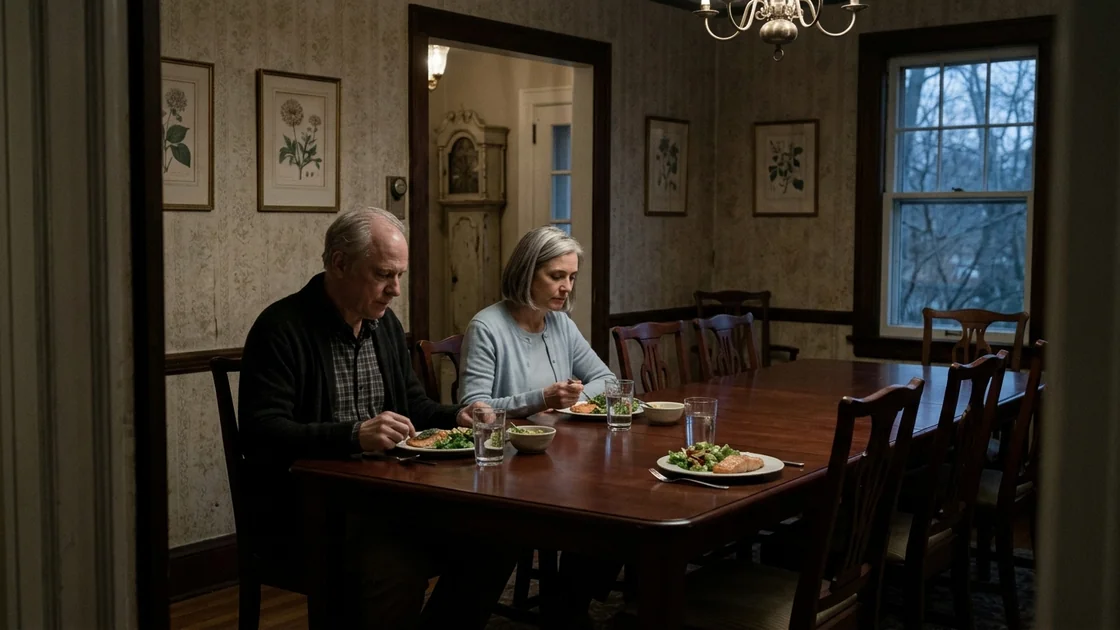
Arthur and Clara had been married for twenty-four years, a span of time that had gradually hollowed out their affection and replaced it with a rigid scaffolding of shared routines, silent meals, and mutual dependency. Though the love between them had long since evaporated into a polite and tepid indifference, neither possessed the courage to dismantle the life they had built, terrified of the vast, echoing solitude that awaited them on the other side of divorce. This is the story of their quiet misery, a chronicle of the seasons they spent trapped inside a sprawling suburban house where the fear of being alone was the only mortar holding the walls together, and where every passing day was a masterclass in the art of enduring the unendurable simply to hear another person breathing in the next room.
I. The Morning Choreography
The radiator in the upstairs hallway always began its metallic clattering at six-fifteen in the morning. It was a sound like someone tapping a wrench against a hollow pipe—three sharp raps, a pause, and then a long, hissing sigh as the steam forced its way through the ancient iron valves.
Arthur lay on the left side of the king-sized bed, his eyes open to the gray light filtering through the linen curtains. He did not move immediately. To move was to initiate the day, and the day required a precise, exhausting adherence to choreography. A foot and a half of cool, undisturbed cotton separated his shoulder from Clara’s. Even in sleep, they respected the border. It had been years since a stray elbow or an unconscious roll had breached the neutral zone in the center of the mattress.
Beside him, Clara’s breathing shifted from the deep, rhythmic cadence of sleep to the shallow, measured inhalation of wakefulness. Arthur knew she was awake because the tension in the room changed. It was a subtle atmospheric shift, like the drop in barometric pressure before a summer storm, except the storm never came. Nothing ever came.
"Is that the radiator?" Clara’s voice was raspy, directed at the ceiling rather than at him.
"Yes," Arthur said. "I bled the valve last Tuesday, like I said I would. It’s just the expansion in the riser."
"It sounds like it’s right inside the wall."
"It is inside the wall, Clara. That’s where the pipes are."
There was no malice in his tone, nor was there any warmth in hers. It was an exchange of data, a verbal ping sent out into the dim bedroom to confirm that both parties had survived the night and were still occupying their designated coordinates. Had Arthur woken to find the right side of the bed empty, a cold, paralyzing panic would have seized his chest. He did not want to hold Clara, nor did he particularly enjoy talking to her, but the thought of waking up to a silence that contained only his own breathing was an abyss he could not bear to look into.
He swung his legs over the edge of the mattress, his bare feet finding the worn patches of the Persian rug. He was fifty-six years old, a man whose hair had thinned to a wispy silver crown and whose joints required a moment of negotiation before accepting his weight. He stood up, reached for the navy-blue flannel robe hanging on the hook behind the door, and walked into the adjoining bathroom.
The morning routine was a marvel of spatial engineering. Over the last decade, without ever sitting down to negotiate the terms, they had perfected a system of movement that allowed two people to inhabit the same two-thousand-square-foot house with minimal friction and zero intimacy.
Arthur used the bathroom from six-twenty to six-forty. He showered, shaved the gray stubble from his jaw, and wiped down the glass door with a small rubber squeegee so as not to leave water spots. He wiped the sink basin with a hand towel before tossing it into the hamper. He left no trace of himself, save for the faint, medicinal scent of his shaving cream and a light fog on the upper corners of the mirror.
When he emerged, Clara was sitting at the edge of the bed, her pale blue cardigan already buttoned over her nightgown, waiting for the bathroom to clear. Their eyes met for a fraction of a second as they passed in the doorway.
"Coffee?" Arthur asked.
"Please," Clara said.
Downstairs, the kitchen was cold. The house was a 1920s colonial that they had bought when they were thirty-two, back when they believed that empty rooms were meant to be filled with children, laughter, and dinner parties. The children had never materialized—a series of quiet, devastating disappointments in their late thirties that they had eventually stopped discussing—and the dinner parties had tapered off as their friends either divorced, moved away, or simply grew tired of the glacial atmosphere that settled over the dining table whenever Arthur and Clara were in the same room.
Arthur measured four level scoops of dark roast into the paper filter. Not three, which was too weak for Clara, and not five, which gave Arthur acid reflux by mid-morning. Four scoops was the treaty they had signed years ago. He filled the carafe to the eight-cup line, poured the water into the reservoir, and pressed the plastic switch. It illuminated with a dull orange glow.
While the machine gurgled and spat, he stood by the window above the sink, looking out at the backyard. It was late October. The maple tree at the back of the property had dropped most of its leaves, creating a sodden, rust-colored carpet over the grass. He needed to rake them before the frost set in and killed the lawn underneath, though he wasn't entirely sure why he cared about the grass. Nobody walked on it. They hadn't used the patio furniture since July, and even then, it had only been to sit ten feet apart, reading separate books until the mosquitoes drove them back inside.
He took two mugs from the cabinet—the heavy stoneware ones they had bought on a weekend trip to Vermont twelve years ago, the last vacation where they had actually shared a laugh, though neither could remember the joke now. He set them on the counter, placed the carton of half-and-half beside hers, and the jar of honey beside his.
When Clara came downstairs at seven-ten, she was dressed for the library where she worked as an archivist—gray wool slacks, a cream-colored blouse, and a pair of sensible leather loafers that made a soft, rhythmic clicking sound on the hardwood floors. Her hair, once a rich chestnut, was now a neat, silver-streaked bob that she pinned back behind her left ear.
She poured her coffee, added a splash of cream, and leaned against the opposite counter. The kitchen island stood between them like a mahogany landmass.
"I have the dentist at four," she said, blowing across the surface of her mug. "So I’ll be coming straight home from there. I won't go back to the university."
"Which tooth is it?" Arthur asked, spreading a thin layer of butter over a piece of rye toast. "The crown on the left?"
"Just a cleaning," she said. "The crown was in April."
"Right. April." He took a bite of the toast. The crunching sound seemed obscenely loud in the quiet room. He chewed slowly, trying to muffle the noise inside his own head. "I need to stop by the hardware store after the office. The flapper in the downstairs toilet is sticking again. If you don't jiggle the handle, it runs all night."
"I noticed," she said. "I jiggled it at two."
"You were up at two?"
"Just for a minute. I couldn't sleep."
Arthur looked at her over the rim of his mug. There were dark hollows beneath her eyes, the skin thin and bruised-looking, like pressed violets. For a fleeting second, an ancient reflex twitched inside him—an urge to cross the kitchen, place a hand on the curve of her shoulder, and ask what had kept her awake. Was she worried about her mother in the nursing home? Was she thinking about the decades rolling up behind them like a carpet? Was she thinking about him?
His feet remained planted on the linoleum. He knew how her shoulder would feel beneath his hand: stiff, startled, waiting politely for the contact to end. Touching her would break the contract. It would introduce variables they were no longer equipped to calculate. If they started talking about why she couldn't sleep at two in the morning, they might end up talking about why he stared at the ceiling at four in the morning, and if they talked about that, the whole fragile edifice of their lives might groan and collapse inward.
"You should try that chamomile tea," he said instead, turning back to the sink to rinse his plate. "The one in the yellow box."
"It tastes like wet hay," Clara replied, setting her empty mug in the dishwasher. "Have a good day, Arthur."
"Drive safe, Clara. The leaves are slick on the avenue."
The front door clicked shut behind her. A moment later, he heard the rumble of her Subaru backing down the driveway. Arthur stood alone in the center of the kitchen. The refrigerator hummed. The coffee maker gave one final, wheezing hiss. The silence of the house rushed in to fill the space she had vacated, heavy and suffocating, until he grabbed his briefcase and fled out the back door toward his own car.
II. The Cartography of Separate Days
Arthur’s office was on the fourth floor of a brick building downtown that smelled perpetually of floor wax and damp wool. He was an actuarial consultant for a mid-sized insurance firm, a job that suited his temperament entirely. His days were spent evaluating risk, calculating the statistical probability of catastrophe, and assigning numerical values to human misfortune. There was a profound comfort in the spreadsheets. On the screen, chaos was tamed into columns and rows; life and death were merely curves on a graph that eventually met the horizontal axis.
His cubicle was bordered by gray fabric walls onto which he had pinned three items: a calendar from a local printing company featuring photographs of covered bridges, a laminated chart of standard mortality tables, and a four-by-six photograph of himself and Clara standing in front of the Grand Canyon in 2008. In the photo, they were squinting into the sun, Arthur’s arm draped loosely around Clara’s waist, both of them smiling the tight, obligatory smiles of people who had driven six hours through the desert to look at a hole in the ground.
He kept the photo there because a married man was supposed to have a photo of his wife on his desk. At fifty-six, being a married man was his primary camouflage in the world.
At twelve-thirty, he ate his turkey sandwich in the breakroom with Mark from claims and a younger man named Devon who had started in September. Devon was twenty-eight, recently divorced after a tumultuous two-year marriage, and spoke about his newfound freedom with a frantic, wide-eyed evangelism that made Arthur’s stomach tighten.
"I'm telling you, Arthur, it's like breathing oxygen for the first time," Devon said, leaning back in the plastic chair and gesturing with a fork full of microwaved pasta. "You don't realize how much weight you're carrying when you're with the wrong person until you put it down. I come home to my apartment now, and if I want to eat cereal out of a mixing bowl at ten at night while watching basketball in my underwear, nobody looks at me like I’m committing a felony."
Mark laughed, shaking his head. "Wait until you're forty, kid. The cereal loses its charm."
"No way," Devon insisted. "Better to be alone and free than trapped in a cage with someone who doesn't even like you. Right, Arthur? How long have you and Clara been together?"
Arthur carefully folded the wax paper from his sandwich into a neat square. "Twenty-four years in June."
"Man. Twenty-four years." Devon whistled, though his eyes flickered with a brief, involuntary horror. "What's the secret?"
Arthur looked at the young man’s eager, unlined face. He thought of Devon’s studio apartment—he had heard the boy talking about it on the phone once, a place over a dry cleaner’s on Seventh Street with a futon and a balcony that overlooked an alley. Arthur imagined himself in that apartment at fifty-six. He imagined coming home at five-thirty to four white walls, turning on a television just to hear a human voice, eating over the sink because setting a table for one felt like an admission of defeat, and wondering if, should his heart stop in the middle of the night, anyone would notice before the rent went unpaid on the first of the month.
"Routine," Arthur said quietly. "And making sure you buy the right kind of coffee."
Mark chuckled, mistaking it for dry wit. "Write that down, Devon. That’s gold."
Arthur smiled faintly, threw his wax paper into the trash can, and went back to his mortality tables.
Five miles away, in the basement of the university library, Clara spent her day surrounded by the dead.
The special collections archive was kept at a constant sixty degrees with forty percent humidity to prevent the degradation of centuries-old paper and vellum. Clara loved the cold. It numbed the dull, persistent ache in her lower back and made her feel preserved, like the nineteenth-century ledgers and bundles of personal correspondence she spent her hours cataloging.
Her current project was the estate of a minor local industrialist named Thomas Hemlock, who had died in 1934. He had left behind forty-two boxes of business receipts, diaries, and letters written between himself and his wife, Eleanor, during the months he spent traveling to oversee timber mills in Michigan.
Wearing white cotton gloves, Clara carefully unfolded a letter dated November 14, 1912.
My dearest Thomas, Eleanor had written in a looping, violet ink that had faded to the color of dried blood. The house is intolerably large without you. The wind comes off the river and rattles the parlor windows until I am certain the glass will break, and I find myself sitting by the hearth until midnight simply because I cannot bear to climb the stairs to our room alone. Come home soon, my love, or I shall surely turn to stone.
Clara stared at the handwriting for a long time. Her breath made a tiny, invisible plume in the chilled air of the archive.
She tried to remember the last time she had felt that way about Arthur. There had been a time, surely. When they were twenty-eight and living in that cramped third-floor walk-up on Elm Street, where the floorboards slanted toward the center of the living room and the kitchen was so narrow their hips brushed every time they passed each other. Back then, if Arthur was twenty minutes late coming home from the train, she would stand at the window, her heart hammering against her ribs, convinced he had been struck by a cab, bargaining with a God she barely believed in to just bring him around the corner with his umbrella and his ridiculous leather satchel.
Where had that woman gone? And where had the man in the leather satchel gone? They had not died; they had simply eroded, grain by grain, washed away by thousands of ordinary Tuesdays.
There had been no great betrayal. Neither of them had ever strayed; the very idea of an affair seemed exhausting, requiring a level of deception and emotional expenditure that neither possessed. There were no screaming matches, no thrown plates, no slammed doors. Instead, there had been the slow, calcifying creep of disappointment. The realization, arriving in their early forties after the final fertility clinic visit, that the future was no longer an expanding horizon, but a narrowing corridor. They had turned inward, nursing their private griefs in separate corners of the house until the silence between them grew too thick to shout through.
"Clara?"
She blinked, pulling her gaze from Eleanor Hemlock’s hundred-year-old longing. Her supervisor, a woman in her late thirties named Brenda whose fingers were permanently stained with fountain pen ink, was standing by the worktable.
"Sorry," Clara said, her gloved hands smoothing the edge of the stationary. "I was just deciphering the postscript."
"A few of us are going over to the tavern on Fourth for a drink after five," Brenda said, shifting her weight from one foot to the other. It was an invitation offered out of duty; Brenda asked every couple of months, and Clara always said no, yet the ritual persisted. "It’s Sarah’s last day before maternity leave. Just an hour or two."
Clara thought of the tavern. It would be loud, smelling of fried food and wet coats. People would talk about their children, their vacations, their messy, vibrant, chaotic lives. And then someone would ask her what she and Arthur were doing for the weekend, and she would have to invent a narrative that sounded like a marriage instead of a custodial sentence.
Worse, if she went to the tavern, she wouldn't get home until seven. Arthur would be there at five-forty-five. He would walk into an empty house, see that her car wasn't in the driveway, and the routine would be fractured. He would have to decide whether to eat without her or wait, and when she finally walked in, they would have to have an entire conversation about where she had been, who was there, and what was said. The sheer weight of those extra sentences made her chest feel tight.
"That’s lovely of you to ask, Brenda," Clara said, offering the warm, crinkled smile she kept folded in her pocket for public use. "Tell Sarah I wish her the absolute best. Actually, I left a card with twenty dollars for the baby pool on her desk this morning. Have a wonderful time, though. Arthur and I have plans this evening. And I have the dentist at four."
"Oh, gross. Well, enjoy your Friday night with Arthur," Brenda said, clearly relieved to have discharged her social obligation.
"I will," Clara lied to the empty air as Brenda walked away.
She carefully placed Eleanor’s letter into a Mylar sleeve, sliding it into the grey acid-free box. Or I shall surely turn to stone, the dead woman had written. Clara looked down at her white-gloved hands. They were entirely steady.
III. The Hardware Store and the Waiting Room
At four-fifteen, Clara sat in the reclining vinyl chair while a twenty-four-year-old hygienist named Tiffany scraped plaque from her lower molars with a tiny metal hook. Tiffany wore a surgical mask printed with little cartoon kittens and talked non-stop, requiring no input from Clara other than the occasional guttural hum.
"So I told him, if we're not engaged by my sister’s wedding in June, I’m moving my stuff out of the condo," Tiffany said, the suction tube gurgling against Clara’s cheek. "Because, like, why waste your twenties on a guy who doesn't know what he wants? My mom stayed with my dad for nineteen years after they stopped talking, just because neither of them wanted to sell the boat. Can you imagine? Staying together for a boat? Open wider, please."
Clara opened wider. The bright halogen light above her head glared off Tiffany’s protective goggles. In the curved plastic lenses, Clara could see two miniature, distorted reflections of her own face—stretched, pale, with a plastic bib clipped around her neck.
A boat, Clara thought. We don't even have a boat.
They had a four-bedroom colonial with a paid-off mortgage, a shared checking account at First National, forty-two thousand dollars in a high-yield savings account, two retirement portfolios that were inextricably braided together for tax purposes, and a silver drawer full of tarnishing forks that Clara’s aunt had given them in 1999.
More than that, they had the knowledge of each other’s frailties. Arthur knew that if Clara ate onions after six o’clock, she would be awake with heartburn until three. Clara knew that Arthur had a weird, harmless mole just below his left shoulder blade that he needed her to look at every six months to make sure the borders hadn't become irregular. Who would look at the mole if she left? Would he have to go to a dermatologist twice a year and take his shirt off in front of a stranger just for thirty seconds of reassurance?
And who would carry the heavy boxes of Christmas decorations down from the attic in December if Arthur wasn't there? They hadn't put up a tree in four years, not since the artificial pine started shedding green plastic needles all over the living room rug, but she still insisted on putting the electric candles in the front windows so the neighbors wouldn't think the house was abandoned. The boxes were up under the eaves. Her back couldn't take the ladder anymore.
"Rinse," Tiffany commanded, handing her a tiny paper cup of blue liquid.
Clara swished and spat into the porcelain bowl. Her gums were bleeding slightly, leaving a pink ribbon in the swirling water.
At the exact same moment, three miles west, Arthur was standing in Aisle 7 of Harrison’s Hardware, staring at a wall of rubber toilet flappers. There were universal flappers, adjustable flappers, flappers designed for low-flow tanks, and flappers made of chemical-resistant silicone.
An older man in an orange vest shuffled down the aisle, his knees popping audibly with each step. It was Bill Harrison, who had owned the store since Arthur was in his thirties. Bill was seventy-eight now; his wife, Martha, had died of pancreatic cancer two winters ago.
"Finding what you need, Arthur?" Bill asked, his voice like dry gravel.
"Just a standard two-inch flapper, Bill. For the Kohler downstairs."
Bill reached past him and plucked a red rubber disc in a blister pack off a lower peg. "Don't buy the blue ones. The chlorine in the city water eats the edges in a year. This one’ll outlive us both."
Arthur took the package. "Thanks. How are you getting on, Bill? Ready for the winter?"
Bill sighed, looking down the long, fluorescent-lit aisle toward the front registers, where a teenage girl was scrolling on her phone. The store was empty. "Oh, you know. The days are fine. Always a leaky pipe or a broken storm window in this town to keep me busy until five. It’s the vijf-to-nine that gets you."
"The five-to-nine?"
"Five in the evening to nine at night," Bill said, rubbing the back of his neck with a spotted, liver-colored hand. "When you close up the shop and go home. Martha and I didn't always get along, Arthur. Lord knows that woman could strip the paint off a barn door when I tracked mud on the sunporch. Last five years, we mostly just watched Wheel of Fortune and went to bed at eight-thirty. I used to think I wanted some peace and quiet."
Bill looked directly at Arthur, his milky blue eyes sharp and suddenly desperate behind his bifocals.
"The quiet isn't peaceful, Arthur," the old man said softly. "It’s loud. You drop a spoon on the kitchen floor at seven o’clock at night, and there’s nobody there to say, What did you drop? It just clangs, and then it stops, and you realize you could lie right down next to that spoon and die, and the refrigerator would just keep running. How’s Clara?"
Arthur’s hand tightened around the plastic blister pack until the cardboard bent. His throat felt dry, coated in the chalky dust of the hardware store.
"She’s well, Bill," Arthur said, his voice sounding very far away to his own ears. "She’s at the dentist today. Just a cleaning."
"Good. You tell her I said hello. Take care of that Kohler."
Bill shuffled away toward the paint mixer. Arthur stood in Aisle 7 for a full two minutes after he left, staring at the brass ballcocks and braided steel supply lines. His heart was thumping with a slow, sickening rhythm against his ribs. You drop a spoon on the kitchen floor, and there’s nobody there to say, What did you drop?
He hurried to the register, paid with a five-dollar bill, and practically ran to his car. When he pulled into his driveway at five-thirty-five, the sight of Clara’s silver Subaru parked neatly on the right side of the asphalt brought a rush of relief so profound it made his knees weak. She was inside. The lights were on in the kitchen. If he dropped a spoon tonight, she would look up from her magazine and frown slightly, and he would be saved.
IV. The Evening Meal
Friday night was salmon night. On Mondays they had chicken breasts; Tuesdays were pasta; Wednesdays, pork chops; Thursdays, leftovers or soup; Saturdays, Arthur picked up Chinese takeout from the place by the strip mall; Sundays, a roast or a casserole that Clara prepared while listening to public radio.
When Arthur came through the back door, hanging his coat on the third peg from the left, Clara was standing at the counter seasoning two six-ounce fillets with lemon pepper and dill. The kitchen smelled faintly of fish and the disinfectant wipe she had used on the cutting board.
"How was the cleaning?" Arthur asked, setting the hardware store bag on the small desk by the pantry where they kept the mail and the scissors.
"Fine," Clara said, not turning around. "No cavities. She says I’m brushing too hard on the upper left side. My gums are receding a little."
"You should get one of those soft-bristle brushes."
"She gave me one. It’s in the little plastic bag on the bathroom counter. Did you get the part for the toilet?"
"Yes. I saw Bill Harrison. He told me to tell you hello."
"Oh. How is he? Since Martha passed?"
Arthur washed his hands at the sink, nudging her slightly to reach the soap dispenser. Their elbows brushed—two layers of wool and cotton sliding past each other without generating a single spark of static. "He looks old," Arthur said, drying his hands on the dish towel. "He looks very tired."
"It’s hard on men of that generation," Clara observed, sliding the baking sheet into the oven and setting the timer for eighteen minutes. "They never learned how to keep house for themselves. My father was the same way during that month my mother was in the hospital for her hip. He ate cold baked beans out of the can with a serving spoon."
Arthur wanted to tell her that it wasn't about the baked beans. He wanted to tell her about the spoon on the floor, about the five-to-nine, about the terrifying, cavernous echo that Bill Harrison went home to every night. Instead, he opened the refrigerator and took out the bag of pre-washed salad greens.
"Italian or vinaigrette?" he asked.
"Vinaigrette, please."
They ate at the dining room table. Years ago, when the kitchen was renovated, they had removed the small breakfast nook to add more cabinet space, forcing them to use the formal dining room for every meal. The table was cherry wood, extendable to seat ten with the extra leaves stored in the hall closet, though the leaves hadn't seen the light of day since the Bush administration. Even without the leaves, the table was six feet long. Rather than sit at the opposite ends like feudal lords, they sat on the adjacent corners—Arthur at the head, Clara to his right. It was a compromise that allowed them to pass the salt without standing up, while neatly avoiding the necessity of looking directly into each other's faces while they chewed.
For the first ten minutes, the only sounds were the scrape of stainless-steel forks against white ceramic plates and the rhythmic ticking of the grandfather clock in the foyer. Arthur’s father had built the clock from a kit in 1976; it ran two minutes fast every week, and every Sunday morning after breakfast, Arthur opened the glass case with a tiny brass key and pushed the minute hand back with his index finger.
"Brenda asked me to go for drinks with the girls from the department tonight," Clara said, spearing a cherry tomato. "For Sarah’s maternity leave."
Arthur paused, his fork halfway to his mouth. A tiny spike of anxiety pricked him. "Oh? Why didn't you go?"
"I had the dentist. And you know how loud that place on Fourth Street is. You can't hear yourself think." She chewed the tomato, looking at the framed botanical print hanging on the wall behind Arthur’s left ear. "Besides, I didn't want to leave you to fend for yourself when I already had the salmon thawed."
"I could have cooked the salmon, Clara. It’s four hundred degrees for eighteen minutes."
"You always overcook it, Arthur. You leave it in until the white stuff comes out the sides, and then it’s like eating sawdust."
"The white stuff is just albumin," he said defensively, though without any real heat. It was an old script; they had had this exact conversation about the albumin at least six times over the last three years. It was almost comforting in its familiarity, like hearing the opening chords of a song from high school on the grocery store radio. "It doesn't mean it’s overdone."
"It means the proteins have contracted and squeezed out all the moisture," she replied primly, taking a sip of her water. "Anyway, I gave Sarah twenty dollars for the baby gift. That was enough."
"Did she say what she's having?"
"A boy. Due in three weeks."
The word boy hung in the air over the salad bowl for a second, heavy and slightly sour, before sinking beneath the surface of the conversation. If the child they had lost in 2004 had lived, he or she would have been twenty years old now. In college. Maybe home for the weekend with a laundry bag full of dirty clothes and a head full of loud opinions that would have filled the dining room up to the crown molding.
Neither of them looked at the empty chairs around the table. They had learned to navigate around their ghosts the same way they navigated around the furniture in the dark.
"I’ll fix the toilet after I load the dishwasher," Arthur said, cutting another piece of fish.
"Thank you," Clara said. "There’s an episode of that British mystery show on at eight. The one with the vicar."
"Have we seen this one?"
"I don't think so. It’s the new season. Someone gets poisoned at a flower show."
"We saw one with a flower show last month," Arthur pointed out.
"That was the other show. With the inspector whose wife left him. This is the vicar."
"Ah. Right."
By seven-fifteen, the kitchen was clean. The counters were wiped down, the sink was scrubbed with Ajax until the stainless steel gleamed, and the leftover salad was sealed in a glass container on the middle shelf of the fridge. Arthur went into the downstairs half-bath with a pair of pliers and a towel.
He shut off the water valve behind the porcelain base, flushed the tank to empty it, and leaned over the bowl. The water in the bottom of the tank was rust-colored and cold against his fingers. He unhooked the tiny brass chain, slipped the old, warped blue flapper off the plastic ears of the flush valve, and snapped the new red one into place.
As he worked, kneeling on the cold tile with his head Wedged between the vanity and the tank, he listened to the sounds of Clara moving around in the living room. The rustle of the newspaper being folded. The creak of the floorboards by the bookcase. The soft thump as she plumped the throw pillows on her end of the sofa.
Every sound was an anchor. He was a man tethered to the earth by the mundane noises of a woman he no longer loved. He wondered, briefly and with a sudden flash of dark humor, if prisoners in solitary confinement ever grew fond of the sound of the warden’s keys jangling down the corridor—not because they liked the warden, or because the keys meant the door was going to open, but simply because the jangling proved that the world outside the cell still existed.
He turned the water valve back on. The tank filled with a loud, rushing roar that ended in a crisp, decisive clunk as the float reached the top and the new red flapper sealed tight against the drain seat. Silence returned. No trickle. No phantom midnight running.
Arthur stood up, his knees aching from the tile, washed his hands, and went into the living room to watch a fictional person get poisoned at a flower show.
V. The Geometry of the Living Room
The living room was arranged around the television, though in 1998, when they had moved in, they had sworn they would never put a television in the main room. Back then, the room had been oriented toward the fireplace, with two armchairs facing each other across a glass coffee table to encourage conversation.
In 2006, after a winter where they spent three months staring into the fireplace without finding anything to say, Arthur had bought a forty-two-inch flat screen and mounted it on the wall opposite the sofa. The armchairs had been pushed back into the corners by the windows, where they now served primarily as places to drape freshly folded laundry before it was carried upstairs.
They sat on the three-cushion leather sofa, leaving the middle cushion empty. On the middle cushion rested the remote control, a box of tissues, and Clara’s reading glasses when she wasn't using them.
The British village on the screen was impossibly green, populated by eccentric pensioners in tweed jackets who rode bicycles down country lanes and murdered each other over marrow-growing competitions. The blue light from the television flickered across their faces in the darkened room—only the small brass lamp on the side table by Clara’s elbow was turned on, casting a warm yellow pool over her hands, which were busy knitting a gray wool scarf.
She had been knitting scarves for five winters now. She didn't wear them—wool made her neck itch—and Arthur only needed the one black cashmere scarf he had owned since 2012. When she finished one, she folded it in tissue paper and put it in a cedar chest in the guest room, telling herself she was donating them to the church bazaar in November, though November came and went every year and the chest only grew fuller. She didn't knit to make scarves; she knit so she wouldn't have to look at the television, and she watched the television so she wouldn't have to look at Arthur.
Halfway through the program, during a scene where the vicar was questioning a suspiciously nervous groundskeeper in a greenhouse, a commercial came on for a cruise line.
A couple in their late fifties—tanned, silver-haired, wearing crisp white linen shirts that billowed in a Caribbean breeze—stood on the deck of a massive ship, laughing as they clinked glasses of champagne together. Then the camera cut to them walking hand-in-hand along a white sand beach at sunset, the woman’s head resting against the man’s shoulder, her eyes closed in an expression of transcendent bliss.
Arthur stared at the screen. "Look at his shirt," he muttered. "Who irons linen on a boat?"
"They have a laundry service on those ships," Clara said, her needles clicking softly—tick, tick, tick, slide. "My sister and her second husband went on one to Alaska before he had his stroke. She said you leave your clothes in a basket outside the cabin door at night, and they come back pressed the next morning."
"Sounds expensive," Arthur said.
"Everything is expensive," Clara replied.
The commercial ended, replaced by an advertisement for a prescription medication for moderate-to-severe plaque psoriasis, featuring a woman in her forties happily playing frisbee with a golden retriever in a park while a soothing voice rattled off a list of side effects that included liver failure, tuberculosis, and fatal infections.
Arthur shifted his weight on the leather cushion. The leather gave a loud, flatulent squeak. "We never went to Alaska," he said.
Clara’s needles paused for half a beat. She looked up from the gray wool, not at him, but at the television screen where the dog was catching the frisbee in slow motion. "You don't like boats, Arthur. Remember the ferry to Martha’s Vineyard? You spent the whole forty-five minutes sitting by the bathroom with a ginger ale."
"A cruise ship isn't a ferry. They have stabilizers. Like wings under the water. You don't even feel the waves."
"Do you want to go to Alaska?" she asked. There was a faint note of alarm in her voice, the sound of someone hearing a strange footstep on the stairs.
Arthur thought about it. He imagined the two of them trapped in a two-hundred-square-foot cabin for ten days, with no hardware store to escape to, no library basement to hide in, no lawn to rake. Just a floating hotel room with two twin beds pushed together and an endless expanse of freezing gray water outside the porthole, eating three meals a day at a small round table where they would have to look straight at each other while they chewed.
"No," he said, sinking back into the cushion as the vicar returned to the screen. "Too cold. And I’d probably get that stomach virus they’re always getting on those ships."
Clara’s shoulders dropped half an inch. The needles resumed their rhythm. Tick, tick, tick, slide. "That’s what my sister said. Half the dining room was quarantined by the time they got to Juneau."
At nine-thirty, the mystery was solved—it had been the organist all along, motivated by an obscure property dispute from 1984. Arthur picked up the remote from the middle cushion and pressed the red button. The green English village collapsed into a pinpoint of light and vanished, leaving the room in shadows.
"Well," Arthur said, slapping his palms gently against his thighs. "That’s that."
"I’m going to lock up," Clara said, rolling her yarn into a neat ball and skewering it with the two aluminum needles like a silver heart.
This was the nightly closing ceremony. Clara checked the front door deadbolt and turned off the porch light. Arthur checked the back door, made sure the stove knobs were all in the completely vertical OFF position, and turned the thermostat in the dining room down from sixty-eight to sixty-two.
They climbed the stairs in single file, Clara first, Arthur two steps behind. At the level of his eyes were the backs of her ankles, pale and thin above the heels of her house slippers. The fifth step from the top creaked under Clara’s foot, and then, a second later, gave a deeper, louder groan under Arthur’s.
They reversed the morning bathroom schedule. Clara took the first shift, from nine-forty to ten, washing her face with a mild Cetaphil cleanser, brushing her teeth carefully around the upper left quadrant with the new soft brush from the dentist, and rubbing unscented lotion into her hands until her knuckles shone. When she came out, smelling of nothing at all, she got into the right side of the bed and read six pages of a biography of Queen Victoria until Arthur emerged at ten-fifteen.
He got into the left side of the bed. He pulled the sheet and the down comforter up to his waist.
"Ready?" she asked, her hand hovering over the switch of the bedside lamp.
"Ready," he said.
Click.
The darkness was total, save for the faint orange numerals of the digital alarm clock on Arthur’s nightstand, which read 10:16.
They both lay on their backs for a moment, adjusting to the dark. Then, simultaneously, as if pulled by invisible strings attached to the opposite walls, they both rolled onto their sides, facing away from each other—Arthur toward the window, Clara toward the closet door.
Their backs formed two parallel parentheses in the center of the mattress: )(.
In the silence, the house began to settle. A joist popped in the attic. The refrigerator downstairs kicked on with a low, vibrating hum that traveled up through the floorboards. Outside, a car drove past on the avenue, its tires hissing on the damp leaves, the beam of its headlights sweeping across the bedroom ceiling from left to right before vanishing into the corner.
"Arthur?" Clara’s voice came out of the dark behind him, small and unexpectedly fragile.
Arthur didn't turn over. To turn over was to invite a conversation that had no predetermined exit. "Yeah?"
"Did you remember to put the trash cans at the curb? Tomorrow’s Saturday, they come early after the holiday."
He closed his eyes. The relief was warm and heavy, like an extra blanket pulled over his shoulders. It was just the trash cans. They were safe.
"No wasn't a holiday this week, Clara," he said into his pillow. "That’s next month. Thanksgiving. They came on Wednesday like normal."
There was a long pause. He could hear the rustle of the pillowcase as she nodded her head in the dark.
"Oh," she said. "Right. I don't know why I thought Monday was a holiday. The days just... run together."
"Go to sleep, Clara."
"Goodnight, Arthur."
"Goodnight."
Twenty minutes later, her breathing slowed, deepening into the steady, rhythmic cadence of sleep. Arthur lay awake for another hour, listening to it. In, pause, out. In, pause, out. He counted her breaths the way other people counted sheep. As long as the sound was there, he was not Bill Harrison in an empty house waiting for the refrigerator to stop running. As long as she was breathing eighteen inches behind his back, he was a husband, a man with a life, a witness to someone else’s existence, and she was a witness to his. It was a cold fire to warm his hands by, he thought as sleep finally dragged him under, but it was the only fire left in the house.
VI. The Autumn Raking
Saturday morning arrived with a sharp, metallic chill. A frost had finally come down during the early hours before dawn, glazing the windshields of the cars in the driveway and turning the fallen maple leaves in the backyard crispy around the edges.
Because it was Saturday, the radiator did not wake them; they had programmed the thermostat to wait until seven-thirty on weekends. Nevertheless, Arthur’s internal clock, trained by thirty years of corporate compliance, snapped his eyes open at six-twenty. He lay still for an hour, staring at the crack in the plaster above the closet door—a jagged line that looked vaguely like the coastline of California—until the clock clicked over to seven-thirty and the pipes began to clank.
At nine o'clock, wearing an old canvas jacket with frayed cuffs and a pair of leather work gloves that had stiffened into the shape of his hands over the years, Arthur went out to the garage and took the wide plastic leaf rake off its nail.
The backyard was a quarter-acre rectangle enclosed by a six-foot cedar fence that was slowly turning gray and leaning slightly toward the neighbor's property on the east side. In the center stood the maple tree, now nearly bare, its dark branches clawing at a sky the color of an aluminum saucepan.
Arthur began in the northwest corner, pulling the rake toward his boots in long, overlapping arcs. Scritch, pull. Scritch, pull.
The physical labor felt good. Unlike the mortality tables at the office or the silent chess game of his marriage, raking leaves had a tangible, immediate metric of success. Where the rake passed, green grass appeared; where it hadn't, the yard remained buried in brown decay. If he kept pulling his arms back and forth for three hours, the task would be completed, the bags would be full, and nobody could argue that he hadn't accomplished something with his Saturday morning.
Inside the house, Clara was vacuuming the second floor. He could hear the muffled roar of the Hoover through the closed storm windows, moving methodically from the master bedroom, down the hall, into the guest room where nobody ever slept, and finally into the third bedroom, which they called "the office" because it contained an obsolete desktop computer from 2011 and four filing cabinets full of old tax returns.
Every twenty minutes or so, Arthur glanced up at the back of the house. He saw her pass the hallway window, a blur of beige cardigan, winding the black cord around the hooks on the vacuum handle. Ten minutes later, she appeared in the kitchen window downstairs, spraying blue liquid onto the glass and wiping it in circular motions with a crumpled piece of newspaper—her mother had taught her that newspaper didn't leave streaks, and Clara held onto her mother’s domestic commandments with the ferocity of a medieval monk guarding a relic.
For a few seconds, they were separated only by a single pane of double-glazed glass. Clara was wiping the inside of the window above the sink; Arthur was standing thirty feet away on the lawn, leaning on the wooden handle of his rake, his breath fogging in the cold air.
She looked out through the newly cleaned glass and saw him looking at her.
Neither of them waved. To wave would have been absurd, theatrical, something people did in coffee commercials. Instead, Clara raised her chin by half an inch—a tiny, almost imperceptible nod of acknowledgment—and then stepped back into the shadows of the kitchen, disappearing behind the reflection of the bare maple branches on the glass.
"Hey there, Artie!"
Arthur turned. Over the top of the leaning cedar fence on the east side of the yard, the round, florid face of his neighbor, Greg Miller, had appeared. Greg was sixty-two, retired from the postal service, and possessed a booming voice that seemed entirely unsuited for a neighborhood where the houses were only twenty feet apart.
"Morning, Greg," Arthur said, walking over toward the fence, grateful for the interruption and simultaneously dreading it.
Greg rested his meaty forearms on the top rail, causing the rotted cedar post at the corner to give an ominous creak. "Getting after them before the snow flies, huh? Smart man. Weather guy on Channel 4 says we might see flurries by Tuesday. I used the blower on mine yesterday. Blew half of 'em right into the street. Let the town sweepers deal with it, that’s what I pay five grand a year in property taxes for, right?"
"I suppose," Arthur said mildly. "The rake is good exercise, though. Sitting at a desk all week, you stiffen up."
"Tell me about it. Since I retired, Brenda—my Brenda, not your wife's boss—she’s got me walking three miles every morning at the high school track. Says she doesn't want me dropping dead of a massive coronary in the hallway before we get down to Tampa in January." Greg chuckled, a wet, rattling sound. "You and Clara doing anything for Thanksgiving? Going up to see her sister in Connecticut?"
"No," Arthur said, looking down at a single yellow leaf impaled on one of the plastic tines of his rake. "Her sister is going to her son’s house in Seattle this year. It’ll just be the two of us."
"Ah, the quiet holiday," Greg said, nodding sagely. "Honestly, Artie, sometimes I envy you guys. Next Thursday, I’m gonna have fourteen people in my living room. Three grandkids screaming their heads off, my son-in-law arguing about politics after two beers, two dogs begging under the table. Meanwhile, over here, it’s like a monastery. Never hear a peep out of your place. I said to Brenda the other day, I said, Arthur and Clara have got it figured out. Twenty-five years and they never even raise their voices."
Arthur looked up at Greg’s red, cheerful face. In Greg’s eyes, the colonial house with the neat shutters and the swept driveway was a bastion of marital tranquility, a quiet harbor where two compatible souls grew old in harmonious silence.
"Twenty-four," Arthur corrected softly. "Twenty-four in June."
"Well, whatever it is, you’re doing it right," Greg said, slapping the top of the fence post with a gloved hand. "Listen, if you guys have too much turkey for two people, don't be shy. Or heck, come over for pie around four! Brenda’s making two pecans and a pumpkin."
"That’s very kind, Greg. I’ll mention it to Clara."
He wouldn't mention it to Clara. He knew what Clara would say if he suggested walking across the driveway into a house full of fourteen loud, loving, arguing strangers. She would get that pinched look around her mouth, the one that meant her stomach was tightening, and she would say, Oh, Arthur, we don't want to intrude on their family time. And besides, I already bought the little Sara Lee pie in the freezer.
Because going into Greg’s house would mean holding their marriage up against the blinding light of other people’s lives. In their own house, with the curtains drawn and the thermostat set to sixty-eight, they could pretend that this was just what fifty-six looked like. If they stood in Greg’s living room while Greg squeezed his wife’s hip by the gravy boat and the grandchildren climbed over the sofa, the silence they had brought with them from next door would curdle into shame.
By noon, Arthur had filled seven giant brown paper lawn bags with leaves, dragging them one by one down the side of the driveway and lining them up along the curb like brown paper soldiers waiting for Monday’s collection truck. His lower back was throbbing with a hot, dull rhythm, and a blister had formed at the base of his right thumb where the leather glove had rubbed through.
When he came inside, kicking his muddy boots off on the rubber mat by the back door, Clara had lunch ready: two bowls of canned tomato soup and a plate of saltines arranged in a neat, overlapping circle.
"Greg said it might snow on Tuesday," Arthur said, sitting down at the table and rubbing his sore thumb with his left hand. "Just flurries."
"I heard on the radio," Clara said, blowing on her spoon. "I put the scraper and the brush in the back seat of the Subaru when I brought the groceries in."
"Good. Do you know where mine is?"
"On the workbench in the garage, behind the paint cans. That’s where you put it in April."
"Right." He broke two saltines into his soup, watching the white squares float on the bright red surface before pushing them under with the back of his spoon until they went soft. "How is your mother? Are you going over there tomorrow?"
Clara’s mother, Evelyn, was eighty-four and lived at Sunnybrook Manor, an assisted living facility twenty minutes away on the bypass. Her mind had been fraying at the edges for three years now, unraveling backward through time until she currently resided somewhere around 1978.
"Yes," Clara said, her voice dropping half an octave. "After lunch. Do you want to come?"
It was the weekly test. Every Saturday at lunch, she asked if he wanted to go to Sunnybrook on Sunday, and every Saturday, a tiny part of Arthur hoped she wouldn't ask, while a larger, guiltier part knew he had to say yes. Not because Evelyn knew who he was—for the last six months, the old woman had been convinced Arthur was her brother-in-law, Walter, who had died in a tractor accident during the Carter administration—but because Clara couldn't drive back from Sunnybrook alone.
The one time Arthur had begged off with a migraine in August, Clara had come home from the nursing home with her face the color of wet putty, had walked straight past him without taking off her coat, and had sat on the edge of the bathtub with the door locked for two hours while the cold water ran in the sink to cover the sound of her dry, silent heaving.
He didn't love her anymore, not the way a man was supposed to love his wife, not the way Eleanor Hemlock had loved her timber merchant in the purple letters, not the way the couple on the cruise ship loved each other in the linen shirts. He didn't want to kiss her mouth or hear about her dreams or hold her hand in the movie theater.
But he could not let her sit on the edge of the bathtub alone after watching her mother vanish into the fog. That was part of the deal. That was the rent he paid for the sound of her breathing at ten-thirty at night.
"Of course I’ll come," Arthur said, scooping a soggy cracker into his mouth. "I’ll drive."
Clara looked down into her red bowl. Her throat worked as she swallowed. "Thank you, Arthur."
VII. The Hall of Mirrors at Sunnybrook
Sunday afternoon was gray and windless, the kind of November day where the sky seemed to press right down against the roofs of the houses, trapping the smell of woodsmoke and automobile exhaust at street level.
Sunnybrook Manor was a sprawling, single-story brick building shaped like a giant wagon wheel, with the nurses' station at the hub and four long corridors radiating outward like spokes. It smelled of boiled cabbage, industrial lemon disinfectant, and the sweet, talcum-powder decay of old age.
Along the hallways, residents sat in wheelchairs parked against the walls beneath motivational posters of kittens and mountain peaks, their hands folded in their laps like pale birds, watching Arthur and Clara walk past with milky, indifferent eyes.
"Don't look in the rooms," Clara whispered as they walked down the C-Wing, her handbag clutched tight against her ribs like a shield. "Just look at the carpet."
Arthur looked at the carpet. It was a low-pile commercial weave in a mottled pattern of maroon and brown, specifically engineered to hide stains.
Evelyn’s room was C-14, near the end of the hall by the fire exit. When they pushed the heavy wooden door open, she was sitting in her vinyl recliner by the window, wearing a pink quilted bed jacket over her dress. The television mounted near the ceiling was tuned to a professional bowling tournament with the volume muted.
"Hello, Mom," Clara said, her voice taking on the bright, artificial singsong that people used with toddlers and the dying. "Look who’s here. It’s Clara and Arthur."
Evelyn turned her head slowly from the window. Her hair was a thin halo of white cotton around a skull that seemed to have shrunk inside its skin since the previous Sunday. Her eyes, the samehazel as Clara’s, were wide and startled.
"Clara?" the old woman said, her voice trembling like a plucked string. "Why aren't you in school? Did you miss the bus again? Your father’s going to be furious if I have to drive you down to the junior high in this weather."
Clara stopped at the foot of the bed. Even though it happened every week, the blow always landed square in the center of her chest. Arthur could see it from behind—the way her spine stiffened under her wool coat, the way her fingers dug into the leather strap of her purse until the tendons stood out on the back of her hand.
"It’s Sunday, Mom," Clara said, forcing her lips into a smile that didn't reach her eyes. She walked over and kissed her mother’s papery cheek, setting a small white bakery box on the rolling tray beside the chair. "There’s no school today. I brought you those lemon squares you like from the bakery on Main Street."
Evelyn ignored the box. She was staring past Clara at Arthur, who had taken off his hat and was standing near the doorway beside the tiny sink. Her brow furrowed into a web of deep vertical lines.
"Who’s that?" Evelyn demanded, pointing a crooked, arthritic finger at Arthur’s chest. "Is that Walter? What’s Walter doing in my bedroom? Clara, go wait in the hall, Walter’s been drinking again, I can see it in his eyes."
"It’s Arthur, Mom," Clara said, a sharp edge of desperation cutting through the singsong tone. "My husband. We’ve been married for twenty-four years, Mom. You were at the wedding. You wore the blue silk dress from Lord & Taylor, remember?"
"You’re fourteen years old!" Evelyn cried, becoming agitated, her thin hands fluttering against the arms of the recliner. "What are you talking about, a wedding? Get out of here, Walter! If my husband comes home from the plant and finds you here, he’ll call the sheriff!"
Arthur took a step back, his heels bumping against the closed door. "I’ll just wait in the sunroom down the hall, Clara," he said quietly. "It’s okay. Don't upset her."
"No," Clara said. She turned to look at him, and for the first time in months, she looked directly into his eyes without a pane of glass or six feet of cherry wood between them. Her hazel eyes were swimming with a raw, naked terror that made Arthur’s breath catch in his throat. "Stay. Please."
If he left the room, there was no witness in C-14 who knew that Clara was fifty-six years old. If he walked out that door, she was trapped in a small white box with a woman who insisted her life hadn't happened yet, that the last forty years were a hallucination, that she was a child waiting for a yellow bus in 1978. Arthur was the only proof in the room that Clara existed in the present tense.
Arthur stayed. He pulled the stiff plastic visitor’s chair into the corner by the closet, out of Evelyn’s direct line of sight, and sat down with his hat on his knees.
For forty-five minutes, he sat in the shadows by the coats while Clara sat by the recliner, holding her mother’s frail, liver-spotted hand and answering questions about people who had been dead for thirty years.
"How’s your grandmother’s sciatica?" Evelyn asked, calmer now that Arthur had retreated into the corner.
"Much better, Mom," Clara lied softly, stroking the papery skin of the old woman’s wrist with her thumb. "She was working in the garden yesterday."
"Tell her not to bend from the waist. She never listens. And tell your father we need milk on his way home from the plant."
"I’ll tell him, Mom."
Arthur watched his wife’s profile against the gray light of the window. The afternoon sun was already beginning to fade, casting long, slanted shadows across the linoleum floor. Looking at Clara sitting next to her mother was like looking at one of those double-exposure photographs from the nineteenth century, where a ghost is superimposed over the living person. Clara had Evelyn’s nose, the same slight dip at the bridge, the same jawline that was beginning to soften into little pouches on either side of the chin, the same thin wrists.
In thirty years—if they were lucky, or perhaps if they were profoundly unlucky—that would be Clara in the vinyl recliner, staring at a muted bowling tournament on the ceiling.
And who would sit in the corner by the closet to prove that Clara had lived? There was no daughter to bring lemon squares in a white box. There was no son to argue with the nurses about her medication. There was only Arthur. If Arthur died first, or if Arthur packed a suitcase and moved into a studio apartment over a dry cleaner’s on Seventh Street like young Devon from the office wanted him to do, Clara would eventually sit in a room just like this one, entirely unmoored from time, with nobody left on earth who remembered the color of her hair when she was thirty or the fact that onions gave her heartburn after six o’clock.
And if she died first, Arthur would be the one in the wheelchair in the hallway under the poster of the mountain peak, watching strangers walk by on the maroon carpet, waiting for someone to say his name.
When they finally left at three-thirty, the wind had picked up, whipping dead leaves across the asphalt of the Sunnybrook parking lot. They got into Arthur’s Honda. He started the engine and turned the heater on high, though the air coming out of the vents was initially ice-cold.
Clara sat in the passenger seat, her hands buried deep in the pockets of her coat, staring straight ahead through the windshield at the brick wall of the facility. She didn't cry. She hadn't cried since the day in August on the edge of the bathtub. She just looked hollowed out, like a locust shell left clinging to the bark of a tree after the insect has crawled away.
Arthur shifted into reverse, backed out of the space, and pulled onto the bypass.
About two miles down the road, waiting at a red light by a strip mall where a mattress store was having a going-out-of-business sale, a teenager in a yellow puffy jacket stood on the sidewalk holding a cardboard sign that read EVERYTHING MUST GO - 70% OFF, spinning it half-heartedly in the freezing wind.
Clara spoke without turning her head. "If I get like that, Arthur..."
"Don't," Arthur said, his hands tightening at the ten-and-two positions on the steering wheel.
"No, listen to me," she said, her voice flat and clinical, the archivist cataloging a damaged document. "If I start thinking you’re my uncle or asking when my father is coming home from work, I don't want you coming every Sunday. There’s no point. She doesn't know I was there today. Five minutes after we closed the door, she probably rang for the nurse and said nobody had visited her in a month. It doesn't help her, and it just... it eats you alive."
"I'm not going to stop coming to see you, Clara," he said, watching the traffic light turn green. He pressed the accelerator.
"Why?" she asked, turning her head to look at him across the center console. It was a genuine question, devoid of bitterness, simply seeking information. "We barely talk now when we both have our minds. What on earth would you do in a room with me when I don't even know who you are?"
Arthur kept his eyes on the dotted white line of the highway. The heater had finally warmed up, blowing dry, dusty-smelling air against his shins.
"I’d sit by the closet," he said quietly. "So the nurses know someone’s checking up on you. They treat the ones with visitors better. Everyone knows that. If nobody comes, they leave you sitting by the radiator in a wet gown."
Clara looked at the side of his face—the gray hair over his ear, the slight droop of his lower eyelid, the tiny nick on his jaw where he had missed a spot with the razor that morning. She stayed like that for a long time while the strip malls and gas stations blurred past the windows.
"I’ll check on you too," she said finally, turning back toward the windshield. "If it’s you first. I’ll make sure they give you the soft toothbrush and don't put five scoops of coffee in the pot."
It was the closest thing to a declaration of love that had passed between them since the Obama administration. It didn't make Arthur’s heart soar; it didn't make him reach across the gearshift to take her hand. Instead, it settled into his chest like a heavy lead weight—cold, solid, and immovable, holding him down against the floor of the car so he wouldn't float away into the gray sky.
VIII. The Flurry on Tuesday
Greg Miller’s weather man had been right. At two o’clock on Tuesday afternoon, the sky over the town turned a bruised, yellowish purple, and by three-fifteen, tiny, hard pellets of snow were ticking against the fourth-floor windows of Arthur’s office building.
Around the cubicles, people stood up to peer out through the vertical blinds, making the same remarks they made every November when the first snow fell, as if winter were an unexpected visiting relative rather than an annual certainty.
"Look at that, coming down sideways," Mark from claims said, leaning over the partition of Arthur’s cubicle with a coffee mug in his hand. "Roads are gonna be a skating rink by five. Nobody remembers how to drive the first day it snows. I might duck out at four before the bridge backs up."
"Probably smart," Arthur said, saving his spreadsheet and closing the file.
Devon walked past, tossing his car keys in the air and catching them with a theatrical slap. "Going down to the pub on Water Street to wait out the traffic! Half-price wings until six! Anyone in? Arthur? Call Clara, tell her you're stuck in a blizzard!"
Arthur looked out through the slats of the blinds. Down on the street, four stories below, the streetlights had already flickered on, casting hazy orange cones through the swirling white dust. Cars were creeping along bumper-to-bumper, their red brake lights smearing across the wet asphalt.
He thought of the pub on Water Street—warm, noisy, smelling of vinegar and hot sauce, full of thirty-year-olds complaining about their bosses and flirting with the waitresses. Then he thought of Clara driving her Subaru up the steep hill on Maple Avenue, where the town plows never laid salt until the storm was already over, her hands gripping the wheel, squinting through the windshield with her bad night vision.
If she slid into the curb and bent an axle, who would she call? AAA would take three hours on a night like this. She would sit in the cold car on the side of the road with the hazard lights blinking tick-tock, tick-tock in the dark.
"Can't tonight, Devon," Arthur said, standing up and reaching for his grey wool overcoat on the hook. "The driveway has a bad pitch at the bottom. If I don't get some salt down before it freezes, Clara won't be able to get up to the garage."
"Man, you are a boy scout, Arthur," Devon laughed, shaking his head as he headed for the elevators. "A total boy scout."
Arthur rode the next elevator down alone, watching the brass numbers light up in descending order: 4, 3, 2, L.
The drive home took forty minutes instead of fifteen. Everyone was driving twenty miles an hour, hunched over their steering wheels as if the quarter-inch of slush on the pavement were the Siberian tundra. Arthur listened to the local AM news station; the announcer was reading a list of canceled evening classes at the community college and church choir practices that had been postponed.
When he turned onto his street, their house was dark. Clara hadn't made it home from the university yet.
He pulled into the left side of the driveway, his tires spinning briefly with a dry crunch on the frozen layer of slush over the asphalt. Before going inside, he went into the garage, took a twenty-pound plastic jug of calcium chloride off the shelf, and walked down the driveway toward the street, slinging handfuls of the white pellets in wide arcs across the right lane where Clara would pull in.
The pellets hit the snow with a faint, sizzling crackle, immediately eating little black craters into the white surface. The wind whipped around the corner of the garage, stinging his cheeks and blowing snow down the collar of his wool coat. Across the street, the warm yellow squares of the neighbors' windows glowed through the blue dusk. Inside those houses, people were cooking dinner, helping children with algebra, arguing about bills, making love, watching television—all of them sealed inside their separate brick boxes against the coming winter.
Arthur stood at the bottom of the driveway by the mailbox, holding the blue plastic jug against his hip, looking down the street toward the avenue.
His ears were aching from the cold, and his dress shoes were soaking through at the seams, the icy water seeping into his black cotton socks. He should go inside. He could turn on the porch light, hang up his wet coat, and start boiling the water for Tuesday night’s spaghetti.
Instead, he stayed by the mailbox for five minutes, his shoulders hunched against the wind, watching the empty white street.
A sudden, irrational terror had taken hold of him—the statistical probability that he spent forty hours a week calculating at his desk suddenly turning its cold face toward his own life. A patch of black ice on the bridge over the river. A delivery truck with bald tires coming the other way. A telephone pole. A knock on the front door at seven o'clock by a state trooper holding his hat in his hands.
And then what? An empty driveway forever. Five-to-nine every night for the next twenty-five years. Four scoops of coffee in the pot, and throwing half of it down the sink every morning because he couldn't bring himself to measure only two.
Two headlights swung around the corner from the avenue, creeping slowly down the street, the beam cutting through the swirling snow. It was a silver Subaru, moving at a cautious fifteen miles an hour, a miniature mountain of white snow piled up on the roof because she hadn't been able to reach the middle with the brush.
As the car approached the driveway, the headlights illuminated Arthur standing by the mailbox in his dark coat with the blue jug in his hand.
Clara tapped the brakes, the red taillights flaring bright against the snow, and turned smoothly into the right lane of the driveway. Her tires gripped the salted asphalt without slipping, rolling all the way up to the garage door before stopping.
Arthur walked up the driveway behind her car, setting the salt jug back inside the garage door before pulling it down with a heavy thud.
Clara had gotten out of the Subaru and was standing by the back steps, stamping the snow off her loafers before climbing up to the porch. She waited at the top of the steps, holding the storm door open against the wind so it wouldn't slam on him while he fumbled with his house key.
"The bridge was terrible," she said as he unlocked the deadbolt and pushed the heavy wooden door open into the warm, dark kitchen. "A Honda spun out right in front of the pharmacy. Traffic was backed up all the way to the campus."
"I figured," Arthur said, reaching up to flip the kitchen light switch. The fluorescent fixture above the sink blinked twice and hummed to life, banishing the blue shadows from the linoleum. "That’s why I put the salt down. So you wouldn't slide at the bottom."
Clara took off her coat, shaking the melting snow off the shoulders before hanging it on the fourth peg from the left. Arthur hung his on the third. Beneath the pegs, on the black rubber boot tray, their wet shoes sat side by side—two pairs of dark leather, leaking small, muddy puddles that slowly spread across the rubber ridges until the edges met and combined into one.
"Thank you," Clara said, walking over to the pantry to take down the blue cardboard box of spaghetti and a jar of marinara sauce. "My hands were shaking by the time I got off the avenue. I hate driving in the dark when it’s coming down like this."
"You don't have to go out again tonight," Arthur said, filling the large stainless-steel pot with cold tap water and setting it on the front burner. He turned the dial to HIGH. A ring of blue gas flames hissed to life beneath the metal. "We've got everything we need right here."
Clara stood by the counter, waiting for the water to boil, while Arthur opened the silverware drawer and took out two forks, two knives, and two spoons, carrying them into the dining room to set them on the corner of the six-foot cherry table.
In the foyer, the grandfather clock gave a quiet mechanical whirr and chimed six times. Upstairs, the radiator in the hallway began to clank—three sharp raps against the iron pipe, a pause, and then the long, steady hiss of steam filling the house for the night.