The Anatomy of a Second Chance
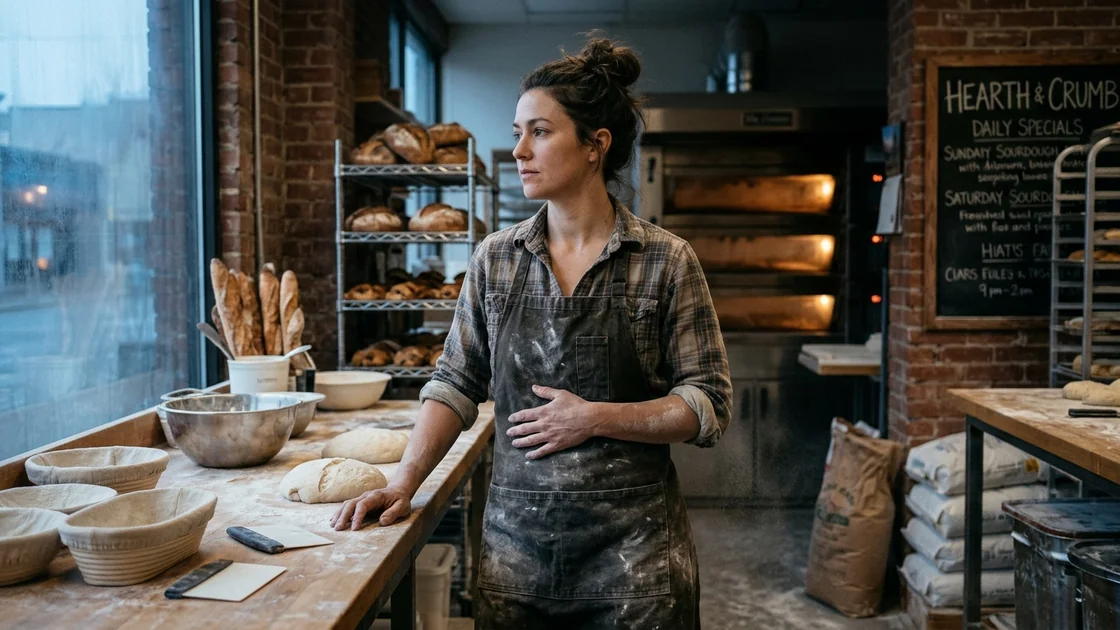
Clara Vance made the ultimate sacrifice when she donated her healthy left kidney to her younger brother, Julian, saving him from the relentless, slow death of end-stage renal failure. The grueling recovery and the permanent changes to her own body seemed like a small price to pay to see her sole sibling restored to vibrant health and given a clean slate. However, once Julian regained his strength, the gratitude that initially bound them began to curdle into a suffocating resentment, driving him back into the very self-destructive habits of alcohol abuse and reckless living that had ruined his body in the first place. Unable to bear the guilt reflected in his sister’s eyes and refusing to be held accountable for his squandered miracle, Julian systematically dismantled their relationship, moving across the country and severing all ties, leaving Clara with a four-inch scar, a lifetime of medical vigilance, and the hollow echo of an unacknowledged sacrifice.
Part I: The Match
The smell of the dialysis clinic was something Clara knew she would carry in the back of her throat for the rest of her life. It was a sharp, metallic mixture of industrial bleach, warm plastic, and the faint, copper tang of circulating blood. Every Tuesday, Thursday, and Saturday, she sat in a stiff vinyl chair beside station four, watching a machinethe size of a dorm refrigerator hum and click as it did the work her brother’s body had surrendered months ago.
Julian looked smaller every week. At twenty-eight, he should have been at the peak of his physical resilience, his tall frame filled out and sturdy. Instead, his skin had taken on a sallow, grayish cast, like wet newsprint, and the dark hollows beneath his eyes made him look like a charcoal sketch of the boy with whom Clara had shared a backyard. A thick woolen blanket was tucked up to his chin to ward off the perpetual chill caused by the cooled blood returning to his veins through the fistula in his left arm.
"You don't have to sit here for all four hours, Clary," Julian murmured, his voice raspy. He didn't open his eyes. The process always drained him, leaving him hollowed out and dizzy, a ghost tethered to a plastic tube. "You have the bakery. You have a life."
"The sourdough is proofing, and Mateo has the afternoon shift covered," Clara said, adjusting the corner of his blanket. "Besides, someone has to make sure you don't try to charm the nurses into sneaking you a salted pretzel."
Julian’s lips twitched into the ghost of a smile, the old spark of the reckless, charismatic brother flickering briefly beneath the exhaustion. "Nurse Brenda is impervious to my charms. I’ve tried. She treats me like a belligerent toddler."
"That’s because you are a belligerent toddler," Clara replied softly.
She looked down at her own hands. They were flour-dusted and strong, the knuckles slightly rough from years of kneading dough and scrubbing sheet pans. Her blood was O-negative. Universal donor. She had known it since high school, when a blood drive van had parked in the gymnasium lot, but she hadn't understood the weight of those two words until the nephrologist, Dr. Aris Thorne, had called her into his office three days ago.
IgA nephropathy, the doctors had called it initially, though the quiet consensus in the hallways—spoken in hushed tones out of Clara’s earshot, though she heard them anyway—was that Julian’s decade of hard living had poured gasoline on a genetic spark. Since their parents died in a highway pileup when Clara was twenty-two and Julian was nineteen, they had processed the grief in opposite directions. Clara had built walls of routine, routine, and more routine, anchoring herself to the hearth of a neighborhood bakery, measuring her life in grams of yeast and early morning hours. Julian had tried to outrun the emptiness. He had chased it through late-night bars, questionable business ventures, a revolving door of toxic friendships, and gallons of cheap whiskey lubricated by over-the-counter painkillers that had quietly, systematically shredded his nephrons.
By the time he had collapsed on Clara’s kitchen floor six months ago, his kidneys were scarred husks, functioning at less than eight percent.
"Clara?" Julian’s eyes were open now, watery and unfocused. "You're doing that thing with your jaw. The grinding thing. What's wrong? Did the landlord raise the rent on the shop?"
Clara took a deep breath, the bleach-scented air burning her nostrils. She reached into her canvas tote bag and pulled out a thick manila folder stuffed with printouts, consent forms, and a diagram of the human renal system where someone had circled the left kidney in blue ink.
"I got the final cross-match results back this morning, Jules," she said, keeping her voice level, as if she were reading off a grocery list. "HLA typing, tissue compatibility, antibody screening. Everything."
Julian’s gaze dropped to the folder. His body went rigid beneath the blanket, causing the dialysis machine to let out a sharp, warning beep as his blood pressure spiked. "No," he whispered. "Clara, I told you not to get tested. I forbid you from getting tested."
"You can't forbid me from doing anything with my own blood, Julian. I'm thirty-one years old."
"The waiting list—"
"The waiting list is five to seven years in this region," she interrupted, leaning forward so he couldn't look away from her. "Dr. Thorne said that with the rate your heart is being strained by the fluid retention, you might have three. I'm not good at math, Jules, but even I can see those numbers don't work."
"It’s my fault I’m in this chair!" His voice cracked, loud enough that the man in station three turned his head to stare. Julian lowered his voice to a fierce, trembling hiss. "I did this to myself. You told me for years to slow down. You told me to go to a doctor when my blood pressure was through the roof and I was living on ibuprofen and bourbon. I didn't listen. Why the hell should you get cut open because I was an idiot?"
"Because you're my brother," Clara said simply. There was no hesitation in her. It was a fundamental law of her universe, as unyielding as gravity: Julian broke things, and Clara fixed them. When he was ten and shattered Mr. Henderson’s greenhouse window with a baseball, Clara had used her babysitting money to pay for the glass. When he was twenty-three and stranded in Nevada with a blown transmission and an empty bank account, she had wired him her vacation savings. Now, his body was broken, and she had a spare part. To her, the logic was elementary.
Tears spilled over Julian’s pale cheeks, tracking down into the stubble along his jaw. With his free hand—the one not tethered to the roaring machine—he reached out and gripped her wrist. His fingers were cold and slightly swollen with edema.
"If you do this," he choked out, pressing his forehead against the back of her hand, "I swear to God, Clary, I’ll make it count. No more bullshit. No more drinking, no more late nights, no more flakiness. I’ll go back to school. I’ll work at the bakery. I’ll spend every single day proving to you that you didn't waste a piece of yourself on me."
Clara stroked his damp hair, feeling a profound, warm swell of protective love that eclipsed every warning the transplant coordinator had given her during the psychological evaluation. The coordinator, a sharp-eyed woman named Sarah Lin, had asked Clara a pointed question: “How will you feel if your recipient does not take care of the organ? Once it leaves your body, it is no longer yours. It is a gift with no strings attached. Can you live with that?”
At the time, Clara had smiled and said, “He’s my brother. He wants to live.”
Looking at Julian weeping against her hand, she believed it with every fiber of her being. "I know you will, Jules," she whispered. "I know you will."
Part II: The Harvest
The months leading up to the surgery were a marathon of invasive scrutiny. Clara’s body, which she had previously thought of merely as a reliable vehicle for hauling fifty-pound sacks of flour, was suddenly treated like a high-security vault containing a priceless gem.
She underwent twenty-four-hour urine collections, Carrying an amber plastic jug in a cooler bag to the bakery and hiding it in the walk-in fridge behind the butter. She drank barium and lay inside the deafening tunnel of an MRI machine while it mapped the intricate branching of her renal arteries. She had sixteen vials of blood drawn in a single sitting, leaving the crook of her elbow bruised the color of an overripe plum. She met with a social worker, a psychiatrist, a nephrologist, a surgeon, and an independent donor advocate whose sole job was to remind her, at the end of every appointment, that she could change her mind at any second, right up until the anesthesia mask was placed over her face, and the hospital would tell Julian she was "medically incompatible" so she wouldn't have to bear the guilt of backing out.
"I'm not backing out," Clara told the advocate during their final meeting in November. Outside, a gray sleet was pelting the hospital windows.
"I understand that, Ms. Vance," the advocate, a gentle man with silver hair, replied. "But you must understand the permanence of the procedure. Donor nephrectomy is unique in medicine. It is the only surgery we perform where we take a completely healthy human being and make them definitively less healthy. Your remaining kidney will grow to compensate, yes, achieving about seventy to eighty percent of your prior total function. Have you considered the long-term risks? Hypertension? Preeclampsia, should you decide to have children later? The fact that if you ever develop kidney disease yourself, you have no backup?"
"I don't have a husband, and I don't have kids," Clara said, folding her hands neatly in her lap. "I have a brother. And right now, he’s drowning."
The night before the surgery, they stayed at Clara’s apartment so they could travel to the hospital together at five in the morning. Neither of them slept. At two a.m., Clara walked into the kitchen to drink her last allowed glass of clear apple juice before the fasting window closed, and she found Julian standing by the window, staring out at the slick, wet streetlamps.
He looked terrifyingly fragile in his flannel pajamas, his shoulders hunched.
"Hey," she said softly.
He turned, offering a weak smile. "Hey. Can't sleep?"
"Too much Hibiclens," she said, sniffing her own arm. They had both been instructed to shower with the harsh red antiseptic soap that left their skin feeling tight and smelling like a veterinary clinic. "I feel like I’m laminated."
Julian laughed, a quiet, genuine sound, and walked over to lean against the kitchen counter beside her. For a long moment, they didn't speak. The radiator clanked in the corner, hissing steam.
"I'm scared, Clary," he admitted, looking down at his bare feet. "Not for me. For you. They're going to pump you full of gas and cut through your muscle."
"It’s laparoscopic," she said, repeating the surgeon’s reassuring patter. "Three tiny keyhole incisions for the instruments, and one four-inch incision near the bikini line to pull it out. I'll be up and walking by tomorrow night."
"Four inches isn't tiny," he said, his voice thick. He reached out and pulled her into a hug. He held her so tightly she could feel the rapid, erratic thumping of his heart against her ribs. "Thank you. I don't have the words, Clara. There aren't words big enough for this. I owe you my life."
"You don't owe me anything," she said into his shoulder. "Just get better. Let's just get to the other side of tomorrow."
The next morning was a blur of harsh fluorescent lights, crinkled blue paper caps, and the rhythmic beep-beep-beep of monitors in adjacent pre-op bays separated only by a thin beige curtain. Before they wheeled Clara away first—the harvest always preceded the transplant—the nurses pulled back the curtain so the siblings could see each other.
Julian raised a hand, his IV lines dangling. "See you on the flip side, sis. Keep my bean warm."
Clara laughed as the sedative in her line began to turn the edges of her vision warm and fuzzy. "Don't drop it," she slurred at the resident pushing her gurney.
Then there was the cold operating room, the glaring jellyfish lights overhead, the plastic smell of the oxygen mask, and a sudden, absolute nothingness.
Waking up was not like waking up from sleep; it was like being dragged upward through heavy, freezing mud while someone stood on her chest.
The pain hit her before her eyes could even open. It wasn't just the sharp, searing agony at her lower abdomen where they had sliced through the fascia to extract the organ; it was a bizarre, excruciating pressure in her left shoulder and collarbone—the carbon dioxide gas they had used to inflate her abdominal cavity, trapped and pressing against her phrenic nerve. Every shallow breath felt like inhaling broken glass.
"Clara? Clara, you're in recovery. Everything went beautifully."
A nurse’s voice floated above her. Clara tried to speak, to ask the only question that mattered, but her throat was raw and dry from the intubation tube. All that came out was a croak.
"Ju—" she managed, her fingers clawing weakly at the hospital sheet.
The nurse knew immediately. Transplant recovery nurses always knew. "Your kidney is already in your brother, sweetie. And the OR just called down—it didn't even wait to be fully stitched in before it started making urine. It turned pink right away. He’s doing great."
A single hot tear leaked from the corner of Clara’s eye, sliding into her hairline. It worked. She let her head sink back into the pillow, surrendering to the wave of hydromorphone the nurse pushed into her IV, the crushing pain in her abdomen momentarily softening into a dull, manageable roar.
The first three days in the hospital were the hardest physical trial of Clara’s life. It was a cruel irony of transplant surgery that the recipient almost always felt better immediately, while the donor felt as though they had been hit by a freight train.
On the afternoon of the second day, shuffling at a glacial pace with a pillow clutched tightly against her stomach to splint the incision, Clara made the trek down the hall to Julian’s room, accompanied by a physical therapist holding her IV pole.
When she pushed open his door, she stopped dead in her tracks.
Julian was sitting up in bed, the head elevated, eating a cup of lemon gelatin. The gray, wet-newsprint color was completely gone from his face, replaced by a healthy, flushed pink that she hadn't seen in three years. His eyes were bright, clear, and wide awake. The swelling around his jaw had vanished; the new kidney had produced nearly four liters of urine in the first twenty-four hours, flushing out months of accumulated toxins and excess fluid.
"Look who it is!" Julian beamed, setting the spoon down. His voice wasn't raspy anymore; it was resonant and strong. "The woman of the hour! Look at me, Clary. Look at my hands." He held them up. His fingers were slender again, the knuckles visible. "My creatinine dropped from nine point two to one point four overnight. One point four! Dr. Thorne said your kidney is a Ferrari."
Clara smiled, though the movement pulled slightly at the nausea simmering in her gut. She shuffled to the visitor’s chair and lowered herself down with an involuntary groan, wincing as the staples beneath her surgical dressing pinched her skin.
Julian’s smile faltered slightly as he watched her struggle. A shadow crossed his newly pink face—a brief, uncomfortable flicker of something that looked like claustrophobia. "God, you look awful," he said, his tone dropping. "Are they giving you enough pain meds?"
"I'm okay," she panted, leaning back and closing her eyes for a second to let the dizziness pass. "It’s just the gas pain. And getting up and down. How's your incision?"
"Honestly? Barely feel it," Julian said, patting the right side of his lower abdomen where her left kidney now nestled inside his pelvic basin. "I guess I felt so toxic for so long that surgical pain feels like a massage by comparison. Plus, the high-dose prednisone they have me on makes me feel like I could lift a car. I'm starving. I want a cheeseburger, a real one, with bacon."
He launched into a rapid, manic monologue—fueled by the heavy intravenous steroids—about everything he was going to do once he was discharged. He was going to hike the Pacific Crest Trail. He was going to learn carpentry. He was going to adopt a dog.
Clara sat in the chair, clutching her pillow to her gutted stomach, listening to him talk. She was profoundly happy that he was alive, that the miracle had taken root. Yet, for the first time, a tiny, unfamiliar seed of isolation sprouted in her chest. He was already running toward the horizon, vibrant and supercharged by her cells, while she sat in the wake of the harvest, hollowed out, aching, and suddenly very, very tired.
Part III: The Debt
For the first four months, they lived together in Clara’s two-bedroom apartment above the bakery, a period Clara would later look back on as the golden delusion.
Recovery was a full-time job for both of them, though for entirely different reasons. For Clara, it was a slow, humbling slog against fatigue. Nobody had warned her about the bone-deep exhaustion that came with one kidney learning to do the work of two. By two o'clock every afternoon, it felt as though someone had pulled her plug from the wall. She had to hire a second baker to handle the morning bake because she wasn't cleared to lift anything heavier than a gallon of milk for eight weeks, and even when she was cleared, her left flank would throb with a dull, phantom ache if she stood on the concrete floors for too long.
For Julian, recovery was a cage of hyper-vigilance. To keep his immune system from recognizing Clara’s tissue as a foreign invader and destroying it, he had to take a massive cocktail of immunosuppressants twice a day—tacrolimus, mycophenolate, and prednisone—along with antivirals, antifungals, and blood pressure medications.
Because Clara was the one who had organized their lives since their parents died, she naturally took over the management of the regimen. She bought a massive seven-day pill organizer with morning, noon, evening, and bedtime compartments. She set alarms on her phone for 8:00 a.m. and 8:00 p.m. sharp.
At first, Julian was a model patient. He wore his N95 mask whenever he stepped into the stairwell. He drank his three liters of water a day from a graduated jug Clara bought for him. He sat at the kitchen table every Sunday night while she sorted the pills with tweezers, thanking her over and over.
"I'm going to pay you back for the extra baker you had to hire," he said in February, two months post-op, as he washed his dishes at the sink. "As soon as Dr. Thorne clears me to be around the general public when my immune suppression drops to the maintenance dose, I’m taking over the front counter. Free labor until the ledger is balanced."
"There's no ledger, Jules," Clara said, rubbing her lower back where her scar was itching furiously as the nerves regenerated.
The shift didn't happen all at once. It began with small, hairline fractures in the routine, barely perceptible until they widened into chasms.
By April, the steroid side effects and the cabin fever were beginning to wear on Julian’s nerves. The prednisone gave him mood swings, insomnia, and a slight rounding of his face that he hated. Now that he felt physically strong—stronger than he had felt since his early twenties—the restrictions of a transplant recipient began to feel less like life-saving protocols and more like a prison sentence handed down by his older sister.
One Tuesday evening in late April, the 8:00 p.m. alarm chimed on Clara’s phone. She was on the couch going over the bakery’s wholesale invoices.
"Eight o'clock, Jules," she called out toward the spare bedroom.
"Yeah, in a minute!" he called back. He was playing an online video game with some of his old friends—a group of guys from his bartender days whom Clara privately despised, led by a loudmouth named Marcus who had never once visited Julian during his year on dialysis.
At 8:20, Julian still hadn't come out. Clara set her clipboard down, stood up, and knocked on his door before pushing it open. Julian was wearing a headset, laughing into the microphone, a half-empty can of soda sitting on the desk next to a bag of salted potato chips.
"Jules," Clara said, holding out the small plastic cup of pills and a glass of water. "Tacrolimus is time-sensitive. It has to be twelve hours apart to keep the trough levels steady in your blood. And you shouldn't be eating those chips; your sodium was borderline on Monday’s labs."
Julian paused, his smile vanishing. Slowly, he pulled one side of the headset off his ear. He looked at the cup in her hand, then up at her face, his eyes narrowing with a flash of cold irritation.
"Jesus Christ, Clara, twenty minutes isn't going to put me into rejection," he snapped, loud enough that his friends on the voice chat probably heard. "Put them on the desk. I'm not five years old."
Clara blinked, stung by the venom in his tone. "Dr. Thorne said—"
"I was in the room when Dr. Thorne spoke! I have ears!" He snatched the plastic cup from her hand, so roughly that one of the white horse-pills bounced out onto the carpet. Neither of them moved to pick it up for three seconds. Then Julian cursed under his breath, snatched it off the floor, tossed the whole handful into his mouth, and swallowed them dry with a grimace. "There. Happy? Can I go back to talking to my friends now, Warden?"
Clara stood in the doorway, her empty hand still slightly raised. "I was just trying to help."
"Well, stop," he said, sliding the headset back over his ear and turning his back to her to face the glowing monitor. "Close the door on your way out."
She closed the door. As she walked back to the living room, she subconsciously pressed her palm against the four-inch purple ridge low on her abdomen. It’s the steroids, she told herself, repeating what the support group forums online always said. Prednisone rage. It’s chemical. It’s not him.
By June, Julian was cleared to return to normal work and social activities, provided he practiced good hygiene and avoided obvious hazards. True to his word from the dialysis clinic, he started working the front counter at Clara’s bakery, Hearth & Crumb, four mornings a week.
It lasted three weeks.
Julian was charismatic with the customers, charming the morning commuters into buying extra almond croissants, which Clara appreciated. Having him there felt, briefly, like the family business she had always dreamed of. Until the morning she walked out from the back kitchen at ten a.m. to find the front register unattended, a line of four annoyed customers waiting, and the back alley door propped open with a milk crate.
She stepped into the alley after clearing the line and found Julian leaning against the dumpster, laughing into his phone, a lit cigarette between his fingers.
The sight of the smoke curling upward made the blood roar in Clara’s ears. Smoking was catastrophic for transplant kidneys; it constricted the blood vessels, accelerated cardiovascular disease—the number one killer of transplant recipients—and dramatically increased the risk of losing the graft.
Without thinking, Clara marched across the asphalt, snatched the cigarette straight from between his fingers, and ground it beneath the heel of her clog.
"Are you out of your mind?!" she hissed, her voice trembling with a mixture of terror and rage. "What are you doing, Julian?!"
Julian stared at the crushed cigarette butt, then slowly raised his eyes to hers. He didn't look ashamed. He looked furious, his jaw clenched so tight a muscle jumped beneath his cheek.
"It’s one cigarette, Clara. I was stressed out."
"Stressed out from ringing up muffins for three hours?!" Her voice rose, cracking in the narrow brick alley. "Do you know what nicotine does to the renal artery? The artery that the surgeon spent four hours sewing into your iliac vein? My artery?"
There it was. She hadn't meant to say it—she had sworn to herself she would never use the possessive pronoun—but the terror of seeing him casually poison the tissue she had been butchered to give him broke her restraint.
Julian’s face went pale, then dark red. He stepped off the wall, towering over her by six inches. "There it is," he said softly, his voice dripping with bitter vindication. "I wondered how long it would take you to throw it in my face. Your artery. Your kidney."
"I didn't mean it like that—"
"The hell you didn't!" he barked. "You look at me like I’m a leased car you’re afraid I’m going to scratch! Every time I eat a piece of pizza, you stare at my plate. Every time I cough, you interrogate me. Every time I stay in the bathroom too long, you ask if my output is normal! I can't even breathe in that apartment without feeling like I owe you rent for the air in my lungs!"
"You almost died, Julian!" she cried, tears springing to her eyes. "Six months ago you couldn't walk up a flight of stairs without turning gray! Forgive me if I’m having a hard time watching you set yourself on fire again!"
"Maybe I’d rather burn out than live in a museum case under your thumb!" he shouted back. He untied his flour-streaked apron, yanked it over his head, and threw it onto the hood of the nearest parked car. "I quit. Keep the paycheck from this week to cover my share of the utilities. I'm going to Marcus's."
"Julian, wait—"
He was already striding down the alley toward the street, his shoulders squared, moving with a brisk, effortless athleticism made possible entirely by the organ filtering his blood beneath his ribs.
Part IV: The Squandering
He didn't move out immediately after the alley fight, because he didn't have the money yet, and Clara, terrified that kicking him out would mean he wouldn't be able to afford his prescription co-pays, apologized that night.
She apologized. Looking back later, that was the moment that haunted her the most. She, the one with the scar that still burned when it rained, sat on the edge of his bed and apologized for making him feel suffocated, promising to back off, to stop asking about his labs, to stop monitoring his pill box.
"I just love you," she had pleaded, her voice small. "I just want you to be around for a long time."
Julian had accepted the apology with a cool, distant nod. "I get it, Clary. We just need boundaries. I’m twenty-nine. I need to live my life."
"Living his life," Clara soon discovered, meant picking up the exact thread he had dropped when his native kidneys failed, as if the two years of sickness and the miracle of the transplant were nothing more than an inconvenient commercial break.
He got a job tending bar at The Rusty Anchor, a dimly lit, high-volume dive bar on the south side of town managed by his friend Marcus. When Clara Gently pointed out that working in a crowded, poorly ventilated bar late at night while immunosuppressed was a recipe for catching every respiratory virus in the city, Julian simply smiled tightly and reminded her of her promise about boundaries.
By September—nine months post-transplant—Julian was a ghost in the apartment. He slept until two in the afternoon, left for work at four, and didn't come staggering back through the front door until three or four in the morning.
Clara would lie awake in her bed, staring at the ceiling, listening to the heavy thud of his boots in the hallway, the clatter of him bumping into the entryway table, and the distinct, unmistakable sound of him retching in the bathroom the next morning.
She didn't have to guess what was happening. She could smell it on the laundry he left piled by the machine—stale beer, sour whiskey, and the sweet, chemical tang of vape smoke. She saw it in the bathroom trash can, where foil blister packs of tacrolimus sat with pills still unpopped from two days prior.
Meanwhile, Clara’s own body was struggling to find its new equilibrium. At her six-month donor follow-up, her blood pressure was elevated for the first time in her life—138 over 88—and her remaining kidney’s filtration rate, her eGFR, was hovering at 62, slightly lower than the doctors had hoped to see in a healthy thirty-one-year-old.
"It's not cause for panic, Clara," Dr. Thorne told her gently, tapping his pen against her chart. "Your right kidney is still undergoing compensatory hypertrophy—it’s growing larger to handle the workload. That puts a bit of hyperfiltration stress on the nephrons. You need to be religious about your hydration, keep your sodium low, avoid all NSAIDs like ibuprofen for the rest of your life, and frankly, you need to lower your stress levels. Your cortisol is likely contributing to the blood pressure."
"I'll try," Clara said hollowly. "How is... I know because of HIPAA you can't tell me Julian’s numbers unless he authorizes it, and he revoked the authorization form last month. Is he at least coming to his appointments?"
Dr. Thorne stopped tapping his pen. His expression became carefully, professionally blank, though a profound sadness flickered behind his glasses. He had been their doctor from the beginning; he had seen Clara hold Julian’s vomit basin during dialysis.
"You know I cannot discuss another patient's attendance or compliance, Clara," Dr. Thorne said quietly. Then he paused, looking down at her chart. "What I can say, speaking generally about the transplant population, is that young male recipients between the ages of eighteen and thirty-five have the highest rate of medication non-adherence and lifestyle relapse. Sometimes, feeling healthy again creates a psychological denial that they are still chronically ill patients. And sometimes, the weight of the gift causes a self-sabotaging impulse. You did a noble, extraordinary thing, Clara. Now you have to take care of the body you have left."
She walked out of the hospital that day into the crisp October air and sat in her parked car for forty minutes without turning the key in the ignition.
The breaking point came on the one-year anniversary of their surgery—their "Kidney-versary," as the donor support groups cheerily called it.
Clara had wanted to do something quiet to mark the day. Despite the tension between them, she thought that acknowledging the milestone might bridge the gap, might remind Julian of the night they stood in her kitchen smelling like antiseptic soap, holding each other against the dark. She spent the afternoon baking his favorite meal: a low-sodium, herb-roasted chicken, garlic mashed potatoes made with olive oil instead of heavy cream, and a tart cherry pie from scratch.
She texted him at 2:00 p.m.: Made dinner for tonight to celebrate one year. Will be ready at 6 before you have to go in for your late shift. Please be here.
He texted back a thumbs-up emoji at 3:15.
At 6:00, the chicken came out of the oven, golden and fragrant. Julian wasn't home. At 7:00, Clara covered the plates in foil and put them in the warm oven. She called him; it went straight to voicemail. At 9:00, she ate a cold wing over the sink, packed the rest into Tupperware containers, and sat on the sofa in the dark.
At 1:30 in the morning, her phone rang. It wasn't Julian’s number; it was the main desk at St. Jude’s Emergency Department.
When Clara arrived at the ER twenty minutes later, breathless and wearing a coat thrown over her pajamas, she found Julian sitting on the edge of a gurney in Cubicle 6. He had three stitches above his left eyebrow, his knuckles were scraped raw, and a saline bag was dripping into his arm. Marcus was leaning against the wall in the corner, looking bored and scrolling through his phone.
"What happened?!" Clara gasped, rushing to the side of the bed.
Julian rolled his eyes, wincing as the movement pulled at the stitches on his brow. "Who called her? Did you put her down as my emergency contact?" he demanded of the nurse who was checking his vitals.
"It's what was in the system from your admission last year, sir," the nurse said briskly. "And given your medical history, we needed someone here to sign your discharge papers since your blood alcohol level was point-one-six on arrival."
Clara froze. Point-one-six. Twice the legal driving limit.
"What happened, Julian?" she repeated, her voice dropping an octave, cold as iron.
"Some guy at the bar got handsy with a waitress, I told him to leave, he swung a bottle at me in the parking lot," Julian muttered, refusing to look at her. "It was nothing. I just came in for the stitches, and the ER doc panicked when he saw 'renal transplant' on my wristband and ran a full metabolic panel because I was a little dehydrated."
The nurse looked up from the computer monitor, her expression stern as she addressed Julian. "You weren't 'a little dehydrated,' Mr. Vance. Your creatinine is up to two point three, your blood pressure was 170 over 105, and your tacrolimus trough level is barely detectable, which means you haven't taken your anti-rejection meds in at least forty-eight hours. Nephrology wants to admit you for observation and a possible biopsy to rule out acute cellular rejection."
"I'm not getting admitted," Julian snapped, reaching over with his good hand to start peeling the tape off his IV cannula. "I have to work tomorrow night, and I don't need a biopsy. I missed two doses because I left my pill bottle at my girlfriend’s place. I’ll take them when I get home."
"Sir, if you leave now, it is Against Medical Advice, and your insurance may refuse to cover the visit," the nurse warned.
"Julian, stop!" Clara grabbed his wrist to stop him from pulling the needle out of his vein. It was the exact same spot on his wrist he had gripped when he was weeping in the dialysis chair a year ago. "Listen to her! Two point three! Your baseline was one point two! You’re going into rejection!"
Julian wrenched his arm out of her grasp with such force that Clara stumbled back a step against the privacy curtain. Marcus looked up from his phone, straightening up from the wall.
"Whoa, take it easy, Clary," Marcus said, offering a greasy, placating smile. "The man said he's fine. Doctors always try to pad the bill with overnight stays."
Clara turned on Marcus like a viper. "Shut your mouth! What do you know about it? Were you the one sitting beside him while a machine washed his blood? Did you let them cut a healthy organ out of your body so he could sit in your filthy bar and drink poison until three in the morning?!"
The cubicle went dead silent. Even the ambient noise of the ER seemed to recede.
Julian’s face contorted into a mask of pure, unadulterated hatred. It wasn't the steroid rage anymore—he had been weaned down to five milligrams months ago. This was the raw, festering resentment of a man who could not stand the sight of his own savior.
"Get out," Julian whispered.
Clara turned back to him, her chest heaving. "What?"
"Get out of my cubicle. Get out of my life." He ripped the IV out himself, blood welling up in a bright red bead on the back of his hand and dripping onto the white sheet. He didn't even press gauze to it as he swung his legs over the side of the gurney. "I knew it. From the day I woke up in that hospital, I knew you didn't do this for me. You did it so you could be the martyr. Saint Clara, the heroic sister! You wanted a leash around my neck for the rest of my life so I could never do anything without asking your permission!"
"You're killing my kidney, Julian!" she screamed, the tears finally breaking free, hot and blinding. "You're killing the piece of me I gave you! You promised me! You swore to God you would make it count!"
"Then take it back!" he roared, grabbing the hem of his blood-stained t-shirt and yanking it up to expose the pale, smooth crescent scar on the right side of his lower belly. "Go grab a scalpel and cut it out right now if it means I never have to hear your voice again! I didn't ask you to get tested! You forced this on me, and you’ve been charging me interest every single day since!"
A security guard pulled back the curtain, drawn by the shouting. "Everything okay in here?"
"She’s leaving," Julian panted, pulling his shirt down and grabbing his jacket from the chair. Blood from his torn IV site smeared onto his jeans. "Come on, Marcus. Let's go."
He brushed past Clara without looking at her, his shoulder clipping hers hard enough to spin her halfway around. She stood alone in the cubicle, staring at the drops of bright red blood on the linoleum floor—blood that her kidney had just cleaned.
Part V: The Amputation
When Clara returned to the apartment at three a.m., the roast chicken was still sitting in the Tupperware on the counter. She stood in the kitchen for a long time, then picked up the containers, walked out to the back alley, and threw the entire meal, Tupperware and all, into the dumpster where she had caught him smoking four months earlier.
She didn't see Julian for two days. Then, on Saturday morning, while she was downstairs in the bakery pulling the first batch of baguettes from the deck oven, she heard the heavy footsteps of multiple people trampling up and down the exterior stairs that led to the apartment above.
She wiped her hands on her apron, untied it, and walked up the back stairs.
The apartment door was propped open. Inside, Julian, Marcus, and a young woman Clara had never seen before—presumably the girlfriend where he had left his pills—were hauling cardboard boxes and trash bags stuffed with clothes out of the spare bedroom.
Julian came out of his room carrying his computer monitor. When he saw Clara standing in the kitchen doorway, he stopped for a fraction of a second, his expression hardening into stone, before walking right past her toward the front door.
"Where are you going?" she asked. Her voice felt strangely detached, as if it were coming from a radio in another room.
"Marcus and I are moving to Phoenix," Julian said over his shoulder, not breaking stride as he carried the monitor down the stairs. "His uncle opens a sports bar out there next month. Needs managers."
Clara followed him to the top of the landing. "Phoenix? Julian, your transplant team is here. Your insurance is state-based—if you leave the state, your Medicaid coverage for the immunosuppressants lapses for at least sixty days until you establish residency in Arizona. How are you going to pay for your tacrolimus? It’s twelve hundred dollars a month out of pocket!"
Julian came back up the stairs, brushing past the girlfriend who was carrying a lamp. He stopped two steps below Clara, so they were finally at eye level.
In the harsh morning sunlight filtering through the stairwell window, she saw that the puffiness had returned slightly around his eyes. The flush of health from the first few months was fading into a dull, ruddy irritation.
"I have a ninety-day supply from the mail-order pharmacy," he said coldly. "And after that, I’ll figure it out. Or I won't. Either way, it's none of your business anymore."
He walked past her into the bedroom to grab his final duffel bag. Clara stood in the hallway, watching him strip the room bare. Left behind on the nightstand was the seven-day plastic pill organizer she had bought him, empty and dusty, along with the graduated water jug and the binder of post-transplant dietary guidelines from St. Jude’s.
He zipped the duffel bag, slung the strap over his shoulder, and walked to the front door. He took the apartment key off his keyring and tossed it onto the kitchen counter. It slid across the laminate and hit the fruit bowl with a sharp clink.
"Goodbye, Clara," he said.
"Jules," she whispered. The anger from the ER was gone, replaced by a terrifying, bottomless vertigo, as if she were watching him step backward off the edge of a cliff in slow motion. "Please. Don't do this. You don't even have to talk to me if you hate me that much. Just stay in town where Dr. Thorne can watch your numbers. Please don't throw your life away to spite me."
Julian paused with his hand on the doorknob. He looked back at her one last time. There was no warmth in his eyes, no recognition of the thirty years of shared history, the dead parents, the shared childhood, or the four-inch scar hidden beneath her flour-dusted jeans. There was only a profound, exhausted relief, like a debtor who had finally decided to declare bankruptcy and walk away from the bank.
"It's my life to throw away," he said softly. "That's the part you never understood."
He stepped out and pulled the door shut behind him.
Clara walked to the living room window and watched from behind the sheer curtains as they loaded the back of Marcus’s rusted pickup truck. She watched Julian climb into the passenger seat. She watched him roll down the window, light a cigarette, and blow a plume of gray smoke into the October air as the truck pulled away from the curb, turned the corner at the end of the block, and vanished.
An hour later, when her hands finally stopped shaking enough to hold her phone, she typed out a text message with the address and phone number of the Mayo Clinic’s transplant center in Phoenix, begging him to transfer his care immediately upon arrival.
She pressed send.
Beneath the blue bubble of the text, the little word Delivered never appeared. Instead, a minute later, she tried to call his number.
“We’re sorry. You have reached a number that has been disconnected or is no longer in service.”
She opened Instagram. User not found. She opened Facebook. This content isn't available right now.
He hadn't just moved to Arizona. He had performed a surgical excision of his own, cutting her out of his life with a blade far sharper than the one Dr. Thorne had used a year ago.
Part VI: Phantom Pain
The human body has a curious mechanism for dealing with the loss of a part of itself. Amputees often report feeling their missing fingers clenching into a fist, or an itch on the sole of a foot that was incinerated years prior. The brain, refusing to update its internal map, continues to send electrical signals into the void, waiting for a reply that never comes.
In the two years that followed Julian’s departure, Clara learned that you could have phantom limb pain for a brother—and for an internal organ.
At first, she went through a period of frantic, obsessive detective work. Every few weeks, late at night when the bakery was dark and silent, she would create burner social media accounts under fake names to search for Marcus, or the bar in Phoenix, or Julian himself.
Six months after he left, she found a public photo posted on the Facebook page of a place called Desert Taproom in Tempe. It was a promotional shot of the staff behind the bar holding up shot glasses of tequila to the camera.
Julian was in the center. He had gained weight—not healthy muscle, but the bloated, water-logged heaviness she recognized all too well from the months before his diagnosis. His face was flushed crimson, a shot glass raised to his lips, his arm slung around the waist of a woman with bleached blonde hair. He looked happy. He looked completely oblivious to the ticking clock inside his pelvis.
Looking at the photo gave Clara a panic attack so severe she had to sit on the kitchen floor with her head between her knees, gasping for air while her heart hammered against her ribs at 140 beats per minute.
The next day, she went back to see Sarah Lin, the transplant social worker who had evaluated her before the surgery.
Clara sat in the same chair she had sat in when she was whole, when she had two kidneys and a brother who wept with gratitude against her hand. Now, she felt like a husk.
"I can't stop thinking about it," Clara confessed, staring at the box of tissues on the coffee table between them. "I wake up at three in the morning and I wonder if it’s hurting. My kidney. I wonder if it’s scarred over from the tacrolimus toxicity or swollen from rejection because he stopped taking his pills. I drink a glass of water and I think, Is he drinking water? It’s a hundred and ten degrees in Phoenix, is he dehydrated? I feel like half of me is trapped inside a burning building in Arizona and I’m locked outside without a hose."
Sarah listened quietly, her hands folded in her lap. She didn't offer platitudes. In the transplant world, Clara’s story was tragic, yes, but it wasn't unheard of.
"Clara," Sarah said gently. "Do you remember what we talked about before the surgery? About the nature of the gift?"
"You said once it leaves my body, it’s no longer mine," Clara recited bitterly. "You asked if I could live with it if he didn't take care of it. I lied. I thought I could, because I couldn't imagine a world where someone is handed a second chance after dying by inches and just... spits on it. Why did he hate me so much at the end, Sarah? I saved his life."
"Sometimes, saving someone's life is the one thing they can never forgive you for," Sarah said, her voice filled with a heavy, clinical empathy. "Think about the dynamic of a debt that cannot be repaid. If I lend you twenty dollars, you can give me twenty dollars next week, and we are equals again. If I give you an organ, how do you ever become my equal again? You can't. Every time Julian looked at you, he didn't just see his sister. He saw a mirror reflecting two things he couldn't tolerate: the fact that he destroyed his own body, and a debt so massive that the only way to escape it was to pretend it had no value."
Clara wiped her eyes with the back of her flour-scarred wrist. "So he destroys the kidney to prove he doesn't owe me anything?"
"He destroys it to reclaim ownership of himself," Sarah said softly. "Even if that ownership is fatal. It isn't rational, Clara. Addiction and self-destruction are never rational. Look at the grief you are carrying. You are grieving two things right now: the loss of your brother, and the loss of a piece of your own body that you feel was wasted."
"Was it wasted?" Clara whispered, the question she had been terrified to voice aloud for eighteen months. "I have high blood pressure now. I take a daily lisinopril pill that makes me cough. I can't take Advil when my back hurts from lifting flour sacks. When I went on a date last month and we talked about the future, I had to explain that any pregnancy I have would be considered high-risk because I’m a living donor. I altered my body permanently, Sarah. For what? To buy him three extra years of drinking tequila in a strip-mall bar?"
Sarah leaned forward, her gaze steady and piercing. "When you lay down on that operating table, Clara, did you do it out of love?"
"Yes."
"Did you give him a healthy, functioning organ that freed him from a machine and gave him the opportunity to live a full life?"
"Yes."
"Then your part of the story was a triumph," Sarah said firmly. "The surgery was a success. Your love was absolute. What Julian chose to do with the time and the tissue you gave him belongs entirely on his ledger, not yours. A gift isn't invalidated because the recipient throws it in the trash. It still speaks to the heart of the giver. You have to stop living inside Julian’s body, Clara. You only have one kidney left, and it’s in your body. Come back home to it."
It was a slow process, returning to her own body.
She deleted the burner accounts. She stopped looking at the Facebook page for the bar in Tempe. She took the spare bedroom—the room that had smelled like Julian’s sickness and then his resentment—and she stripped the wallpaper, painted the walls a bright, warm sage green, and turned it into an office and a yoga studio.
When the two-year anniversary of the surgery arrived in November, Clara didn't bake a chicken. Instead, she closed the bakery for three days, leaving Mateo in charge, and drove four hours north to a cabin on the coast of Maine.
On the morning of the anniversary, she brewed a mug of herbal tea, wrapped herself in a heavy wool cardigan, and walked down to the rocky shoreline where the gray Atlantic waves were crashing against the granite ledges, sending up plumes of cold white spray.
Later that night, before going to bed, she stood in front of the full-length mirror in the cabin’s bathroom. She pulled up her sweater and pushed the waistband of her flannel pajama pants down an inch.
The four-inch scar at her bikini line had faded from angry purple to a thin, silvery-white line, almost blending into the pale skin of her stomach. Higher up, the three tiny keyhole scars from the laparoscopic instruments looked like nothing more than old chickenpox marks.
For two years, she had avoided looking at them in the mirror. Every time she had caught a glimpse of the scar getting out of the shower, it had felt like an accusation—a permanent brand reading FOOL.
Now, she placed her warm, strong baker’s hand over the silver line. Beneath her ribs on the right side, her remaining kidney—enlarged now, sturdy, working quietly and tirelessly on its own—filtered her blood, maintained her electrolytes, and kept her alive.
She didn't know where her left kidney was tonight. She didn't know if it was struggling through a fog of cheap whiskey and dehydration in the Arizona desert, or if it was already failing, scarring over in a slow, silent rejection while Julian ignored the swelling in his ankles and the metallic taste returning to the back of his throat.
If it failed, she knew the phone would probably ring eventually. A hospital social worker in Phoenix, or perhaps Julian himself, desperate and gray again, calling from a dialysis clinic to tell her he was sorry, to tell her he was ready to grow up this time, to ask if she would come take care of him.
Clara looked into her own eyes in the mirror. She thought of the woman who had sat in station four smelling bleach for four hours every Tuesday, Thursday, and Saturday. She loved that woman for her capacity to give. And she knew, with a sudden, crystalline certainty that settled into her bones like warmth, that if that phone ever rang, she would not answer it.
She had given him her blood, her flesh, and his second chance. The rest of her life belonged to her.
Clara pulled her sweater down, switched off the bathroom light, and went to bed, sleeping through the night without waking once.