Letters from the Ash
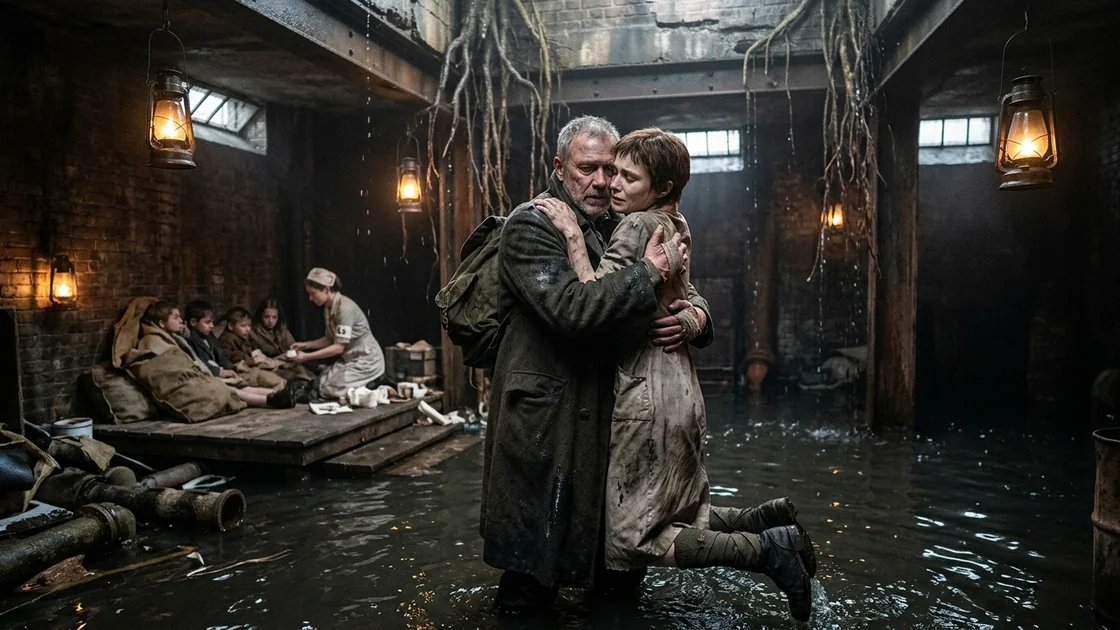
This is the story of Arthur Pendelton, an aging clockmaker who embarks on a perilous journey into the besieged and ruined city of Oakhaven after his daughter, Clara, abruptly stops sending her weekly letters. Over the course of six harrowing months of silence, the war between the Northern Coalition and the Republic has reduced the once-vibrant metropolis to a labyrinth of ash, rubble, and warring factions. Armed only with a satchel of faded correspondence, a broken pocket watch, and a father’s desperate resolve, Arthur navigates sniper alleys, underground refugee camps, and the haunting remnants of his daughter’s life. Along the way, he relies on the reluctant guidance of a cynical young smuggler named Jonas, uncovers the sacrifices Clara made as a combat medic, and ultimately confronts the devastating cost of survival in a world that has forgotten how to heal.
The last envelope had arrived on a Tuesday in late October, smelling faintly of woodsmoke and the cheap, metallic ink the postal service had started using when the rationing began. Arthur had read it so many times that the creases had given way, splitting the thin paper into four distinct quadrants that he eventually had to mend with strips of translucent masking tape.
Dearest Papa, it began, the loops of Clara’s cursive tighter and more frantic than usual. The hospital has moved to the basement of the old conservatory on Elm. The glass roof came down two nights ago when the artillery hit the ridge, so we are sleeping beneath the roots of the tropical ferns. Don’t worry about the cold; the boilers are still running on broken furniture. I have enough tea to last until November. Keep winding the mantel clock. I’ll be home before the frost settles.
The frost had settled, thickened into the brutal, iron-hard ice of January, thawed into the mud of March, and now the pale, reluctant green of late April was beginning to choke the ditches along the southern highway. Six months. Twenty-six Tuesdays had come and gone without the rattle of the brass mail slot.
Arthur stood at the edge of the Ridgeway Overpass, where the asphalt simply ended, sheared off by a five-hundred-pound demolition charge. Below him, nestled in the river valley like a shattered bowl of bone china, lay Oakhaven.
Even from two miles away, the city did not look like a place where human beings lived; it looked like a geological formation, a jagged badland of grey concrete and rusted rebar jutting toward a sky the color of a bruised plum. A perpetual smudge of oily black smoke hung over the eastern industrial district, refusing to disperse in the stagnant spring air. Every few minutes, a dull, subterranean thud would vibrate through the soles of Arthur’s worn leather boots, followed three seconds later by the flat, unenthusiastic crump of a mortar shell landing somewhere near the river docks.
Arthur adjusted the strap of his canvas rucksack. He was sixty-two years old, a man whose life had been measured in the microscopic tolerances of balance wheels, escapements, and hairsprings. His hands, usually steady enough to manipulate tweezers the size of eyelashes, trembled slightly as he gripped the rough concrete of the shattered barrier. Inside his coat pocket, pressed against his ribs, were thirty-four letters tied with butcher’s twine.
"You’re looking the wrong way, old man," a voice rasped from the shadow of an overturned municipal bus. "The refugee columns are ten miles back toward the border. Nothing going down that hill but lead and fools."
Arthur turned. A young man—hardly more than a boy, really, though his eyes had the sunken, hyper-vigilant flatness of someone twice his age—was squatting beside a small smokeless stove made from a punctured ration tin. He was wearing an oversized military greatcoat with the insignia ripped off the shoulders, leaving behind darker patches of wool in the shape of triangles. A bolt-action rifle, its wooden stock wrapped in greasy burlap, rested across his knees.
"I am looking for Elm Street," Arthur said. His voice sounded strange to his own ears, dry and rustling, like dead leaves. He hadn't spoken aloud to another person in three days. "The old conservatory."
The boy spat into the gravel. "Elm Street is in Sector Four. The Coalition holds the north end of the boulevard, the Republic remnants hold the sewer grates at the south, and during the day, the snipers shoot at the stray dogs just to keep their zeroes straight. Even if the conservatory is still standing, there’s nobody in it you want to meet."
"My daughter is a nurse," Arthur said, stepping closer. He reached into his coat—slowly, noticing the way the boy’s dirty fingers twitched toward the trigger guard of the rifle—and pulled out the taped October letter. "She was with the Third Medical Auxiliary. They moved into the basement in the autumn."
The boy didn't look at the paper. He looked at Arthur’s boots. They were good boots, heavy horsehide, oiled and resoled before he left the village of Millbrook. Then his eyes traveled up to Arthur’s woolen coat, and finally to the bulge of the rucksack.
"You got food in there?" the boy asked.
"Hardtack. Dried apples. Three tins of sardines," Arthur replied honestly. "And forty silver crowns, pre-war mint."
The boy’s eyebrows lifted a fraction of an inch. Paper script was worthless now, good only for starting fires or lining boots with holes in the soles, but silver still had weight. Silver could buy passage on a river barge out of the siege zone.
"I’m Jonas," the boy said, standing up and kicking dirt over his tiny stove. He was shorter than Arthur, slight of frame, moving with a low, scuttling center of gravity that suggested he spent most of his life ducking beneath windowsills. "And for forty crowns, I’ll take you to the edge of the Botanical Gardens. What you do after that is between you and whatever god you pray to."
"Twenty now," Arthur said, the merchant instincts of a small-town tradesman surfacing through his grief. "Twenty when my feet touch the soil of the gardens."
Jonas grinned, revealing a gap where his left canine should have been. "You’re stubborn. That’s good. Stubborn people die slower, which gives me a better chance of collecting the second half."
The descent into Oakhaven did not happen via the roads. The roads were bowling alleys for machine guns, swept clean of life and littered with the skeletal husks of burned-out sedans, luggage carts, and the occasional stiffened bundle of rags that Arthur forced himself not to examine too closely.
Instead, Jonas led him through the drainage ditches, down through a terraced vineyard that had been cratered into a moonscape of red clay, and finally into the city proper by way of a collapsed storm culvert that smelled overwhelmingly of copper and stagnant water.
Once inside the perimeter, the silence was the most terrifying thing. From the ridge, the war had seemed like a distant, rumbling thunderstorm. Down here, within the canyon walls of five-story apartment blocks whose facades had been peeled away like dollhouses, the sound was suffocatingly intimate. The wind whistled through thousands of glassless window frames, creating a low, mournful dissonance. Bricks shifted and settled with sharp, rifle-like cracks. Beneath their feet, crunching with every step despite their efforts to walk softly, was a continuous carpet of pulverized plaster, broken glass, and spent brass casings.
"Step where I step," Jonas whispered, his voice barely carrying over the sighing of the wind. He pointed toward a stretch of cobblestones where a rusted bicycle lay tangled in a coil of telephone wire. "See how the dirt looks fresh by that curb? Bouncing Betty. The Republic sowed them like turnips before they pulled back from the tram depot. You trip the wire, it jumps waist-high and turns your pelvis into soup."
Arthur swallowed hard, his eyes fixed on the heels of Jonas’s mismatched combat boots. He felt his age acutely in the marrow of his shins and the small of his back. For forty years, his world had been the square mile of Millbrook, the ticking of thirty clocks on his workshop wall, the smell of whale oil and brass polish, and the quiet rhythm of raising Clara after her mother died of the winter fever.
Clara had always been the brave one. When the war started, she had refused to stay in the valley. “They need people who can stitch a vein, Papa, not just people who can pull a trigger,” she had said, standing on the train platform with her hair pinned up under a crisp white cap that had never seen blood. “I’ll write every Tuesday. If you don't hear from me, it just means the trains are delayed.”
The trains hadn't run since November. The tracks had been ripped up by the Coalition to build tank traps along the river.
They moved through the carcass of a textile mill, where thousands of spools of colored thread had spilled across the oil-stained floorboards, unraveled and matted by the rain into a grotesque, soggy rainbow. A dead horse, reduced mostly to hide and ribcage by the winter crows, lay near the loading dock. Beside it was a handcart painted with a faded red cross.
Arthur stopped, his breath catching in his throat.
"Don't," Jonas hissed, grabbing the sleeve of Arthur’s coat. "Keep moving. The roof is gone; we’re visible from the bell tower on Fifth."
"Wait," Arthur whispered, pulling free. He knelt beside the handcart. The wood was splintered by shrapnel, one wheel completely missing. Stenciled on the side, in black paint that was flaking off, were the letters: 3RD MED AUX - OAKHAVEN.
Arthur’s fingers traced the stencil. It was real. She had been here. Perhaps she had pushed this very cart, her small hands gripping the ash handles, her brow furrowed with that fierce, stubborn concentration she always had when she was trying to mend a broken teacup or learn a difficult passage on the piano.
In the bottom of the cart, frozen into a crust of dried mud and brown leaves, was a pair of surgical scissors, their tips rusted shut. Arthur picked them up and slipped them into his coat pocket beside the letters.
"You gonna collect every piece of junk between here and Elm, you'll need a mule," Jonas muttered, scanning the jagged roofline above them with his rifle half-raised. "Come on. We got two hours of daylight left, and I don't move after dark. Not since the dogs went feral."
They spent the night in the vault of a ruined savings bank on Mercer Street. The three-foot-thick steel door was wedged open by a fallen concrete beam, creating a narrow iron cave that was completely dark and mercifully shielded from the wind.
Jonas built a tiny fire using pages torn from a waterlogged ledger he found behind the teller cages, feeding the flames one crumpled sheet of accounting history at a time. Arthur sat with his back against the cold steel wall, chewing slowly on a piece of dried apple that tasted of canvas and dust.
Across the diminutive flame, Jonas was watching him with those flat, ancient eyes.
"Why didn't she leave when the evacuation corridor opened in September?" the boy asked suddenly. "The Red Cross pulled out half their staff before the bridge went down."
Arthur pulled his knees up toward his chest, feeling the stiffness in his joints. "She wrote to me about that. The September twelfth letter. She said there were forty patients in the ward who couldn't be moved—chest wounds, mostly, and children with typhus. The doctors drew lots to see who would stay behind to keep the drips going. The nurses were given the choice to leave."
"And she stayed."
"She said that if her mother had had someone stay with her during the fever of thirty-eight, she might have lived," Arthur said softly, staring into the dying orange curl of a ledger page bearing the names of people whose mortgages no longer mattered. "Clara never could bear to leave a job unfinished. When she was seven, she found a robin with a broken wing in the hedgerow. Kept it in a shoebox behind the stove for three weeks. It died anyway, of course. Wild things don't do well in boxes. She cried for two days, then went out and built three birdhouses so the others wouldn't get caught in the wind."
Jonas didn't smile. He poked the ashes with a piece of wire. "People like that don't last long here, mister. This city eats the good ones first. They share their rations, they stop to pull somebody out of the rubble while the mortar tubes are still hot, they give away their penicillin. Only reason I’m still breathing is because I stopped looking down when people started screaming."
"I don't believe that," Arthur said, looking closely at the boy’s hollow cheeks and the way his fingers constantly worried a tear in the burlap wrapping of his rifle. "If you were as hard as you claim, Jonas, you would have shot me on the ridge, taken the forty crowns and the sardines, and left me in the ditch."
Jonas’s hand froze on the wire. For a long moment, the only sound in the vault was the faint, rhythmic dripping of water somewhere out in the lobby.
"My old man was a carpenter," Jonas said, his voice dropping an octave, losing some of its practiced street-corner rasp. "When the first shells hit the tenement on Water Street, he went back inside for his tool chest. Said a man wasn't anything without his trade. The whole third floor came down on him while I was standing on the sidewalk holding a sack of potatoes." He rolled over, turning his back to Arthur and pulling the oversized greatcoat over his ears. "Go to sleep, mister. Tomorrow we have to cross the canal, and the bridges are all at the bottom of the water."
Before he closed his eyes, Arthur reached into his vest pocket and pulled out the heavy silver pocket watch he had carried since his apprenticeship. The crystal had been cracked during his scramble down the culvert that morning, and the mainspring was overwound, jammed tight at four-fifteen.
In the pitch blackness of the bank vault, he held the silent brass case against his ear. For the first time in his adult life, there was no ticking. Just the erratic, exhausted thumping of his own heart.
He pulled the bundle of letters from his coat, untied the twine by touch, and slid out the fourth one from the top. August nineteenth. He didn't need light to read it; he knew the geography of the paper by heart.
Papa, we had a boy brought in today who couldn't have been more than sixteen. He had shrapnel in his shoulder and kept calling for his father to bring the wagon around. I sat with him until the morphine took hold and told him about the waterwheel at Millbrook, and how the trout hide under the willow roots when the sun gets too high. He went to sleep smiling. It’s strange, isn't it? How a memory belonging to someone else can keep you warm when your own have gone cold.
Arthur pressed the paper to his forehead and prayed to a quiet, mechanical universe that the gears would turn just a little longer.
Dawn in Oakhaven did not arrive with bird song or the gradual warming of the sky; it arrived as a slow bleaching of the darkness into a uniform, sleet-colored grey.
They emerged from the bank like rats from a drainpipe, eyes watering in the damp chill. The smell of the canal reached them three blocks before they saw it—a thick, sweet-sour stench of sewage, diesel fuel, and things that had bloated in the reeds during the winter thaw.
The canal was fifty yards wide, bordered by steep stone embankments that had once been lined with chestnut trees and iron benches. Now, the trees were splintered stumps, stripped of their bark by machine-gun fire, and the water was a sluggish, olive-drab soup choked with floating timber, mattresses, and oil slicks.
"Keep low," Jonas breathed, dropping to his belly behind a low brick parapet that had once enclosed a café terrace. Arthur dropped beside him, his elbows scraping painfully against the gritty concrete.
Jonas pointed across the water toward a massive, windowless grain silo that dominated the opposite bank. "Coalition observer post up top. And down there, in the basement of the brewery with the green copper roof, that’s the local militia. They call themselves the Iron Dogs. Deserters, mostly. Neither side cares about civilians anymore; if it moves on the canal bank, it’s target practice."
"How do we cross?" Arthur asked, his eyes scanning the water. Halfway down the block, the iron truss of a pedestrian bridge lay twisted and half-submerged in the channel, forming a jagged reef of black steel that caught the floating debris.
"We wait for the morning hate," Jonas said, checking the bolt of his rifle. "Every day at seven, the Coalition artillery behind the hills dumps twenty rounds into the brewery to try and collapse the cellars. The militia shoots back at the grain silo with a heavy machine gun. Lasts about ten minutes. The smoke comes down on the water, and nobody’s looking at the footbridge because they’re too busy trying not to go deaf."
"And we run across a wet iron girder in the middle of an artillery barrage?" Arthur looked at the boy in disbelief. "I am sixty-two years old, Jonas."
"Then you better run like you’re forty," Jonas said flatly. "Because the only other way into Sector Four is through the main sewer trunk, and the militia flooded it with gasoline last week and dropped a flare down the manhole."
Arthur looked at the twisted spine of the bridge. Part of the wooden walkway was still attached to the southern half, canted at a forty-five-degree angle, slick with green river slime. In the center, for a gap of about fifteen feet, there was only a twelve-inch I-beam hovering two feet above the sluggish current.
He thought of Clara’s handwriting in that last October letter. The way the t’s weren't crossed at the end of the page, as if someone had shouted for her and she had dropped the pen to run toward a stretcher.
"Seven o'clock," Arthur said, tightening the straps of his rucksack around his shoulders. "How will we know when it's seven?"
Jonas tilted his head toward the western sky. "Listen."
For thirty seconds, there was only the lap of dirty water against the stonework. Then, high up in the grey ceiling of clouds, came a sound like a giant tearing a sheet of heavy canvas from end to end.
Shhhhhhh-CRACK.
The brewery’s copper roof disappeared in a geyser of pulverized brick and black dust. The shockwave rolled across the canal, slapping Arthur in the face with a wall of warm, acrid air and knocking his cap from his head. Instantly, the morning erupted. A second shell hit the cobblestone street behind the brewery; a third detonated straight in the canal thirty yards upstream, sending a column of filthy water arcing into the air before it rained down on them like pebbles.
From the rubble of the brewery, a heavy caliber machine gun began to hammer—thud-thud-thud-thud—sending tracer rounds streaking like angry red wasps toward the top of the grain silo. White phosphorus smoke from a spotting round began to drift down over the embankment, smelling sharply of garlic and burning matches.
"Go!" Jonas screamed, his mouth wide, though Arthur could barely hear him over the concussive roaring in his ears.
The boy scrambled over the parapet and sprinted in a low crouch toward the ruined bridge abutment. Arthur lunged after him. His knees screamed as he hit the broken stone steps leading down to the water’s edge. The air was thick with stinging gray fog now, reducing visibility to twenty feet.
Jonas hit the tilted wooden planking of the collapsed bridge at a dead run, his boots skidding on the wet rot before he caught himself on a diagonal steel cable. He didn't look back.
Arthur reached the planking. His horsehide boots, so good for the gravel roads of Millbrook, had no tread for wet algae. His right foot shot out from under him instantly. He went down hard on his hip, the canvas rucksack catching on a jagged bolt and jerking him backward. Below him, the olive water swirled around a tangled mass of barbed wire and a bloated gray coat that he prayed was empty.
Something whined past his ear—a sharp, metallic zip followed by the spark of lead striking the iron girder six inches from his nose.
Arthur didn't think. He grabbed the rusted suspension cable with both hands, the frayed steel strands biting straight through his palms, drawing hot lines of blood. He hauled himself up, ignoring the shriek of his lower back, and reached the central gap where the wood ended and only the twelve-inch I-beam remained.
Through the swirling phosphorus smoke, he saw Jonas on the far bank, crouched behind a concrete bollard, waving his arm frantically.
Arthur didn't try to walk the beam. He dropped to his hands and knees and straddled the wet steel, dragging himself forward like an inchworm, his shins banging against the rivets, his bleeding hands sliding through bird droppings and grease. Another mortar round hit the canal bank behind him, the blast wave nearly lifting him off the girder. Splinters of stone and hot iron hissed into the water on either side.
Clara, he thought, his eyes squeezed shut against the stinging smoke. Wait for me. I have the sardines. I have your mother’s shawl in the bottom of the bag.
A rough hand grabbed the collar of his coat and yanked violently. Arthur tumbled off the end of the girder onto a pile of wet coal cinders on the northern bank, gasping for air like a landed trout, his chest heaving with dry, tearing sobs.
"Up! Up!" Jonas yelled, hauling him by the armpit and dragging him through a blown-out brick wall into the ground floor of what had once been a carpenter’s shop.
They collapsed behind a massive cast-iron band saw, chests heaving in unison as the artillery barrage outside slowly petered out into sporadic rifle shots and the rumble of falling masonry.
Arthur lay on his back in a pile of decades-old sawdust mixed with shattered window glass. He held his hands up before his face. They were embedded with rust and steel splinters, dark blood welling from a dozen small punctures across his palms. A clockmaker’s hands. Ruined in thirty seconds.
Jonas leaned his head back against the iron base of the saw, his face pale beneath a mask of dirt and sweat. He looked at Arthur’s bleeding hands, then reached into his greatcoat, pulled out a filthy, oil-stained rag, and tossed it onto Arthur’s chest.
"Not bad for sixty-two," the boy panted, a tremor running through his thin shoulders. "You looked like a sack of flour on that beam, though. Thought the sniper in the silo had you for sure."
"He missed," Arthur wheezed, wrapping the rag around his right palm and clenching his fist against the sting.
"He didn't miss," Jonas said, pointing at Arthur’s canvas rucksack.
Arthur twisted his neck to look. There was a neat, blackened hole through the upper corner of the canvas, and the unmistakable smell of olive oil was seeping through the fabric. One of the sardine tins had taken a seven-millimeter round.
Arthur stared at the oil stain for a long time, then let his head fall back into the sawdust and let out a sound that was half-laugh, half-groan. "Clara always hated sardines anyway."
Sector Four was different from the outer rings of the city. In the outer rings, the destruction had been sudden and industrial—the work of heavy bombers and regimented artillery batteries. Here, in the old residential heart of Oakhaven, the war had been fought from bedroom to bedroom, kitchen to kitchen.
They moved through "mouse-holes"—jagged gaps knocked through the interior brick walls of row houses with sledgehammers and satchel charges so soldiers could advance down a block without ever stepping into the street.
It was a surreal, intimate voyage through the fossilized lives of strangers. They stepped from a child’s nursery papered with faded yellow ducks directly into a neighbor’s dining room where a skeleton in a rotted cardigan still sat beneath a collapsed chandelier. They crawled through holes behind wardrobes, walked across mattresses laid over blown-out stairwells, and saw the frantic graffiti of two different armies scrawled in charcoal and grease paint on the floral wallpaper: CLEAR. BOOBY TRAP IN CELLAR. NO WATER. GOD FORGIVE US, WE HAD TO LEAVE THE LIEUTENANT.
Arthur found himself looking at the clocks. Every house had one, and every single one had died at a different moment. A grandfather clock in a bay window, its pendulum lying in the street below, frozen at 11:04. A little porcelain kitchen timer shaped like a rooster, lying among shattered teacups, pointing to twenty minutes past three. Time in Oakhaven had not stopped all at once; it had shattered into a million separate pieces, each family experiencing the end of the world on their own private schedule.
By midday, the rain began—a cold, drizzling mist that turned the soot on the walls into black paste.
Jonas stopped in the second-floor parlor of a corner townhouse, peering through a narrow gap between two sandbags that had been stacked in the bay window. Across the wide, rubble-choked expanse of a four-lane avenue stood a wrought-iron fence, twisted and mangled, behind which rose a dense tangle of overgrown hedges, shattered marble statues, and the skeletal iron ribs of a massive Victorian dome.
"The Botanical Gardens," Jonas said quietly. "Elm Street runs right along the western wall."
Arthur crowded in beside him, his heart hammering against his ribs until it hurt. Through the gray mist, past a burned-out tank with its barrel pointing impotently at the sky, he could see the limestone archway of the conservatory. The great glass dome that Clara had written about—the one where she used to walk on her rare Sundays off during the first months of the war, admiring the orchids—was completely gone. Only a few jagged triangles of green-tinted glass remained wedged in the lower iron ribs, looking like teeth in the jaw of a whale.
"It's quiet," Arthur whispered. "There's no smoke."
"That's what I don't like," Jonas muttered, his eyes narrowing as he scanned the surrounding windows. "No smoke means no cookfires. No cookfires means the auxiliary pulled out, or..." He didn't finish the sentence. He held out his dirty hand, palm up. "This is the soil of the gardens, old man. Close enough, anyway. That avenue is a dead zone, and my contract stops on this side of the asphalt."
Arthur reached into his vest, counted out the remaining twenty silver crowns with his stiff, bandaged fingers, and dropped them into Jonas’s palm. The heavy coins clinked softly.
"Thank you, Jonas," Arthur said. He meant it. Without the boy, he would be floating face-down by the storm culvert on the southern highway. "Buy yourself passage on the river barges. Go south to Millbrook. My workshop is on High Street, the green door with the brass bell. The key is under the loose brick by the coal chute. There’s potatoes in the root cellar and thirty clocks that need winding."
Jonas stared at the silver in his hand, then up at Arthur’s weathered, grey-stubbled face. The boy looked angry, his jaw working as if he were chewing on glass.
"You can't just walk across that street," Jonas hissed. "You don't even know how to clear a room. What if there's tripwires in the stairwell? What if there's scavengers squatting in the cellar?"
"Then I will tell them I am looking for my daughter," Arthur said simply, adjusting his rucksack.
Jonas let out a harsh, bitter sound and shoved the silver deep into his pocket. He jerked the bolt of his rifle back half an inch to check the brass in the chamber, then slammed it home. "Fifty crowns," he snarled, refusing to meet Arthur’s eyes. "You owe me another ten when we get back to that green door of yours. My old man always said a tradesman who leaves a job half-finished is worse than a thief."
Arthur felt a sudden, sharp sting behind his eyelids that had nothing to do with the phosphorus smoke. He laid a bandaged hand briefly on the boy’s wet shoulder, then followed him down into the cellar to find a breach into the street.
They crossed Elm Street on their bellies, worming their way through a shallow trench that had been gouged into the paving stones by a dragging tank tread. The silence here was absolute, heavy with the smell of wet earth and rotting vegetation from the ruined gardens.
When they passed through the mangled wrought-iron gates, it felt like stepping into another century. Nature, indifferent to the calibres of shells, had gone wild in the absence of the gardeners. Brambles and bindweed had swallowed the gravel paths, wrapping around the headless marble statues of Roman nymphs. Exotic ferns, liberated from the shattered tropical house and mutated by the strange microclimate of the sheltered craters, grew in wild, ragged clumps alongside thorny nettles and dandelion weeds.
And everywhere, half-buried in the mud and the creeping ivy, was the detritus of the Third Medical Auxiliary.
Shattered brown glass ampoules crunched beneath their boots. Rotted strips of gauze hung from the rose bushes like ghostly Spanish moss. Near a dry stone fountain, Arthur passed a row of twelve wooden crosses made from broken ammunition crates, jammed hastily into the turf.
His breath stopped. His legs turned to lead.
Jonas saw him freeze and immediately stepped between Arthur and the graves. "Stay here," the boy said softly. "Let me read them."
"No," Arthur said, his voice trembling violently. "I have to look."
He pushed past the boy and walked down the line, the cold rain dripping from his nose as he squinted at the faded indelible pencil marks on the raw pine wood.
CPL. H. MILLER - OCT 4. PVT. J. VANCE - OCT 9. UNKNOWN CHILD - OCT 12. DR. S. KAUFMAN - OCT 19.
He reached the twelfth cross. SGT. R. ALVAREZ - OCT 22.
There were no more crosses. And Clara’s last letter had been dated October twenty-fourth.
Arthur let out a breath he felt he had been holding since he left Millbrook. He looked toward the conservatory. The massive limestone building loomed before them, its grand arched entrance sandbagged up to the height of a man’s chest, leaving only a narrow slit like the entrance to a bunker. Painted above the arch, fading under streaks of black rainwater, was a large red cross inside a white circle. Someone had fired a burst of machine-gun bullets directly across the center of the cross, chipping the limestone into pale scars.
"Stay behind me," Jonas whispered, raising his rifle to his shoulder as he approached the sandbagged slit. "If I yell, run back toward the tank and don't stop."
They slipped inside.
The main floor of the conservatory was an open-air cathedral of rust and weeds. The massive iron ribs of the dome arched seventy feet overhead against the gray sky. Beneath their feet, the tiled walkways were buried under six inches of shattered glass, leaf mold, and fallen brick. In the center of the hall stood the charred, leafless trunk of a giant Canary Island date palm that had burned during the shelling, standing like a black obelisk over rows of rusted iron cots.
The cots were empty. Their canvas mattresses had been slashed or rotted away by the elements. Overturned IV stands lay tangled in the creeping ivy like the skeletons of long-legged birds.
"Downstairs," Arthur whispered, pulling the taped October letter from his pocket as if it were a map. "We are sleeping beneath the roots of the tropical ferns... the basement of the old conservatory."
They found the stone staircase at the back of the building, behind what had once been the botanical library. The smell coming up from the dark stairwell was thick and suffocating—a mixture of carbolic acid, old blood, damp paper, and the unmistakable, sweetish rot of gangrene that had soaked into the concrete months ago and would never fully leave.
Jonas pulled a small, dynamo-powered squeeze flashlight from his coat. It made a rhythmic, whirring zzt-zzt-zzt sound as he pumped the handle with his left hand, casting a weak, pulsing beam of yellow light down the wet steps.
"Hello!" Arthur called out, his voice echoing hollowly down the concrete tunnel. "Clara? Is anyone down here?"
"Shut up!" Jonas hissed, grabbing his coat. "You want to wake up a straggler with a grenade?"
"If she's down here, she needs to know it's me," Arthur said fiercely, shaking off the boy’s grip. He started down the stairs.
The basement was a labyrinth of low-ceilinged brick vaults, bisected by massive cast-iron heating pipes wrapped in flaking white asbestos. Above their heads, where the ceiling had cracked under the weight of the main floor, thick, hairy roots from the conservatory’s trees hung down through the masonry like stalactites, dripping dirty water onto the floor.
The flashlight beam swept across a scene of frantic evacuation.
Unlike the orderly ward upstairs, the basement looked as though it had been abandoned in the middle of a hurricane. Wooden crates of bandages were tipped over, their contents trampled into the grey sludge on the floor. Surgical instruments—forceps, retractors, kidney dishes—lay scattered around two porcelain operating tables that were stained a deep, oxidized mahogany. Along the walls, dozens of pallets made from straw and wooden doors were lined up shoulder to shoulder.
In the far corner, near the massive, silent bulk of the cast-iron coal boilers, someone was sitting on an upturned bucket.
Jonas’s flashlight beam locked onto the figure. The boy stopped pumping the dynamo, bringing his rifle up with a sharp clack as his finger hit the safety.
In the dying amber glow of the bulb, an old woman blinked up at them like an owl caught in a barn. She was wrapped in three layers of filthy wool hospital blankets, a knitted tea cozy pulled down over her wispy white hair. In her lap, she held a porcelain mortar and pestle, methodically grinding nothing at all into the empty bowl.
"We're out of ether," the old woman said conversationally, her voice thin and cracked like antique glaze. "You'll have to bite on the leather, soldier. Doctor says the trucks are coming from the station at four."
Jonas lowered the barrel of his rifle an inch, looking around the shadows of the boiler room before stepping closer. He pumped the light twice. Zzt-zzt.
"Who are you, grandma?" Jonas asked quietly. "Where’s the rest of the unit?"
The woman stopped grinding the empty mortar and squinted past the light at Arthur. Her eyes were milky with cataracts at the edges, but the centers were a startling, lucid blue.
"You aren't Coalition," she murmured. "Your coat is dry wool. Have you got any salt? The soup has no taste without salt."
Arthur knelt in the damp filth before her, his bandaged hands trembling as he reached into his rucksack and pulled out a tin of sardines—one of the two intact ones—and a handful of dried apples. He laid them gently in her lap beside the mortar.
The woman’s claw-like hands closed over the tin with terrifying speed, pressing it against her chest beneath the blankets.
"I am looking for Clara Pendelton," Arthur said, speaking slowly and clearly, trying to keep the desperation from fracturing his voice. "She was a nurse here. Twenty-four years old. Brown hair, about this high, a small scar on her chin from when she fell off the hay wagon. She was here in October."
The old woman stared at him for a long time. The silence of the cellar pressed in on them, punctuated only by the plip-plop of groundwater falling from the fern roots into a surgical basin.
"Little Clara," the woman whispered. A slow, terrible smile stretched across her papery face. "The clockmaker’s girl. Oh, she had the good hands. Steady. When the shells came down on the glasshouse, she didn't even drop the needle. Just kept stitching that boy’s leg while the orchids rained down on our heads."
Arthur’s heart gave a great, painful leap. "Where is she? Did the unit evacuate?"
"Evacuate?" The woman barked a dry laugh that turned into a wet, rattling cough. "Who evacuates a graveyard? The Republic boys came down the stairs on the first of November. Said the Coalition was bringing up flame-tanks to clear the park. Said anyone who could walk had to go to the railway tunnels under St. Jude’s church, and anyone who couldn't walk..."
She trailed off, her milky eyes drifting toward a bricked-up coal chute behind the boilers where the earth had been mounded high and covered with lime.
Arthur’s blood turned to ice. He gripped the woman’s thin wrists through the blankets. "Did Clara walk out? Did she go to St. Jude’s?"
"She didn't want to," the woman murmured, rocking back and forth slightly, her eyes going distant again as she stroked the sardine tin. "There were six children with the scarlet fever in the coal bin. Too weak to walk. Clara said she was staying. She had a letter in her apron. Kept reading it to them by the candle stub."
"What happened?" Arthur pleaded, tears finally spilling over his lower lids, cutting clean tracks through the soot on his cheeks. "Why aren't they here?"
"The tall girl with the red hair—Nurse Martha—she hit Clara over the head with a bedpan," the old woman said matter-of-factly. "Wait... no, not a bedpan. Just grabbed her by the hair while the sergeant tied her wrists with gauze. Threw her over a mule like a sack of barley so she wouldn't stay behind and get burned up with the rest of us. I hid in the ash pit. Nobody throws old Aggie over a mule. I’m too heavy. Full of iron."
Arthur slumped back onto his heels, a dizzying wave of relief and horror washing over him. They had forced her to leave. His stubborn, impossible daughter had tried to die in this cellar with six dying children, and her friends had tied her up to save her life.
"Wait," Jonas said, stepping forward with the flashlight aimed at the wooden crate beside the old woman’s bucket. "What's that?"
Sitting on the crate, weighted down by a brass artillery fuse to keep the rats from dragging it off, was a small, oilcloth-wrapped bundle and a rusted cookie tin.
Arthur reached out with a shaking hand and lifted the artillery fuse. Beneath it, written directly onto the grey oilcloth in faded black ink, were the words:
FOR ARTHUR PENDELTON, MILLBROOK. IF FOUND BY EITHER ARMY, PLEASE HAVE THE DECENCY TO MAIL.
Arthur’s breath came in ragged gasps. He untied the surgical gauze wrapping the oilcloth. Inside was a thick stack of paper—not stationery, but the backs of temperature charts, ration manifests, and torn brown paper bags—covered in Clara’s neat, cramped handwriting.
Twenty-two letters. Dated every Tuesday from November fourth to April sixth.
She hadn't stopped writing. There had simply been no postmen left in the world to carry them.
"St. Jude’s railway tunnel," Jonas said, looking down at Arthur with a strange, tight expression on his young face. "That’s half a mile west, right on the frontline trenches. The Coalition has been shelling that hill for two weeks."
Arthur wasn't listening. He was looking at the last slip of brown butcher paper at the bottom of the stack, dated just twelve days ago. The writing was smudged with grease and charcoal.
Papa, we are moving the children out of the St. Jude tunnel tonight. The ceiling is cracking from the heavy howitzers, and the water is rising over the tracks. Martha says there is an old waterworks pumping station down by the river bend at Blackfriars where the cellar is reinforced with steel plate. If the spring offensive starts, look for us where the big pipes cross the marsh. My shoes have gone through at the soles, so I’ve wrapped them in canvas. Don't scold me. Keep winding the clock. Love, Clara.
"Why were these here?" Arthur asked the old woman, clutching the bundle of paper against his chest as if it were a living child. "If she left in November, how did April’s letter get here?"
Old Aggie cackled, working the lid of the sardine tin with her thumb. "She sends the boy. Every Tuesday after dark, some skinny little runner with one arm crawls through the hedge and drops a paper down the coal chute for me, along with a crust of bread or a bit of horse tallow. She thinks I’m the post office. Crazy girl. Thinks the war’s going to end and the mail train’s going to pull right up to the greenhouse."
Arthur stood up. The pain in his knees, the raw fire in his bleeding palms, the sixty-two years of heavy gravity dragging at his spine—all of it vanished, replaced by a fierce, terrifying clarity. Twelve days ago, she had been alive. Twelve days ago, she had been wrapping her worn-out shoes in canvas and worrying about his mantel clock.
He reached into his rucksack and pulled out the remaining tin of sardines, the rest of the dried apples, and the square of hardtack, piling them all onto the crate beside the old woman.
"The mail train is here, Madam," Arthur said, his voice ringing off the damp brick vaults. "And it is running on time."
Getting from the Botanical Gardens to the river bend at Blackfriars meant crossing the active line of scrimmage.
By three in the afternoon, the drizzle had turned into a steady, soaking downpour that drummed incessantly on the ruined roofs and turned the shell craters into brimming brown ponds. According to Jonas, the rain was the only reason they had a chance of surviving the next mile. Heavy rain grounded the spotter planes, blinded the snipers' scopes with condensation, and muffled the sound of boots crunching on rubble.
"Blackfriars is no-man's-land," Jonas explained as they crouched inside the burned-out hull of a municipal tram car three blocks west of the gardens. He used a piece of broken slate to scratch a crude map onto the soot-covered floor of the tram. "The river makes a horseshoe here. The waterworks is right at the tip of the bend. Nobody holds it because if you put troops in there, the other side just shells the levee and floods you out. If your daughter is in there with a bunch of sick kids, they’re sitting in three feet of river water by now."
"The letter said the cellar is reinforced with steel plate," Arthur said. He had tucked the twenty-two new letters inside his shirt, directly against his skin, where they formed a stiff paper breastplate over his heart.
"Steel plate doesn't stop you from drowning, mister," Jonas said grimly. He looked out the shattered window of the tram toward the west. The sky over the river was flashing intermittently with a pale, sheet-lightning glow, followed immediately by the bone-shaking roar of heavy field guns firing at nearly point-blank range. "The Coalition is pushing for the river crossings before the mud gets too deep for the tanks. We have to go through the trench line behind St. Jude’s."
They moved like ghosts through the drowning city.
The war here was not old; it was fresh, raw, and bleeding. They passed through a courtyard where a field kitchen had been hit less than an hour before; the overturned cauldron was still steaming in the rain, spilling a grey broth of barley and horsemeat across the wet cobblestones. Around it lay three soldiers in the grey-green wool of the Republic, their faces remarkably young and pale under the washing rain, looking more like boys who had fallen asleep during a long hike than heroes of the homeland.
Arthur didn't look away this time. He looked at each of their faces, wondering if Clara had stitched that boy’s eyebrow, or held a cup of water to that one’s lips, or written a letter home for the corporal whose glasses lay unbroken in the puddle beside his outstretched hand.
At the crest of a low hill dominated by the jagged, half-collapsed bell tower of St. Jude’s church, the city simply dissolved into mud.
Houses had been pulverized into bricks, and the bricks had been pounded by months of high explosives into a uniform, red-brown paste laced with splinters of pine, tangles of rusted concertina wire, and soggy sandbags. A communication trench, hip-deep in yellow water, zig-zagged across the church cemetery, cutting straight through nineteenth-century family vaults and tipping marble angels nose-first into the slime.
"Down," Jonas breathed, sliding into the trench like an otter.
Arthur followed, the freezing mud instantly soaking through his woolen trousers up to his thighs. As they waded forward, keeping their heads below the parapet of greasy sandbags and broken tombstones, a machine gun opened up less than a hundred yards to their right. The sound was physically painful—a tearing, mechanical shriek that seemed to rip the wet air apart. Spent brass casings rained down into the mud thirty yards ahead of them from a bunker slit they couldn't see.
They reached a junction in the trench where a sheet of corrugated iron had been laid across the top to form a crude shelter. Beneath it, slumped against the clay wall with his boots in the water, sat a single soldier.
Jonas brought his rifle up instantly, the muzzle six inches from the man’s face.
The soldier didn't move his hands toward the submachine gun resting on his chest. He was maybe thirty, with a thick, mud-caked beard and eyes that were completely red-rimmed from cordite fumes and lack of sleep. A dirty bandage, soaked through with bright arterial crimson, was wrapped clumsily around his left thigh, cinched tight with a bayonet scabbard twisted into a tourniquet.
"Don't shoot," the soldier croaked, his teeth chattering violently. "I'm out of clips anyway. Are you the relief?"
Jonas looked at the man’s collar tabs. "You’re Coalition."
"Was," the soldier shivered, his head rolling back against the wet clay. "Company went over the top toward the railway cut twenty minutes ago. I caught a piece of mortar casing in the femoral. If you're Republic, just make it quick. I'm tired of the rain."
Jonas’s finger tightened slightly on the trigger guard. His jaw clenched. Arthur saw the boy’s eyes flick down to the triangular patches on his own greatcoat—the coat he had taken off a dead man months ago—and then to the bleeding soldier.
Arthur pushed gently past the barrel of Jonas’s rifle. He knelt in the yellow water beside the soldier, reached into his coat pocket, and pulled out the rusted surgical scissors he had taken from the handcart in the textile mill and the remaining strips of clean cloth he had used for his own hands.
"What are you doing?" Jonas hissed, grabbing Arthur’s shoulder. "He’s northern infantry! They’re the ones who shelled the conservatory!"
"He is bleeding to death," Arthur said calmly, examining the tourniquet. It had slipped down the wet wool of the trousers, sitting right over the wound instead of above it, forcing more blood out of the torn vein with every heartbeat. "And my daughter is a nurse. What would I say to her if I walked past a man who needed a knot tied?"
Using the heavy handle of the rusted scissors to pry the soaked knot loose, Arthur moved the bandage four inches higher up the thigh, right into the groin, and retied it with the fierce, precise tension he used when stringing the gut cable on a grandfather clock’s drive weight. He twisted the bayonet scabbard three times until the bright red pulsing beneath the mud slowed to a dark ooze, then tucked the end of the scabbard securely under the man’s belt so it wouldn't unwind.
The soldier let out a long, shuddering sigh, his trembling hands coming up to touch Arthur’s wet sleeve. "You a doctor, pop?"
"Clockmaker," Arthur said, sitting back on his heels. "Keep your belt tight. If you loosen that before someone stitches the vein, you’ll be gone in two minutes."
The soldier looked at Arthur, then at Jonas, who was staring down at them with a look of profound, bewildered helplessness.
"Where you two headed?" the soldier whispered. "Nothing ahead of this trench but the marsh and the river."
"The Blackfriars pumping station," Arthur said. "There’s a medical group in the cellar."
The soldier’s red-rimmed eyes widened slightly. "The nurses with the kids? Don't go over the ridge. My captain put a squad of engineers in the ruins of the tannery fifty yards left of the waterworks an hour ago. They're setting demolition charges on the floodgates to wash out the Republic trenches downstream. When they blow those gates, that whole marsh is going under ten feet of river."
Arthur felt the air leave his lungs. "Do they know there are children in the pumping station?"
"Captain doesn't care if the Pope is in the pumping station," the soldier coughed, spitting pink saliva into the mud. "Orders came down from division at noon. Clear the bend before the armor moves up. They’ve got a twenty-minute fuse on the cordial once the wire is laid." He fumbled in his grease-stained tunic pocket and pulled out a square tin of morphia syrettes and a heavy brass flare pistol with a single green cartridge in the breach. He pressed the pistol into Jonas’s hand. "Green flare means 'hold demolition—friendly infantry in the sector.' It won't stop the captain forever, maybe buys you fifteen minutes while he gets on the field phone to division to verify."
Jonas stared at the heavy brass pistol in his palm. "Why are you giving me this?"
The soldier looked down at the bayonet scabbard cinched tightly under his belt, where the blood had stopped flowing, then up at Arthur’s bandaged, rust-stained hands.
"Because my old man was a shoemaker in Oakhaven before the war," the soldier whispered, closing his eyes against the rain. "And I haven't seen anybody fix anything in two years. Go on. Before the wire goes hot."
They didn't crawl the last three hundred yards; they ran.
Climbing out of the end of the communication trench where it collapsed into a flooded bomb crater, Arthur and Jonas scrambled down the slippery clay bank toward the river marsh.
Before them, looming out of the driving gray rain and the waist-high reeds of the wetlands, stood the Blackfriars Waterworks. It was a squat, fortress-like building of red brick and soot-stained granite, with a tall, octagonal chimney that had been sheared off halfway up by a shell. Two massive iron intake pipes, each six feet in diameter, emerged from the basement wall and spanned the marsh on concrete piers to reach the swollen, chocolate-brown torrent of the river.
Fifty yards to the left, where the massive stone floodgates held back the upper reservoir, Arthur could see three figures in slick wet ponchos moving rapidly along the top of the concrete dam, unspooling a heavy black reel of detonator wire back toward the ruined walls of a brick tannery.
"Go to the cellar!" Jonas yelled over the roar of the river and the distant artillery. He held up the brass flare pistol. "I have to get closer to the tannery or they won't see the flare through this rain! When you hear it pop, you have fifteen minutes to get them up onto the high ground by the railway embankment!"
"Jonas, wait!" Arthur shouted, grabbing at the boy’s coat, but the wet wool slipped through his stiff fingers.
Jonas was already twenty yards away, bounding through the marsh reeds like a hare, his oversized coat flapping behind him, his rifle slung over his back as he held the brass pistol high above the water.
Arthur turned and plunged through the waist-deep marsh water toward the pumping station. The mud sucked at his boots, threatening to pull them off his feet with every stride. He reached the concrete apron beside the giant intake pipes, where an iron bulkhead door set into the foundation had been wedged open with a block of timber to let in air.
From beneath the iron door came a sound that made Arthur stop dead in the pouring rain, his heart seizing in his throat.
A woman was singing.
It was a low, hoarse voice, cracked with exhaustion and damp, singing an old valley lullaby about the miller’s wheel and the silver trout that hid beneath the willow roots. Beneath the singing was the whimpering of a child and the rhythmic, metallic clank-hiss, clank-hiss of a hand-operated bilge pump.
Arthur threw his weight against the iron bulkhead door, shoving the timber wedge aside, and half-fell, half-slid down the steep iron ladder into the darkness below.
The cellar was lit by two hurricane lanterns hanging from the overhead steel I-beams that reinforced the ceiling. The floor was covered in six inches of swirling, oily river water. On a raised wooden platform built over the massive cast-iron flywheels of the defunct steam pumps, six small shapes were huddled together under a tent of stitched-together canvas mail sacks.
At the edge of the platform, working the long iron handle of a manual trench pump to keep the water from rising over the boards, stood two women. One was tall, with tangled red hair tied back with a strip of dirty bandage.
The other was small, her uniform dress rotted away at the hem, her feet wrapped in tied bundles of grey canvas, her brown hair cut jaggedly short around a face that had been hollowed out by starvation until she looked mostly made of dark, fierce eyes and cheekbones.
She stopped pushing the pump handle. She looked down at the old man standing at the bottom of the ladder in six inches of black water, with his horsehide boots and his grey woolen coat and the twenty-two letters bulging against his ribs.
The silence in the flooded cellar was absolute, save for the rush of the river outside the iron walls.
"Papa?"
The word was barely a breath, fragile as a moth’s wing. She didn't move, her hands frozen on the iron lever, her eyes wide with the terrifying look of someone who had hallucinated this exact moment in the dark a hundred times and was afraid that blinking would bring back the cellar wall.
"The trains were delayed," Arthur said, and then his voice broke completely.
He waded across the black water in three strides, ignoring the floating debris, and reached up to the platform just as Clara let go of the pump handle and launched herself off the boards into his arms.
She weighed nothing. It was like catching a bundle of dry willow twigs wrapped in wet wool. She buried her face into the crook of his neck, her canvas-wrapped feet dangling above the water as Arthur held her up against his chest, her thin arms locked around his shoulders with a strength that nearly choked him. She wasn't crying—she had probably run out of tears somewhere back in January—she was just making a small, fierce, animal sound against his collar, her whole body trembling like a wet bird.
"Your hands," she gasped, pulling back just enough to touch the blood-soaked, dirty rags wrapped around his palms, her nurse’s instincts firing even through the shock. "Papa, what did you do to your hands? How are you here? You can't be here, they’re shelling the church—"
"Clara, listen to me," Arthur said, framing her gaunt, beautiful face in his ruined hands. He looked past her at the tall red-haired nurse—Martha, the one who had saved Clara’s life with a mule and a length of gauze—who was staring at him with her mouth open. "The soldiers on the dam are blowing the floodgates. We have to leave right now. Not in an hour, not when the rain stops. Now."
Outside, muffled by the thick granite walls of the waterworks, came a dull thump, followed two seconds later by a brilliant, eerie green glow that filtered down through the high ventilation grates above the water line, turning the falling rain outside into emeralds.
Jonas had fired the flare.
"Fifteen minutes," Arthur said, setting Clara back on the wooden platform and immediately reaching for the smallest child under the mail-sack tent—a little boy of perhaps five whose skin was the color of tallow and whose eyes were crusted shut with fever. "How many can walk?"
Clara snapped out of her shock instantly. The trembling stopped; her spine straightened, and the terrifyingly competent woman who had survived six months in the basement of hell took over.
"Four can walk if they hold onto the ropes," Clara said rapidly, already bundling a little girl with a splinted leg into a blanket sling. "Martha, take Sarah and the morphine box. I’ve got Tommy. Papa, the boy you have is Leo, don't let his head drop back, his lungs are congested."
They worked with frantic, wordless speed. Within three minutes, they were climbing the iron ladder into the driving rain, hauling the four older children—skinny, silent wraiths between the ages of seven and ten who didn't even cry when the cold rain hit their faces—up onto the concrete apron.
At the top of the floodgate dam fifty yards away, there was shouting. A whistle blew three sharp blasts. The green flare was still burning on the roof of the ruined tannery, sending up a thick plume of emerald smoke that the wind was tearing to shreds.
Then, from the windows of the tannery, a rifle cracked. Then a submachine gun.
"Down!" Clara screamed, pushing the four walking children behind the massive six-foot curve of the iron intake pipe.
Arthur crouched behind the rusted iron cylinder with little Leo clutched to his chest. He peered around the bolted flange of the pipe toward the tannery.
The Coalition engineers hadn't waited to use the field phone. Either they thought the flare was a Republic trick, or they had spotted a boy in an oversized coat with a rifle in the reeds.
Thirty yards out in the marsh, halfway between the tannery and the waterworks, water was kicking up in white spurts as the machine gun raked the reeds.
"Jonas!" Arthur roared, his voice tearing in his throat.
From behind a concrete pier supporting the second intake pipe, Jonas’s bolt-action rifle barked once. Crack. Up on the dam, one of the men in the slick ponchos who was leaning over the plunger box dropped into the mud.
Then Jonas broke from cover. He didn't run back toward the trench line. He ran straight along the concrete pier toward the waterworks, drawing the fire of the submachine gun away from the bulkhead door where Martha and Clara were guiding the children through the marsh grass toward the railway embankment.
He almost made it to the shadow of the brick wall. Ten feet from the concrete apron, the boy’s left leg kicked out from under him as if someone had hit his ankle with a sledgehammer. He pitched forward face-first into the shallow water at the edge of the marsh.
"Take him!" Arthur shoved little Leo into Clara’s arms—she was already burdened with another child on her back, her face white with strain—and before she could scream his name, Arthur vaulted over the iron pipe and splashed back into the open marsh.
Bullets whined off the granite wall of the waterworks above his head, showering him with stinging chips of stone. He reached Jonas, grabbed the boy by the heavy collar of the greatcoat and the belt at his waist, and hauled him out of the mud. The boy was light, almost as light as the children, his right trousers leg torn open below the knee, trailing a bright ribbon of red in the brown water.
"You idiot," Jonas gasped through clenched teeth as Arthur dragged him behind the massive iron intake pipe. "You owes me... fifty crowns, old man."
"Sixty," Arthur panted, hoisting the boy entirely off the ground in a fireman’s carry across his shoulders, his sixty-two-year-old spine bowing under the weight, his knees locking through sheer, blind refusal to fall. "And a hot meal!"
They scrambled up the steep, cinder-covered slope of the railway embankment just as the engineer on the dam reached the plunger box.
There was no Hollywood fireball. There was simply a deep, sub-audible thump that Arthur felt in his teeth rather than his ears, as if a giant had dropped an anvil onto the floorboards of the earth.
The center section of the granite dam lifted three feet into the air in a slow-motion curtain of pulverized gray stone and white foam, and then the upper reservoir simply stepped through the gap.
A wall of churning, debris-choked brown water, eight feet high and carrying whole uprooted trees and timber pilings from the upper docks, roared into the marshland. It hit the Blackfriars Waterworks like a battering ram. The massive iron intake pipes groaned, shrieked as their concrete piers sheared off, and then twisted away into the flood like pieces of black spaghetti. Within ten seconds, the iron bulkhead door where Clara had been singing was beneath twelve feet of raging, whirlpooling river water.
On top of the railway embankment, thirty feet above the flood line, nine people lay gasping in the wet cinders among the twisted iron ties of the torn-up tracks.
Arthur rolled Jonas off his shoulders and immediately pressed both of his bandaged palms straight down onto the boy’s bleeding calf, leaning his forehead against Jonas’s wet hair while the river roared below them, washing the trenches, the mines, the barbed wire, and the dead out toward the sea.
Clara crawled through the cinders to his side. She didn't ask who the boy was. She just pulled a roll of surgical silk and a curved needle from the pocket of her apron, bit the thread with her teeth, and went to work on Jonas’s leg right there in the pouring rain while Arthur held the boy’s shoulders down against the gravel.
When she finished tying off the last stitch, she didn't get up. She just leaned sideways until her wet head rested against Arthur’s shoulder, right over the spot where her twenty-two letters were warming against his ribs.
"I told you," she whispered, her voice shaking as she looked down at the ruined, flooded waste of the city they were leaving behind. "I told you I wouldn't lose the scissors."
Arthur reached into his coat pocket with one bloody hand, pulled out the rusted, mud-crusted surgical shears from the textile mill, and laid them in her lap.
For the first time in six months, Clara smiled.
They did not go back through the city. They followed the elevated spine of the old railway bed south, walking above the flooded marshes as the spring evening settled over the valley. Behind them, the artillery began to rumble again, distant and pointless, pounding the mud where nobody lived anymore.
It took them four days to cover the twelve miles to Millbrook.
They moved at the pace of the slowest child. Jonas hobbled on a crutch fashioned from a birch limb, stubbornly refusing to let Martha carry his rifle, while Arthur pulled a two-wheeled hay cart they had scavenged from an abandoned barn near the border, inside which rode Leo, Tommy, and the little girl with the splinted leg.
On the morning of the fifth day—a Tuesday, though no one in the column had a calendar to prove it—the road crested the final limestone hill above the southern valley.
The war had not crossed the ridge. Below them lay Millbrook, untouched and impossibly green in the late April sunlight. The slate roofs of the village glistened after a morning shower; the willow trees along the millpond were trailing their fresh yellow-green shoots in the clear water, where the trout were hiding from the sun; and thin, peaceful plumes of woodsmoke rose straight up from a dozen kitchen chimneys.
At the bottom of the High Street stood a small cottage with a green door and a brass bell that needed polishing.
Arthur stopped the cart at the top of the lane to let his breath catch. Behind him, the four walking children stood in silence, staring down at the sheep grazing in the vicarage meadow as if they were looking at creatures from a fairy tale. Martha sat on the grass and began to cry, quietly and steadily, into her apron.
Jonas limped up beside Arthur, leaning on his birch crutch, his eyes wide and slightly frightened by the sheer, overwhelming quiet of a place where no one was trying to kill him.
"There’s a loose brick by the coal chute," Arthur said softly to the boy. "Go on down and get the stove lit. The kindling is in the dry box behind the shed."
Jonas swallowed hard, nodded once, and started hobbling down the hill toward the green door, leaving his rifle leaning against a milestone by the side of the road. He didn't look back at it.
Arthur turned to Clara. She was standing beside the cart wheel, the morning wind lifting the short, jagged ends of her brown hair, the sun warming the pale skin of her face. He reached into his vest pocket and pulled out the silver pocket watch with the cracked crystal and the jammed mainspring.
"It stopped in the bank vault on Mercer Street," Arthur confessed, holding it out to her on his scarred palm. "Four-fifteen. I think the balance staff is bent."
Clara took the watch. She held it in both hands, her fingers—still steady, still the best hands in the valley—tracing the cracked glass before she closed it gently and slipped it into her apron pocket beside her thread.
"That’s all right, Papa," she said, taking the other handle of the cart alongside him as they began the slow walk down the hill toward home. "We have plenty of time to fix it."